Quick Recipe Summary
| Feature | Details |
|---|---|
| Prep Time | 20 minutes |
| Cook Time | 15 minutes |
| Total Time | 35 minutes |
| Servings | 4 (2 tacos per person) |
| Cuisine | Mexican / Tex-Mex Fusion |
| Course | Main Course / Dinner |
| Difficulty | Intermediate |
| Calories | ~650 kcal per serving |
Table of Contents
- Introduction
- Why This Recipe Works
- Why You’ll Love This Recipe
- Ingredient Notes
- Kitchen Equipment
- Step-by-Step Instructions
- Expert Tips
- Common Mistakes
- Recipe Variations
- What to Serve With This Recipe
- Make Ahead & Meal Prep Tips
- Storage & Reheating Instructions
- Nutritional Information
- Troubleshooting Guide
- Frequently Asked Questions
- Final Thoughts
Introduction
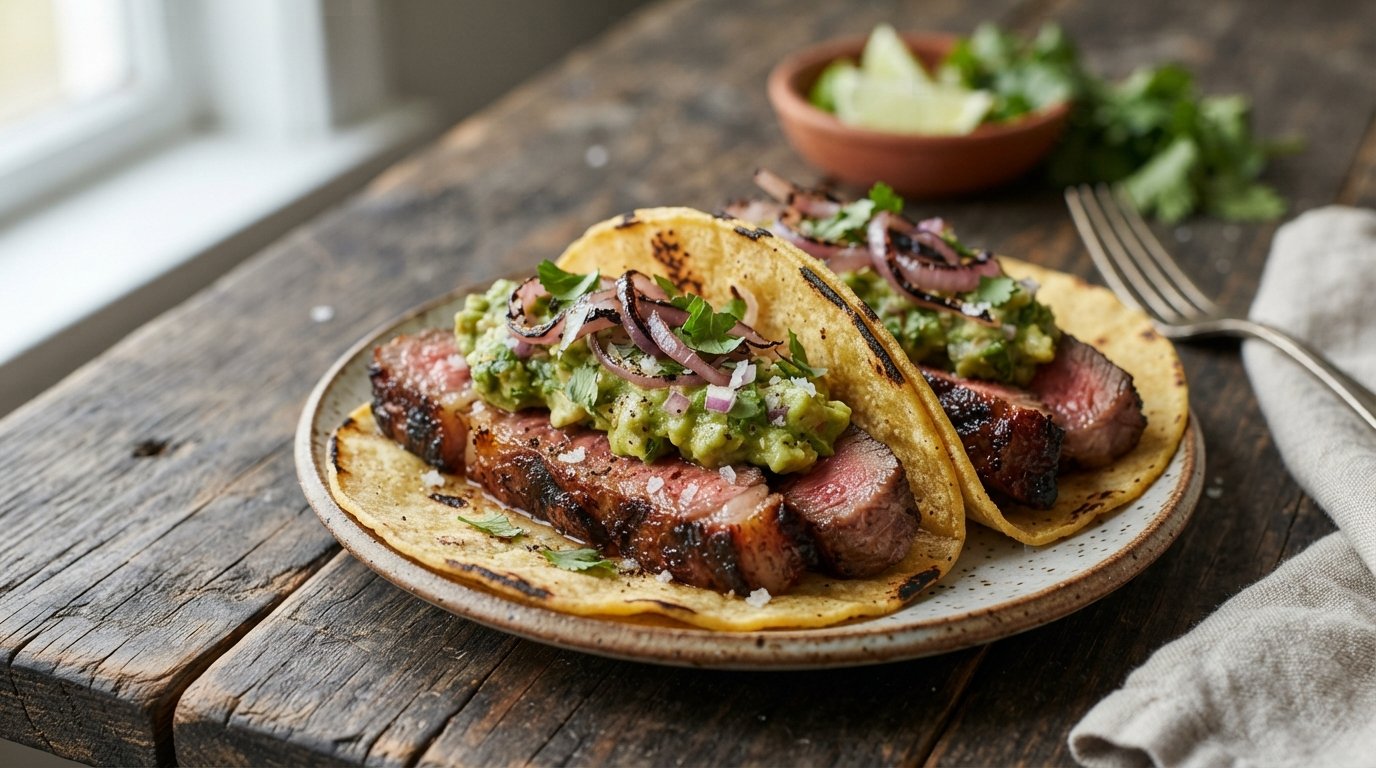
There is a specific kind of magic that happens when high-quality beef meets the primal heat of an open flame. These grilled bone-in steak tacos represent the pinnacle of backyard grilling, transforming a premium cut of meat into a handheld masterpiece that balances rich, smoky flavors with bright, fresh acidity. Unlike standard ground beef tacos, this recipe elevates the humble taco by using thick-cut ribeye or tomahawk steaks, grilled directly over wood embers to achieve a perfect char while maintaining a juicy, medium-rare interior.
The secret weapon in this dish isn’t just the steak itself, but the utilization of every part of the ingredient. By scooping out the rendered marrow from the bone and incorporating it into a chunky avocado salsa, we create a sauce that is impossibly creamy and deeply savory without relying on heavy dairy. Topped with sweet charred onions, a squeeze of fresh lime, and a drizzle of vibrant hot sauce, these bone-in steak tacos offer a complex flavor profile that feels both rustic and refined. Whether you are hosting a summer cookout or simply treating yourself to a gourmet weeknight dinner, this recipe delivers restaurant-quality results right at home.
Why This Recipe Works
This recipe succeeds because it respects the integrity of the protein while maximizing flavor through technique. Grilling a bone-in steak allows the bone to act as an insulator, protecting the inner eye of the meat from drying out while the exterior develops a crust. The direct exposure to wood fire introduces phenolic compounds that gas grills simply cannot replicate, adding a layer of complexity to the beef’s natural richness.
Furthermore, the “nose-to-tail” approach of using the bone marrow in the salsa bridges the gap between the heavy protein and the fresh vegetables. The fat from the marrow emulsifies with the avocado and tomato, creating a luxurious mouthfeel that coats the tongue and enhances the perception of savoriness. When paired with the sharp bite of raw cilantro and the sweetness of fire-charred onions, every bite offers a distinct textural contrast—crisp tortilla, tender meat, creamy salsa, and crisp onion rings—that keeps the palate engaged.
Why You’ll Love This Recipe
- Premium Protein Experience: Uses high-quality bone-in cuts like ribeye or cowboy steak for superior flavor and texture compared to traditional skirt or flank steak.
- Zero-Waste Flavor Boosting: Transforms the often-discarded bone marrow into a gourmet ingredient for the salsa, reducing waste and increasing richness.
- Perfect Grill Marks: The technique ensures distinct cross-hatch sear marks that look professional and taste incredible.
- Balanced Flavor Profile: Combines fatty, rich beef with acidic lime, fresh herbs, and spicy salsa to prevent palate fatigue.
- Versatile Heat Levels: The base recipe is mild and savory, allowing you to customize the spice level with your choice of hot sauce or salsa verde.
- Impressive Presentation: Serving steak tacos on warm corn tortillas with visible grill marks and vibrant green salsa makes for stunning food photography and table appeal.
Ingredient Notes
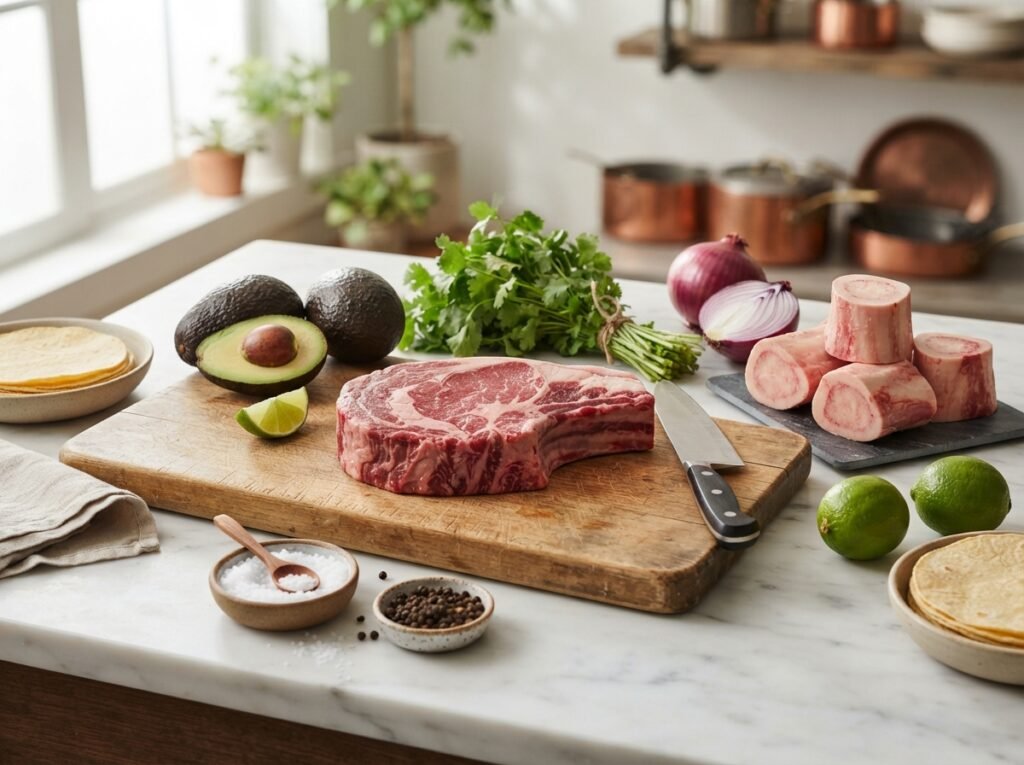
Bone-In Ribeye or Cowboy Steak
- Purpose: The star of the show. The bone adds flavor during cooking and provides the marrow for the salsa.
- Buying Tips: Look for steaks that are at least 1.5 inches thick. A good marbling score (USDA Choice or Prime) ensures the meat stays juicy over high heat. Ask your butcher to “french” the bone if you want a cleaner handle, though leaving it natural works perfectly for roasting marrow.
- Substitutions: If bone-in ribeye is unavailable, a thick-cut T-bone or Porterhouse works well. Avoid thin-cut steaks as they will overcook before developing a proper crust.
Fresh Avocados
- Purpose: Provides the creamy base for the salsa and healthy fats to balance the leaner parts of the steak.
- Buying Tips: Choose avocados that yield slightly to gentle pressure but do not feel mushy. Hass avocados are preferred for their higher fat content and nuttier flavor.
- Storage: If buying ahead, keep them at room temperature until ripe, then refrigerate to slow ripening.
Corn Tortillas
- Purpose: The vessel. Corn tortillas have a distinct earthy flavor and structural integrity that pairs better with robust steak than flour tortillas.
- Buying Tips: Look for tortillas labeled “nixtamalized” or made with masa harina and water only. Avoid preservative-heavy brands found in the bread aisle; check the refrigerated section for authentic street-style tortillas.
- Prep Note: These must be warmed directly over a flame or on a hot comal to become pliable and develop toasted spots. Cold tortillas will crack and ruin the eating experience.
White Onion
- Purpose: Adds sweetness and crunch. Sliced into rings and grilled, the onion caramelizes and loses its harsh sulfuric bite.
- Substitutions: Yellow onions work in a pinch, but white onions are sweeter and crisper, making them ideal for tacos. Red onions can be used raw for a sharper bite but won’t grill as sweetly.
Fresh Cilantro & Lime
- Purpose: Essential aromatics. Cilantro cuts through the fat of the steak and marrow, while lime juice provides necessary acid to brighten the heavy components.
- Buying Tips: Choose cilantro with bright green leaves and no yellowing. Limes should feel heavy for their size, indicating juiciness.
Salsa Verde or Roasted Tomato Salsa
- Purpose: Adds moisture, heat, and tang. In the video, a red salsa is added to the guacamole, and a green salsa is spooned onto the taco.
- Substitutions: Use your favorite store-bought or homemade salsa. A tomatillo-based salsa verde offers a brighter, more acidic contrast to the rich marrow-guac.
Kitchen Equipment
- Charcoal or Wood Grill: Essential for achieving the smoky flavor and high direct heat required for this recipe. Gas grills can work but lack the specific wood-smoke profile.
- Long-Handled Tongs: For safely flipping thick steaks over open flames.
- Meat Thermometer: Crucial for pulling the steak at the perfect medium-rare (130°F–135°F internal temp).
- Molcajete (Stone Mortar and Pestle) or Heavy Bowl: For mashing the avocado and mixing the salsa. A molcajete creates a superior texture and incorporates stone-mineral nuances.
- Small Spoon or Scoop: For extracting the soft marrow from the cooked bone.
- Cast Iron Skillet or Comal: Optional, for charring onions if grill space is limited.
- Sharp Chef’s Knife: For slicing the rested steak against the grain.
- Cutting Board: Preferably wood, to catch juices during resting.
Step-by-Step Instructions
H3: Prepare the Fire and Season the Steak
Start by building a two-zone fire in your charcoal grill. Pile hot coals on one side for direct searing and leave the other side empty for indirect cooking. Allow the grill grate to get screaming hot. While the grill heats, pat your bone-in steaks completely dry with paper towels. Moisture is the enemy of a good sear. Generously season all sides of the steak with coarse kosher salt and freshly cracked black pepper. Let the steak sit at room temperature for 20–30 minutes while the fire stabilizes; this promotes even cooking.
H3: Sear the Steaks Over Direct Flame
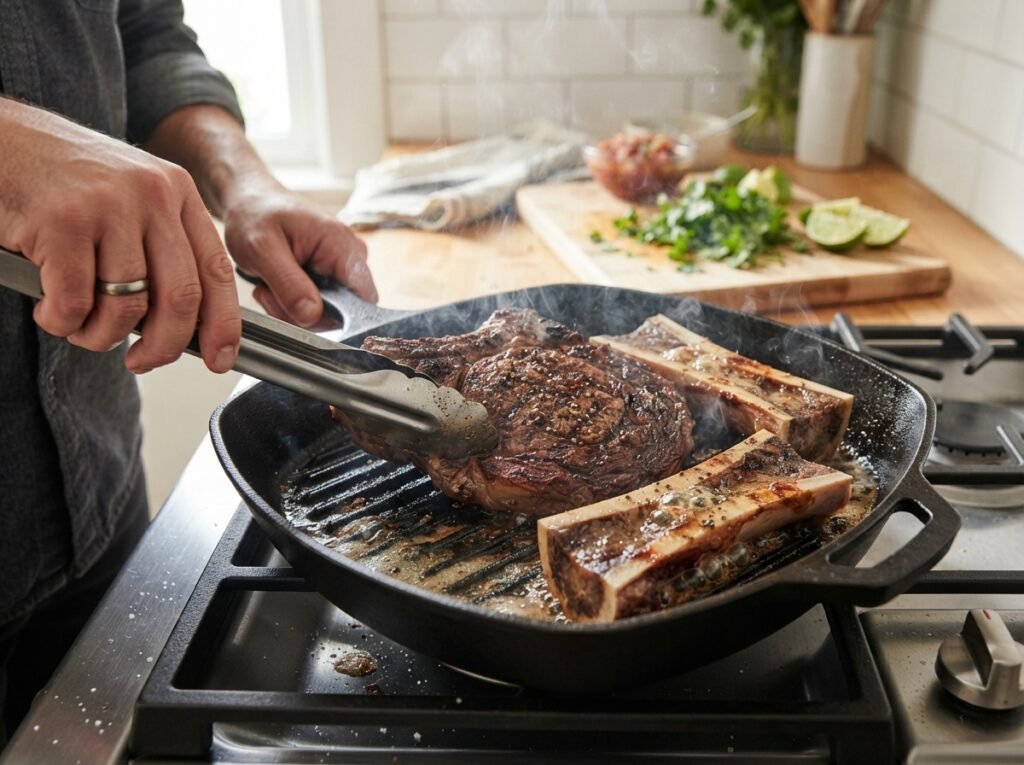
Place the steaks directly over the hot coals. Do not move them for at least 2–3 minutes. You want to develop a deep mahogany crust and distinct grill marks. Flip the steaks using tongs (never pierce the meat with a fork, or you will lose precious juices). Sear the second side for another 2–3 minutes. If flare-ups occur due to dripping fat, move the steak temporarily to the indirect zone to prevent burning. The goal is a crust that is dark brown, not blackened carbon.
H3: Finish Cooking and Rest
Once seared on both sides, move the steaks to the cooler, indirect side of the grill. Close the lid and cook until the internal temperature reaches 125°F–130°F for medium-rare. This usually takes 5–10 minutes depending on thickness. Remove the steaks from the grill and place them on a cutting board or warm plate. Crucial Step: Tent loosely with foil and let rest for at least 10–15 minutes. During this time, the muscle fibers relax and reabsorb the juices. Cutting too early will result in a dry steak and a pool of liquid on your board.
H3: Extract the Marrow and Make the Salsa
While the steak rests, carefully remove the bones from the meat (if not already separated). Using a small spoon, scoop out the soft, gelatinous marrow from the center of the bone. It should be creamy and pale gold. In your molcajete or bowl, combine diced avocados, chopped cilantro, and diced tomatoes. Add the warm marrow directly into the bowl. The residual heat from the marrow will slightly soften the avocado, helping it meld. Mash gently with a pestle or fork until chunky. Season with salt and a squeeze of lime juice. Stir in your chosen salsa (red or green) to loosen the mixture and add acidity. Taste and adjust seasoning.
H3: Char the Onions and Warm Tortillas
Slice the white onion into ¼-inch thick rings. Place them directly on the grill grate over medium-high heat for 2–3 minutes per side, until they have distinct char marks but still retain some crunch. Alternatively, char them in a dry cast iron skillet. Simultaneously, warm your corn tortillas directly over the open flame for 10–15 seconds per side, or on a hot skillet until they puff slightly and smell toasted. Keep wrapped in a clean kitchen towel to stay warm and pliable.
H3: Slice and Assemble the Tacos
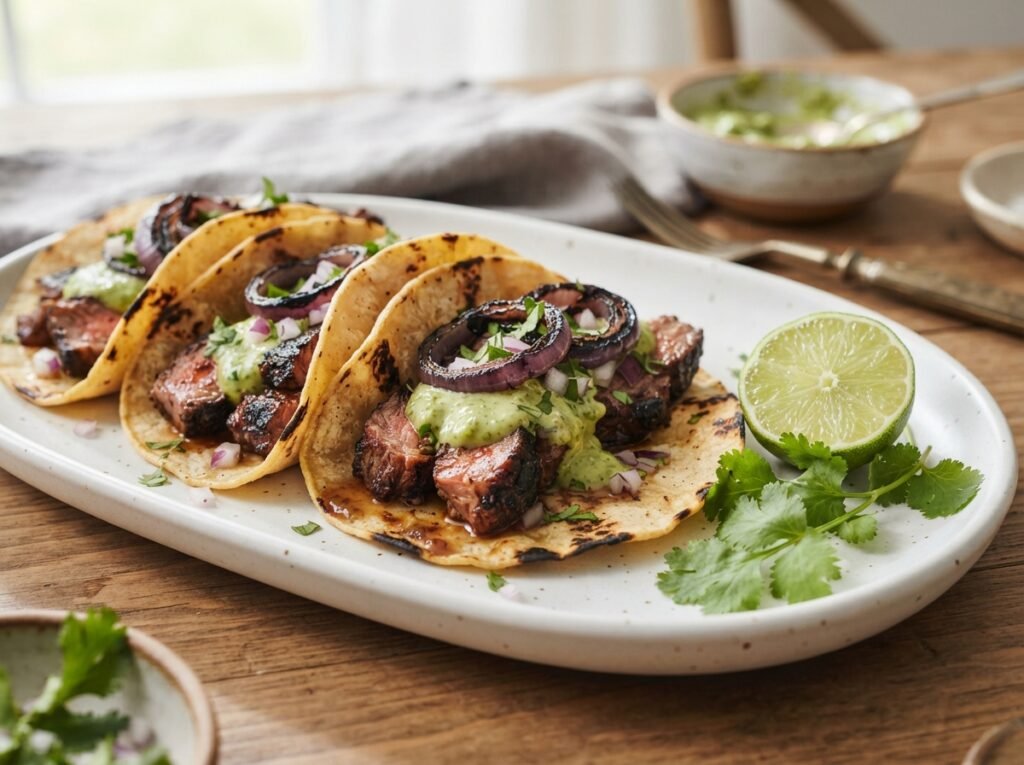
After resting, slice the steak against the grain into ½-inch thick strips. You should see a uniform pink center with a beautiful gradient to the seared edge. To assemble, ladle a generous spoonful of the avocado-marrow salsa onto the center of a warm tortilla. Top with 2–3 slices of steak. Add a few rings of charred onion. Finish with a fresh squeeze of lime juice and a drizzle of hot sauce. Serve immediately while the steak is still warm and the tortilla is supple.
Expert Tips
- Don’t Fear the Flare-Up: Fat rendering from a bone-in ribeye will cause flames. This is actually desirable for short bursts as it imparts smoky flavor. Just don’t let the steak sit in the fire; lift it away if flames engulf it for more than a few seconds.
- The Marrow Must Be Warm: Cold marrow is waxy and unpleasant. Ensure you scoop it while the bone is still hot from the grill. If it cools down, microwave it for 10 seconds before adding to the salsa.
- Salt Early, But Not Too Early: Salting 40 minutes before cooking or immediately before is best. Salting 10–20 minutes before draws moisture to the surface that hasn’t had time to reabsorb, leading to steaming instead of searing.
- Tortilla Temperature Matters: A cold tortilla breaks. A properly heated tortilla stretches. The steam inside the towel is what keeps them perfect. Never stack cold tortillas; always warm them just before serving.
- Use the Juices: After slicing the steak, pour any accumulated resting juices back over the meat or mix a teaspoon into the salsa. This is pure flavor gold.
Common Mistakes
- Overcooking the Steak: Bone-in steaks continue to cook significantly during resting (carryover cooking). Pulling at 135°F means you’ll have medium-well by the time you eat. Aim for 125°F–130°F pull temp.
- Mushing the Avocado: Over-mashing turns guacamole into baby food. Leave distinct chunks of avocado for texture. The marrow provides creaminess; you don’t need to obliterate the fruit.
- Skipping the Rest: Impatience is the #1 killer of good steak. If you cut immediately, the pressure inside the muscle forces juice out onto the board. Give it 10 minutes minimum.
- Using Thin Tortillas: Cheap, mass-produced tortillas tear under the weight of steak. Invest in thicker, handmade-style corn tortillas that can support the filling.
- Ignoring the Grain: Steak muscle fibers run in a specific direction. Cutting parallel to them leaves long, chewy strands. Always cut perpendicular (across) the grain to shorten fibers and ensure tenderness.
Recipe Variations
- Spicy Chipotle Version: Blend a chipotle pepper in adobo sauce into the avocado salsa for a smoky, fiery kick that complements the grilled meat.
- Vegetarian Portobello Alternative: Replace steak with large portobello mushroom caps marinated in soy sauce, garlic, and oil. Grill until tender and use the same marrow-free avocado salsa.
- Chicken Thigh Swap: Use bone-in, skin-on chicken thighs. Grill skin-side down first to render fat and crisp skin. Shred or slice for a lighter taco option.
- Seafood Twist: Substitute with swordfish steaks or halibut. Reduce grilling time significantly (2-3 mins per side). Pair with a mango-avocado salsa instead of tomato-based.
- Low-Carb/Keto Friendly: Skip the tortilla entirely. Serve the sliced steak and avocado salsa over a bed of mixed greens or use large lettuce cups (romaine or butter lettuce) as wraps.
- Extra Cheesy: Melt Oaxaca or Cotija cheese directly on the steak during the last minute of grilling. Crumble extra cotija over the finished taco for salty brightness.
- Breakfast Style: Top the steak tacos with a fried egg and pickled red onions for a hearty brunch variation.
What to Serve With This Recipe
- Mexican Street Corn (Elote): The creamy, cheesy, chili-lime coating on grilled corn mirrors the richness of the steak tacos perfectly.
- Black Bean and Rice Pilaf: A classic side that soaks up extra salsa and provides fiber to balance the meal.
- Pickled Jalapeños and Carrots: The vinegar brine cuts through the fat of the steak and cleanses the palate between bites.
- Agua Fresca: Watermelon, hibiscus (jamaica), or cucumber-lime drinks provide refreshing hydration against the smoky, salty tacos.
- Churros with Chocolate Sauce: For dessert, the cinnamon-sugar crunch contrasts beautifully with the savory main course.
- Cerveza or Mezcal: A light lager or an amber ale stands up to the beef. For spirits, mezcal’s smokiness echoes the grill flavors.
Make Ahead & Meal Prep Tips
- Salsa Prep: The avocado-marrow salsa is best made fresh, but you can prep the components ahead. Dice avocado and toss with lime juice to prevent browning. Chop cilantro and tomatoes. Store separately in airtight containers. Mix with marrow just before serving.
- Steak Marinade/Seasoning: You can season the steaks up to 24 hours in advance and keep them uncovered in the fridge. This air-dries the surface for an even better sear.
- Onion Charring: Charred onions can be made 2 days ahead and stored in the fridge. Bring to room temp or quickly reheat on a skillet before serving.
- Tortilla Warming: Warm tortillas in batches as guests arrive. Don’t warm them all at once or they’ll dry out. Keep a stack in a low oven (200°F) wrapped in foil if prepping for a crowd.
Storage & Reheating Instructions
Refrigerator
Store leftover steak slices in an airtight container for up to 3 days. Store salsa separately in a sealed container with plastic wrap pressed directly onto the surface to prevent oxidation. Consume salsa within 24 hours for best quality.
Freezer
Cooked steak freezes well for up to 3 months. Wrap tightly in plastic wrap then foil. Do NOT freeze the avocado salsa; it will separate and become watery upon thawing.
Reheating
- Oven (Best Method): Preheat to 275°F. Place steak on a wire rack over a baking sheet. Warm for 10–15 minutes until internal temp reaches 110°F. This preserves moisture better than any other method.
- Air Fryer: Reheat at 300°F for 3–4 minutes. Watch closely to avoid drying out edges.
- Stovetop: Sear briefly in a hot skillet with a touch of oil for 30 seconds per side just to take the chill off. Do not cook through again.
- Microwave (Last Resort): Use 30% power in 30-second intervals. Place a cup of water in the microwave to create steam and prevent rubbery texture.
Nutritional Information
Per Serving (2 Tacos)
- Calories: 650
- Protein: 42g
- Carbohydrates: 38g
- Fat: 38g
- Fiber: 8g
- Sugar: 4g
- Sodium: 680mg
Note: Values are estimates based on standard ingredients and may vary based on steak size, tortilla brand, and salsa used.
Troubleshooting Guide
| Problem | Cause | Solution |
|---|---|---|
| Steak is tough/chewy | Cut with the grain or overcooked | Always slice perpendicular to muscle fibers. Use a thermometer to avoid exceeding 135°F internal temp. |
| Salsa is brown/oxidized | Avocado exposed to air too long | Press plastic wrap directly on surface. Add extra lime juice. Make fresh if severely discolored. |
| Tortillas cracking | Too cold or dried out | Warm directly over flame or dampen slightly and microwave for 10 secs before heating on skillet. |
| No grill marks | Grill not hot enough or moved too soon | Ensure grate is ripping hot before placing steak. Don’t touch for first 2-3 mins to allow Maillard reaction. |
| Marrow is hard/waxy | Bone wasn’t cooked long enough or marrow cooled | Return bone to grill for 5 more mins. Reheat extracted marrow gently before mixing. |
| Flare-ups charring steak | Too much fat dripping | Move steak to indirect zone temporarily. Trim excess external fat cap if flare-ups are unmanageable. |
Frequently Asked Questions
Can I make this recipe on a gas grill? Yes, but you’ll miss the wood smoke flavor. Compensate by adding wood chips (mesquite or oak) in a smoker box. Focus on getting the grates extremely hot for a proper sear.
Is it safe to eat bone marrow? Absolutely. Bone marrow is a delicacy rich in healthy fats and nutrients. As long as the steak has been cooked to a safe internal temperature, the marrow inside the bone is fully rendered and safe to consume.
What if I can’t find bone-in steaks? You can use boneless ribeye and purchase beef marrow bones separately from your butcher. Roast the marrow bones at 450°F for 15–20 minutes to extract the marrow for the salsa.
How do I know when the steak is done without a thermometer? Use the hand test: Touch your thumb to your middle finger—the fleshy part of your palm should feel like medium-rare steak. However, a digital thermometer is always more reliable.
Can I use flour tortillas instead of corn? You can, but corn is traditional and structurally superior for wet fillings like salsa. Flour tortillas can become soggy faster. If using flour, toast them well to create a barrier.
Why does my avocado salsa turn watery? Salt draws moisture out of tomatoes and avocados. Salt the salsa immediately before serving, not hours in advance. Also, ensure tomatoes are seeded and drained if very juicy.
What wine pairs best with these tacos? A Zinfandel or Malbec works beautifully. Both have enough fruit and spice to match the charred steak and bold salsa without being overwhelmed.
Can I prep the steaks the night before? Yes! Season and leave uncovered in the fridge overnight. This dry-brining process seasons the meat deeply and dries the surface for an exceptional crust.
Final Thoughts
These grilled bone-in steak tacos are more than just a meal—they’re an experience that celebrates the art of live-fire cooking and thoughtful ingredient pairing. By taking the time to properly sear a quality cut of beef, honor the entire animal by utilizing the marrow, and balancing richness with fresh acidity, you create something truly special that transcends typical taco fare. I encourage you to embrace the process, invite friends to gather around the grill, and savor each element of this dish. Don’t forget to rate the recipe below and share your own twists in the comments—I’d love to hear how you made these tacos your own!