
Quick Recipe Summary
| Metric | Details |
|---|---|
| Prep Time | 60 minutes |
| Cook Time | 30 minutes (Rice) |
| Total Time | 1 hour 30 minutes |
| Servings | 4–6 People |
| Cuisine | Japanese |
| Course | Main Course / Appetizer |
| Difficulty | Intermediate |
| Calories | ~450 kcal per serving |
Table of Contents
- Introduction
- Why This Recipe Works
- Why You’ll Love This Recipe
- Ingredient Notes
- Kitchen Equipment
- Preparation Information
- Step-by-Step Instructions
- Expert Tips
- Common Mistakes
- Recipe Variations
- What to Serve With This Recipe
- Make Ahead Tips
- Meal Prep Tips
- Storage Instructions
- Reheating Instructions
- Nutritional Information
- Troubleshooting Guide
- Frequently Asked Questions
- Final Thoughts
Introduction
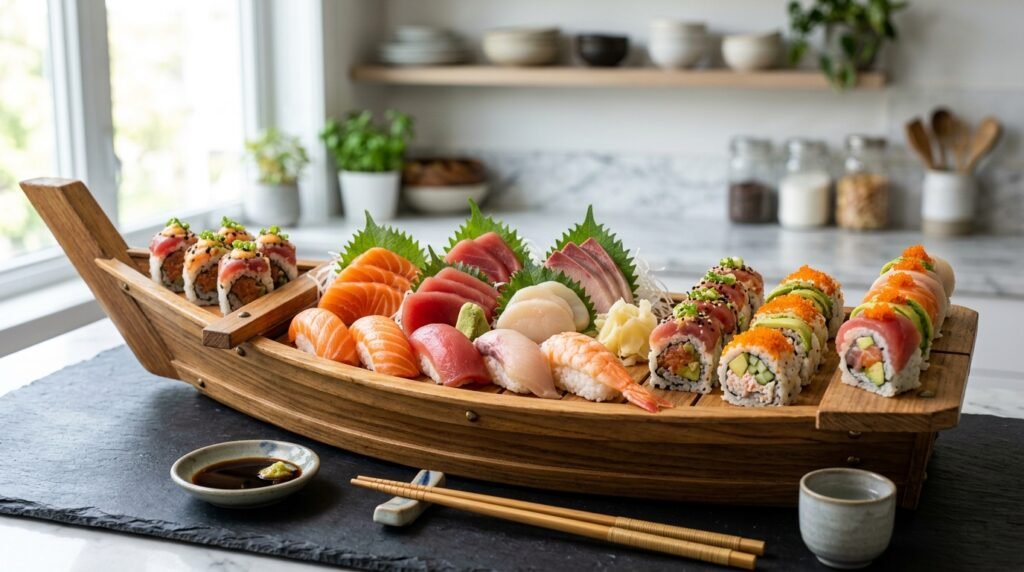
There is an undeniable magic in a table laden with vibrant, fresh Japanese sushi. From the glistening orange of salmon sashimi to the intricate layers of a spicy tuna roll, this cuisine is a celebration of texture, flavor, and artistry. While many assume that creating a restaurant-quality spread requires years of training, the truth is that with the right techniques and high-quality ingredients, you can host an unforgettable Japanese sushi feast right in your own kitchen.
This guide isn’t just about assembling rice and fish; it’s about understanding the balance of flavors that defines authentic Japanese dining. Whether you are craving the delicate melt of toro, the satisfying crunch of a tempura roll, or the comforting warmth of udon noodles, mastering these fundamentals will elevate your home cooking. Let’s dive into the world of fresh seafood and seasoned rice to create a meal that looks as stunning as it tastes.
Why This Recipe Works
The secret to a successful homemade sushi platter lies in the harmony of its components. Unlike cooked dishes where heat transforms ingredients, sushi relies on the pristine quality of raw elements and the precise seasoning of the rice. This recipe works because it focuses on three pillars: vinegar-balanced rice, knife skills for clean cuts, and temperature control.
By preparing the rice with the correct ratio of rice vinegar, sugar, and salt, we ensure each grain is distinct yet sticky enough to hold shape. The method emphasizes chilling the fish properly to maintain food safety and texture, while the rolling techniques provided here are designed for home cooks who may not have professional bamboo mats or decades of experience. The result is a cohesive dining experience where every bite offers a perfect contrast of soft rice, fresh fish, and crisp vegetables.
Why You’ll Love This Recipe
- Restaurant Quality at Home: Achieve the visual appeal and taste profile of high-end sushi bars without the markup.
- Customizable Feast: Mix and match nigiri, sashimi, maki, and temaki to suit every guest’s preference.
- Interactive Dining: Serving styles like hand rolls (temaki) encourage guests to participate in the meal preparation.
- Fresh & Healthy: Packed with omega-3 rich fish, nutrient-dense seaweed, and fiber-rich vegetables.
- Versatile Menu: Easily pairs with hot sides like udon or fried rice to create a complete multi-course meal.
- Impressive Presentation: Learn professional plating techniques using banana leaves and ceramic ware to wow your guests.
Ingredient Notes
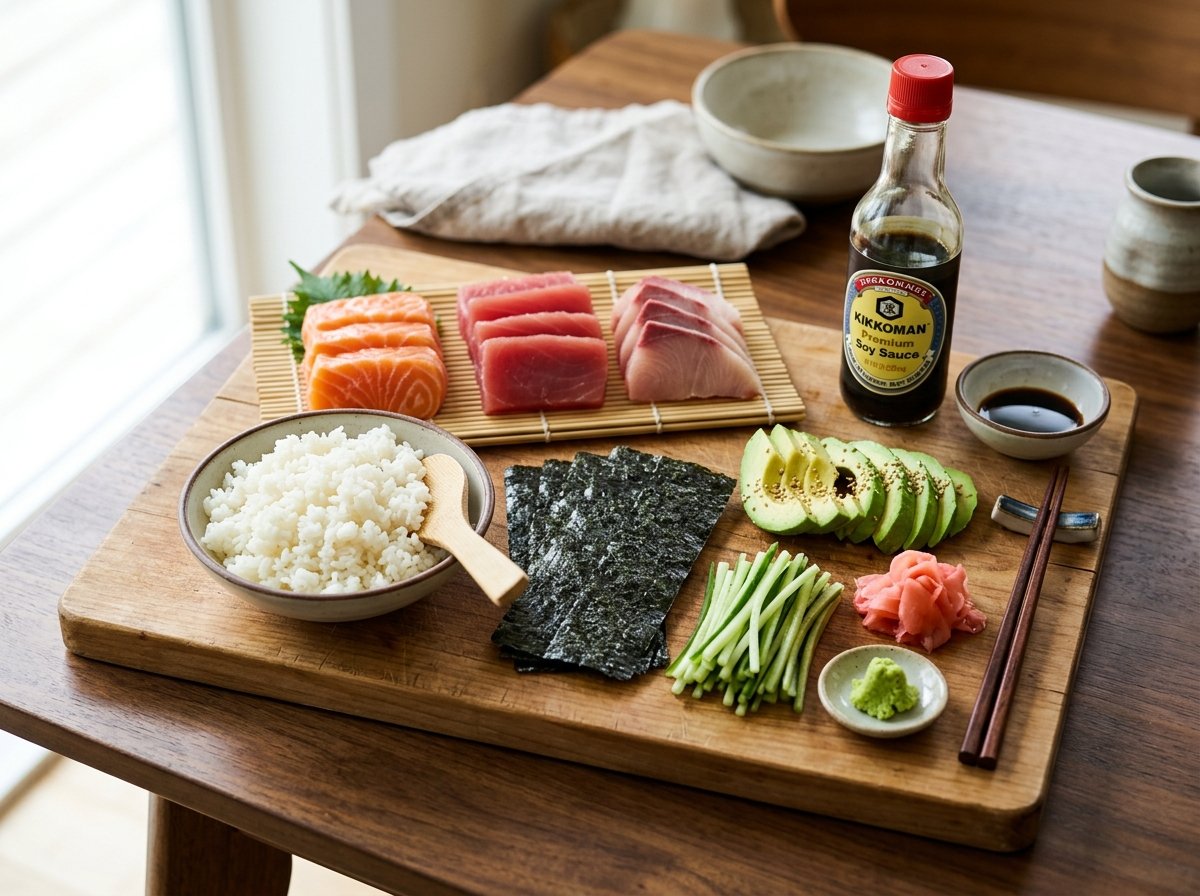
Sushi Rice (Short Grain)
- Purpose: The foundation of all sushi. Short-grain rice has a higher amylopectin content, making it sticky enough to mold but firm enough to bite through.
- Substitutions: Calrose rice is a good alternative if Japanese short-grain is unavailable. Avoid long-grain varieties like Jasmine or Basmati.
- Buying Tips: Look for “Sushi Rice” or “Short Grain Japonica” on the label. New crop rice tends to be moister and sweeter.
Raw Fish (Salmon, Tuna, Yellowtail)
- Purpose: Provides the primary protein and umami flavor.
- Substitutions: If raw fish is intimidating, use smoked salmon, cooked shrimp (ebi), or imitation crab (surimi).
- Buying Tips: Crucial: Always purchase “Sushi Grade” or “Sashimi Grade” fish from a reputable fishmonger. This indicates the fish has been frozen at specific temperatures to kill parasites. Never use standard supermarket fish for raw consumption.
Nori (Dried Seaweed Sheets)
- Purpose: Wraps maki rolls and temaki cones, adding a savory, oceanic flavor and structural integrity.
- Substitutions: Soy paper (for those avoiding iodine/seaweed taste) or cucumber ribbons.
- Buying Tips: Buy roasted nori specifically meant for sushi. Keep sheets sealed until use to prevent moisture absorption, which makes them chewy rather than crisp.
Rice Vinegar, Sugar, & Salt
- Purpose: Creates the shari (seasoned rice) dressing. The acid cuts the richness of the fish, while sugar balances the sourness.
- Substitutions: Apple cider vinegar can work in a pinch but alters the flavor profile significantly.
- Buying Tips: Unseasoned rice vinegar is preferred so you can control the salt/sugar levels yourself.
Wasabi & Pickled Ginger (Gari)
- Purpose: Wasabi provides antimicrobial properties and heat; ginger cleanses the palate between different types of fish.
- Substitutions: Fresh horseradish dyed green (common substitute), though real wasabi root is superior.
- Buying Tips: Real wasabi is grated fresh. Tube wasabi is often just horseradish and mustard. For ginger, look for pale pink slices in brine, not bright neon red.
Avocado & Cucumber
- Purpose: Adds creaminess (avocado) and refreshing crunch (cucumber) to rolls.
- Substitutions: Mango for sweetness, asparagus for crunch, or pickled radish (takuan).
- Buying Tips: Use avocados that yield slightly to pressure but aren’t mushy. English cucumbers are best as they have fewer seeds and thinner skin.
Kitchen Equipment
- Sharp Chef’s Knife or Yanagiba: Essential for slicing fish cleanly without tearing. A dull knife ruins the texture.
- Rice Cooker or Heavy-Bottomed Pot: For consistent rice texture.
- Hangiri (Wooden Tub) or Large Glass Bowl: For cooling and mixing rice. Wood absorbs excess moisture.
- Bamboo Rolling Mat (Makisu): For shaping maki rolls. Wrap in plastic wrap for easier cleaning.
- Plastic Wrap: Keeps rice from sticking to hands and protects the rolling mat.
- Small Bowl of Tezu (Vinegar Water): Mix 1 cup water + 2 tbsp rice vinegar. Dip hands here before handling rice to prevent sticking.
- Ceramic Plates & Chopsticks: For authentic presentation.
Preparation Information
- Prep Time: 60 Minutes
- Cook Time: 30 Minutes (Rice only; fish is prep-only)
- Total Time: 1 Hour 30 Minutes
- Servings: 4–6 People
Step-by-Step Instructions
1. Preparing Perfect Sushi Rice
Start by rinsing 3 cups of short-grain rice under cold water until the water runs clear. This removes excess surface starch that causes gumminess. Cook the rice with a 1:1.1 water-to-rice ratio. Once cooked, transfer immediately to your hangiri or large bowl. In a small saucepan, gently heat ½ cup rice vinegar, 3 tbsp sugar, and 1 tsp salt until dissolved. Pour this mixture over the hot rice in a cutting motion with a rice paddle. Fan the rice while mixing to cool it rapidly; this gives the grains a glossy sheen and distinct texture. Cover with a damp cloth and let rest at room temperature for 30 minutes. Never refrigerate sushi rice, as it hardens the starch.
2. Prepping Fresh Fish and Vegetables
Ensure your fish is chilled but not ice-cold; extreme cold numbs the flavor. Using a very sharp knife wetted with tezu, slice tuna and salmon against the grain into uniform pieces. For sashimi, cut thicker slices (¼ inch); for nigiri, cut thinner rectangles (⅛ inch). Julienne cucumber into matchsticks and slice avocado into thin fans. Having your mise en place organized is vital—sushi assembly moves fast, and you don’t want to be chopping while rice dries out.
3. Assembling Nigiri and Sashimi
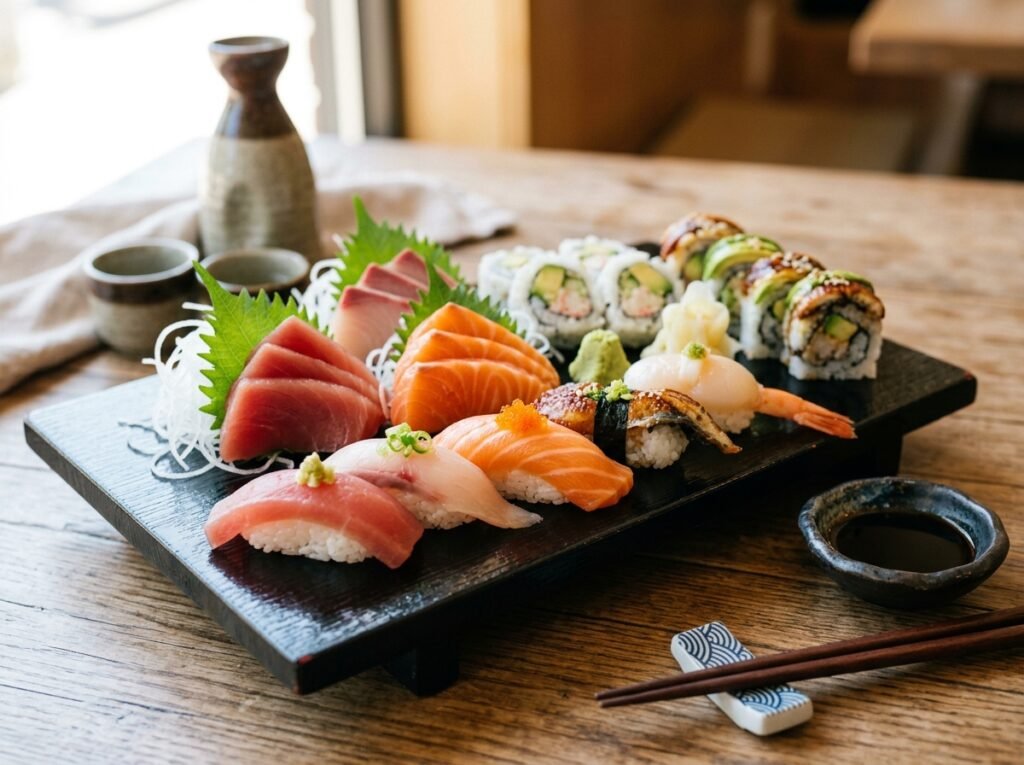
For Nigiri: Wet your hands thoroughly. Grab a golf-ball-sized amount of rice (about 20g) and gently squeeze it into an oblong shape. It should be firm on the outside but airy inside. Place a dab of wasabi on the fish slice, then lay the fish over the rice mound. Press gently with two fingers to adhere. For Sashimi: Simply arrange the pre-cut fish slices on a chilled plate lined with shiso leaves or daikon radish. The beauty here is simplicity; no rice, just pure fish.
4. Rolling Maki and Temaki
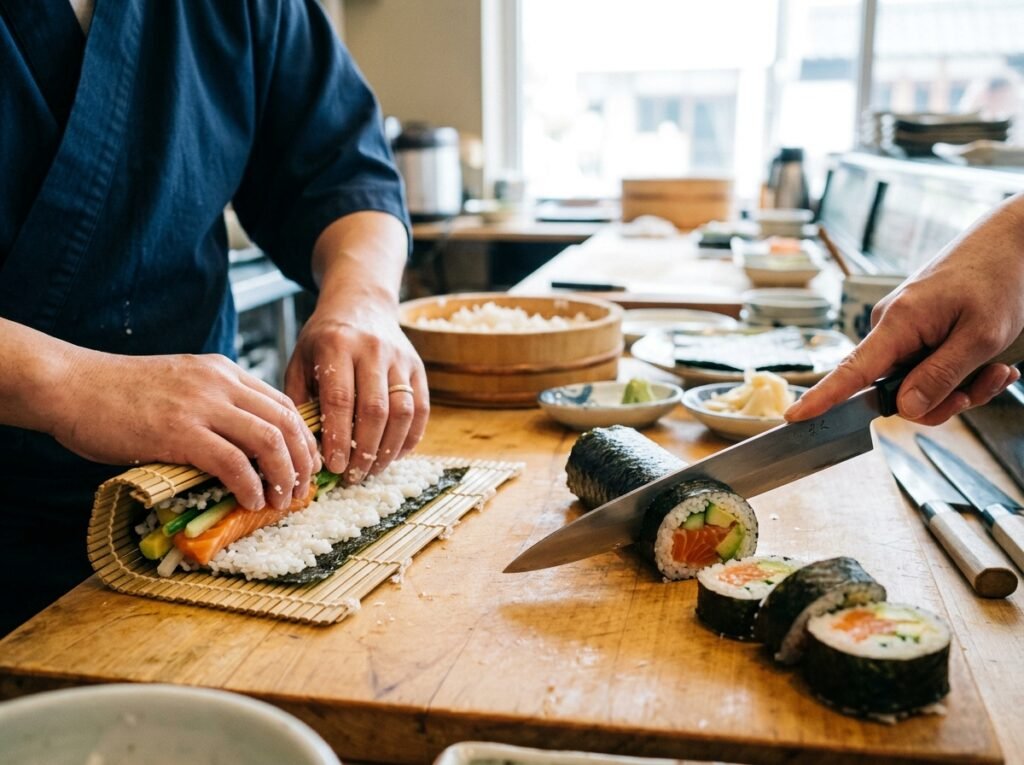
For Maki (Rolls): Place nori shiny-side down on the bamboo mat. Spread a thin layer of rice evenly, leaving a 1-inch border at the top. Add fillings (fish, veg) in a line across the center. Lift the bottom edge of the mat, tucking the filling in as you roll forward. Apply even pressure to form a tight cylinder. Slice with a wet knife using a sawing motion. For Temaki (Hand Rolls): Cut nori in half. Hold a piece in your palm, place rice on the left third, add fillings diagonally, and roll into a cone shape. Seal the edge with a grain of rice. These are meant to be eaten immediately while the nori is crisp.
5. Creating Specialty Rolls
To replicate the stunning rolls seen in the video, try an Inside-Out Roll (Uramaki): Spread rice on the entire nori sheet, flip it over so rice faces the mat, then add fillings to the nori side. Roll tightly. Top with sliced avocado or tobiko (flying fish roe). For a Spicy Tuna Roll, mix minced tuna with spicy mayo (sriracha + mayo) before rolling. Drizzle unagi sauce (eel sauce) or spicy mayo over finished rolls for that glossy, appetizing finish shown in the footage.
6. Plating and Garnishing
Presentation is half the experience. Use dark ceramic plates to make the colors pop. Arrange nigiri in alternating patterns. Place sashimi on elevated stands or folded leaves for height. Garnish with microgreens, sesame seeds, or edible flowers. Serve soy sauce in small dipping bowls, not poured over the sushi. Provide plenty of napkins and wet towels (oshibori) for guests. The goal is a balanced, colorful tableau that invites sharing.
Expert Tips
- Knife Hygiene: Wipe your knife with a damp cloth between every single cut. Sticky rice residue builds up instantly and will drag the fish, ruining the slice.
- Rice Temperature: Sushi rice should be body temperature when served. Hot rice melts fish; cold rice is hard and unpleasant.
- Less is More: Don’t overstuff rolls. Too much filling prevents sealing and makes biting difficult. Aim for elegance, not volume.
- Fish Safety: If you aren’t 100% confident in your fish source, stick to cooked options like shrimp, eel, or vegetable rolls. Food safety is non-negotiable.
- Seasoning Balance: Taste your rice seasoning before mixing. It should be tangy, slightly sweet, and salty—a bold flavor that stands up to the fish.
Common Mistakes
- Using Warm Nori: Moisture from warm rice or humid hands makes nori soggy instantly. Work quickly and keep nori covered until the last second.
- Pressing Rice Too Hard: Compacted rice feels like a brick. Handle gently; the rice should fall apart easily in the mouth.
- Cutting Rolls Sawing Backwards: Always push the knife forward. Pulling back crushes the roll. Use a sharp blade and minimal pressure.
- Overfilling Hand Rolls: If you can’t seal the cone, you’ve added too much. Guests will end up with unwrapped messes.
- Ignoring Cross-Contamination: Use separate boards/knives for raw fish and vegetables. Sanitize surfaces frequently.
Recipe Variations
- Vegetarian/Vegan: Replace fish with marinated tofu, grilled eggplant, sweet potato tempura, or pickled daikon. Use vegan mayo for spicy sauces.
- Cooked Seafood: Use poached lobster, seared scallops, or canned tuna mixed with celery and mayo for a safer, budget-friendly option.
- Spicy Lover: Add kimchi, jalapeños, or extra sriracha to fillings. Top rolls with chili oil or crispy garlic.
- Low-Carb/Keto: Swap rice for cauliflower rice mixed with vinegar, or use cucumber slices/nori sheets as wraps without any rice base.
- High-Protein: Double the fish portion in nigiri or add edamame and hemp seeds to rolls.
- Fusion Style: Incorporate local ingredients like mango, cream cheese, bacon, or truffle oil for modern twists.
What to Serve With This Recipe
A sushi feast needs balance. Pair your platter with:
- Hot Sides: Steaming bowls of Udon noodle soup or Chicken Fried Rice provide comforting contrast to cold sushi.
- Appetizers: Edamame with sea salt, Gyoza dumplings, or Seaweed Salad.
- Drinks: Crisp Sake, Japanese lager beer, or Yuzu cocktails cleanse the palate beautifully. Green tea is the traditional choice.
- Dessert: Matcha mochi, Dorayaki, or light fruit sorbet to finish without heaviness.
Make Ahead Tips
You cannot fully prep raw sushi hours in advance, but you can streamline the process. Cook and season the rice up to 4 hours ahead; keep covered at room temp. Wash and cut all vegetables; store in airtight containers with damp paper towels. Prepare sauces and garnishes. Slice fish no more than 1 hour before serving to prevent oxidation and drying. Assemble rolls just before eating to maintain nori crispness.
Meal Prep Tips
For lunchboxes, focus on sturdy items. Vegetable rolls and cooked fish nigiri hold up better than raw sashimi. Pack soy sauce separately to avoid sogginess. Include pickled ginger and wasabi in tiny sealed containers. Keep the container refrigerated until ready to eat. Avoid mayo-heavy rolls for meal prep as they can spoil faster.
Storage Instructions
- Refrigerator: Store leftover sushi in an airtight container for max 24 hours. Note: Raw fish leftovers should ideally be discarded after one meal due to safety risks. Cooked rolls and veggie rolls last 1-2 days.
- Freezer: Do not freeze assembled sushi. The rice becomes grainy and inedible upon thawing. However, you can freeze unused raw fish portions individually wrapped for future use.
Reheating Instructions
- Microwave: Not recommended for sushi. Rice gets rubbery, fish cooks unevenly.
- Oven/Air Fryer: Only suitable for cooked rolls (tempura, baked). Reheat at 350°F for 3-5 mins to restore crispness.
- Stovetop: Pan-fry leftover cooked maki rolls lightly in oil to make “leftover sushi fritters”—a delicious way to repurpose!
- Best Practice: Eat sushi fresh. If reheating cooked sides like fried rice or udon, steam or stir-fry gently.
Nutritional Information
(Per serving estimate, varies by fillings)
- Calories: 450 kcal
- Protein: 22g
- Carbohydrates: 58g
- Fat: 14g
- Fiber: 3g
- Sugar: 6g
- Sodium: 680mg
Troubleshooting Guide
- Rice is Mushy: Too much water during cooking or insufficient rinsing. Next time, reduce water slightly and rinse longer.
- Rolls Falling Apart: Rice wasn’t pressed firmly enough, or nori was stale/damp. Ensure nori is crisp and apply consistent pressure while rolling.
- Fish Tastes Fishy: Fish wasn’t fresh or wasn’t handled correctly. Always buy sushi-grade and keep chilled. A quick wipe with sake/vinegar can mitigate mild odors.
- Nori is Chewy: Humidity or slow assembly. Work faster, keep nori sealed, and serve immediately.
- Knife Sticking: Blade isn’t wet enough. Dip in tezu before every cut. Sharpen your knife regularly.
Frequently Asked Questions
- Is supermarket fish safe for sushi? Generally, no. Unless explicitly labeled “sushi/sashimi grade,” it hasn’t undergone parasite-killing freezing protocols.
- Can I use brown rice? Yes, but texture differs. Cook thoroughly and season well. It won’t stick as easily, so press firmer.
- How do I sharpen my sushi knife? Use a whetstone (1000/3000 grit). Maintain a 15-degree angle. Professional sharpening yearly is ideal.
- Why is my rice hard after cooling? Refrigeration retrogrades starch. Always store at room temp for same-day use.
- Can pregnant women eat sushi? Avoid raw fish entirely. Opt for fully cooked rolls, veggie rolls, or pasteurized crab.
- What’s the difference between maki and temaki? Maki is cylindrical, cut into pieces, eaten with chopsticks. Temaki is cone-shaped, hand-held, eaten immediately.
- How much rice per roll? About ¾ cup cooked rice for a full sheet nori roll. Adjust based on roll size preference.
- Can I reuse leftover rice? Not for sushi. Repurpose into fried rice, rice balls (onigiri), or rice porridge (okayu).
Final Thoughts
Creating a stunning Japanese sushi spread at home is a rewarding journey that blends culinary skill with creative expression. By focusing on quality ingredients, respecting traditional techniques, and embracing the interactive nature of dishes like temaki, you transform dinner into an event. Remember, perfection comes with practice; even imperfect rolls taste delicious when made with care. We hope this guide empowers you to host your own sushi night with confidence. Try this recipe, experiment with variations, and share your creations in the comments below—we’d love to hear how your feast turned out!