
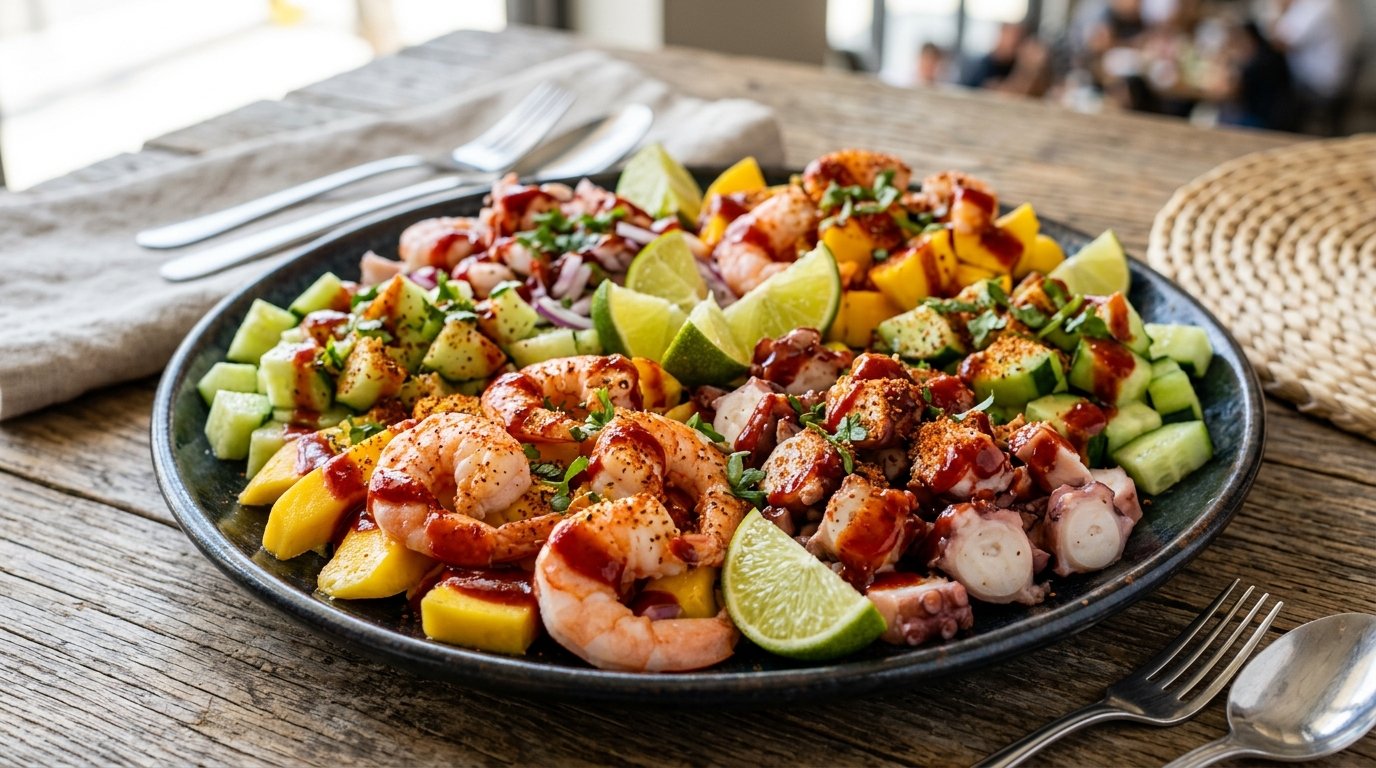
Quick Recipe Summary
| Metric | Details |
|---|---|
| Prep Time | 45 minutes |
| Cook Time | 10 minutes (Seafood) |
| Total Time | 55 minutes |
| Servings | 6–8 People |
| Cuisine | Mexican / Tex-Mex |
| Course | Appetizer / Snack / Main |
| Difficulty | Easy |
| Calories | ~320 kcal per serving |
Table of Contents
- Introduction
- Why This Recipe Works
- Why You’ll Love This Recipe
- Ingredient Notes
- Kitchen Equipment
- Preparation Information
- Step-by-Step Instructions
- Expert Tips
- Common Mistakes
- Recipe Variations
- What to Serve With This Recipe
- Make Ahead Tips
- Meal Prep Tips
- Storage Instructions
- Reheating Instructions
- Nutritional Information
- Troubleshooting Guide
- Frequently Asked Questions
- Final Thoughts
Introduction
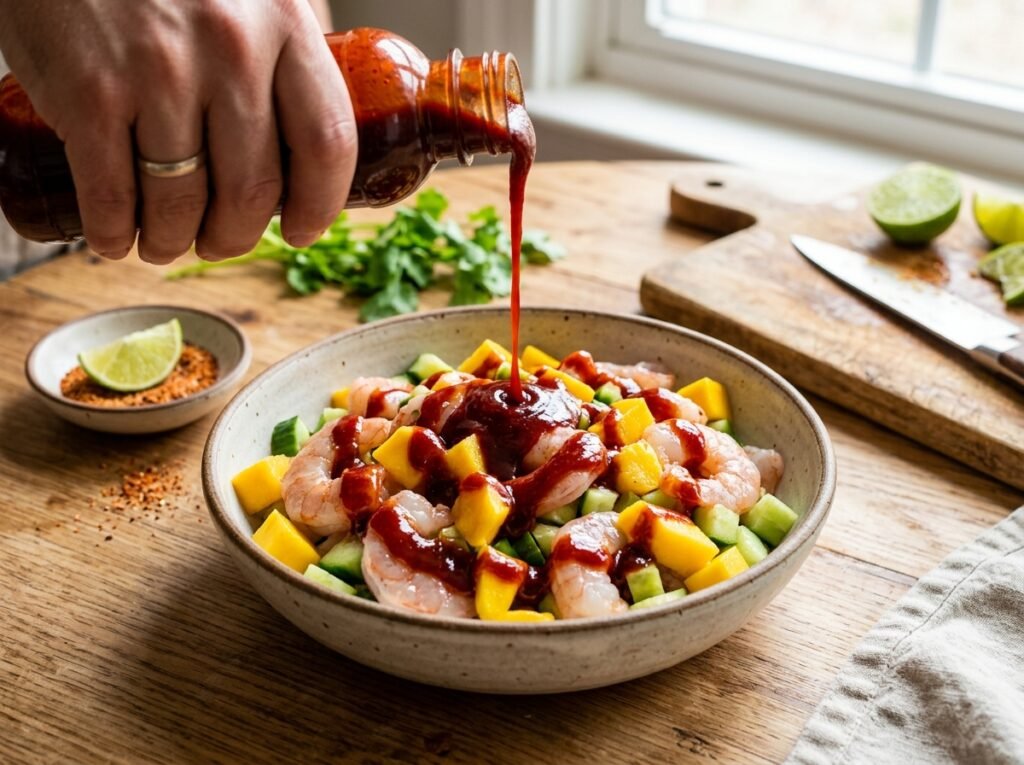
If you are looking for a dish that perfectly balances sweet, spicy, salty, and tangy flavors while delivering an explosion of textures, this Mexican seafood chamoy platter is your new obsession. Often referred to as “Tostilocos de Mariscos” or simply a seafood tostada tower, this vibrant appetizer has taken social media by storm for good reason. It transforms simple ingredients like shrimp, crab legs, and octopus into a festive centerpiece that is as fun to eat as it is beautiful to behold.
The secret lies in the interplay between the crisp tortilla chips, the refreshing crunch of cucumber and mango, and the rich, savory depth of the seafood, all brought together by the legendary chamoy sauce. Whether you are hosting a summer party, watching the big game, or just craving something bold and addictive, this recipe delivers a full fiesta experience right on your table. Let’s dive into how to build this masterpiece at home.
Why This Recipe Works
This recipe succeeds because it respects the fundamental principles of flavor balancing found in Mexican street food. The heat from the chili powder and hot sauce cuts through the richness of the seafood, while the sweetness of the mango and the acidity of the lime provide necessary contrast. Texture is equally important; without the sturdy base of tortilla chips and fresh vegetables, the dish would be soggy and one-dimensional.
Furthermore, the temperature contrast plays a vital role. Serving chilled seafood over room-temperature chips with cool fruit creates a sensory experience that keeps every bite interesting. The use of high-quality condiments like Valentina sauce and Tajín ensures authenticity, providing that specific umami and citrus profile that defines true Mexican seafood chamoy dishes. It is not just a salad; it is a carefully constructed edible architecture.
Why You’ll Love This Recipe
- Flavor Explosion: Every bite offers a perfect harmony of sweet, spicy, sour, and salty notes.
- Visual Stunner: The colorful arrangement of red shrimp, orange crab, yellow mango, and green cucumber makes it an instant Instagram hit.
- Customizable: Easily scale up for a crowd or down for a solo snack; swap proteins based on preference or budget.
- No-Cook Assembly: Once the seafood is boiled, the rest is just chopping and arranging—perfect for hot days when you don’t want to heat up the kitchen.
- Interactive Eating: Encourages guests to dig in and mix their own bites, making it a great conversation starter.
- Budget-Friendly Luxury: Looks expensive and gourmet but relies on accessible ingredients like frozen seafood and seasonal produce.
Ingredient Notes
Seafood Mix (Shrimp, Crab Legs, Octopus)
- Purpose: The protein star providing savory depth and satisfying texture.
- Substitutions: Use imitation crab (surimi) for a budget option, scallops for luxury, or canned tuna for a pantry staple version.
- Buying Tips: Buy frozen cooked shrimp and crab legs for convenience and safety. Ensure octopus is pre-cooked/tenderized unless you have hours to braise it yourself.
- Storage Tips: Keep thawed seafood refrigerated and consume within 24 hours. Do not refreeze previously frozen seafood.
Tortilla Chips (Totopos)
- Purpose: Provides the essential crunchy foundation and salty base.
- Substitutions: Doritos (Nacho Cheese or Cool Ranch) for a modern twist, or fried wonton strips for an Asian fusion vibe.
- Buying Tips: Choose thick, restaurant-style chips that can withstand moisture better than thin generic brands.
- Storage Tips: Store in an airtight container to maintain crispness until assembly.
Fresh Mango & Cucumber
- Purpose: Adds sweetness, freshness, and hydration to balance the heavy spices.
- Substitutions: Pineapple, jicama, watermelon, or radish slices work beautifully.
- Buying Tips: Select mangoes that yield slightly to pressure and smell fragrant at the stem. Use English cucumbers for fewer seeds and thinner skin.
- Storage Tips: Cut fruit just before serving to prevent oxidation and sogginess.
Chamoy Sauce & Tajín
- Purpose: The binding agent that delivers the signature sweet-sour-spicy kick.
- Substitutions: Homemade chamoy (apricot/hibiscus based), Miguelito powder, or a mix of tamarind paste + lime + chili.
- Buying Tips: Look for authentic brands like Lucas, Vero, or Miguelito. Tajín should be the classic chili-lime seasoning.
- Storage Tips: Store bottles in a cool, dark place. Refrigerate after opening to preserve freshness.
Hot Sauce (Valentina/Tapatío) & Lime
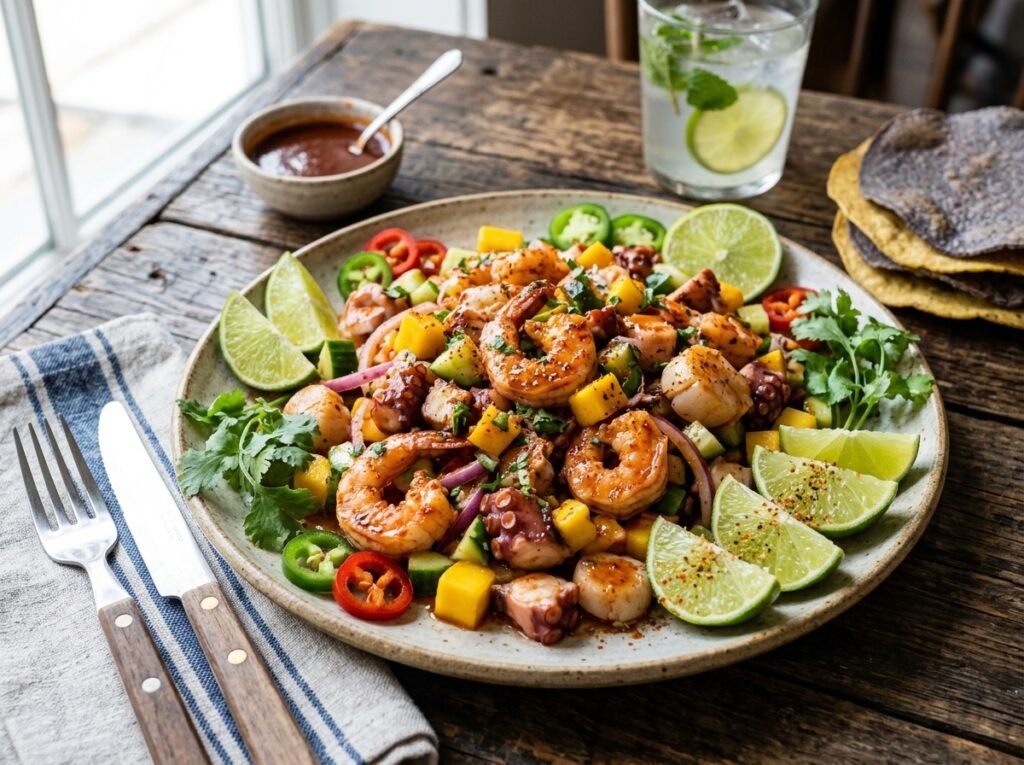
- Purpose: Adds liquid heat and bright acidity to wake up the palate.
- Substitutions: Cholula, Sriracha, or fresh habanero salsa for more heat. Lemon juice if limes aren’t available.
- Buying Tips: Valentina is preferred for its distinct vinegar-chili flavor that pairs perfectly with seafood.
- Storage Tips: Fresh limes are best juiced immediately before use for maximum brightness.
Cilantro & Serrano Peppers
- Purpose: Herbal freshness and adjustable heat level.
- Substitutions: Parsley (if cilantro is disliked), jalapeños (milder), or Thai chilies (hotter).
- Buying Tips: Choose cilantro with bright green leaves and no yellowing. Serranos should be firm and glossy.
- Storage Tips: Wrap cilantro stems in a damp paper towel and store in a bag in the fridge.
Kitchen Equipment
- Large Pot: For boiling seafood.
- Colander/Strainer: For draining and cooling seafood rapidly.
- Large Ice Bath Bowl: Crucial for stopping the cooking process and keeping seafood tender.
- Sharp Chef’s Knife: For precise slicing of mango, cucumber, and peppers.
- Cutting Board: Dedicated board for raw/cooked seafood to prevent cross-contamination.
- Large Serving Platter or Tray: Metal trays (like cafeteria trays) add authenticity, but any large flat platter works.
- Ladle or Spoon: For drizzling sauces evenly.
- Tongs: For hygienic assembly and serving.
Preparation Information
- Prep Time: 45 Minutes
- Cook Time: 10 Minutes
- Total Time: 55 Minutes
- Servings: 6–8 People
Step-by-Step Instructions
1. Preparing the Fresh Produce Base
Wash all produce thoroughly. Slice the cucumber into thin rounds or half-moons; the goal is a crisp snap, not a mushy texture. Peel and slice the mango into uniform strips or cubes—uniformity ensures every forkful gets fruit. Thinly slice the serrano peppers (remove seeds for less heat) and chop the cilantro roughly. Why this matters: Pre-cutting everything first (mise en place) prevents the seafood from sitting out too long during assembly. The visual contrast of bright yellow mango against green cucumber sets the stage for the vibrant platter.
2. Cooking and Chilling the Seafood
Bring a large pot of salted water to a rolling boil. If using raw shrimp, cook for 2-3 minutes until pink and opaque. If using pre-cooked frozen seafood, blanch for just 1 minute to warm through and clean. Immediately transfer seafood to an ice bath to stop cooking. Drain well and pat dry with paper towels. Visual Cues: Shrimp should be C-shaped (tight O-shape means overcooked). Texture Cue: Seafood should be firm but yielding, never rubbery. Why this matters: Overcooked seafood becomes tough and chewy, ruining the delicate balance of the dish. Drying prevents diluting the chamoy sauce later.
3. Assembling the Crunch Foundation
Arrange a generous layer of tortilla chips across the bottom of your serving platter. Don’t be shy—this is the structural integrity of the dish. Scatter some cucumber slices and mango pieces directly onto the chips now to create pockets of freshness throughout. Professional Tip: Avoid stacking chips too high in the center; keep the base relatively flat so the seafood doesn’t slide off. Why this matters: The chips need to support the weight of the seafood without shattering instantly, yet they must eventually soften slightly from the sauces to become flavorful.
4. Arranging the Seafood Tower
Pile the drained seafood artfully over the chip base. Place larger items like crab legs and octopus tentacles strategically for height and visual interest. Nestle shrimp among the gaps. Distribute the remaining cucumber and mango slices around and on top of the seafood. Sprinkle sliced serranos and chopped cilantro generously. Aroma Cue: You should smell the briny ocean scent mixed with fresh citrus herbs. Why this matters: An organized pile looks intentional and inviting, whereas a messy heap can look unappetizing. Height creates dimension and makes portioning easier.
5. The Chamoy Magic Finish
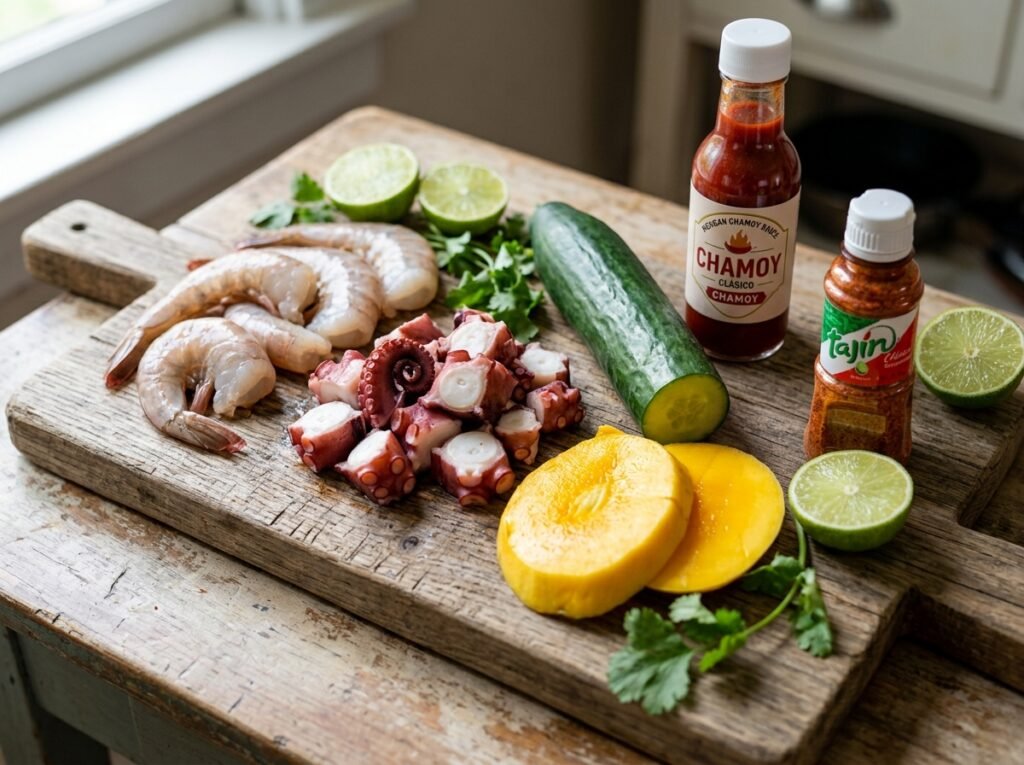
This is the transformative moment. Drizzle chamoy sauce liberally over the entire mound, ensuring it seeps into the cracks. Follow with dashes of Tajín, squirts of Valentina hot sauce, and a generous squeeze of fresh lime juice. Toss gently with tongs if desired, or leave layered for presentation. Color Cue: The dish should transform from pale pinks and yellows to a glossy, deep reddish-orange hue. Texture Cue: Sauces should coat but not drown; chips should still retain some crunch. Why this matters: This final seasoning step binds all elements together. The acid from lime and chamoy “cooks” the surface slightly, enhancing flavor penetration.
Expert Tips
- Dry Your Seafood Thoroughly: Excess water is the enemy of crunch. Pat seafood dry multiple times before assembling. Wet seafood steams the chips underneath, creating a soggy mess.
- Chill Your Platter: For extra refreshment, chill your serving tray in the freezer for 10 minutes before assembly. This keeps the seafood cold longer, especially outdoors.
- Sauce on the Side: For parties where guests have different spice tolerances, serve the platter lightly dressed and provide extra chamoy, Tajín, and lime on the side. This prevents the dish from becoming too salty or wet for those who prefer mild flavors.
- Quality Chips Matter: Invest in thick, restaurant-style totopos. Thin gas-station chips will disintegrate under the weight and moisture of the seafood within minutes.
- Balance the Heat: Taste your chamoy and hot sauce before pouring. Some brands are significantly hotter or sweeter than others. Adjust with lime or sugar if needed to match your palate.
Common Mistakes
- Overcooking the Shrimp: Boiling shrimp for more than 3 minutes turns them rubbery. Remember, residual heat continues cooking even after removal from water. Ice bath immediately.
- Soggy Chip Base: Assembling too far in advance allows moisture to migrate. Build the platter no more than 15-20 minutes before serving.
- Uneven Seasoning: Dumping all sauce in one spot leaves bland patches. Drizzle in a zigzag pattern and rotate the platter while saucing.
- Ignoring Food Safety: Leaving seafood at room temperature for hours invites bacteria. Keep the platter on ice or in a cool environment if serving for extended periods.
- Skipping the Acid: Without fresh lime juice, the dish tastes flat and overly salty. Lime is non-negotiable for brightness.
Recipe Variations
- Spicy Lover’s Edition: Add minced habanero, extra ghost pepper sauce, or spicy Takis crumbs for intense heat.
- Vegetarian/Vegan: Replace seafood with hearts of palm, marinated mushrooms, jackfruit, or seasoned tofu. Use vegan chamoy and cheese alternatives.
- Chicken Version: Use shredded rotisserie chicken or grilled chicken strips for a hearty, protein-packed alternative that’s kid-friendly.
- Beef/Taco Style: Swap seafood for seasoned ground beef or carne asada strips. Top with pico de gallo and queso fresco.
- Extra Cheesy: Melt Oaxaca or mozzarella cheese over the chips before adding seafood for a gooey, indulgent twist.
- Healthy/Low-Carb: Replace chips with baked kale chips, pork rinds (chicharrones), or cucumber boats. Reduce chamoy quantity.
- High-Protein Boost: Add edamame, hemp seeds, or extra shrimp. Serve with a side of Greek yogurt dip for additional protein.
- Fruit-Forward: Increase mango/pineapple ratio and add berries. Use lighter chamoy and more lime for a dessert-like appetizer.
What to Serve With This Recipe
This platter is a meal in itself, but these pairings elevate the experience:
- Drinks: Ice-cold Mexican lager (Modelo, Corona), Paloma cocktail, horchata, or agua fresca (tamarind or hibiscus).
- Sides: Guacamole with extra lime, pico de gallo, or esquites (Mexican street corn salad).
- Dips: Queso fundido, crema Mexicana, or avocado salsa verde for dipping chips.
- Dessert: Churros, flan, or mango sorbet to cool the palate after the spicy feast.
- Bread: Warm bolillo rolls or conchas for soaking up leftover sauces.
Make Ahead Tips
You cannot fully assemble this dish ahead of time due to sogginess risk, but you can prep components. Cook and chill seafood up to 24 hours in advance; store in sealed containers. Wash, cut, and store fruits/vegetables separately in airtight containers with damp paper towels. Prepare sauces and measure out seasonings. When ready to serve, assembly takes only 5-10 minutes. Keep chips in their original packaging until the last second.
Meal Prep Tips
For individual portions, use mason jars or to-go containers. Layer chips at bottom, then veggies, seafood, and sauce on top. Pack sauces separately in small leak-proof cups. Assemble just before eating to maintain texture. This works great for lunchboxes or picnic baskets. Label containers with date and contents. Consume within 24 hours for best quality and safety.
Storage Instructions
- Refrigerator: Leftover assembled platter should be consumed within 24 hours. Store in airtight container. Note: Chips will soften significantly; texture will change but flavor remains good.
- Freezer: Do not freeze assembled platter. Seafood texture degrades, chips become inedible, and produce turns mushy. Freeze unused cooked seafood separately for future use.
- Component Storage: Unassembled cooked seafood lasts 2-3 days refrigerated. Cut produce lasts 2-3 days. Chips last weeks in sealed container.
Reheating Instructions
- Microwave: Not recommended. Will make seafood rubbery and chips soggy.
- Oven/Air Fryer: Only for reheating plain chips or cooked seafood separately. Chips: 350°F for 3-5 mins. Seafood: 300°F for 5-7 mins (watch closely). Never reheat assembled dish.
- Stovetop: Sauté leftover seafood briefly in butter/garlic for a new dish. Toast leftover chips in dry pan for 2 mins to restore crunch.
- Best Practice: Eat fresh. Repurpose leftovers into tacos, salads, or soups rather than attempting to rehydrate the original platter.
Nutritional Information
(Per serving estimate, varies by portion size and toppings)
- Calories: 320 kcal
- Protein: 24g
- Carbohydrates: 28g
- Fat: 12g
- Fiber: 3g
- Sugar: 8g
- Sodium: 680mg
Troubleshooting Guide
- Chips Too Soggy: Caused by excess moisture or early assembly. Fix: Add fresh chips on top next time. Prevent: Dry seafood thoroughly, assemble last-minute.
- Seafood Tough/Rubbery: Overcooked during boiling. Fix: Cannot fix texture, but mask with extra sauce/lime. Prevent: Strict timing + ice bath.
- Too Salty/Sour: Over-seasoned with Tajín/chamoy. Fix: Add more unsalted chips, mango, or cucumber to dilute. Balance with pinch of sugar.
- Not Spicy Enough: Mild chamoy/hot sauce. Fix: Add fresh chilies, cayenne, or hotter sauce. Prevent: Taste sauces before using.
- Bland Flavor: Missing acid or salt. Fix: Add fresh lime juice and pinch of salt. Ensure seafood was cooked in salted water.
Frequently Asked Questions
- Can I use raw seafood? No. Always use cooked seafood for safety and texture. Raw seafood requires professional handling and poses health risks in this preparation style.
- What is chamoy made of? Traditionally from pickled fruit (apricot, plum, mango), chili powder, lime, and salt. It’s sweet, sour, salty, and spicy simultaneously.
- How do I prevent cross-contamination? Use separate cutting boards/knives for raw and cooked items. Wash hands/surfaces thoroughly. Keep seafood chilled until serving.
- Can I make this gluten-free? Yes! Use certified GF tortilla chips or replace with rice crackers, plantain chips, or cucumber slices as base.
- Is this dish very spicy? It depends on your chamoy and hot sauce choice. Start mild and add heat gradually. Mango/cucumber help temper spice.
- How long can this sit out? Max 2 hours at room temp (1 hour if >90°F). Keep on ice bed for outdoor events to extend safe window.
- Can I use canned seafood? Yes, canned shrimp/crab works in a pinch. Drain/rinse well to remove brine. Texture won’t be as premium but flavor still shines.
- What’s the best chip for this? Thick, restaurant-style corn tortilla chips (totopos). Avoid thin/fried styles that shatter easily.
- Can kids eat this? Absolutely! Reduce/omit spicy elements. Focus on mango, cucumber, mild chamoy, and shrimp. Great way to introduce new flavors.
- Where to buy authentic chamoy? Latin grocery stores, international aisles of major supermarkets, or online retailers specializing in Mexican foods.
Final Thoughts
Creating this Mexican seafood chamoy platter at home brings the vibrant energy of a street food fiesta directly to your table. It’s more than just a recipe—it’s an experience that engages all senses and brings people together through bold, unforgettable flavors. Don’t be intimidated by the assembly; embrace the creativity and make it your own. Whether you stick to tradition or experiment with new combinations, the result is always a celebration worth sharing. We’d love to see your creations! Snap a photo, tag us, and let us know how your platter turned out in the comments below. ¡Buen provecho!