
Quick Recipe Summary
| Prep Time | Cook Time | Total Time | Servings | Cuisine | Course | Difficulty | Calories (approx.) |
|---|---|---|---|---|---|---|---|
| 10 minutes | 25 minutes | 35 minutes | 6–8 | Mediterranean / American fusion | Breakfast, Brunch, Lunch, Light Dinner | Easy | 320–380 per serving |
Table of Contents
| Section |
|---|
| Introduction |
| Why This Recipe Works |
| Why You’ll Love This Recipe |
| Ingredient Notes |
| Kitchen Equipment |
| Preparation Information |
| Step-by-Step Instructions |
| Expert Tips |
| Common Mistakes |
| Recipe Variations |
| What to Serve With This Recipe |
| Make Ahead Tips |
| Meal Prep Tips |
| Storage Instructions |
| Reheating Instructions |
| Nutritional Information |
| Troubleshooting Guide |
| Frequently Asked Questions |
| Final Thoughts |
Introduction
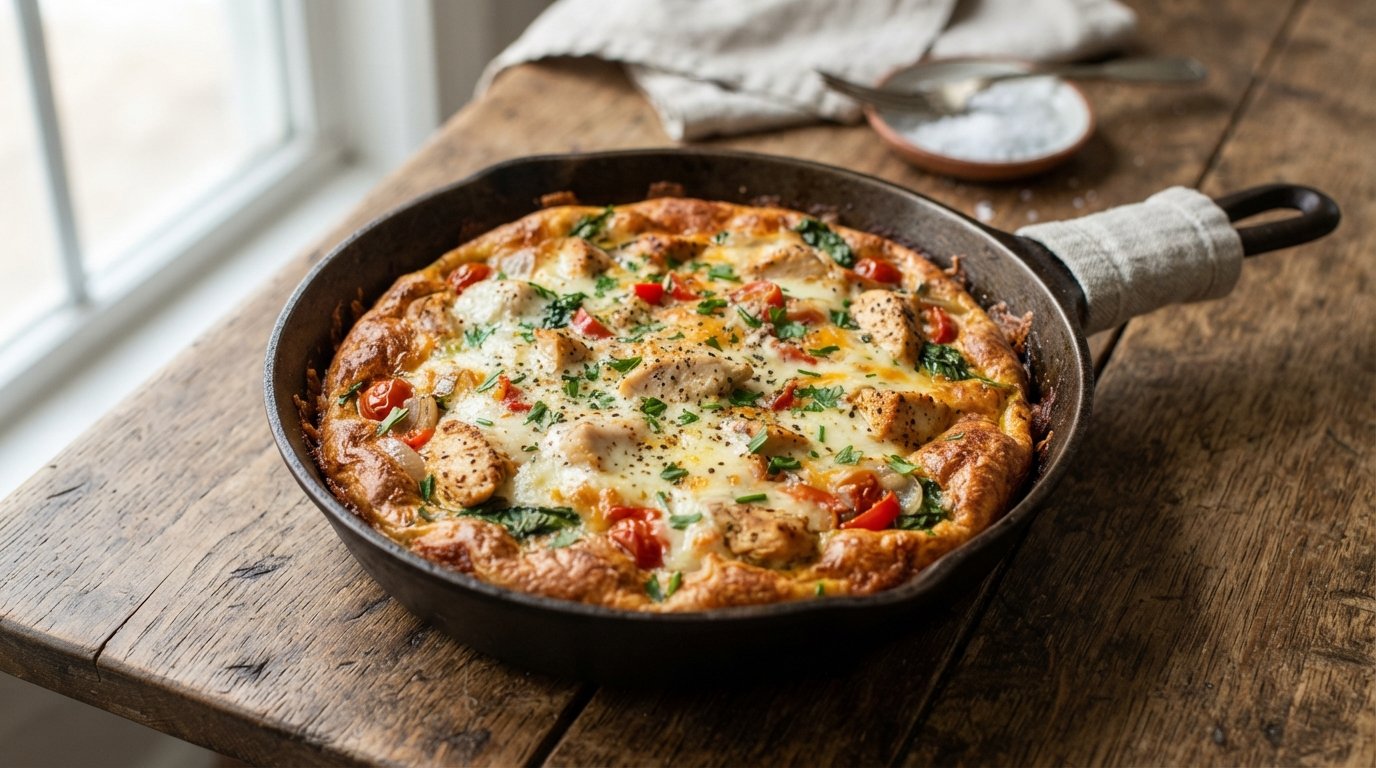
This cheesy chicken frittata turns a handful of everyday ingredients into a golden, stretchy, protein-packed skillet meal that feels special enough for weekend brunch yet simple enough for a weeknight dinner. Whole eggs, tender chicken pieces, fresh herbs, and two layers of melted cheese come together in one pan with almost no fuss. The result is a thick, custardy center, a beautifully browned crust, and those dramatic cheese pulls that make everyone reach for seconds. If you’ve ever wanted a frittata that actually tastes like comfort food instead of “just eggs,” this is the one.
Why This Recipe Works
Cooking the eggs and chicken together from the start lets the chicken gently poach in the egg mixture while the proteins set slowly under a lid. The first covered cook creates a soft, almost soufflé-like texture. A second layer of cheese and a final covered rest finishes the top without drying the eggs. The result is evenly cooked, never rubbery, and loaded with flavor in every bite.
Why You’ll Love This Recipe
- One-pan, minimal cleanup
- High-protein and satisfying
- Ready in about 35 minutes
- Kid-friendly and crowd-pleasing
- Customizable with whatever cheese or herbs you have
- Excellent hot, warm, or at room temperature
- Makes impressive leftovers
Ingredient Notes
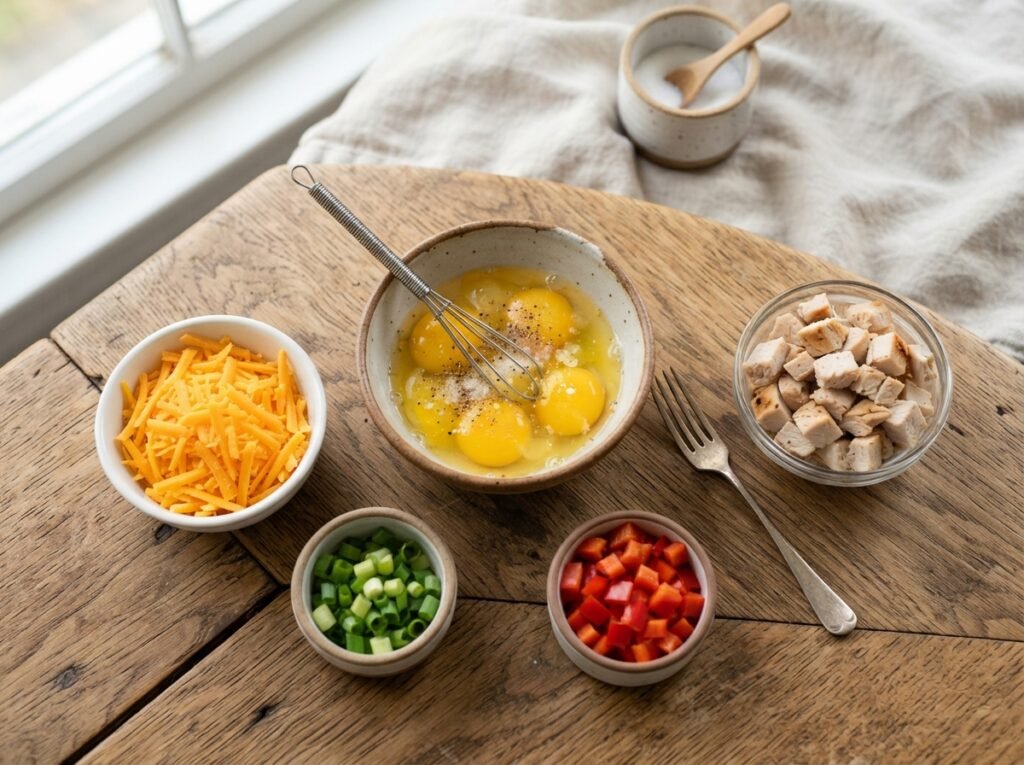
Eggs (10–12 large) They form the structure. Room-temperature eggs incorporate more evenly and cook more gently. Use the freshest eggs you can find for the brightest yolks and best set.
Chicken breast or tenderloin (12–14 oz / 350–400 g), cut into small cubes Lean and mild so the cheese and herbs shine. Cut pieces roughly the same size so they cook evenly. Thighs work if you prefer richer flavor; just trim excess fat.
Salt (1 teaspoon) Seasons the entire mixture. Add it early so it dissolves into the eggs.
Shredded mozzarella or mild melting cheese (about 1½–2 cups total) Half goes into the mixture for creaminess; the rest melts on top for that stretchy finish. Freshly shredded melts better than pre-shredded.
Fresh parsley or mixed soft herbs (a generous handful, chopped) Adds brightness and color. Flat-leaf parsley is classic; cilantro or chives also work.
Creamy element (2–3 tablespoons sour cream, heavy cream, or Greek yogurt) Gives the eggs a richer, more tender set and helps the cheese bind. Optional but recommended.
Neutral oil or butter for the pan Just enough to prevent sticking at the start.
Substitutions
- Dairy-free: use plant-based cream and melting cheese alternative.
- No chicken: omit or replace with cooked ham, turkey, or sautéed mushrooms.
- Lower sodium: reduce salt and use a milder cheese.
Buying & storage tips Choose chicken that is pale pink and firm. Store eggs in the carton in the refrigerator. Shred cheese just before using for best melt.
Kitchen Equipment
- 10- to 12-inch nonstick or well-seasoned skillet with lid
- Slotted spoon or spatula
- Mixing bowl (optional)
- Induction or regular stovetop
- Glass or heatproof lid
- Serving plate or cake stand
Optional: digital thermometer, kitchen scale.
Preparation Information
Prep Time: 10 minutes Cook Time: 25 minutes (15 minutes covered + 10 minutes with cheese) Total Time: 35 minutes Servings: 6–8 generous wedges
Step-by-Step Instructions
1. Prepare the Pan and Base
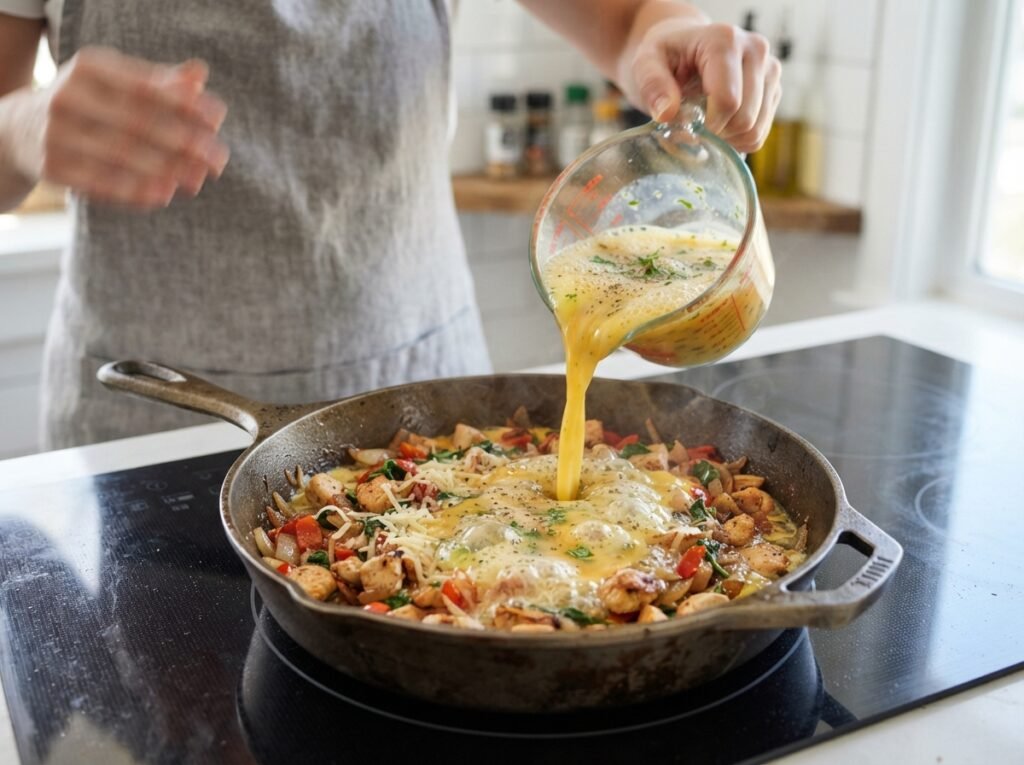
Lightly oil a 10- to 12-inch nonstick skillet and set it over medium heat. Crack 10–12 eggs directly into the pan (or beat them first if you prefer a more uniform texture). Arrange the yolks in a roughly even circle and place the cubed chicken in the center. The eggs will begin to set gently around the edges while the chicken starts to warm through. This arrangement looks impressive and ensures the chicken is surrounded by egg for even cooking.
2. Season and Enrich
Sprinkle 1 teaspoon salt over the eggs and chicken. Add a generous handful of chopped parsley and half of the shredded cheese. Spoon in 2–3 tablespoons of sour cream, cream, or yogurt. Use a spatula to gently distribute the ingredients without completely scrambling the yolks if you like distinct pockets of yolk. The cream softens the egg proteins so the finished frittata stays tender rather than rubbery.
3. First Covered Cook (15 Minutes)
Cover the skillet with a tight-fitting lid and reduce heat to medium-low. Cook for 15 minutes. The steam trapped under the lid gently sets the eggs from the top down while the chicken finishes cooking in the moist environment. You will see the mixture turn opaque and the edges pull slightly away from the pan. Do not lift the lid too often—steam is essential.
4. Check and Flip or Invert if Needed
After 15 minutes the bottom should be golden and the center mostly set. If the top still looks very wet, continue covered for another 2–3 minutes. Some cooks slide the frittata onto a plate and invert it back into the pan for a second side; others simply keep it in place. Either method works as long as the heat stays moderate.
5. Add the Cheese Topping and Finish (10 Minutes)
Scatter the remaining shredded cheese evenly over the surface. Cover again and cook for 10 minutes on low heat. The residual heat and steam melt the cheese into a glossy, stretchy blanket without browning it too aggressively. The frittata is done when the cheese is fully melted and the center feels firm but still springy when pressed.
6. Rest, Slice, and Serve
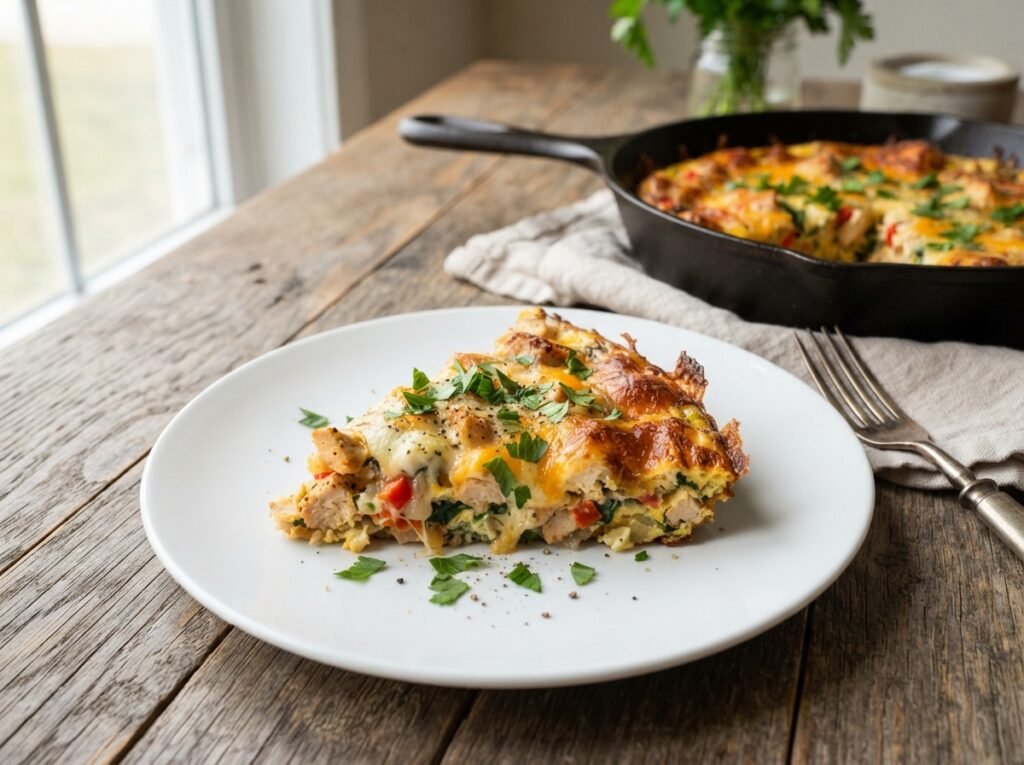
Remove the lid and let the frittata rest in the pan for 2–3 minutes. This allows the structure to firm up so slices hold their shape. Slide it onto a serving plate or invert it for a clean presentation. Cut into wedges and serve immediately while the cheese is still stretchy.
Expert Tips
- Keep the heat moderate. High heat browns the bottom too fast and leaves the center undercooked.
- A tight-fitting lid is non-negotiable for even setting.
- Let the frittata rest before slicing—patience prevents a messy plate.
- Freshly shredded cheese melts more smoothly than pre-shredded.
- If your skillet is not nonstick, make sure it is well seasoned or use a thin layer of oil.
Common Mistakes
Bottom burns before the center sets Cause: heat too high. Fix: lower the heat and use a lid from the start.
Rubbery texture Cause: overcooking or too little fat/moisture. Fix: add the creamy element and pull the frittata as soon as the center is just set.
Cheese doesn’t melt evenly Cause: cheese added too early or heat too low at the end. Fix: add the final cheese layer only in the last 10 minutes under a lid.
Chicken pieces remain pink Cause: pieces cut too large or heat too low. Fix: cut chicken into ½-inch cubes and ensure the first covered cook reaches a full 15 minutes.
Recipe Variations
- Spicy: Add a pinch of chili flakes or diced jalapeño with the herbs.
- Vegetarian: Replace chicken with sautéed mushrooms, spinach, or roasted red peppers.
- Extra Cheesy: Use a mix of mozzarella and sharp cheddar or Gruyère.
- Herb-forward: Double the parsley and add chives or dill.
- Low-carb / high-protein: Already excellent; simply serve with a green salad.
- Breakfast version: Add cooked breakfast sausage or leftover roasted vegetables.
What to Serve With This Recipe
- Simple arugula or mixed-green salad with lemon vinaigrette
- Sliced tomatoes and avocado
- Crusty bread or garlic toast
- Fresh fruit for brunch
- Light yogurt or sour cream on the side
- Iced tea, sparkling water with citrus, or a crisp white wine
Make Ahead Tips
Assemble the egg-chicken mixture up to 4 hours ahead and keep refrigerated in the skillet (covered). Bring to room temperature for 15 minutes before cooking. The finished frittata can be made the night before and reheated gently.
Meal Prep Tips
Cook the full frittata, cool completely, and portion into airtight containers. It keeps well for 3–4 days and reheats beautifully for quick lunches.
Storage Instructions
Refrigerator: Cool completely, wrap tightly or store in an airtight container for up to 4 days. Freezer: Wrap individual wedges in plastic and foil; freeze up to 2 months. Thaw overnight in the refrigerator.
Reheating Instructions
- Oven: 325°F (160°C) for 10–12 minutes, covered with foil.
- Air fryer: 300°F (150°C) for 4–6 minutes.
- Microwave: 50–70% power in 30-second bursts until warmed through.
- Stovetop: Low heat in a covered skillet with a splash of water to create steam.
Nutritional Information (Approximate per serving, based on 8 servings)
- Calories: 340
- Protein: 28 g
- Carbohydrates: 3 g
- Fat: 24 g
- Fiber: 0 g
- Sugar: 1 g
- Sodium: 480 mg
Values will vary with exact cheese and chicken amounts.
Troubleshooting Guide
Center still liquid after 15 minutes Continue covered cooking in 3-minute increments. Ensure the lid seals well.
Too dry Next time add an extra tablespoon of cream or reduce total cook time by 2–3 minutes.
Sticks to the pan Use a nonstick skillet or more oil at the beginning. Let it rest before attempting to slide it out.
Cheese browns too much Keep the final cook on low heat and check at 8 minutes.
Frequently Asked Questions
Can I use egg whites only? Yes, but the texture will be less rich. Add an extra tablespoon of cream to compensate.
Is the chicken fully cooked? Yes—the 15-minute covered cook plus residual heat brings small cubes to a safe temperature.
Can I bake this in the oven instead? Yes. Transfer the mixture to an oven-safe skillet and bake at 350°F (175°C) for 20–25 minutes, then add cheese and finish under the broiler for 2–3 minutes.
How do I know when it’s done? The center should feel firm but still slightly springy, and a knife inserted near the middle should come out mostly clean.
Can I make it dairy-free? Use a dairy-free melting cheese and plant-based cream alternative.
Why didn’t my cheese stretch? Pre-shredded cheese often contains anti-caking agents. Freshly shredded mozzarella gives the best pull.
Can I double the recipe? Use a larger skillet or cook in two batches. Cooking time may increase slightly.
Is this good cold? Excellent. It firms up nicely and makes a great picnic or lunchbox option.
Final Thoughts
This cheesy chicken frittata delivers everything you want in a simple skillet meal: tender eggs, juicy chicken, bright herbs, and that irresistible melted-cheese topping. It comes together quickly, looks impressive on the table, and tastes even better the next day. Once you try the covered-cook method, you’ll never go back to scrambling everything in a rush. Make it this weekend, share a photo, and let me know how the cheese pull turned out—I’d love to hear what variations you try.