Quick Recipe Summary
| Detail | Information |
|---|---|
| Prep Time | 5 minutes |
| Cook Time | 10 minutes |
| Total Time | 15 minutes |
| Servings | 2–3 |
| Cuisine | Thai-Inspired / Fusion |
| Course | Main Course / Dinner |
| Difficulty | Easy |
| Calories | ~480 kcal per serving |
Table of Contents
- Introduction
- Why This Recipe Works
- Why You’ll Love This Creamy Red Curry Chickpeas
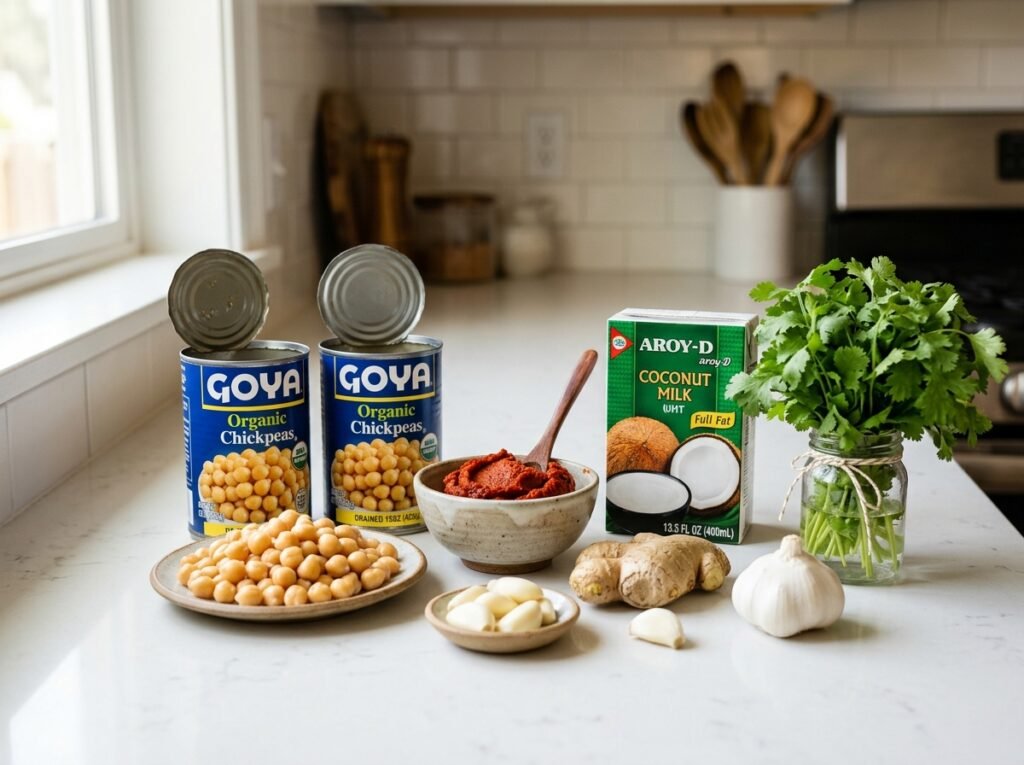
- Ingredient Notes
- Kitchen Equipment
- Preparation Information
- Step-by-Step Instructions
- Expert Tips for Maximum Flavor
- Common Mistakes to Avoid
- Recipe Variations
- What to Serve With This Recipe
- Make Ahead & Meal Prep Tips
- Storage & Reheating Instructions
- Nutritional Information
- Troubleshooting Guide
- Frequently Asked Questions
- Final Thoughts
Introduction
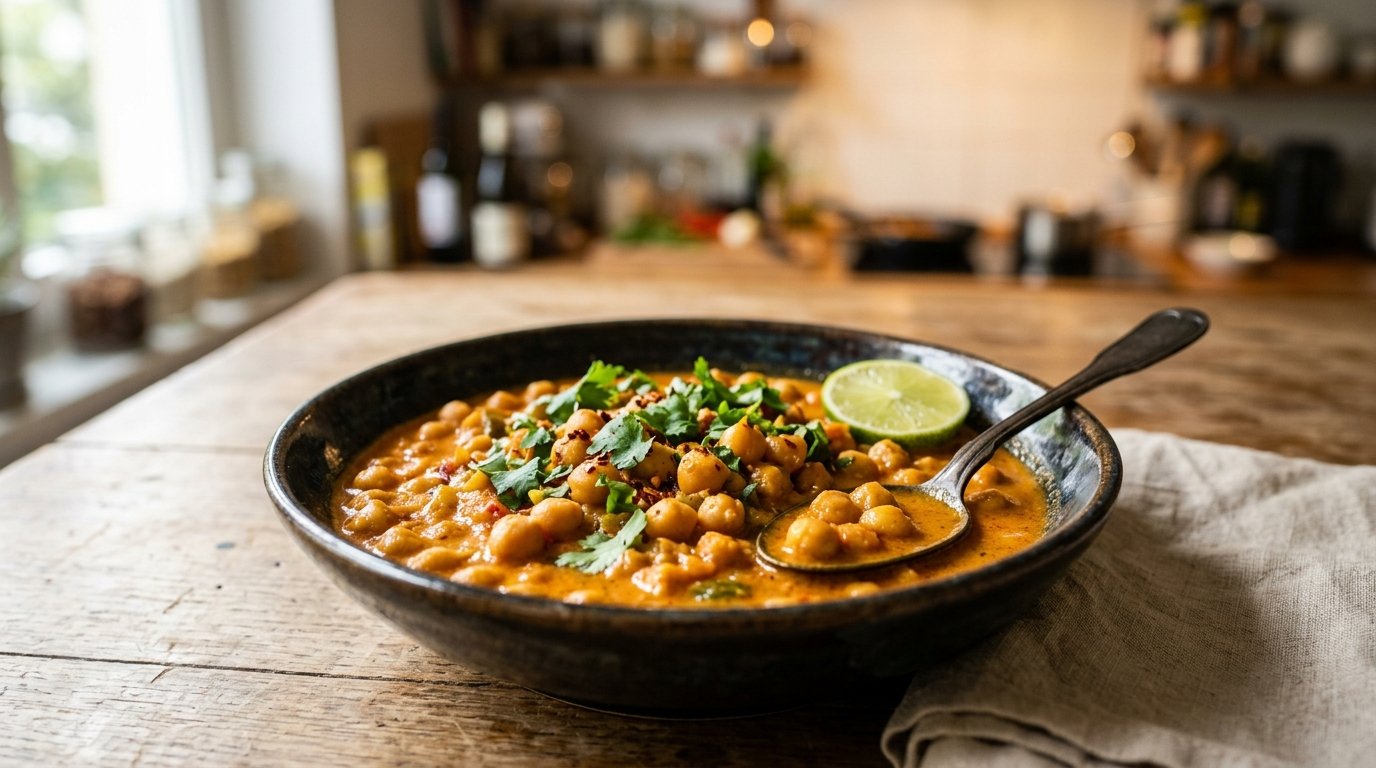
There are nights when the gap between “I need to eat” and “I have zero energy to cook” feels impossible to bridge. On those evenings, this Creamy Red Curry Chickpeas recipe is nothing short of a lifesaver. It is one of my most viral easy recipes for a reason: it delivers restaurant-quality depth of flavor in the time it takes to boil rice, requiring minimal chopping and even less cleanup.
This dish transforms humble pantry staples—canned chickpeas, coconut milk, and red curry paste—into a luxurious, velvety stew that feels indulgent rather than utilitarian. The secret lies in how we build the base. By blooming the curry paste in oil with garlic before adding liquids, we unlock essential oils and deepen the flavor profile instantly. Paired with fresh spinach that wilts into the sauce in seconds, this meal hits every note: spicy, savory, creamy, and fresh. Whether you are a busy parent, a student on a budget, or just someone who craves comfort without the chore, this Creamy Red Curry Chickpeas proves that low-effort cooking doesn’t mean compromising on taste.
Why This Recipe Works
The success of this Creamy Red Curry Chickpeas relies on three culinary principles: fat solubility, emulsification, and texture contrast. Red curry paste is an oil-soluble spice blend containing chilies, lemongrass, galangal, and shrimp paste (or soy for vegan versions). When fried directly in oil, these compounds release their full aromatic potential—a process called “blooming.” If you were to simply dump the paste into boiling water or coconut milk, the flavors would remain muted and raw-tasting. Frying it first creates a complex, toasted foundation that defines the dish.
Coconut milk acts as both the liquid and the fat source, creating a natural emulsion with the curry oil. The proteins and fats in the milk coat the tongue, carrying the heat of the chilies smoothly rather than sharply. This creates the signature “creamy” mouthfeel that makes the dish satisfying despite being plant-based. The starch from the chickpeas further thickens the sauce slightly as it simmers, giving it body without needing flour or cornstarch.
Finally, the addition of fresh spinach at the very end is crucial. Spinach contains high water content and delicate cell structures. Adding it early would result in slimy, gray greens that leach excess water into your sauce. By stirring it in during the last minute of cooking, it retains its vibrant green color and bright, vegetal freshness, providing a necessary textural and flavor counterpoint to the rich, heavy curry base.
Why You’ll Love This Creamy Red Curry Chickpeas
- Pantry Hero: Uses shelf-stable ingredients you likely already have, making it perfect for emergency dinners.
- Incredibly Fast: From stove to table in under 15 minutes, faster than delivery.
- Vegan & Gluten-Free Naturally: No substitutions needed; it’s inclusive by default.
- Budget Friendly: Canned beans and frozen or fresh spinach keep costs low without sacrificing nutrition.
- Flavor Bomb: Blooming the paste ensures deep, complex spice levels that taste like hours of simmering.
- One-Pan Wonder: Minimal cleanup means more time relaxing after dinner.
- Customizable Heat: Easily adjust spice levels by varying the amount of curry paste or adding chili flakes.
- Nutrient Dense: Packed with plant protein, fiber, iron, and healthy fats from coconut.
Ingredient Notes
Red Curry Paste
- Purpose: The primary flavor driver. Provides heat, salt, umami, and aromatic complexity (lemongrass, galangal, kaffir lime).
- Substitutions: Green curry paste (herbaceous/milder), Massaman paste (sweeter/nuttier), or homemade paste. Yellow curry works but is milder.
- Buying Tips: Look for brands stored in jars near Asian sauces, not dried spice aisles. Mae Ploy or Maesri are authentic, potent choices. Check labels for shrimp paste if strictly vegan.
- Storage Tips: Refrigerate after opening. Freeze leftover paste in ice cube trays for portioned future use. Lasts months refrigerated due to oil/salt content.
Coconut Milk (Full Fat)
- Purpose: Creates the creamy sauce body and balances spice with richness.
- Substitutions: Light coconut milk (thinner/less rich), coconut cream (very thick/rich), or oat milk + 1 tbsp oil (dairy-free alternative, though less authentic).
- Buying Tips: Always choose “Full Fat” or “Classic” canned coconut milk. Carton drinking coconut milk lacks the fat needed for proper emulsion and will result in a watery sauce. Shake can well before opening.
- Storage Tips: Store unopened cans in cool pantry. Once opened, transfer unused portion to glass container; lasts 5 days fridge.
Chickpeas (Garbanzo Beans)
- Purpose: Primary protein and texture. Absorbs curry flavor while maintaining bite.
- Substitutions: Cannellini beans (creamier), lentils (cook faster/different texture), tofu cubes, or edamame.
- Buying Tips: Canned is fastest. If using dried, soak overnight and pressure cook first. Rinse canned beans thoroughly to remove metallic aquafaba taste and excess sodium.
- Storage Tips: Unopened cans last years. Cooked chickpeas keep 4 days fridge or 3 months freezer.
Fresh Spinach
- Purpose: Adds color, iron, and fresh vegetal balance to rich sauce.
- Substitutions: Baby kale (heartier/longer cook), Swiss chard, bok choy, or frozen spinach (thawed/squeezed dry).
- Buying Tips: Baby spinach is tenderest and wilts instantly. Avoid mature spinach with tough stems unless chopped finely. Wash thoroughly to remove grit.
- Storage Tips: Store unwashed in crisper drawer with paper towel to absorb moisture. Use within 3-5 days. Wilting = discard.
Garlic & Oil
- Purpose: Garlic adds pungent aromatics; oil conducts heat for blooming paste.
- Substitutions: Shallots (sweeter), ginger (zesty), neutral oil (avocado/grapeseed) instead of coconut/vegetable.
- Buying Tips: Fresh garlic preferred over jarred/minced for superior flavor. Firm bulbs without sprouts.
- Storage Tips: Garlic keeps months in cool dark place. Oil indefinitely.
Kitchen Equipment
- Large Skillet or Sauté Pan: Wide surface area allows even frying of paste and quick wilting of spinach. Stainless steel or non-stick both work.
- Wooden Spoon or Spatula: For stirring paste without scratching pan and scraping up flavorful fond.
- Can Opener: Essential for chickpeas and coconut milk.
- Measuring Spoons: Precision matters with potent curry paste.
- Knife & Cutting Board: For mincing garlic and roughly chopping spinach if leaves are large.
- Ladle: For serving sauce over rice neatly.
- Rice Cooker or Pot: For preparing the accompanying grain.
Preparation Information
- Prep Time: 5 Minutes
- Cook Time: 10 Minutes
- Total Time: 15 Minutes
- Servings: 2–3
Step-by-Step Instructions
Building the Aromatic Base
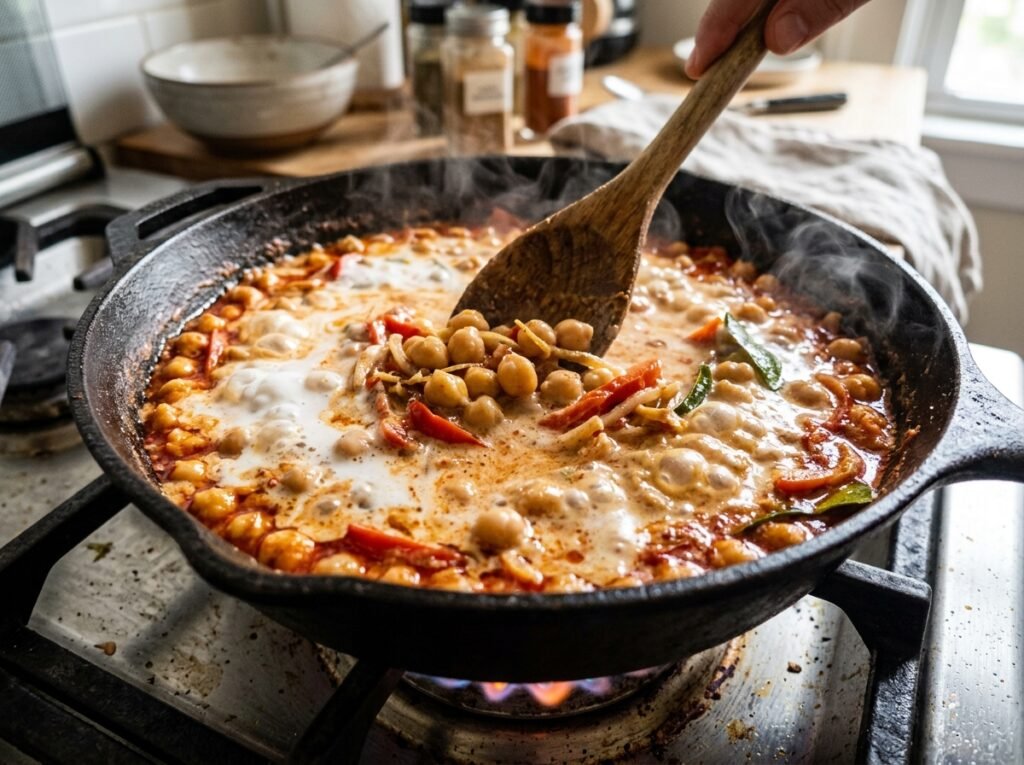
Heat 1 tablespoon of oil in a large skillet over medium heat. Add 2 cloves of minced garlic and sauté for 30 seconds until fragrant but not browned. Immediately add 2–3 tablespoons of red curry paste. Stir constantly, pressing the paste into the pan, for 1–2 minutes until it darkens slightly, becomes glossy, and smells intensely aromatic. Why it matters: This “blooming” step is non-negotiable. Raw curry paste tastes metallic and one-dimensional. Frying caramelizes sugars, releases volatile oils, and integrates the garlic flavor into the spice base. The color change from dull red to deep brick-red signals readiness. Visual Cue: Paste should look shiny/oily, not dry or matte. Small bubbles form around edges. Color deepens noticeably. Aroma Cue: Sharp, raw garlic smell transitions to warm, toasted spice fragrance. No burning scent. Common Mistake: Burning the garlic before adding paste. Garlic burns in seconds at medium-high heat. Add paste immediately after garlic softens. Pro Tip: If paste sticks excessively, add a splash of coconut milk to deglaze and incorporate stuck bits. Don’t let it scorch.
Creating the Coconut Sauce
Pour in one 13.5oz can of full-fat coconut milk. Whisk or stir vigorously to fully dissolve the curry paste into the milk. Bring to a gentle simmer (small bubbles breaking surface), then reduce heat to medium-low. Let simmer uncovered for 2–3 minutes to thicken slightly and meld flavors. Why it matters: Vigorous mixing prevents oily separation and ensures uniform spice distribution. Simmering reduces water content slightly, concentrating flavor and improving sauce consistency. High heat can cause coconut milk to split curdle. Texture Cue: Sauce should coat back of spoon lightly. Not watery, not gloopy. Smooth and homogenous. Color Cue: Uniform orange-red hue. No streaks of white milk or dark paste clumps. Chef Tip: Taste now! Adjust seasoning. Need more heat? Add extra paste. Too salty? Splash of lime juice or sugar. Balance before adding beans.
Simmering Chickpeas and Greens
Add two 15oz cans of rinsed chickpeas to the simmering sauce. Stir to coat evenly. Simmer for 3–4 minutes to heat through and allow beans to absorb some sauce. Turn off heat. Immediately stir in 3 cups of fresh baby spinach. Cover pan for 1 minute, then uncover and stir gently until spinach is just wilted and vibrant green. Why it matters: Chickpeas are already cooked; they just need heating and flavor absorption. Overcooking makes them mushy. Adding spinach OFF heat prevents overcooking. Residual heat wilts it perfectly while preserving nutrients and color. Covering traps steam for even wilting. Visual Cue: Spinach volume reduces by ~70%. Color remains bright emerald, not olive drab. Chickpeas look coated/glossy. Texture Cue: Spinach tender but not slimy. Chickpeas intact, not splitting. Common Mistake: Boiling spinach. Results in bitter, stringy, discolored greens. Always add at end, off heat.
Serving and Garnishing
Divide fluffy white rice among bowls. Ladle generous portions of curry over rice. Top with chili crisp, fried shallots, fresh cilantro, or lime wedges as desired. Serve immediately while hot. Why it matters: Rice acts as neutral canvas balancing intense curry. Hot serving temperature is critical for aroma and mouthfeel. Garnishes add texture contrast (crunch) and fresh acidity (lime/herbs) that elevate the dish. Visual Cue: Vibrant orange sauce contrasting with white rice and green garnish. Steam rising. Plating Tip: Wipe bowl rims clean. Drizzle chili crisp artistically. Fresh herbs added last second prevent wilting from heat.
Expert Tips for Maximum Flavor
- Taste Your Paste First: Brands vary wildly in salt/spice intensity. Taste a tiny bit raw (if safe) or cooked in oil to gauge potency. Adjust quantity accordingly. Some pastes are 3x hotter than others.
- Rinse Chickpeas Thoroughly: Aquafaba (bean liquid) is starchy and can make sauce gummy or impart bean-water taste. Rinsing removes this and excess sodium.
- Don’t Skip the Simmer: Those 2-3 minutes after adding coconut milk are when magic happens. Flavors marry, sauce thickens naturally. Rushing this step yields thin, disjointed sauce.
- Use Full-Fat Coconut Milk Religiously: Light/coconut beverage versions lack emulsifying fats. Sauce will be watery and lack luxurious mouthfeel. Worth the calories for texture.
- Finish with Acid: A squeeze of fresh lime juice right before serving brightens all flavors dramatically. Heat dulls perception; acid restores vibrancy. Add incrementally.
- Toast Your Rice: If making rice separately, toast grains in dry pan 2 mins before adding water. Adds nutty depth that complements curry beautifully.
- Reserve Bean Liquid (Optional): If sauce gets too thick during simmer, add reserved chickpea liquid (aquafaba) instead of water. Adds body without diluting flavor.
Common Mistakes to Avoid
- Not Blooming the Paste: Dumping paste directly into liquid = raw, harsh flavor. ALWAYS fry in oil first. Non-negotiable step.
- Overcooking Spinach: Turns gray, slimy, bitter. Add OFF heat, cover briefly, stir. Should take <60 seconds total.
- Using Low-Fat Coconut Milk: Results in watery, bland sauce. Fat carries flavor and creates creaminess. No substitute replicates this.
- Skipping the Rinse: Unrinsed chickpeas make sauce cloudy, overly salty, and beany-tasting. Rinse until water runs clear.
- Boiling Coconut Milk: High heat causes splitting/curdling. Maintain gentle simmer only. Stir frequently.
- Underseasoning: Curry paste varies. Always taste and adjust BEFORE serving. May need extra salt, lime, or sugar depending on brand.
- Crowding the Pan: Too much volume prevents proper evaporation/thickening. Use appropriately sized pan. Sauce should reduce, not stew.
Recipe Variations
- Spicy Kick: Add 1 tsp chili flakes or extra tbsp curry paste. Finish with chili oil or fresh bird’s eye chilies. Sriracha swirl on top.
- Vegetarian/Vegan Boost: Already vegan! Add tofu cubes (pan-fried first), tempeh, or seitan for extra protein. Mushrooms add umami depth.
- Chicken Version: Add diced chicken breast/thigh with garlic. Cook through before adding paste. Proceed as usual. Increases protein significantly.
- Seafood Twist: Add shrimp or scallops in last 3 minutes of simmer. Delicate seafood cooks fast. Pairs beautifully with red curry.
- Extra Cheesy (Unconventional): Stir in ¼ cup nutritional yeast or vegan parmesan for cheesy umami. Surprisingly good with coconut curry.
- Healthy/Low-Calorie: Use light coconut milk + 1 tbsp cashew butter for creaminess. Double spinach, halve chickpeas. Serve over cauliflower rice.
- Low-Carb/Keto: Omit rice. Serve over zucchini noodles, shirataki noodles, or roasted broccoli. Thicken sauce with xanthan gum if needed.
- High-Protein Power: Add edamame, hemp seeds, or lentils alongside chickpeas. Use coconut cream for richer protein/fat profile.
- Sweet Potato Addition: Add cubed sweet potato with chickpeas. Simmer 5 extra mins until tender. Natural sweetness balances spice beautifully.
- Peanut Butter Twist: Stir in 2 tbsp peanut butter with coconut milk. Creates satay-like richness. Garnish with crushed peanuts.
What to Serve With This Recipe
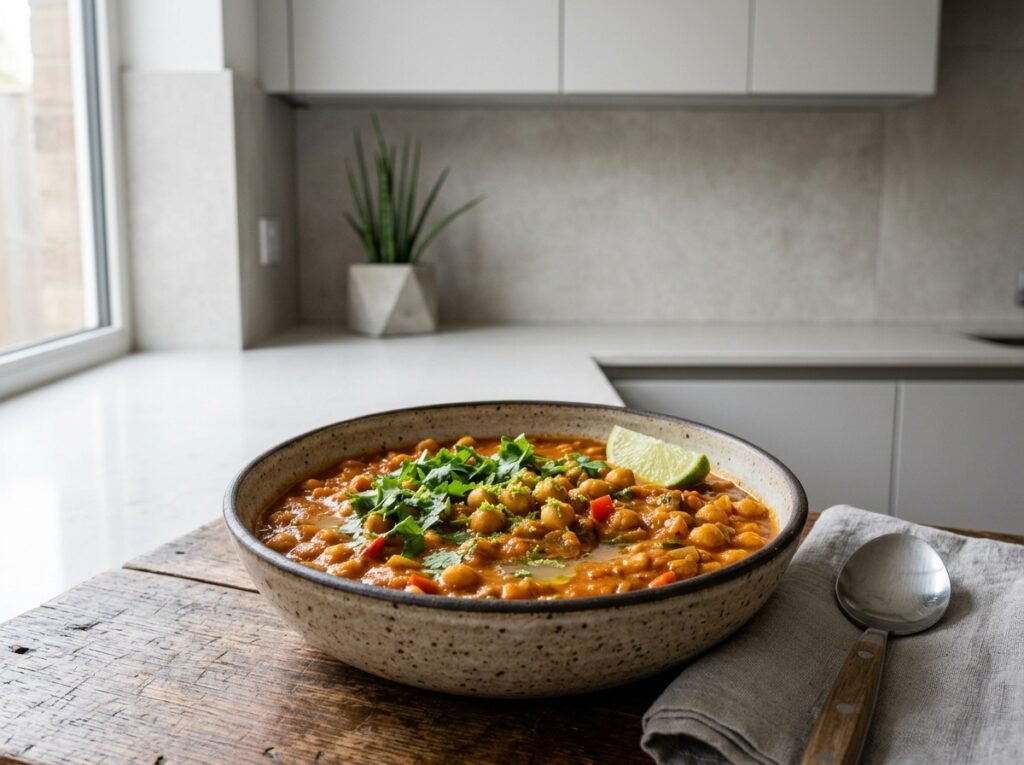
- Jasmine Rice: Classic pairing. Fragrant, fluffy grains soak up sauce perfectly. Basmati also excellent.
- Naan Bread or Roti: For scooping. Warm, chewy bread contrasts creamy curry. Garlic naan elevates further.
- Thai Cucumber Salad: Sweet-vinegar dressing cuts richness. Refreshing palate cleanser between bites.
- Mango Sticky Rice: Traditional dessert. Sweet mango balances spicy/savory main. Perfect ending.
- Iced Thai Tea: Sweet, creamy, spiced beverage complements curry heat. Cooling contrast.
- Steamed Bok Choy: Simple sesame-ginger dressed greens add crunch and freshness without competing.
- Pickled Red Onions: Quick-pickled onions add sharp acid crunch that cuts through coconut fat brilliantly.
- Coconut Water: Hydrating, subtly sweet. Cleanses palate naturally without overwhelming flavors.
Make Ahead & Meal Prep Tips
- Sauce Base Ahead: Fry garlic + paste, add coconut milk, simmer. Cool and store up to 3 days. Reheat, add chickpeas/spinach fresh. Saves active cook time to 5 mins.
- Chickpea Prep: Rinse and drain chickpeas ahead. Store in container 3 days. Eliminates prep step during cooking.
- Spinach Wash/Dry: Wash and spin-dry spinach ahead. Store in container with paper towel 2-3 days. Ready to toss in instantly.
- Rice Batch Cook: Make large batch rice. Portion and freeze. Reheat in microwave with splash of water. Perfect texture restored.
- Freeze Sauce Only: Freeze curry base (without spinach/chickpeas) up to 3 months. Thaw overnight. Add fresh chickpeas/spinach when reheating. Spinach doesn’t freeze well in sauce.
Storage & Reheating Instructions
Refrigerator
Store cooled curry in airtight container up to 4 days. Rice separately up to 5 days. Note: Spinach may darken slightly but remains safe/tasty. Sauce thickens when cold; normal.
Freezer
Freeze curry (without spinach) up to 3 months. Thaw in fridge overnight. Add fresh spinach when reheating. Frozen spinach becomes mushy; always use fresh for reheated portions. Rice freezes well 3 months.
Reheating Methods
- Stovetop (Best): Medium-low heat, splash of water/coconut milk to loosen. Stir frequently 3-5 mins. Restores texture/flavor perfectly. Add fresh spinach if needed.
- Microwave: Covered, 1-min bursts, stir between. Add splash liquid. Risk of uneven heating/splattering. Convenient but inferior texture.
- Oven: 350°F covered dish 10-15 mins. Good for large batches. Slower but even heating. Add liquid to prevent drying.
- Air Fryer: Not recommended. Sauces splatter/dry out. Stovetop/microwave superior for liquid dishes.
Nutritional Information
Estimates per serving (based on can coconut milk, ½ can chickpeas, 1 cup spinach, ¾ cup rice)
- Calories: 480 kcal
- Protein: 14g
- Carbohydrates: 58g
- Fat: 22g
- Fiber: 10g
- Sugar: 4g
- Sodium: 680mg
Note: Values vary based on coconut milk brand, curry paste sodium, and rice portion. High fiber/protein makes this exceptionally satiating.
Troubleshooting Guide
| Problem | Cause | Solution |
|---|---|---|
| Sauce Too Thin/Watery | Insufficient reduction or light coconut milk. | Simmer uncovered 5+ mins to reduce. Mix 1 tsp cornstarch + 1 tbsp water, stir in, simmer 1 min. Next time: use full-fat milk. |
| Sauce Too Thick/Gloopy | Over-reduced or too much starch from beans. | Stir in splash coconut milk/water/broth. Heat gently to reincorporate. Avoid cornstarch next time. |
| Curry Tastes Raw/Metallic | Paste not bloomed sufficiently. | Return to pan, add 1 tsp oil, fry paste 2 more mins. Deglaze with splash coconut milk. Never skip blooming step. |
| Spinach Slimy/Gray | Overcooked or boiled. | Cannot fix texture. Next time: add OFF heat, cover 1 min max. Use baby spinach. |
| Too Salty | Salty paste + unrinsed beans. | Add unsalted coconut milk/water to dilute. Squeeze lime juice to balance perception. Add pinch sugar. |
| Too Spicy | Overused paste or hot variety. | Add more coconut milk/cream. Stir in 1 tbsp peanut butter or yogurt (if not vegan). Serve with extra rice/bread. |
| Coconut Milk Split/Curdled | Boiled too hard or acidic ingredient added early. | Remove from heat. Whisk vigorously. Blend immersion blender to re-emulsify. Next time: gentle simmer only. |
| Bland Flavor | Underseasoned or weak paste. | Add fish sauce/soy sauce (umami), lime juice (acid), palm sugar (sweetness). Taste-adjust incrementally. |
Frequently Asked Questions
1. Can I use green curry paste instead? Yes! Green curry is herbaceous, brighter, and often milder. Adjust quantity as green paste can be potent. Flavor profile shifts to more lemongrass/basil forward. Delicious variation.
2. Is this recipe naturally gluten-free? Yes, IF your curry paste is GF. Some brands contain wheat fillers. Always check label. Tamari instead of soy sauce if adding. Rice is naturally GF.
3. Can I make this without coconut milk? You can use oat milk + 2 tbsp cashew butter or tahini for creaminess. Flavor will differ significantly—less rich, more nutty. Coconut milk is ideal for authentic texture/flavor.
4. How do I reduce the sodium? Use low-sodium chickpeas (rinse thoroughly). Choose lower-sodium curry paste. Omit added salt. Increase lime juice/herbs to compensate flavor loss. Sodium primarily from paste/beans.
5. Can I use frozen spinach? Yes, but thaw completely and SQUEEZE DRY aggressively. Excess water ruins sauce consistency. Add at same stage as fresh. Texture softer but acceptable. Fresh preferred.
6. Why did my coconut milk separate/oil pool on top? Normal for full-fat coconut milk! Oil rises when heated. Simply stir vigorously to recombine. If excessive, blend briefly. Doesn’t affect flavor. Prevent by gentle simmer + frequent stirring.
7. Can I add other vegetables? Absolutely! Bell peppers, snap peas, broccoli florets, zucchini all work. Add harder veggies (peppers/broccoli) with chickpeas to soften. Soft veggies (zucchini/snap peas) with spinach at end.
8. Is shrimp paste in all red curry paste? No. Many brands offer vegan/shrimp-free versions. Check ingredient list carefully. Mae Ploy traditionally has shrimp; some Maesri varieties don’t. Vegan-certified pastes available.
9. How spicy is this typically? Depends entirely on paste brand/quantity. Start with 2 tbsp, taste, add more. Most commercial pastes are moderately hot. Control heat by adjusting paste amount, not adding water (dilutes flavor).
10. Can I double this recipe? Yes! Use larger pan. Cooking times remain similar. Ensure adequate space for simmering/reduction. Double garnishes/rice accordingly. Great for meal prep or families.
Final Thoughts
This Creamy Red Curry Chickpeas recipe embodies everything I love about modern home cooking: accessible ingredients, bold flavors, and respect for your time and energy. It proves that nourishing, satisfying meals don’t require elaborate techniques or expensive components—just smart method and quality staples. Whether you’re feeding yourself after a long day or sharing with loved ones, this dish delivers comfort and joy in equal measure.