
| Quick Recipe Summary | |
|---|---|
| Prep Time | 20 minutes (+ marinating) |
| Cook Time | 15 minutes |
| Total Time | 45 minutes |
| Servings | 4 |
| Cuisine | American |
| Course | Main Course / Appetizer |
| Difficulty | Easy |
| Calories | Approx. 480–550 per serving |
Table of Contents
- Why This Recipe Works
- Why You’ll Love These Hot Honey Chicken Tenders
- Ingredient Notes
- Kitchen Equipment
- Preparation Information
- Step-by-Step Instructions
- Expert Tips
- Common Mistakes
- Recipe Variations
- What to Serve With This Recipe
- Make-Ahead Tips
- Meal Prep Tips
- Storage Instructions
- Reheating Instructions
- Nutritional Information
- Troubleshooting Guide
- Frequently Asked Questions
- Final Thoughts
Introduction
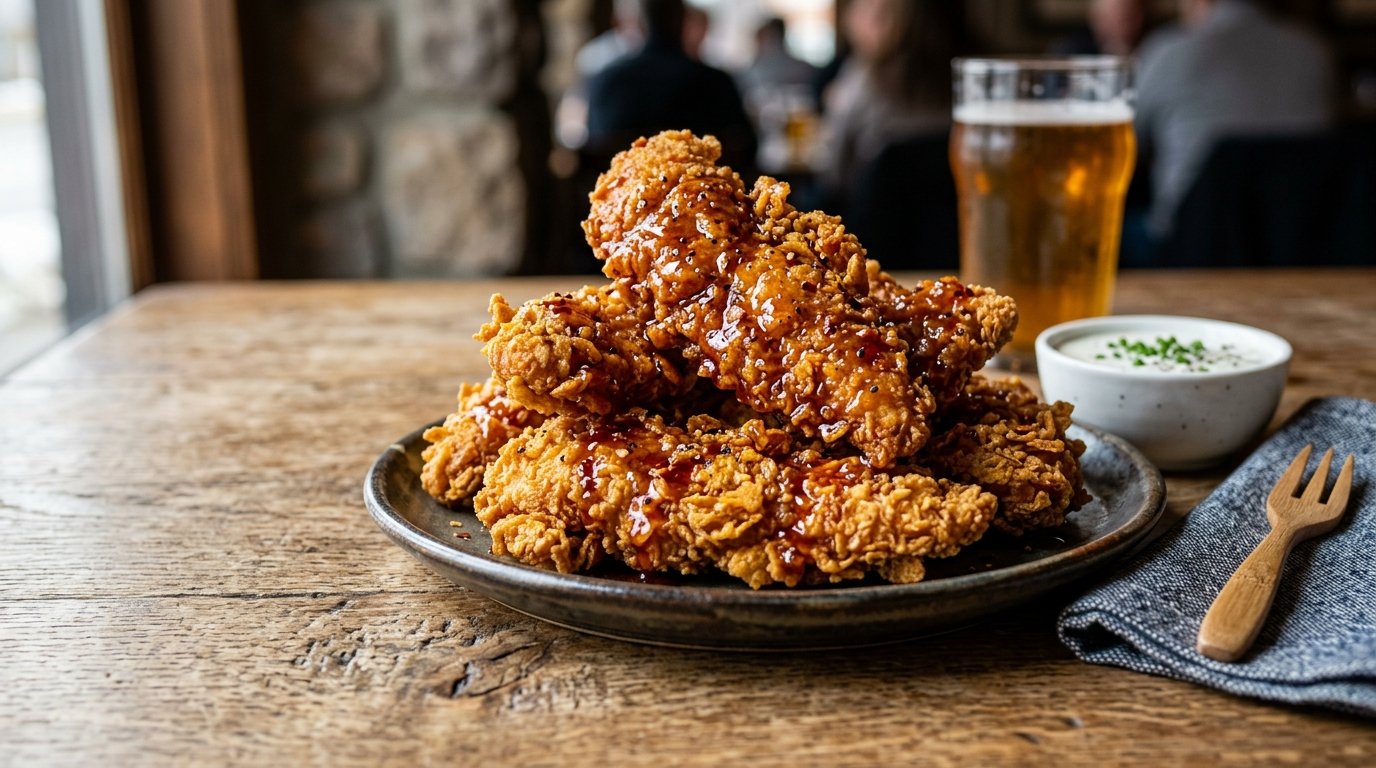
These hot honey chicken tenders deliver the ultimate combination of shatteringly crispy coating and sticky-sweet heat. Chicken strips are soaked in a seasoned buttermilk marinade, coated in a shaggy flour mixture that creates extra crunch, then fried until deep golden. A quick butter-and-hot-sauce glaze (the hot honey finish) is brushed on while the tenders are still hot so every ridge gets coated in glossy, spicy-sweet flavor.
If you have been searching for hot honey chicken tenders that stay crispy even after saucing, this method is the one. The secret lies in the clumpy flour coating and the timing of the glaze. Serve them with a cool herbed dipping sauce and watch them disappear.
Why This Recipe Works
The buttermilk marinade tenderizes the chicken and helps the coating stick. Adding a spoonful of the wet marinade into the seasoned flour creates irregular clumps that fry into a craggy, ultra-crispy crust. Frying at the right temperature sets the coating quickly so it stays crunchy. Brushing the hot honey glaze on after frying (instead of tossing) preserves that texture while still giving full flavor coverage. The result is chicken tenders that stay crisp longer than most sauced versions.
Why You’ll Love These Hot Honey Chicken Tenders
- Extremely crispy coating that holds up to the glaze
- Perfect balance of sweet heat from the hot honey finish
- Simple ingredients and straightforward steps
- Great for weeknight dinners or game-day spreads
- Customizable spice level
- Pairs beautifully with a cool creamy dip
- Looks and tastes restaurant-quality
Ingredient Notes
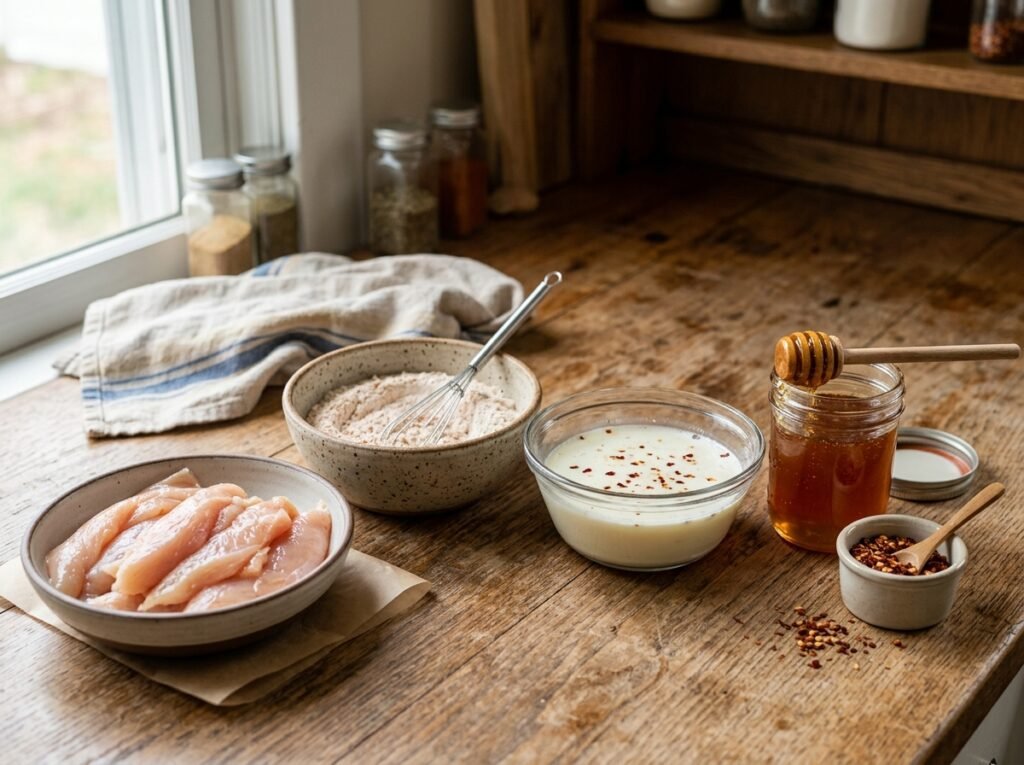
Chicken Tenders Boneless, skinless chicken tenderloins or breast cut into strips. Purpose: tender, quick-cooking protein. Substitutions: chicken breast cut into even strips. Buying tip: look for similar-sized pieces so they cook evenly. Storage: refrigerate and use within 1–2 days or freeze.
Buttermilk Creates a tangy marinade that tenderizes and helps the coating adhere. Purpose: moisture and flavor base. Substitutions: milk mixed with a teaspoon of lemon juice or vinegar. Storage: keep refrigerated.
Spice Blend Paprika, garlic powder, onion powder, salt, black pepper, and a touch of cayenne or chili powder. Purpose: seasons both the marinade and the flour for layered flavor. Adjust cayenne for heat preference.
All-Purpose Flour Forms the crispy coating. Purpose: creates the crunchy exterior. The key is creating clumps with a little marinade for extra texture.
Oil for Frying Neutral oil with a high smoke point (vegetable, canola, or peanut). Purpose: even, crisp frying.
Butter & Hot Sauce Melted together for the hot honey glaze. Purpose: glossy, spicy-sweet finish. Add honey to taste for classic hot-honey flavor. Buying tip: use a good-quality hot sauce you enjoy.
Fresh Herbs & Dipping Sauce Chopped parsley or dill for garnish; a creamy herbed sauce (ranch-style) for serving. Purpose: freshness and cooling contrast.
Kitchen Equipment
- Mixing bowls
- Tongs
- Whisk
- Large heavy skillet or deep fryer
- Wire rack or paper towels
- Small saucepan for the glaze
- Pastry brush
- Instant-read thermometer (helpful)
Preparation Information
Prep Time: 20 minutes (plus optional 30 minutes marinating) Cook Time: 15 minutes Total Time: 45 minutes Servings: 4
Step-by-Step Instructions
Marinate the Chicken
Place the chicken tenders in a bowl. Pour buttermilk over them until mostly covered. Add a portion of the spice blend and mix so every piece is coated. Let sit at least 15–20 minutes (or up to a few hours in the refrigerator).
Why it matters: the acid in buttermilk tenderizes the meat and gives the coating something to grip. Visual cue: the chicken looks evenly coated in a light beige marinade.
Prepare the Crispy Coating
In a shallow plate, mix flour with the remaining spices. The secret to extra-crispy chicken: spoon a little of the wet marinade into the flour and toss with a fork or fingers to create irregular clumps and shaggy bits.
Why it matters: those clumps fry into the craggy texture that stays crunchy. Visual cue: the flour should look rough and textured rather than fine and powdery.
Coat the Chicken
Working with one piece at a time, lift a tender from the marinade, let excess drip off, then press it firmly into the clumpy flour, turning and packing the coating on so it is fully covered in a thick, shaggy layer. Set aside on a plate while you finish the rest.
Why it matters: pressing (not just dredging) builds a substantial crust. Texture cue: the coated tenders should look rough and heavily covered.
Fry Until Golden
Heat 1–1½ inches of oil in a large heavy skillet to 350–365°F (175–185°C). Carefully add the coated tenders in batches without crowding. Fry 4–6 minutes, turning once, until deep golden brown and cooked through.
Visual cue: the coating turns a rich golden color with darker crispy ridges. Texture cue: the crust feels firm and crisp. Drain on a wire rack or paper towels neutral.
Make the Hot Honey Glaze
In a small pan, melt butter over medium heat. Stir in hot sauce (and honey if using) until smooth and glossy. Taste and adjust heat or sweetness.
Why it matters: the warm glaze clings better and soaks slightly into the hot crust without making it soggy.
Glaze and Serve
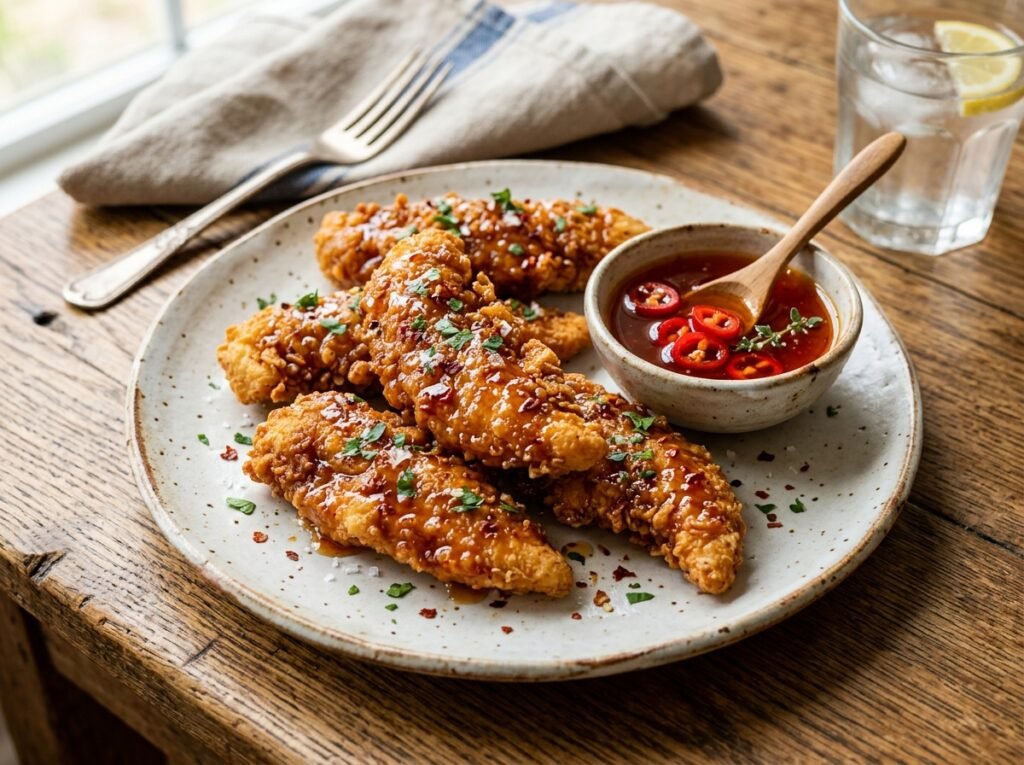
Brush the hot glaze generously over the fried tenders while they are still warm. Sprinkle with chopped fresh herbs. Serve immediately with a creamy herbed dipping sauce on the side.
Visual cue: the tenders should look shiny and evenly coated. The contrast of the cool white sauce against the glossy red-orange glaze is part of the appeal.
Expert Tips
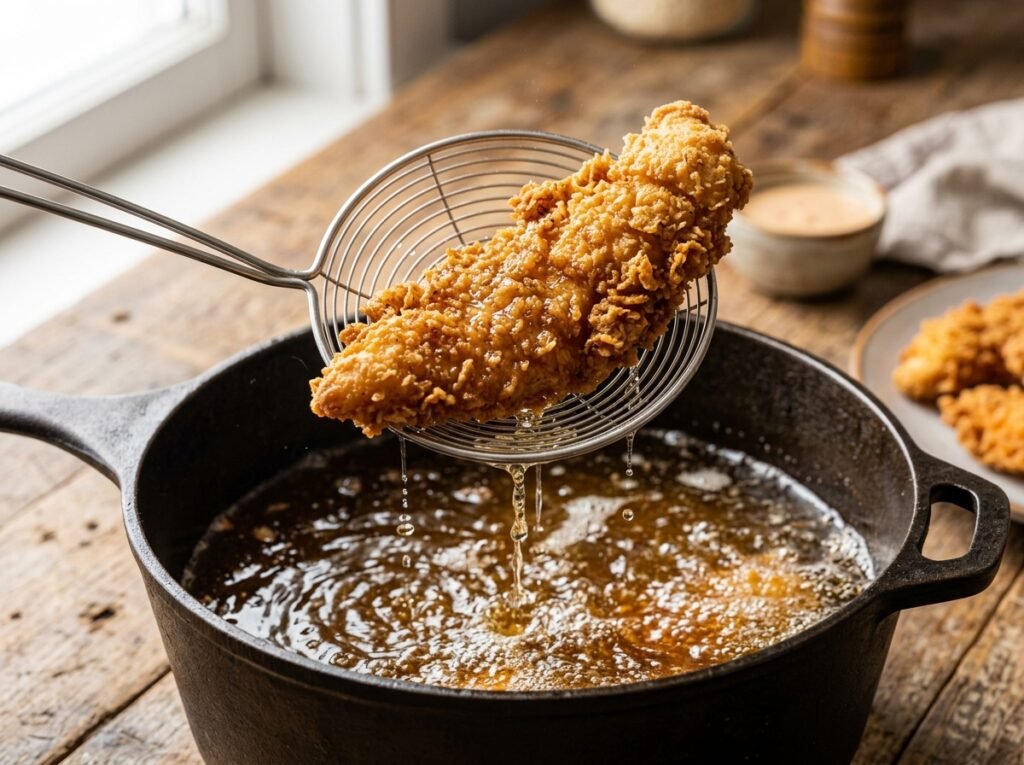
- Keep the oil temperature steady; too low and the coating absorbs oil, too high and it browns before the chicken cooks.
- Do not skip the clumping step in the flour — it is the difference between ordinary and extra-crispy.
- Fry in batches so the oil temperature does not drop.
- Glaze only when ready to serve for maximum crunch.
- An instant-read thermometer helps confirm the chicken reaches 165°F (74°C) internally.
Common Mistakes
Coating falls off Cause: chicken too wet or flour not pressed on firmly. Prevention: let excess marinade drip off and pack the flour on well. Fix: double-coat if needed by dipping back in marinade and flour once more.
Soggy tenders after saucing Cause: glazing too early or using too much glaze. Prevention: brush lightly and serve right away. Fix: hold glaze until the last minute.
Uneven browning Cause: overcrowded pan or inconsistent oil temperature. Prevention: fry in small batches and monitor heat. Fix: adjust burner as needed between batches.
Bland flavor Cause: under-seasoned flour or marinade. Prevention: season both components generously. Fix: sprinkle a little extra salt or spice on the finished tenders.
Recipe Variations
- Spicier: Increase the cayenne in the flour and use a hotter sauce in the glaze.
- Milder: Reduce or omit the cayenne and use a milder hot sauce.
- Extra Hot Honey: Add more honey to the glaze for a sweeter profile.
- Air-Fryer Version: Spray coated tenders well with oil and air-fry at 380°F (193°C), flipping once, then glaze.
- Gluten-Free: Use a gluten-free flour blend and check that your hot sauce is gluten-free.
- Boneless Wings Style: Cut the chicken into smaller chunks for bite-size pieces.
What to Serve With This Recipe
These hot honey chicken tenders pair perfectly with classic sides: crispy fries, coleslaw, pickle spears, or a simple green salad. The cool creamy dip balances the heat. For a full meal, add corn on the cob or mac and cheese. Cold lemonade, iced tea, or a crisp beer works well as a drink.
Make-Ahead Tips
Marinate the chicken up to 8 hours in advance. Mix the dry flour and spices ahead, but create the clumps just before coating. The glaze can be made several hours ahead and gently rewarmed.
Meal Prep Tips
Fry the tenders, cool completely, and store separately from the glaze. Reheat and glaze just before eating for best texture.
Storage Instructions
Store leftover tenders in an airtight container in the refrigerator for up to 3 days. Keep any remaining glaze separate. Freezing is possible but the coating softens; reheat in a hot oven or air fryer to restore crispness.
Reheating Instructions
- Oven or toaster oven: 375°F (190°C) for 8–12 minutes until hot and crisp.
- Air fryer: 360°F (182°C) for 4–6 minutes.
- Skillet: Warm in a dry pan over medium heat.
- Avoid the microwave if you want to keep the coating crispy.
Nutritional Information
Approximate values per serving (based on 4 servings): Calories: 520 Protein: 34 g Carbohydrates: 32 g Fat: 28 g Fiber: 1 g Sugar: 8 g Sodium: 890 mg
Values vary depending on exact oil absorption, honey amount, and dipping sauce.
Troubleshooting Guide
- Chicken undercooked: Cut larger tenders in half or finish in a 350°F oven after frying.
- Coating too pale: Oil was not hot enough; increase heat slightly and fry a bit longer.
- Glaze too thin: Simmer a minute longer or add a small amount of honey to thicken.
- Too spicy: Serve with extra creamy dip and a milder glaze next time.
Frequently Asked Questions
Can I bake these instead of frying? Yes. Place coated tenders on a wire rack over a baking sheet, spray with oil, and bake at 425°F (220°C) until cooked through and browned, then glaze.
How do I keep them crispy after glazing? Brush on the glaze just before serving and avoid covering them.
What hot sauce works best? Any cayenne-based hot sauce you like. Adjust the amount to control heat.
Can I use chicken breast instead of tenders? Yes. Slice into even strips about 1-inch wide so they cook at the same rate.
Is the clumping step really necessary? It makes a noticeable difference in crunch. The shaggy texture is what sets these apart.
How long can I marinate the chicken? From 20 minutes up to overnight in the refrigerator. Longer marinating improves tenderness.
Can I make the glaze without butter? Butter adds richness and helps the glaze cling, but you can use a little oil if needed.
What is the best dipping sauce? A cool, herbed ranch or blue-cheese style sauce balances the sweet heat perfectly.
Final Thoughts
These hot honey chicken tenders prove that crispy and saucy can coexist. The shaggy, well-seasoned coating stays crunchy under the glossy hot honey glaze, and the cool creamy dip makes every bite balanced. Whether you are cooking for a weeknight dinner or a crowd, the method is reliable and the results are impressive.