
| Quick Recipe Summary | |
|---|---|
| Prep Time | 15 minutes |
| Cook Time | 25 minutes |
| Total Time | 40 minutes |
| Servings | 4 |
| Cuisine | Italian-inspired |
| Course | Main Course |
| Difficulty | Easy |
| Calories | Approx. 520–580 per serving |
Table of Contents
- Why This Recipe Works
- Why You’ll Love This One-Pan Skillet Lasagna
- Ingredient Notes
- Kitchen Equipment
- Preparation Information
- Step-by-Step Instructions
- Expert Tips
- Common Mistakes
- Recipe Variations
- What to Serve With This Recipe
- Make-Ahead Tips
- Meal Prep Tips
- Storage Instructions
- Reheating Instructions
- Nutritional Information
- Troubleshooting Guide
- Frequently Asked Questions
- Final Thoughts
Introduction
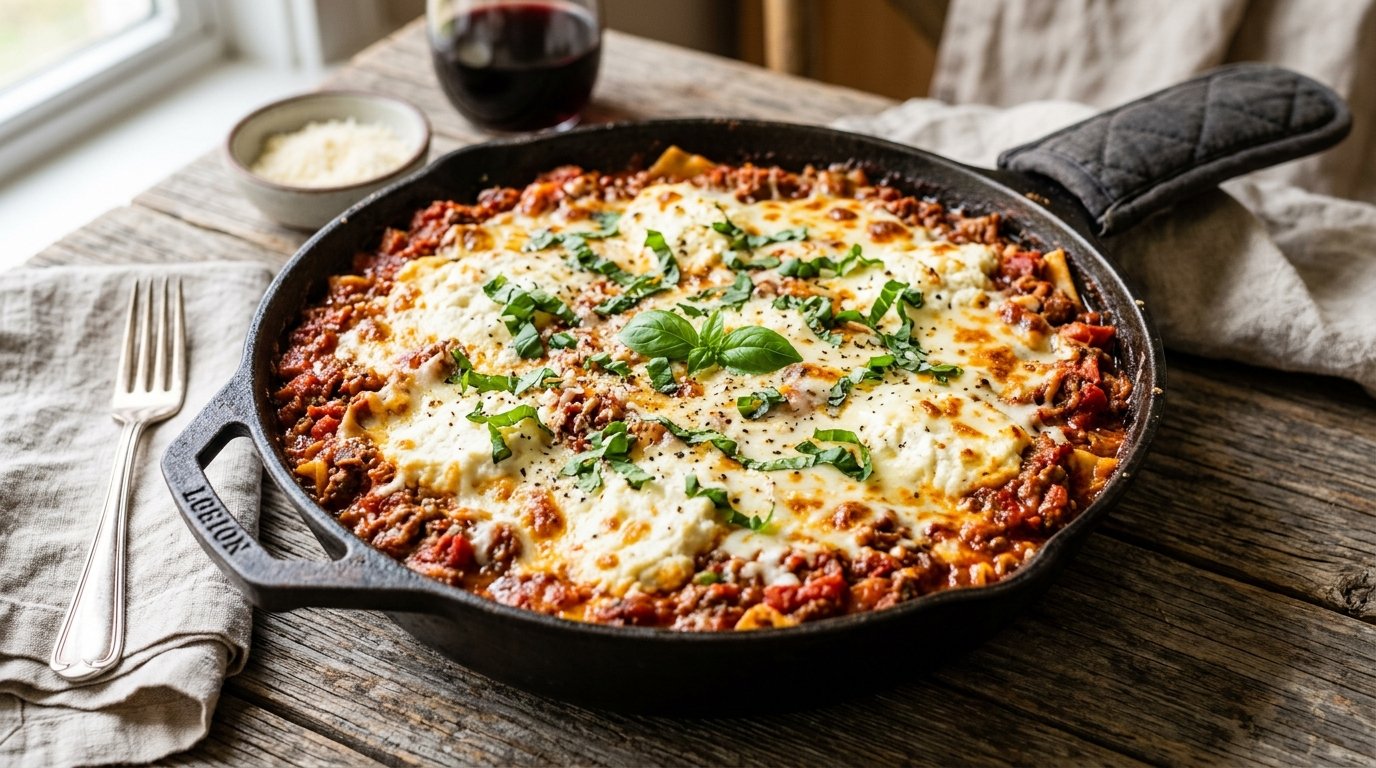
This one-pan skillet lasagna delivers all the comforting layers of classic lasagna without the baking dish, long oven time, or pile of dirty pots. Seasoned ground meat, a simple tomato sauce built with onion and carrot, tender lasagna sheets, and plenty of melted mozzarella come together in a single skillet on the stovetop. The result is a bubbling, cheesy, saucy dinner that is ready in about 40 minutes and perfect for busy weeknights when you still want something satisfying.
If you have been looking for a true one-pan lasagna that actually tastes like the real thing, this method is the answer. Everything cooks together so the pasta absorbs the rich meat sauce while the cheese melts into stretchy, golden layers on top.
Why This Recipe Works
Browning the meat first builds deep flavor in the same pan that will later hold the layers. Softening onion and carrot in the meat drippings creates a natural sweetness and body for the sauce. Deglazing and adding tomato sauce turns those browned bits into a flavorful base. Breaking the lasagna sheets into the skillet and letting them simmer directly in the sauce means they cook evenly while soaking up seasoning. Finishing with mozzarella and a quick low-heat covered cook melts the cheese and finishes the pasta without drying anything out. The single-pan approach concentrates flavor and keeps cleanup minimal.
Why You’ll Love This One-Pan Skillet Lasagna
- Only one skillet from start to finish
- Ready in under 45 minutes
- Classic lasagna flavor with far less effort
- Stretchy melted cheese and rich meat sauce
- Easy to customize with what you have on hand
- Perfect for weeknights or casual dinners
- Minimal dishes to wash
Ingredient Notes
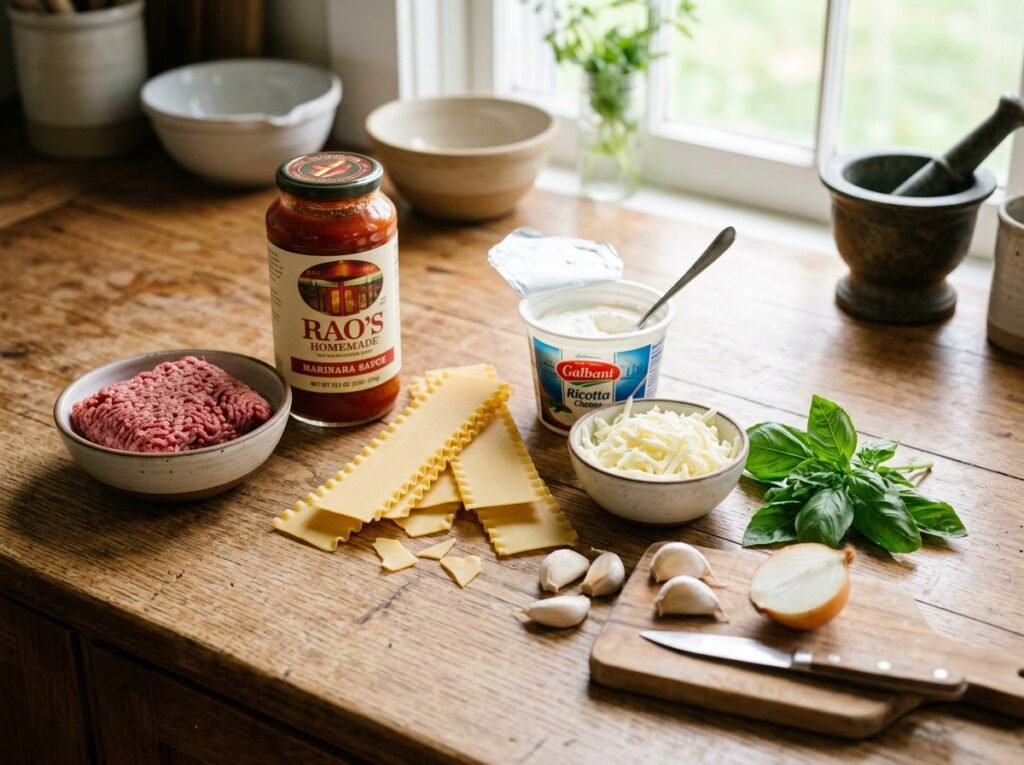
Ground Meat Beef or a beef-pork mix works best. Purpose: provides savory depth and protein. Substitutions: ground turkey or chicken for a lighter version. Buying tip: choose 80/20 for good flavor without excess grease. Storage: refrigerate and use within 1–2 days or freeze.
Onion and Carrot Finely chopped onion and grated or finely diced carrot. Purpose: build natural sweetness and body in the sauce. Substitutions: shallot or a pinch of sugar if needed. Storage: keep whole vegetables in the refrigerator.
Garlic Fresh minced or grated. Purpose: aromatic backbone. Substitutions: garlic powder in a pinch.
Tomato Sauce Smooth passata or canned tomato sauce. Purpose: creates the classic red sauce base. Buying tip: choose a good-quality plain sauce without added sugar if possible.
Lasagna Sheets Regular dry lasagna noodles broken to fit the pan, or no-boil sheets. Purpose: the pasta layers. Tip: break them into manageable pieces so they fit and cook evenly in the skillet.
Mozzarella Sliced or shredded low-moisture mozzarella. Purpose: the stretchy, melty cheese layers and topping. Buying tip: fresh mozzarella can be used but drain well; low-moisture melts more cleanly.
White Sauce or Cream A simple drizzle of cream, béchamel, or even plain heavy cream. Purpose: adds richness and helps create creamy pockets between layers.
Seasonings Salt, black pepper, and cumin. Purpose: season the meat and sauce. Cumin adds a subtle warm note that complements the tomato.
Oil Neutral oil or olive oil for browning. Purpose: prevents sticking and helps develop color on the meat.
Kitchen Equipment
- Large cast-iron or heavy non-stick skillet with lid
- Wooden spoon or spatula
- Mixing bowl for seasoning the meat
- Knife and cutting board
- Measuring spoons
Preparation Information
Prep Time: 15 minutes Cook Time: 25 minutes Total Time: 40 minutes Servings: 4
Step-by-Step Instructions
Season the Meat
Place the ground meat in a bowl. Season generously with salt, black pepper, and a pinch of cumin. Mix well with your hands or a fork until the spices are evenly distributed.
Why it matters: seasoning the meat before cooking ensures every bite is flavorful rather than relying only on the sauce. Visual cue: the meat should look evenly speckled with the spices.
Brown the Meat
Heat a generous drizzle of oil in a large skillet over medium-high heat until shimmering. Add the seasoned meat and break it up with a spatula. Cook without stirring too often at first so it develops good color, then continue until no longer pink and nicely browned. Remove the meat to a bowl and set aside, leaving the flavorful drippings in the pan.
Why it matters: proper browning creates the fond that becomes the foundation of the sauce. Color cue: the meat should turn from pink to deep brown with some crispy edges. Aroma cue: rich, savory smell.
Build the Sauce Base
In the same skillet, add the chopped onion and grated or finely diced carrot. Season with a pinch of salt. Cook, stirring, until the vegetables soften and the onion becomes translucent, about 3–4 minutes. Add the minced garlic and cook just until fragrant, 30 seconds.
Why it matters: cooking the vegetables in the meat drippings captures every bit of flavor. Texture cue: onion softens and turns slightly golden; carrot loses its raw crunch.
Deglaze and Add Tomato
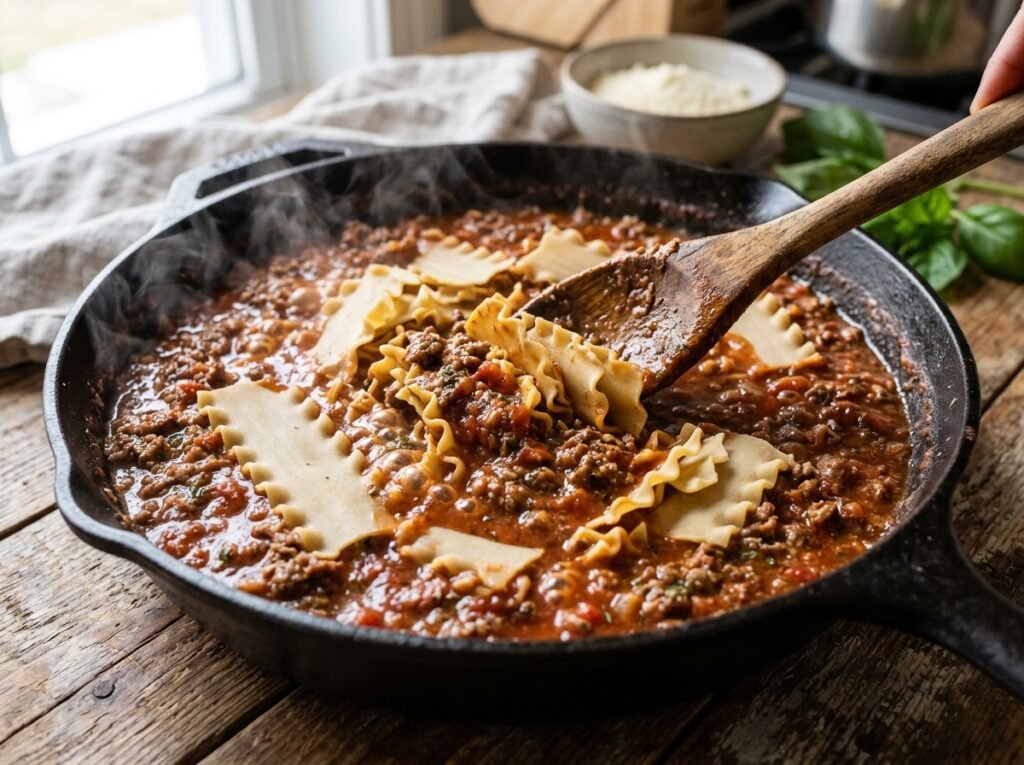
Pour in a splash of water to deglaze, scraping up any browned bits from the bottom of the pan. Stir in the tomato sauce and bring to a gentle simmer. Return the browned meat to the skillet and mix well. Taste and adjust seasoning. Reserve a portion of the sauce if you want cleaner layers later.
Why it matters: deglazing dissolves the flavorful browned bits into the sauce. Visual cue: the sauce should look rich, red, and slightly thickened.
Layer the Lasagna
Reduce heat to medium-low. Spread the meat sauce into an even layer. Arrange broken lasagna sheets over the sauce, overlapping slightly to cover. Spoon a little more sauce over the pasta, then add a layer of mozzarella slices. Repeat with another layer of sauce, pasta, and cheese if your pan allows. Finish with a generous amount of mozzarella on top.
Why it matters: layering ensures every bite has pasta, sauce, and cheese. Tip: break the sheets so they fit snugly without too much overhang.
Add Cream and Finish Cooking
Drizzle a spiral of cream or white sauce over the top layer. Season with a little black pepper. Cover the skillet and cook on low heat for about 15 minutes, until the pasta is tender and the cheese is fully melted and bubbly.
Why it matters: the gentle covered heat steams the pasta while melting the cheese without burning the bottom. Visual cue: cheese becomes glossy and stretchy; pasta softens and absorbs sauce.
Rest and Serve
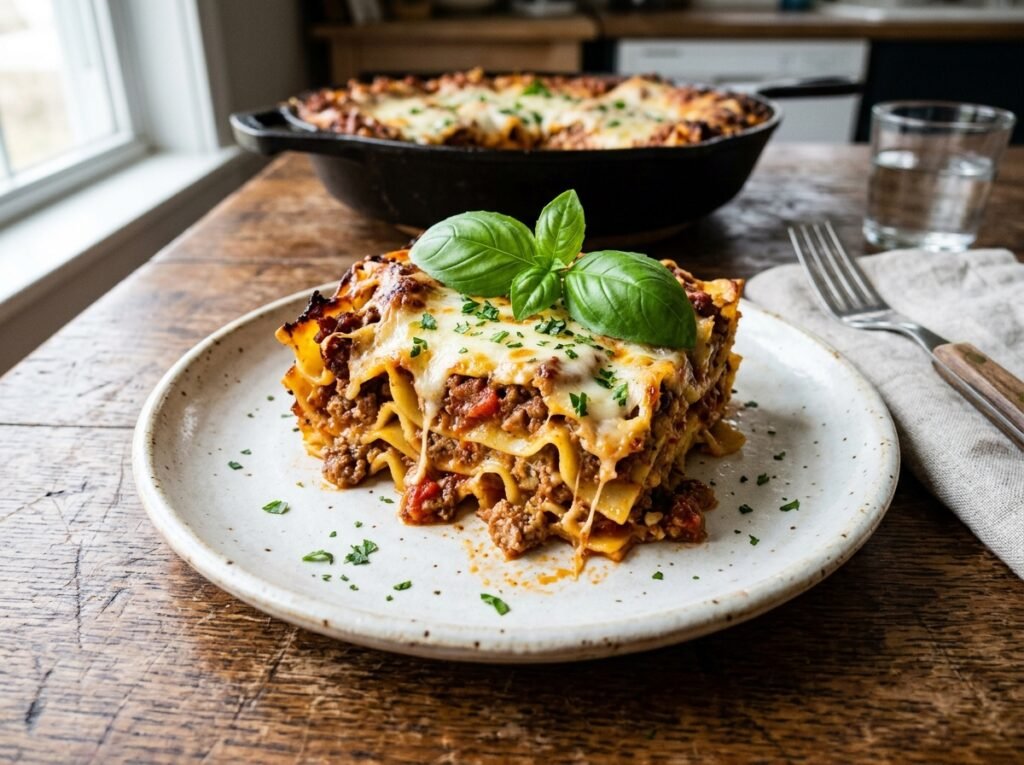
Remove from heat and let the skillet lasagna rest for 3–5 minutes. This helps the layers set slightly for cleaner serving. Scoop generous portions onto plates, making sure to get the cheesy top and saucy bottom in every serving.
Texture cue: the cheese should stretch dramatically when lifted. Serve hot.
Expert Tips
- Use a heavy skillet that retains heat well so the bottom does not scorch while the pasta cooks.
- Break the lasagna sheets into pieces that fit the pan rather than forcing whole sheets.
- Keep the heat low once the pasta is added so the sauce simmers gently instead of reducing too fast.
- If the sauce looks dry before the pasta is tender, add a small splash of water around the edges.
- Let it rest a few minutes before serving so the layers hold together better.
Common Mistakes
Pasta still hard after 15 minutes Cause: not enough liquid or heat too low. Prevention: make sure the sauce is saucy enough and the pan is covered. Fix: add a few tablespoons of water, cover, and cook a few minutes longer.
Burnt bottom Cause: heat too high after layering. Prevention: reduce to low as soon as the pasta goes in. Fix: carefully transfer to a clean pan if needed, but prevention is better.
Watery sauce Cause: too much water or under-reduced tomato sauce. Prevention: simmer the sauce a few minutes before layering. Fix: uncover and cook a couple of extra minutes to thicken.
Cheese not melting fully Cause: heat too low or not covered. Prevention: use a lid and give it the full 15 minutes. Fix: place under a broiler for 1–2 minutes if your skillet is broiler-safe.
Recipe Variations
- Spicy: Add red pepper flakes or a spoonful of chili paste with the garlic.
- Vegetarian: Replace the meat with sautéed mushrooms, lentils, or a plant-based ground.
- Chicken or Turkey: Use ground poultry and add a pinch of Italian herbs.
- Extra Cheesy: Add a layer of ricotta or more mozzarella between the pasta sheets.
- Healthy: Use lean ground meat, whole-wheat lasagna sheets, and load extra vegetables.
- Low-Carb: Swap lasagna sheets for thinly sliced zucchini or eggplant.
- High-Protein: Choose leaner meat and add an extra layer of cheese or a side of protein.
What to Serve With This Recipe
A simple green salad with vinaigrette cuts through the richness. Garlic bread or crusty bread is perfect for soaking up extra sauce. Steamed broccoli or roasted vegetables make easy sides. For drinks, a medium-bodied red wine or sparkling water with lemon works well. Keep dessert light — fresh fruit or a small scoop of gelato.
Make-Ahead Tips
Season and brown the meat up to a day ahead. The sauce can also be fully prepared and refrigerated. Assemble the layers in the skillet when ready to cook, then finish on the stove.
Meal Prep Tips
Cook the full recipe, portion into airtight containers, and refrigerate. The flavors improve the next day. Reheat gently with a splash of water to loosen the sauce.
Storage Instructions
Cool completely, then store in an airtight container in the refrigerator for up to 3–4 days. For longer storage, freeze portions for up to 2 months. Thaw overnight in the refrigerator before reheating.
Reheating Instructions
- Stovetop: Place in a skillet with a splash of water, cover, and warm over low heat until hot and the cheese softens.
- Oven: Cover with foil and reheat at 350°F (175°C) for 15–20 minutes.
- Microwave: Heat individual portions in 1-minute intervals, stirring or checking halfway.
- Air Fryer: Not ideal for saucy lasagna, but can crisp the top of a portion at 320°F (160°C) for a few minutes.
Nutritional Information
Approximate values per serving (based on 4 servings): Calories: 550 Protein: 32 g Carbohydrates: 38 g Fat: 30 g Fiber: 4 g Sugar: 8 g Sodium: 780 mg
Values will vary based on exact meat fat content, cheese quantity, and brand of tomato sauce.
Troubleshooting Guide
- Pasta undercooked: Add a splash of water, cover, and continue cooking on low until tender.
- Too dry: Stir in a little more tomato sauce or water and warm through.
- Too saucy: Uncover and simmer a few extra minutes to reduce.
- Cheese browning too fast: Lower the heat and keep the lid on.
- Meat clumping: Break it up thoroughly while browning and again when returning it to the sauce.
Frequently Asked Questions
Can I use no-boil lasagna sheets? Yes. They work well in this method because they cook directly in the sauce. Just make sure there is enough liquid.
Do I need to boil the pasta first? No. The beauty of this one-pan version is that the sheets cook in the sauce.
Can I make this in a non-stick skillet? Yes, as long as it is large and has a lid. Cast iron gives excellent browning but is not required.
How do I know when the pasta is done? Taste a piece from the center. It should be tender but still have a little bite, similar to al dente.
Can I add more vegetables? Absolutely. Spinach, zucchini, or mushrooms can be stirred into the sauce after the onion and carrot.
Is the cumin necessary? It adds a subtle warmth that works well with the tomato and meat, but you can omit it or replace it with Italian seasoning.
Can I prepare it ahead and bake later? You can assemble the layers, refrigerate, then finish on the stovetop or transfer to a baking dish and bake until bubbly.
What size skillet works best? A 10- to 12-inch skillet is ideal so the layers have enough surface area without being too thin.
Final Thoughts
This one-pan skillet lasagna proves you do not need a stack of dishes or an hour in the oven to enjoy proper lasagna flavor. The meaty tomato sauce, tender pasta sheets, and stretchy melted mozzarella come together quickly in a single skillet, making it an ideal solution for busy evenings when comfort food is still the goal.