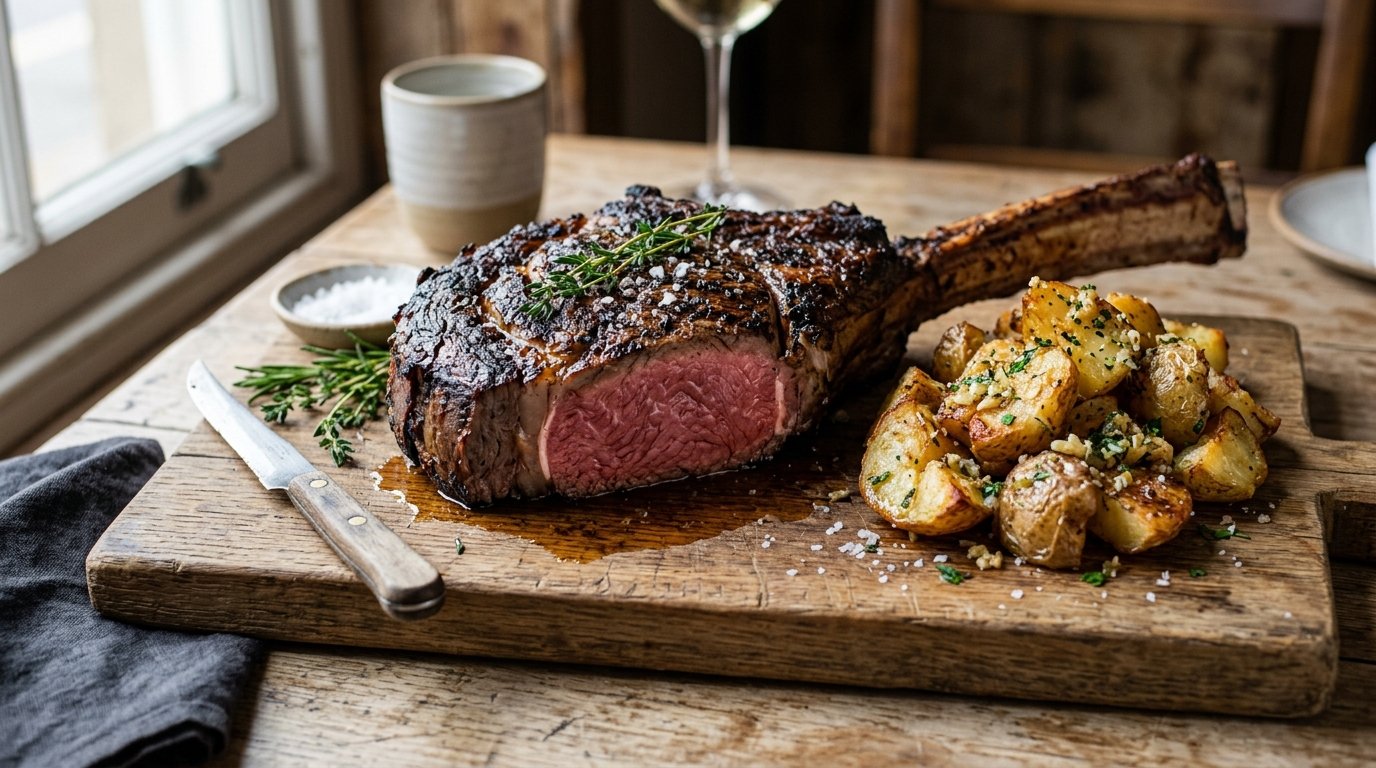
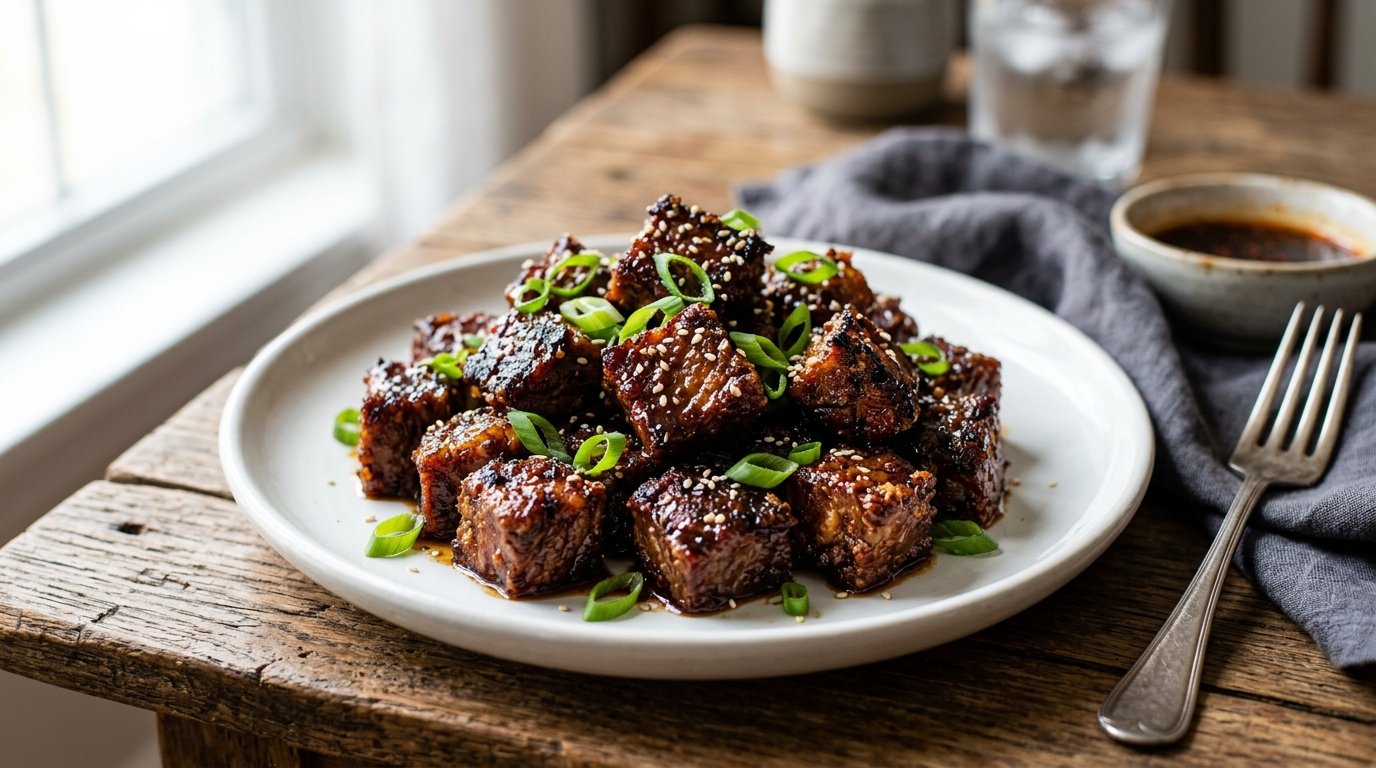
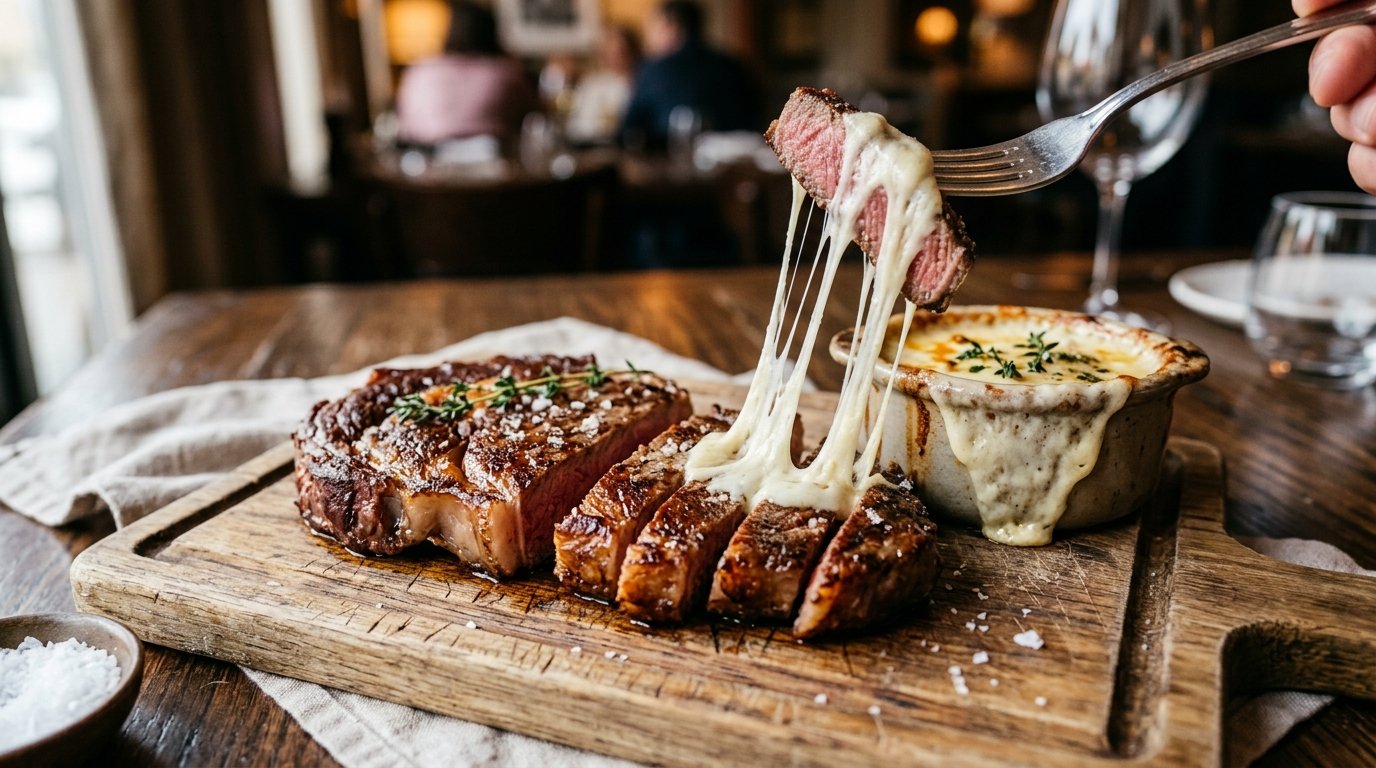
There is a primal satisfaction in holding a tomahawk steak by its long, frenched bone and watching it transform over an open flame. It is not just dinner; it is an event. If you are looking to elevate your grilling game beyond standard burgers and hot dogs, this guide to cooking a Perfectly Grilled Tomahawk Steak is exactly what you need. The combination of intense charcoal heat, beautiful crosshatch grill marks, and a juicy medium-rare interior creates a dining experience that rivals high-end steakhouses.
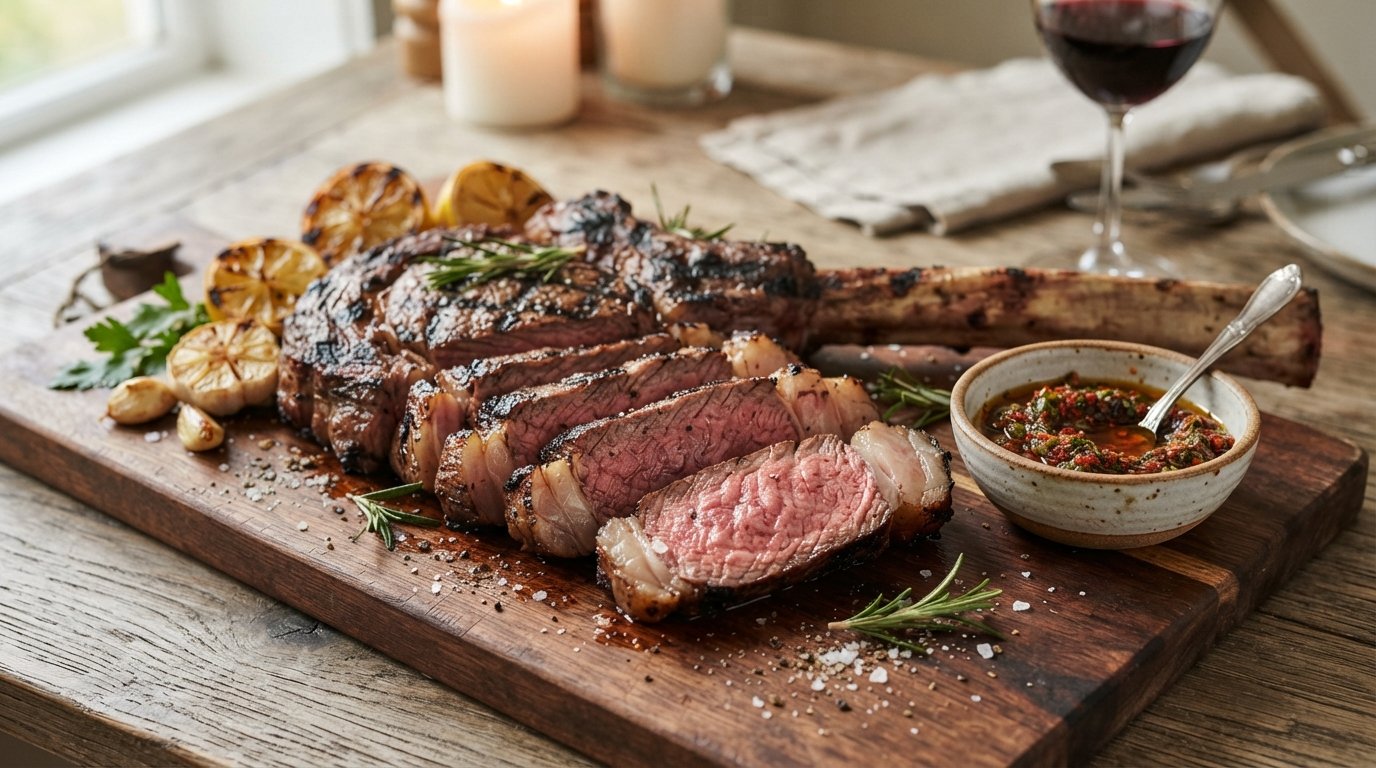
The secret lies in respecting the cut. A tomahawk is essentially a ribeye with the bone left intact, acting as both a handle and an insulator. When paired with a vibrant, spicy chili dipping sauce—visible in our video as the perfect complement to the rich beef fat—you create a balance of flavors that is simply unforgettable. Whether you are celebrating a milestone or just treating yourself to the best cut in the butcher case, mastering this grilled tomahawk steak technique will make you the hero of your next backyard barbecue.
Why This Recipe Works
This recipe succeeds because it leverages the unique anatomy of the tomahawk cut. The long bone isn’t just for show; it acts as a natural handle, keeping your hands away from the intense heat of the grill while allowing for precise maneuvering. Furthermore, the bone insulates the meat nearest to it, ensuring that even the edges near the rib stay succulent rather than drying out.
Grilling over direct charcoal fire provides two critical elements: radiant heat for searing and smoke flavor for depth. Unlike gas grills, charcoal produces infrared radiation that caramelizes the surface proteins rapidly (the Maillard reaction), creating that signature crust without overcooking the interior. The resting period, emphasized in the video, allows the muscle fibers to relax and reabsorb moisture, guaranteeing that every slice releases juices rather than losing them on the cutting board.
Why You’ll Love This Recipe
Steakhouse Quality at Home: Achieves a professional-grade char and internal temperature without expensive equipment.
Visual Spectacle: The dramatic presentation of the long bone and crosshatch marks makes it a centerpiece for any table.
Flavor Balance: The rich, fatty ribeye is perfectly cut by the acidity and heat of the spicy dipping sauce.
Simple Technique: Relies on fundamental grilling skills rather than complex marinades or sous-vide machines.
Interactive Dining: Serving the steak whole allows guests to see the doneness and participate in the carving process.
Ingredient Notes
Quality ingredients are non-negotiable when cooking a premium cut like this. Here is what to look for.
For the Steak
Tomahawk Ribeye (2.5 – 3 lbs): Look for heavy marbling (intramuscular fat). The white flecks should be distributed evenly throughout the red meat. This fat renders during cooking, basting the steak from the inside out.
Buying Tip: Ask your butcher to “french” the bone if it hasn’t been done already. This removes meat and sinew from the rib bone, creating the clean handle seen in the video.
Kosher Salt: Essential for forming a crust. The coarse grains adhere better to the meat surface than table salt and dissolve at a controlled rate.
Freshly Cracked Black Pepper: Adds aromatic heat. Pre-ground pepper loses its volatile oils quickly; always grind fresh.
High-Smoke Point Oil: Avocado oil or grapeseed oil. Do not use olive oil or butter for the initial sear as they will burn at charcoal temperatures.
For the Spicy Dipping Sauce
Chili Flakes / Fresh Chilies: Provides the necessary heat to cut through the beef fat.
Garlic & Ginger: Aromatics that add savory depth to the sauce.
Acid (Vinegar or Lime Juice): Brightens the sauce and balances the richness of the steak.
Soy Sauce or Fish Sauce: Adds umami, enhancing the beefy flavor of the dip.
Kitchen Equipment
Charcoal Grill: Preferred for authentic flavor and high heat. A kettle grill or kamado style works best.
Long-Handled Tongs: Essential for safely flipping the heavy steak without burning your hands.
Instant-Read Thermometer: The only reliable way to judge doneness. Visual cues can be deceiving with thick cuts.
Wire Rack & Baking Sheet: For resting the steak. Elevating it prevents the bottom from steaming in its own juices.
Sharp Chef’s Knife or Carving Knife: Crucial for slicing against the grain cleanly.
Small Ramekins: For serving the dipping sauce.
Preparation Information
Prep Time: 15 Minutes (plus tempering time)
Cook Time: 20-25 Minutes
Total Time: 40 Minutes
Servings: 2 (or 1 very hungry person)
Step-by-Step Instructions
Follow these steps to achieve the results shown in the video.
H3: Temper and Season the Steak
Temper the Meat: Remove the tomahawk from the refrigerator 45-60 minutes before grilling. Let it sit at room temperature.
Why this matters: A cold steak cooks unevenly. The outside will burn before the inside reaches temperature. Tempering ensures an even edge-to-edge pink center.
Dry the Surface: Pat the steak completely dry with paper towels. Moisture is the enemy of a good sear; steam prevents browning.
Season Generously: Coat all sides liberally with kosher salt and freshly cracked black pepper. Don’t forget the fat cap on the side. Press the seasoning into the meat so it adheres.
H3: Prepare the Charcoal Fire
Light the Coals: Use a chimney starter for even lighting. Wait until coals are covered in gray ash and glowing orange.
Create Zones: Pile the hot coals on one side of the grill for direct heat. Leave the other side empty for indirect heat (a safety zone).
Clean and Oil Grates: Scrub the grates with a wire brush while hot. Dip a folded paper towel in oil and wipe the grates with tongs to prevent sticking.
H3: Sear for Crosshatch Marks
Place on Direct Heat: Lay the steak directly over the hottest part of the coals. Listen for a loud sizzle—this indicates proper surface dehydration and searing.
The First Rotate: After 2-3 minutes, lift the steak and rotate it 90 degrees (clockwise or counter-clockwise). Do not flip it yet.
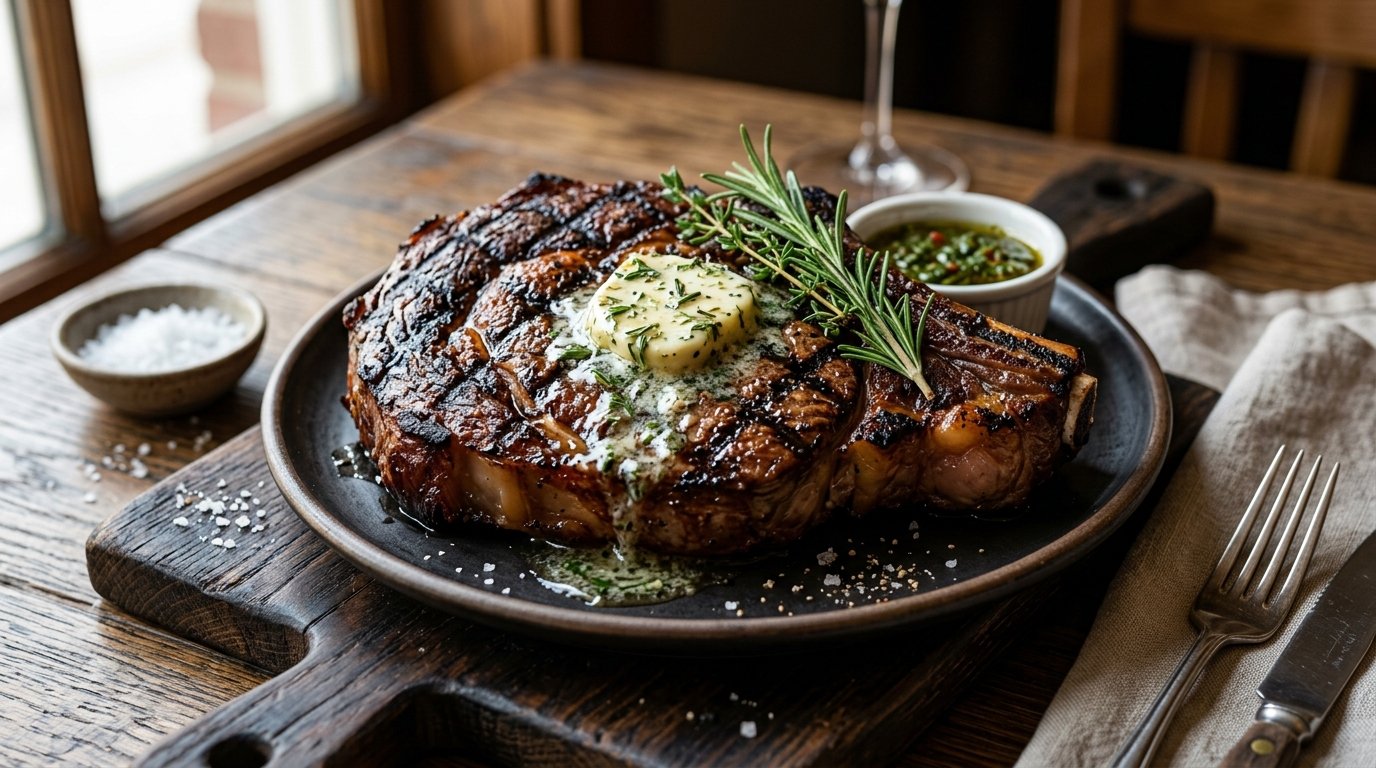
Visual Cue: This creates the first set of parallel grill marks.
The Flip: After another 2-3 minutes, flip the steak over. You should now see distinct diamond-shaped crosshatch marks.
Second Rotate: Rotate the flipped side 90 degrees after 2-3 minutes to complete the pattern on the second side.
Aroma Cue: You should smell toasted proteins and rendering fat. If it smells acrid or burnt, move the steak to the indirect zone immediately.
H3: Finish and Check Temperature
Monitor Thickness: Because tomahawks are thick (often 2+ inches), the center may still be cold after searing. Move the steak to the indirect zone (no coals underneath) and close the lid.
Use a Thermometer: Insert an instant-read thermometer into the thickest part of the meat, avoiding the bone.
Note: Pull the steak off 5 degrees before your target temp. Carryover cooking will raise the temperature while resting.
H3: Rest and Slice
Rest Properly: Transfer the steak to a wire rack set over a baking sheet. Tent loosely with foil (do not seal tight, or you’ll steam the crust). Rest for 10-15 minutes.
Why this matters: Cutting immediately causes juice loss. Resting allows proteins to relax and retain moisture.
Slice Against the Grain: Identify the direction of the muscle fibers. Cut perpendicular to them. This shortens the fibers, making each bite tender rather than chewy.
Finish with Salt: As seen in the video, sprinkle flaky sea salt (like Maldon) over the sliced meat just before serving. This adds a final burst of texture and salinity.
Expert Tips for the Perfect Sear
Don’t Press Down: Never press the steak with your spatula or tongs while grilling. This squeezes out precious juices and lowers the grill temperature locally, ruining the sear.
Fat Cap Rendering: Hold the steak vertically with tongs to sear the fat cap on the side for 1-2 minutes. Unrendered fat is waxy and unpleasant; rendered fat is delicious.
Thermometer Placement: Always measure from the side, not the top down. The bone conducts heat differently than meat and can give false readings if the probe touches it.
Sauce Timing: Serve the spicy dipping sauce warm or at room temperature. Cold sauce shocks the palate and solidifies the beef fat on contact.
Common Mistakes to Avoid
Mistake
Why It Happens
How to Fix/Prevent
Gray Band of Overcooked Meat
Grill not hot enough; steak too cold.
Ensure coals are screaming hot. Temper steak for 1 hour prior.
Burnt Exterior, Raw Interior
Flame flare-ups; searing too long.
Move to indirect heat to finish. Trim excess dripping fat to reduce flare-ups.
Tough, Chewy Texture
Slicing with the grain.
Always identify fiber direction and slice perpendicular to it.
Dry Steak
Overcooking; skipping rest.
Use a thermometer. Rest for minimum 10 mins.
Bitter Char Taste
Using lighter fluid; dirty grates.
Use a chimney starter. Clean grates thoroughly before cooking.
Recipe Variations
While the classic charcoal sear is king, here are ways to adapt:
Reverse Sear (Oven + Grill): For thicker steaks (>2.5″), bake at 225°F until 115°F internal, then sear on blazing hot grill for 1 min/side. Guarantees edge-to-edge perfection.
Cast Iron Finish: Sear on grill for marks, then finish in a cast iron skillet with butter, garlic, and rosemary for a richer crust.
Spicy Korean Style: Marinate in soy, pear, garlic, and gochujang before grilling. Swap the dipping sauce for ssamjang.
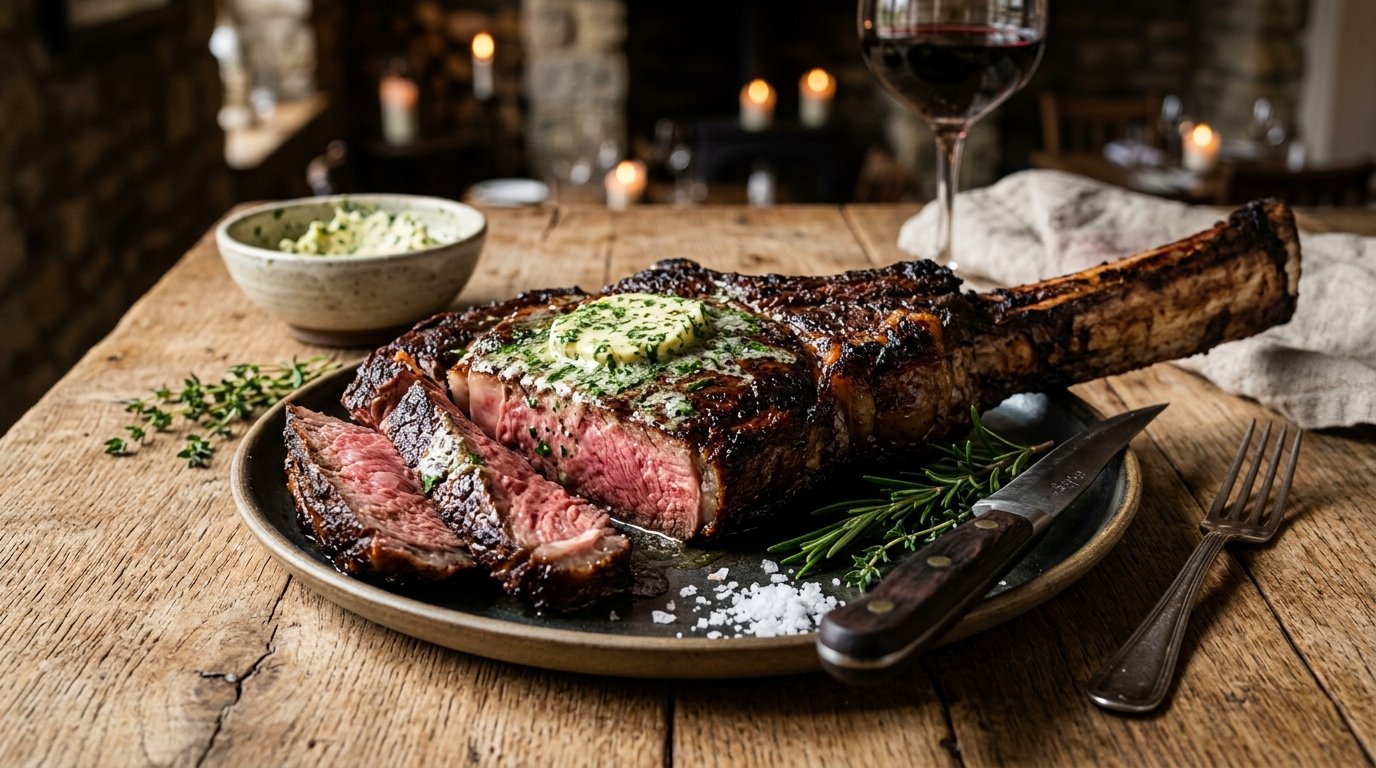
Herb Butter Baste: Instead of dipping sauce, melt compound butter with parsley, thyme, and garlic over the resting steak.
Low-Carb/Keto: Skip the fries. Serve with grilled asparagus, sautéed spinach, or a wedge salad with blue cheese.
Smoked Tomahawk: Add wood chunks (oak or hickory) to the coals for a deep smoky flavor profile. Smoke at 225°F then sear.
What to Serve With This Recipe
A tomahawk is rich and heavy. Pair it with sides that provide contrast.
Classic Frites: Thick-cut french fries (as seen in the video) are traditional. The starch soaks up the sauce and beef juices.
Garlic Bread: Toasted baguette slices with herb butter help cleanse the palate between bites.
Acidic Salad: An arugula salad with shaved parmesan and lemon vinaigrette cuts through the fat.
Creamed Spinach: A steakhouse staple that complements the beef without competing.
Drinks: A bold Cabernet Sauvignon or Malbec stands up to the ribeye’s intensity. For non-alcoholic, sparkling water with lime or unsweetened iced tea works well.
Dessert: Keep it light. Lemon sorbet or fresh berries. Heavy chocolate cake would be too much after this meal.
Make Ahead & Meal Prep Tips
Prep the Sauce: The spicy dipping sauce actually improves with time. Make it 24 hours ahead to let flavors meld. Store in the fridge.
Trim Early: Ask the butcher to french the bone and trim silver skin a day ahead. Store wrapped tightly in plastic.
Season in Advance: You can salt the steak up to 24 hours before cooking (dry brining). This seasons the meat deeper and dries the surface for a better sear. Just keep it uncovered on a rack in the fridge.
Don’t Pre-Cook: Do not cook the steak ahead of time. Tomahawks must be served fresh. Leftovers are good, but never as good as fresh.
Storage & Reheating Instructions
Refrigerator
Store leftover steak in an airtight container for up to 3 days. Store sauce separately.
Freezer
Wrap cooled steak tightly in plastic wrap, then foil. Freeze for up to 3 months. Thaw in fridge overnight before reheating.
Reheating Methods
Oven (Best Method): Preheat to 250°F. Place steak on wire rack. Warm for 15-20 mins until internal temp hits 110°F. Sear quickly in a hot pan for 30 seconds/side to restore crust.
Air Fryer: Reheat at 350°F for 3-4 minutes. Watch closely to avoid drying out.
Stovetop: Slice cold steak. Sear slices in a hot pan with a little oil for 30 seconds per side. Fast and effective.
Microwave (Avoid): Microwaving destroys the texture, turning premium beef rubbery. Only use if absolutely necessary, at 50% power.
Nutritional Information
Approximate values per serving (excluding sauce/fries):
Calories: 650 kcal
Protein: 55g
Carbohydrates: 2g
Fat: 45g
Saturated Fat: 18g
Cholesterol: 160mg
Sodium: 600mg
Note: Values vary significantly based on trim level and specific cut size.
Troubleshooting Guide
Problem: Steak is sticking to the grate.Solution: Your grill wasn’t hot enough or wasn’t oiled. Wait for the steak to release naturally; if it sticks, it’s not ready to flip. Force-tearing ruins the crust. Next time, ensure grates are scorching and oiled.
Problem: Massive flare-ups charring the meat.Solution: Too much fat dripping onto coals. Trim excess hard fat before grilling. Move steak to indirect zone temporarily until flames subside. Keep a spray bottle of water handy (use sparingly).
Problem: Bone is burning/blackening.Solution: The bone protrudes and catches direct heat. Wrap the exposed bone end in aluminum foil before grilling to protect it.
Problem: Center is cold despite seared exterior.Solution: Steak was too thick for direct heat alone. Next time, use the two-zone method: sear for marks, then move to indirect heat with lid closed to gently bring up internal temp.
Frequently Asked Questions
1. How do I know when my tomahawk steak is done without cutting it? Always use an instant-read digital thermometer. Touch tests are unreliable for thick cuts. Aim for 130-135°F for medium-rare, remembering it will rise 5 degrees while resting.
2. Can I cook a tomahawk steak on a gas grill? Yes. Turn burners to high for searing, then turn off one side for indirect finishing. You won’t get the same charcoal smoke flavor, but you can still achieve excellent grill marks and doneness.
3. What is the “spicy dipping sauce” in the video? It appears to be an Asian-style chili dipping sauce, likely containing chili flakes, garlic, vinegar, soy sauce, and possibly sugar or fish sauce. It’s designed to be salty, sour, and spicy to balance the fatty ribeye.
4. Do I need to marinate a tomahawk steak? No. High-quality ribeye has enough flavor on its own. Marinades can actually mask the beef taste and make the surface mushy. Salt, pepper, and good fire are all you need.
5. How long should I rest the steak? For a tomahawk this size, rest for at least 10-15 minutes. Less than that and you’ll lose significant juice when slicing. More is fine; it stays warm under a loose foil tent.
6. Can I reuse the bone after eating? Absolutely! Roast the cleaned bones at 400°F for 30 minutes to caramelize remaining bits, then simmer in water with veggies for 4-6 hours to make incredible beef stock.
7. Why are my grill marks faint or missing? Your grill wasn’t hot enough, or you moved the steak too soon. Let it sear undisturbed for 2-3 minutes. Also, ensure the steak surface is dry; moisture creates steam that prevents browning.
8. Is tomahawk steak worth the extra cost? If you value presentation and the experience of gnawing on a bone, yes. Flavor-wise, it’s identical to a ribeye. You’re paying for the spectacle and the handle.
Final Thoughts
Mastering the Perfectly Grilled Tomahawk Steak is about patience and respect for the ingredient. It teaches you to listen to the sizzle, watch the color change, and trust your thermometer over guesswork. The reward is a meal that engages all senses—the crackle of the crust, the aroma of smoke, the vibrant red center, and the satisfying heat of that spicy dipping sauce.