
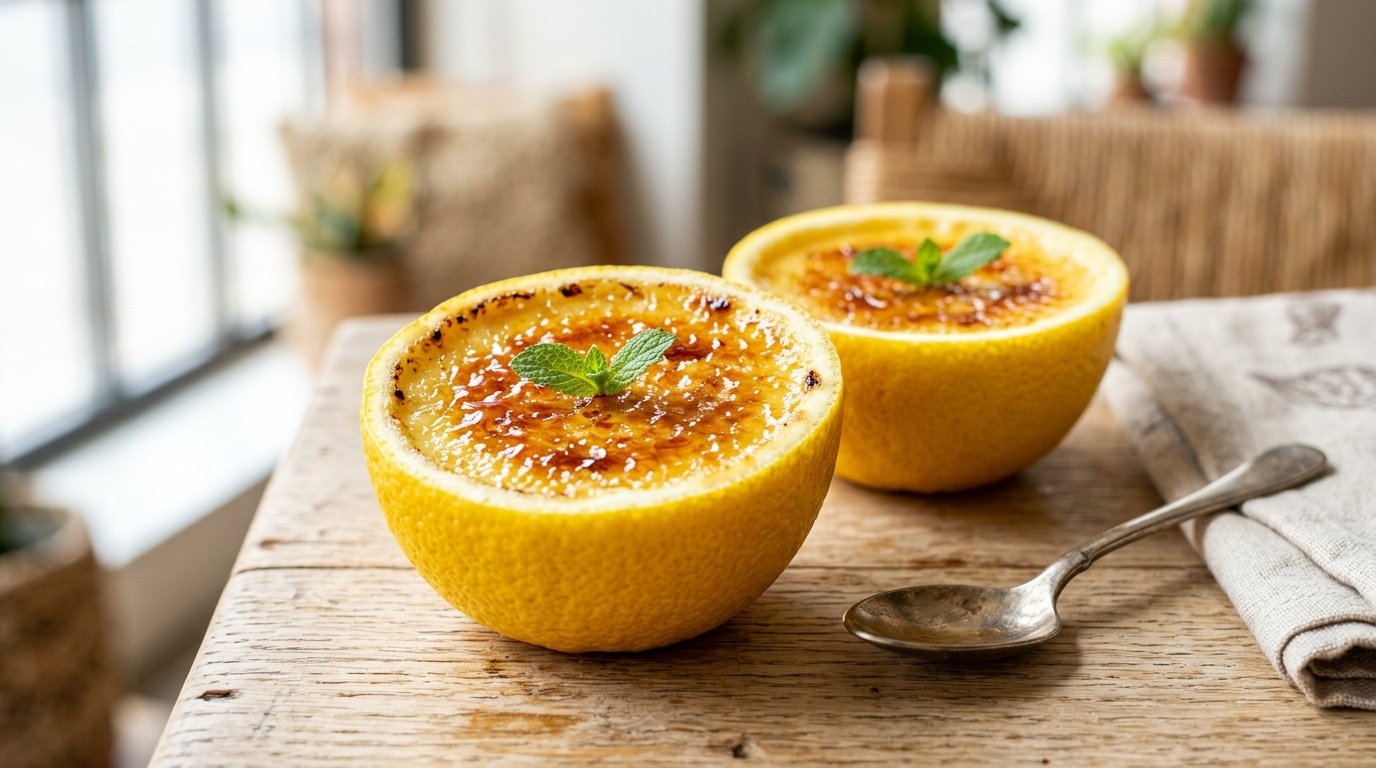
Quick Recipe Summary
| Detail | Information |
|---|---|
| Prep Time | 30 minutes |
| Cook Time | 45 minutes (plus chilling) |
| Total Time | 1 hour 15 minutes active + 4 hours chill |
| Servings | 6 individual desserts |
| Cuisine | French / Modern Pastry |
| Course | Dessert |
| Difficulty | Intermediate |
| Calories | ~280 kcal per serving |
Table of Contents
| Section | Heading Level |
|---|---|
| Introduction | H2 |
| Why This Recipe Works | H2 |
| Why You’ll Love This Recipe | H2 |
| Ingredient Notes | H2 |
| Kitchen Equipment | H2 |
| Preparation Information | H2 |
| Step-by-Step Instructions | H2 |
| Expert Tips for Perfect Texture | H2 |
| Common Mistakes to Avoid | H2 |
| Delicious Recipe Variations | H2 |
| What to Serve With This Recipe | H2 |
| Make Ahead & Meal Prep Tips | H2 |
| Storage Instructions | H2 |
| Reheating Instructions | H2 |
| Nutritional Information | H2 |
| Troubleshooting Guide | H2 |
| Frequently Asked Questions | H2 |
| Final Thoughts | H2 |
Introduction
There is a specific moment in pastry that transforms a simple custard into an unforgettable experience: the audible crack of caramelized sugar giving way to silky, chilled cream beneath. This lemon crème brûlée recipe elevates the classic French dessert by infusing bright citrus zest directly into the custard and serving it inside hollowed-out lemon rinds, creating a presentation that is as stunning as it is delicious. Unlike traditional ramekins which can feel formal or stuffy, these natural cups bring a playful elegance to the table while imparting subtle aromatic oils from the peel itself. Whether you are hosting a dinner party, celebrating a special occasion, or simply craving a sophisticated homemade treat, this dessert delivers restaurant-quality refinement with approachable technique. The contrast between the warm, brittle sugar crust and the cool, tangy-sweet custard creates a sensory harmony that defines exceptional pastry. Let’s explore how to master this citrus-infused masterpiece at home.
Why This Recipe Works
The success of this lemon crème brûlée lies in precise temperature control and flavor integration through infusion rather than extraction. Traditional lemon custards often rely on juice alone, resulting in one-dimensional acidity that can curdle eggs if not handled carefully. By steeping fresh zest in warm cream before combining with yolks, we extract volatile essential oils that carry complex floral/citrus notes impossible to achieve with juice alone. This oil-based flavor compounds remain stable during baking, unlike acid which reacts unpredictably with proteins. Furthermore, using whole lemons as vessels serves dual purpose: they act as edible ramekins eliminating need for separate dishes, while their porous rind allows微量 aromatic exchange during chilling, subtly enhancing the custard’s perfume over time. The water bath (bain-marie) ensures gentle, even heat distribution preventing scrambled eggs; direct oven heat would cook outer edges too fast leaving center raw. Sugar torching at service time creates thermal shock that caramelizes sucrose without warming custard underneath, preserving the critical hot-cold/textural contrast that defines perfect crème brûlée.
Why You’ll Love This Recipe
- Show-Stopping Presentation: Served in real lemon halves for instant visual wow factor at any gathering.
- Bright, Balanced Flavor: Zest infusion provides complex citrus aroma without overwhelming tartness or eggy taste.
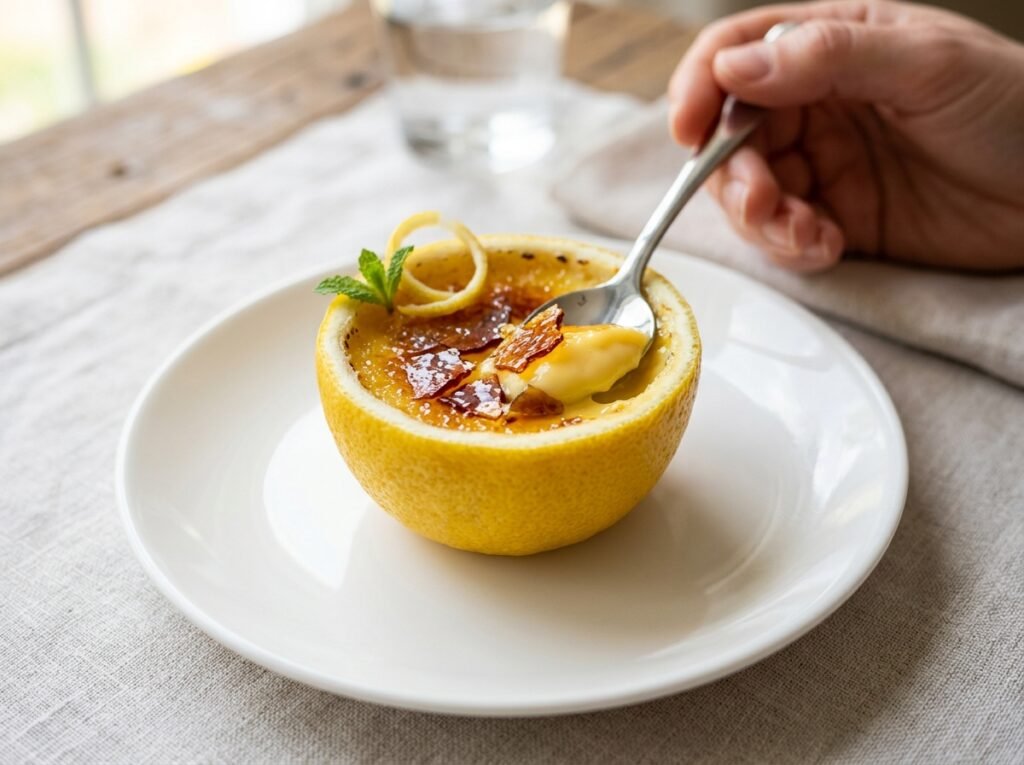
- Perfect Textural Contrast: Shatteringly crisp sugar crust yields to impossibly smooth, chilled custard.
- No Special Ramekins Needed: Uses fruit itself as vessel—sustainable, beautiful, and functional.
- Make-Ahead Friendly: Custards improve with overnight chilling; torch sugar just before serving.
- Gluten-Free Naturally: Inherently safe for celiac diets without modification.
- Impressive Yet Approachable: Restaurant technique broken down into manageable home-kitchen steps.
Ingredient Notes
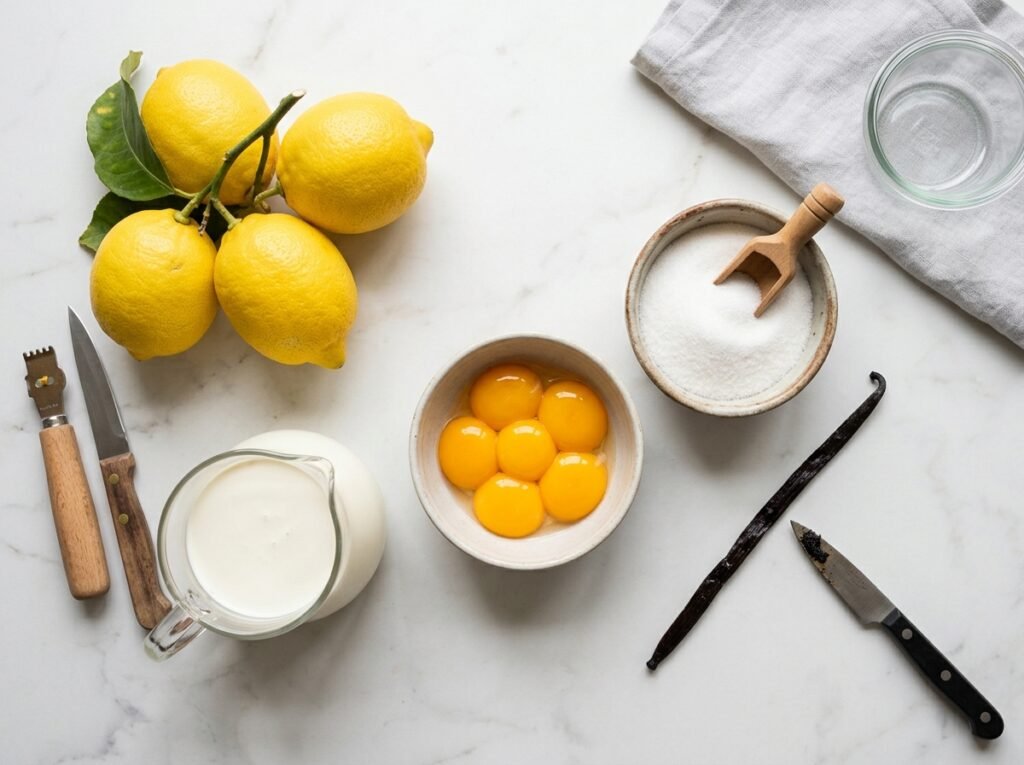
Heavy Cream (35%+ Fat Content)
- Purpose: Provides rich base for custard emulsion. High fat content prevents graininess and ensures silky mouthfeel after baking/chilling.
- Substitutions: Half-and-half (lighter/less rich), coconut cream (dairy-free alternative). Avoid skim milk; insufficient fat causes watery/grainy texture.
- Buying Tips: Check expiration date; older cream may have off-flavors amplified by heating. Ultra-pasteurized heats more stably but lacks fresh flavor nuance. Organic often has superior taste profile.
- Storage Tips: Refrigerate immediately upon opening. Use within 7 days. Freeze unused portion in ice cube trays for future batches; thaw overnight before use.
Egg Yolks (Large, Fresh)
- Purpose: Primary thickening agent via protein coagulation. Lecithin acts as natural emulsifier binding fat/water phases smoothly.
- Substitutions: Whole eggs (firmer/less rich texture). Vegan alternatives like silken tofu + cornstarch exist but lack authentic custard quality.
- Buying Tips: Choose pasture-raised/free-range for deeper yellow color/richer flavor. Check shells for cracks; compromised integrity risks contamination. Size matters; large yolks provide consistent ratios.
- Storage Tips: Separate whites/yolks immediately if not using whole eggs. Store yolks covered with plastic wrap touching surface to prevent drying. Use within 2-3 days refrigerated.
Granulated Sugar (For Custard & Torch)
- Purpose: Sweetens custard base; forms glass-like crust when torched. Fine crystals dissolve completely preventing gritty texture.
- Substitutions: Caster/superfine sugar (dissolves faster). Turbinado/raw sugar creates thicker/darker crust but may leave granules. Avoid powdered sugar; contains cornstarch interfering with caramelization.
- Buying Tips: Pure cane sugar preferred over beet for cleaner melt/caramelization. Ensure no clumps/moisture exposure before use. Store airtight away from humidity.
- Storage Tips: Indefinite shelf life if kept dry. Clumping indicates moisture absorption; sift before use or discard if hardened. Keep away from strong odors; sugar absorbs ambient scents readily.
Fresh Lemons (Organic Preferred)
- Purpose: Vessel + flavor source. Zest provides essential oils; rind acts as edible container. Juice balances sweetness if needed.
- Substitutions: Meyer lemons (sweeter/floral), limes (tarter/greener note), oranges (milder/citrus variant). Avoid waxed/conventional unless scrubbed thoroughly; pesticides concentrate in peel.
- Buying Tips: Choose heavy-for-size fruits indicating juiciness/thick rind. Bright yellow color = ripe/aromatic. Avoid green-tinted unless specifically Meyer variety. Skin should be taut/not shriveled.
- Storage Tips: Room temp up to 1 week; fridge crisper up to 3 weeks. Zest immediately before hollowing; oxidized zest loses potency rapidly. Hollowed rinds freeze well for future use.
Vanilla Bean Paste or Extract (Optional Enhancement)
- Purpose: Adds depth/complexity complementing citrus brightness. Rounds out sharp acidity with warm/spicy undertones.
- Substitutions: Almond extract (nutty/floral), lavender buds (floral/herbal), or omit entirely for pure lemon focus. Avoid artificial vanilla; chemical aftertaste clashes with fresh citrus.
- Buying Tips: Real vanilla bean paste shows visible seeds; indicates genuine product. Alcohol-based extracts evaporate partially during cooking; adjust quantity accordingly. Store dark/cool place indefinitely.
- Storage Tips: Tightly sealed away from light/heat. Vanilla beans store in alcohol/vodka to maintain pliability. Extracts last years if properly stored; potency diminishes gradually over decades.
Kitchen Equipment
- Sharp Chef’s Knife: Essential for cleanly slicing lemons horizontally without crushing rind. Dull blades slip causing uneven cuts/injury risk.
- Teaspoon or Melon Scoop: For hollowing lemon flesh efficiently. Rounded edge follows inner curve minimizing wall damage. Metal preferred over plastic for precision/control.
- Fine-Mesh Sieve: Strains custard mixture removing chalaza/undissolved bits ensuring silkiness. Nylon mesh gentler on delicate emulsion than metal.
- Saucepan (Medium): For heating cream/zest infusion. Heavy bottom prevents scorching. Stainless steel conducts heat evenly; avoid reactive metals like aluminum/copper with acidic ingredients.
- Whisk & Silicone Spatula: Whisk incorporates air/emulsifies gently. Spatula scrapes pan sides/bottom preventing localized overheating. Heat-resistant silicone withstands stovetop temps safely.
- Baking Dish (Deep): Holds water bath securely. Glass/ceramic retains heat steadily; metal conducts too quickly risking overcooked edges. Must accommodate lemon halves without tipping.
- Kitchen Torch (Butane): Critical for caramelizing sugar topping. Adjustable flame control prevents burning. Refillable models more economical long-term. Never use lighter fluid/propane torches indoors.
- Instant-Read Thermometer (Optional): Verifies custard reaches safe thicken temp (170-175°F/77-80°C) without guessing. Prevents under/overcooking anxiety. Digital probe most accurate/responsive.
Preparation Information
- Prep Time: 30 minutes
- Cook Time: 45 minutes
- Total Time: 1 hour 15 minutes active + 4 hours minimum chill
- Servings: 6 individual desserts
Step-by-Step Instructions
H3: Prepare Lemon Vessels Carefully
Slice 3 large lemons horizontally through equator creating two equal halves. Using teaspoon/melon scoop, carefully remove pulp/membranes leaving ¼-inch thick rind walls intact. Scrape interior clean; reserve pulp/juice separately if desired. Rinse rinds briefly; pat dry inside/out. Why it matters: Uniform thickness ensures even cooking/stability. Thin walls collapse/burn; thick walls insulate excessively slowing set. Clean interiors prevent bitter pith flavors leaching into custard. Dry surfaces help custard adhere/set properly. Visual cue: Rinds stand upright steadily; interiors smooth/pale yellow. No remaining membrane strands visible. Texture cue: Walls firm yet yielding slightly to pressure. Not mushy/crumbly. Common mistake: Puncturing rind base causing leaks. Work slowly near bottom; angle spoon parallel to curve. Professional tip: Stabilize lemon half on flat cutting board; never hold in hand while scooping. Safety first.
H3: Infuse Cream with Lemon Zest
Zest 2 additional lemons directly into saucepan containing 2 cups heavy cream. Avoid white pith; bitter compounds ruin delicate balance. Heat cream/zest over medium-low until steaming (not boiling); small bubbles form around edges. Remove from heat; cover tightly. Steep 30 minutes off-heat. Why it matters: Gentle heat opens oil glands releasing aromatics without degrading volatile compounds. Boiling destroys delicate top notes creating cooked/stewed flavor. Covered steeping traps vapors maximizing extraction efficiency. Color cue: Cream turns pale yellow; zest appears vibrant/fresh not browned/dull. Aroma cue: Intense citrus fragrance fills kitchen; no eggy/sulfurous smell develops. Critical tip: Never boil cream with zest; high heat volatilizes desirable oils leaving harsh residues. Patience yields superior complexity.
H3: Temper Eggs and Cook Custard Base
Whisk 6 egg yolks + ½ cup granulated sugar in separate bowl until pale/thickened (~2 mins). Slowly pour warm infused cream into yolk mixture whisking constantly (tempering). Return entire mixture to saucepan. Cook over LOW heat stirring constantly with spatula until thickened enough to coat back of spoon (nappe consistency, ~170-175°F). Immediately strain through fine-mesh sieve into clean bowl. Stir in 1 tsp vanilla paste if using. Why it matters: Tempering prevents scrambling eggs by gradually raising temperature. Constant stirring distributes heat evenly preventing localized coagulation. Nappe stage indicates proper protein denaturation; thinner = runny custard, thicker = grainy/curdled. Straining removes any accidental cooked bits ensuring silkiness. Visual cue: Mixture transforms from translucent yellow to opaque creamy ivory. Leaves clear trail when spatula drawn across bottom. Texture cue: Smooth/velvety flowing ribbon; not watery/lumpy. Doneness test: Thermometer reads 170-175°F. If no thermometer, watch for first signs of steam rising + slight resistance when stirring. Remove IMMEDIATELY at this point; residual heat continues cooking.
H4: Fill Rinds and Bake Gently
Arrange prepared lemon rinds snugly in deep baking dish. Place dish on oven rack; pour hot tap water into dish until reaching halfway up rind sides (water bath). Carefully ladle strained custard into each rind filling ¾ full. Transfer to preheated 325°F (160°C) oven. Bake 35-45 minutes until centers jiggle slightly when shaken gently but edges are set. Why it matters: Water bath moderates oven heat preventing rubbery edges/raw centers. Snug arrangement stabilizes round rinds preventing tipping/spillage. ¾ fill allows expansion during bake without overflow. Gentle jiggle indicates perfect set; firm center = overbaked/grainy. Color cue: Custard surface matte/settled; no liquid sheen remaining. Edges pull away slightly from rind wall. Aroma cue: Sweet eggy/citrus scent intensifies; no burnt/sulfurous odor develops. Rest: Cool completely at room temp 1 hour then refrigerate minimum 4 hours (overnight ideal). Chilling firms texture developing signature silkiness. Warm custard won’t support sugar crust properly.
H5: Torch Sugar Crust Just Before Serving
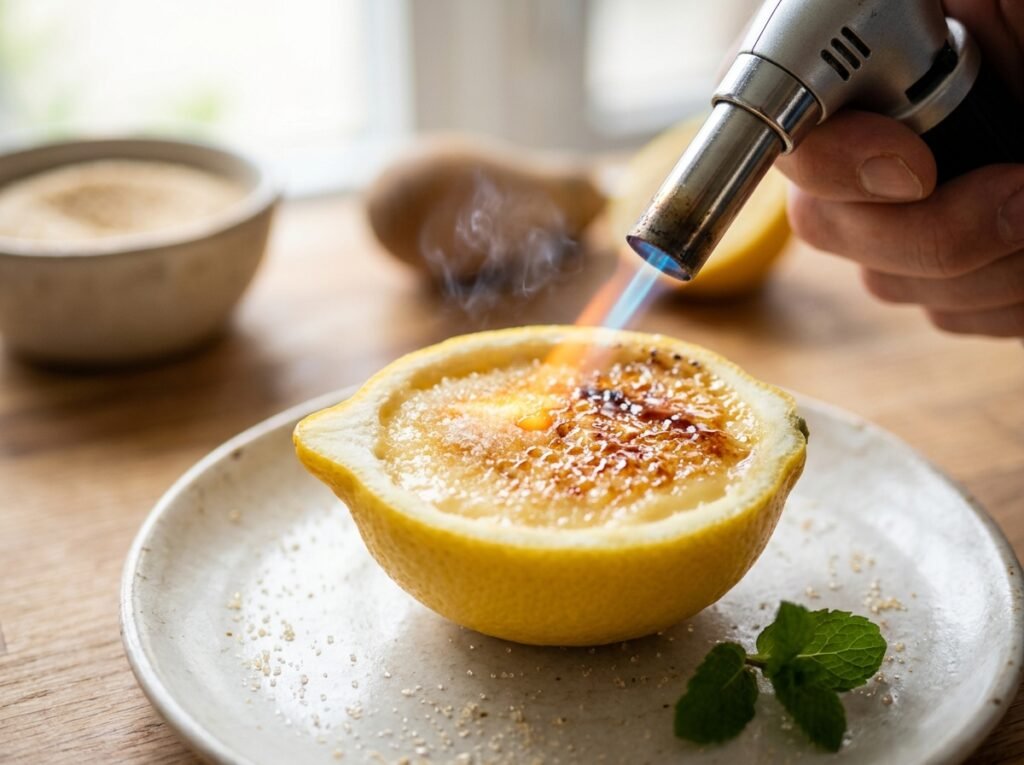
Remove chilled custards from fridge. Sprinkle 1-2 tsp granulated sugar evenly over each surface tilting/rotating rind to coat uniformly. Tap excess sugar onto tray below. Hold torch 4-6 inches above surface moving continuously in circular motion until sugar melts/bubbles/caramelizes amber-brown. Let sit 1-2 minutes before serving to allow crust harden. Why it matters: Even sugar layer ensures uniform caramelization; clumps burn/create holes. Continuous torch movement prevents scorching spots. Amber color indicates proper sucrose inversion creating complex bitter-sweet notes. Resting allows glass transition completing; soft/tacky crust ruins textural contrast. Visual cue: Surface transforms from white granules to glossy amber/brown mosaic. Bubbles form/pop rapidly then settle into smooth glaze. Aroma cue: Toasted caramel scent emerges distinctly; acrid smoke means burning—stop immediately! Safety note: Torch produces intense heat/flame. Keep away from flammable materials/curtains. Use heatproof surface underneath. Ventilate area adequately. Never leave unattended while lit.
Expert Tips for Perfect Texture
- Temperatures Are Non-Negotiable: Cream infusion max 180°F (82°C). Custard cook max 175°F (80°C). Exceeding either threshold guarantees graininess/curdling. Invest in reliable thermometer; guesswork fails consistently.
- Strain Twice For Silkiness: First strain post-cook removes chalaza/cooked bits. Second strain through cheesecloth/nut milk bag eliminates micro-lumps invisible to naked eye. Extra step separates good from transcendent texture.
- Chill Thoroughly Before Torching: Warm custard melts sugar crust instantly creating soupy mess. Minimum 4 hours chill required; overnight optimal. Cold custard maintains structural integrity under thermal shock.
- Sugar Layer Thickness Matters: Too thin = incomplete coverage/holey crust. Too thick = unmelted granules/bitter burn. Aim for translucent veil covering surface completely. Practice makes perfect judgment.
- Torch Technique Requires Motion: Stationary flame creates crater/burn spot. Constant circular motion distributes heat evenly. Start low/intensify gradually as sugar liquefies. Watch color change closely; amber happens FAST.
- Rind Stability Is Key: Wobbly rinds spill custard during transport/torching. Trim bottom slice thin if unstable; create flat base. Nestle in sand/salt-filled tray if needed for extra security.
Common Mistakes to Avoid
Mistake: Grainy/Curdled Custard
- Why: Overheating eggs/cream, insufficient stirring, or acidic juice added prematurely.
- Prevention: Monitor temps religiously. Stir constantly during cook. Infuse zest only; add juice AFTER straining if needed (tiny amount). Strain immediately upon reaching nappe.
- Fix: Blend briefly with immersion blender to salvage smoothness. Strain again through super-fine mesh. Accept slight texture compromise; flavor remains intact. Next time, prioritize temperature control.
Mistake: Leaking/Broken Lemon Rinds
- Why: Punctured base during hollowing, overly thin walls, or rough handling.
- Prevention: Scoop parallel to inner curve; never dig downward. Leave adequate wall thickness. Handle filled rinds gently; support base when moving.
- Fix: Patch small holes with melted chocolate/wax paper barrier underneath. Serve in shallow dish to catch leaks. Next time, practice scooping technique on spare lemons first.
Mistake: Burnt/Sooty Sugar Crust
- Why: Torch held too close/stationary, excessive sugar layer, or distracted timing.
- Prevention: Maintain 4-6 inch distance. Move torch constantly. Watch color not clock. Stop at deep amber; carryover heat darkens further.
- Fix: Scrape off burnt layer carefully with knife edge. Re-sugar/torch if necessary. Prevention via focused attention essential. Burning irreversible once occurred.
Mistake: Runny/Unset Centers
- Why: Underbaking, inaccurate oven temp, or insufficient egg ratio.
- Prevention: Verify oven calibration with external thermometer. Bake until center jiggles like gelatin not liquid. Trust visual/tactile cues over timer alone.
- Fix: Return to oven 5-min increments checking frequently. Accept slightly softer texture if borderline. Next time, extend bake time or increase yolk count marginally.
Mistake: Bitter/Pithy Flavor
- Why: White pith included during zesting/hollowing, or over-steeped zest.
- Prevention: Zest superficially avoiding white layer. Scrape rind interiors meticulously. Limit steep time to 30 mins max.
- Fix: Balance with extra sugar/vanilla if mild bitterness. Severe cases unrecoverable; compost gracefully. Next time, refine zesting/hollowing precision.
Delicious Recipe Variations
Lavender Lemon Bliss
Add 1 tbsp culinary lavender buds to cream infusion alongside zest. Floral notes complement citrus beautifully. Strain thoroughly; oversleeping creates soapy taste. Elegant springtime variation.
Orange Blossom Honey Twist
Replace half sugar with orange blossom honey. Add orange zest instead of lemon. Floral sweetness creates Middle Eastern-inspired profile. Softer caramelization due to honey’s fructose content. Adjust torch technique accordingly.
Matcha Green Tea Fusion
Whisk 1 tsp ceremonial matcha into strained custard before filling. Earthy bitterness contrasts sweet/tart elements brilliantly. Vibrant green color visually striking. Japanese-French fusion elegance.
Coconut Lime Tropical Escape
Use coconut cream instead of dairy. Lime zest/juice replaces lemon. Dairy-free version maintaining richness authentically. Tropical vibes perfect summer entertaining. Toast coconut flakes garnish optional.
Earl Grey Bergamot Sophistication
Steep 2 Earl Grey tea bags in warm cream 10 mins before adding zest. Bergamot oil enhances citrus complexity naturally. British-tea-meets-French-pastry sophistication. Remove bags promptly; oversteeping bitter.
Raspberry Swirl Romance
Swirl 2 tbsp seedless raspberry coulis into filled rinds before baking. Pink marbling against yellow custard visually romantic. Tart berry balances sweetness perfectly. Fresh raspberries garnish post-torch optional.
Dark Chocolate Ganache Core
Pour 1 oz warm dark chocolate ganache into rind center before adding custard. Hidden molten core surprises diners delightfully. Rich cocoa contrasts bright citrus unexpectedly well. Decadent upgrade requiring precise layering.
Ginger Spice Warmth
Add 1 tbsp freshly grated ginger to cream infusion. Spicy heat amplifies citrus vibrancy dynamically. Asian-inspired twist feeling invigorating. Strain thoroughly; fibrous ginger unpleasant texturally.
Mascarpone Creaminess Boost
Replace ¼ cup cream with mascarpone cheese. Ultra-rich/luxurious mouthfeel elevates indulgence factor. Italian cream cheese adds subtle tang complementing lemon. Whisk vigorously to incorporate smoothly.
Rosewater Persian Elegance
Add ½ tsp food-grade rosewater to finished custard before filling. Delicate floral aroma creates exotic allure. Middle Eastern/Persian dessert tradition honored. Use sparingly; overpowering easily. Pistachio garnish optional.
What to Serve With This Recipe
Side Accompaniments
- Shortbread Cookies: Buttery crunch contrasts silky custard perfectly. Classic pairing refined over centuries. Simple preparation doesn’t compete.
- Fresh Berries: Raspberries/blueberries add tart/juicy counterpoint. Color contrast enhances presentation. Seasonal freshness celebrated.
- Candied Ginger: Chewy/spicy bites cleanse palate between rich spoonfuls. Crystallized texture adds interest. Unexpected harmony achieved.
- Tuile Cookies: Delicate crisp wafers provide textural variety. Neutral flavor lets custard shine. Elegant plating element.
Sauces & Drizzles
- Lemon Curd: Intensifies citrus theme exponentially. Tangy/sweet swirl creates visual drama. Homemade curd superior to jarred.
- Crème Anglaise: Vanilla custard sauce pools around rind adding luxury. Double custard experience for enthusiasts. Pour tableside for theatrical effect.
- Salted Caramel: Sweet/salty contrast cuts richness effectively. Golden drizzle enhances caramelized top visually. Modern twist on classic pairing.
- Berry Coulis: Tart red sauce balances sweet custard beautifully. Vibrant color pops against yellow rind. Refreshing acidity welcomed.
Drinks
- Moscato d’Asti: Lightly sparkling sweet wine mirrors dessert’s brightness. Low alcohol won’t overwhelm delicate flavors. Italian pairing authenticity maintained.
- Earl Grey Tea: Bergamot notes echo custard’s citrus complexity. Warm beverage contrasts chilled dessert intentionally. Comforting conclusion to meal.
- Limoncello Liqueur: Intensifies lemon theme exponentially. Digestif tradition honored appropriately. Sip slowly alongside bites.
- Sparkling Water with Mint: Effervescent refreshment cleanses palate between rich spoonfuls. Zero calories won’t compete. Hydration focus preserved.
Dessert Pairings
- Macarons: Delicate almond cookies continue French patisserie theme. Pastel colors enhance visual appeal. Bite-sized portions prevent overwhelm.
- Panna Cotta: Silky milk custard echoes texture intentionally. Vanilla/bean variation complements lemon beautifully. Double creamy experience justified.
- Sorbet Palate Cleanser: Lemon/raspberry sorbet resets taste buds before next course. Icy contrast prepares for coffee/digestif. Thematic continuity maintained.
Make Ahead & Meal Prep Tips
Component Prep Strategy
Hollow/rinse lemon rinds up to 3 days ahead; store refrigerated in airtight container lined with damp paper towel. Prevents drying/shriveling. Prepare custard base day-of for freshest texture. Alternatively, cook custard fully; chill 24 hrs before filling/torching. Quality improves overnight.
Freezer Storage (Rinds Only)
Freeze empty cleaned rinds in single layer then bag up to 3 months. Thaw overnight in fridge before filling. Texture may soften slightly; still functional. Never freeze filled custards; ice crystals destroy silkiness irreversibly.
Party Service Planning
Fill/chill custards morning-of event. Torch sugar JUST before serving; maximum 15 mins advance. Pre-measure sugar portions in small bowls for rapid assembly. Assign dedicated torch operator for consistency/safety. Timing coordination essential for peak experience.
Storage Instructions
Refrigerator
Store filled/torched custards covered loosely with plastic wrap up to 2 days. Sugar crust softens inevitably; re-torch briefly if desired (risk melting custard). Untorched custards keep 4-5 days optimally. Quality declines daily; consume promptly.
Freezer
Not recommended. Ice crystal formation destroys custard’s silky emulsion permanently. Thawed product becomes grainy/watery mess. Waste avoidance better served by accurate portion planning. Enjoy fresh within recommended window.
Reheating Instructions
DO NOT REHEAT TORCHED CUSTARDS
Sugar crust melts instantly upon warming creating soupy disaster. Custard itself shouldn’t be reheated; texture degrades irreversibly. Serve chilled always. If untroched and cold, allow 10 mins room temp before torching. Never microwave/oven reheat filled rinds.
Creative Repurposing Leftovers
Blend leftover custard into smoothies/milkshakes. Use as filling for crepes/cakes. Fold into whipped cream for mousse. Transform waste into new creation respecting original ingredients’ spirit. Compost rinds responsibly.
Nutritional Information
Approximate values per serving (based on 6 servings):
- Calories: 280 kcal
- Protein: 4g
- Carbohydrates: 28g
- Fat: 18g
- Fiber: 0g
- Sugar: 26g
- Sodium: 35mg
Note: Values vary significantly based on cream fat content, sugar quantity, yolk size, and rind thickness. Consult product labels for precise calculations. These are estimates for general guidance.
Troubleshooting Guide
Problem: Custard Didn’t Set Properly
- Cause: Underbaking, inaccurate oven temp, or insufficient egg ratio.
- Solution: Return to oven 5-min increments checking jiggle. Verify oven calibration externally. Next time, extend bake time or add extra yolk. Chill thoroughly before judging final set.
Problem: Sugar Crust Won’t Harden
- Cause: Humid environment, insufficient torching, or custard too warm.
- Solution: Torch longer/more intensely ensuring full caramelization. Chill custard thoroughly before torching. Serve immediately after hardening. Dehumidify kitchen if possible.
Problem: Rinds Collapse/Leak During Bake
- Cause: Walls too thin, punctured base, or overfilled.
- Solution: Leave adequate wall thickness next time. Scoop carefully avoiding base puncture. Fill only ¾ full. Stabilize wobbly rinds in sand/salt tray.
Problem: Bitter Aftertaste Dominates
- Cause: Pith inclusion during zesting/hollowing, or over-steeped zest.
- Solution: Zest superficially avoiding white layer. Scrape rind interiors meticulously. Limit steep time strictly. Balance mild bitterness with extra sugar/vanilla if salvageable.
Problem: Grainy Texture Despite Straining
- Cause: Overheated custard exceeding 175°F, or acidic juice added prematurely.
- Solution: Monitor temps religiously next time. Infuse zest only; add juice AFTER straining if needed. Blend briefly with immersion blender to salvage smoothness. Accept slight compromise.
Frequently Asked Questions
Can I use bottled lemon juice instead of fresh zest?
Absolutely not. Bottled juice lacks volatile essential oils providing complex aroma. Flavor profile flat/one-dimensional vs layered zest infusion. Fresh zest irreplaceable here. Budget for quality lemons; worth every penny.
How do I know when custard is done baking?
Center should jiggle like gelatin when shaken gently—not slosh like liquid nor remain rigid. Edges appear set/pulled slightly from rind. Insert thermometer horizontally; reads 170-175°F. Visual/tactile cues develop intuition over practice.
Can I make this dairy-free/vegan?
Yes! Substitute coconut cream for dairy. Use aquafaba/cornstarch as egg replacer. Texture differs slightly but still enjoyable. Check sugar vegan status (some processed with bone char). Experimentation required for optimal results.
Why did my sugar crust melt immediately after torching?
Custard wasn’t chilled sufficiently. Warm custard transfers heat melting sugar instantly. Minimum 4 hours chill mandatory. Torch JUST before serving; never pre-torch hours ahead. Patience rewarded with perfect crunch.
Can I reuse lemon rinds after eating custard?
Technically yes but impractical. Residual custard/sugar residue difficult cleaning thoroughly. Risk bacterial growth in porous rind. Compost respectfully instead. Fresh rinds ensure safety/presentation quality always.
What torch fuel is safest/best?
Refillable butane torches ideal. Butane burns cleanly without odor/taste transfer. Propane/lighter fluid unsafe indoors; toxic fumes/fire hazard. Purchase culinary-specific torches; hardware store torches lack precision control. Ventilate adequately regardless.
Can I add lemon juice to custard base?
Minimal amounts only (1-2 tsp max). Excess acid curdles eggs during cook compromising texture. Zest provides sufficient flavor complexity. If extra tartness desired, add juice AFTER straining/cooking; stir gently. Taste before adding.
Is this recipe suitable for diabetics?
High sugar content problematic. Substitute erythritol/allulose for granulated sugar; caramelization behavior differs requiring torch adjustment. Consult healthcare provider regarding dietary restrictions. Portion control essential regardless sweetener choice.
Final Thoughts
This lemon crème brûlée reminds us that extraordinary desserts emerge from respecting fundamental techniques rather than seeking shortcuts. Sometimes the most profound culinary experiences come from trusting exceptional ingredients to speak for themselves. That moment when you crack through the warm caramelized sugar into cool silky custard—it’s poetry on a plate. Whether you’re sharing with loved ones on a special evening or savoring solitude with a cup of tea, this dessert celebrates simplicity’s power. Don’t hesitate to source the finest lemons your market offers; investment pays dividends in joy. If you try this recipe, please share your experience in the comments below.