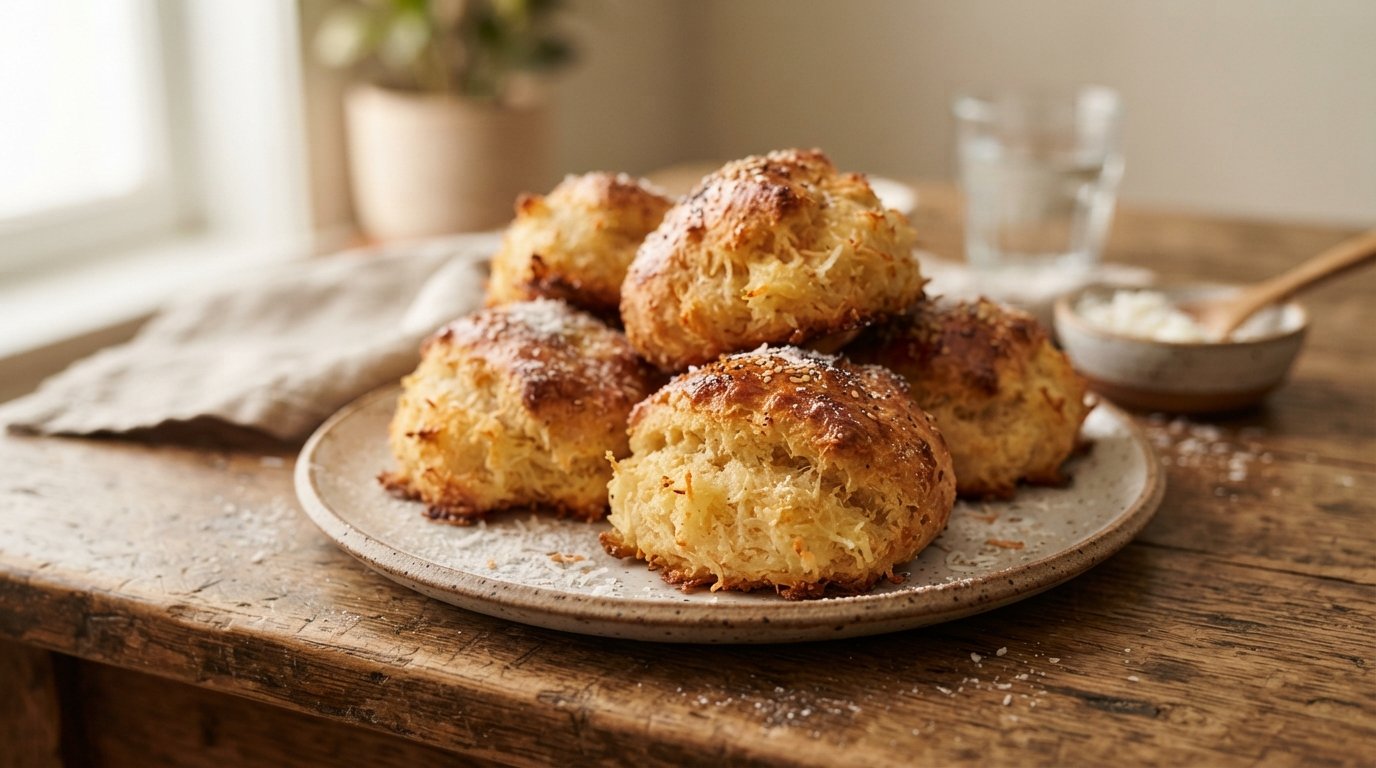
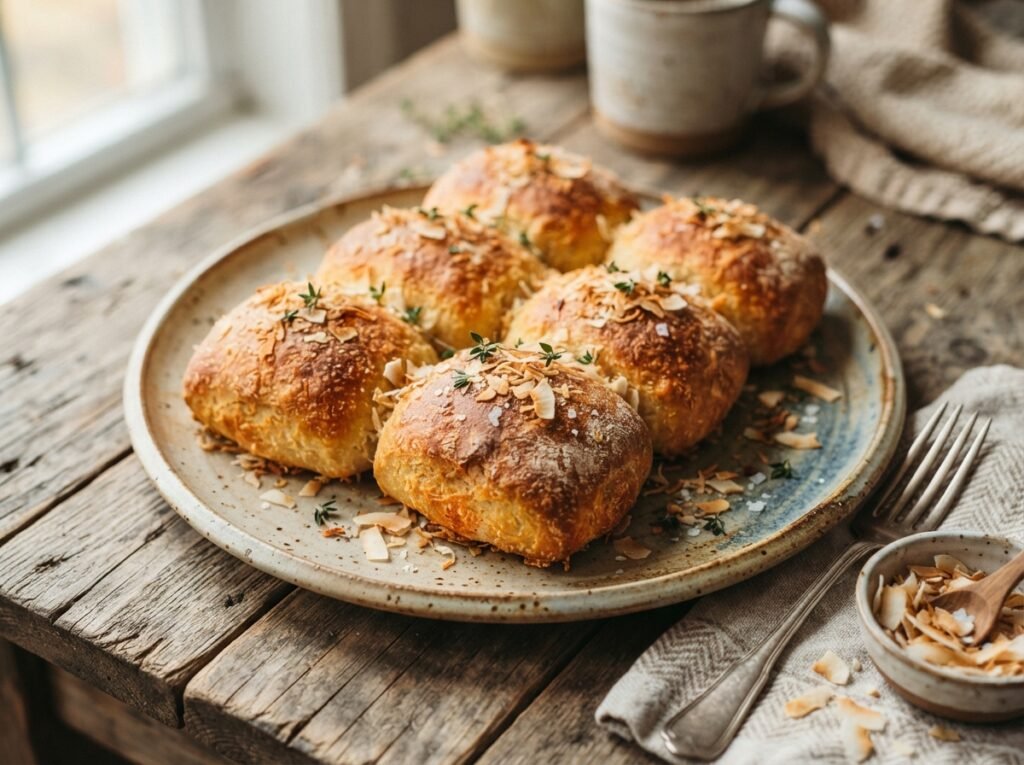
Golden, crispy on the outside and soft inside, these cassava rolls deliver stretchy melted cheese and savory ham in every bite. Made from boiled and mashed cassava (yuca), the dough is simple to work with and fries up beautifully. This cassava rolls recipe turns humble root vegetables into a satisfying snack or light meal that feels special without complicated techniques.
Quick Recipe Summary
| Prep Time | Cook Time | Total Time | Servings | Cuisine | Course | Difficulty | Calories |
|---|---|---|---|---|---|---|---|
| 30 minutes | 25 minutes | 55 minutes | 4–6 | Latin American / Caribbean-inspired | Appetizer / Snack | Intermediate | ~380 kcal |
These cassava rolls start with boiled yuca that is mashed with butter, egg, and seasonings, then flattened, filled with ham and cheese, rolled, and fried until deeply golden. The result is a crisp exterior with a tender, slightly stretchy interior and a dramatic cheese pull when broken open.
Table of Contents
| Section |
|---|
| Introduction |
| Why This Recipe Works |
| Why You’ll Love This Recipe |
| Ingredient Notes |
| Kitchen Equipment |
| Preparation Information |
| Step-by-Step Instructions |
| Expert Tips |
| Common Mistakes |
| Recipe Variations |
| What to Serve With This Recipe |
| Make Ahead Tips |
| Meal Prep Tips |
| Storage Instructions |
| Reheating Instructions |
| Nutritional Information |
| Troubleshooting Guide |
| Frequently Asked Questions |
| Final Thoughts |
Introduction
Cassava rolls are a delicious way to enjoy yuca beyond simple boiling or frying. Once the root is cooked and mashed into a soft dough, it becomes easy to shape around a classic ham-and-cheese filling. Fried until the outside turns a rich golden brown, each roll offers a satisfying contrast of textures and a long cheese stretch when pulled apart. This cassava rolls recipe is approachable for home cooks and works well as an appetizer, side, or casual main.
Why This Recipe Works
Boiling the cassava until fully tender allows it to mash smoothly without fibrous bits. Adding butter and egg creates a cohesive dough that holds its shape when rolled yet stays soft after frying. Flattening the dough under light pressure produces an even sheet that wraps cleanly around the filling. A moderate frying temperature gives the exterior time to crisp and color evenly while the cheese melts inside. The finished rolls stay intact when sliced or pulled apart, revealing the spiral of ham and cheese.
Why You’ll Love This Recipe
- Crisp golden crust with a soft, slightly stretchy interior
- Classic ham-and-cheese filling that melts beautifully
- Naturally gluten-free base when made without extra flour
- Impressive cheese pull that looks great on the plate
- Uses affordable, widely available ingredients
- Easy to scale for parties or smaller households
- Freezer-friendly before or after frying
Ingredient Notes
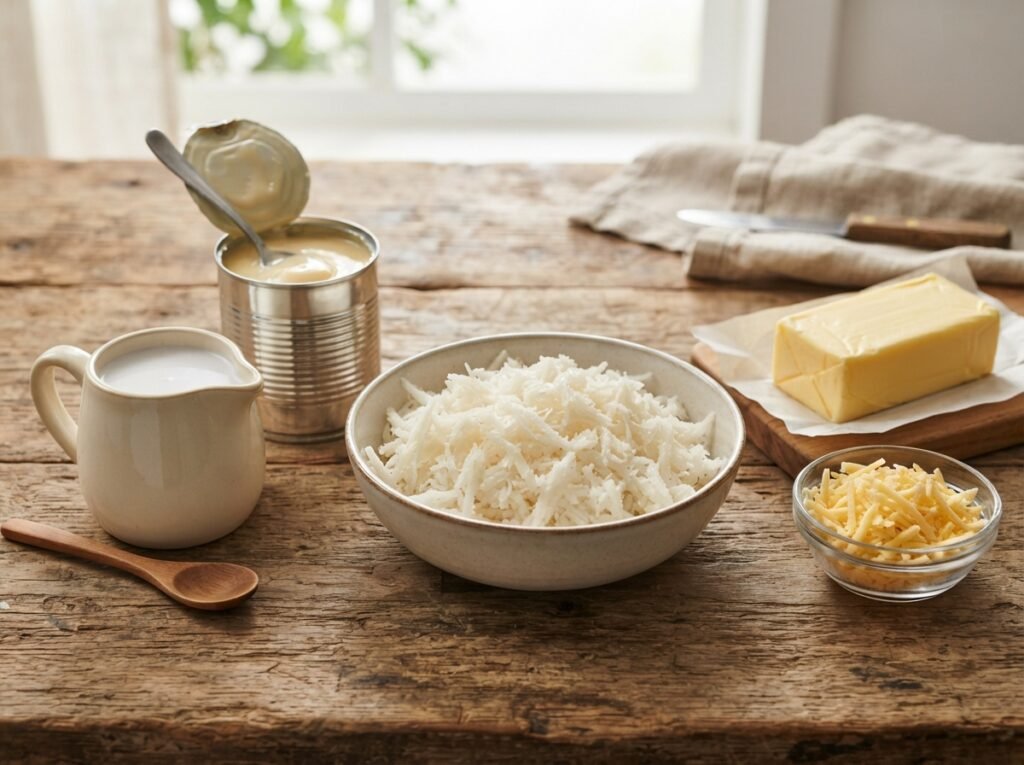
Cassava (yuca) Fresh cassava root is peeled, cut into chunks, and boiled until soft. Purpose: forms the neutral, starchy dough that becomes tender when cooked. Substitutions: frozen peeled cassava (thaw and boil as directed). Buying tip: choose firm roots without soft spots or mold; the flesh should be pure white. Storage: keep unpeeled roots in a cool, dry place for several days or peel, cut, and refrigerate in water for up to 2 days.
Butter Added while the cassava is still warm. Purpose: enriches the dough and helps it stay pliable. Substitutions: margarine or a neutral oil for dairy-free versions. Storage: standard refrigeration.
Egg One egg (or yolk plus a bit of white) binds the mash. Purpose: adds structure so the dough holds together during rolling and frying. Substitutions: a flax egg for egg-free versions, though texture will be slightly less cohesive.
Seasonings Salt and black pepper are essential; a light pinch of garlic powder or paprika can be added if desired. Purpose: balances the mild flavor of the cassava. Buying tip: freshly ground pepper gives brighter taste.
Starch or flour (optional but helpful) A small amount of cornstarch, cassava starch, or all-purpose flour may be mixed in if the mash feels too wet. Purpose: firms the dough for easier handling. Substitutions: omit if the boiled cassava is dry enough.
Ham Thin deli slices work best. Purpose: provides savory, salty contrast. Substitutions: turkey, chicken slices, or smoked tofu for vegetarian options. Storage: keep refrigerated and use promptly.
Cheese A melting cheese such as mozzarella, queso de freír, or a mild cheddar stick or shredded cheese. Purpose: creates the signature stretch. Substitutions: any good melting cheese; avoid very hard aged varieties. Buying tip: low-moisture mozzarella gives the best pull.
Oil for frying Neutral oil with a high smoke point (vegetable, canola, or peanut). Purpose: produces even browning and crispness.
Kitchen Equipment
Required
- Sharp knife and cutting board
- Large pot for boiling
- Potato masher or fork
- Mixing bowl or glass baking dish
- Plastic wrap
- Flat board or second cutting board for pressing
- Large skillet or deep frying pan
- Tongs or slotted spoon
- Paper towels for draining
Optional
- Kitchen scale for consistent portions
- Thermometer for oil temperature
- Wire rack for draining after frying
Preparation Information
- Prep Time: 30 minutes
- Cook Time: 25 minutes
- Total Time: 55 minutes
- Servings: 4–6 rolls
Step-by-Step Instructions
Boil the Cassava
Peel the cassava thoroughly, removing the thick brown skin and any pinkish under-layer. Cut into even chunks about 2 inches long. Place in a pot of salted water and bring to a boil. Cook until the pieces are completely tender and a fork slides in easily with no resistance—usually 20–25 minutes. Drain well. Fully cooked cassava mashes smoothly; undercooked pieces leave fibrous strands that make the dough hard to work.
Mash and Season
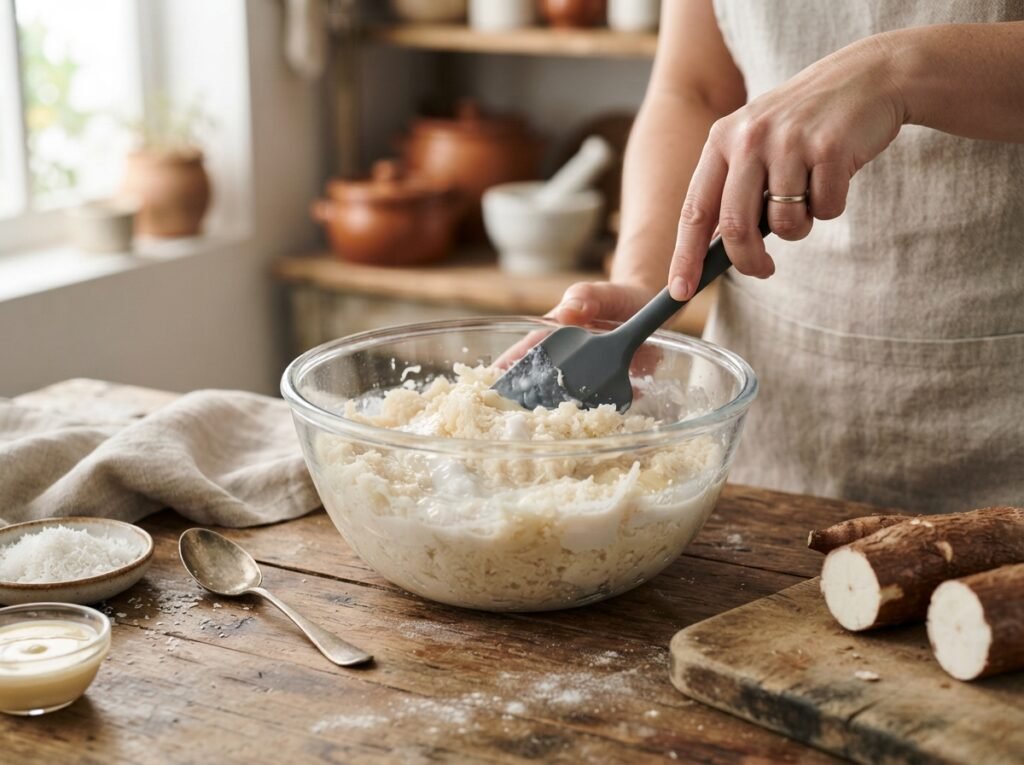
Transfer the hot drained cassava to a bowl or shallow dish. Add a knob of butter and mash thoroughly with a fork or potato masher until smooth and free of large lumps. Crack in an egg, season generously with salt and pepper, and mix until the egg is fully incorporated. If the mixture feels overly sticky or wet, sprinkle in a tablespoon or two of cornstarch or cassava starch and work it in. The dough should be soft but hold its shape when pressed.
Flatten the Dough
Place a portion of the mash on a sheet of plastic wrap. Cover with another piece of wrap or place a flat board on top and press gently into an even oval or rectangle about ¼-inch thick. Consistent thickness ensures the roll cooks evenly and the filling stays centered. Avoid pressing so hard that the dough tears.
Add the Filling and Roll
Remove the top layer of plastic. Lay one or two thin slices of ham across the center of the flattened dough, then place a stick or generous line of cheese on top of the ham. Using the plastic wrap to help, roll the dough tightly around the filling, tucking the sides as you go to seal the ends. The finished roll should be compact and roughly cylindrical. Repeat with the remaining dough.
Fry Until Golden
Heat about ½–¾ inch of neutral oil in a skillet over medium heat until it shimmers (around 350°F / 175°C). Carefully lower the rolls into the oil, seam side down if possible. Fry, turning occasionally, until all sides are deep golden brown and crisp—about 4–6 minutes total. The exterior should look evenly colored and feel firm. Remove to a paper-towel-lined plate or wire rack.
Rest, Slice, and Serve
Let the rolls rest 2–3 minutes so the cheese settles slightly. Slice on the diagonal or simply pull apart to reveal the melted cheese and ham. Serve immediately while the exterior is still crisp and the interior is hot and stretchy.
Expert Tips
Drain the boiled cassava thoroughly; excess water makes the dough sticky and hard to roll. Work while the mash is still warm—it is more pliable. Keep the filling centered and leave a clean border so the ends seal cleanly. Maintain steady oil temperature; too hot and the outside burns before the inside heats through. Fry in batches so the oil temperature does not drop. A light dusting of starch on your hands prevents sticking when shaping.
Common Mistakes
Undercooked cassava Leaves stringy fibers. Always cook until completely soft.
Wet dough Causes the rolls to fall apart or absorb too much oil. Drain well and add a little starch if needed.
Overfilling Leads to bursting during frying. Use modest amounts of ham and cheese.
Oil too cool Produces greasy, pale rolls. Wait until the oil shimmers before adding the food.
Cutting too soon Cheese runs out excessively. A short rest helps it set.
Recipe Variations
Spicy Add a pinch of cayenne or finely chopped jalapeño to the dough, or tuck a thin slice of pickled pepper inside with the ham.
Extra Cheesy Use a thicker cheese stick or mix two melting cheeses.
Vegetarian Replace ham with roasted red peppers, sautéed mushrooms, or spinach.
Chicken or Beef Swap the ham for thinly sliced cooked chicken or seasoned ground beef.
Healthier Pan-fry with less oil or finish in a 400°F oven after a light spray of oil.
Herb-Infused Mix chopped cilantro, parsley, or green onion into the mashed cassava.
Sweet Version Omit savory seasonings and fill with sweetened cheese or guava paste for a dessert-style roll.
What to Serve With This Recipe
These cassava rolls pair well with a simple green salad, pickled onions, or a light tomato salsa. A creamy cilantro-lime sauce or garlic aioli makes an excellent dipping option. For a fuller meal, serve alongside black beans and rice or a fresh cabbage slaw. Cold beer, sparkling water with lime, or a light tropical juice complements the richness. Finish with fresh fruit for a balanced plate.
Make Ahead Tips
Boil and mash the cassava up to one day ahead; store covered in the refrigerator. Shape the rolls and keep them wrapped in the fridge for several hours before frying. The uncooked rolls can also be frozen on a tray, then transferred to a bag for longer storage.
Meal Prep Tips
Fry a full batch, cool completely, and refrigerate. Reheat in the oven or air fryer to restore crispness. Alternatively, shape and freeze the uncooked rolls; fry directly from frozen, adding an extra minute or two.
Storage Instructions
Store leftover fried rolls in an airtight container in the refrigerator for up to 3 days. Freeze fully cooled rolls for up to 1 month. Uncooked shaped rolls freeze well for up to 2 months.
Reheating Instructions
Oven: 375°F for 10–12 minutes until heated through and crisp. Air Fryer: 350°F for 5–7 minutes. Stovetop: Warm in a lightly oiled skillet over medium heat, turning often. Microwave: Use only for convenience; the exterior will soften.
Nutritional Information
Approximate values per roll (based on 6 servings):
- Calories: 380
- Protein: 12 g
- Carbohydrates: 42 g
- Fat: 18 g
- Fiber: 3 g
- Sugar: 2 g
- Sodium: 480 mg
Values vary depending on exact ingredients and oil absorption.
Troubleshooting Guide
Dough too sticky Add a little more starch and chill briefly.
Rolls bursting in the oil Sealed poorly or overfilled. Press edges firmly and use less filling.
Pale, greasy exterior Oil temperature was too low. Heat properly and avoid overcrowding.
Cheese leaking excessively Normal to some degree; a short rest after frying reduces runoff.
Dense or dry interior Cassava was overcooked or too much starch was added. Mash while hot and use starch sparingly.
Frequently Asked Questions
Can I use frozen cassava? Yes. Thaw completely, then boil until tender and proceed as usual.
Is cassava the same as yuca? Yes. Cassava, yuca, and manioc refer to the same root.
Do I have to fry them? Baking is possible after brushing with oil, but the texture will be less crisp.
Can I make them ahead and reheat? Absolutely. Reheat in the oven or air fryer for best results.
What cheese gives the best pull? Low-moisture mozzarella or a similar melting cheese works best.
How do I know the oil is ready? It should shimmer; a small piece of dough should sizzle gently on contact.
Are these gluten-free? They can be if you use only cassava starch or omit extra flour.
Can I air-fry the rolls? Yes. Lightly oil the exterior and air-fry at 375°F for 10–12 minutes, turning once.
Why is my dough falling apart? The cassava may have been undercooked or the mixture needed more binding from the egg or starch.
How many rolls does this make? Typically 4–6 medium rolls, depending on how large you shape them.
Final Thoughts
This cassava rolls recipe transforms simple boiled yuca into crisp, cheese-filled rolls that are fun to make and even more fun to eat. The combination of a golden exterior, soft interior, and long cheese stretch makes them memorable for everyday meals or casual gatherings. Once you try the basic version, experiment with different fillings and seasonings. Give these cassava rolls a try, then leave a comment or rating to let others know how they turned out in your kitchen.