Quick Recipe Summary
| Feature | Details |
|---|---|
| Prep Time | 15 Minutes |
| Cook Time | 45-60 Minutes |
| Total Time | 1 Hour 15 Minutes |
| Servings | ~20-24 Cloves (Yield varies by bulb size) |
| Cuisine | French / Mediterranean |
| Course | Condiment / Side / Ingredient |
| Difficulty | Easy |
| Calories | ~45 kcal per clove (mostly from oil) |
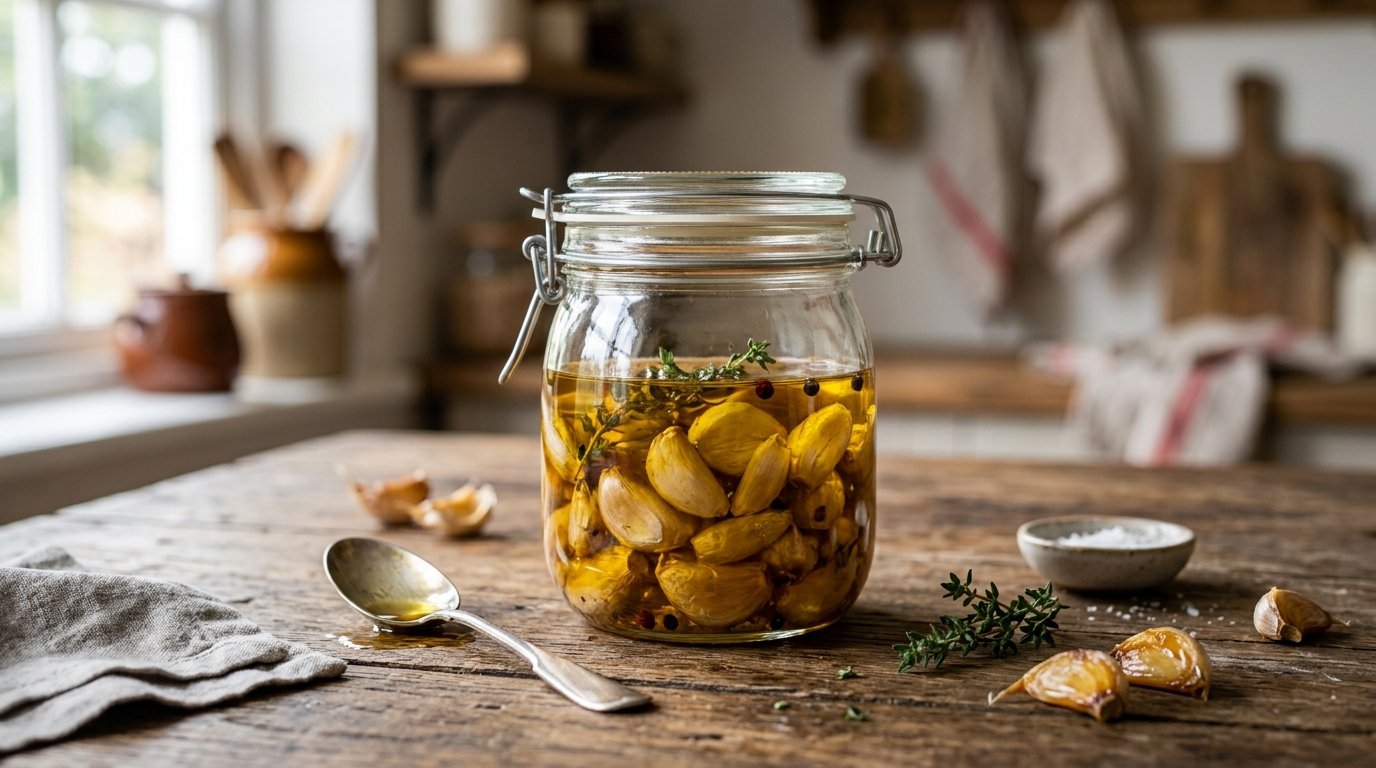
This recipe yields two treasures: tender, caramelized garlic cloves that melt in your mouth, and aromatic garlic-infused olive oil that becomes a prized cooking fat. The process is remarkably simple yet produces results that rival high-end restaurants. Whether you mash it into butter, stir it into pasta, or simply spread it on warm sourdough, this confit transforms ordinary meals into extraordinary experiences. It is the ultimate pantry staple for anyone who believes garlic makes everything better.
Table of Contents
- Introduction
- Why This Recipe Works
- Why You’ll Love This Recipe
- Ingredient Notes
- Kitchen Equipment
- Preparation Information
- Step-by-Step Instructions
- Expert Tips
- Common Mistakes
- Recipe Variations
- What to Serve With This Recipe
- Make Ahead & Meal Prep Tips
- Storage Instructions
- Reheating Instructions
- Nutritional Information
- Troubleshooting Guide
- Frequently Asked Questions
- Final Thoughts
Introduction
If you have ever been disappointed by harsh, raw garlic or unevenly roasted cloves that burn before softening, you understand why mastering Roasted Garlic Confit is a game-changer. Traditional roasting at high heat can scorch the exterior while leaving the interior firm, but confit solves this through gentle, sustained warmth. Submerging peeled cloves in oil creates a protective barrier that conducts heat evenly, allowing the garlic to soften and caramelize without browning too quickly. The addition of fresh thyme adds an herbal complexity that permeates both the cloves and the oil, creating layers of flavor that develop even further during storage.
The beauty of this technique lies in its versatility and longevity. A single batch yields enough confit to last weeks, providing instant gourmet flair to weeknight dinners. The infused oil alone is worth the effort, transforming sautéed vegetables, dressings, and finishing drizzles into something special. Whether you are a seasoned cook or just beginning to explore flavor-building techniques, this recipe teaches fundamental principles of low-temperature cooking that apply far beyond garlic. It is an investment in taste that pays dividends every time you reach for that jar in your fridge.
Why This Recipe Works
From a food science perspective, confit succeeds because oil acts as both a heat transfer medium and a moisture regulator. Water boils at 212°F (100°C), but oil can reach much higher temperatures without evaporating. By maintaining the oil between 200°F-250°F (93°C-121°C), we create an environment where garlic enzymes break down slowly, converting harsh sulfur compounds into sweet, mellow flavors through the Maillard reaction and caramelization. This temperature range is critical; too hot and the garlic burns, too cool and it merely poaches without developing depth.
The inclusion of fresh thyme serves multiple purposes beyond flavor. The herb’s essential oils are fat-soluble, meaning they dissolve into the warm oil rather than burning off as they would in dry heat. This infusion process creates a synergistic effect where the garlic and thyme enhance each other’s aromatic profiles. Additionally, the oil coating prevents surface dehydration, ensuring the cloves remain plump and creamy rather than shriveled. The result is a texture that spreads like butter and a flavor profile that balances sweetness, savoriness, and herbal brightness in perfect harmony.
Why You’ll Love This Recipe
- Dual Yield: Get both tender garlic cloves AND flavorful infused oil from one batch—two products for the effort of one.
- Superior Texture: Low-and-slow cooking creates uniformly soft, spreadable cloves without burnt edges or hard centers.
- Flavor Development: Taste actually improves over 3-5 days as flavors meld and mellow in storage.
- Versatile Application: Use cloves in mashed potatoes, pasta, dips, or sandwiches; use oil for cooking, dressings, or finishing.
- Long Shelf Life: Properly stored confit lasts weeks in the fridge, providing instant gourmet upgrades anytime.
- Beginner Friendly: Requires minimal active time and no special equipment beyond an oven-safe dish or air fryer.
Ingredient Notes
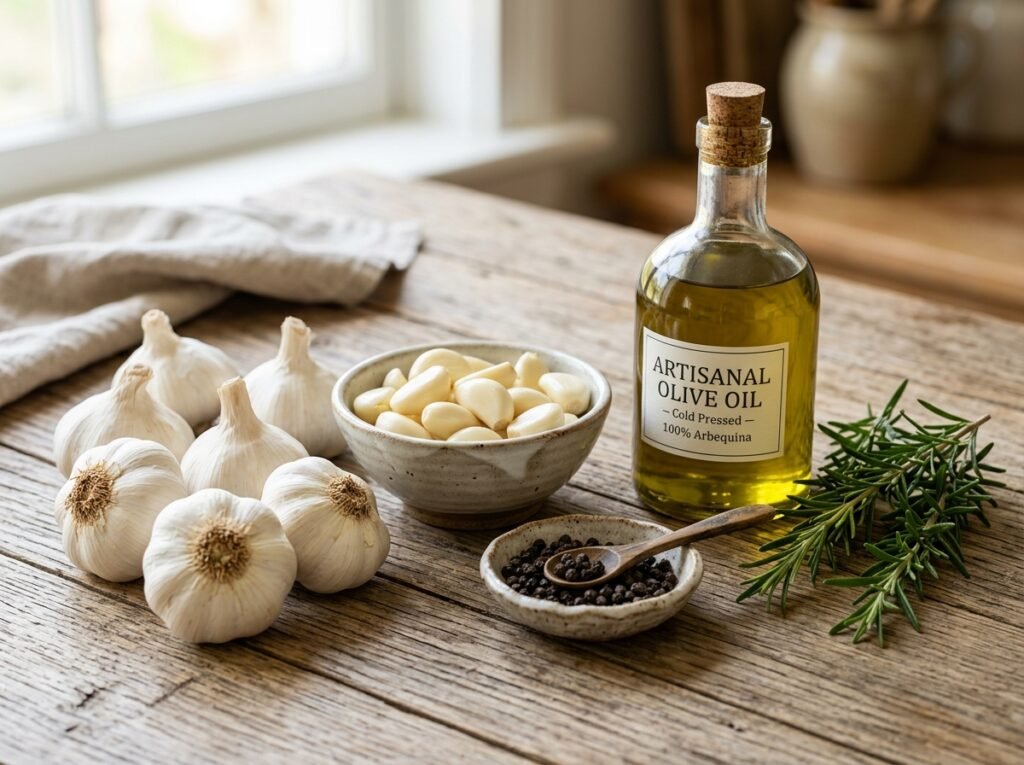
Garlic Bulbs (Fresh)
- Purpose: Primary ingredient. Provides base flavor, texture, and body for confit.
- Substitutions: None. Shallots can be confited similarly but yield different flavor profile.
- Buying Tips: Choose heavy, firm bulbs with tight, papery skins. Avoid sprouting, soft, or moldy cloves. Larger cloves cook more evenly than tiny ones. Organic preferred to avoid pesticide residue in oil.
- Storage Tips: Store whole bulbs in cool, dark, ventilated place up to 3 months. Once peeled, use immediately or store submerged in oil in fridge max 3 days before cooking. Never store raw peeled garlic at room temp in oil (botulism risk).
Extra Virgin Olive Oil
- Purpose: Cooking medium, flavor carrier, and preservation agent. Must fully submerge garlic.
- Substitutions: Avocado oil (neutral, higher smoke point), grapeseed oil (light), or regular olive oil (milder flavor). Avoid butter (burns at confit temps) or coconut oil (overpowers garlic).
- Buying Tips: Quality matters since oil becomes part of final product. Choose EVOO you’d enjoy eating raw. Dark glass bottle protects from light degradation. Harvest date within 18 months.
- Storage Tips: Store cool/dark. After confit, strained oil keeps refrigerated 2-3 weeks. Discard if cloudy/smells rancid. Never reuse oil that held garlic at room temp >2 hours.
Fresh Thyme Sprigs
- Purpose: Aromatic herb that infuses oil/cloves with earthy, floral notes. Complements garlic perfectly.
- Substitutions: Rosemary (stronger, piney), oregano (more pungent), or savory (peppery). Dried thyme (use 1/3 amount, less vibrant). Omit if unavailable; garlic still delicious alone.
- Buying Tips: Look for vibrant green leaves with no yellowing/wilting. Smell should be fragrant, not musty. Avoid bundled herbs tied tightly (promotes decay).
- Storage Tips: Wrap in damp paper towel, store in bag in fridge up to 1 week. Freeze sprigs in oil for long-term. Add to confit whole; remove before storing.
Salt & Pepper (Optional Finish)
- Purpose: Enhances flavor post-cooking. Not added during confit to prevent drawing out moisture prematurely.
- Substitutions: Flaky sea salt, smoked salt, or chili flakes for variation. White pepper for subtlety.
- Buying Tips: Kosher salt preferred for even distribution. Freshly cracked black pepper superior to pre-ground.
- Storage Tips: Indefinite shelf life. Add just before serving/mashing to preserve texture/aroma.
Kitchen Equipment
- Oven-Safe Baking Dish or Air Fryer Basket: Ceramic/glass dish ideal for oven method. Air fryer basket works for smaller batches. Must hold oil safely without leaking.
- Aluminum Foil or Lid: Essential for covering during cooking to prevent splattering and retain heat/moisture.
- Slotted Spoon or Spider Strainer: For removing cloves from oil without transferring excess liquid. Heat-resistant handle crucial.
- Fine-Mesh Sieve/Cheesecloth: For straining infused oil if desired. Removes herb fragments/garlic bits for clear oil.
- Airtight Glass Jars/Containers: For storage. Glass preferred over plastic (oil can degrade plastic). Sterilize before use.
- Instant-Read Thermometer (Optional): Ensures oil stays in safe 200°F-250°F range. Prevents burning/undercooking.
- Mortar & Pestle or Fork: For mashing cloves into paste/spread. Mortar yields smoother texture.
- Measuring Cups/Spoons: For consistent oil/garlic ratios. Precision ensures proper submersion.
Preparation Information
- Prep Time: 15 Minutes
- Cook Time: 45-60 Minutes
- Total Time: 1 Hour 15 Minutes
- Servings: ~20-24 Cloves
Step-by-Step Instructions
H3: Prepare Garlic & Aromatics
Peel all garlic cloves completely. Trim any hard root ends. Place peeled cloves in single layer in baking dish/air fryer basket. Nestle fresh thyme sprigs among cloves. Do NOT overcrowd; cloves need space for even cooking.
- Why it matters: Complete peeling ensures oil penetrates evenly. Single layer prevents steaming/clumping. Thyme placement maximizes infusion surface area. Overcrowding = uneven cooking/soggy texture.
- Visual Cue: Cloves uniform ivory/cream color. No purple/green spots (indicates age/sprouting). Thyme vibrant green, not wilted.
- Texture Cue: Cloves firm, not soft/mushy. Skin completely removed, no papery bits remaining.
- Common Mistake: Leaving root ends intact creates tough, inedible bits. Trim flush with clove base. Don’t wash peeled garlic; water introduces moisture that causes splattering/spoilage.
- Pro Tip: Use older garlic (not freshly harvested) for sweeter, mellower confit. New garlic has higher water content, takes longer to caramelize.
H3: Submerge in Oil
Pour extra virgin olive oil over cloves until COMPLETELY submerged by at least 1/2 inch. Oil should cover topmost clove generously. Gently shake/tap dish to release air bubbles trapped between cloves.
- Why it matters: Full submension ensures even heat conduction and prevents exposed cloves from burning/drying. Air pockets create hot spots where garlic scorches. Adequate oil volume maintains stable temperature.
- Visual Cue: Oil level clearly above highest clove. No dry spots visible. Bubbles rise to surface when tapped.
- Texture Cue: Cloves shift slightly when dish moved, indicating free movement in oil.
- Mistake to Avoid: Insufficient oil = burnt tops, undercooked bottoms. Always err on side of too much oil; leftover infused oil is valuable. Don’t use shallow pan; depth matters for temperature stability.
H3: Cook Low & Slow
Cover dish tightly with foil/lid. Cook at 225°F-250°F (107°C-121°C) for 45-60 minutes. Check at 45 mins; cloves should be golden, tender when pierced with fork. If pale/firm, continue cooking 10-15 min increments. For air fryer: 225°F 30-40 mins, check frequently.
- Why it matters: Low temperature allows gradual caramelization without burning. Covering retains heat/moisture, prevents oil splatter. Fork test confirms doneness without cutting open. Patience yields superior texture/flavor vs. rushing at high heat.
- Visual Cue: Cloves turn pale gold to amber. Oil bubbles gently, not vigorously. Thyme wilts/darkens slightly.
- Aroma Cue: Sweet, nutty, caramelized garlic scent fills kitchen. No acrid/burnt smell indicates proper temp.
- Doneness Test: Fork slides in effortlessly with zero resistance. Clove yields like butter, not crunchy/firm. Internal temp ~200°F if measured. Overcooking = mushy/bitter; undercooking = harsh/chewy.
H3: Cool & Store Safely
Remove from heat. Let cool COMPLETELY in oil at room temp (max 2 hours). Transfer cloves/oil to sterilized airtight jars. Ensure cloves remain submerged. Refrigerate immediately. Label with date.
- Why it matters: Cooling in oil allows continued flavor infusion. Rapid cooling prevents bacterial growth. Submersion in oil creates anaerobic environment that preserves cloves BUT requires refrigeration to prevent botulism. Sterile jars prevent contamination.
- Visual Cue: Oil clears slightly as cools. Cloves settle, may darken slightly. No cloudiness/mold signs.
- Safety Note: NEVER store garlic-in-oil at room temperature. Botulism spores thrive in anaerobic, low-acid environments. ALWAYS refrigerate. Discard if bubbles, foam, off-smell, or mold appears.
- Tip: Strain oil separately if desired. Store cloves and oil together for maximum flavor retention. Use clean utensils always to prevent contamination.
Expert Tips
- Temperature Control is Everything: Invest in oven thermometer. Many ovens run 25-50°F off calibration. True 225°F-250°F is non-negotiable for safety/texture. Too hot = burnt/bitter; too cool = unsafe/pale.
- Oil Quantity Matters: Don’t skimp. Generous oil ensures even cooking and yields more infused oil. Leftover oil is liquid gold for dressings/sautéing. Measure oil used; you’ll know exact yield next time.
- Garlic Age Affects Outcome: Older, cured garlic (stored 2+ weeks) has lower water content, caramelizes faster/sweeter. Freshly harvested “wet” garlic needs longer cook time, may steam instead of confit. Ask farmer/market about harvest date.
- Herb Timing Flexibility: Add thyme at start for deep infusion. For brighter herb note, add fresh sprig last 10 mins of cook. Remove ALL herbs before storage; they can harbor bacteria/mold over time.
- Batch Size Awareness: Don’t exceed 2-inch depth of cloves in dish. Deeper layers cook unevenly. Multiple shallow batches better than one deep batch. Consistency > quantity.
Common Mistakes
- Burnt/Bitter Garlic: Oil too hot or uncovered. Fix: Verify oven temp. Cover tightly. Reduce to 200°F if browning too fast. Start over if bitter; can’t be salvaged.
- Hard/Undercooked Centers: Temp too low or insufficient time. Fix: Increase to 250°F max. Extend cook time 15-min increments. Pierce test is definitive; color alone deceives.
- Cloudy/Rancid Oil: Stored at room temp or contaminated. Fix: ALWAYS refrigerate. Use sterile jars/utensils. Discard if suspicious. Prevention > cure.
- Uneven Cooking: Overcrowded dish or inconsistent clove size. Fix: Single layer only. Sort cloves by size; cook similar sizes together. Shake dish gently halfway through.
- Watery/Soggy Texture: Wet garlic or insufficient oil. Fix: Dry peeled cloves thoroughly. Ensure full submersion. Older garlic preferred. Patience during cook drives off moisture gradually.
Recipe Variations
- Spicy Chili-Garlic Confit: Add 1-2 dried arbol/chili flakes to oil. Infuses heat alongside garlic. Perfect for spicy pastas/oils. Adjust chili quantity to tolerance.
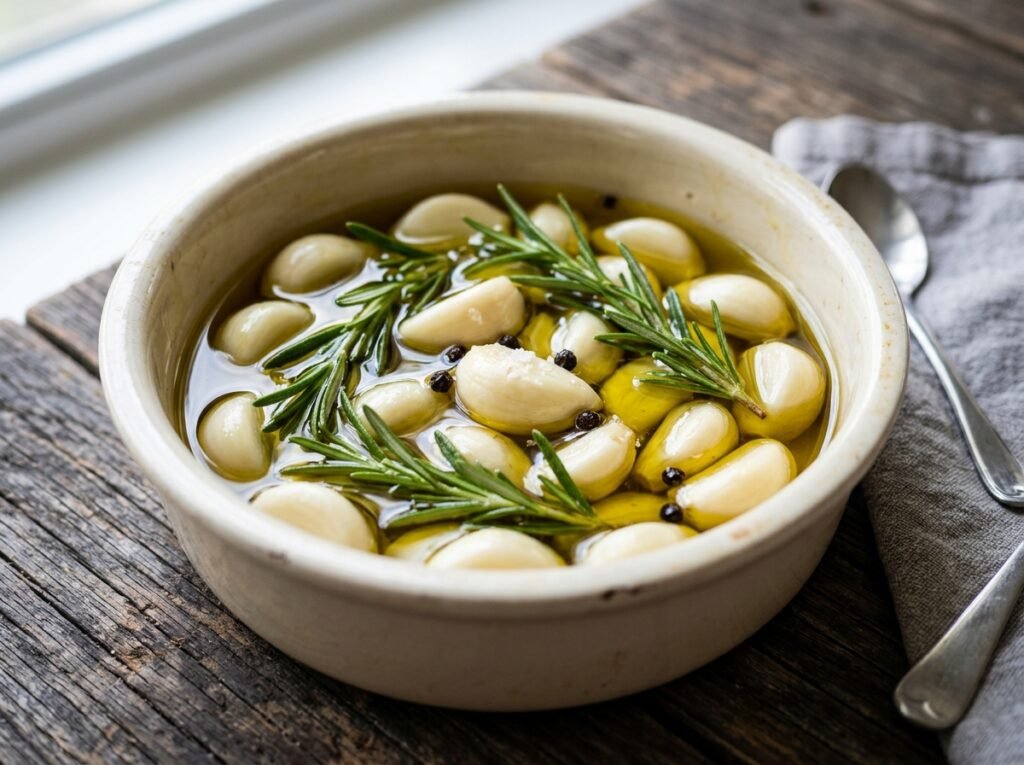
- Rosemary-Lemon Twist: Substitute thyme with rosemary + 3 lemon zest strips. Bright, citrusy profile. Excellent with fish/chicken. Remove lemon zest before storage (can bitter over time).
- Vegan Umami Boost: Add 1 tbsp white miso paste to oil before cooking. Deepens savoriness without animal products. Whisk miso into warm oil first to dissolve.
- Smoked Paprika Infusion: Stir in 1 tsp smoked paprika post-cook. Adds smoky depth/color. Great for potato dishes/stews. Strain if preferring clear oil.
- Black Garlic Confit: Use fermented black garlic instead of fresh. Sweeter, molasses-like flavor. Reduce cook time to 20-30 mins (already softened). Unique gourmet variation.
- Herb Garden Medley: Combine thyme + rosemary + oregano + sage. Complex herbal profile. Ideal for roasted meats/grains. Remove all herbs before storage.
- Low-Sodium Option: Omit added salt entirely. Rely on garlic’s natural savoriness. Perfect for sodium-restricted diets. Flavor still robust from confit process.
What to Serve With This Recipe
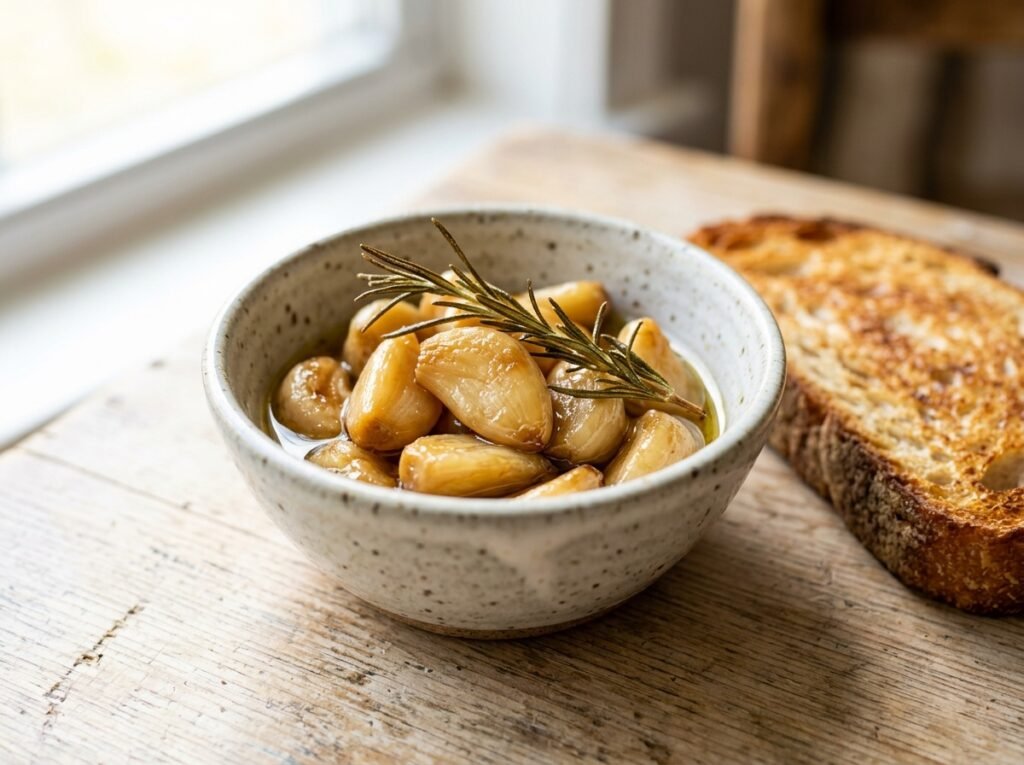
- Breads: Crusty sourdough, ciabatta, or baguette warmed and slathered with confit. Ultimate appetizer/snack.
- Mashed Potatoes: Fold 3-4 cloves into hot mashed potatoes. Transforms humble side into gourmet experience. Drizzle with infused oil.
- Pasta: Toss cooked pasta with 2-3 mashed cloves + infused oil + parsley. Simple, elegant main course. Add pecorino if desired.
- Salads: Whisk infused oil into vinaigrettes. Top with whole cloves. Elevates greens/grain bowls instantly.
- Proteins: Spread under chicken/fish skin before roasting. Mix into burger patties/meatballs. Finishing drizzle over steak/shrimp.
- Vegetables: Toss roasted veggies with confit oil. Stir into hummus/bean dips. Swirl into soups/stews for depth.
Make Ahead & Meal Prep Tips
- Batch Cooking: Double/triple recipe. Portion into small jars. Freeze up to 3 months. Thaw overnight in fridge before use. Saves significant future prep time.
- Oil Preservation: Strain oil after cooling. Store separately from cloves. Keeps 2-3 weeks refrigerated. Use for sautéing/dressings. Label with date/type.
- Pre-Peeled Garlic: Peel bulk garlic ahead. Store submerged in oil in fridge max 3 days before cooking. Reduces active prep time significantly.
- Portion Control: Mash portion of cloves with oil into paste. Freeze in ice cube trays. Pop out cubes for instant flavor bombs in sauces/soups.
Storage Instructions
- Refrigerator: Store submerged in oil in airtight glass jar up to 2 weeks. Always keep cloves fully covered. Use clean utensils. Discard if bubbles/foam/off-smell/mold appears.
- Freezer: Freeze cloves/oil together in freezer-safe container up to 3 months. Texture softens slightly upon thawing but flavor remains excellent. Thaw overnight in fridge.
- Avoid: Room temperature storage EVER. Plastic containers (oil degrades plastic). Metal containers (reacts with acid/oil). Storing with fresh herbs >24 hours (spoilage risk).
- Safety First: When in doubt, throw out. Botulism is odorless/tasteless. Never risk it. Label jars with date. Rotate stock FIFO (first in, first out).
Reheating Instructions
- Oven (Best): 200°F for 5-8 mins in oven-safe dish. Gentle heat restores spreadability without cooking further. Preserves texture/flavor optimally.
- Microwave: 10-sec bursts on low power. Stir between bursts. Risk of hot spots/overcooking. Only if speed essential. Expect slight texture change.
- Stovetop: Small saucepan over lowest heat 2-3 mins, stirring constantly. Direct heat risks burning. Remove immediately when warm. Not recommended for delicate confit.
- Air Fryer: 200°F 2-3 mins. Quick effective method. Monitor closely. Spray basket lightly if concerned about sticking.
- Note: Reheated confit won’t match fresh-from-jar vibrancy. Accept slight softening. Always check temp before use. Refresh with pinch of salt/herbs if needed.
Nutritional Information
Per clove (approximate):
- Calories: 45
- Protein: 0.5g
- Carbohydrates: 1g
- Fat: 4.5g
- Fiber: 0g
- Sugar: 0.5g
- Sodium: 0mg
Note: Values vary based on oil absorption and clove size. Primarily fat calories from olive oil. Naturally vegan/gluten-free. Sodium-free unless salt added.
Troubleshooting Guide
| Problem | Cause | Solution |
|---|---|---|
| Burnt/bitter garlic | Oil too hot / Uncovered | Verify oven temp. Cover tightly. Reduce to 200°F. Start over if bitter. |
| Hard/undercooked centers | Temp too low / Insufficient time | Increase to 250°F max. Extend cook 15-min increments. Pierce test definitive. |
| Cloudy/rancid oil | Room temp storage / Contamination | ALWAYS refrigerate. Use sterile jars/utensils. Discard if suspicious. |
| Uneven cooking | Overcrowded / Mixed sizes | Single layer only. Sort by size. Shake dish gently halfway. |
| Watery/soggy texture | Wet garlic / Insufficient oil | Dry cloves thoroughly. Ensure full submersion. Use older garlic. |
| Mold/spoilage | Improper storage / Contamination | Refrigerate immediately. Submerge fully. Use clean utensils. Discard if affected. |
Frequently Asked Questions
1. Can I make garlic confit in advance? Yes! In fact, flavor improves 3-5 days post-cooking as cloves mellow and absorb oil. Store properly refrigerated. Makes excellent gift when jarred beautifully. Plan ahead for best flavor development.
2. Is garlic confit safe? What about botulism? Safe IF refrigerated always. Botulism spores thrive in anaerobic, low-acid, room-temp environments. Refrigeration inhibits growth. NEVER store at room temp. Discard if bubbles/foam/off-smell. When in doubt, throw out. Safety > savings.
3. Can I reuse the infused oil? Yes, but treat as perishable. Strain through cheesecloth. Store refrigerated max 2-3 weeks. Use for sautéing/dressings/finishing. Discard if cloudy/smells rancid. Never reuse oil that sat at room temp >2 hours.
4. Why are my cloves bitter/burnt? Oil temperature too high or uncovered during cook. Verify oven thermometer accuracy. Cover tightly. Reduce to 200°F if browning too fast. Bitterness can’t be fixed; start over. Prevention via temp control is key.
5. Can I use dried herbs instead of fresh? You can, but fresh provides superior aroma/flavor infusion. Dried herbs can become gritty/bitter in oil. If using dried, reduce quantity to 1/3 and strain oil thoroughly before storage. Fresh strongly recommended.
6. How do I know when confit is done? Pierce test is definitive: fork slides in with zero resistance, clove yields like butter. Color should be pale gold to amber, not brown/black. Internal temp ~200°F if measured. Visual color alone deceives; texture confirms doneness.
7. Can I freeze garlic confit? Absolutely! Freeze cloves/oil together in freezer-safe container up to 3 months. Thaw overnight in fridge. Texture softens slightly but flavor remains excellent. Great for batch cooking/portions. Label with date.
8. What’s the best garlic variety for confit? Older, cured garlic (stored 2+ weeks) works best. Lower water content = faster/sweeter caramelization. Softneck varieties often sweeter/milder than hardneck. Avoid newly harvested “wet” garlic; takes longer, may steam instead of confit.
Final Thoughts
Creating Roasted Garlic Confit is more than following a recipe—it’s embracing the transformative power of patience and technique. The alchemy of turning pungent cloves into sweet, spreadable gold teaches us that great flavor often comes from simplicity executed with care. This humble preparation unlocks endless culinary possibilities, elevating everyday meals into memorable experiences. We encourage you to experiment with herbs, adjust cooking times to your equipment, and discover your perfect confit rhythm. Share your creations, ask questions, and rate the recipe below—your feedback helps our community grow and inspires fellow cooks to explore the magic of slow-cooked garlic. Now grab those bulbs and start pouring; your kitchen (and taste buds) will thank you profoundly.