Quick Recipe Summary
| Prep Time | 10 Minutes |
|---|---|
| Cook Time | 15 Minutes |
| Total Time | 25 Minutes |
| Servings | 4 |
| Cuisine | American / Italian-Inspired |
| Course | Breakfast / Brunch / Light Dinner |
| Difficulty | Easy |
| Calories | ~380 kcal per serving |
Table of Contents
- Introduction
- Why This Recipe Works
- Why You’ll Love This Recipe
- Ingredient Notes
- Kitchen Equipment
- Step-by-Step Instructions
- Expert Tips for the Perfect Set & Melt
- Common Mistakes to Avoid
- Recipe Variations
- What to Serve With This Recipe
- Make Ahead & Meal Prep Tips
- Storage & Reheating Instructions
- Nutritional Information
- Troubleshooting Guide
- Frequently Asked Questions
- Final Thoughts
Introduction
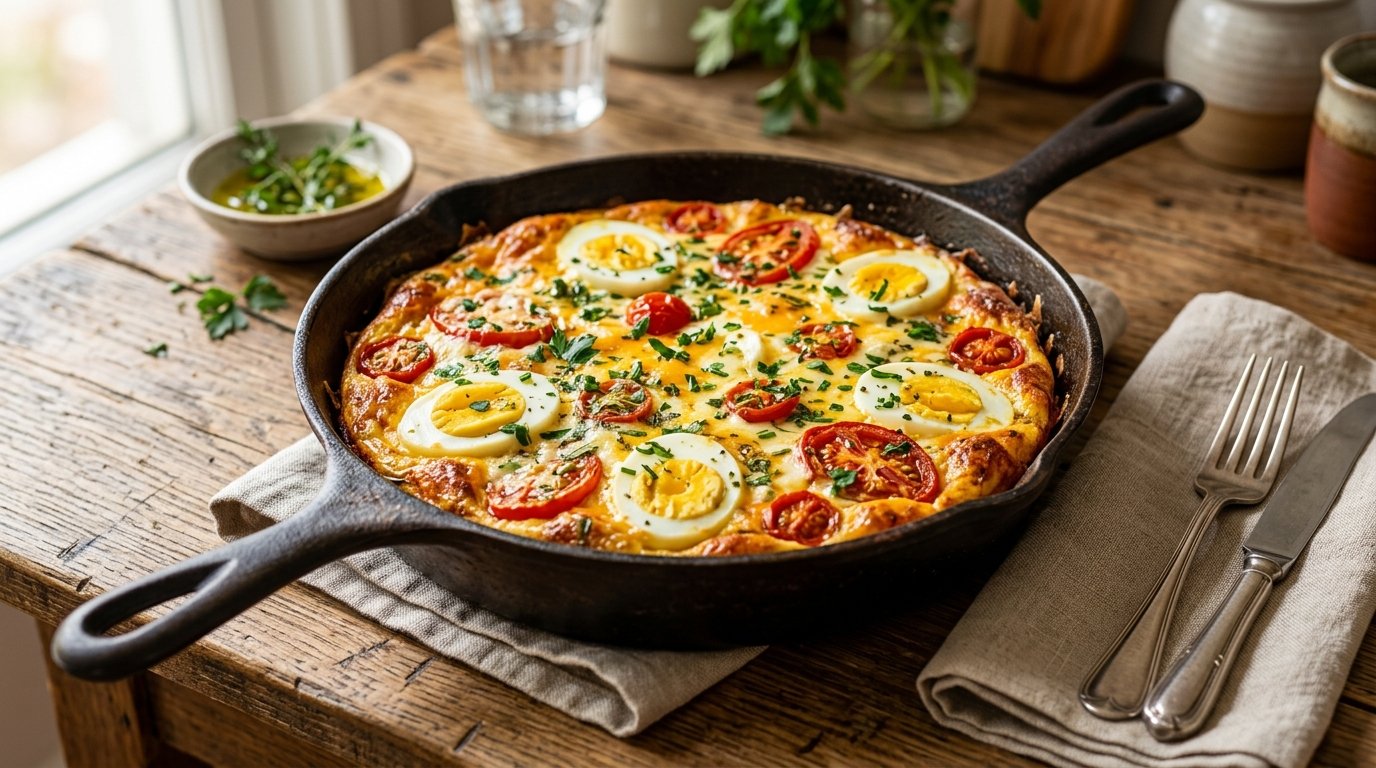
There is a specific kind of culinary satisfaction that comes from transforming humble, pre-cooked ingredients into something visually stunning and deeply comforting. This Cheesy Hard-Boiled Egg Frittata with Tomato is exactly that kind of dish. It takes the often-overlooked hard-boiled egg—a staple of meal prep and picnics—and elevates it into a golden, sizzling skillet masterpiece topped with melted mozzarella and fresh tomato slices. Unlike traditional frittatas that rely solely on raw eggs binding together, this version uses whole boiled eggs as structural anchors, creating a unique texture where tender egg whites meet fluffy custard and gooey cheese in every bite.
This recipe is a brilliant solution for using up leftover boiled eggs or creating a high-protein breakfast that feels indulgent rather than utilitarian. The technique of pouring seasoned raw egg mixture around pre-cooked eggs ensures that the final dish holds its shape beautifully when sliced, while the steam-trapped melting phase creates a stretchy, pizza-like cheese pull that is impossible to resist. Whether you are hosting a lazy Sunday brunch, looking for a quick protein-packed dinner, or simply want to reimagine your egg repertoire, this skillet creation delivers restaurant-quality results with minimal effort and maximum flavor.
Why This Recipe Works
The success of this Cheesy Hard-Boiled Egg Frittata with Tomato lies in the interplay between two different egg textures and the thermal dynamics of the skillet. Hard-boiled eggs provide a firm, dense core that contrasts with the soft, aerated custard of the raw egg mixture. When the raw eggs cook around the solid boiled eggs, they act as a mortar, locking the pieces in place and preventing the common frittata problem of crumbling when sliced. This structural integrity makes the dish ideal for serving in wedges, much like a quiche but without the pastry.
Furthermore, the finishing technique is critical. By adding cheese and tomatoes only after the base has set, and then covering the pan to trap steam, we create a mini-oven environment. This gentle, indirect heat melts the mozzarella evenly without overcooking the underlying eggs or making the tomatoes watery. The steam also helps the cheese adhere to the surface, creating that signature stretchy pull when served. The acidity of the fresh tomato cuts through the richness of the double-egg and cheese combination, balancing the palate and adding a burst of freshness that prevents the dish from feeling heavy.
Why You’ll Love This Recipe
- Unique Texture Contrast: Experience the satisfying bite of firm boiled egg alongside fluffy custard and stretchy melted cheese.
- Zero-Waste Hero: The perfect way to use up leftover hard-boiled eggs before they go bad, turning potential waste into a gourmet meal.
- High-Protein Powerhouse: Double eggs plus cheese make this an incredibly satiating meal that keeps energy levels stable.
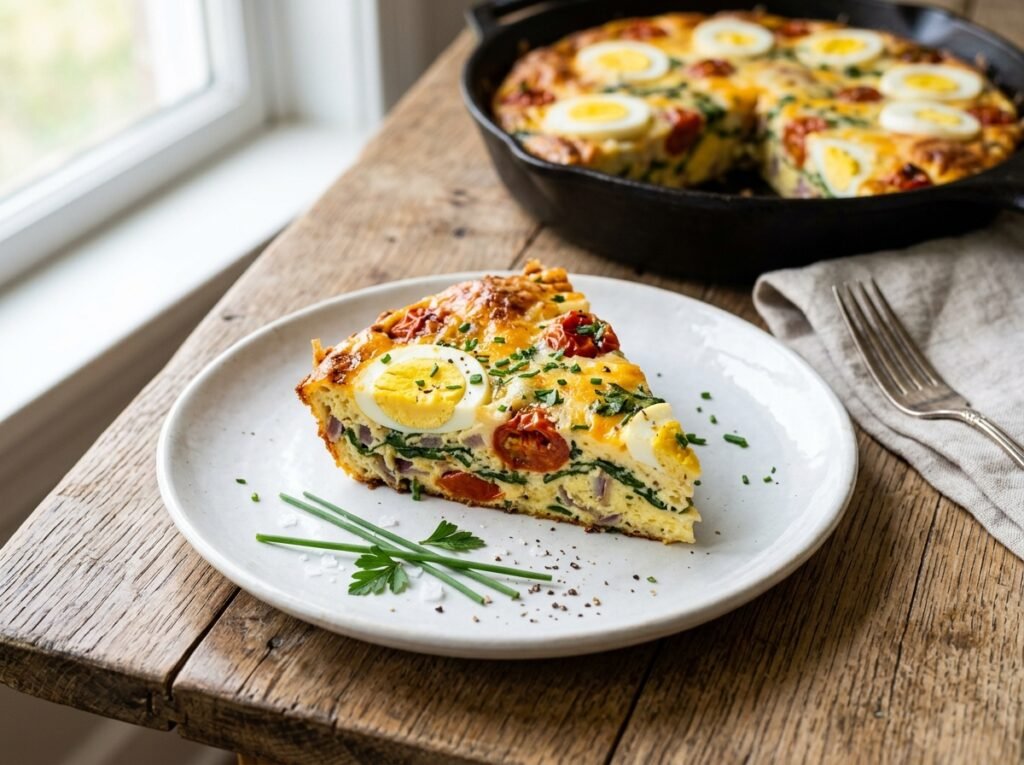
- Visual Stunner: The arrangement of white egg rounds against golden custard and red tomato slices looks beautiful straight from the pan.
- Quick & Efficient: Uses pre-cooked protein to slash active cooking time; ready in under 30 minutes start to finish.
- Versatile Meal Option: Equally appropriate for breakfast, brunch, lunch, or a light keto-friendly dinner.
- Kid-Friendly Appeal: The familiar flavors of eggs, cheese, and mild tomato make this a hit with younger eaters who might reject complex dishes.
Ingredient Notes
Hard-Boiled Eggs
- Purpose: Primary protein and structural element. Provides firm texture and visual pattern.
- Substitutions: Soft-boiled eggs (jammy yolk adds richness but may bleed color), poached eggs (too delicate for this method), or silken tofu cubes (vegan option, though texture differs significantly).
- Buying Tips: If buying pre-peeled, check expiration dates carefully. Homemade is best; ensure yolks are fully set but not green-rimmed (indicates overcooking). Peel gently to avoid tearing whites.
- Storage Tips: Store unpeeled in fridge up to 1 week. Peeled eggs last 2-3 days submerged in cold water (change daily). Bring to room temp before cooking to prevent thermal shock.
Raw Eggs (Large)
- Purpose: Binder and custard base. Creates the fluffy matrix that holds boiled eggs together.
- Substitutions: Liquid egg whites (lower fat/calorie), duck eggs (richer/larger), or quail eggs (delicate, require more quantity).
- Buying Tips: Freshness matters for volume and structure. Check carton date. Avoid cracked shells. Room temperature eggs whip better and cook more evenly than cold ones.
- Storage Tips: Refrigerate immediately. Use within 3-5 weeks of purchase. Do not wash before storing; natural bloom protects against bacteria.
Mozzarella Cheese (Low-Moisture, Part-Skim)
- Purpose: Melting agent and flavor enhancer. Creates the signature stretch and salty contrast.
- Substitutions: Provolone (sharper melt), Fontina (nutty/creamy), Cheddar (stronger flavor, less stretch), or vegan mozzarella shreds.
- Buying Tips: Crucial: Buy block cheese and shred yourself. Pre-shredded cheese contains cellulose anti-caking agents that inhibit smooth melting and cause greasy separation. Low-moisture melts better than fresh mozzarella balls (which release too much water).
- Storage Tips: Wrap block in parchment then foil. Refrigerate up to 4 weeks. Shred only what you need; pre-shredded lasts 3-5 days max.
Tomatoes (Beefsteak or Roma)
- Purpose: Freshness, acidity, and color. Balances richness of eggs/cheese.
- Substitutions: Cherry tomatoes (halved), sun-dried tomatoes (oil-packed, intense flavor), roasted red peppers (sweeter/softer), or zucchini slices.
- Buying Tips: Choose firm, ripe tomatoes with no soft spots. Beefsteak offers large slices for presentation; Roma has fewer seeds/less water. Smell should be earthy/sweet at stem end.
- Storage Tips: Store at room temperature, never refrigerate (destroys flavor/texture). Use within 3-5 days. Slice just before topping to prevent sogginess.
Butter & Seasonings (Salt, Pepper, Herbs)
- Purpose: Fat for cooking/flavor. Seasoning enhances natural egg taste. Herbs add aromatic lift.
- Substitutions: Olive oil (fruitier), ghee (nuttier/higher smoke point). Dried oregano/basil if fresh unavailable (use 1/3 amount). Red pepper flakes for heat.
- Buying Tips: Unsalted butter allows salt control. Fresh herbs vibrant/green, not wilted/yellow. Whole spices ground fresh offer superior aroma.
- Storage Tips: Butter freezes well. Herbs in damp paper towel in fridge crisper. Dried spices replace annually for potency.
Kitchen Equipment
- 10-12 Inch Oven-Safe Skillet (Non-Stick or Cast Iron): Essential for even cooking and easy release. Non-stick preferred for egg dishes; cast iron retains heat well but requires proper seasoning/oiling. Must have tight-fitting lid for steaming phase.
- Whisk & Mixing Bowl: For beating raw eggs thoroughly. Incorporating air creates fluffier texture. Glass/ceramic bowl preferred for easy cleaning.
- Sharp Chef’s Knife & Cutting Board: For slicing tomatoes and halving boiled eggs cleanly. Stable board prevents slips. Dull knife crushes tomatoes, releasing excess juice.
- Spatula (Silicone or Heat-Resistant): For loosening edges and serving wedges. Flexible edge gets under frittata without breaking.
- Measuring Spoons/Cups: Precision matters for seasoning balance. Too much salt = overpowering; too little = bland.
- Lid (Glass Preferred): Allows monitoring steam/melt without lifting. Lifting releases steam, extending cook time and risking dry eggs.
Step-by-Step Instructions
H3: Step 1 – Prep Boiled Eggs & Whisk Custard
Peel hard-boiled eggs. Slice each in half lengthwise (or into thick rounds if preferred). In bowl, whisk 6-8 large raw eggs with ¼ cup milk/cream (optional for richness), ½ tsp salt, ¼ tsp black pepper, and dried herbs until uniform and slightly frothy. Let sit 5 mins.
- Why this matters: Halving exposes yolk/white surface area for better integration with custard. Whisking incorporates air bubbles that expand during cooking, creating lift. Resting allows proteins to relax, resulting in tender curd. Milk/cream adds moisture/fat for softer texture.
- Visual Cue: Egg mixture pale yellow, uniform color. No streaks of white/yolk. Small bubbles on surface. Boiled eggs clean, no shell fragments.
- Texture Cue: Custard liquid but viscous. Not watery or gloopy. Boiled eggs firm, smooth surface.
- Aroma Cue: Mild eggy scent. Herbs/spices fragrant. No sulfur/ammonia smell (indicates old/overcooked boiled eggs).
- Common Mistake: Under-whisking. Results in streaky, uneven texture. Fix: Whisk vigorously 1-2 mins until fully combined. Strain through sieve if lumps persist.
- Professional Tip: Add pinch of baking powder to egg mixture. Creates extra lift/fluffiness. Dissolves completely during cook; no taste residue.
H3: Step 2 – Sear Boiled Eggs in Butter
Heat 1 tbsp butter in skillet over medium heat until foaming subsides. Arrange boiled egg halves cut-side DOWN in single layer. Cook 1-2 mins until lightly golden/seared. Flip gently. Cook 30 secs more.
- Why this matters: Searing creates Maillard reaction crust on boiled eggs, adding nutty flavor and textural contrast. Prevents them from being bland/mushy. Golden surface helps custard adhere. Butter adds richness and promotes browning.
- Visual Cue: Cut surfaces turn pale gold/amber. Edges crisp slightly. Butter bubbly but not brown/burnt.
- Texture Cue: Seared surface slightly firm/crisp. Interior still tender. Not rubbery or hard.
- Aroma Cue: Nutty/toasted butter + eggy scent. Rich, inviting aroma. Burnt smell = heat too high; reduce immediately.
- Common Mistake: Overcrowding pan. Eggs steam instead of sear. Fix: Use large skillet. Work in batches if needed. Space between eggs essential.
- Professional Tip: Don’t move eggs prematurely. Let crust form naturally (1-2 mins). Forced flipping tears surface. Proper sear = non-stick.
H3: Step 3 – Pour Custard & Set Base
Reduce heat to medium-low. Pour whisked egg mixture OVER and AROUND boiled eggs, ensuring liquid fills gaps. Cook UNDISTURBED 3-5 mins until edges set and center jiggles slightly when shaken. Lift edges gently with spatula to let uncooked egg flow underneath.
- Why this matters: Medium-low heat prevents bottom from burning before top sets. Undisturbed cooking allows even coagulation. Lifting edges promotes even cooking throughout depth. Jiggle indicates perfect doneness window; overcooking = rubbery.
- Visual Cue: Edges opaque/firm. Center still translucent/jiggly. Surface matte, not shiny/wet. Bubbles small/few.
- Texture Cue: Edges yield to spatula but hold shape. Center soft/wobbly. Not liquid or solid.
- Aroma Cue: Cooking egg scent intensifies. Buttery/herbal notes prominent. No acrid/burnt smell.
- Common Mistake: High heat. Bottom burns, top raw. Fix: Patience. Low/slow = tender custard. Adjust burner dynamically.
- Professional Tip: Cover pan loosely with lid during this stage IF top isn’t setting. Traps gentle heat. Remove once edges set to avoid over-steaming.
H3: Step 4 – Top, Steam & Melt
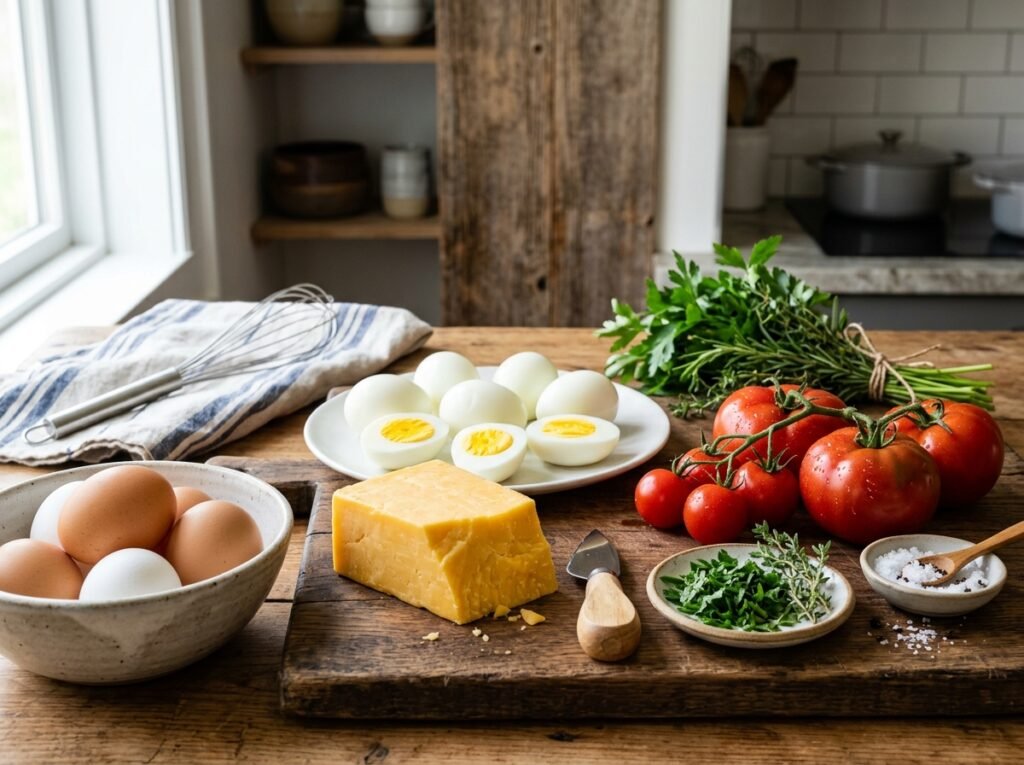
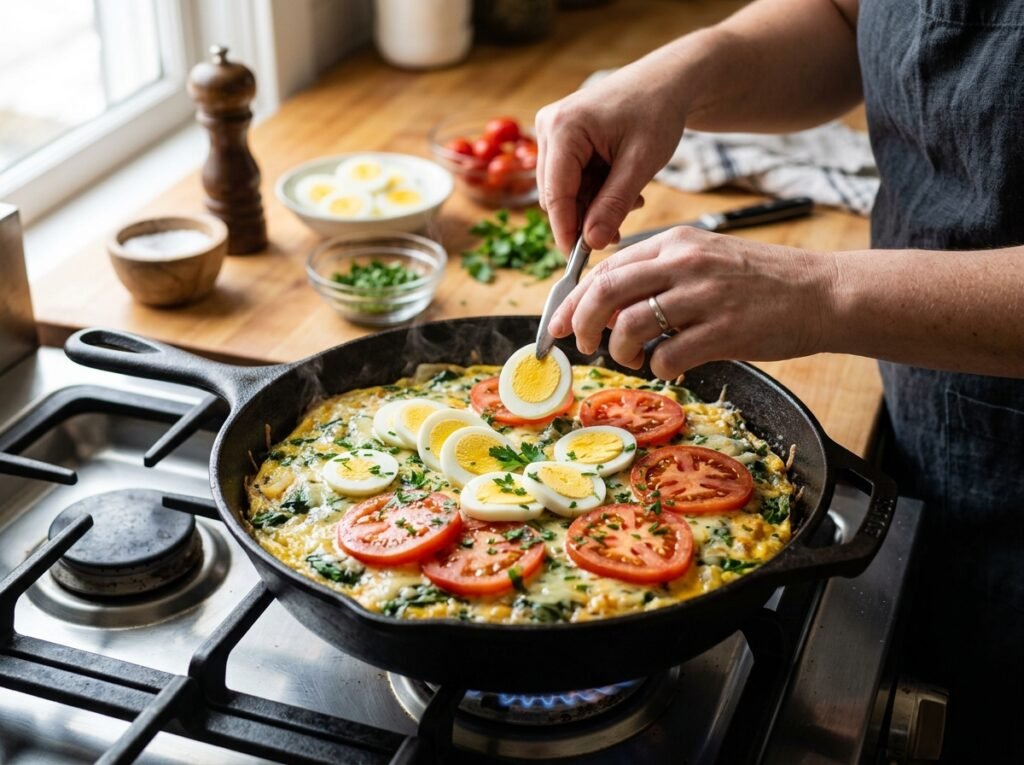
Sprinkle 1 cup shredded mozzarella evenly over set frittata. Arrange 3-4 tomato slices on top. Sprinkle with fresh herbs/red pepper flakes. COVER PAN TIGHTLY. Cook 2-3 mins until cheese fully melted/bubbly and tomatoes warm. Remove from heat. Rest 2 mins.
- Why this matters: Cheese/tomatoes added LAST prevents sogginess/burning. Lid traps steam, melting cheese gently without overcooking eggs. Steam warms tomatoes without making them mushy. Resting allows carryover cooking and juice redistribution; cutting immediately releases steam/mess.
- Visual Cue: Cheese glossy/molten. Tomatoes bright red, softened slightly. Herbs vibrant. Steam visible when lid lifted.
- Texture Cue: Cheese stretchy/gooey. Tomatoes yielding but intact. Eggs firm but tender. Not dry/rubber.
- Aroma Cue: Melty cheese + warm tomato + herbal steam. Complex, appetizing bouquet.
- Common Mistake: Overcooking covered phase. Eggs become dry/tough. Fix: Watch closely. Remove when cheese JUST melted. Residual heat finishes job.
- Professional Tip: Broil 1-2 mins AFTER steaming IF cheese needs more color/bubble. WATCH CONSTANTLY. Burns in seconds. Optional but impressive.
Expert Tips for the Perfect Set & Melt
- Room Temp Ingredients: Cold eggs/cheese shock hot pan, causing uneven cooking. Bring all components to room temp 15 mins before cooking. Ensures smooth custard set and even melt.
- Shred Your Own Cheese: Pre-shredded = anti-caking agents = grainy melt. Block cheese = smooth stretch. Worth the 30-second effort. Grate fine for faster/even melt.
- Don’t Overbeat Eggs: Vigorous whisking >1 min develops tough protein bonds. Gentle but thorough mixing incorporates air without toughness. Aim for uniformity, not foam.
- Lid Seal Matters: Tight seal = efficient steam. Loose lid = escaped steam = longer cook/dry eggs. Use lid that fits snugly. Foil tent works in pinch.
- Rest Before Serving: 2-min rest allows internal temp to equalize. Juices redistribute. Structure firms slightly for cleaner slicing. Cutting hot = messy collapse.
- Tomato Dryness: Pat tomato slices dry with paper towel before topping. Excess moisture = soggy cheese/eggs. Critical for texture integrity.
Common Mistakes to Avoid
- High Heat During Custard Phase: Burns bottom, leaves top raw. Fix: Medium-low always. Patience = tender texture. Adjust burner as needed.
- Adding Toppings Too Early: Cheese burns/tomatoes watery. Fix: ONLY after base is set. Last 2-3 mins max. Timing is everything.
- Overcooking Covered Phase: Rubber eggs/dry texture. Fix: Remove when cheese JUST melted. Carryover heat finishes. Trust residual warmth.
- Skipping Sear on Boiled Eggs: Bland/mushy texture. Fix: Always sear cut-side down first. Adds flavor/crust. Non-negotiable step.
- Using Wet Tomatoes: Soggy frittata. Fix: Pat slices bone-dry. Seed removal optional but helpful. Moisture control = success.
- Cutting Immediately: Collapsed structure/messy plate. Fix: Rest 2 mins minimum. Sharp knife + clean cuts. Presentation matters.
- Cold Ingredients: Uneven cook/grainy cheese. Fix: Room temp everything. Thermal consistency = professional results.
Recipe Variations
- Spicy Chorizo Kick: Add crumbled cooked chorizo with boiled eggs. Top with pepper jack cheese. Fiery, smoky depth.
- Vegetarian Garden: Swap boiled eggs for roasted veggies (zucchini, bell pepper, mushroom). Same custard/cheese method. Hearty plant-based option.
- Vegan Adaptation: Use silken tofu cubes instead of boiled eggs. Cashew cream + nutritional yeast custard. Vegan mozzarella. Surprisingly similar texture.
- Mediterranean Twist: Add kalamata olives, spinach, feta cheese. Oregano-heavy seasoning. Bright, briny profile.
- Breakfast Meat Lover: Crispy bacon/sausage bits mixed into custard. Cheddar cheese. Classic hearty brunch upgrade.
- Low-Carb/Keto: Skip milk in custard. Increase cheese/egg ratio. Verify net carbs. High-fat/protein perfection.
- Seafood Luxe: Smoked salmon instead of boiled eggs. Dill + cream cheese topping. Elegant, sophisticated variation.
- Extra Cheesy Pull: Double cheese layer. Add cream cheese dollops under mozzarella. Molten core explosion. Indulgent upgrade.
What to Serve With This Recipe
Balance the rich, eggy frittata with fresh, acidic, or light accompaniments:
- Mixed Green Salad with Vinaigrette: Peppery greens cut richness. Acid cleanses palate. Simple, refreshing counterpoint.
- Crusty Bread or Toast: Essential for mopping up cheesy eggy bits. Sourdough or ciabatta ideal. Carb comfort.
- Fresh Fruit Salad: Berries, melon, citrus. Sweet/acidic contrast to savory eggs. Light, vibrant finish.
- Roasted Potatoes or Hash Browns: Classic breakfast pairing. Salty/crispy starch complements soft eggs.
- Sparkling Water with Lemon: Cleanses palate between rich bites. Effervescence cuts fat. Simple, effective.
- Coffee or Tea: Warm beverage enhances breakfast/brunch experience. Black coffee cuts richness; herbal tea complements herbs.
- Avocado Slices: Creamy/fatty contrast to eggy texture. Healthy fats boost satiety. Lime squeeze adds brightness.
Make Ahead & Meal Prep Tips
- Boil Eggs Ahead: Hard-boil eggs up to 1 week ahead. Store unpeeled in fridge. Saves active prep time. Peel just before cooking.
- Pre-Shred Cheese: Shred cheese up to 2 days ahead. Store airtight with parchment between layers. Prevents clumping. Ready-to-use convenience.
- Whisk Custard Ahead: Beat eggs/seasonings up to 24 hrs ahead. Refrigerate. Bring to room temp before use. Flavors meld. Saves morning rush.
- Slice Tomatoes Day-Of: Tomatoes oxidize/weep if pre-sliced. Cut just before topping. Pat dry thoroughly. Freshness = texture.
- Reheat Leftovers Smartly: Frittata reheats well. Store wedges airtight. Reheat in oven/air fryer to preserve texture. Microwave acceptable but softer.
Storage & Reheating Instructions
Storage
- Refrigerator: Store cooled frittata wedges in airtight container up to 3-4 days. Cheese may harden slightly; normal. Separate from wet toppings if possible.
- Freezer: Freeze individual wedges wrapped in foil/plastic up to 2 months. Thaw overnight in fridge before reheating. Texture softens slightly; best for quick meals.
Reheating
- Oven (Best): 350°F (175°C) for 8-10 mins on wire rack. Restores texture effectively. Avoid direct pan contact (soggy bottom). Tent with foil if browning too fast.
- Air Fryer: 320°F (160°C) for 3-5 mins. Excellent revival method. Preserves crisp edges. Spray lightly with oil if dried out.
- Microwave (Convenient): Medium power 30-sec bursts. Cover loosely. Steams slightly; texture softer. Accept trade-off for speed.
- Stovetop: Skillet over low heat, covered, 3-5 mins. Revives some crispness. Good for single wedges. Watch closely to prevent burning.
Nutritional Information
Estimates per serving (based on 2 boiled eggs + custard + cheese + tomato):
- Calories: 380 kcal
- Protein: 26g
- Carbohydrates: 6g
- Fat: 28g
- Fiber: 1g
- Sugar: 3g
- Sodium: 620mg
Note: Values vary based on egg size, cheese amount, milk/cream use, and tomato variety. Always check labels for precise tracking.
Troubleshooting Guide
| Problem | Cause | Solution |
|---|---|---|
| Frittata Rubbery/Dry | Overcooked or high heat. | Next time: Medium-low heat. Remove when center jiggles. Rest 2 mins. Carryover finishes. |
| Cheese Didn’t Melt | Wrong cheese or insufficient steam. | Use low-moisture block cheese. Ensure tight lid seal. Extend covered time 1 min. Broil briefly if needed. |
| Bottom Burnt | Heat too high or pan too thin. | Reduce to medium-low. Use heavy-bottomed skillet. Check frequently. Lift edges to redistribute heat. |
| Watery/Soggy Texture | Wet tomatoes or under-set custard. | Pat tomatoes bone-dry. Ensure custard fully set before topping. Extend initial cook time 1-2 mins. |
| Eggs Stick to Pan | Pan not oiled/enough butter. | Use non-stick or well-seasoned cast iron. Adequate fat essential. Loosen edges before serving. |
| Bland Flavor | Underseasoned custard/eggs. | Season aggressively at each stage. Taste custard before pouring. Add finishing salt/herbs post-cook. |
Frequently Asked Questions
1. Can I use raw eggs instead of boiled? Yes, but texture differs significantly. Raw-only frittata is uniform custard. Boiled eggs add chew/structure. If substituting, increase raw eggs by 2-3. Cook time similar. Expect softer, less defined slices.
2. Why did my cheese separate/oil pool? Pre-shredded cheese or overheating. Anti-caking agents cause breakdown. Fix: Use freshly grated block cheese. Lower heat during melt phase. Whisk in splash milk/cream to re-emulsify if needed.
3. Can I make this in the oven instead of stovetop? Absolutely. After searing eggs/pouring custard, transfer skillet to 375°F oven. Bake 12-15 mins until set. Add toppings last 3 mins. Broil 1-2 mins for cheese color. Even cooking, less attention needed.
4. How do I prevent tomatoes from making frittata soggy? Pat slices bone-dry with paper towels. Remove seeds if very juicy. Add ONLY after custard is fully set. Limit steam time to 2-3 mins max. Freshness timing is critical.
5. Can I freeze this frittata? Yes, but texture changes slightly. Freeze wedges individually wrapped. Thaw overnight in fridge. Reheat in oven/air fryer best. Microwave acceptable but softer. Good for meal prep.
6. What’s the best cheese for melting? Low-moisture mozzarella, provolone, or fontina. Avoid fresh mozzarella balls (too wet) or pre-shredded (anti-caking agents). Block cheese grated fresh = smoothest melt/stretch.
7. Can I add vegetables to the custard? Yes! Sauté spinach, mushrooms, peppers first. Drain excess moisture thoroughly. Mix into custard or layer under boiled eggs. Prevents sogginess. Enhances nutrition/flavor.
8. How do I know when custard is set? Edges firm/opaque. Center jiggles slightly when shaken. Toothpick inserted comes out clean/moist crumbs (not wet batter). Visual/tactile cues > timer. Ovens/stoves vary.
Final Thoughts
Creating the perfect Cheesy Hard-Boiled Egg Frittata with Tomato is about embracing simplicity and respecting technique. The transformation of humble boiled eggs into a golden, cheesy skillet delight proves that creativity thrives within constraints. This recipe celebrates resourcefulness, turning leftovers into luxury with minimal effort and maximum reward.