Quick Recipe Summary
| Prep Time | 20 Minutes |
|---|---|
| Cook Time | 15 Minutes |
| Total Time | 35 Minutes |
| Servings | 4 Large Cakes |
| Cuisine | American / Carnival Dessert |
| Course | Dessert / Snack |
| Difficulty | Medium |
| Calories | ~650 kcal per serving |
Table of Contents
- Introduction
- Why This Recipe Works
- Why You’ll Love This Recipe
- Ingredient Notes
- Kitchen Equipment
- Step-by-Step Instructions
- Expert Tips for Perfect Lacing & Crispness
- Common Mistakes to Avoid
- Recipe Variations
- What to Serve With This Recipe
- Make Ahead & Meal Prep Tips
- Storage & Reheating Instructions
- Nutritional Information
- Troubleshooting Guide
- Frequently Asked Questions
- Final Thoughts
Introduction

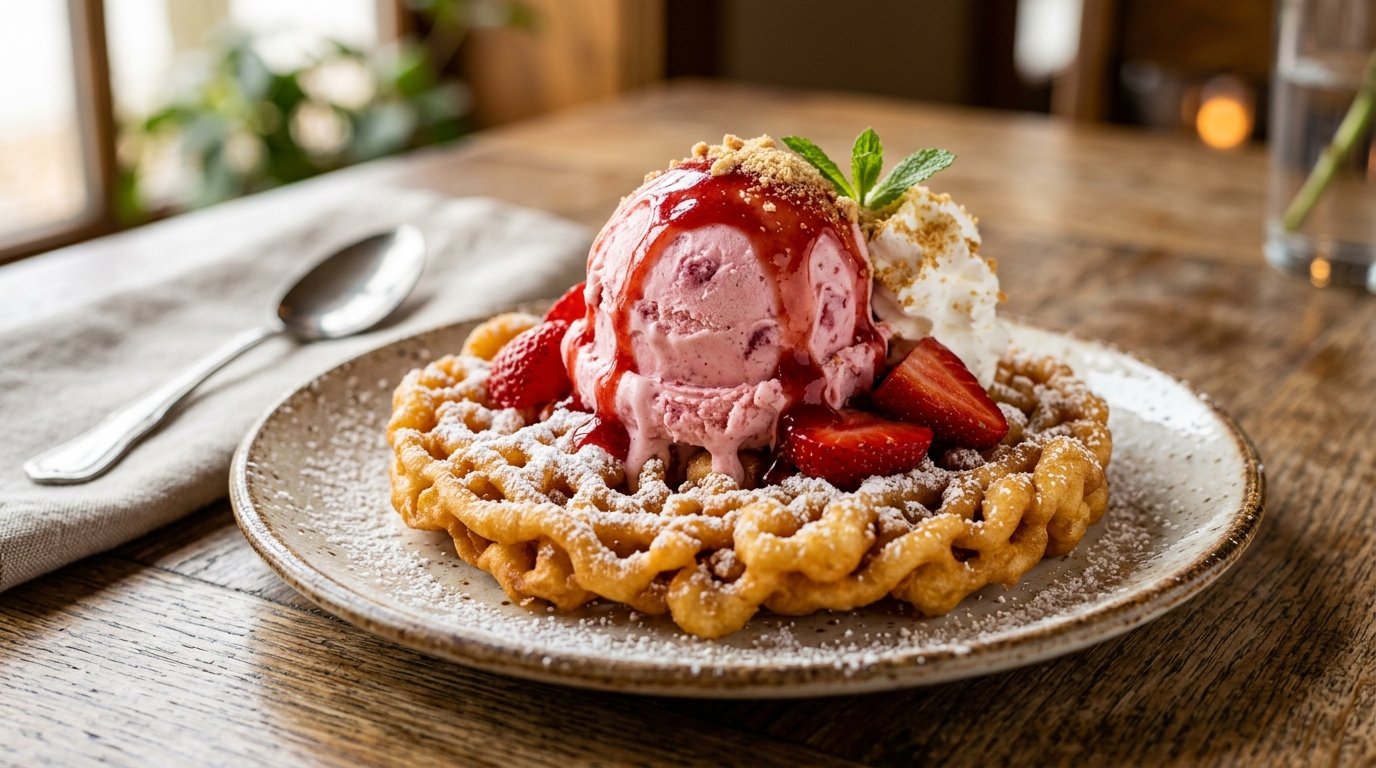
There is a specific, nostalgic magic that happens when hot batter hits bubbling oil and transforms into a golden, lacy web of crispy dough. This Ultimate Funnel Cake with Strawberry Ice Cream Sundae captures the essence of summer carnivals and county fairs right in your own kitchen. Unlike standard fried dough, the funnel cake technique creates an intricate network of strands that are shatteringly crisp on the outside yet tender and airy within. When topped with a scoop of melting vanilla ice cream, fresh strawberries, powdered sugar, whipped cream, and chocolate drizzle, it becomes an indulgent dessert experience that rivals any boardwalk treat.
This recipe demystifies the carnival classic by breaking down the science of batter viscosity and oil temperature management. The key lies not just in the ingredients, but in the rhythmic motion of pouring and the precise thermal environment of the fryer. Whether you are hosting a backyard party, craving a sweet weekend treat, or simply want to master a show-stopping dessert, this guide provides the professional techniques needed to achieve restaurant-quality results. It proves that with patience and practice, anyone can recreate the iconic taste and texture of a perfect funnel cake sundae at home.
Why This Recipe Works
The success of this Ultimate Funnel Cake with Strawberry Ice Cream Sundae relies on three fundamental culinary principles: gluten development control, starch gelatinization, and thermal shock. The batter is mixed only until combined to prevent excessive gluten formation, which would make the cake tough and chewy rather than light and crisp. A slightly thicker batter (similar to pancake batter) holds its shape as it hits the oil, allowing the strands to set before spreading too thin, while still being fluid enough to create delicate lacework.
Simultaneously, the high heat of the oil (375°F/190°C) causes immediate surface dehydration and Maillard browning, creating that signature golden crust and nutty aroma. The rapid cooking seals the exterior while steam trapped inside keeps the interior moist and fluffy. The contrast between the hot, crisp cake and the cold, creamy ice cream creates a sensory experience known as “thermal contrast,” which enhances perceived flavor intensity. The powdered sugar adds sweetness without moisture, preserving crispness, while the strawberry sauce and chocolate provide acidic and bitter counterpoints that balance the richness of the fried dough and dairy.
Why You’ll Love This Recipe
- Authentic Carnival Texture: Achieves the perfect balance of shatteringly crisp edges and tender, airy interior through proper batter consistency and oil temperature.
- Visual Showstopper: The intricate lacy pattern and towering sundae toppings make this an Instagram-worthy centerpiece for any gathering.
- Customizable Toppings: While strawberry ice cream is classic, the base cake pairs beautifully with endless flavor combinations to suit any preference.
- Surprisingly Simple Technique: Requires no special equipment beyond a funnel or squeeze bottle; mastery comes from rhythm and temperature control, not complexity.
- Nostalgic Comfort Food: Evokes memories of summer fairs and boardwalks, providing emotional satisfaction alongside physical indulgence.
- Versatile Serving Options: Works as a standalone dessert, breakfast treat, or interactive party activity where guests customize their own sundaes.
- Crowd-Pleasing Appeal: Universally loved by children and adults alike; the combination of fried dough, ice cream, and fruit is virtually irresistible.
Ingredient Notes
All-Purpose Flour
- Purpose: Primary structure builder. Provides gluten network that gives cake integrity while remaining tender due to minimal mixing.
- Substitutions: Cake flour (lighter/tenderer), pastry flour (middle ground). Avoid bread flour (too much protein = tough/chewy). Gluten-free blends work but require xanthan gum for structure.
- Buying Tips: Check protein content (10-12% ideal). Bleached flour yields whiter color/tenderer crumb; unbleached has more flavor. Store in cool/dry place.
- Storage Tips: Airtight container away from heat/light. Lasts 6-8 months. Freeze for long-term storage to prevent rancidity/weevils.
Granulated Sugar & Powdered Sugar
- Purpose: Granulated sweetens batter and promotes browning/crispness via caramelization. Powdered sugar dusts finished cake; dissolves instantly without adding moisture that softens crispness.
- Substitutions: Brown sugar (deeper flavor/moister), coconut sugar (lower glycemic), monk fruit/erythritol (low-carb). For dusting: cocoa powder, cinnamon sugar, or crushed candy.
- Buying Tips: Fine granulation dissolves faster in batter. Powdered sugar should be lump-free; sift before use. Avoid anti-caking agents if possible (cornstarch affects melt).
- Storage Tips: Granulated lasts indefinitely. Powdered sugar absorbs moisture; store airtight with terra cotta disc or rice grains to prevent clumping.
Milk & Eggs

- Purpose: Liquid hydrates flour/starch. Eggs provide richness, emulsification, and structure via protein coagulation. Fat coats gluten strands for tenderness.
- Substitutions: Buttermilk (tangier/tenderer), almond/oat milk (dairy-free), flax/chia eggs (vegan binding). Whole milk preferred for richness; skim yields thinner batter/less crispness.
- Buying Tips: Fresh eggs crucial for volume/emulsion. Room temperature ingredients mix more evenly and fry more consistently than cold ones.
- Storage Tips: Refrigerate milk/eggs. Bring to room temp 30 mins before mixing. Use eggs within 3-5 weeks of purchase.
Vegetable Oil (for Frying)
- Purpose: Heat transfer medium. Must have high smoke point (>400°F) to withstand prolonged frying without breaking down or imparting off-flavors.
- Substitutions: Canola, peanut, grapeseed, or avocado oil. Avoid olive oil (low smoke point/strong flavor), coconut oil (flavor clash), or butter (burns instantly).
- Buying Tips: Choose refined oils, not unfiltered. Check expiration date; rancid oil ruins entire batch. Peanut oil adds subtle nuttiness prized in frying.
- Storage Tips: Store in cool/dark place. Filter and reuse up to 3 times if strained properly. Discard if dark/foamy/acrid-smelling. Never pour hot oil down drain.
Vanilla Ice Cream & Strawberries
- Purpose: Cold/creamy contrast to hot/crisp cake. Vanilla complements fried dough without overpowering. Strawberries add acidity/freshness/brightness.
- Substitutions: Chocolate/coffee/caramel ice cream. Fresh berries, blueberry compote, banana slices, or peach preserves. Sorbet for dairy-free option.
- Buying Tips: High-fat ice cream melts slower/holds shape better. Fresh strawberries should be firm/red/fragrant. Avoid watery/bruised fruit.
- Storage Tips: Keep ice cream frozen solid until serving. Macerate strawberries with sugar 15 mins before serving to enhance juiciness/flavor.
Kitchen Equipment
- Deep Fryer or Heavy-Bottomed Pot/Dutch Oven: Essential for maintaining stable oil temperature and accommodating cake size. Cast iron retains heat best; stainless steel responds quickly. Avoid thin aluminum pots that cause dangerous temp swings.
- Candy/Deep-Fry Thermometer: Non-negotiable for safety and quality. Visual cues are unreliable. Digital probe gives instant reading; dial thermometers require calibration check. Target 375°F (190°C) consistently.
- Funnel or Squeeze Bottle: Traditional funnel offers authentic experience/control. Squeeze bottle (with large tip) provides easier handling/less mess. Ensure opening is ½-inch diameter for proper strand thickness.
- Spider Strainer or Slotted Spoon: For safe removal of cake. Fine mesh prevents small crumbs from falling back into oil. Long handle keeps hands away from splatter.
- Wire Cooling Rack: Superior to paper towels for draining. Allows air circulation underneath, preventing steam buildup that softens crispness. Place over baking sheet to catch drips.
- Mixing Bowls & Whisk: For combining batter smoothly. Glass/ceramic preferred for easy cleaning/non-reactive surface. Whisk incorporates air for lighter texture.
- Sifter or Fine-Mesh Sieve: For powdered sugar dusting. Ensures even distribution without clumps. Also useful for sifting dry ingredients into batter to prevent lumps.
Step-by-Step Instructions
H3: Step 1 – Mix Batter to Perfect Consistency
In large bowl, whisk together 2 cups flour, ¼ cup granulated sugar, 1 tsp baking powder, ½ tsp salt. In separate bowl, beat 2 eggs with 1 cup milk and 1 tsp vanilla extract until smooth. Pour wet into dry. Whisk GENTLY until JUST combined. Batter should be thick but pourable (like heavy cream/pancake batter). Do NOT overmix. Let rest 5 mins.
- Why this matters: Gentle mixing prevents gluten overdevelopment = tender cake. Resting allows flour to fully hydrate and air bubbles to relax, resulting in smoother flow and crispier texture. Thick batter holds shape in oil; thin batter spreads too much/becomes greasy.
- Visual Cue: Smooth, uniform pale yellow batter. No dry flour streaks or lumps. Small bubbles on surface. Falls from whisk in thick ribbon.
- Texture Cue: Viscous but fluid. Coats back of spoon thickly. Not gloopy/pasty or watery/thin.
- Aroma Cue: Mild eggy/vanilla scent. No raw flour smell.
- Common Mistake: Overmixing. Develops tough gluten = chewy/rubber cake. Fix: Stop when no dry spots remain. Lumps okay; they hydrate during rest.
- Professional Tip: Add 1 tbsp cornstarch to dry ingredients. Inhibits gluten formation further = extra crispness/tenderness. Dissolves completely during cook.
H3: Step 2 – Heat Oil & Test Temperature
Fill fryer/pot with 2-3 inches oil. Heat to 375°F (190°C). Use thermometer to verify. Test readiness by dropping tiny bit of batter into oil. Should sizzle vigorously and float immediately, turning golden in 30-45 seconds. Adjust heat as needed. Maintain temp throughout cooking.
- Why this matters: Correct temp ensures rapid crust formation (sealing moisture inside) without absorbing excess oil. Too cool = greasy/soggy cake. Too hot = burnt outside/raw inside. Testing confirms actual temp vs. dial setting.
- Visual Cue: Oil shimmers slightly. Test batter puffs/browns quickly. No smoking (indicates too hot). Bubbles steady around test piece.
- Texture Cue: Test piece crisp outside/tender inside when bitten. Not oily or hard.
- Aroma Cue: Neutral oil scent. No acrid/burnt smell.
- Common Mistake: Guessing temp without thermometer. Leads to inconsistent results. Fix: ALWAYS use thermometer. Calibrate regularly. Recover temp between batches.
- Professional Tip: Preheat oil 10-15 mins BEFORE cooking. Ensures even heat distribution throughout pot. Cold spots cause uneven frying.
H3: Step 3 – Pipe & Fry the Funnel Cake
Pour batter into funnel/squeeze bottle. Hold 6-8 inches above oil. Move hand in slow, overlapping circular/spiral motions, starting from center outward. Create web-like pattern. Fry 2-3 mins per side until deep golden brown. Flip carefully with spider strainer. Drain on wire rack 1 min.
- Why this matters: Height allows batter to stretch into thin strands before hitting oil. Circular motion creates even lacework. Overlapping ensures structural integrity. Flipping ensures even browning/cooking. Wire rack drainage preserves crispness vs. paper towels trapping steam.
- Visual Cue: Batter forms distinct strands that hold shape. Color progresses from pale to amber to deep gold. Bubbles actively around cake. Edges crisp/darkened slightly.
- Texture Cue: Exterior rigid/crisp when tapped. Interior yields slightly. Not floppy/soggy or rock-hard.
- Aroma Cue: Nutty/toasted dough + sweet caramelization. Rich, inviting scent. Burnt smell = temp too high; remove immediately.
- Common Mistake: Moving hand too fast/slow. Fast = thin/brittle strands. Slow = thick/doughy blobs. Fix: Practice rhythm. Aim for consistent strand thickness. Watch oil reaction.
- Professional Tip: Work in small batches. Overcrowding drops oil temp drastically = soggy cakes. Allow full recovery between batches. Skim floating crumbs constantly.
H3: Step 4 – Assemble the Sundae Immediately
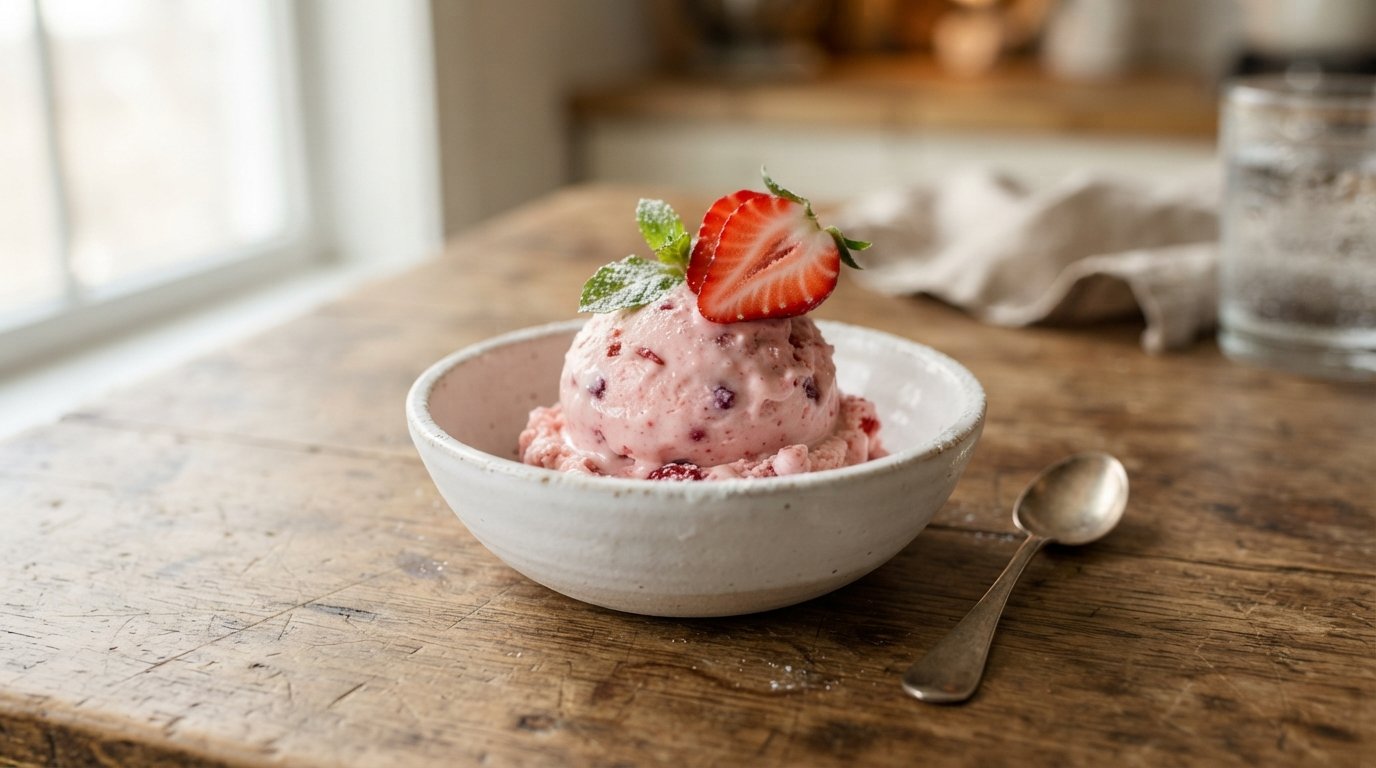
Place warm funnel cake on plate. Dust generously with powdered sugar using sifter. Scoop vanilla ice cream onto center. Top with sliced strawberries, strawberry sauce, whipped cream, and chocolate drizzle. Serve IMMEDIATELY while cake is still crisp and ice cream is cold.
- Why this matters: Immediate assembly preserves textural contrast. Warm cake melts ice cream slightly = creamy integration. Powdered sugar adheres best to warm surface. Cold toppings prevent cake from steaming/soggifying. Speed is critical; delay = sad/soggy dessert.
- Visual Cue: Golden cake dusted white. Ice cream pristine scoop. Vibrant red strawberries. Glossy chocolate swirls. Steam rising subtly from cake.
- Texture Cue: Crisp cake + creamy ice cream + juicy berries + fluffy whip. Multi-textural bliss.
- Aroma Cue: Fried dough + vanilla + berry sweetness + chocolate. Complex, indulgent bouquet.
- Common Mistake: Assembling too early. Cake steams under cold toppings = loses crispness. Fix: Have all components prepped/mise en place ready. Assemble ONLY when ready to serve.
- Professional Tip: Chill plates briefly before assembly. Helps maintain ice cream shape longer. Warm cake on chilled plate = optimal thermal contrast duration.
Expert Tips for Perfect Lacing & Crispness
- Batter Viscosity is Key: Too thick = clogged funnel/thick strands. Too thin = spreads into puddle. Adjust with milk (thin) or flour (thick). Ideal: flows steadily but holds shape briefly on spoon.
- Oil Depth Matters: Minimum 2 inches deep. Shallow oil causes uneven cooking/temp fluctuations. Deep oil surrounds cake, cooking uniformly from all angles.
- Rhythm Over Speed: Consistent circular motion > speed. Practice empty-handed first. Find your natural pace. Jerky movements create broken strands; too slow creates doughy masses.
- Skim Between Batches: Floating burnt crumbs darken oil and impart bitter flavor to next cake. Use spider strainer to remove debris constantly. Clean oil = clean flavor.
- Serve Within 2 Minutes: Funnel cake peak crispness lasts <5 mins after frying. After that, moisture migration begins. Have guests seated/toppings ready BEFORE frying final cake.
- Thermometer Calibration: Test in boiling water (212°F/100°C) before use. Inaccurate readings lead to burnt/greasy cakes. Adjust accordingly. Digital probes most reliable.
Common Mistakes to Avoid
- Overmixing Batter: Creates tough/chewy cake. Fix: Mix gently until JUST combined. Lumps okay. Rest 5 mins.
- Wrong Oil Temp: Too low = greasy/soggy. Too high = burnt/raw. Fix: Maintain 375°F strictly. Use thermometer. Adjust burner dynamically.
- Pouring Too Close/Far: Close = thick strands. Far = thin/brittle strands. Fix: Hold 6-8 inches above oil. Adjust based on batter thickness.
- Overcrowding Pot: Drops temp = soggy cakes. Fix: One cake at a time for standard pots. Recover temp fully between batches.
- Draining on Paper Towels: Traps steam = softens crispness. Fix: ALWAYS use wire rack over baking sheet. Air circulation preserves crunch.
- Assembling Too Early: Steam destroys crispness. Fix: Prep all toppings beforehand. Assemble ONLY when ready to eat. Speed is essential.
- Using Stale Oil: Dark/foamy oil = bitter/off-flavors. Fix: Filter/reuse max 3 times. Discard if degraded. Fresh oil = superior taste.
Recipe Variations
- Chocolate Lover’s Dream: Add ¼ cup cocoa powder to batter. Top with chocolate ice cream, fudge sauce, and oreo crumbles. Decadent twist.
- Apple Pie Funnel Cake: Fold diced apples + cinnamon into batter. Top with vanilla ice cream + caramel sauce + pecans. Autumn comfort.
- Vegan Adaptation: Use flax eggs + oat milk + vegan butter. Aquafaba whipped cream. Dairy-free ice cream. Surprisingly similar texture/flavor.
- Low-Carb/Keto: Almond/coconut flour batter + erythritol. Sugar-free syrup. Keto ice cream. Verify net carbs. Indulgence without guilt.
- Savory Breakfast Style: Omit sugar from batter. Top with fried egg + bacon + maple syrup + chives. Brunch brilliance.
- Tropical Paradise: Coconut milk batter. Top with mango/pineapple + macadamia nuts + passionfruit curd. Island vibes.
- Extra Crunch Upgrade: Add crushed pretzels/granola to batter. Top with toasted coconut + honey drizzle. Textural explosion.
- Mini Bite-Sized Version: Pipe smaller circles. Serve as appetizers/passed hors d’oeuvres. Dip in flavored creams/sauces. Party perfect.
What to Serve With This Recipe
Balance the rich, sweet dessert with light, acidic, or refreshing accompaniments:
- Fresh Berry Salad: Mixed berries with mint/lime. Acidic/fresh contrast cuts richness. Cleanses palate between bites.
- Sparkling Lemonade or Iced Tea: Effervescent/citrusy beverage cuts fat/sweetness. Refreshing counterpoint. Classic carnival pairing.
- Espresso or Affogato: Bitter coffee balances sweet fried dough. Sophisticated adult pairing. Enhances chocolate/vanilla notes.
- Light Fruit Sorbet: Raspberry/lemon sorbet. Tart/frozen contrast to warm cake. Palate cleanser.
- Whipped Cream Dip: Extra cream for dipping cake pieces. Interactive/fun element. Doubles indulgence.
- Salted Caramel Sauce: Sweet/salty contrast enhances depth. Drizzle over ice cream/cake. Gourmet touch.
- Fresh Mint Sprigs: Garnish adds visual freshness/aromatic lift. Subtle but effective presentation upgrade.
Make Ahead & Meal Prep Tips
- Pre-Mix Dry Ingredients: Combine flour/sugar/baking powder/salt up to 1 week ahead. Store airtight. Saves active prep time. Shake before use.
- Prep Toppings Ahead: Slice strawberries, make sauces, whip cream up to 24 hrs ahead. Store separately in airtight containers. Assembly line efficiency during service.
- Chill Ice Cream Harder: Freeze ice cream 1-2 hrs before serving. Holds shape longer against warm cake. Prevents premature melting/mess.
- Pre-Heat Oil Strategically: Start heating oil 15 mins before serving. Maintains temp better when batter added. Reduces wait time for guests.
- Batch Fry Smartly: Fry cakes just before serving. Cannot be made ahead successfully. Crispness degrades rapidly. Prioritize timing over multitasking.
Storage & Reheating Instructions
Storage
- Refrigerator: Store cooled funnel cake in airtight container up to 2 days. Crispness diminishes significantly. Store toppings separately. Combine only when reheating/serving.
- Freezer: Freeze cooked cake individually wrapped in foil/plastic up to 1 month. Thaw at room temp before reheating. Texture softens considerably; best for repurposing (e.g., bread pudding, trifle base).
Reheating
- Oven (Best): 350°F (175°C) on wire rack 5-7 mins. Restores some crispness effectively. Avoid direct pan contact (soggy bottom). Tent loosely with foil if browning too fast.
- Air Fryer: 350°F (175°C) 2-3 mins. Excellent revival method. Shake basket halfway. Spray lightly with oil if dried out. Best for single portions.
- Stovetop: Dry skillet over medium-low, 1-2 mins per side. Revives some crispness. Good for single pieces. Watch closely to prevent burning.
- Microwave (Avoid): Steams cake, destroys crispness entirely. Only use if texture irrelevant (e.g., for trifle/bread pudding addition). Accept sogginess trade-off.
Nutritional Information
Estimates per serving (based on 1 large cake + toppings):
- Calories: 650 kcal
- Protein: 8g
- Carbohydrates: 78g
- Fat: 34g
- Fiber: 2g
- Sugar: 42g
- Sodium: 380mg
Note: Values vary based on cake size, oil absorption, ice cream brand, and topping quantities. Always check labels for precise tracking.
Troubleshooting Guide
| Problem | Cause | Solution |
|---|---|---|
| Cake Soggy/Greasy | Oil too cool or batter too thin. | Maintain 375°F strictly. Thicken batter with flour. Ensure oil depth sufficient. Drain on wire rack. |
| Cake Burnt Outside/Raw Inside | Oil too hot or strands too thick. | Reduce temp to 350°F. Thin batter with milk. Pour from greater height. Cook longer at lower temp. |
| Strands Break Apart | Batter too thin or poured too high. | Thicken batter with flour. Lower pouring height to 6 inches. Move hand slower/more deliberately. |
| Cake Sticks Together/Clumps | Poured too slowly or oil too cool. | Increase pouring speed. Ensure oil at 375°F. Move hand continuously in fluid motion. |
| Ice Cream Melts Too Fast | Cake too hot or ice cream too soft. | Chill ice cream harder. Let cake cool 30 secs before assembling. Use high-fat ice cream. Serve immediately. |
| Powdered Sugar Clumps | Humidity or applied to cold cake. | Sift sugar finely. Apply ONLY to warm cake. Store sugar with desiccant. Dust just before serving. |
Frequently Asked Questions
1. Can I use a plastic squeeze bottle instead of a funnel? Yes! Plastic squeeze bottles (with ½-inch tip) offer easier control/less mess than traditional funnels. Ensure bottle is heat-resistant. Fill only ¾ full to prevent squeezing accidents. Cleanup easier too.
2. Why did my funnel cake turn out dense/doughy? Overmixed batter or oil too cool. Overmixing develops gluten = tough texture. Cool oil prevents rapid setting = dough absorbs oil instead of crisping. Fix: Mix gently. Verify temp with thermometer.
3. Can I bake funnel cake instead of frying? Not recommended. Baking produces cake-like texture, not crispy/lacy strands. Frying is essential for authentic texture. If avoiding frying, try churros or beignets as alternative fried dough desserts.
4. How do I prevent oil splatters? Ensure batter isn’t too wet. Pour steadily (not dripping). Use splatter screen if concerned. Never add wet items to hot oil. Safety first! Keep lid nearby to smother flames if needed.
5. Can I reuse frying oil? Yes, 2-3 times if filtered/stored properly. Strain through cheesecloth/fine mesh. Store in cool/dark place. Discard if dark/foamy/rancid-smelling. Never mix old/new oil.
6. What’s the best ice cream for topping? High-fat premium vanilla (14%+ butterfat). Melts slower/holds shape better against warm cake. Avoid low-fat/air-heavy brands; they melt instantly/create soupy mess.
7. Can I make mini funnel cakes? Absolutely! Use smaller funnel/squeeze bottle. Pipe 3-4 inch circles. Reduce cook time to 1-2 mins per side. Perfect for parties/appetizers. Adjust topping ratios accordingly.
8. How do I keep funnel cake crisp for parties? You can’t. Peak crispness lasts <5 mins. Fry in small batches just before serving. Have toppings prepped/mise en place ready. Communicate to guests: “Eat immediately!” Manage expectations.
Final Thoughts
Mastering the Ultimate Funnel Cake with Strawberry Ice Cream Sundae is about embracing rhythm, respecting temperature, and understanding that perfection lies in the details. The dance of batter meeting oil, the transformation from liquid to lace, the symphony of hot/crisp and cold/creamy—these are the moments that define great cooking. This recipe proves that carnival magic isn’t reserved for fairgrounds; it can be recreated at home with patience, practice, and passion.