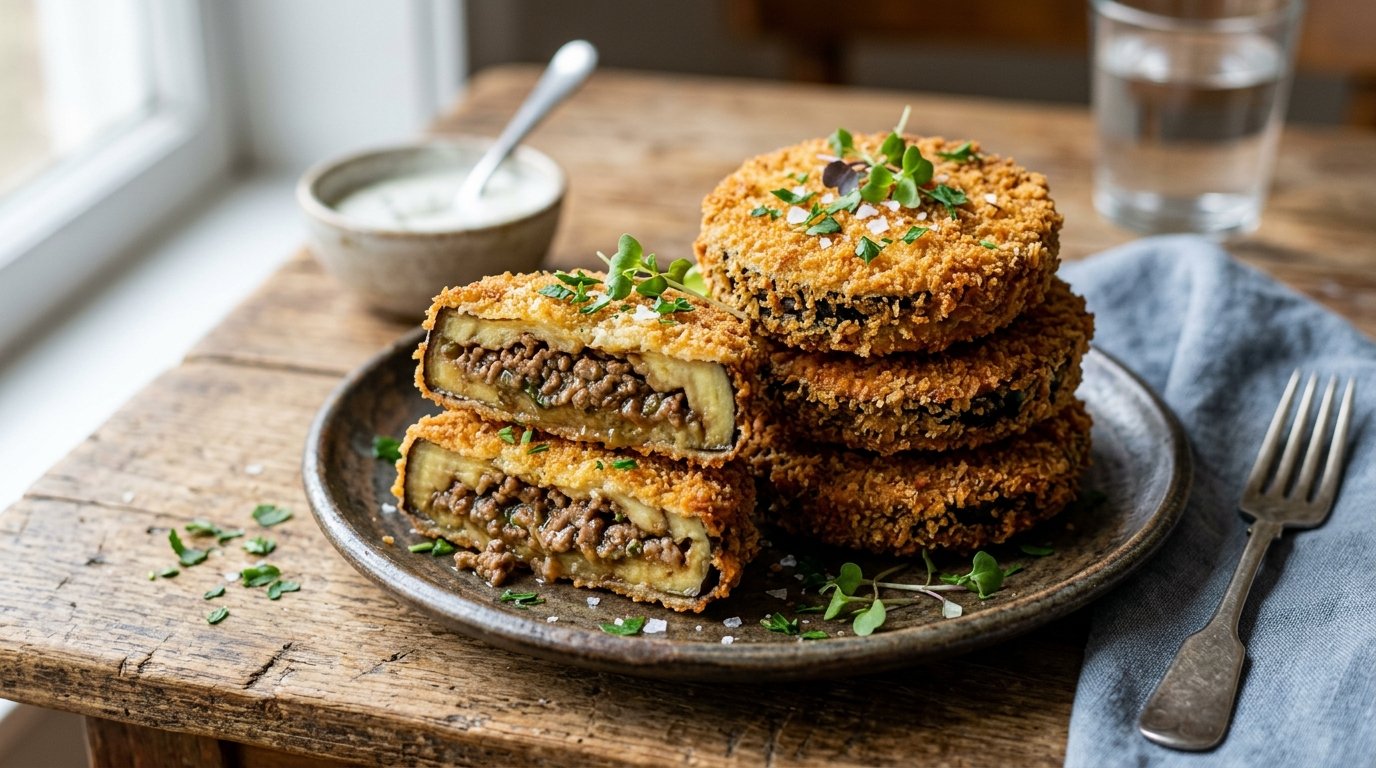
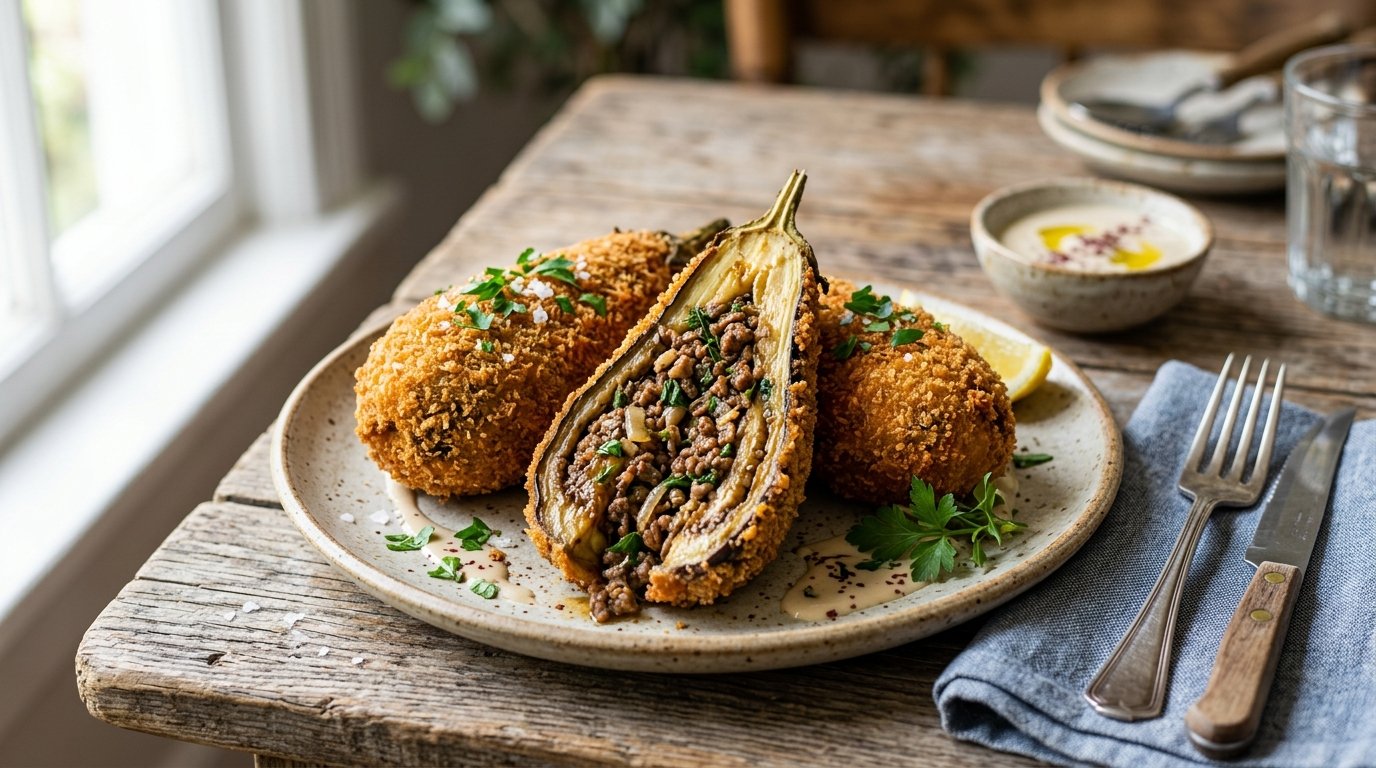
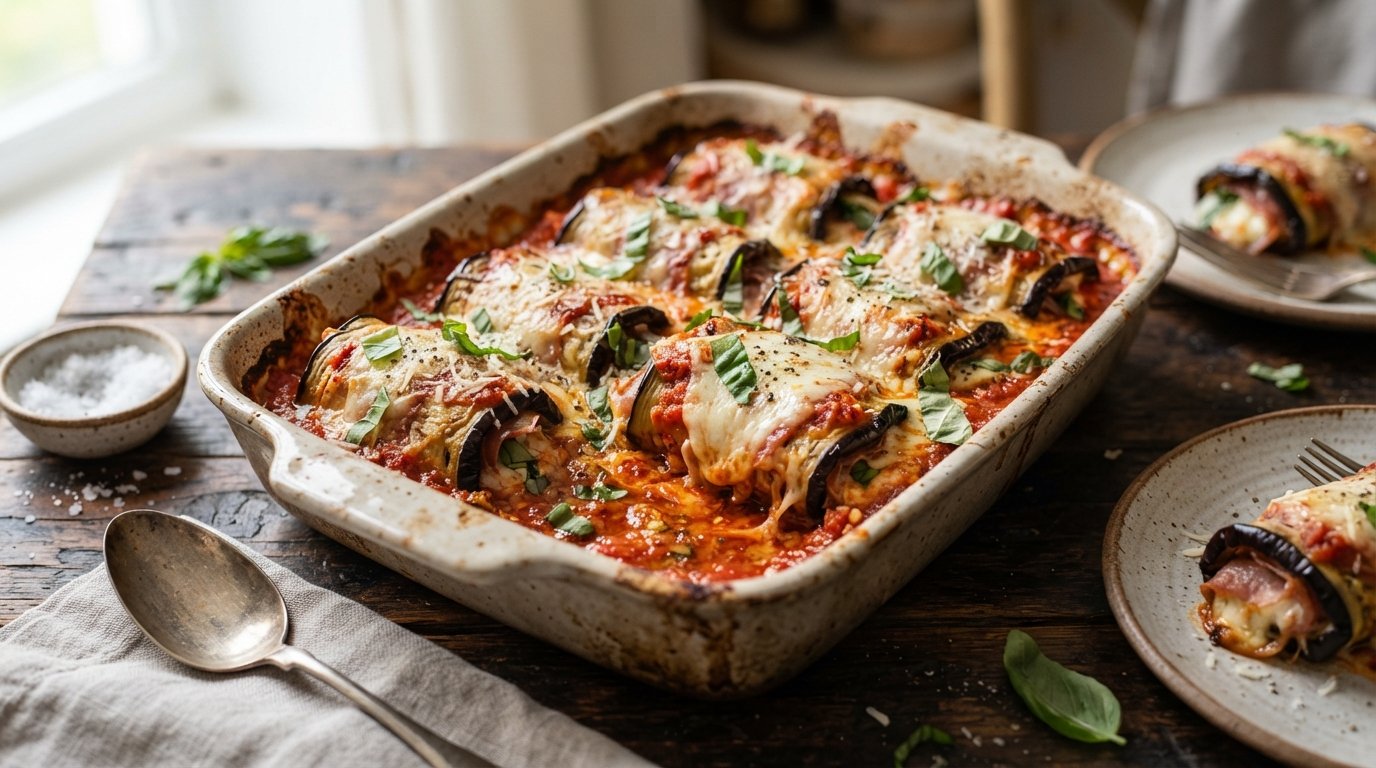
There is a specific kind of culinary alchemy that happens when you take a humble vegetable, stuff it with savory meat, coat it in a crisp batter, and fry it to golden perfection. This crispy stuffed fried eggplant with meat filling is exactly that kind of magic. Unlike traditional eggplant dishes that can sometimes turn mushy or bitter, this recipe uses a clever “accordion” cutting technique combined with a light, herb-flecked batter to create an exterior that shatters satisfyingly while the interior remains tender and juicy. The contrast between the crunchy shell and the soft, seasoned pork filling makes every bite an event. Whether you are looking for an impressive appetizer or a hearty main course, this crispy stuffed fried eggplant with meat filling delivers restaurant-quality texture and flavor right in your own kitchen.
Why This Recipe Works
The secret to this dish lies in its structural engineering. By slicing the eggplant almost all the way through but leaving the bottom intact (using chopsticks as guides), we create pockets that expand during frying, increasing surface area for maximum crispiness while holding the filling securely. The batter acts as a protective barrier, preventing the eggplant from absorbing excessive oil—a common issue with fried eggplant—while creating a distinct textural layer separate from the vegetable itself. Furthermore, the meat filling is pressed directly into the raw flesh; as the eggplant cooks, its moisture steams the meat from the inside out, ensuring the filling stays succulent rather than drying out. This dual-cooking method guarantees that both components reach peak doneness simultaneously.
Why You’ll Love This Recipe
Superior Texture: The double-layer crunch of batter and fried eggplant skin is unmatched by standard breading methods.
No Sogginess: The batter seal prevents oil saturation, keeping the eggplant firm and the filling dry.
Visual Appeal: The accordion slices fan out beautifully when fried, making for a stunning presentation.
Flavor Integration: Stuffing raw meat allows juices to meld with the eggplant during cooking, creating a unified taste profile.
Versatile Serving: Equally delicious hot as a main or at room temperature as a finger food appetizer.
Dipping Potential: The crispy exterior is the perfect vehicle for creamy, tangy dipping sauces.
Ingredient Notes
For the Eggplant & Filling
Long Asian Eggplants: slender, purple variety. Purpose: Ideal shape for accordion slicing and even frying. Buying Tip: Choose firm, glossy specimens with no wrinkles; heavy for their size indicates freshness. Substitution: Italian globe eggplants work but require thicker slices and longer frying.
Ground Pork: Lean-to-medium fat ratio (80/20). Purpose: Provides savory richness and binds well. Tip: Avoid extra-lean pork; fat content keeps filling moist during high-heat frying. Substitution: Ground chicken or turkey works but may need added oil/moisture.
Green Onions (Scallions): Finely chopped. Purpose: Adds aromatic freshness and cuts through richness. Tip: Use both white and green parts; whites for flavor base, greens for color.
Ginger & Garlic: Minced finely. Purpose: Essential aromatics that neutralize any eggplant bitterness. Tip: Fresh is non-negotiable here; powdered versions lack the necessary pungency.
Soy Sauce & Sesame Oil: Seasoning the meat. Purpose: Umami depth and nutty aroma. Tip: Toasted sesame oil has stronger flavor; use sparingly.
For the Batter
All-Purpose Flour: Base of the batter. Purpose: Creates structure and adhesion. Tip: Sift to remove lumps for smoother coating.
Cornstarch: Mixed with flour. Purpose: Lightens batter and enhances crispiness. Why it matters: Pure flour batter can be heavy; cornstarch creates a delicate, shattering crust.
Egg: Binder. Purpose: Helps batter adhere to oily eggplant surface. Tip: Beat lightly; over-beating incorporates too much air.
Salt & Pepper: Seasoning. Purpose: Flavors the crust itself. Tip: Batter should be seasoned; unseasoned coating tastes bland regardless of filling flavor.
For Dipping (Optional)
Mayonnaise & Herbs: Base for creamy dip. Purpose: Cooling contrast to hot fried food. Substitution: Greek yogurt for tangier, lighter option.
Lemon Juice/Vinegar: Acid component. Purpose: Cuts richness of fried food. Tip: Add gradually; acid can break mayo if overused.
Kitchen Equipment
Sharp Chef’s Knife: Essential for precise accordion cuts.
Wooden Chopsticks: Guides for safe, uniform slicing.
Large Mixing Bowls: One for meat, one for batter.
Deep Skillet or Wok: For shallow/deep frying.
Tongs: For safe handling in hot oil.
Wire Rack: For draining excess oil (prevents sogginess vs. paper towels).
Paper Towels: For patting eggplant dry before battering.
Preparation Information
Prep Time: 25 minutes
Cook Time: 15 minutes
Total Time: 40 minutes
Servings: 4 (2 halves per person)
Dietary Tags: High Protein, Nut-Free
Step-by-Step Instructions
H3: Prepare the Accordion Eggplant
Wash and dry eggplants thoroughly. Place two chopsticks parallel on either side of an eggplant on a cutting board. Slice crosswise at ½-inch intervals, letting knife rest on chopsticks to prevent cutting through completely. Flip eggplant over and slice diagonally between previous cuts, again using chopsticks as guides. Why this matters: This creates expandable pockets that hold filling and maximize crispy surface area. Visual Cue: Eggplant should resemble a flexible accordion when gently pulled. Common Mistake: Cutting all the way through; chopsticks are essential safety guides.
H3: Mix and Stuff the Meat Filling
In a bowl, combine ground pork, chopped green onions, minced ginger, garlic, soy sauce, sesame oil, salt, and pepper. Mix gently with hands until just combined; overmixing makes meat tough. Open each eggplant pocket and press meat mixture firmly inside, ensuring filling reaches bottom of each slit. Why this matters: Firm pressing prevents filling from falling out during frying. Texture Cue: Meat should feel compact but not dense. Aroma Cue: Fresh ginger/garlic should be prominent; if smelling sour, meat is old.
H3: Make the Crispy Batter
In a separate bowl, whisk together flour, cornstarch, salt, and pepper. In another bowl, beat egg with cold water until smooth. Combine wet and dry ingredients, whisking until just incorporated; small lumps are okay. Why this matters: Overmixing develops gluten, leading to chewy rather than crispy coating. Texture Cue: Batter should coat back of spoon thickly but drip slowly. Tip: Keep batter cold until ready to use; warmth activates gluten prematurely.
H3: Coat and Fry
Heat 1 inch of oil in skillet to 350°F (175°C). Pat stuffed eggplants dry with paper towels (critical for batter adhesion). Holding by stem, dip entire eggplant into batter, allowing excess to drip off. Gently lower into hot oil, stem-side up initially. Fry 3-4 minutes per side, turning carefully with tongs, until deep golden brown and crispy. Why this matters: Proper oil temperature seals batter instantly; too cool = greasy, too hot = burnt outside/raw inside. Visual Cue: Bubbles around eggplant should be vigorous but not violent. Doneness Cue: Internal meat temp must reach 160°F; check with thermometer.
H4: Drain and Rest
Transfer fried eggplants to wire rack set over baking sheet. Let rest 2-3 minutes before serving. Why this matters: Wire rack allows air circulation; paper traps steam and softens crust. Texture Cue: Crust should audibly crack when tapped.
Expert Tips
Oil Temperature is King: Invest in an instant-read thermometer. 350°F is the sweet spot; fluctuations ruin texture. Adjust heat between batches.
Dry Surface = Better Adhesion: Moisture is batter’s enemy. Pat eggplant thoroughly dry before dipping; consider dusting lightly with flour first for extra grip.
Don’t Crowd the Pan: Frying multiple pieces drops oil temperature dramatically. Cook in batches; patience yields superior crispiness.
Season Every Layer: Season meat, season batter, AND serve with seasoned dip. Unseasoned components make dish taste flat despite good technique.
Test Fry First: Fry one piece first to check oil temp and timing. Adjust before committing entire batch.
Common Mistakes
Cutting Through Completely: Ruins structural integrity; filling leaks out. Fix: Always use chopstick guides; practice on one eggplant first.
Overmixing Meat: Creates dense, rubbery filling. Fix: Mix gently until just combined; stop when ingredients are distributed.
Batter Too Thick/Thin: Thick = doughy coating; thin = patchy coverage. Fix: Adjust with water/flour incrementally; aim for heavy cream consistency.
Wrong Oil Temp: Low = greasy/soggy; high = burnt/raw. Fix: Use thermometer; adjust heat constantly between batches.
Draining on Paper Towels: Traps steam, softening crust. Fix: Always use wire rack for proper air circulation.
Undercooking Pork: Food safety risk. Fix: Never guess; always verify 160°F internal temp with thermometer.
Recipe Variations
Spicy Sichuan Style: Add chili oil, Sichuan peppercorns, and doubanjiang to meat filling for numbing heat.
Vegetarian Version: Replace pork with crumbled firm tofu + mushrooms + walnuts for meaty texture.
Vegan Adaptation: Use flax egg in batter; substitute mayo dip with cashew cream + lemon.
Chicken/Turkey Swap: Ground poultry works but add 1 tbsp oil to mixture to prevent dryness.
Beef/Lamb Variation: Richer meats pair well with cumin, coriander, and mint in filling.
Cheese-Stuffed: Add mozzarella/cheddar to meat mixture for gooey pull-apart centers.
Low-Carb/Keto: Use almond flour + psyllium husk batter; skip breading entirely for grilled version.
Seafood Twist: Substitute pork with minced shrimp + water chestnuts for lighter, briny filling.
Extra Crispy Panko: Add crushed panko breadcrumbs to batter for additional crunch layer.
Herb-Forward: Mix fresh basil, cilantro, or dill into batter for aromatic crust.
Use thermometer; rotate pieces; ensure uniform slice thickness.
Frequently Asked Questions
1. Can I use regular globe eggplants instead of Asian varieties? Yes, but they’re wider and denser. Slice thicker (¾-inch), score deeper, and fry 1-2 minutes longer. They may absorb more oil; salting beforehand helps draw out moisture.
2. How do I know when the oil is ready without a thermometer? Drop a small bit of batter into oil. If it sinks then immediately rises bubbling vigorously, temp is correct. If it sinks and stays, oil’s too cool. If it browns instantly, too hot.
3. Can I bake these instead of frying for a healthier version? Baking won’t achieve same crispiness. For compromise: brush battered eggplants generously with oil, bake at 425°F on wire rack 25-30 mins, flipping halfway. Spray with oil mid-bake. Texture will be softer but still tasty.
4. Why did my batter turn gummy/chewy? Usually overmixing (developed gluten) or oil too cool (batter absorbed oil before setting). Next time: mix batter minimally, ensure oil hits 350°F before frying, and don’t overcrowd pan.
5. Can I prepare the stuffed eggplants ahead and fry later? Absolutely! Stuff and refrigerate up to 24 hours. Bring to room temp 15 mins before frying (cold eggplant lowers oil temp dangerously). Batter just before frying for best adhesion.
6. What’s the best oil for frying this dish? Neutral oils with high smoke points: vegetable, canola, peanut, or grapeseed. Avoid olive oil (low smoke point, strong flavor clashes). Peanut oil adds subtle nuttiness that complements Asian flavors nicely.
7. How do I prevent the eggplant from absorbing too much oil? Key factors: proper oil temp (350°F+), dry eggplant surface, thin consistent batter, and immediate draining on wire rack. Salting eggplant slices briefly before stuffing also reduces oil absorption by drawing out moisture.
8. Is there a way to make the filling less dense/heavy? Add ¼ cup breadcrumbs or cooked rice to meat mixture; lightens texture significantly. Alternatively, fold in whipped egg white for airiness. Don’t overpack pockets; leave slight expansion room.
9. Can I freeze these after frying? Yes, but expect some crispiness loss. Freeze individually on tray, then bag. Reheat in air fryer/oven (not microwave) to restore some crunch. Best consumed within 1 month.
10. What dipping sauce pairs best with this dish? Classic combo: Japanese-style mayo + lemon + herbs. Also excellent: sweet chili sauce, ponzu, spicy sriracha-mayo, or simple soy-vinegar-ginger dip. Offer multiple options for variety.
Final Thoughts
This crispy stuffed fried eggplant with meat filling transforms a humble vegetable into something extraordinary through smart technique and bold flavors. The accordion cut isn’t just visually striking—it’s functional, creating pockets that hold savory goodness while maximizing that irresistible crunch. Whether you’re feeding a crowd or treating yourself, this dish proves that vegetarian-forward cooking can be deeply satisfying and indulgent. Don’t be intimidated by the frying step; with proper temperature control and a little practice, you’ll achieve restaurant-quality results every time. We’d love to hear how yours turned out! Share your variations, tips, or questions in the comments below, and don’t forget to rate the recipe if you enjoyed it. Happy frying!