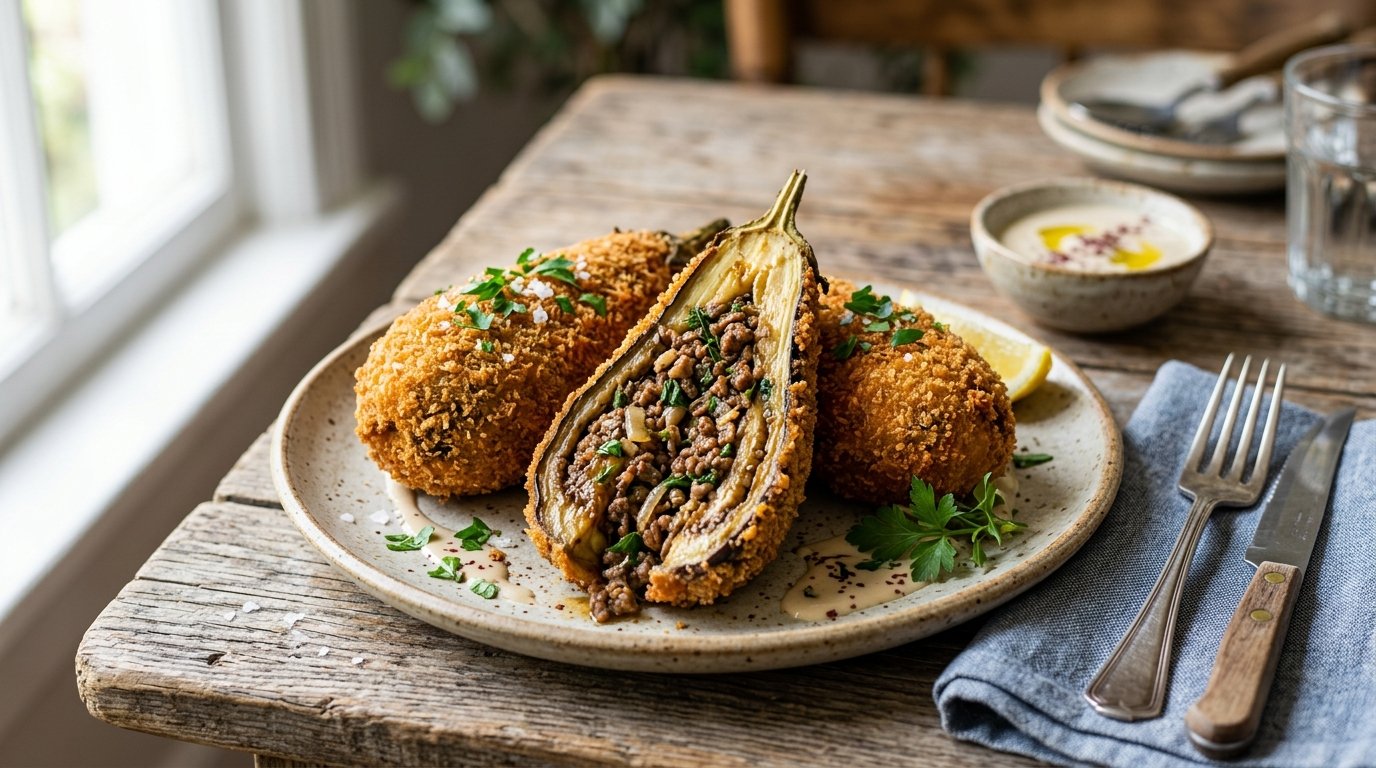
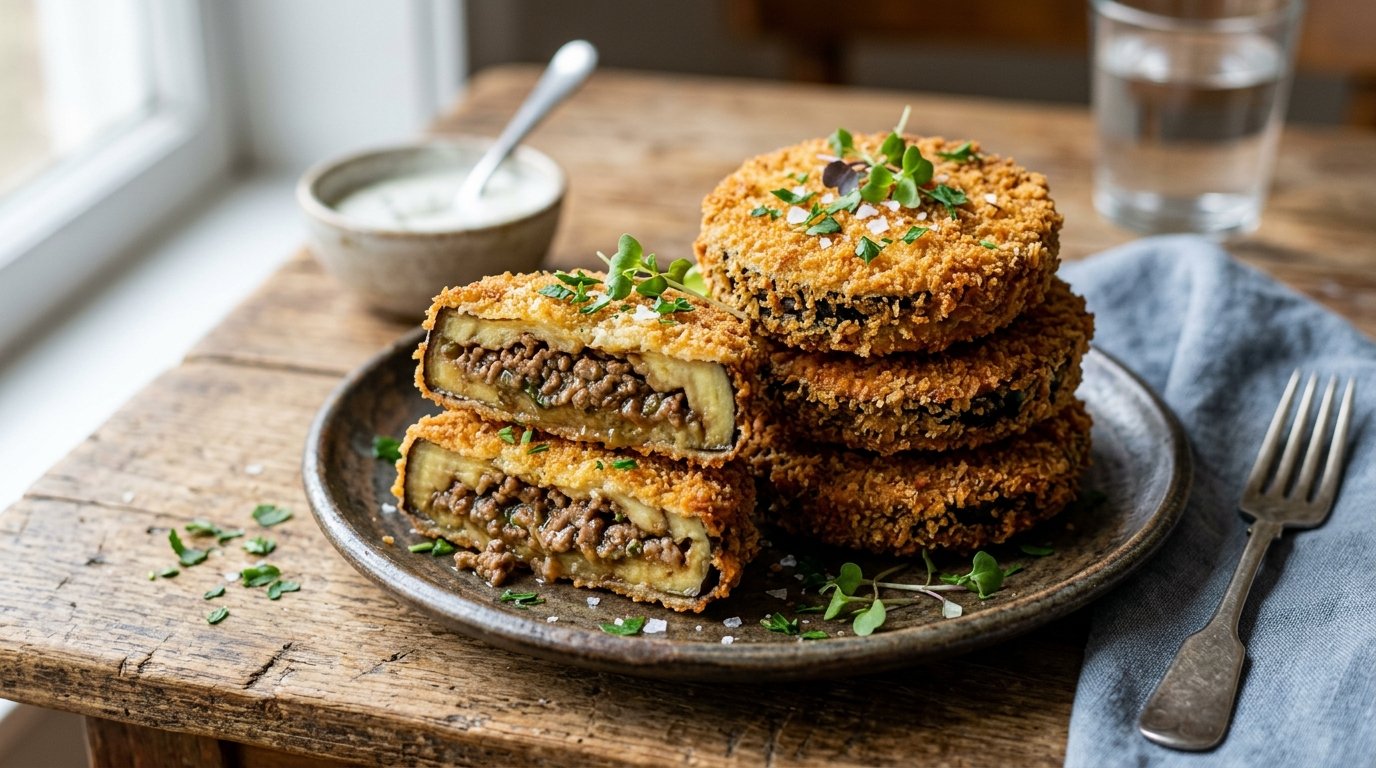
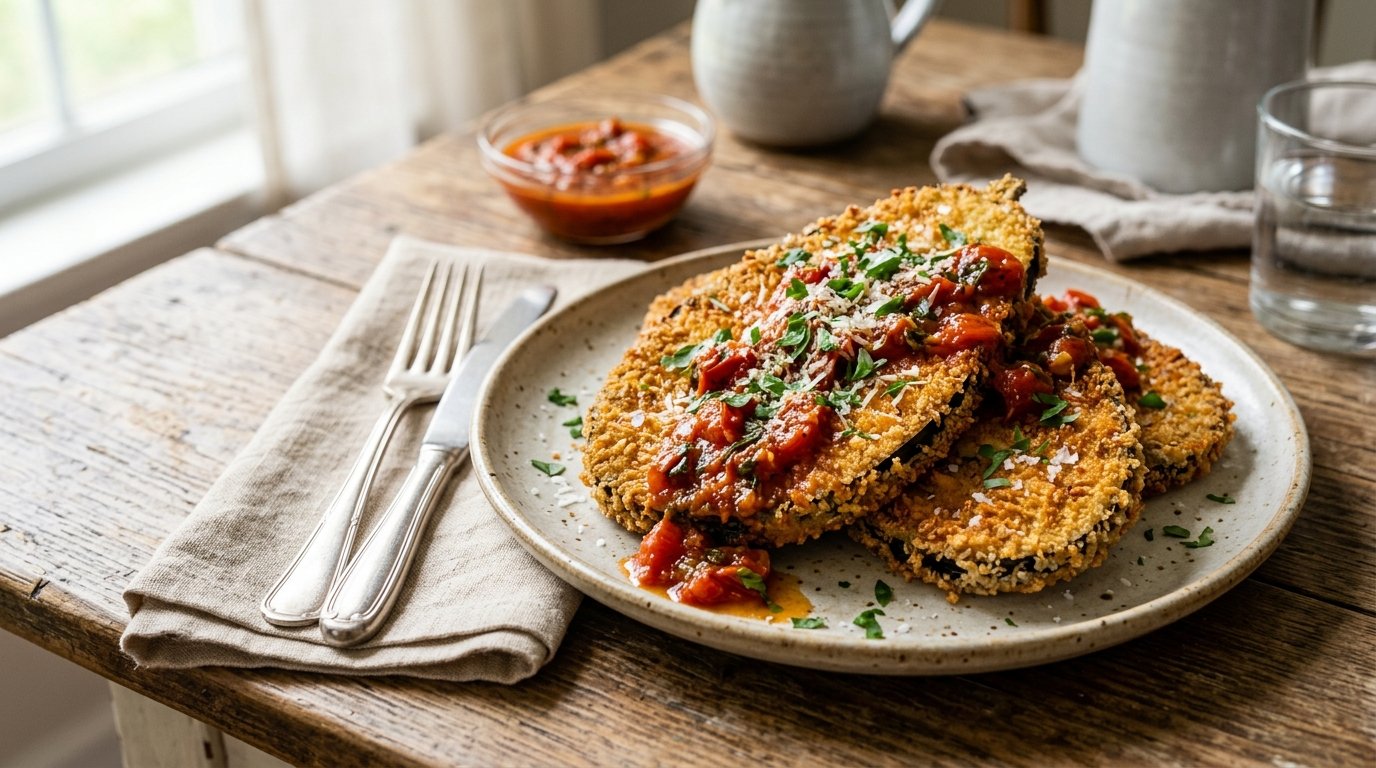
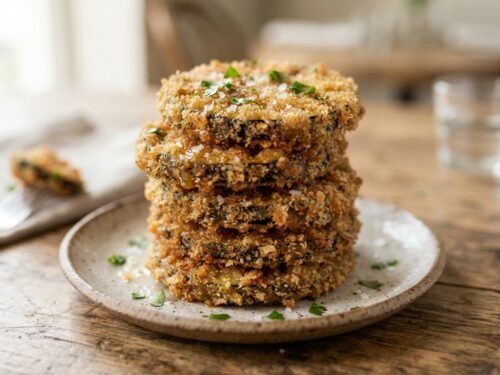
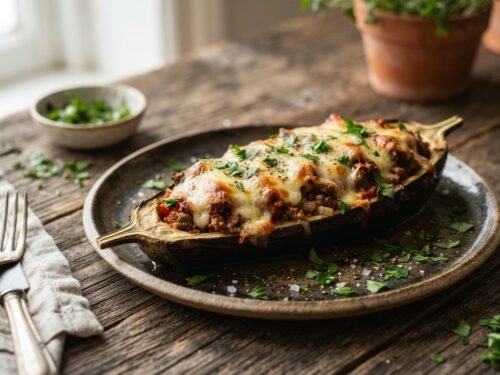
Few dishes deliver the perfect balance of crisp exterior and tender, savory interior like stuffed fried eggplant. In this recipe, a halved eggplant is scored, lightly cooked, then filled with a rich mixture of ground chicken, diced carrots, scallions, and eggs—before being deep-fried to golden perfection. The result is a showstopper: crunchy on the outside, moist and flavorful within, with layers of texture and umami that make every bite deeply satisfying.
This dish draws inspiration from classic Chinese home cooking—where resourcefulness meets technique—and transforms humble ingredients into something extraordinary. Whether served as an elegant appetizer or a hearty main course, it’s guaranteed to impress without requiring hours in the kitchen. Let’s break down how to nail this technique for restaurant-quality results at home.
Why This Recipe Works
The success of this stuffed fried eggplant hinges on three key principles: pre-cooking the eggplant, binding the filling properly, and controlled frying.
First, the eggplant is not raw when stuffed—it’s briefly steamed or pan-seared (as shown in the video), which softens its flesh just enough to hold the filling without collapsing during frying. This prevents sogginess and ensures structural integrity.
Second, the filling contains raw eggs, which act as a natural binder and moisture source. When fried, the eggs cook inside the eggplant cavity, creating a custardy, cohesive center that doesn’t leak out. The small dice of carrot and scallion add sweetness, crunch, and aroma without compromising the binding.
Finally, the shallow-to-deep fry method (starting with a moderate oil level and adding more as needed) creates an even golden crust while keeping the interior tender—not greasy. The visual cue of “golden brown with slight blistering” signals perfect doneness: crisp but not burnt, yielding a satisfying crunch followed by a juicy, savory core.
Why You’ll Love This Recipe
Impressive Yet Accessible: Looks like a chef’s creation but uses everyday ingredients and techniques.
Follow these steps precisely to achieve the ideal texture and structure.
H3: Step 1 – Prep the Eggplant
Cut one medium eggplant in half lengthwise. Using a fork, gently score the flesh in a diamond pattern (about ½-inch deep), being careful not to pierce the skin. This helps it soften evenly and absorb flavors. Why score? It increases surface area for seasoning and prevents the flesh from shrinking unevenly during cooking.
H3: Step 2 – Pre-Cook the Eggplant Halves
Place eggplant halves flesh-side down in a lightly oiled skillet over medium heat. Cook for 3–4 minutes until the flesh begins to soften and develop light browning. Alternatively, steam for 5 minutes. Visual cue: Flesh should yield slightly to gentle pressure but still hold shape. This step is critical—it prevents the eggplant from absorbing too much oil later and keeps the cavity intact.
H3: Step 3 – Make the Filling
In a bowl, combine 8 oz ground chicken, 3 raw eggs, ¼ cup diced carrots, 3–4 sliced scallions, and a pinch of salt and white pepper. Mix gently with a fork—do not overwork, or the filling will become dense. Texture tip: The mixture should be moist but hold together when pressed; if too wet, add 1 tsp cornstarch.
H3: Step 4 – Stuff the Eggplant
Using a spoon, generously fill each eggplant cavity with the chicken-egg mixture, mounding it slightly above the rim. Press gently to compact—this ensures the filling stays put during frying. Pro tip: Leave a ¼-inch border around the edge to prevent overflow.
H3: Step 5 – Fry to Golden Perfection
Heat ½ inch of neutral oil (canola, peanut, or vegetable) in a skillet over medium-high heat (325–350°F). Carefully place eggplant halves, filling-side down, into the oil. Fry for 4–5 minutes until the bottom is deeply golden and crisp. Flip carefully using a spatula and spider strainer, then fry the skin side for another 2–3 minutes until evenly browned. Doneness cue: Filling should feel set (not jiggly) when gently shaken; internal temp ~165°F.
H3: Step 6 – Drain and Rest
Transfer fried eggplants to a paper towel–lined tray. Let rest for 2 minutes—this allows residual heat to finish cooking the center and lets excess oil drain. Why rest? Prevents the filling from oozing out when cut.
H3: Step 7 – Serve Warm
Plate immediately. Garnish with extra sliced scallions or a light drizzle of chili oil. Cut in half crosswise to reveal the layered interior: crispy skin → tender eggplant → creamy egg-chicken filling.
Expert Tips
Oil Temperature Control: Too hot = burnt outside, raw inside. Too cool = greasy, soggy crust. Test with a breadcrumb—it should sizzle gently and turn golden in 30 seconds.
Egg Safety: If concerned about undercooked eggs, pre-scramble the filling lightly in a pan first (just until set), then stuff and fry briefly to crisp the exterior. This adds 2 minutes but guarantees safety.
Skin Integrity Trick: Lightly brush the outer skin with oil before frying—this creates a barrier that minimizes oil absorption and enhances browning.
No Leaking Secret: Press filling firmly and avoid overfilling. The scored flesh acts like a natural “cage” to contain the mixture.
Batch Frying: Fry only 2 halves at a time to maintain oil temperature. Crowding lowers the heat and causes steaming instead of crisping.
Common Mistakes
Filling Leaks Out During Frying
Why: Overfilling, insufficient pressing, or skipping the pre-cook step.
Fix: Next time, underfill slightly and press firmly. Pre-cook eggplant thoroughly to stabilize the cavity.
Soggy or Greasy Crust
Why: Oil too cold, eggplant not pre-cooked, or frying too many pieces at once.
Fix: Heat oil properly. Use a thermometer. Fry in batches. Drain well on paper towels.
Raw or Rubbery Filling
Why: Insufficient frying time or oil too cool.
Fix: Fry until deep golden (not pale yellow) and internal temp reaches 165°F. If unsure, finish in a 350°F oven for 3–4 minutes.
Bitter Eggplant
Why: Using old or overly ripe eggplant, or not salting (though not shown, salting draws out bitterness).
Fix: Choose fresh, firm eggplants. If concerned, sprinkle flesh with salt, let sit 10 minutes, then pat dry before cooking.
Recipe Variations
This stuffed fried eggplant is a canvas for creativity:
Spicy Sichuan Style: Add 1 tsp Sichuan peppercorn powder and ½ tsp dried chili flakes to the filling. Finish with chili oil.
Vegetarian Version: Replace chicken with finely chopped mushrooms + 2 tbsp cooked lentils. Use flax egg (1 tbsp ground flax + 3 tbsp water) if avoiding eggs entirely.
Seafood Twist: Substitute chicken with minced shrimp or scallops. Add a splash of rice wine to filling.
Cheesy Upgrade: Stir 2 tbsp shredded mozzarella into filling before stuffing. Melts beautifully during frying.
Low-Carb/Keto: Skip carrots; add finely diced celery and bell pepper. Use almond flour (1 tsp) as binder if needed.
Vegan Option: Use tofu scramble + mashed chickpeas + nutritional yeast for “egg” texture. Fry in coconut oil.
Extra Umami: Add 1 tsp fermented black beans (rinsed and minced) to filling.
Herb-Infused: Mix in 1 tbsp chopped cilantro or parsley to filling for freshness.
What to Serve With This Recipe
Balance the richness of the fried eggplant with bright, acidic, or cooling elements:
Salads: Cucumber salad with rice vinegar, sesame oil, and toasted sesame seeds; or a simple tomato-onion salad with lime.
Rice or Noodles: Steamed jasmine rice, garlic fried rice, or cold sesame noodles.
Soups: Light miso soup or clear vegetable broth with scallions.
Dips/Sauces: Sweet chili sauce, hoisin-mayonnaise blend, or a quick ginger-scallion oil.
Drinks: Sparkling lemonade, jasmine tea, or dry Riesling to cut through the fat.
Dessert Pairing: Mango sticky rice or red bean paste dumplings for authentic Asian meal flow.
Make Ahead & Meal Prep Tips
Filling Prep: Mix filling up to 1 day ahead; store covered in fridge. Do not add eggs until ready to stuff (to prevent premature setting).
Eggplant Prep: Score and pre-cook eggplant halves up to 4 hours ahead. Store uncovered in fridge to prevent sogginess.
Full Assembly: Assemble (stuff) up to 2 hours before frying. Keep refrigerated on a tray lined with parchment.
Freezing? Not recommended—frying quality degrades significantly after thawing. Best made fresh.
Storage Instructions
Refrigerator: Store cooled leftovers in an airtight container for up to 2 days. The crust will soften, but reheating restores crispness.
Freezer: Not suitable. The egg-based filling separates and becomes rubbery upon thawing/frying.
Container Tip: Place paper towels between layers if stacking to absorb moisture.
Reheating Instructions
Revive the crispness without drying out the filling:
Air Fryer (Best Method): 350°F for 4–5 minutes, flipping halfway. Rest 1 minute before serving.
Oven: 375°F on a wire rack for 8–10 minutes. The rack prevents sogginess.
Stovetop: Re-crisp in a dry non-stick skillet over medium heat for 2–3 minutes per side.
Microwave: Only if desperate—heat 30 seconds, then finish in air fryer/oven. Microwaving alone makes it soggy.
Nutritional Information
Per Stuffed Eggplant Half (approx.)
Calories: 380 kcal
Protein: 22g
Carbohydrates: 14g
Fat: 24g (saturated: 5g)
Fiber: 4g
Sugar: 5g
Sodium: 280mg
Note: Values vary based on oil absorption and exact ingredient amounts.
Troubleshooting Guide
Issue
Root Cause
Solution
Filling oozes out
Under-pressed, overfilled, or raw egg not bound
Press firmly; reduce filling volume; mix with 1 tsp cornstarch
Crust too dark, inside raw
Oil too hot, frying time too short
Lower heat to 325°F; fry longer on lower setting
Eggplant mushy
Overcooked during pre-step
Reduce pre-cook to 2–3 minutes; test with fork
Filling tastes bland
Insufficient seasoning
Add salt/pepper to filling before stuffing; taste a small cooked portion first
Oil splatters violently
Wet eggplant or cold filling
Pat eggplant dry; bring filling to room temp before stuffing
Skin peels off during frying
Eggplant not pre-cooked enough
Ensure flesh is softened and slightly caramelized before stuffing
Frequently Asked Questions
Can I bake this instead of frying? Yes, but texture changes significantly. Brush with oil, stuff, and bake at 400°F for 20–25 minutes until golden. The crust won’t be as crisp, but it’s healthier and still delicious.
Is the egg safe to eat raw in the filling? The eggs cook fully during frying (internal temp reaches 165°F+). If you’re immunocompromised or pregnant, pre-cook the filling lightly in a pan first.
What if I don’t have a wok or heavy skillet? A deep-sided stainless steel or cast iron skillet works perfectly. Avoid non-stick for high-heat frying—it can degrade.
Can I use zucchini instead of eggplant? Zucchini is too watery and lacks structural integrity. Stick with eggplant for best results. If you must, salt and drain zucchini slices first.
How do I know when the oil is hot enough? Drop a tiny piece of scallion in—if it sizzles immediately and floats, oil is ready (~325°F). A wooden spoon handle will bubble steadily around the wood.
Can I make this ahead for a party? Yes! Prep everything except frying up to 2 hours ahead. Fry just before serving for maximum crispness.
Why does my filling look gray instead of yellow? Overmixing or using older eggs can cause this. Use fresh eggs and fold gently. A pinch of turmeric (⅛ tsp) can enhance color without altering flavor.
Can I freeze the uncooked stuffed eggplants? Not recommended—the moisture from the filling will make the eggplant soggy and cause freezer burn. Best assembled and fried fresh.
Final Thoughts
This stuffed fried eggplant is more than a recipe—it’s a celebration of technique, texture, and thoughtful layering. It proves that with a few smart steps—scoring, pre-cooking, proper binding—you can transform simple ingredients into something truly special. Whether you’re cooking for yourself on a quiet Tuesday or hosting friends on a Saturday, this dish delivers satisfaction in every bite: the crackle of the crust, the yielding tenderness of the eggplant, and the rich, savory surprise within.