Quick Recipe Summary
| Metric | Details |
|---|---|
| Prep Time | 10 minutes |
| Cook Time | 15 minutes |
| Total Time | 25 minutes |
| Servings | 2–4 people |
| Cuisine | Italian / American Comfort |
| Course | Main Course / Lunch |
| Difficulty | Easy (Beginner Friendly) |
| Calories | ~450 kcal per serving |
Table of Contents
| Section | Heading Level |
|---|---|
| Introduction | H2 |
| Why This Recipe Works | H2 |
| Why You’ll Love This Recipe | H2 |
| Ingredient Notes | H2 |
| Kitchen Equipment | H2 |
| Preparation Information | H2 |
| Step-by-Step Instructions | H2 |
| Expert Tips | H2 |
| Common Mistakes | H2 |
| Recipe Variations | H2 |
| What to Serve With This Recipe | H2 |
| Make Ahead & Meal Prep Tips | H2 |
| Storage Instructions | H2 |
| Reheating Instructions | H2 |
| Nutritional Information | H2 |
| Troubleshooting Guide | H2 |
| Frequently Asked Questions | H2 |
| Final Thoughts | H2 |
Introduction
There is a profound beauty in simplicity, especially when it comes to comfort food. If you are looking for a meal that feels like a warm hug but requires almost no effort, this creamy butter pasta recipe is exactly what you need. It captures the essence of Italian cucina povera—peasant cooking that relies on high-quality ingredients rather than complex techniques.
Unlike heavy cream-based sauces that can weigh you down, this dish creates a luxurious, silky emulsion using just starchy pasta water, cold butter, and sharp cheese. It is the perfect solution for busy weeknights, late-night cravings, or when your pantry is looking a little bare. Whether you call it “Pasta al Burro” or simply buttered noodles elevated to gourmet status, this recipe proves that you don’t need a long ingredient list to create something spectacular. Let’s dive into how to master this deceptively simple classic.
Why This Recipe Works
The magic behind this creamy butter pasta lies in the science of emulsification. Many home cooks make the mistake of melting butter directly into drained pasta, resulting in a greasy, separated mess. This recipe avoids that pitfall by utilizing the “mantecatura” technique.
By finishing the pasta in the pan with reserved starchy cooking water and cold cubes of butter, we force the fat and water to bind together. The starch acts as an emulsifier, creating a stable, glossy sauce that clings to every strand of spaghetti. Adding the cheese off-heat prevents it from seizing or becoming stringy, ensuring a smooth, velvety texture that coats the palate perfectly. It is a masterclass in texture transformation using only three core components.
Why You’ll Love This Recipe
- Pantry Staple Friendly: You likely already have spaghetti, butter, and parmesan in your kitchen. No special trips to the grocery store required.
- Incredibly Fast: From boiling water to plated dinner in under 30 minutes. It is faster than waiting for delivery.
- Kid-Approved: The mild, savory flavor profile makes it a hit with picky eaters who might turn their noses up at tomato or pesto sauces.
- Customizable Canvas: While delicious on its own, it serves as the perfect base for adding herbs, proteins, or vegetables based on what you have on hand.
- Budget Conscious: High-end restaurant quality for a fraction of the price. A block of parmesan goes a long way when grated fresh.
- Texture Perfection: Achieves that elusive “al dente” bite combined with a sauce that is creamy without being heavy.
Ingredient Notes
Understanding your ingredients is the first step to mastering this creamy butter pasta. Here is what you need to know to get the best results.
Spaghetti
- Purpose: Provides the structural base and releases the essential starch needed for the sauce.
- Buying Tips: Look for bronze-die extruded pasta. It has a rougher surface texture that grabs onto sauce much better than smooth, Teflon-die pasta. Brands like De Cecco or Rustichella d’Abruzzo are excellent choices.
- Substitutions: Linguine, bucatini, or fettuccine work beautifully. Avoid short shapes like penne for this specific technique, as the long strands help create the signature swirl.
Unsalted Butter
- Purpose: Creates the rich, creamy body of the sauce through emulsification.
- Why Unsalted? Salted butter varies wildly in sodium content. Using unsalted allows you to control the seasoning precisely. Parmesan is naturally salty; balancing it with unsalted butter prevents the dish from becoming inedible.
- Temperature Matters: Keep the butter cold and cubed until the very last moment. Cold butter incorporates more air and creates a thicker, glossier emulsion than melted butter.
- Quality: Since butter is a primary flavor driver, use European-style butter with a higher fat content (82%+) if possible. It melts slower and tastes richer.
Parmigiano-Reggiano
- Purpose: Adds umami depth, saltiness, and helps thicken the sauce.
- Buying Tips: Always buy a wedge and grate it yourself. Pre-grated cheese is coated in cellulose anti-caking agents that prevent it from melting smoothly, leading to a gritty sauce. Look for the stamped rind to ensure authenticity.
- Substitutions: Pecorino Romano (saltier, sharper), Grana Padano (milder, nuttier), or Asiago. Avoid “Italian Blend” shakers found in the green can—they will not melt properly.
Fresh Basil
- Purpose: Adds a pop of color and a fresh, aromatic contrast to the rich dairy.
- Handling: Tear leaves by hand rather than cutting with a knife to prevent oxidation (blackening). Add them at the very end or as a garnish to preserve their volatile oils.
Black Pepper
- Purpose: Cuts through the richness of the butter and cheese.
- Tip: Freshly cracked is non-negotiable here. Pre-ground pepper lacks the floral heat necessary to balance the fat.
Kitchen Equipment
You do not need a fully stocked professional kitchen to make this creamy butter pasta, but having the right tools makes the process seamless.
Required Tools
- Large Pot (6+ Quarts): Essential for boiling pasta. Pasta needs room to move freely to cook evenly and release starch properly.
- Large Skillet or Sauté Pan: Preferably stainless steel or carbon steel. You need enough surface area to toss the pasta vigorously. Non-stick works but doesn’t develop fond as well.
- Tongs: Metal tongs are crucial for transferring pasta and tossing it in the pan. They give you the control needed to create the emulsion.
- Microplane or Box Grater: For achieving fluffy, snow-like cheese that melts instantly.
- Sharp Chef’s Knife: For cubing the butter uniformly. Uniform cubes ensure even melting.
- Cutting Board: Wooden or plastic board for prepping butter and basil.
Optional but Helpful
- Pasta Fork/Spoon: Helps measure portions and twist pasta for plating.
- Cheese Grater with Handle: Makes grating hard cheese safer and faster.
- Instant Read Thermometer: Useful if you want to ensure your pasta water is at a rolling boil before adding noodles.
Preparation Information

- Prep Time: 10 Minutes (Grating cheese, cubing butter, washing basil)
- Cook Time: 15 Minutes (Boiling water, cooking pasta, emulsifying sauce)
- Total Time: 25 Minutes
- Servings: 2 Generous Portions or 4 Side Dish Portions
Step-by-Step Instructions
Follow these steps carefully to achieve the perfect creamy butter pasta emulsion.
H3: Step 1 – Prep Your Mise en Place
Before you even turn on the stove, prepare your ingredients. Cube 4 tablespoons of cold unsalted butter into uniform ½-inch pieces. Grate ½ cup of Parmigiano-Reggiano finely. Wash and dry your basil leaves. Having everything ready is critical because the final stage of this recipe happens fast, and you won’t have time to search for ingredients while the pasta is cooling.
H3: Step 2 – Boil Water and Season Generously
Bring a large pot of water to a rolling boil. Add a generous amount of kosher salt—it should taste like seawater. This is your only chance to season the pasta itself. Drop in 8 oz of spaghetti. Do not break the pasta; let it soften and submerge naturally over 30 seconds. Stir immediately to prevent sticking.
H3: Step 3 – Cook to Al Dente
Cook the spaghetti according to package directions, but set your timer for 1 minute less than recommended. You want the pasta slightly undercooked because it will finish cooking in the sauce. This residual cooking absorbs flavor and helps release more starch into the pan.
H3: Step 4 – Reserve Liquid Gold
Before draining, scoop out 1 ½ cups of starchy pasta water. This cloudy liquid is the binding agent for your sauce. Do not skip this step! Without it, you cannot create the creamy emulsion. Drain the pasta, but do not rinse it. Rinsing washes away the surface starch we need.
H3: Step 5 – Create the Emulsion Base
Return the empty pot to low heat or use your large skillet over medium-low heat. Add ½ cup of the reserved pasta water. Once simmering, add the cold butter cubes. Swirl the pan constantly. As the butter melts, it will combine with the starchy water to form a milky, opaque sauce. This visual cue tells you the emulsion is starting.
H3: Step 6 – Toss and Finish Cooking
Add the drained spaghetti directly to the skillet with the butter-water mixture. Increase heat to medium. Using tongs, toss the pasta vigorously for 1–2 minutes. The friction and agitation are key. The pasta will absorb the liquid, and the sauce will thicken and cling to the strands. If it looks dry, add a splash more pasta water. The texture should be glossy and fluid, not soupy.
H3: Step 7 – Mantecatura (The Cheese Stage)
Crucial Step: Remove the pan from the heat entirely. Wait 10 seconds. Sprinkle the grated parmesan over the pasta while tossing continuously. Adding cheese over direct heat causes it to seize and become oily. Off-heat tossing ensures a smooth, creamy coating. Taste and adjust seasoning with freshly cracked black pepper.
H3: Step 8 – Plate and Garnish
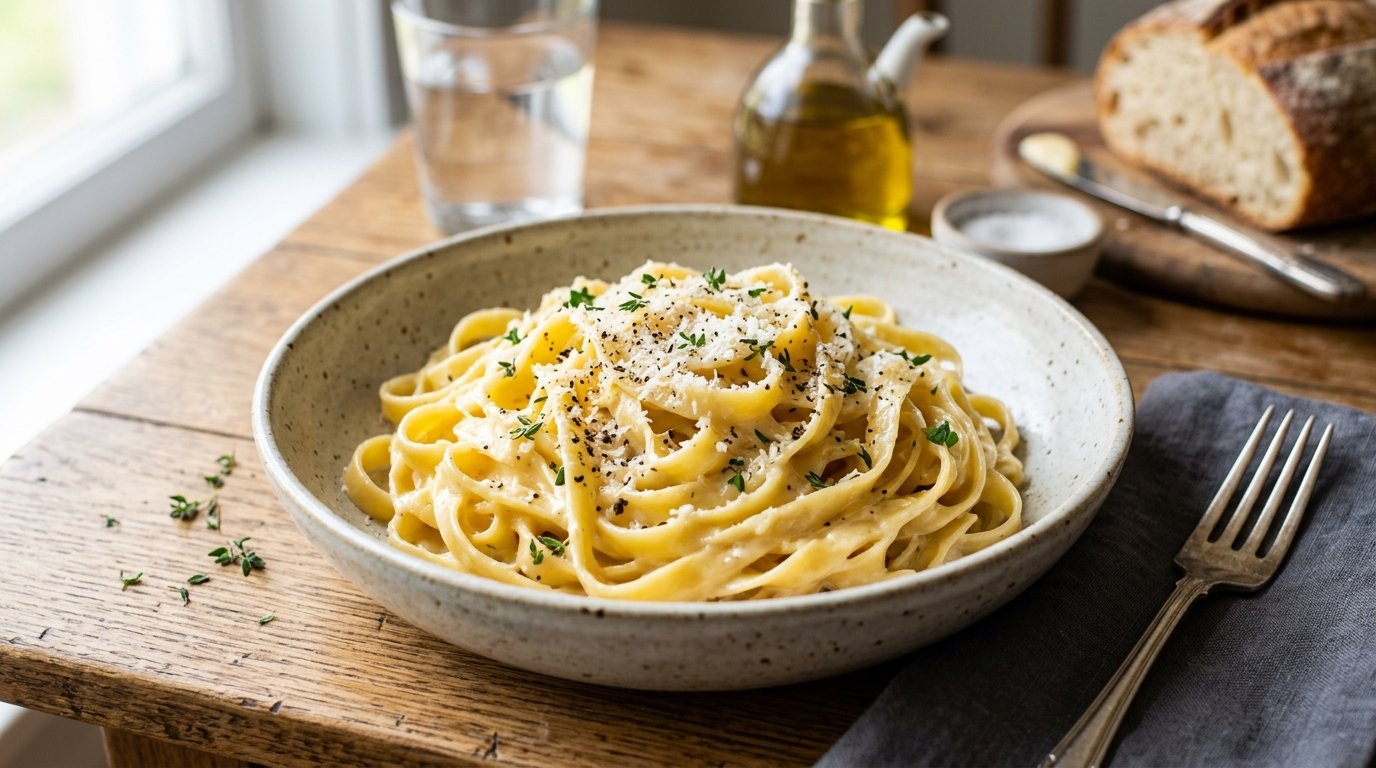
Using tongs, lift a portion of pasta and twirl it against a ladle or the side of the bowl to create a neat nest. Place it gently in a warm shallow bowl. Top with extra grated parmesan, a crack of black pepper, and fresh basil leaves. Serve immediately while steaming hot.
Expert Tips
- Warm Your Bowls: Cold bowls shock the pasta and cause the butter sauce to solidify instantly. Run bowls under hot water or warm them in a low oven for 2 minutes before plating.
- The “Splash” Technique: When tossing pasta in the pan, use a flicking motion with your wrist. This aerates the sauce and helps incorporate air bubbles, making it lighter and creamier.
- Salt Timing: Never salt the water before it boils. Salt lowers the boiling point and can pit stainless steel pots if added to cold water. Always wait for the rolling boil.
- Butter Temperature Check: If your kitchen is very warm, keep your butter cubes in the fridge until the exact second you need them. Warm butter melts too fast and separates before emulsifying.
- Pasta Water Consistency: The ideal pasta water should look like cloudy milk, not clear tea. If your water is too clear, reduce it by boiling for an extra minute before using it for the sauce to concentrate the starch.
Common Mistakes
Greasy Sauce
- Why it Happens: Heat was too high when adding cheese, or butter was added all at once instead of gradually.
- Fix: Remove from heat immediately. Add a tablespoon of cold pasta water and toss vigorously to re-emulsify. Next time, lower the heat and add cheese off-heat.
Gritty Texture
- Why it Happens: Pre-grated cheese was used, or cheese was added to boiling liquid.
- Fix: Always grate your own cheese. Ensure the pan is off the heat before adding cheese. If already gritty, unfortunately, it cannot be fully fixed, but adding a splash of cream can mask it slightly.
Sticky Clumped Pasta
- Why it Happens: Pasta sat in the colander too long without oil or water, or wasn’t tossed quickly enough in the sauce.
- Fix: Transfer pasta directly from water to sauce pan. If clumping occurs, add hot pasta water and toss aggressively to separate strands.
Bland Flavor
- Why it Happens: Under-salted water or low-quality cheese.
- Fix: Season pasta water heavily. Use aged Parmigiano-Reggiano (24+ months) for deeper flavor. Finish with flaky sea salt if needed.
Recipe Variations
This creamy butter pasta is incredibly versatile. Try these twists:
- Spicy Arrabbiata Style: Add ½ tsp red pepper flakes to the butter-water emulsion. The heat cuts through the richness beautifully.
- Lemon Herb: Zest one lemon into the finished pasta and add chopped parsley. The acidity brightens the heavy butter.
- Garlic Confit: Slow-cook sliced garlic in olive oil until golden, then add to the pan with the butter. Adds savory depth.
- Protein Boost: Top with crispy pancetta, prosciutto crisps, or grilled chicken breast for a heartier meal.
- Vegan Version: Substitute butter with high-quality vegan butter and parmesan with nutritional yeast or cashew cream. Works surprisingly well!
- Mushroom Umami: Sauté cremini mushrooms in the pan before adding pasta water. Their earthiness complements the butter.
- Pea & Mint: Stir in blanched peas and fresh mint for a springtime variation that adds color and sweetness.
- Truffle Luxe: Drizzle with white truffle oil just before serving. A little goes a long way; it transforms this into a luxury dish.
What to Serve With This Recipe

Since this pasta is rich and carb-forward, pair it with lighter, acidic, or crisp sides to balance the meal.
- Salads: Arugula salad with lemon vinaigrette, Caprese salad with balsamic glaze, or a simple mixed greens with shaved fennel.
- Vegetables: Roasted broccolini with chili flakes, sautéed spinach with garlic, or grilled asparagus.
- Bread: Crusty sourdough or garlic bread to mop up any leftover sauce.
- Drinks: Crisp white wine like Pinot Grigio or Vermentino, sparkling water with lemon, or a light lager beer.
- Dessert: Keep it light—affogato, sorbet, or fresh fruit. Avoid heavy cakes after such a rich main.
Make Ahead & Meal Prep Tips
While best served fresh, you can prep components ahead:
- Grate Cheese Early: Grate parmesan up to 3 days ahead. Store in an airtight container in the fridge. Bring to room temp before using for better melting.
- Cube Butter: Portion and cube butter in advance. Freeze for up to 1 month. Thaw in fridge before use.
- Par-Cook Pasta: For meal prep, cook pasta 2 minutes less than al dente. Toss with a tiny bit of oil, cool, and refrigerate. Reheat in sauce later. Note: Fresh is always superior for emulsion quality.
- Wash Herbs: Wash and dry basil, wrap in paper towel, store in container. Lasts 5–7 days.
Storage Instructions
- Refrigerator: Store leftovers in an airtight container for up to 3 days. The sauce will solidify when cold—this is normal.
- Freezer: Not recommended. Butter-based emulsions separate and become grainy when frozen and thawed. Pasta texture also suffers significantly.
- Container Choice: Glass containers are best as plastic can retain odors and stain from cheese.
Reheating Instructions

Reviving leftover creamy butter pasta requires care to restore the emulsion.
- Stovetop (Best Method): Place pasta in a skillet over medium-low heat. Add 1–2 tbsp water or milk. Toss gently until heated through and sauce re-emulsifies. Takes 3–5 minutes.
- Microwave: Place in microwave-safe bowl. Add 1 tbsp water. Cover loosely. Heat in 30-second intervals, stirring between each, until warm. Prevents rubbery texture.
- Air Fryer: Not recommended. Will dry out pasta and burn butter.
- Oven: Place in oven-safe dish, cover with foil, add splash of liquid. Bake at 350°F for 10–15 minutes. Good for larger batches but less effective at restoring creaminess.
Nutritional Information
Per Serving (Based on 4 servings)
- Calories: 450 kcal
- Protein: 14g
- Carbohydrates: 52g
- Fat: 20g
- Fiber: 2g
- Sugar: 2g
- Sodium: 380mg
Note: Values are approximate and vary based on specific brands and portion sizes.
Troubleshooting Guide
| Problem | Cause | Solution |
|---|---|---|
| Sauce Separated | Heat too high / Cheese seized | Remove from heat. Add cold pasta water. Toss vigorously. |
| Pasta Too Dry | Insufficient pasta water | Add reserved water 1 tbsp at a time while tossing. |
| Pasta Too Wet | Too much liquid / Not reduced enough | Continue tossing over medium heat to evaporate excess. |
| Cheese Clumpy | Pre-grated cheese / Overheated | Use freshly grated cheese. Always add off-heat. |
| Lacks Flavor | Under-salted water / Low-quality cheese | Salt pasta water generously. Use aged Parmigiano. |
| Greasy Mouthfeel | Butter not emulsified properly | Ensure vigorous tossing. Add cold water to re-bind. |
Frequently Asked Questions
Can I use salted butter instead of unsalted? Yes, but reduce or eliminate added salt in the pasta water and avoid salting the finished dish until you taste it first. Salted butter varies in sodium content, so tasting is essential.
Why is my sauce oily instead of creamy? Oiliness indicates broken emulsion. This usually happens from excessive heat or adding cheese too early. Lower the heat, add a splash of cold pasta water, and toss aggressively to rebind the fats and liquids.
Can I make this gluten-free? Absolutely. Use high-quality gluten-free spaghetti (brown rice or corn blends work best). Gluten-free pasta often releases more starch, which can actually help the emulsion. Just be gentle when tossing as GF pasta breaks easier.
How do I know when the pasta is perfectly al dente? Taste it! It should offer slight resistance in the center but not be crunchy. There should be no white core when bitten, but it shouldn’t feel soft or mushy. Remember, it will continue cooking in the sauce.
Can I add cream to make it richer? You can, but it changes the character of the dish. Traditional butter pasta relies on starch emulsion, not dairy cream. If adding cream, reduce pasta water accordingly and simmer briefly to thicken. It will be heavier but undeniably indulgent.
What cheese works best besides Parmigiano-Reggiano? Pecorino Romano is the classic alternative—saltier and tangier. Grana Padano is milder and nuttier. Asiago Dolce adds sweetness. Avoid mozzarella or cheddar; they don’t emulsify well for this style.
Is this recipe vegetarian? Yes, traditionally. However, some strict vegetarians avoid Parmigiano-Reggiano due to animal rennet. Look for vegetarian-certified parmesan or use Pecorino (often made with microbial rennet) if this is a concern.
Can I double this recipe? Yes, but use a larger pan. Emulsification requires space to toss effectively. If the pan is overcrowded, pasta steams instead of sautés, preventing proper sauce formation. Work in batches if necessary.
Final Thoughts
Mastering this creamy butter pasta is a rite of passage for any home cook. It teaches you to respect ingredients, understand technique, and find joy in simplicity. In a world of complicated recipes and endless ingredient lists, this dish reminds us that sometimes less truly is more. The next time you crave comfort without complication, remember that greatness doesn’t require a grocery haul—just good pasta, quality butter, and a little patience.