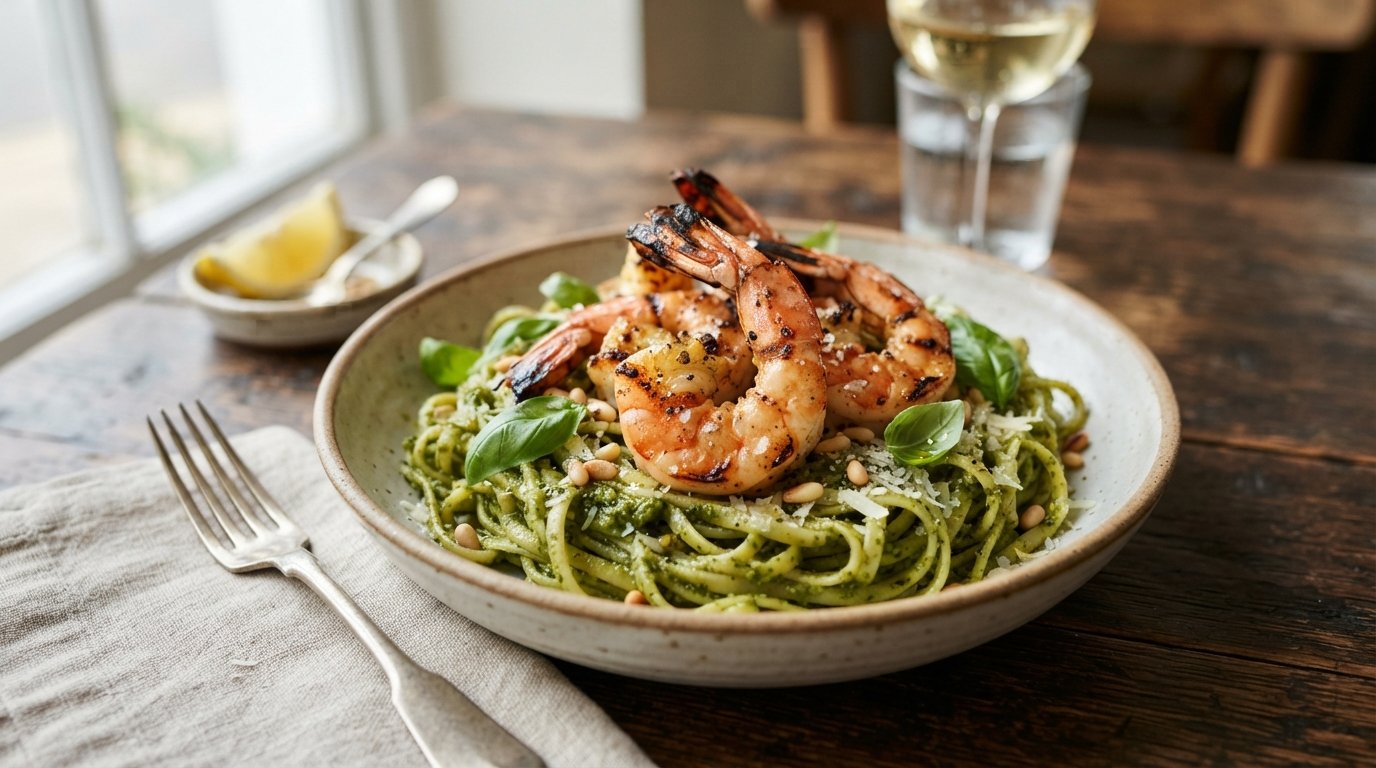
There is a distinct moment in cooking when you realize that luxury doesn’t require complexity; it simply requires precision and high-quality ingredients. These Grilled Tiger Prawns with Basil Pesto Pasta represent the pinnacle of this philosophy. The dish combines the primal, smoky char of open-flame grilling with the vibrant, herbaceous freshness of homemade pesto, creating a contrast that is both elegant and deeply satisfying. Unlike standard shrimp pasta where seafood often gets lost in heavy cream sauces, here the prawns remain the undisputed star, their sweet, firm flesh enhanced rather than masked by the aromatic basil emulsion.
This recipe transforms a simple weeknight dinner into an occasion. By butterflying the prawns and grilling them shell-on, we protect the delicate meat from drying out while infusing it with an unmistakable smokiness that only direct flame can provide. The pesto, tossed with al dente linguine and finished with starchy pasta water, creates a glossy, restaurant-style coating that clings to every strand. Whether you are celebrating an anniversary, hosting a summer dinner party, or simply treating yourself to something extraordinary after a long day, this dish delivers an experience that feels indulgent yet remains surprisingly achievable in your own kitchen.
Why This Recipe Works
The success of Grilled Tiger Prawns with Basil Pesto Pasta lies in the balance of thermal dynamics and flavor chemistry. Tiger prawns have a thicker shell and denser muscle structure than standard shrimp, making them uniquely suited for high-heat grilling. The shell acts as a natural insulator, slowing down the heat transfer to the flesh just enough to allow the exterior to develop complex Maillard reaction compounds—those savory, toasted notes—without overcooking the interior into rubbery toughness. When you butterfly the prawn through the shell, you create channels for smoke and seasoning to penetrate while maintaining structural integrity.
Simultaneously, the pesto preparation relies on proper emulsification. Basil contains volatile oils that oxidize rapidly when exposed to heat or air, turning brown and bitter. By blending fresh leaves with cold oil and nuts, and then tossing the sauce off-heat with reserved pasta water, we preserve its brilliant green color and fresh, peppery flavor. The starch in the pasta water acts as a binder, transforming separate oil and water phases into a cohesive, creamy sauce without dairy. This technique ensures the pesto coats the pasta luxuriously rather than pooling at the bottom of the bowl, delivering consistent flavor in every bite alongside the smoky, succulent prawns.
Why You’ll Love This Recipe
Restaurant Presentation: Shell-on grilled prawns arranged atop vibrant green pasta look stunning on the plate, perfect for entertaining or date nights.
Superior Texture: Grilling provides a crisp, charred exterior and juicy interior that boiling or sautéing cannot replicate.
Fresh, Vibrant Flavor: Homemade pesto tastes exponentially better than jarred versions, offering bright herbal notes that cut through the richness of the seafood.
Quick Cooking Time: Despite its elegance, the active cooking time is under 15 minutes, making it feasible for busy evenings.
Healthy Indulgence: Rich in omega-3s, lean protein, and healthy fats from olive oil and nuts, without heavy creams or excessive sodium.
Versatile Base: The core technique works with various pastas, herbs, or proteins, allowing endless customization based on seasonal availability.
Impressive Yet Forgiving: While it looks chef-driven, the steps are straightforward. Mastering the grill timing is the only real skill required, and even slightly overcooked prawns remain delicious with the robust pesto.
Ingredient Notes
Tiger Prawns (Jumbo/Colossal)
Purpose: Primary protein. Their size and shell thickness make them ideal for grilling; they stay moist and develop superior char compared to smaller shrimp.
Substitutions: Jumbo shrimp (16/20 count), langoustines, or lobster tails. Smaller shrimp will cook too fast on a grill and may dry out; adjust heat/time accordingly.
Buying Tips: Choose “shell-on, head-on” if possible for maximum flavor, though headless is fine. Ensure shells are intact, eyes clear (if present), and flesh smells like ocean, not ammonia. Avoid “pre-cooked” or treated with sodium tripolyphosphate (STP), which causes mushy texture and excessive water release.
Storage Tips: Store on ice in coldest part of fridge; use within 24 hours of purchase. Freeze up to 3 months if vacuum-sealed. Thaw overnight in fridge, never at room temp or in warm water.
Fresh Basil Leaves
Purpose: Provides the signature aromatic, peppery-sweet flavor and vibrant green color essential to authentic pesto.
Substitutions: Arugula (peppery), spinach (milder, less flavorful), or parsley (herbaceous). None replicate basil perfectly, but combinations work. Dried basil is NOT a substitute for pesto; it lacks volatile oils and turns dusty/bitter.
Buying Tips: Look for perky, deep green leaves with no black spots or wilting. Smell should be intensely fragrant. Organic often has stronger flavor due to slower growth.
Storage Tips: Treat like flowers: trim stems, place in glass of water, cover loosely with plastic bag, refrigerate. Use within 3-5 days. Never wash until ready to use; moisture accelerates decay.
Pine Nuts (or Walnuts/Cashews)
Purpose: Adds nutty richness, body, and healthy fats to pesto. Traditional choice is pine nuts, but alternatives offer different flavor profiles and cost savings.
Substitutions: Toasted walnuts (earthier), cashews (creamier/milder), almonds (crunchier), or sunflower seeds (nut-free). All work; toast lightly before blending to enhance flavor.
Buying Tips: Buy raw, unsalted nuts. Check for rancidity; sniff before using. Rancid nuts ruin pesto irreparably. Store in freezer to prevent oxidation.
Storage Tips: Keep in airtight container in freezer up to 6 months. Room temp storage leads to rapid rancidity due to high oil content.
Extra Virgin Olive Oil (EVOO)
Purpose: Carries flavor, creates emulsion, and adds fruity/peppery notes. Quality directly impacts pesto taste since it’s uncooked.
Buying Tips: Choose harvest-dated EVOO from reputable producer. Dark glass bottle protects from light. Taste before buying; should be fruity, grassy, slightly peppery. Not all “extra virgin” is equal.
Storage Tips: Store in cool, dark place. Use within 3-6 months of opening. Heat and light destroy quality rapidly.
Linguine or Spaghetti
Purpose: Long pasta strands hold pesto better than short shapes. Surface area allows sauce to cling effectively.
Substitutions: Fettuccine (wider, richer mouthfeel), bucatini (hollow, holds sauce inside), or gluten-free rice/corn pasta. Avoid delicate angel hair; it breaks under tossing.
Buying Tips: Bronze-die cut pasta has rougher surface that grabs sauce better than smooth Teflon-extruded. Check ingredients: semolina + water only for traditional.
Storage Tips: Dry pasta lasts years in pantry. Once opened, store in airtight container to prevent moisture absorption and staleness.
Garlic & Parmesan Cheese
Purpose: Garlic adds pungent warmth; Parmesan provides salty umami and helps thicken emulsion. Both are foundational to classic pesto.
Substitutions: Shallots (milder garlic), Pecorino Romano (saltier/sharper), nutritional yeast (vegan). Adjust quantities based on substitution strength.
Buying Tips: Firm garlic bulbs with tight skins. Block Parmesan (Parmigiano-Reggiano preferred); pre-grated contains anti-caking agents that inhibit melting/emulsifying.
Storage Tips: Garlic in cool, dark place. Parmesan wrapped in parchment + foil in fridge. Grate fresh just before use for best texture/flavor.
Kitchen Equipment
Outdoor Grill or Indoor Grill Pan: Essential for achieving authentic char and smoky flavor. Gas grill offers temperature control; charcoal provides superior smoke. Cast iron grill pan works indoors but lacks true smoke infusion.
Food Processor or Blender: For efficient pesto emulsification. Pulse function prevents overheating basil. Mortar/pestle yields superior texture but requires significant effort.
Large Pot: For boiling pasta. Must hold 4-6 quarts water for proper cooking. Heavy bottom prevents scorching.
Tongs: Long-handled metal tongs for safe prawn handling on hot grill. Silicone tips melt; use metal or heat-resistant silicone.
Sharp Chef’s Knife & Cutting Board: For butterflying prawns and chopping garlic/nuts. Dull knife crushes prawn flesh instead of slicing cleanly.
Reserve Cup/Bowl: For capturing starchy pasta water BEFORE draining. Critical for sauce emulsion.
Instant-Read Thermometer: Optional but recommended for prawn doneness. Prevents guesswork and overcooking.
Step-by-Step Instructions
H3: Step 1 – Butterfly & Season the Prawns
Using sharp knife, slice prawn lengthwise along back curve, cutting through shell and flesh but NOT severing tail. Open like a book. Remove devein if visible. Pat completely dry. Brush cut side lightly with oil, season generously with salt and pepper. Let sit 5 minutes at room temp.
Why this matters: Butterflying exposes flesh to smoke/seasoning while shell protects from direct heat. Drying ensures sear, not steam. Room temp promotes even cooking; cold prawns shock grill, causing uneven doneness.
Visual Cue: Flesh should look translucent pink-gray, not opaque white. Shell intact, no tears. Surface matte-dry, not glistening wet.
Texture Cue: Flesh firm, springs back when pressed gently. Not mushy or slimy.
Aroma Cue: Clean ocean scent. No ammonia or sour notes. Salt enhances natural sweetness.
Common Mistake: Cutting too deep, severing tail. Prawn falls apart on grill. Fix: Stop knife when you feel resistance of tail joint. Practice on one first.
Professional Tip: Score flesh lightly in crosshatch pattern if prawns are very thick. Helps heat penetrate evenly without overcooking edges.
H3: Step 2 – Grill Over High Heat
Preheat grill to HIGH (450-500°F / 230-260°C). Clean and oil grates thoroughly. Place prawns CUT-SIDE DOWN first. Grill 2-3 minutes undisturbed until char marks form and flesh turns opaque halfway up. Flip carefully. Grill shell-side down 1-2 minutes more until internal temp reaches 120-125°F (49-52°C). Remove immediately.
Why this matters: Cut-side down first creates sear barrier, locking in juices. High heat = char, not steaming. Carryover cooking raises temp 5-10°F after removal; pulling at 120°F ensures perfect medium-rare to medium. Overcooking = rubbery disaster.
Visual Cue: Deep brown/black grill marks on flesh. Shell turns bright orange-red. Flesh opaque but still slightly translucent at center.
Texture Cue: Firm but yielding. Springs back when pressed. Not hard or chalky.
Aroma Cue: Smoky, caramelized seafood scent. Sweet, briny aroma. Burnt smell = heat too high or left too long.
Common Mistake: Moving prawns too soon. They stick and tear. Fix: Wait until they release naturally from grates. Properly seared prawns don’t stick.
Professional Tip: Create flare-up zone and safe zone on grill. If flames engulf prawns, move to safe zone briefly. Controlled flare-ups add flavor; uncontrolled ones burn.
H3: Step 3 – Cook Pasta & Reserve Water
Bring large pot of heavily salted water (1 tbsp kosher salt per quart) to rolling boil. Add linguine. Cook 1 minute LESS than package directions for al dente. Before draining, reserve 1 cup starchy pasta water. Drain pasta.
Why this matters: Salty water seasons pasta from inside. Undercooking ensures perfect texture after tossing with hot sauce. Starchy water is liquid gold for emulsifying pesto; without it, sauce separates and pools.
Visual Cue: Pasta floats, bubbles vigorously. Water cloudy with starch. Reserved water milky-white, not clear.
Texture Cue: Al dente: firm bite, slight resistance at center. Not soft or mushy.
Aroma Cue: Wheaty, salty steam. No burnt smell.
Common Mistake: Discarding pasta water. Sauce becomes oily, disconnected. Fix: ALWAYS reserve water before draining. Better to have extra than none.
Professional Tip: Stir pasta frequently during first 2 minutes to prevent sticking. Don’t add oil to water; it coats pasta, preventing sauce adhesion.
H3: Step 4 – Make Pesto & Toss Pasta
In food processor, combine 2 cups packed basil, ½ cup toasted nuts, 2 cloves garlic, ½ cup grated Parmesan, ¾ cup EVOO, pinch salt. Pulse until coarse paste forms. Transfer to large bowl. Add hot drained pasta. Toss vigorously, adding reserved pasta water 2 tbsp at a time until glossy, creamy sauce coats every strand. Adjust seasoning.
Why this matters: Pulsing prevents overheating basil (which turns it brown/bitter). Hot pasta activates cheese/oil emulsion. Pasta water starch binds oil/water into stable sauce. Vigorous tossing incorporates air, creating lightness.
Visual Cue: Vibrant green sauce. Glossy sheen. No oily separation. Pasta uniformly coated, not clumped.
Texture Cue: Silky, coating consistency. Not watery or greasy. Clings to pasta, doesn’t slide off.
Aroma Cue: Intense fresh basil, garlicky, nutty. Bright, herbaceous. Not cooked or dull.
Common Mistake: Blending continuously. Friction heats basil, destroying color/flavor. Fix: Pulse only. Scrape sides frequently. Keep bowl cool if possible.
Professional Tip: Add oil SLOWLY while pulsing, like making mayo. Creates stable emulsion. If sauce breaks, whisk in 1 tsp warm water vigorously to rebind.
H3: Step 5 – Plate & Garnish
Twirl pasta onto warm plates using tongs/fork. Arrange 1-2 grilled prawns atop pasta, shell-side up for drama. Drizzle with extra EVOO if desired. Garnish with flaky sea salt, chili flakes, and fresh basil chiffonade. Serve IMMEDIATELY.
Why this matters: Warm plates prevent sauce from congealing. Shell-up presentation showcases grill marks and protects meat. Immediate service preserves prawn texture and pesto vibrancy. Delay = sad, wilted dish.
Visual Cue: Contrast of orange prawns against green pasta. Glossy sauce. Fresh garnish pops. Steam rising subtly.
Texture Cue: Prawns hot, juicy. Pasta al dente. Sauce silky. Garnish crisp.
Common Mistake: Letting prawns rest too long before plating. They continue cooking, becoming tough. Fix: Plate within 1 minute of removing from grill.
Professional Tip: Wipe plate rims clean before serving. Presentation matters. A messy rim distracts from beautiful food.
Expert Tips for Perfect Grilling & Emulsion
Shell-On is Non-Negotiable: Peeling before grilling exposes flesh directly to flame, guaranteeing dryness. Shell protects, insulates, and adds flavor. Peel at table for interactive dining experience.
Toast Nuts Before Blending: Raw nuts taste flat. Toast in dry skillet 3-5 mins until golden/fragrant. Cool completely before blending. Enhances depth and aroma exponentially.
Chill Blender Bowl (Optional): For ultra-green pesto, chill blender bowl/blades 10 mins before use. Reduces friction heat during blending. Preserves volatile oils and color.
Flare-Up Management: Have spray bottle of water ready. Controlled flare-ups add smoky flavor; uncontrolled ones burn. Spray lightly to tame flames without extinguishing grill. Move prawns to cooler zone if needed.
Pasta Water Consistency: Reserved water should be visibly starchy/cloudy. If water is clear, pasta wasn’t cooked in enough water or stirred enough. Start over with new batch if necessary; clear water won’t emulsify.
Season in Layers: Salt prawns, salt pasta water, salt pesto. Each layer builds flavor. Undersalted pasta = bland dish regardless of sauce quality. Taste pasta water; should taste like seawater.
Serve Immediately: Pesto oxidizes; prawns overcook. This dish waits for no one. Have guests seated, plates warmed, garnishes prepped BEFORE prawns hit grill. Timing is everything.
Common Mistakes to Avoid
Overcooking Prawns: Rubber texture irreversible. Fix: Pull at 120-125°F. Trust thermometer, not clock. Remember carryover cooking.
Discarding Pasta Water: Sauce separates, pools. Fix: Reserve 1 cup minimum. Add gradually while tossing. Essential for emulsion.
Grilling Cold Prawns: Uneven cooking, stuck to grates. Fix: Bring to room temp 5-10 mins. Dry thoroughly. Oil grates well.
Using Pre-Grated Cheese: Anti-caking agents prevent emulsification. Fix: Grate block Parmesan fresh. Worth the effort.
Adding Pesto to Boiling Pasta: Kills fresh flavor, turns brown. Fix: Toss OFF heat. Use residual warmth only.
Ignoring Flare-Ups: Burnt prawns, acrid taste. Fix: Manage fire actively. Move prawns, spray water, reduce heat if needed. Control = flavor; chaos = ruin.
Recipe Variations
Spicy Arrabbiata Twist: Add 1 tsp red pepper flakes to pesto. Top prawns with Calabrian chili oil. Fiery, bold contrast to sweet seafood.
Vegetarian Primavera: Replace prawns with grilled zucchini, eggplant, bell peppers. Add roasted cherry tomatoes to pasta. Hearty, colorful plant-based option.
Vegan Adaptation: Omit Parmesan; use nutritional yeast + miso paste for umami. Swap honey (if used) for maple syrup. Cashew cream adds richness. Test emulsion carefully.
Lemon-Herb Brightness: Add lemon zest + juice to pesto. Swap basil for parsley/mint. Lighter, summery profile. Pairs beautifully with delicate white fish.
Creamy Tuscan Style: Stir in ¼ cup heavy cream or ricotta to pesto. Adds richness, mellows garlic. Comforting, indulgent variation.
Low-Carb/Keto: Substitute pasta with zucchini noodles (zoodles) or shirataki. Sauté zoodles briefly; don’t boil. Verify net carbs. Increase prawn portion.
High-Protein Power: Add edamame or white beans to pasta. Use chickpea/lentil pasta. Boosts fiber/protein significantly. Earthy flavors complement pesto.
Smoky Paprika & Chorizo: Add smoked paprika to prawn rub. Crumble chorizo into pasta. Spanish-inspired depth. Robust, savory twist.
What to Serve With This Recipe
Balance the rich, herbaceous pasta with light, acidic, or crunchy sides:
Arugula Salad with Lemon Vinaigrette: Peppery greens and sharp acid cut through pesto richness. Simple, refreshing palate cleanser.
Garlic Bread or Focaccia: Essential for mopping up leftover sauce. Crispy texture contrasts creamy pasta.
Roasted Asparagus or Broccolini: Charred bitter greens complement smoky prawns. Adds fiber and color contrast.
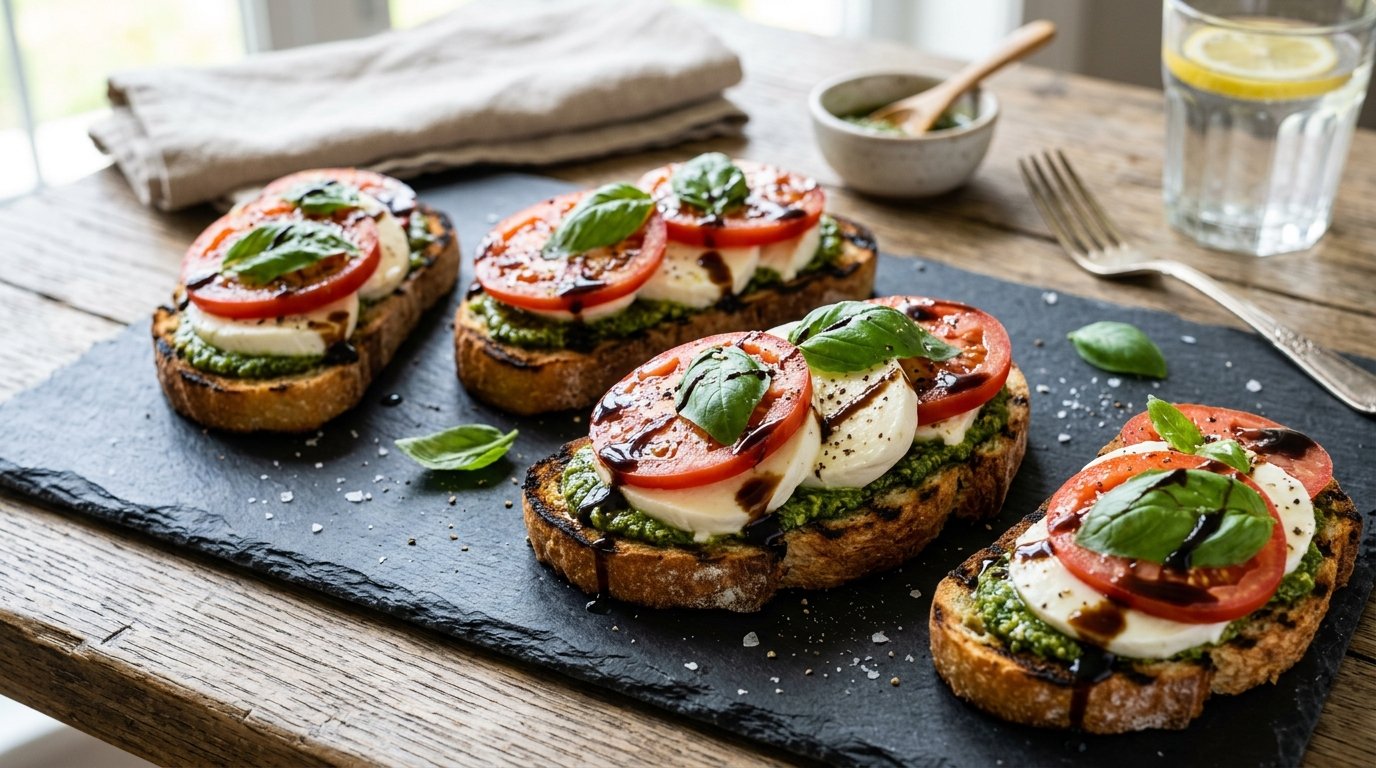
Caprese Salad: Fresh mozzarella, tomato, basil echoes Italian profile while providing cool, light contrast.
Sparkling Water with Lime: Cleanses palate between rich bites better than still water or sweet soda.
Pinot Grigio or Vermentino: Crisp white wine with good acidity complements pesto and seafood. Avoid oaky Chardonnay.
Light Citrus Dessert: Lemon sorbet or grapefruit segments refresh palate after savory richness. Avoid heavy creams post-pasta.
Make Ahead & Meal Prep Tips
Pesto Prep: Make pesto up to 3 days ahead. Store in airtight container with plastic wrap pressed directly on surface (prevents oxidation). Refrigerate. Flavors meld beautifully. Bring to room temp before using.
Prawn Prep: Clean, butterfly, and season prawns up to 4 hours ahead. Store covered in fridge. Bring to room temp 10 mins before grilling. Do not marinate >4 hours; acid/salt breaks down texture.
Pasta Par-Cook: Cook pasta 2 minutes under al dente. Toss with 1 tsp oil to prevent sticking. Refrigerate up to 24 hours. Finish in boiling water 1 min before tossing with pesto. Saves active time.
Garnish Prep: Chop herbs, grate cheese, toast nuts ahead. Store separately. Assemble garnishes just before serving for maximum freshness/vibrancy.
Freezing Caution: Pesto freezes well (omit cheese, add after thawing). Cooked prawns do NOT freeze well (texture degrades). Freeze raw prawns separately if needed.
Storage & Reheating Instructions
Storage
Refrigerator: Store leftovers in airtight container up to 2 days. Pesto oxidizes; color darkens but flavor remains. Prawns become firmer; accept texture change.
Freezer: Not recommended for assembled dish. Pesto separates; prawns turn rubbery. Freeze components separately: pesto (without cheese) up to 3 months; raw prawns up to 3 months.
Reheating
Stovetop (Best): Gentle heat in skillet. Add splash water/pasta water. Toss constantly 2-3 mins until warmed. Restores some emulsion. Low heat prevents prawn toughening.
Microwave (Convenient): Medium power in 30-sec intervals. Stir between each. Sprinkle water before heating. Prawns may toughen; accept trade-off for speed.
Oven: Not recommended. Dries out prawns, separates pesto. If necessary, 300°F covered with foil 10 mins. Add moisture. Inferior to stovetop.
Air Fryer: Absolutely not. Destroys pesto, overcooks prawns. Use only for reheating bread/garlic knots alongside.
Nutritional Information Estimates per serving (based on 2 prawns, 3oz pasta, ¼ cup pesto):
Note: Values vary based on prawn size, pasta brand, pesto oil/nut ratio, and cheese amount. Always check labels for precise tracking.
Troubleshooting Guide
Problem Cause Solution Prawns Rubbery/Tough Overcooked. Next time: Pull at 120-125°F. Reduce grill time 30 sec. Accept slight translucency at center; carryover finishes. Pesto Brown/Bitter Over-blended or heated. Next time: Pulse only. Chill bowl. Toss OFF heat. Can’t fix color; balance bitterness with lemon/sugar next time. Sauce Separated/Oily Insufficient pasta water or over-blended. Whisk in 1-2 tbsp warm water vigorously. Emulsion should re-form. Next time: reserve more water, pulse less. Pasta Sticky/Clumped Not tossed immediately or insufficient water. Rinse briefly with hot water (last resort). Next time: toss with sauce IMMEDIATELY after draining. Use adequate pasta water. Prawns Stick to Grill Grates not oiled or prawns moved too soon. Oil grates thoroughly. Wait until prawns release naturally. Don’t force them. Proper sear = non-stick. Bland Flavor Undersalted pasta water or weak pesto. Season aggressively at each stage. Taste pasta water (seawater salty). Boost pesto with salt/lemon/cheese. Frequently Asked Questions 1. Can I use frozen tiger prawns? Yes, if thawed properly. Overnight in fridge is best. Pat EXTREMELY dry before grilling; frozen prawns release more water. Expect slightly softer texture than fresh. Adjust grill time +30 sec if needed.
2. Why is my pesto turning brown in the blender? Friction heat oxidizes basil. Fix: Pulse only, not continuous blend. Chill blender bowl. Add ice cube while blending (melts, cools mixture). Work quickly. Some browning is normal; minimize it.
3. Can I make this without a grill? Yes. Use cast iron grill pan or broiler. Grill pan gives marks but less smoke. Broiler gives char but watch closely; burns fast. Neither replicates outdoor grill perfectly, but results are still excellent.
4. How do I know when prawns are done without a thermometer? Flesh turns opaque pink-white, forms “C” shape (not tight “O”). Tight curl = overcooked. Flesh should feel firm but yield slightly to pressure. Practice builds intuition; thermometer removes guesswork.
5. Can I use dried basil for pesto? No. Dried basil lacks volatile oils, turns dusty/bitter, and won’t emulsify. Fresh is non-negotiable for authentic pesto. If fresh unavailable, make alternative sauce (e.g., sun-dried tomato, olive tapenade).
6. Why does my pasta water need to be so salty? Pasta absorbs water during cooking; salt seasons it from inside. Unsalted pasta = bland dish regardless of sauce. Aim for seawater salinity (1 tbsp kosher salt per quart). It tastes salty alone but perfect when combined with sauce.
7. Can I add cream to pesto? Traditionalists say no; purists insist on oil/nut/cheese emulsion. Cream makes it richer, milder, less vibrant. If desired, add 1-2 tbsp heavy cream OFF heat. Accept it’s no longer classic pesto but still delicious.
8. How do I prevent flare-ups on the grill? Trim excess fat from prawns. Oil grates lightly, not heavily. Have water spray bottle ready. Move prawns to cooler zone if flames engulf. Controlled flare-ups add flavor; manage them actively.
Final Thoughts Creating exceptional Grilled Tiger Prawns with Basil Pesto Pasta is about respecting ingredients and mastering timing. The sizzle of the grill, the vibrant green of fresh pesto, the perfect al dente bite—these sensory cues guide you to restaurant-quality results at home. This recipe proves that elegance doesn’t require complexity; it demands attention, quality, and confidence in simple techniques executed well.