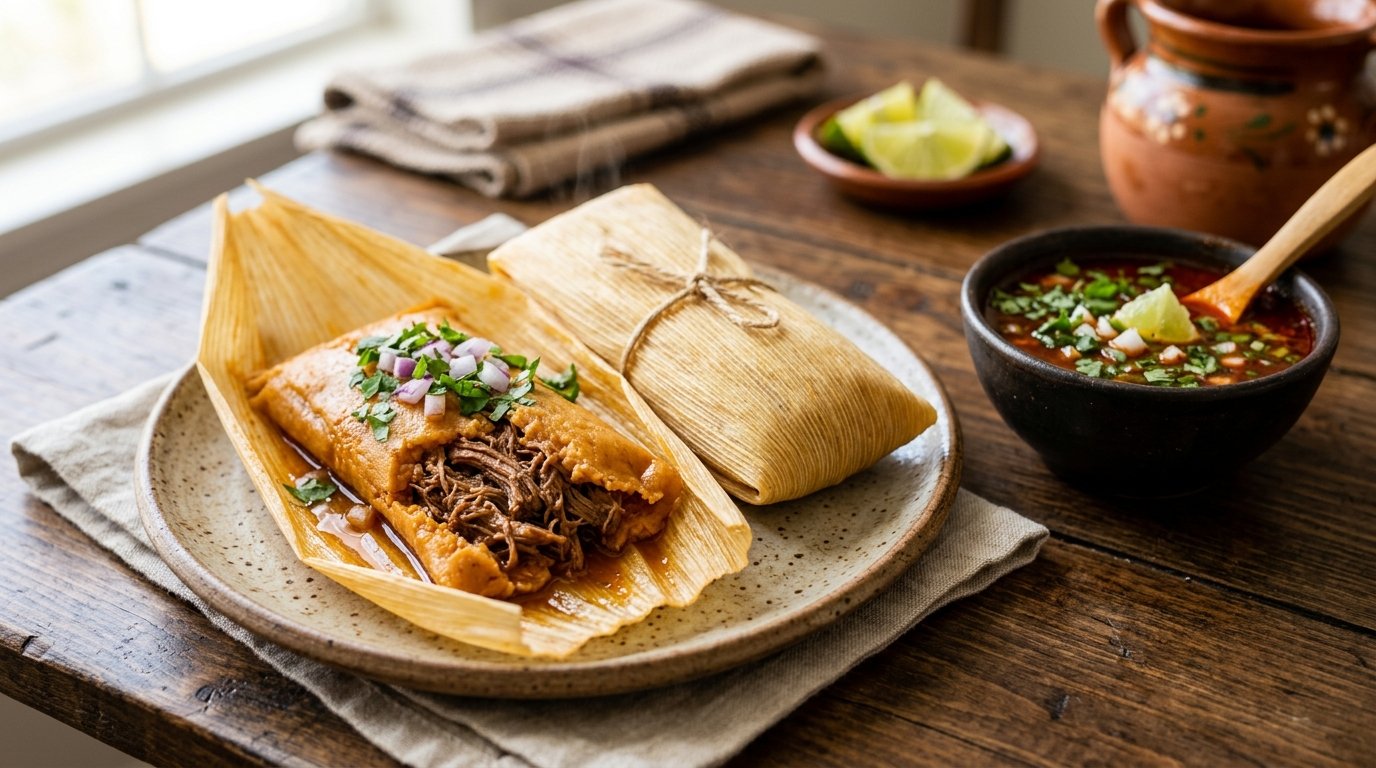
There is a reason why Birria Tamales (or Tamales de Birria) have taken the culinary world by storm. Imagine the deep, savory richness of traditional Mexican birria—a slow-cooked stew of beef or goat marinated in dried chilies—wrapped inside a fluffy, steamed corn masa pocket, and then stuffed with gooey, melting cheese. It is the ultimate comfort food fusion.
This recipe isn’t just about following steps; it’s about understanding the balance of textures and flavors that make this dish a staple in Mexican street food culture. Whether you are looking to recreate a favorite memory from a trip to Mexico or simply want to impress your family with a restaurant-quality meal, this guide will walk you through every single step, from preparing the masa to achieving that perfect, Instagram-worthy cheese pull.
If you have spent any time on food social media recently, you have likely seen the viral sensation that is the Tamal de Birria. Originating from the rich culinary traditions of Jalisco and Michoacán, birria is a stew known for its complex, smoky, and slightly spicy flavor profile derived from guajillo, ancho, and chile de árbol peppers.
Traditionally, tamales are filled with pork or chicken in a red or green salsa. However, the Tamal de Birria elevates this concept by using the actual meat and fat from the birria stew to flavor the masa (corn dough). The result is a vibrant orange-hued dough that is incredibly savory. When you add a core of melting cheese and shredded beef, then steam it all in a corn husk, you get a handheld masterpiece that is juicy, spicy, and comforting all at once.
This recipe breaks down the process into manageable steps, ensuring that even if you are new to making tamales, you can achieve professional results at home.
Why This Recipe Works
The secret to a great Birria Tamal lies in the fat. In traditional tamale making, lard or vegetable shortening is whipped into the masa to create fluffiness. In this recipe, we utilize the rendered fat (manteca) from the birria consommé. This fat is red with chili oil and packed with flavor. When whipped into the masa, it does two things: it gives the dough that signature orange color, and it infuses every bite with the deep, smoky taste of the stew.
Furthermore, the steaming process allows the flavors to meld. The corn husk acts as a vessel, trapping the steam and ensuring the masa cooks evenly while staying moist. The cheese in the center doesn’t just melt; it creates a barrier that keeps the meat juices contained until you bite into it, resulting in that explosive flavor release.
Why You’ll Love This Recipe
Flavor Explosion: The combination of spicy beef, rich masa, and salty cheese is unmatched.
Texture Contrast: You get the soft, fluffy bite of the steamed corn dough against the tender, shreddable meat and the creamy, stringy cheese.
Crowd Pleaser: These are perfect for parties, holidays, or a special family dinner. They are interactive and fun to eat.
Customizable Heat: You can control the spice level by adjusting the amount of chili in your birria consommé.
Great for Leftovers: Tamales actually taste better the next day as the flavors continue to marry.
Ingredient Notes
To make authentic Birria Tamales, you need specific ingredients. Here is what you need to know about each component.
For the Masa (Dough)
Masa Harina: This is nixtamalized corn flour (like Maseca). Do not substitute this with regular cornmeal or polenta; the texture will be gritty and wrong. You need the fine, treated corn flour.
Birria Consommé/Fat: This is the most critical ingredient. You need the liquid and, more importantly, the red oil/fat that rises to the top of your birria stew. If you don’t have homemade birria, you can buy high-quality canned birria, but skim the fat off the top to use in the dough.
Baking Powder: This helps the masa rise slightly and become fluffy during steaming.
Salt: Essential for balancing the flavors.
For the Filling
Birria Meat: Shredded beef (chuck roast or brisket) or goat meat that has been slow-cooked in the chili marinade. It should be tender enough to pull apart with a fork.
Cheese: The video shows a white, melting cheese. The traditional choice is Queso Oaxaca (Oaxacan cheese), which is similar to mozzarella but with a more buttery flavor. If you cannot find Oaxaca cheese, low-moisture mozzarella or even Monterey Jack are excellent substitutes. Avoid pre-shredded cheese as it contains anti-caking agents that prevent smooth melting.
Corn Husks: Dried corn husks are used to wrap the tamales. They must be dried, not fresh corn leaves (though fresh leaves, called hojas de elote, are used in some regions, dried husks are standard for this style).
Kitchen Equipment
Making tamales is a process, but having the right tools makes it much easier.
Large Bowl: For whipping the masa.
Electric Mixer or Stand Mixer: While you can whip masa by hand, an electric mixer saves time and ensures the fat is fully incorporated for a lighter texture.
Steamer Pot (Tamalera): A large pot with a steamer insert. If you don’t have a dedicated tamale steamer, a large stockpot with a metal steamer basket or even a colander that fits inside the pot works fine.
Tongs: For handling hot husks and tamales.
Spoon: For spreading the masa.
Preparation Information
Prep Time: 45 minutes (This assumes your birria meat is already cooked. If you need to cook the meat from scratch, add 3-4 hours).
Cook Time: 1 hour 30 minutes (Steaming time).
Total Time: 2 hours 15 minutes.
Servings: Makes approximately 12 to 15 tamales, depending on size.
Step-by-Step Instructions
Step 1: Prepare the Corn Husks
Before you start mixing the dough, you need to prep the wrappers. Place the dried corn husks in a large bowl or sink and cover them with very hot water. Place a heavy plate or bowl on top to keep them submerged. Let them soak for at least 30 to 60 minutes.
Why this matters: Dried husks are brittle. Soaking rehydrates them, making them pliable and soft so they can be folded without cracking.
Visual Cue: The husks are ready when they turn from a pale, dry yellow to a darker, translucent beige and feel soft and leathery to the touch.
Step 2: Whip the Masa
In a large bowl (or stand mixer), combine the masa harina, baking powder, and salt. Slowly add the warm birria consommé and the red birria fat. Start mixing on low speed, then increase to medium-high. You want to whip the mixture until it is light, fluffy, and spreadable. It should have the consistency of thick peanut butter or frosting.
Why this matters: Whipping incorporates air into the dough, which prevents the final tamal from being dense and heavy. The fat coats the corn particles, keeping them moist during steaming.
Texture Cue: To test if the masa is ready, drop a small ball of dough into a cup of cold water. If it floats, it has enough air incorporated. If it sinks, keep whipping.
Step 3: Assembly – Spread the Masa
Take a soaked corn husk and pat it dry with a paper towel (too much water will make the masa slide off). Hold the husk with the narrower end pointing down. The smoother side of the husk should be facing up. Using a spoon or a small offset spatula, spread about 2-3 tablespoons of the orange masa onto the wider part of the husk. Spread it into a thin, even rectangle, leaving a border at the edges.
Tip: Don’t spread it all the way to the edges; leave about an inch on the sides and a few inches at the top narrow end.
Step 4: Add the Filling
Place a generous spoonful of the shredded birria meat in the center of the masa. Drizzle a little bit of the birria consommé over the meat to keep it juicy. Then, place a strip or cube of your cheese (Oaxaca or Mozzarella) on top of the meat.
Why this matters: The cheese acts as a moisture barrier and provides that signature “cheese pull.” The extra consommé ensures the meat doesn’t dry out during the long steaming process.
Step 5: Fold the Tamal
This is the trickiest part for beginners.
Fold the long side of the husk (the one with more overhang) over the filling, covering the meat and cheese completely.
Fold the other long side over the first fold. The masa should now be encased.
Fold the narrow bottom tip up towards the center. Some people leave the top open (as seen in the video style), while others fold the top down. For Tamales de Birria, leaving the top slightly open is common, but ensure the filling is covered by the husk folds on the sides.
Visual Cue: The final packet should look like a tight cylinder or a cone shape. It should feel secure, not loose.
Step 6: Steaming
Arrange the tamales in your steamer basket. Stand them up vertically with the open end facing up. This is crucial! If you lay them flat, the filling might leak out, and the masa might not cook evenly. Pack them tightly so they support each other and don’t fall over.
Water Level: Ensure there is boiling water in the bottom of the pot, but the water level must be below the steamer basket. You do not want the tamales boiling in the water; they must cook in the steam.
Covering: Cover the tamales with any leftover corn husks or a clean kitchen towel before putting the lid on the pot. This catches condensation and prevents water from dripping onto the tamales, which can make them soggy.
Step 7: The Cook
Bring the water to a boil, then reduce to a simmer. Cover and steam for about 1 hour and 30 minutes. Check the water level every 30 minutes and add more boiling water if it gets low. Never add cold water, as it stops the cooking process.
Doneness Test: After 1.5 hours, take one tamal out. Let it cool for a minute. Open the husk. The masa should pull away cleanly from the husk and feel firm but springy to the touch. If it’s still sticky or mushy, steam for another 15-20 minutes.
Step 8: Rest and Serve
Once cooked, remove the pot from the heat. Let the tamales rest for about 15-20 minutes before serving. This allows the masa to set firmly, making them easier to handle and unwrap. Serve them hot, ideally with a side of the birria consommé for dipping.
Expert Tips
Keep the Masa Warm: Masa tends to dry out and harden as it cools. Keep your bowl of masa covered with a damp towel while you are assembling the tamales. If it gets too stiff, mix in a tablespoon of warm consommé to loosen it up.
The “Float” Test: As mentioned in the instructions, the float test is the gold standard for knowing if your masa has enough fat and air whipped into it. If the dough ball sinks, your tamales will be dense. Keep whipping!
Don’t Overfill: It’s tempting to stuff them with as much meat and cheese as possible, but overfilling leads to bursting. Leave enough room for the masa to expand slightly as it cooks.
Use a Timer for Water Checks: Set a timer on your phone for every 30 minutes to check the water level. Running out of water halfway through cooking is a disaster that can burn your pot and ruin the tamales.
Common Mistakes
Masa Sticking to the Husk: This usually means the tamal isn’t cooked yet. If you open it and the dough is sticky and clings to the husk, put it back in the steamer for another 15 minutes. It can also happen if you didn’t use enough fat in the masa.
Soggy Tamales: This happens if water drips from the lid onto the tamales. Always cover the top of the tamales with extra husks or a towel to absorb condensation.
Dry Filling: If you forget to add a splash of consommé to the meat before wrapping, the shredded beef can dry out during the long steaming process. Always moisten the meat.
Husks Cracking: If your husks crack when you fold them, they weren’t soaked long enough. Soak them for another 30 minutes.
Recipe Variations
Chicken Birria Tamales: Substitute the beef with shredded chicken thighs cooked in the same birria chili marinade. Chicken absorbs the flavor quickly and stays very moist.
Vegetarian/Vegan Option: Use a mushroom and jackfruit filling marinated in the birria spices (omit the meat fat, use vegetable oil). Use vegan cheese or omit the cheese entirely and add roasted poblano peppers.
Extra Cheesy: Add a second layer of cheese or mix shredded cheese directly into the masa for a “queso tamal” style, though this changes the traditional texture.
Spicy Kick: Add chopped pickled jalapeños or a slice of fresh serrano pepper inside the tamal along with the meat for an extra heat burst.
Seafood Birria: While less traditional for tamales, some coastal regions use shrimp or fish in birria-style broths. This would make for a lighter, faster-cooking tamal.
What to Serve With This Recipe
Birria Tamales are a complete meal on their own, but traditional accompaniments elevate the experience.
Consommé for Dipping: This is non-negotiable. Serve the tamales with small bowls of the hot birria broth. You can dip the tamal into the broth or pour a little broth over the opened tamal.
Garnishes: Serve with diced white onions, fresh cilantro, and lime wedges. Squeezing lime over the rich, fatty tamal cuts through the richness perfectly.
Salsas: A spicy red salsa or a fresh pico de gallo adds a bright, acidic contrast.
Drinks: A cold Horchata (rice milk drink) or Jamaica (hibiscus tea) balances the spice. For adults, a Mexican lager or a Paloma cocktail pairs beautifully.
Side Salad: A simple cabbage slaw (curtido) with vinegar and oregano adds crunch.
Make Ahead & Meal Prep Tips
Tamales are actually the ultimate meal prep food because they freeze beautifully.
Prep the Filling: You can cook the birria meat 2-3 days in advance. Store the meat and the consommé separately in the fridge. The fat will solidify on top, making it easy to scoop out for the masa.
Assembly Line: If you have a large family, make it a group activity. One person spreads the masa, one adds the filling, and one folds. You can assemble all the tamales, freeze them uncooked on a baking sheet, then transfer to a bag. When ready to eat, steam them directly from frozen (adding about 30 mins to the cook time).
Storage Instructions
Refrigerator: Store cooked tamales in an airtight container in the fridge for up to 5 days. Keep them wrapped in their husks to retain moisture.
Freezer: Cooked tamales freeze exceptionally well. Wrap each tamal individually in plastic wrap or aluminum foil, then place them in a heavy-duty freezer bag. They will last for up to 3 months.
Reheating Instructions
Steaming (Best Method): Place the tamales (still in husks) back in a steamer for 15-20 minutes until heated through. This restores the original fluffy texture.
Microwave: Wrap the tamal in a damp paper towel and microwave for 1-2 minutes. This is faster but can make the masa slightly rubbery if overheated.
Oven: Wrap in foil and bake at 350°F (175°C) for 20 minutes.
Air Fryer: Remove the husk, wrap the tamal in foil, and air fry at 350°F for 5-8 minutes. If you want a crispy exterior, remove the foil for the last 2 minutes.
Nutritional Information
Approximate values per tamal (based on 15 servings):
Calories: 380 kcal
Protein: 22g
Carbohydrates: 35g
Fat: 18g
Fiber: 4g
Sugar: 2g
Sodium: 650mg
Note: Values will vary depending on the cut of meat used and the amount of cheese.
Troubleshooting Guide
Problem
Cause
Solution
Masa is sticky/runny
Too much liquid or not enough whipping.
Whip the masa longer to incorporate air. Add a bit more masa harina if necessary.
Tamales are dry/crumbly
Not enough fat or overcooked.
Ensure you use enough birria fat/oil in the dough. Check water levels during steaming so they don’t dry out.
Husks stick to masa
Undercooked.
Steam for another 15-20 minutes. The masa should release easily when done.
Filling fell out
Folded too loosely.
Fold the husks tighter next time. Pack the tamales upright tightly in the steamer so they support each other.
Bland flavor
Not enough salt/spice in masa.
Taste your raw masa (it should be slightly salty) before assembling. Adjust seasoning with salt or more consommé.
Frequently Asked Questions
1. Can I use fresh corn instead of masa harina? Yes, you can use fresh corn dough if you have access to a Mexican market. It often yields a more tender tamal. However, masa harina is more accessible and consistent for home cooks.
2. Do I have to use lard? No. In this specific recipe, we are using the fat from the birria consommé, which is delicious. If your birria doesn’t have enough fat, you can supplement with vegetable shortening or lard. Avoid butter as the water content is too high.
3. Why did my tamales turn out mushy? This usually happens if water dripped onto them from the lid, or if they were undercooked. Always cover the tamales with a towel or extra husks inside the pot to catch condensation.
4. Can I make these gluten-free? Yes! Corn masa is naturally gluten-free. Just ensure your birria spices and any additives (like baking powder) are certified gluten-free.
5. What if I don’t have corn husks? You can use banana leaves (common in Southern Mexico) or even aluminum foil in a pinch, though the flavor and texture will be slightly different. Banana leaves need to be wilted over a flame to make them pliable.
6. How do I know if the water is boiling enough? You want a steady, gentle simmer. A rolling boil might agitate the tamales too much, while no steam means they won’t cook. You should see steam escaping from the sides of the lid.
7. Can I use store-bought birria? Absolutely. Many grocery stores now sell high-quality refrigerated birria kits. This saves hours of cooking time. Just skim the fat for the masa and use the meat for the filling.
8. Why is my cheese not melting? If you used a hard cheese like Cotija or Parmesan, it won’t melt. You need a melting cheese like Oaxaca, Mozzarella, Asadero, or Chihuahua cheese. Also, ensure the tamales are fully cooked; the center needs to reach a high enough temperature to melt the cheese.
Final Thoughts
Making Birria Tamales is a labor of love, but the reward is undeniable. There is something magical about peeling back the corn husk to reveal the steaming, orange-hued masa and the gooey, melted cheese stretching from the center. It is a dish that brings people together, perfect for lazy Sunday dinners or festive celebrations.