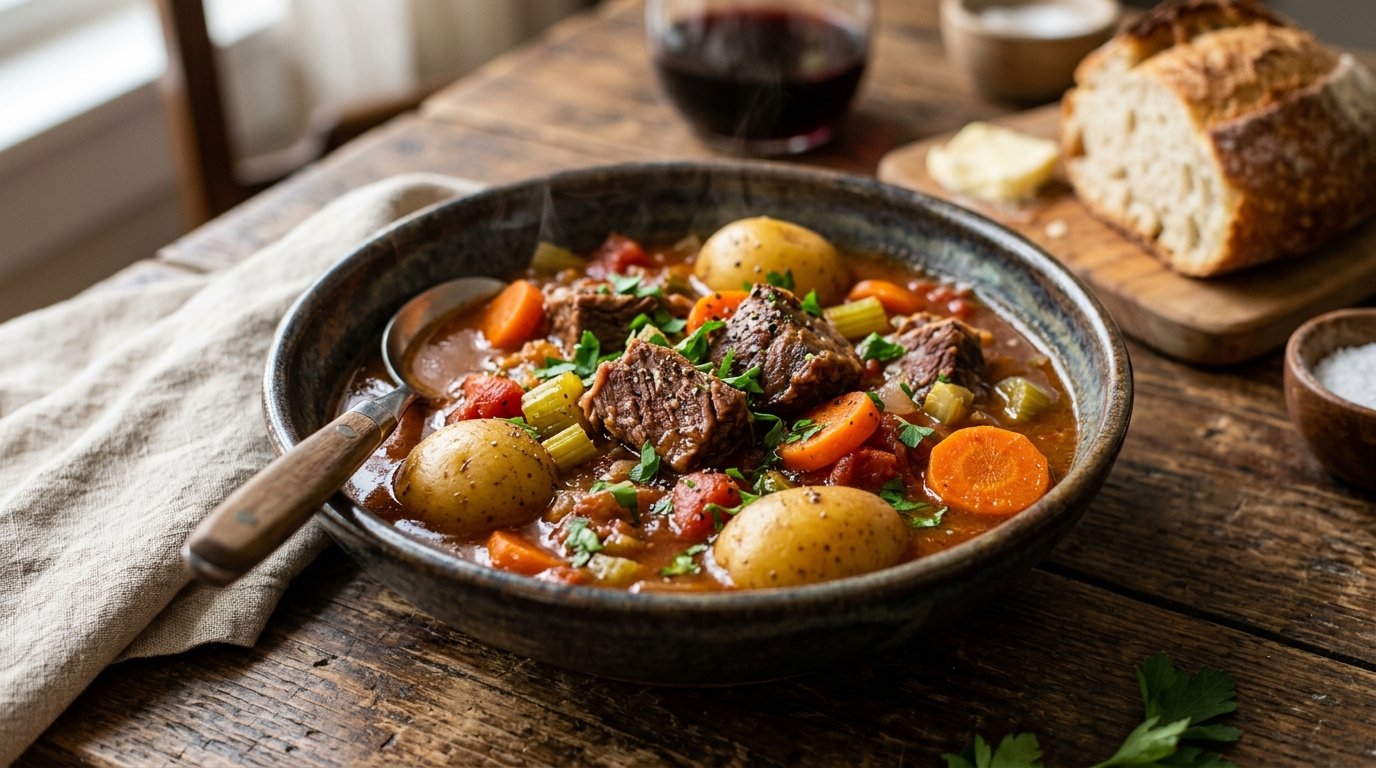
There is a profound comfort in coming home to the rich, savory aroma of beef stew simmering on the stove. However, traditional braising can take hours of active monitoring and patience. This Easy Pressure Cooker Beef Stew changes the game entirely, delivering fork-tender meat and deeply developed flavors in a fraction of the time. By utilizing the intense steam pressure of a modern cooker, we break down tough connective tissues rapidly while infusing every bite with the sweetness of caramelized onions and the acidity of fresh tomatoes. This recipe isn’t just about speed; it’s about achieving that slow-cooked depth of flavor on a busy weeknight. Whether you are feeding a hungry family or meal-prepping for the week ahead, this one-pot masterpiece proves that gourmet comfort food doesn’t require an entire day in the kitchen.
The science behind this Easy Pressure Cooker Beef Stew lies in thermodynamics and collagen breakdown. Tough cuts of beef like chuck roast are full of collagen, which transforms into gelatin only when exposed to moist heat over time. A pressure cooker raises the boiling point of water to approximately 250°F (121°C), significantly higher than the standard 212°F (100°C). This elevated temperature accelerates the hydrolysis of collagen, turning chewy meat into meltingly tender bites in roughly 35 minutes—a process that would take 3-4 hours in a Dutch oven. Furthermore, by searing the meat first and building layers of aromatics (onions, garlic, tomatoes) directly in the pot, we utilize the Maillard reaction to create complex flavor compounds that form the foundation of a rich, non-watery broth. The addition of whole potatoes later in the process ensures they cook through without disintegrating into mush, maintaining structural integrity against the high-pressure environment.
Why You’ll Love This Recipe
Time Efficiency: Achieves “all-day braise” texture in under an hour of total hands-on and cook time.
One-Pot Convenience: Searing, sautéing, and pressure cooking happen in a single vessel, minimizing cleanup.
Flavor Depth: The sealed environment forces moisture and flavor back into the meat rather than letting it evaporate.
Versatile Vegetables: Whole baby potatoes hold their shape beautifully, offering a satisfying textural contrast to the soft beef.
Budget Friendly: Utilizes affordable, tougher cuts of beef that become premium-quality through proper cooking technique.
Meal Prep Champion: Stews taste even better the next day as flavors continue to meld during storage.
Ingredient Notes
Understanding your ingredients ensures consistent results for this Easy Pressure Cooker Beef Stew.
Beef Chuck Roast
Purpose: Primary protein; provides richness and gelatinous texture.
Buying Tips: Look for well-marbled chuck roast. Marbling (intramuscular fat) is crucial for moisture and flavor. Avoid lean rounds or sirloins, which will dry out under pressure.
Substitutions: Beef short ribs (bone-in adds more flavor but requires straining), brisket (fattier, longer cook time), or lamb shoulder for a different profile.
Storage Tips: Freeze in 1-inch cubes for up to 3 months if buying in bulk. Thaw overnight in fridge before use.
Onions and Garlic
Purpose: Aromatic base; provides sweetness and savory depth.
Buying Tips: Choose firm, heavy onions with dry skins. Yellow or white onions work best for stewing due to balanced sugar content. Fresh garlic bulbs should feel solid, not spongy.
Substitutions: Shallots (milder, sweeter), leeks (earthier), or 1 tsp garlic powder + 1 tsp onion powder in emergencies (add with liquid, not during sear).
Storage Tips: Store onions in cool, dark, ventilated place. Keep garlic at room temperature; refrigeration causes sprouting.
Fresh Tomatoes
Purpose: Acidity and umami; balances richness of beef.
Buying Tips: Use ripe Roma or plum tomatoes. They have lower water content and denser flesh than beefsteak varieties, preventing watery stew. If out of season, high-quality canned diced tomatoes are acceptable.
Substitutions: 1/2 cup tomato paste (adds deeper color/flavor but reduce liquid slightly), sun-dried tomatoes (intense umami), or red wine vinegar (1 tbsp) if skipping tomatoes entirely.
Storage Tips: Never refrigerate fresh tomatoes; cold destroys texture and flavor. Store stem-side down on counter.
Baby Potatoes
Purpose: Starchy component; absorbs broth and provides heartiness.
Buying Tips: Select uniform-sized baby potatoes (Yukon Gold or Red Bliss). Uniformity ensures even cooking. Avoid large potatoes cut into chunks—they may overcook externally before softening internally.
Substitutions: Pearl onions, carrots (cut into 2-inch chunks), parsnips, or turnips. Root vegetables generally withstand pressure well.
Storage Tips: Store in cool, dark place away from onions (onions emit gases that spoil potatoes). Do not wash until ready to use.
Cooking Oil
Purpose: Heat transfer medium for searing; prevents sticking.
Buying Tips: Use neutral oil with high smoke point: avocado, grapeseed, or vegetable oil. Olive oil burns too easily at searing temperatures.
Substitutions: Bacon grease (adds smoky flavor), ghee (nutty, high smoke point), or butter (only if mixed with oil to prevent burning).
Storage Tips: Store oils away from light and heat to prevent rancidity.
Fresh Parsley/Cilantro
Purpose: Fresh garnish; adds brightness and color contrast.
Buying Tips: Look for vibrant green leaves without yellowing or wilting. Flat-leaf parsley has superior flavor to curly for cooking.
Substitutions: Chives, green onions, or dried parsley (use 1/3 amount, add during cooking not garnish).
Storage Tips: Treat like flowers: trim stems, place in jar with inch of water, cover loosely with bag, refrigerate. Changes water every 2 days.
Kitchen Equipment
Electric Pressure Cooker (6qt or larger): Essential for safe, controlled pressure cooking. Instant Pot, Ninja Foodi, or similar brands work identically.
Sharp Chef’s Knife: For uniform 1-inch beef cubes and precise vegetable prep.
Cutting Board: Large enough to hold all prepped ingredients.
Wooden Spoon or Silicone Spatula: Deglazing tool; won’t scratch pot interior.
Tongs: For safely turning beef during sear.
Measuring Cups/Spoons: For accurate liquid ratios.
Ladle: For serving without splashing.
Instant-Read Thermometer (Optional): To verify beef doneness if unsure.
Step-by-Step Instructions
Follow these detailed steps to ensure your Easy Pressure Cooker Beef Stew turns out perfectly every time.
H3: Searing the Beef
Dry and Season: Pat beef cubes completely dry with paper towels. Season generously with salt and pepper on all sides.
Why it matters: Moisture is the enemy of browning. Wet meat steams instead of sears, resulting in gray, flavorless beef. Salt draws out surface moisture, so season immediately before cooking.
Visual Cue: Meat should look matte, not shiny or wet.
Texture Cue: Surface should feel tacky, not slimy.
Heat Oil: Set pressure cooker to “Sauté” mode (High/Normal). Add 2 tbsp oil. Wait until oil shimmers and moves fluidly when tilted—about 2-3 minutes.
Why it matters: Properly heated oil creates instant crust formation. Cold oil leads to sticking and uneven browning.
Aroma Cue: Oil should have no smell yet; smoking means it’s too hot.
Sear in Batches: Add beef in single layer, leaving space between pieces. Do NOT overcrowd. Sear undisturbed for 2-3 minutes per side until deep brown crust forms. Remove to plate; repeat with remaining batches.
Why it matters: Overcrowding drops pan temperature, causing meat to release water and steam. Batch searing preserves heat for proper Maillard reaction.
Visual Cue: Crust should be mahogany-brown, not pale tan or blackened.
Common Mistake: Moving meat too soon. Let it develop crust naturally; it will release from pot when ready.
H3: Building the Flavor Base
Sauté Aromatics: Reduce sauté heat to Medium. Add sliced onions and minced garlic to pot drippings. Stir constantly for 2-3 minutes until onions soften and garlic becomes fragrant.
Why it matters: Drippings contain fond (caramelized bits) that dissolve into onions, creating flavor foundation. Garlic burns quickly at high heat; lowering temp prevents bitterness.
Aroma Cue: Sweet, toasted onion smell; pungent garlic aroma should mellow, not acrid.
Visual Cue: Onions turn translucent with golden edges; garlic turns pale gold.
Add Tomatoes and Deglaze: Add diced tomatoes. Scrape bottom vigorously with wooden spoon to lift all browned bits. Cook 1 minute until tomatoes begin to break down.
Why it matters: Fond is concentrated flavor. Leaving it stuck = wasted taste. Acidic tomatoes help dissolve fond faster.
Visual Cue: Bottom of pot should be clean, glossy, and free of dark patches.
Professional Tip: If fond is stubborn, add 1 tbsp water or broth to assist deglazing.
H3: Pressure Cooking the Stew
Return Beef and Add Liquid: Return seared beef (and accumulated juices) to pot. Pour in 1 cup water or broth. Stir to combine. Ensure liquid covers at least 1/3 of ingredients.
Why it matters: Minimum liquid is required to generate steam and reach pressure. Too little = burn error; too much = diluted flavor.
Visual Cue: Liquid should bubble gently around solids, not submerge them completely.
Seal and Cook: Secure lid. Set valve to “Sealing.” Select “Manual/Pressure Cook” on HIGH for 35 minutes.
Why it matters: High pressure is necessary for tough beef. 35 minutes is optimal for 1-inch cubes; less = chewy, more = mushy.
Note: Pot will take 10-15 minutes to come to pressure. Timer starts only after pressurization.
Natural Release: When timer ends, allow NATURAL RELEASE for 15 minutes. Then carefully turn valve to “Venting” to release remaining steam.
Why it matters: Rapid release causes violent boiling inside pot, potentially breaking apart potatoes and making meat tough. Natural release allows gentle pressure drop and continued carryover cooking.
Safety: Never force-open lid while pressurized. Steam causes severe burns.
H3: Adding Potatoes and Finishing
Add Potatoes: Open lid. Gently nestle whole baby potatoes into stew. Submerge partially in liquid.
Why now? Adding potatoes initially would overcook them during 35-minute beef cycle. Post-pressure addition uses residual heat and brief re-pressurization for perfect texture.
Second Pressure Cycle: Reseal lid. Valve to “Sealing.” Pressure Cook HIGH for 8 minutes. Natural Release 10 minutes, then quick release remainder.
Why 8 minutes? Whole baby potatoes need ~8 mins under pressure to become tender-but-firm. Less = hard center; more = falling apart.
Garnish and Serve: Open lid. Stir gently to distribute potatoes. Taste broth; adjust salt/pepper if needed. Ladle into bowls. Top generously with fresh chopped parsley or cilantro.
Visual Cue: Broth should be rich amber-brown, not cloudy or greasy. Potatoes intact but yield to fork. Beef shreds easily.
Aroma Cue: Deep, meaty, herbal fragrance. No raw onion or metallic smells.
Expert Tips for Perfect Stew
Cut Beef Uniformly: 1-inch cubes cook evenly. Irregular sizes mean some pieces overcook while others remain tough. Use ruler if precision matters.
Don’t Skip the Sear: Browning isn’t optional—it’s foundational. The crust contributes 70% of stew’s depth. If short on time, sear fewer batches longer rather than skipping.
Use Full-Fat Broth/Water: Fat carries flavor. Skimmed broth tastes thin. If using water, compensate with extra seasoning and tomato paste.
Potato Size Matters: True baby potatoes (1-1.5 inches) are ideal. Larger ones must be halved; smaller ones may dissolve. Test one potato before serving—if firm, reseal and cook 3 more minutes.
Rest Before Serving: Let stew sit 5-10 minutes off-heat after final release. Flavors settle, broth thickens slightly, and textures stabilize. Rushing = watery, disjointed stew.
Acid Balance: If stew tastes flat despite proper seasoning, add 1 tsp apple cider vinegar or lemon juice at end. Acid brightens dull flavors instantly.
Common Mistakes to Avoid
Burn Error Message:
Why: Insufficient liquid or unscraped fond sticks to bottom during pressurization.
Fix: Always deglaze thoroughly. Use minimum 1 cup liquid. Avoid thickeners (flour/cornstarch) before pressure cooking—they sink and scorch.
Tough, Chewy Beef:
Why: Undercooked collagen hasn’t converted to gelatin. Wrong cut used.
Fix: Return to pressure for additional 10-15 minutes. Next time, use chuck roast and verify 35-min minimum.
Mushy Potatoes:
Why: Added too early or overcooked. Wrong variety (waxy vs. starchy).
Fix: Use waxy baby potatoes. Add post-beef cycle. Reduce second cycle to 6 mins if potatoes are very small.
Watery Broth:
Why: Too much liquid added. Vegetables released excess water. No reduction step.
Fix: Use “Sauté” mode after cooking to reduce broth 5-10 mins uncovered. Next time, reduce initial liquid by 1/4 cup.
Bland Flavor:
Why: Underseasoned. No acid balance. Poor quality tomatoes.
Fix: Season aggressively at each stage. Finish with acid (vinegar/lime). Use ripe tomatoes or add 1 tbsp tomato paste during sauté.
Lid Won’t Seal:
Why: Valve not set to “Sealing.” Gasket dirty/damaged. Lid misaligned.
Fix: Check valve position. Clean/replace silicone ring. Ensure lid clicks fully into place. Listen for hiss停止—silence indicates seal.
Recipe Variations
Adapt this Easy Pressure Cooker Beef Stew to suit dietary needs and preferences:
Spicy Chipotle: Add 2 minced chipotles in adobo + 1 tsp cumin during sauté. Top with pickled jalapeños and cotija cheese.
Vegetarian Mushroom: Replace beef with 1 lb cremini mushrooms (quartered) + 1 block extra-firm tofu (pressed, cubed). Use vegetable broth. Add 2 tbsp soy sauce for umami.
Vegan Lentil: Substitute beef with 1 cup dried brown lentils (rinsed). Increase liquid to 2 cups. Cook 20 mins HIGH. Add spinach at end. omit dairy garnishes.
Chicken Thigh: Use boneless skinless chicken thighs (cut 1.5-inch). Reduce pressure time to 12 mins. Add peas and carrots with potatoes. Lighter, quicker version.
Seafood Cioppino Style: Replace beef with firm white fish (cod/halibut) + shrimp. Omit pressure cooking fish. Make broth base first, then poach seafood on Sauté mode 5-7 mins. Delicate, elegant twist.
Extra Cheesy French Onion: Stir in 1 cup grated Gruyère + 1/2 cup cream after cooking. Top with toasted baguette slices. Rich, indulgent comfort.
Healthy Low-Sodium: Use low-sodium broth. Omit added salt; rely on herbs (thyme, rosemary, bay leaf) and acid (lemon zest) for flavor. Increase veggies (celery, carrots) for volume.
Low-Carb/Keto: Omit potatoes. Replace with cauliflower florets (add last 5 mins) or radishes (mimic potato texture when cooked). Thicken broth with xanthan gum if desired.
High-Protein Power: Add 1 can drained white beans or chickpeas with potatoes. Boosts fiber and plant protein. Minimal flavor change, major nutrition upgrade.
What to Serve With Beef Stew
Complete your meal with these complementary sides:
Crusty Sourdough Bread: Essential for soaking up rich broth. Warm briefly in oven for crisp exterior.
Green Salad with Vinaigrette: Bright, acidic greens cut through stew’s richness. Arugula, shaved fennel, and lemon dressing work beautifully.
Roasted Root Vegetables: Carrots, parsnips, or beets roasted with olive oil and thyme echo stew’s earthiness without redundancy.
Creamy Polenta: Soft, buttery polenta provides luxurious contrast to chunky stew. Stir in Parmesan for extra depth.
Red Wine: Cabernet Sauvignon or Syrah complements beef’s tannins and stew’s acidity. Serve slightly below room temp.
Apple Crisp: Warm spiced apples with oat topping offer sweet, textural contrast to savory main. Classic comfort pairing.
Make Ahead & Meal Prep Tips
Full Make-Ahead: Stew improves overnight. Prepare entirely, cool completely, store in fridge up to 4 days. Reheat gently on stovetop.
Component Prep: Sear beef and sauté aromatics up to 2 days ahead. Refrigerate separately. Assemble and pressure cook when ready. Saves 20 mins active time.
Freezer Portions: Portion cooled stew into individual containers. Freeze up to 3 months. Label with date. Thaw overnight in fridge before reheating.
Potato Strategy: For meal prep, slightly undercook potatoes (6 mins instead of 8). They’ll finish softening during reheating without becoming mushy.
Herb Preservation: Chop parsley/cilantro, mix with 1 tbsp olive oil, freeze in ice cube trays. Pop out frozen herb cubes directly into reheated stew.
Storage & Reheating Instructions
Refrigerator Storage
Store cooled stew in airtight container up to 4 days. Place plastic wrap directly on surface before sealing to prevent skin formation.
Freezer Storage
Freeze in portion-sized containers up to 3 months. Leave 1-inch headspace for expansion. Thaw overnight in refrigerator before reheating. Do not refreeze thawed stew.
Reheating Methods
Stovetop (Best): Transfer to pot. Heat over medium-low, stirring occasionally, 8-10 mins until steaming. Prevents scorching, maintains texture.
Microwave: Cover loosely. Heat 2-min intervals, stirring between, until hot. Risk of uneven heating; stir thoroughly. Potatoes may soften further.
Oven: Preheat 325°F. Transfer to oven-safe dish, cover with foil. Bake 20-25 mins until bubbly. Gentle, even heat preserves integrity.
Air Fryer: Not recommended. Dry heat evaporates broth, concentrates salt, and risks burning. Use only for crisping bread accompaniments.
Nutritional Information
Approximate values per serving (based on 6 servings):
Calories: 480
Protein: 38g
Carbohydrates: 32g
Fat: 20g
Fiber: 4g
Sugar: 6g
Sodium: 680mg
Note: Values vary based on beef marbling, broth sodium content, and exact portion sizes. For precise tracking, input specific ingredient brands/amounts into a nutrition calculator.
Return to pressure 10-15 mins. Verify chuck roast used next time.
Potatoes Disintegrated
Overcooked / Starchy variety
Use waxy babies. Reduce cook time. Accept as thickener; strain if needed.
Broth Too Thin
Excess liquid / No reduction
Sauté mode 5-10 mins uncovered to reduce. Next time, decrease liquid.
Stew Tastes Bland
Underseasoned / No acid
Add salt + 1 tsp vinegar/lemon juice. Adjust incrementally.
Lid Leaks Steam
Damaged gasket / Misaligned lid
Replace silicone ring. Ensure lid locks fully. Check valve position.
Greasy Surface
Excess fat from beef
Skim with ladle or use fat separator. Chill; remove solidified fat layer.
Metallic Taste
Reactive pot / Old tomatoes
Use stainless steel insert. Freshen tomatoes. Add pinch sugar to balance.
Frequently Asked Questions
Can I use frozen beef cubes? Yes, but increase pressure time by 5-7 minutes. Searing frozen beef is ineffective; skip sear and rely on sautéed aromatics for flavor. Thawing first yields superior texture and browning.
Why did my stew turn out watery? Likely too much liquid or insufficient reduction. Pressure cookers lose almost no moisture, so use less liquid than stovetop recipes. Always reduce on Sauté mode post-cook if broth seems thin.
Can I add flour to thicken before pressure cooking? No. Flour sinks and scorches, triggering Burn error. Thicken AFTER cooking: mix 1 tbsp cornstarch + 2 tbsp cold water; stir into hot stew. Simmer on Sauté 2-3 mins until thickened.
Is natural release really necessary? Absolutely. Quick release causes violent boiling that breaks apart potatoes and tightens beef proteins, making them tough. Natural release = gentle finish. Worth the 15-minute wait.
Can I substitute canned tomatoes for fresh? Yes. Use 1 (14oz) can diced tomatoes, drained. Fresh tomatoes vary in water content; canned offers consistency. Add 1 tbsp tomato paste for deeper flavor if using canned.
How do I know when beef is done without opening lid? Trust the timing. 1-inch chuck cubes need 35 mins HIGH pressure. If uncertain, natural release 15 mins, then test one piece. If tough, reseal and cook 10 more mins. Experience builds intuition.
Can I make this in a slow cooker instead? Yes, but texture differs. Sear beef first. Transfer to slow cooker with aromatics, tomatoes, liquid. Cook LOW 8 hrs or HIGH 4 hrs. Add potatoes last 2 hrs. Longer time = softer, less distinct textures.
Why does my stew taste metallic? Old/damaged pressure cooker liner, reactive aluminum pot, or overripe tomatoes. Use stainless steel insert. Freshen ingredients. Add pinch sugar or acid to counteract metallic notes.
Final Thoughts
Mastering this Easy Pressure Cooker Beef Stew unlocks a world of efficient, flavorful cooking that fits seamlessly into modern life. It proves that speed and depth aren’t mutually exclusive—that with the right technique, you can honor tradition while embracing convenience.