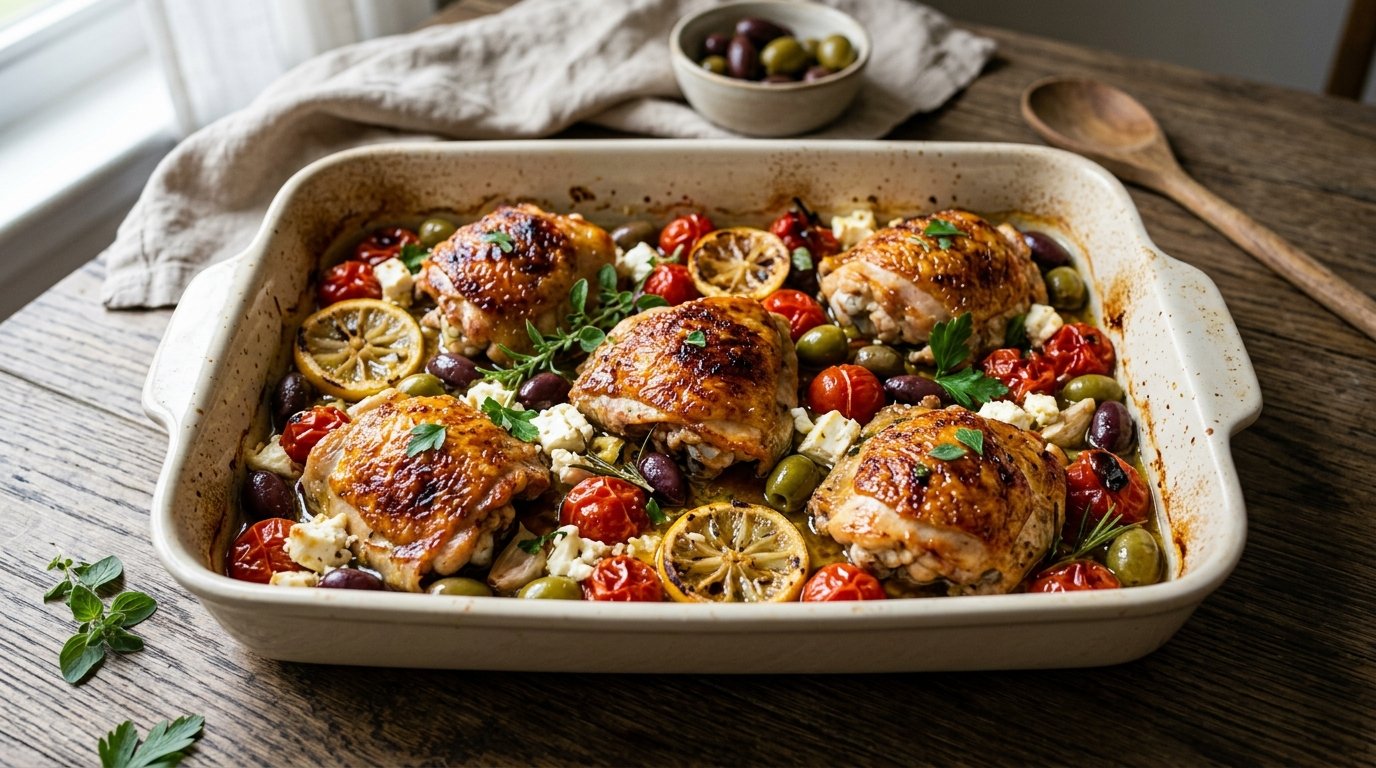
There is a specific moment in cooking when the kitchen transforms into a sun-drenched Provençal villa, filled with the intoxicating aroma of rosemary, garlic, and sizzling chicken. This one-pan Mediterranean chicken with olives and tomatoes captures that essence perfectly, delivering restaurant-quality depth of flavor with minimal cleanup. Unlike dry baked chicken or complicated stews requiring multiple pots, this method uses a single stainless steel skillet to sear, sauté, and braise ingredients together. The result is incredibly tender meat falling off the bone, bathed in a rich, buttery sauce bursting with briny olives and sweet burst cherry tomatoes. Whether you are hosting a dinner party or simply craving a nourishing weeknight meal that feels special, this recipe delivers maximum satisfaction without the stress. Let’s dive into how to create this Mediterranean masterpiece at home.
Why This Recipe Works
The success of this one-pan Mediterranean chicken with olives and tomatoes lies in the strategic layering of flavors and textures through sequential cooking. By searing the chicken skin-side down first, we render fat and create fond (browned bits) on the pan bottom—this is pure flavor gold that forms the base of our sauce. Removing the chicken temporarily allows us to properly sauté shallots and garlic without burning them, while deglazing with white wine lifts those caramelized bits back into suspension. Adding butter at this stage creates an emulsion that enriches the sauce and coats the chicken as it finishes cooking. The olives and tomatoes aren’t just garnishes; they release their juices during braising, creating a self-basting environment that keeps the meat moist while infusing every bite with bright acidity and umami. Fresh herbs added at the end preserve their volatile oils, providing aromatic freshness that dried herbs cannot replicate. This isn’t just throwing ingredients together; it’s building complexity through technique.
Why You’ll Love This Recipe
One-Pan Simplicity: From searing to serving, everything happens in a single vessel, making cleanup effortless.
Restaurant-Quality Flavor: Layered techniques create depth usually reserved for professional kitchens.
Incredibly Tender Meat: Braising in its own juices ensures chicken thighs stay succulent and fall-off-the-bone tender.
Vibrant Visual Appeal: Golden skin, ruby tomatoes, and green herbs make this dish as beautiful as it is delicious.
Pantry-Friendly Ingredients: Uses accessible staples like canned olives, fresh tomatoes, and basic aromatics.
Versatile Serving Options: Pairs beautifully with crusty bread, rice, pasta, or roasted vegetables.
Meal Prep Champion: Flavors improve overnight as ingredients meld; perfect for leftovers or advance preparation.
Ingredient Notes
Bone-In, Skin-On Chicken Thighs
Purpose: Provides rich flavor from bones and crispy texture from skin. Dark meat stays juicy during braising unlike breasts.
Substitutions: Chicken legs work similarly. Boneless/skinless thighs can be used but will lack crispy skin element and some richness. Avoid breasts; they dry out easily in this method.
Buying Tips: Choose organic or air-chilled if possible for better texture/flavor. Ensure skin is intact without tears. Uniform size promotes even cooking. Pat completely dry before searing—moisture is enemy of crispness.
Storage Tips: Refrigerate up to 2 days raw. Freeze up to 9 months wrapped tightly. Thaw overnight in fridge before cooking. Never refreeze thawed raw poultry.
Kalamata and Green Olives
Purpose: Adds salty, briny depth and umami complexity. Kalamata offers intense fruitiness; green olives provide milder tang.
Substitutions: Castelvetrano (buttery/mild), Niçoise (delicate), or black olive tapenade. Avoid canned sliced olives; they lack texture/flavor intensity.
Buying Tips: Buy pitted olives in brine/oil, not vinegar-packed (too acidic). Taste before using; quality varies wildly. Rinse briefly if overly salty. Store unused portion refrigerated in original liquid.
Storage Tips: Keep submerged in brine/oil in fridge up to 3 weeks. Discard if moldy/smells off. Freeze excess olives in oil for future use.
Cherry Tomatoes
Purpose: Provides sweetness, acidity, and color contrast. Bursting releases juices that enrich sauce naturally.
Substitutions: Grape tomatoes (similar), halved Roma tomatoes (meatier), or sun-dried tomatoes (intense flavor, rehydrate first). Canned diced tomatoes work but lack fresh brightness.
Buying Tips: Choose firm, vibrant red tomatoes without soft spots. Sweetness varies by season; taste-test one before buying. Organic often has superior flavor concentration.
Storage Tips: Store at room temperature away from direct sunlight. Refrigeration destroys texture/flavor. Use within 3-5 days of purchase for peak sweetness.
Shallots and Garlic
Purpose: Aromatic foundation building savory-sweet base note. Shallots offer subtlety vs onion harshness; garlic adds pungency.
Substitutions: Yellow onion (diced small) if shallots unavailable. Leeks (milder/sweeter). Garlic powder (¼ tsp per clove) only if fresh impossible.
Buying Tips: Firm shallots/garlic without sprouts/soft spots. Purple-skinned garlic often more potent. Store in cool/dark/dry place with airflow. Never refrigerate whole bulbs.
Storage Tips: Properly stored shallots last 2-3 weeks; garlic 3-6 months. Peel/chop just before use to prevent oxidation/bitterness.
Substitutions: Chicken broth + 1 tbsp lemon juice/vinegar (non-alcoholic). Vermouth (herbal complexity). Apple cider vinegar (use sparingly; very acidic).
Buying Tips: Choose crisp, dry varieties like Sauvignon Blanc or Pinot Grigio. Avoid “cooking wine” (loaded with salt/preservatives). Drinkable quality = better sauce.
Storage Tips: Refrigerate opened bottle up to 5 days. Freeze leftover wine in ice cube trays for future deglazing. Discard if oxidized/vinegary smell develops.
Fresh Rosemary and Thyme
Purpose: Herbal aromatics adding piney/citrus notes complementing Mediterranean profile. Fresh herbs retain volatile oils lost in drying.
Substitutions: Dried herbs (use ⅓ amount; add earlier in cooking). Oregano (more robust). Tarragon (anise note; use sparingly).
Buying Tips: Vibrant green needles/leaves without yellowing/wilting. Smell should be potent and fragrant. Avoid pre-packaged dried-out sprigs.
Storage Tips: Treat like flowers; trim stems, place in water glass on counter. Wrap loosely in damp paper towel in fridge crisper. Use within 5-7 days for best flavor.
Unsalted Butter
Purpose: Enriches sauce, creates glossy emulsion, carries fat-soluble flavors. Unsalted allows control over sodium levels.
Buying Tips: European-style butter (82%+ fat) yields richer sauce than standard American butter. Check expiration date; rancid butter ruins dish.
Storage Tips: Refrigerate up to 1 month; freeze up to 6 months. Keep wrapped tightly to prevent absorbing odors. Bring to room temp before using for easier incorporation.
Kitchen Equipment
12-Inch Stainless Steel Skillet: Essential for even heat distribution, proper searing, and oven-safe finishing. Non-stick won’t develop adequate fond. Cast iron works but reacts with acidic tomatoes/wine.
Tongs: For safely flipping/searing chicken without piercing skin (which releases juices). Heat-resistant silicone tips protect pan surface.
Cutting Board: Dedicated board for raw poultry to prevent cross-contamination. Plastic easier to sanitize than wood for raw meat.
Measuring Cups/Spoons: For accurate wine/butter ratios affecting sauce consistency. Eyeballing leads to unpredictable results.
Instant-Read Thermometer: Crucial for verifying safe internal temperature (165°F/74°C) without guessing. Prevents over/undercooking.
Serving Platter: Warm platter maintains dish temperature during service. Cold plates shock hot food causing rapid cooling.
Basting Spoon (Optional): For spooning sauce over chicken during final minutes. Enhances glaze and moisture retention.
Preparation Information
Prep Time: 15 minutes
Cook Time: 40 minutes
Total Time: 55 minutes
Servings: 4 people
Step-by-Step Instructions
H3: Sear Chicken Skin-Side Down
Pat 4 bone-in, skin-on chicken thighs completely dry with paper towels. Season generously with salt and pepper on both sides. Heat 1 tbsp olive oil in 12-inch stainless steel skillet over medium-high heat until shimmering. Place chicken skin-side down; do NOT move for 6-8 minutes. Why it matters: Dry skin + hot pan = Maillard reaction creating golden crust and rendering fat. Moving too early tears skin and prevents browning. Rendering fat provides cooking medium for next steps. Visual cue: Skin turns deep golden brown; edges lift slightly from pan. Fat pools around chicken. Texture cue: Skin feels crisp when tapped gently with tongs. Aroma cue: Nutty, toasted protein scent indicates proper browning. Common mistake: Crowding pan lowers temperature causing steaming instead of searing. Work in batches if necessary. Professional tip: Press chicken gently with spatula during first minute to ensure full skin contact with pan.
H3: Flip and Finish Searing Other Side
Flip chicken carefully using tongs. Cook skin-up side 3-4 minutes until lightly colored. Remove chicken to plate; tent loosely with foil. Why it matters: Second-side searing ensures even cooking and additional flavor development. Tentting retains heat without trapping steam (which softens skin). Reserved chicken continues carryover cooking. Color cue: Second side pale gold, not dark brown. Doneness test: Internal temp should be ~140°F (60°C) at this stage; it will finish cooking in sauce. Rest: Let chicken rest 5 minutes while preparing sauce; this redistributes juices preventing dryness.
H3: Sauté Aromatics and Deglaze Pan
Reduce heat to medium. Add 2 minced shallots to same skillet; cook 2-3 minutes stirring constantly until softened/translucent. Add 3 minced garlic cloves; cook 30 seconds until fragrant. Pour in ½ cup dry white wine; scrape bottom vigorously with wooden spoon to loosen fond. Simmer 2-3 minutes until reduced by half. Why it matters: Shallots/garlic build aromatic base; burning creates bitterness. Deglazing incorporates concentrated flavor from seared chicken into sauce. Reduction concentrates wine’s acidity and removes raw alcohol taste. Visual cue: Shallots turn translucent, not brown. Wine bubbles vigorously then slows as it reduces. Fond dissolves into liquid creating amber-colored sauce base. Aroma cue: Sweet onion/garlic fragrance transitions to complex wine reduction scent. Critical tip: Don’t skip scraping; fond is flavor essence. If wine evaporates too fast, lower heat slightly.
H3: Build Sauce with Butter and Return Chicken
Remove skillet from heat. Whisk in 2 tbsp cold unsalted butter until melted/emulsified. Return chicken skin-side up to skillet, nestling into sauce. Scatter ½ cup each Kalamata and green olives around chicken. Arrange 1 cup cherry tomatoes among olives. Why it matters: Off-heat butter prevents breaking/separation creating silky sauce. Nestling chicken ensures even braising. Olives/tomatoes positioned around (not on top of) chicken allow direct heat exposure for bursting/blistering. Texture cue: Sauce looks glossy, not greasy or separated. Visual cue: Olives/tomatoes distributed evenly; chicken sits partially submerged. Professional tip: Cold butter incorporates smoother than room-temp; cut into cubes before adding.
H3: Braise Until Tender and Saucy
Return skillet to medium-low heat. Cover partially with lid (leave 1-inch gap for steam escape). Simmer gently 15-20 minutes until chicken reaches 165°F (74°C) internally and tomatoes burst. Uncover last 5 minutes to thicken sauce if needed. Why it matters: Partial cover traps moisture for tenderizing while allowing reduction for sauce concentration. Gentle simmer prevents toughening proteins; boiling makes chicken rubbery. Burst tomatoes release pectin thickening sauce naturally. Visual cue: Tomatoes wrinkle/split open; sauce coats back of spoon. Chicken juices run clear when pierced near bone. Aroma cue: Herbaceous, tomatoey, wine-infused steam fills kitchen. Doneness test: Instant-read thermometer confirms safety; fork-tender texture indicates doneness. Rest: Remove from heat; let rest 5 minutes covered. Residual heat completes cooking; resting allows sauce to cling to meat.
H4: Finish with Fresh Herbs
Sprinkle 2 tbsp chopped fresh rosemary and 1 tbsp fresh thyme leaves over chicken and sauce just before serving. Drizzle with extra virgin olive oil if desired. Why it matters: Fresh herbs added post-cooking preserve delicate volatile oils destroyed by prolonged heat. Olive oil adds fruity finish and visual sheen. Color cue: Bright green herbs contrast golden chicken/red tomatoes. Aroma cue: Piney/citrus herbal burst signals freshness. Tip: Chop herbs finely for even distribution; large pieces can be unpleasant texturally.
Expert Tips for Perfect Results
Dry Skin = Crispy Skin: Moisture is enemy of browning. Pat chicken bone-dry before seasoning. Air-dry uncovered in fridge 2-24 hours before cooking for ultimate crispness. Wet skin steams instead of sears.
Pan Temperature Matters: Preheat skillet properly before adding oil/chicken. Cold pan = sticking/pale skin. Test oil readiness: it should shimmer and ripple when tilted, not smoke excessively.
Don’t Overcrowd During Sear: Leave 1-2 inches between pieces. Crowding drops pan temperature drastically causing steaming. Batch sear if needed; patience yields superior crust.
Cold Butter for Emulsion: Always whisk in cold cubed butter off-heat. Warm/hot butter separates into oil pool. Emulsified butter creates luxurious mouthfeel and glossy appearance.
Partial Cover for Braising: Full cover traps too much steam making skin soggy. No cover loses too much moisture drying chicken. 1-inch gap balances tenderness and texture preservation.
Rest Before Serving: Those 5 minutes aren’t optional. Resting allows juices redistribute throughout meat rather than pooling on plate. Sauce also thickens slightly during rest improving cling.
Common Mistakes to Avoid
Mistake: Soggy, Pale Chicken Skin
Why: Wet skin, overcrowded pan, or insufficient sear time.
Prevention: Dry skin thoroughly. Sear undisturbed 6-8 mins. Leave space between pieces. Preheat pan properly.
Fix: Cannot reverse post-braise. Next time, prioritize drying and spacing. Finish under broiler 1-2 mins if skin needs crisping (watch closely!).
Mistake: Tough, Rubbery Chicken
Why: Boiling instead of simmering, overcooking, or skipping rest period.
Prevention: Maintain gentle bubble, not rolling boil. Pull at 160°F; carryover reaches 165°F. Rest 5 mins covered.
Fix: Cannot reverse toughness. Serve with extra sauce to mask texture. Next time, monitor temp closely and reduce heat.
Mistake: Broken, Greasy Sauce
Why: Adding butter while pan too hot, or excessive agitation.
Prevention: Remove from heat before adding butter. Whisk gently, not vigorously. Use cold butter cubes.
Fix: Add 1 tsp cold water while whisking vigorously to re-emulsify. Strain if necessary. Prevention key; broken sauce lacks silkiness.
Mistake: Bitter Burnt Garlic/Shallots
Why: Heat too high, stirring infrequently, or adding garlic too early.
Prevention: Medium heat max. Stir constantly. Add garlic after shallots soften (30 secs only).
Fix: Discard burnt aromatics; start over. Bitterness permeates entire dish irreversibly. Next time, watch heat and timing meticulously.
Mistake: Watery, Thin Sauce
Why: Insufficient reduction, too much liquid, or unburst tomatoes.
Prevention: Reduce wine adequately before adding chicken. Uncover last 5 mins to concentrate. Burst tomatoes release natural thickeners.
Fix: Simmer uncovered 5-10 mins longer to reduce. Mix 1 tsp cornstarch + 1 tbsp cold water; stir in if desperate. Better prevention than cure.
Delicious Recipe Variations
Spicy Calabrian Chili Version
Add 2 tbsp chopped Calabrian chilies with olives. Red pepper flakes amplify heat gradually. Creamy sauce balances spice beautifully. Serve with cooling yogurt dollop.
Vegetarian Mushroom and Artichoke Pocket
Replace chicken with large portobello caps or cauliflower steaks. Add artichoke hearts with olives. Same braising method. Umami-rich plant-based alternative with similar depth.
Replace olives with capers + lemon zest/juice. Extra butter for piccata sauce. Brighter, sharper profile. Classic Italian-American variation maintaining one-pan simplicity.
Seafood Shrimp and Fennel Adaptation
Use large shrimp instead of chicken. Add sliced fennel with shallots. Cook shrimp only 3-4 mins at end to prevent rubberiness. Lighter coastal interpretation with anise notes.
Extra Cheesy Goat Cheese Finish
Crumble ¼ cup goat cheese over hot chicken before herbs. Tangy creaminess complements briny olives. Melts slightly creating pockets of richness. Indulgent upgrade for cheese lovers.
Healthy Greek Yogurt Marinade Boost
Marinate chicken in yogurt-lemon-herb mix 2 hours before searing. Yogurt enzymes tenderize while adding protein. Lower fat than traditional method; equally moist results.
Low-Carb Zucchini Noodle Base
Serve over spiralized zucchini noodles instead of bread/rice. Reduces carbs significantly. Zucchini absorbs sauce beautifully. Keto-friendly adaptation maintaining satisfaction.
High-Protein Lentil and Chicken Combo
Add ½ cup cooked lentils with olives. Increases fiber/protein without altering flavor significantly. Earthy lentils complement Mediterranean profile. Budget-friendly nutrition boost.
Fresh Fig and Honey Plate: Seasonal fruit + floral honey provides light ending. No heaviness after substantial meal.
Make Ahead & Meal Prep Tips
Component Prep Strategy
Sear chicken and prepare sauce base up to 24 hours ahead. Store separately refrigerated. Combine and braise just before serving for optimal texture. Fresh herbs always added day-of.
Freezer Storage (Cooked)
Cool completely. Portion chicken + sauce into airtight containers. Freeze up to 3 months. Thaw overnight in fridge before reheating. Quality best within first month; longer storage risks texture changes.
Freezer Storage (Uncooked Components)
Freeze seared chicken portions individually. Freeze sauce base separately. Combine from frozen when ready; extend braising time 10-15 mins. Convenient for meal prep without quality loss.
Storage Instructions
Refrigerator
Store cooled chicken + sauce in airtight container up to 4 days. Keep herbs separate if possible; add fresh when reheating. Flavors improve overnight as ingredients meld. Do not store warm; condensation creates sogginess.
Freezer
See make-ahead tips above. Label containers with date and contents. Consume within recommended timeframe for best quality. Thaw overnight in fridge before reheating. Never refreeze previously frozen cooked chicken.
Reheating Instructions
Oven (Best Method)
Preheat to 325°F (165°C). Place chicken + sauce in oven-safe dish. Cover with foil. Heat 15-20 minutes until internal temp reaches 165°F. Uncover last 5 mins to crisp skin slightly. Restores texture most effectively.
Stovetop (Good Alternative)
Warm gently in skillet over low-medium heat. Cover partially. Stir sauce occasionally to prevent scorching. Heat 8-10 minutes until hot throughout. Good for reviving sauciness; less effective for skin crispness.
Microwave (Last Resort)
Cover with damp paper towel. Heat in 30-second intervals, checking frequently. Skin will soften significantly; sauce may separate. Use only when speed outweighs quality. Follow with brief broiler stint if available.
Air Fryer (Skin Revival)
Reheat at 300°F (150°C) for 5-7 minutes. Superior skin crisping vs other methods. Monitor closely to prevent drying. Ideal for restoring texture when microwave fails.
Nutritional Information
Approximate values per serving (based on 4 servings):
Calories: 480 kcal
Protein: 38g
Carbohydrates: 12g
Fat: 30g
Fiber: 3g
Sugar: 5g
Sodium: 820mg
Note: Values vary based on chicken size, olive quantity, wine brand, and butter amount. Consult product labels for precise calculations. These are estimates for general guidance.
Troubleshooting Guide
Problem: Chicken Not Browning Properly
Cause: Pan not hot enough, wet skin, or overcrowding.
Solution: Preheat pan adequately. Dry skin thoroughly. Leave space between pieces. Increase heat slightly if needed. Patience yields crust.
Problem: Sauce Too Salty
Cause: Overly salty olives, excessive seasoning, or reduced too much.
Solution: Add unsalted chicken broth or water to dilute. Balance with acid (lemon juice/vinegar). Next time, rinse olives briefly or choose low-sodium variety.
Problem: Tomatoes Didn’t Burst
Cause: Heat too low, insufficient cooking time, or old/tough tomatoes.
Solution: Increase heat slightly. Extend cooking time 5 mins. Pierce tomatoes with knife tip before adding to encourage bursting. Use ripe, seasonal tomatoes.
Problem: Chicken Dry Despite Braising
Cause: Overcooking, boiling instead of simmering, or lean meat.
Solution: Pull at 160°F; carryover finishes cooking. Maintain gentle simmer. Use bone-in/skin-on thighs exclusively. Brine chicken 2 hours beforehand for moisture insurance.
Problem: Herbs Turned Brown/Mushy
Cause: Added too early during cooking.
Solution: Always add fresh herbs at very end, off-heat. Dried herbs can go in earlier. Fresh herbs lose color/flavor with prolonged heat exposure.
Frequently Asked Questions
Can I use chicken breasts instead of thighs?
Technically yes, but strongly discouraged. Breasts lack fat/connective tissue making them prone to drying out during braising. Thighs stay juicy forgivingly. If using breasts, reduce braising time to 10-12 mins and pull at 155°F. Texture will differ significantly.
What wine should I avoid?
Never use “cooking wine” sold in grocery stores; loaded with salt/preservatives ruining sauce. Avoid sweet wines (Moscato/Riesling); sugar overwhelms savory balance. Oaky Chardonnay can impart bitter notes. Stick to crisp, dry whites like Sauvignon Blanc/Pinot Grigio.
Can I make this dairy-free?
Absolutely! Substitute butter with extra virgin olive oil or vegan butter. Sauce will be lighter/fruitier but still delicious. Adjust seasoning accordingly as butter adds subtle richness. Olive oil actually enhances Mediterranean authenticity.
How do I know when olives are done?
Olives don’t need “doneness” testing; they’re already cured. They’re done when heated through and integrated into sauce (~15 mins braising). Overcooking makes them mushy/bitter. Add midway through braising for optimal texture.
Can I double this recipe?
Yes, but use larger skillet or cook in batches. Crowding prevents proper searing/braising. Sauce volume increases proportionally; ensure adequate pan depth. Double aromatics/wine/butter accordingly. Taste adjust seasoning; doubling doesn’t always mean double salt.
Why did my sauce separate?
Butter added while pan too hot, or excessive agitation. Remove from heat before adding butter. Whisk gently. If separated, add 1 tsp cold water while whisking vigorously to re-emulsify. Prevention better than cure.
Can I use dried herbs instead of fresh?
Yes, but use ⅓ amount and add during sauce-building stage (with shallots/garlic). Dried herbs need time/hydration to release flavor. Fresh herbs added at end provide brightness dried can’t replicate. Combination approach works well too.
Is this recipe gluten-free?
Naturally gluten-free! Verify wine is GF-certified if sensitive (some processed with wheat products). All other ingredients inherently GF. Perfect for celiac diets without modification. Cross-contamination risk minimal with dedicated utensils.
Final Thoughts
This one-pan Mediterranean chicken with olives and tomatoes proves that extraordinary meals don’t require extraordinary effort. Sometimes the most satisfying dishes emerge from simple ingredients treated with respect and technique. That moment when you pull apart the tender chicken and watch the glossy sauce cascade over burst tomatoes—it’s worth every minute of preparation.