Quick Recipe Summary
| Detail | Information |
|---|---|
| Prep Time | 15 minutes |
| Cook Time | 30 minutes |
| Total Time | 45 minutes |
| Servings | 6 people |
| Cuisine | Italian-American / Comfort Food |
| Course | Main Course / Dinner |
| Difficulty | Easy (Beginner Friendly) |
| Calories | ~420 kcal per serving |
Table of Contents
| Section | Heading Level |
|---|---|
| Introduction | H2 |
| Why This Recipe Works | H2 |
| Why You’ll Love This Recipe | H2 |
| Ingredient Notes | H2 |
| Kitchen Equipment | H2 |
| Preparation Information | H2 |
| Step-by-Step Instructions | H2 |
| Expert Tips for Perfect Texture | H2 |
| Common Mistakes to Avoid | H2 |
| Delicious Recipe Variations | H2 |
| What to Serve With This Recipe | H2 |
| Make Ahead & Meal Prep Tips | H2 |
| Storage Instructions | H2 |
| Reheating Instructions | H2 |
| Nutritional Information | H2 |
| Troubleshooting Guide | H2 |
| Frequently Asked Questions | H2 |
| Final Thoughts | H2 |
Introduction

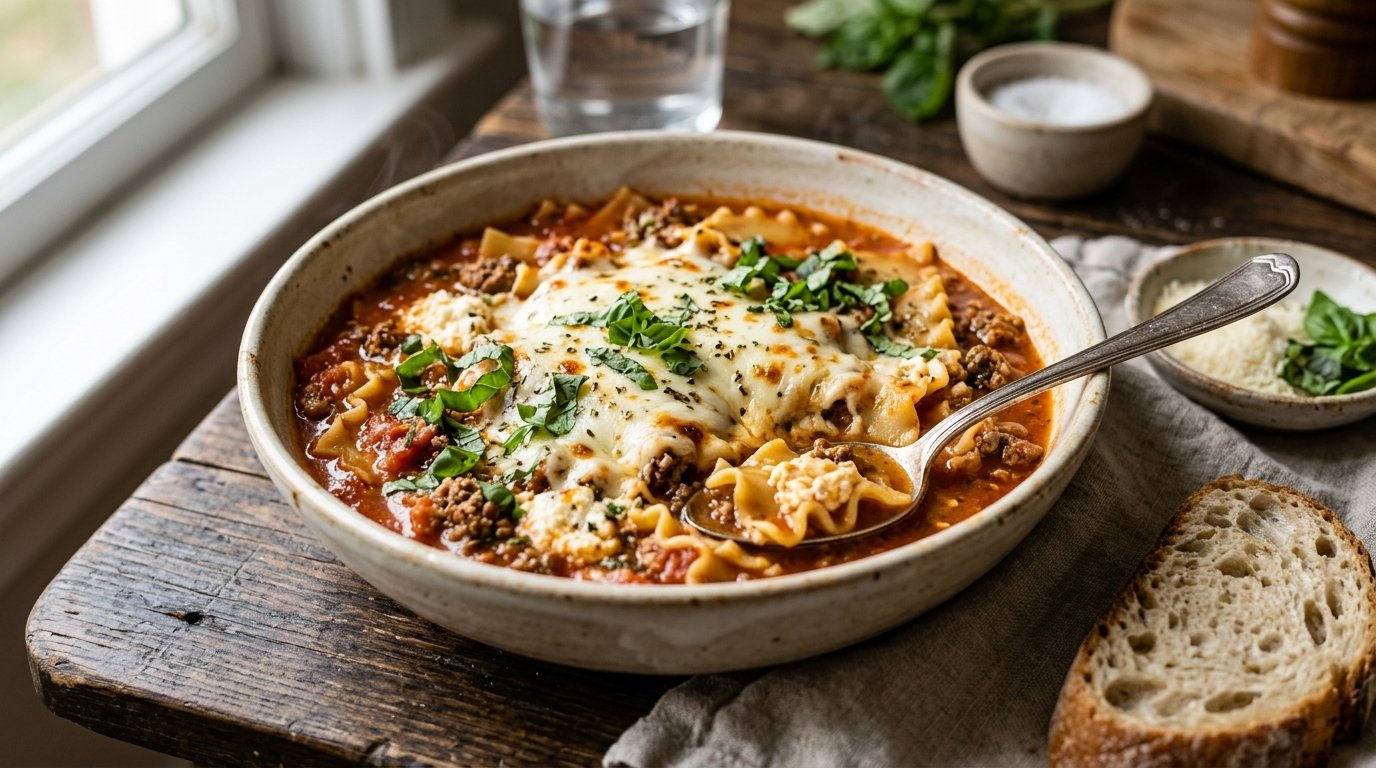
There is a specific kind of comfort that only lasagna can provide: rich tomato sauce, tender pasta, savory meat, and creamy cheese all working in harmony. But let’s be honest—traditional lasagna requires hours of layering, multiple pots, and significant cleanup effort. This one-pot lasagna soup delivers every bit of that beloved flavor profile in a fraction of the time and with minimal mess. By breaking lasagna noodles directly into a simmering pot of seasoned meat and broth, we eliminate the tedious assembly process while maintaining the soul-satisfying essence of the classic dish. The result is a hearty, spoonable meal that captures the magic of layered pasta without the labor-intensive preparation. Whether you are feeding a hungry family on a busy weeknight or craving nostalgic comfort food without the fuss, this recipe transforms dinner from chore to joy in under an hour. Let’s dive into how to make this cozy masterpiece at home.
Why This Recipe Works
The genius of this one-pot lasagna soup lies in starch management and flavor integration. Traditional lasagna relies on pre-cooked noodles absorbing sauce during baking; here, broken noodles cook directly in the seasoned broth, releasing starch that naturally thickens the liquid into a rich, velvety base. This eliminates the need for flour or cornstarch thickeners while creating superior mouthfeel. Browning the meat first develops Maillard reaction compounds—the foundation of deep savory flavor—that would be lost if ingredients were simply boiled together. Adding cream or ricotta at the end (off-heat) prevents curdling while providing the signature creamy element associated with lasagna’s cheese layers. Breaking noodles by hand rather than cutting ensures irregular edges that trap more sauce and create varied textures in each bite. This isn’t just dumping ingredients into a pot; it’s applying fundamental cooking science to achieve complex results through simple technique.
Why You’ll Love This Recipe
- All Lasagna Flavor, Zero Layering: Captures the complete taste profile without tedious assembly or multiple dishes.
- One-Pot Simplicity: Everything cooks in a single vessel, making cleanup effortless compared to traditional baked lasagna.
- Ready in Under 45 Minutes: Perfect for busy weeknights when time is limited but comfort is non-negotiable.
- Kid-Friendly Appeal: Familiar flavors and fun noodle shapes make this a hit with younger eaters who might resist vegetable-heavy soups.
- Pantry-Staple Friendly: Uses accessible ingredients like ground beef, canned tomatoes, and dried pasta—no specialty shopping required.
- Customizable Creaminess: Adjust dairy addition to personal preference; some prefer brothy, others love it rich and cheesy.
- Freezer-Friendly Comfort: Makes excellent leftovers and freezes beautifully for future cozy meals.
Ingredient Notes
Ground Beef (85/15 Lean-to-Fat Ratio)
- Purpose: Provides savory protein base and renders fat for browning aromatics. Fat content essential for flavor development.
- Substitutions: Ground turkey or chicken (leaner option), Italian sausage (adds fennel/garlic notes), or plant-based ground meat. Avoid extra-lean beef; lacks flavor/fat needed for proper browning.
- Buying Tips: Choose freshly ground over pre-formed patties for better texture control. Ask butcher for coarse grind; fine grind becomes dense/tough when cooked in soup. Keep cold until browning.
- Storage Tips: Refrigerate raw beef up to 2 days. Freeze formed portions between parchment sheets up to 3 months. Thaw overnight in fridge before use. Never refreeze thawed raw meat.
Lasagna Noodles (Dry, Not Fresh)
- Purpose: Signature pasta element providing chewy texture and starch for thickening. Broken pieces mimic layered effect in spoonfuls.
- Substitutions: Mafaldine or reginette pasta (similar ruffled edges). Wide egg noodles work but lack authentic lasagna texture. Avoid fresh pasta; cooks too fast becoming mushy.
- Buying Tips: Standard dry lasagna sheets preferred. Check expiration date; old pasta takes longer to cook and may taste stale. No-boil varieties work but adjust liquid ratio slightly.
- Storage Tips: Store in airtight container in cool dark place indefinitely. Keep away from moisture/humidity. Break noodles just before cooking to prevent staleness at broken edges.
Crushed Tomatoes or Tomato Sauce
- Purpose: Acidic/sweet base forming soup foundation. Provides umami depth and color. Balances richness of meat/dairy.
- Substitutions: Diced tomatoes (chunkier texture), passata (smoother consistency), or marinara sauce (pre-seasoned). Avoid tomato paste alone; too concentrated/intense.
- Buying Tips: San Marzano tomatoes offer superior sweetness/acidity balance. Low-sodium versions allow seasoning control. Check labels for added sugar; many brands contain unnecessary sweeteners.
- Storage Tips: Transfer unused portion to glass container; refrigerate up to 7 days. Freeze in ice cube trays for future portioning. Discard if moldy/smells fermented.
Heavy Cream or Ricotta Cheese
- Purpose: Adds creamy richness mimicking lasagna’s cheese layers. Softens acidity and creates luxurious mouthfeel.
- Substitutions: Half-and-half (lighter), coconut cream (dairy-free), or Greek yogurt (tangier/protein boost). Ricotta provides authentic lasagna texture; cream offers smoother consistency.
- Buying Tips: For cream: choose ultra-pasteurized for stability when heated. For ricotta: whole milk variety melts better than part-skim. Avoid “cooking cream” with stabilizers; they alter texture.
- Storage Tips: Cream refrigerates up to expiration date; freeze up to 3 months (may separate; whisk after thawing). Ricotta keeps 5-7 days opened; freeze up to 2 months (texture changes slightly).
Onion, Garlic, and Italian Seasoning
- Purpose: Aromatic foundation building savory complexity. Herbs echo traditional lasagna flavor profile.
- Substitutions: Shallots (milder/sweeter), leeks (gentler onion note). Fresh basil/oregano instead of dried (add at end). Fennel seeds enhance sausage-like depth.
- Buying Tips: Firm onions without soft spots/sprouts. Plump garlic cloves; avoid green sprouts (bitter). Fresh herbs vibrant green; dried should smell potent not dusty.
- Storage Tips: Onions/garlic store cool/dark/dry with airflow. Fresh herbs treat like flowers (trim stems, water glass). Dried herbs lose potency after 6 months; replace regularly.
Kitchen Equipment
- 6-8 Quart Dutch Oven or Heavy-Bottomed Pot: Essential for even heat distribution and preventing scorching. Enameled cast iron ideal; stainless steel works. Thin pots burn easily.
- Wooden Spoon or Spatula: For breaking up meat and stirring without scratching pot. Heat-resistant silicone also effective. Metal spoons can damage enameled surfaces.
- Sharp Chef’s Knife & Cutting Board: For dicing onions/mincing garlic uniformly. Uniform size ensures even cooking. Dedicated board for raw meat prevents cross-contamination.
- Measuring Cups/Spoons: For accurate liquid/seasoning ratios affecting flavor balance. Eyeballing leads to inconsistent results batch-to-batch.
- Ladle: For serving soup neatly. Deep bowl ladle holds noodles/meat/broth proportionally. Slotted ladle optional if preferring less broth.
- Instant-Read Thermometer (Optional): To verify meat reaches safe temperature (160°F/71°C) before adding liquids. Ensures food safety without guesswork.
- Cheese Grater (If Using Block Parmesan): Freshly grated parmesan melts smoothly; pre-grated contains anti-caking agents inhibiting melt. Box grater or microplane both work.
Preparation Information

- Prep Time: 15 minutes
- Cook Time: 30 minutes
- Total Time: 45 minutes
- Servings: 6 people
Step-by-Step Instructions
H3: Brown Meat and Build Flavor Base
Heat 1 tbsp olive oil in Dutch oven over medium-high heat. Add 1 lb ground beef; break apart with wooden spoon. Cook 5-7 minutes until deeply browned, not just gray. Drain excess fat if desired (leave 1 tbsp for flavor). Add 1 diced onion, 3 minced garlic cloves, 1 tsp dried oregano, ½ tsp red pepper flakes (optional). Cook 2-3 minutes stirring constantly until fragrant. Why it matters: Proper browning creates fond (caramelized bits) on pot bottom—this is concentrated flavor. Rushing this step yields bland soup. Draining excess fat prevents greasiness while retaining enough for sautéing aromatics. Visual cue: Meat turns rich brown with crispy edges; onions translucent/golden. Aroma cue: Savory toasted meat scent transitions to sweet onion/garlic fragrance. Common mistake: Crowding pot steams meat instead of browning; cook in batches if necessary. Professional tip: Don’t stir constantly during initial browning; let meat sear undisturbed 2-3 minutes for better crust.
H3: Deglaze and Simmer Broth
Pour in 4 cups beef broth, scraping pot bottom vigorously with spoon to loosen fond. Add 1 can (28 oz) crushed tomatoes, 1 tsp salt, ½ tsp black pepper. Bring to boil; reduce to simmer. Cover partially; cook 10 minutes to meld flavors. Why it matters: Deglazing incorporates concentrated flavor into liquid base. Partial cover allows reduction concentrating taste while preventing splatter. Simmering hydrates dried herbs releasing full potential. Color cue: Liquid turns deep reddish-brown; no pale/raw tomato appearance. Texture cue: Slight thickening begins as tomatoes break down. Critical tip: Scrape thoroughly; fond stuck to pot = wasted flavor. If using low-sodium broth, adjust salt accordingly.
H3: Break Noodles and Cook Until Tender
Break 8-10 dry lasagna noodles into 1-2 inch pieces by hand over bowl (prevents shards flying). Stir broken noodles into simmering soup. Return to gentle boil; cook uncovered 12-15 minutes stirring occasionally until noodles are al dente. Why it matters: Hand-breaking creates irregular shapes trapping sauce better than uniform cuts. Uncovered cooking prevents overflow from starchy foam. Al dente noodles hold up in leftovers; overcooked become mushy. Visual cue: Noodles soften visibly; edges become wavy/ruffled. Soup thickens noticeably from released starch. Doneness test: Taste noodle piece; should have slight bite, not chalky center. Rest: Remove from heat immediately when done; residual heat continues cooking. Overcooking ruins texture irreversibly.
H4: Finish with Cream/Cheese and Rest
Remove pot from heat. Stir in ½ cup heavy cream OR ¾ cup ricotta cheese until fully incorporated. Taste; adjust salt/pepper/herbs. Let rest 5 minutes off-heat before serving. Why it matters: Off-heat dairy prevents curdling/separation. Resting allows noodles absorb remaining liquid; soup thickens to perfect consistency. Flavors meld further during rest improving overall balance. Texture cue: Soup looks creamy/opaque, not separated/oily. Noodles plump slightly during rest. Aroma cue: Rich milky/cheesy scent emerges blending with tomato/meat aromas. Serving tip: Ladle gently to avoid breaking noodles further. Top with fresh basil and grated parmesan if desired.
Expert Tips for Perfect Texture
- Noodle Timing Is Everything: Start checking doneness at 10 minutes; different brands vary wildly. Pull when barely al dente; carryover cooking finishes them. Mushy noodles cannot be fixed.
- Starch Management Prevents Glue: Stir frequently during noodle cooking to prevent sticking/scorching. If soup gets too thick before noodles done, add splash hot broth/water. Too thin? Simmer uncovered 2-3 mins extra.
- Dairy Temperature Control: Never boil after adding cream/ricotta. High heat causes proteins to seize creating grainy texture. Warm gently if needed; never re-boil finished soup.
- Salt in Stages: Salt meat during browning, broth during deglaze, final adjustment after dairy. Layered salting builds depth vs. one-note saltiness. Taste before final salt addition; reduced broth concentrates sodium.
- Fresh Herb Finish: Add chopped fresh basil/parsley just before serving. Prolonged heat destroys delicate volatile oils turning herbs bitter/dull. Dried herbs go in early; fresh at end.
- Acid Balance Brightens: If soup tastes flat/heavy, add 1 tsp lemon juice or balsamic vinegar. Acid lifts flavors cutting richness. Add incrementally; taste after each addition.
Common Mistakes to Avoid
Mistake: Mushy, Disintegrating Noodles
- Why: Overcooking, boiling too vigorously, or adding noodles too early.
- Prevention: Check doneness at 10 mins. Maintain gentle simmer not rolling boil. Add noodles only after broth fully flavored/reduced slightly.
- Fix: Cannot reverse mushiness. Strain noodles; serve broth separately as tomato soup. Next time, set timer and check early.
Mistake: Greasy, Heavy Soup
- Why: Excess fat not drained, too much cream, or high-fat meat without balancing acid.
- Prevention: Drain beef thoroughly leaving only 1 tbsp fat. Use half-and-half instead of cream if concerned. Add splash vinegar/lemon to cut richness.
- Fix: Skim surface fat with spoon. Blend ¼ cup soup with 1 tbsp bread crumbs; stir back in to absorb grease. Prevention better than cure.
Mistake: Curdled Dairy
- Why: Boiling after adding cream/ricotta, or adding cold dairy to very hot soup.
- Prevention: Remove from heat BEFORE adding dairy. Temper dairy by stirring in ¼ cup hot soup first if worried. Use room-temp dairy when possible.
- Fix: Blend briefly with immersion blender to re-emulsify. Strain if severely curdled. Next time, prioritize temperature control.
Mistake: Bland, One-Dimensional Flavor
- Why: Insufficient browning, under-seasoning, or skipping deglaze step.
- Prevention: Brown meat deeply. Scrape fond thoroughly. Season at each stage. Finish with acid/fresh herbs.
- Fix: Add splash Worcestershire/soy sauce for umami boost. Stir in 1 tbsp tomato paste cooked 1 min. Adjust salt/acid/herbs incrementally.
Delicious Recipe Variations
Spicy Arrabbiata Lasagna Soup
Add 2 tbsp Calabrian chili paste + 1 tsp red pepper flakes with aromatics. Use spicy Italian sausage instead of beef. Top with extra chili oil drizzle. Heat builds gradually; creamy base balances fire beautifully.
Vegetarian Lentil and Mushroom Version

Replace beef with 1 cup brown lentils + 8 oz chopped mushrooms. Use vegetable broth. Lentils provide protein/texture mimicking meat. Umami-rich plant-based alternative satisfying even meat-eaters.
Vegan Cashew Cream Adaptation
Use plant-based ground meat + cashew cream (blended soaked cashews + nutritional yeast). Coconut cream works too. Same technique; dairy-free indulgence maintaining creamy richness authentically.
Chicken Sausage and Kale Twist
Swap beef for sliced chicken sausage + 2 cups chopped kale. Kale adds earthy bitterness balancing richness. Lighter poultry version with similar comfort factor. Add white beans for heartiness.
Seafood Shrimp and Fennel Fusion
Use shrimp instead of beef + sliced fennel bulb. White wine instead of red pepper flakes. Delicate seafood version requiring shorter cook time. Add shrimp last 3 mins to prevent rubberiness. Coastal interpretation.
Extra Cheesy Four-Cheese Blend
Stir in mozzarella + fontina + parmesan + gorgonzola dolce with cream. Each cheese contributes unique melt/flavor. Ultimate indulgence for cheese lovers. Reduce salt; cheeses contribute sodium.
Healthy Greek Yogurt Protein Boost
Replace cream with ½ cup plain Greek yogurt. Increases protein significantly. Tangier profile complements tomato base. Still creamy when tempered properly. Great macro-friendly option.
Low-Carb Zucchini Noodle Swap
Substitute lasagna noodles with spiralized zucchini. Add zucchini last 3 mins only; overcooks instantly. Reduces carbs dramatically. Texture differs but satisfies craving. Blot zucchini first to prevent watery soup.
High-Protein Turkey and White Bean Combo
Use ground turkey + 1 can cannellini beans. Beans add fiber/protein without altering flavor significantly. Earthy beans complement Italian seasonings perfectly. Budget-friendly nutrition boost.
Roasted Garlic and Caramelized Onion Depth
Roast entire garlic head + caramelize onions separately before adding. Intense sweetness/complexity elevates simple soup. Labor-intensive but transformative. Worth effort for special occasions.
What to Serve With This Recipe
Side Dishes
- Garlic Breadsticks: Essential for dipping into rich broth. Crispy exterior soaks up sauce beautifully. Homemade or store-bought both work.
- Caesar Salad: Crisp romaine + sharp dressing cuts through soup richness. Croutons echo pasta texture pleasantly. Classic pairing for good reason.
- Roasted Broccoli with Lemon: Charred florets add vegetal contrast. Lemon brightness cleanses palate between rich bites. Simple preparation doesn’t compete.
- Antipasto Platter: Marinated olives, artichokes, roasted peppers continue Italian theme. Grazing-style side encourages lingering at table.
Salads
- Arugula Pear Salad: Peppery greens + sweet fruit + balsamic provide refreshing counterpoint. Light vinaigrette won’t overwhelm soup.
- Caprese Salad: Fresh tomato/mozzarella/basil echoes soup flavors lightly. Burrata upgrade adds luxury. Summer freshness balances warm comfort food.
- Shaved Fennel Orange Salad: Anise-citrus combination refreshes after rich meal. Textural crunch contrasts soft soup components.
Sauces & Condiments
- Extra Virgin Olive Oil Drizzle: Fruity finish enhances existing flavors. High-quality oil makes visible/tasteable difference.
- Red Pepper Flakes: Customizable heat for individual preferences. Shake at table allowing diner control.
- Grated Parmesan: Salty/nutty topping amplifies umami. Freshly grated melts into hot soup creating silky pockets.
Drinks
- Chianti Classico: Medium-bodied red wine mirrors tomato/meat flavors. Tannins cut richness effectively. Classic Italian pairing.
- Sparkling Water with Lemon: Effervescence refreshes palate between rich spoonfuls. Zero calories won’t compete with complex soup.
- Iced Black Tea: Tannins cleanse palate similarly to wine. Unsweetened version maintains balance. Casual dining companion.
Desserts
- Lemon Sorbet: Bright icy finish resets palate after savory richness. Cleansing effect prepares for coffee/digestif.
- Tiramisu: Coffee-soaked ladyfingers continue Italian theme elegantly. Creamy mascarpone echoes soup’s dairy element subtly.
- Dark Chocolate Squares: Bittersweet chocolate provides sophisticated ending. Small portion satisfies without heaviness after substantial meal.
Make Ahead & Meal Prep Tips
Component Prep Strategy
Brown meat and sauté aromatics up to 2 days ahead. Store refrigerated separately. Combine with broth/tomatoes day-of for freshest noodle texture. Pre-break noodles storing in airtight container.
Freezer Storage (Without Noodles)
Freeze meat/broth base without noodles up to 3 months. Noodles become mushy when frozen/thawed. Cook noodles fresh when reheating base. Label clearly with date/content.
Freezer Storage (Fully Prepared)
Not recommended. Noodles degrade significantly upon freezing/thawing. Soup separates; dairy may curdle. Quality loss severe. Always cook noodles fresh for best experience.
Storage Instructions
Refrigerator
Store cooled soup in airtight container up to 4 days. Noodles continue absorbing liquid; soup thickens considerably. Add splash broth/water when reheating to restore consistency. Do not store warm; condensation promotes spoilage.
Freezer
See make-ahead tips above. Freeze base only; cook noodles fresh. Consume within 3 months for best quality. Thaw overnight in fridge before reheating. Never refreeze previously frozen soup containing noodles.
Reheating Instructions
Stovetop (Best Method)
Warm gently over medium-low heat stirring frequently. Add splash broth/water if too thick. Heat until steaming not boiling. Preserves noodle texture and prevents dairy separation. Ideal for restoring original consistency.
Microwave (Convenient Option)
Heat in microwave-safe bowl covered loosely. 30-second intervals stirring between. Add liquid if needed. Noodles may soften further; accept trade-off for speed. Best for single servings.
Slow Cooker (Party Serving)
Transfer to slow cooker on LOW setting. Stir occasionally to prevent scorching. Keep warm up to 2 hours max. Longer holding degrades noodle texture. Good for buffets/gatherings.
Oven (Batch Reheating)
Cover oven-safe dish with foil. Heat at 325°F (165°C) 20-25 mins stirring halfway. Add liquid if drying out. Gentle even heat preserves integrity. Better than microwave for large quantities.
Nutritional Information
Approximate values per serving (based on 6 servings):
- Calories: 420 kcal
- Protein: 28g
- Carbohydrates: 38g
- Fat: 18g
- Fiber: 4g
- Sugar: 8g
- Sodium: 980mg
Note: Values vary based on meat fat content, cream quantity, broth brand, and noodle type. Consult product labels for precise calculations. These are estimates for general guidance.
Troubleshooting Guide
Problem: Soup Too Thick/Gloopy
- Cause: Overcooked noodles, excessive starch release, or insufficient liquid.
- Solution: Stir in hot broth/water ¼ cup at a time until desired consistency. Next time, reduce noodle cook time or increase initial liquid volume.
Problem: Soup Too Thin/Watery
- Cause: Under-reduced broth, insufficient noodle starch, or excess liquid added.
- Solution: Simmer uncovered 5-10 mins to reduce. Mash some noodles against pot side to release starch. Next time, start with less liquid; easier to add than remove.
Problem: Noodles Stick Together in Clumps
- Cause: Insufficient stirring during cooking, or adding noodles to non-simmering liquid.
- Solution: Stir immediately upon adding noodles. Maintain gentle simmer. Separate clumps gently with fork if caught early. Prevention via constant attention key.
Problem: Metallic or Tinny Taste
- Cause: Cooking acidic tomatoes in reactive metal pot, or low-quality canned tomatoes.
- Solution: Transfer to non-reactive pot (enameled/stainless). Add pinch sugar to balance acidity. Next time, use enameled Dutch oven exclusively for tomato-based soups.
Problem: Dairy Separates/Oily Surface
- Cause: Boiling after adding dairy, or high heat throughout finishing stage.
- Solution: Remove from heat before adding dairy. Temper dairy first. If separated, blend briefly to re-emulsify. Prevention via temperature control essential.
Frequently Asked Questions
Can I use no-boil lasagna noodles?
Yes, but reduce cook time to 8-10 minutes. No-boil noodles absorb liquid faster becoming mushy if overcooked. Monitor closely starting at 7 minutes. Regular noodles preferred for better texture control.
How do I prevent noodles from getting soggy in leftovers?
Store noodles and broth separately if possible. Combine just before reheating. If already combined, expect softer noodles; add splash broth when reheating. Noodles will never be identical to fresh-cooked texture.
Can I make this vegetarian/vegan?
Absolutely! Substitute beef with lentils/mushrooms/plant-based meat. Use vegetable broth. Replace cream with cashew/coconut cream. Same technique applies. Flavor depth remains achievable without animal products.
Why did my soup turn gray/brown?
Over-browned meat or oxidized tomatoes. Ensure meat browns evenly not burns. Use fresh/high-quality canned tomatoes. Acidic environment (tomatoes) can discolor certain meats; this is normal but unappealing. Prevention via controlled browning key.
Can I double this recipe?
Yes, but use larger pot (8+ quart). Crowding prevents proper browning/reduction. Double all ingredients proportionally. Taste adjust seasoning; doubling doesn’t always mean double salt. Cook time may increase slightly.
What cheese works best besides ricotta?
Mascarpone (richer/smoother), cottage cheese blended smooth (higher protein), or crème fraîche (tangier). Each alters texture/flavor profile. Ricotta most authentic; alternatives offer interesting variations. Avoid hard aged cheeses; they don’t incorporate smoothly.
Can I prepare this in advance for party?
Prepare base (meat/broth/tomatoes) up to 2 days ahead. Cook noodles fresh just before serving. Noodles degrade rapidly in stored soup. Assemble components day-of for optimal texture and presentation.
Is this recipe gluten-free?
Not as written due to wheat noodles. Substitute with gluten-free lasagna noodles or rice-based pasta. Verify broth/tomatoes GF-certified. Technique identical; texture differs slightly. Great adaptation for celiac diets.
Final Thoughts
This one-pot lasagna soup proves that comfort food doesn’t require compromise between flavor and convenience. Sometimes the most satisfying meals emerge from reimagining classics through smarter technique rather than elaborate effort. That moment when you lift a spoonful laden with tender noodles, savory meat, and creamy broth—it’s worth every minute of preparation. Whether you’re feeding kids after school, hosting friends for game night, or simply treating yourself to something special, this recipe delivers joy in edible form. Don’t hesitate to experiment with different proteins, cheeses, or spice levels; make this recipe your own.