Quick Recipe Summary
| Feature | Details |
|---|---|
| Prep Time | 15 Minutes |
| Cook Time | 20-25 Minutes |
| Total Time | 40 Minutes |
| Servings | 4 |
| Cuisine | Mediterranean / Greek-Inspired |
| Course | Main Course |
| Difficulty | Easy |
| Calories | ~480 kcal per serving |
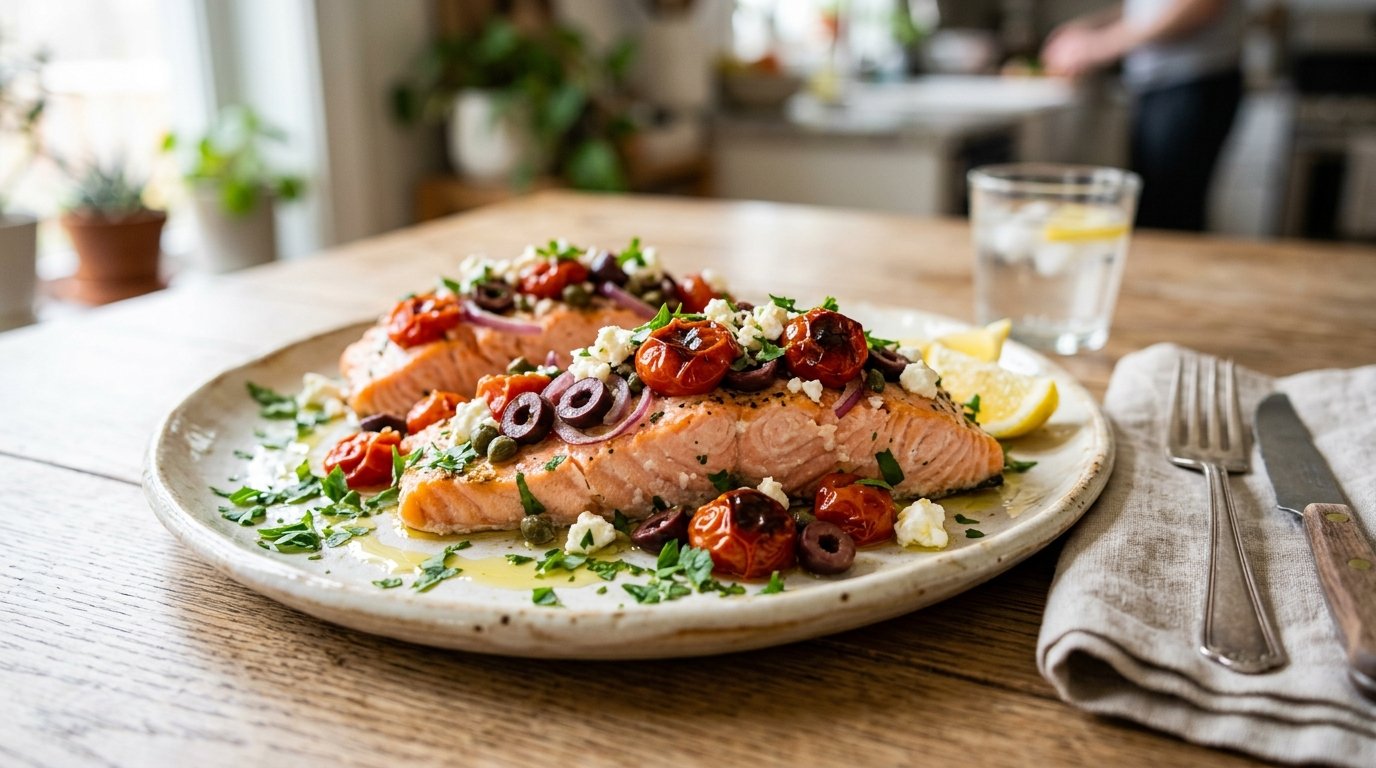
This recipe relies on the synergy between the salmon’s natural oils and extra virgin olive oil to roast the vegetables while keeping the fish moist. The high heat caramelizes the natural sugars in the onions and tomatoes, creating a savory-sweet pan sauce that coats every bite. Finished with a bright squeeze of fresh lemon juice, this dish balances richness with acidity, making it an ideal weeknight dinner that feels like a vacation on a plate.
Table of Contents
- Introduction
- Why This Recipe Works
- Why You’ll Love This Recipe
- Ingredient Notes
- Kitchen Equipment
- Preparation Information
- Step-by-Step Instructions
- Expert Tips
- Common Mistakes
- Recipe Variations
- What to Serve With This Recipe
- Make Ahead & Meal Prep Tips
- Storage Instructions
- Reheating Instructions
- Nutritional Information
- Troubleshooting Guide
- Frequently Asked Questions
- Final Thoughts
Introduction

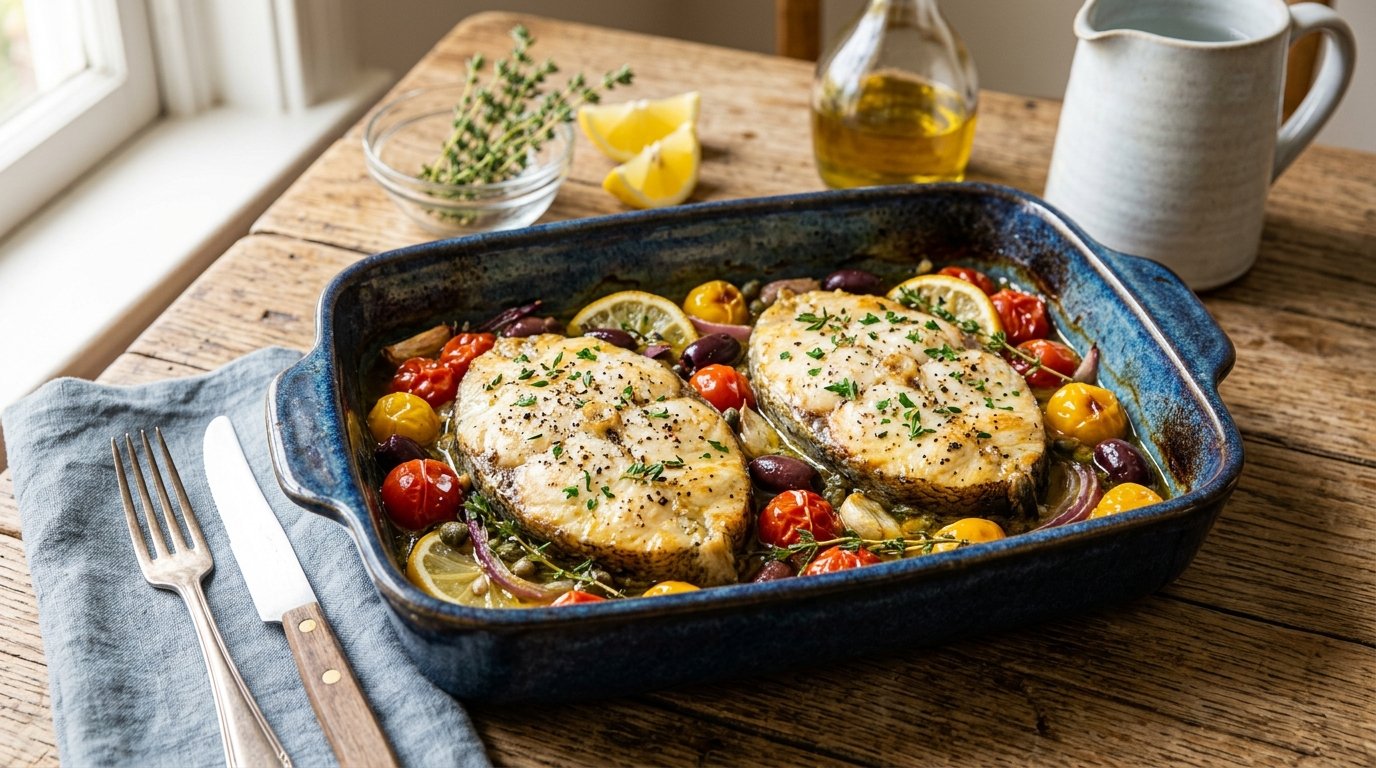
If you have ever felt intimidated by cooking fish or overwhelmed by the prospect of washing multiple pots and pans after dinner, this Mediterranean Baked Salmon is your new best friend. The video demonstration highlights the beautiful simplicity of this method: layering colorful vegetables and protein in a single ceramic baking dish, seasoning generously, and letting the oven do the heavy lifting. Unlike poaching or steaming, which can sometimes result in bland textures, roasting at high heat intensifies flavors and creates delightful textural contrasts—crisp-edged onions, burst tomatoes, and tender-crisp salmon.
The beauty of this dish lies in its adaptability and nutritional density. Salmon provides essential omega-3 fatty acids and high-quality protein, while the medley of vegetables offers fiber, vitamins, and antioxidants. The addition of Kalamata olives brings a salty, umami depth that mimics the complexity of a slow-cooked stew but in a fraction of the time. Whether you are hosting a casual dinner party or simply seeking a healthy, satisfying meal for yourself, this recipe delivers consistent, restaurant-quality results with minimal effort.
Why This Recipe Works
From a culinary science perspective, this recipe succeeds because of fat compatibility and moisture management. Salmon is a fatty fish, and as it cooks, it releases oils that mingle with the olive oil poured over the vegetables. This shared lipid environment ensures that the aromatics (onions, garlic, thyme) infuse directly into the fish, while the fish’s richness prevents the vegetables from drying out. The cherry tomatoes act as natural basting agents; as they burst under heat, their acidic juices mix with the oil to form an emulsified pan sauce that clings to the salmon rather than pooling separately.
Furthermore, the timing of the lemon addition is crucial. Adding acid after baking preserves its bright, volatile top notes, which would otherwise cook off and turn bitter if added before roasting. The fresh lemon juice cuts through the richness of the olive oil and salmon fat, cleansing the palate and enhancing the perception of saltiness from the olives without needing additional sodium. This balance of fat, acid, heat, and salt is the hallmark of great Mediterranean cooking, achieved here through strategic layering rather than complex technique.
Why You’ll Love This Recipe
- One-Pan Efficiency: Everything cooks together in a single vessel, meaning less active time and significantly easier cleanup.
- Flavor Explosion: Roasting concentrates the sweetness of onions and tomatoes while the olives add a savory punch that permeates the entire dish.
- Heart-Healthy Fats: Rich in omega-3s from salmon and monounsaturated fats from olive oil, supporting cardiovascular health.
- Visual Appeal: The vibrant reds, purples, and oranges make for a stunning presentation straight from the oven.
- Forgiving Technique: Unlike delicate fillets that dry out instantly, the vegetable bed acts as a buffer, helping to keep the salmon moist even if slightly overcooked.
- Versatile Serving: Equally delicious hot from the oven or at room temperature, making it perfect for picnics or buffets.
Ingredient Notes
Salmon Fillets (Skin-On or Skinless)
- Purpose: Primary protein source. Provides rich texture and healthy fats.
- Substitutions: Trout, arctic char, or cod (adjust cooking time for thinner white fish).
- Buying Tips: Look for firm, bright orange/pink flesh with no brown spots or dullness. Smell should be clean and oceanic, not “fishy.” Wild-caught often has a deeper flavor and firmer texture than farmed.
- Storage Tips: Use within 1-2 days of purchase. Keep refrigerated on ice or in the coldest part of the fridge. Pat dry before cooking to ensure proper searing/roasting.
Red Onion
- Purpose: Adds sweetness when roasted and vibrant purple color. Milder than yellow onion when cooked.
- Substitutions: Yellow onion (sweeter, softer), shallots (more delicate), or leeks (mild, earthy).
- Buying Tips: Choose heavy, firm bulbs with tight, papery skins. Avoid sprouting or soft spots. Larger onions are easier to slice into uniform wedges.
- Storage Tips: Store in a cool, dark, ventilated place. Do not refrigerate whole onions; humidity causes mold. Once cut, store wrapped in fridge up to 7 days.
Cherry Tomatoes
- Purpose: Provide acidity, moisture, and bursts of sweetness. Hold shape better than large tomatoes when roasted.
- Substitutions: Grape tomatoes (similar), halved plum tomatoes (juicier), or sun-dried tomatoes (intense flavor, rehydrate first).
- Buying Tips: Select plump, shiny tomatoes with green stems attached. Avoid wrinkled or leaking fruit. Sweetness varies by season; summer tomatoes are superior.
- Storage Tips: Store at room temperature away from direct sunlight to preserve flavor and texture. Refrigeration makes them mealy. Wash just before use.
Kalamata Olives
- Purpose: Salty, briny umami bomb. Essential for authentic Mediterranean flavor profile.
- Substitutions: Niçoise olives (smaller, fruitier), Castelvetrano (buttery, mild), or capers (briny, different texture).
- Buying Tips: Buy pitted olives in brine or oil, not canned black olives (which lack complexity). Check expiration dates; olives last long but quality degrades.
- Storage Tips: Keep submerged in brine/oil in refrigerator. Rinse briefly before use if too salty, but don’t soak or you lose flavor.
Extra Virgin Olive Oil

- Purpose: Cooking fat, flavor carrier, and finishing element. High smoke point varieties work best for roasting.
- Substitutions: Avocado oil (neutral, high heat), regular olive oil (lighter flavor). Avoid butter (burns at high temps).
- Buying Tips: Dark glass bottle protects from light degradation. Harvest date within 18 months. Taste should be fruity, peppery, not rancid. Cold-pressed preferred.
- Storage Tips: Store cool, dark place. Never refrigerate (clouds/solidifies). Use within 6 months of opening for peak flavor. Rancid oil ruins delicate dishes.
Fresh Thyme & Lemon
- Purpose: Aromatic herb adds earthy pine notes; lemon provides essential acidity and brightness.
- Substitutions: Oregano (classic Greek pairing), rosemary (stronger, use sparingly), dried thyme (1/3 amount). Bottled lemon juice (inferior, avoid if possible).
- Buying Tips: Thyme: vibrant green, no yellowing/wilting. Lemon: heavy for size, smooth skin (indicates juice content).
- Storage Tips: Thyme: wrap in damp paper towel, bag, refrigerate up to 1 week. Lemon: room temp for juicing, fridge for longevity. Zest before juicing if needed.
Kitchen Equipment
- Ceramic or Glass Baking Dish (9×13 inch): Retains heat evenly, non-reactive with acidic tomatoes/lemon. Metal pans work but may react with acid and cook faster/harsher.
- Sharp Chef’s Knife: For uniform onion slicing and tomato halving. Dull knives crush cells, releasing excess moisture and uneven pieces.
- Cutting Board: Stable surface for safe prep. Separate boards for produce vs. other items if cross-contamination concern.
- Measuring Spoons/Cups: For consistent oil/seasoning ratios. Precision matters in balancing salty olives with mild fish.
- Tongs or Spatula: For gently tossing ingredients post-bake without breaking delicate salmon. Silicone-tipped protects baking dish.
- Citrus Juicer/Reamer: Maximizes juice extraction from lemon. Manual press preferred over electric for small quantities.
- Instant-Read Thermometer: Ensures salmon reaches safe 145°F (63°C) without overcooking. Visual cues can be misleading.
- Paper Towels: For patting salmon dry before seasoning. Moisture = steam = soggy skin/flesh.
Preparation Information
- Prep Time: 15 Minutes
- Cook Time: 20-25 Minutes
- Total Time: 40 Minutes
- Servings: 4
Step-by-Step Instructions
H3: Layer Vegetables & Oil
Preheat oven to 400°F (200°C). Arrange sliced red onions and halved cherry tomatoes in a single layer in baking dish. Drizzle generously with extra virgin olive oil (approx. 3 tbsp). Toss gently to coat.
- Why it matters: Single layer ensures even roasting, not steaming. Oil conducts heat, promotes browning, and prevents sticking. Pre-heating oven ensures immediate sear upon entry.
- Visual Cue: Vegetables glisten with oil. No dry patches. Colors vibrant against white dish.
- Texture Cue: Onions separate easily, not clumped. Tomatoes intact, not crushed.
- Common Mistake: Overcrowding dish. If veggies pile up, they steam instead of roast. Use larger dish or two smaller ones if needed.
- Pro Tip: Slice onions 1/4-inch thick. Too thin = burn; too thick = raw center. Uniformity is key.
H3: Add Olives & Salmon
Scatter pitted Kalamata olives over vegetables. Nestle salmon fillets skin-side down (if using) among veggies, pressing gently to embed slightly. Ensure fish touches oil/veggies, not just bare dish.
- Why it matters: Olives distribute flavor throughout. Embedding fish allows it to cook in veggie juices/oil, preventing dry bottom. Skin-side down protects delicate flesh from direct heat.
- Visual Cue: Salmon sits snugly, not floating. Olives interspersed, not clustered. Dish looks full but not stuffed.
- Texture Cue: Fish feels firm, cold. Veggies yield slightly under pressure.
- Mistake to Avoid: Placing fish on top of piled veggies = uneven cooking. Create bed, nestle fish IN, not ON.
H3: Season Generously
Sprinkle coarse sea salt, freshly cracked black pepper, and fresh thyme sprigs over everything. Be liberal; roasting mellows seasoning.
- Why it matters: Salt penetrates fish/veggies during cook. Pepper adds heat/aroma. Thyme infuses oil. Under-seasoning = bland dish; roasting reduces perceived saltiness.
- Visual Cue: Visible flecks of pepper/herbs. Salt crystals glisten. Thyme sprigs distributed evenly.
- Aroma Cue: Herbal, peppery scent mixes with raw onion/tomato freshness.
- Tip: Season salmon flesh side too, not just top. Flip carefully if needed, or trust oil to carry flavor. Don’t salt olives—they’re already salty.
H3: Bake Until Golden

Roast in preheated oven 20-25 minutes. Salmon should flake easily with fork and reach 145°F internal temp. Tomatoes burst, onions softened/golden edges.
- Why it matters: High heat renders fat, caramelizes sugars, cooks fish quickly to retain moisture. Overcooking = dry, chalky salmon. Undercooking = unsafe/translucent.
- Visual Cue: Salmon opaque pink/orange, white albumin (protein) may appear slightly. Tomatoes collapsed, releasing juices. Onions translucent/browned edges.
- Aroma Cue: Rich, savory, herbal fragrance fills kitchen. No burnt smell indicates proper temp.
- Doneness Test: Fork twists into thickest part; flakes separate easily. Thermometer reads 145°F. Remove immediately; residual heat continues cooking.
H3: Lemon & Toss
Remove from oven. Squeeze fresh lemon juice (1/2 to 1 lemon) over entire dish. Gently toss ingredients with spoon/tongs to combine salmon with pan juices/veggies. Serve immediately.
- Why it matters: Acid brightens flavors, cuts richness. Tossing coats fish in emulsified sauce, ensuring every bite is flavorful. Serving hot preserves texture contrast.
- Visual Cue: Juice sizzles slightly on hot dish. Sauce becomes glossy/unified. Herbs wilt slightly from heat.
- Texture Cue: Salmon moist/flaky. Veggies tender but not mushy. Sauce coats, doesn’t pool excessively.
- Critical Tip: TOSS GENTLY. Salmon breaks easily. Use wide spoon/spatula. Fold, don’t stir. Taste before serving; adjust salt/lemon if needed.
Expert Tips
- Salmon Temperature Truth: Pull salmon at 135-140°F (57-60°C). Carryover cooking raises it to safe 145°F. Overcooked salmon is irreversible; undercooked can be returned to oven. Trust thermometer over time.
- Olive Oil Quality Matters: Since oil is primary flavor载体, use BEST EVOO you can afford. Cheap oil tastes metallic/rancid when heated. Save expensive finishing oil for post-bake drizzle if desired.
- Vegetable Size Consistency: Cut all veggies to similar size. Onions 1/4″, tomatoes halved. Uniformity ensures even cooking. Large chunks remain raw; small pieces burn.
- Pan Selection Impact: Ceramic/glass retains heat, cooks gently. Metal conducts fast, may scorch bottom. If using metal, reduce temp 25°F or line with parchment. Monitor closely.
- Lemon Timing Non-Negotiable: NEVER add lemon before baking. Heat destroys fresh citrus flavor, turns bitter. Always finish post-oven. Zest can be added pre-bake for subtle aroma without acidity loss.
Common Mistakes
- Dry/Chalky Salmon: Overcooked or lean fish. Fix: Use thermometer (pull at 135°F). Choose fatty salmon. Don’t bake >25 mins. Rest 2 mins before serving.
- Soggy Vegetables: Overcrowded pan or low oven temp. Fix: Single layer only. Verify oven calibration. Preheat fully. Use convection if available for better air circulation.
- Bland Flavor: Underseasoned or poor-quality oil/olives. Fix: Salt generously. Use good EVOO. Taste olives before adding; adjust salt accordingly. Finish with lemon/zest.
- Burnt Onions/Olives: Oven too hot or placed too high. Fix: Middle rack. Tent with foil if browning too fast. Reduce temp to 375°F if needed. Watch last 5 mins closely.
- Fish Sticking to Pan: Insufficient oil or moved too early. Fix: Generous oil base. Don’t move fish until fully cooked/flaky. Use non-stick spray if anxious. Let rest 2 mins before tossing.
Recipe Variations
- Spicy Harissa Kick: Add 1-2 tbsp harissa paste to oil before tossing. Top with chili flakes. North African heat complements salmon beautifully.
- Vegan Adaptation: Replace salmon with firm tofu cubes or chickpeas. Marinate tofu in soy/lemon/oil first. Same veggie base. Equally delicious plant-based option.
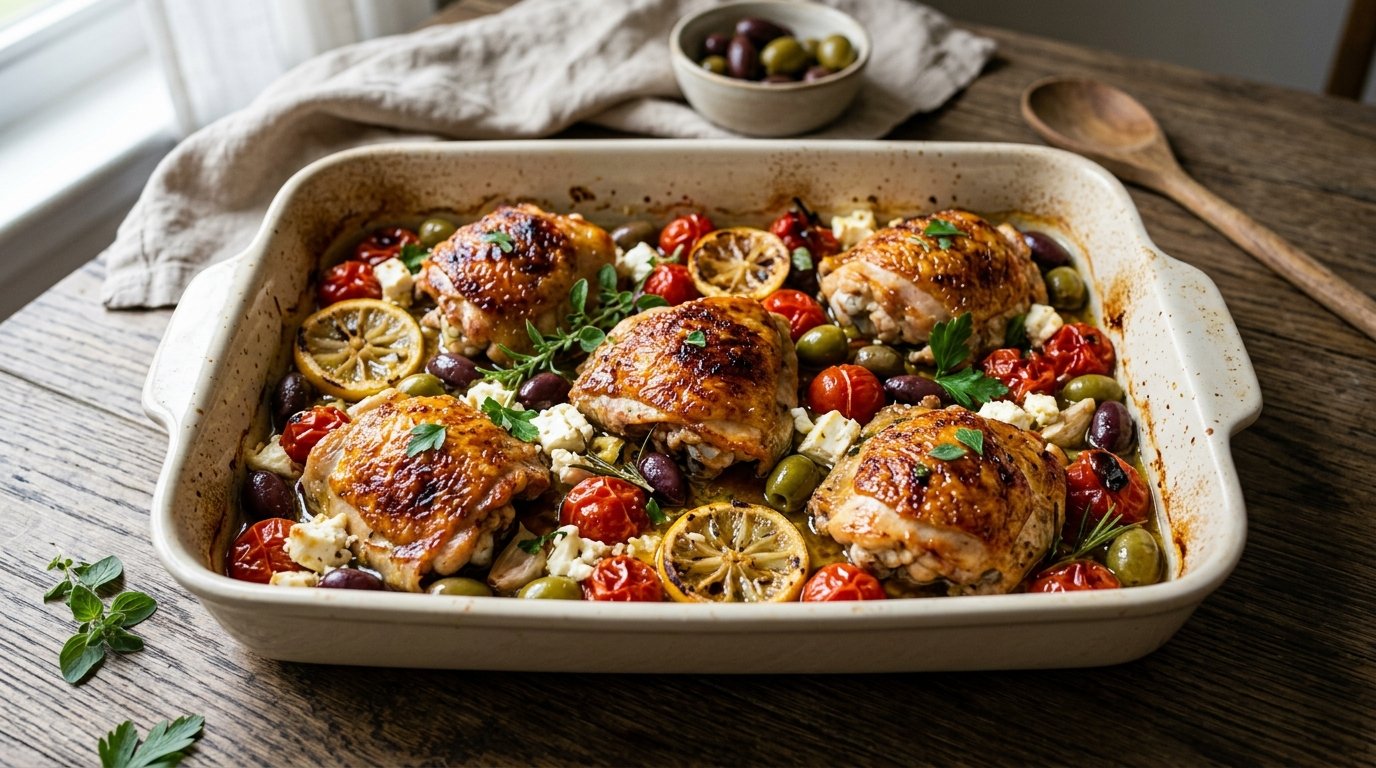
- Chicken Thigh Swap: Use boneless skinless chicken thighs. Increase cook time to 30-35 mins. Ensure internal temp 165°F. Juicier than breast for roasting.
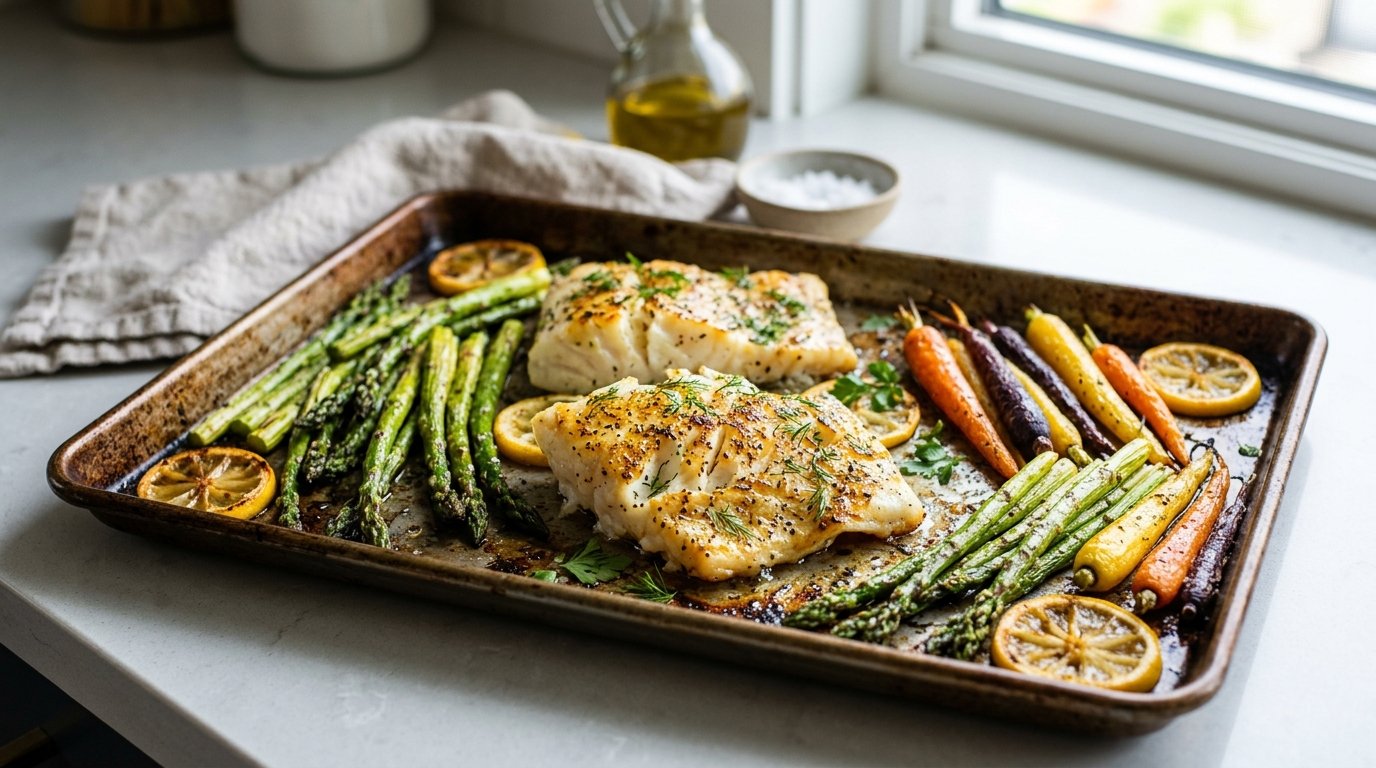
- Shrimp & Asparagus: Replace salmon with shrimp (cook 8-10 mins) + asparagus spears. Lighter, quicker protein. Springtime variation.
- Extra Cheesy Finish: Sprinkle feta/goat cheese over hot dish post-bake. Let melt 2 mins. Creamy tang contrasts salty olives. Indulgent twist.
- Low-Carb/Keto Boost: Add avocado slices post-bake. Increase olive oil. Skip starchy sides. High-fat, nutrient-dense meal.
- Herb Garden Twist: Substitute thyme with oregano + basil + mint. Classic Greek profile. Fresh herbs added post-bake for maximum aroma.
What to Serve With This Recipe
- Grains: Fluffy couscous, quinoa pilaf, orzo pasta, or crusty sourdough bread for soaking up pan juices.
- Salads: Simple arugula with shaved parmesan/lemon vinaigrette. Greek salad (cucumber/tomato/olive) echoes flavors.
- Starches: Roasted baby potatoes, sweet potato mash, or polenta. Absorbs sauce wonderfully.
- Drinks: Crisp white wine (Sauvignon Blanc/Pinot Grigio), rosé, sparkling water with citrus, or iced herbal tea.
- Desserts: Light fruit sorbet, yogurt with honey/nuts, or dark chocolate square. Refreshing finish after rich main.
- Garnishes: Extra fresh herbs, lemon wedges, flaky sea salt, or chili oil drizzle for tableside customization.
Make Ahead & Meal Prep Tips
- Prep Components Ahead: Chop onions/tomatoes, pit olives, portion salmon up to 24 hours ahead. Store separately in fridge. Assemble/bake day-of for best texture.
- Marinate Salmon (Optional): Briefly marinate salmon in oil/lemon/herbs 30 mins pre-bake. Enhances flavor penetration. Don’t exceed 1 hour; acid “cooks” fish prematurely.
- Leftovers Repurpose: Flake leftover salmon into salads, grain bowls, or pasta. Pan juices make excellent dressing base. Transform yesterday’s dinner creatively.
- Freezing Not Recommended: Cooked salmon/veggies don’t freeze well (texture degrades). Best enjoyed fresh or within 2 days refrigerated.
Storage Instructions
- Refrigerator: Store cooled leftovers in airtight container up to 3 days. Separate salmon from veggies if possible to maintain texture.
- Freezer: NOT RECOMMENDED. Salmon becomes dry/grainy; veggies turn mushy upon thawing. Sauce separates. Enjoy fresh for optimal experience.
- Avoid: Storing hot food sealed (condensation = sogginess). Cool completely first. Don’t store with fresh herb garnish; add post-reheat. Discard if sour smell/off-color develops.
- Safety: Reheat to 165°F (74°C) internal temp before consuming. Never refreeze thawed leftovers. Label containers with date.
Reheating Instructions
- Oven (Best): 300°F covered with foil 10-12 mins. Gentle heat preserves moisture. Uncover last 2 mins to crisp edges. Restores texture closest to fresh.
- Air Fryer: 300°F 5-7 mins. Quick, efficient. Prevents sogginess better than microwave. Shake basket gently halfway. Spray lightly with oil if dried out.
- Microwave (Last Resort): Medium power 1-min intervals, stirring between. Adds splash of water. Expect softer texture. Only if speed > quality. Cover loosely.
- Stovetop: Skillet over low heat with splash of water/broth. Covered 3-5 mins. Gentle reheating preserves integrity. Flip salmon carefully.
- Note: Reheated dish won’t match fresh vibrancy. Accept slight softening. Always check internal temp reaches 165°F. Refresh with pinch of salt/herbs/lemon post-reheat.
Nutritional Information
Per serving (approximate):
- Calories: 480
- Protein: 34g
- Carbohydrates: 12g
- Fat: 32g
- Fiber: 3g
- Sugar: 6g
- Sodium: 580mg
Note: Values vary based on salmon portion size, olive oil amount, and olive brand. High healthy fat content from salmon/EVOO. Naturally gluten-free.
Troubleshooting Guide
| Problem | Cause | Solution |
|---|---|---|
| Dry/chalky salmon | Overcooked / Lean fish | Pull at 135°F. Choose fatty salmon. Rest 2 mins. |
| Soggy vegetables | Overcrowded pan / Low temp | Single layer only. Verify oven temp. Preheat fully. |
| Bland flavor | Underseasoned / Poor oil | Salt generously. Use good EVOO. Finish with lemon/zest. |
| Burnt onions/olives | Oven too hot / High rack | Middle rack. Tent with foil. Reduce temp to 375°F. |
| Fish sticking | Insufficient oil / Moved early | Generous oil base. Don’t move until flaky. Rest 2 mins. |
| Bitter lemon taste | Added pre-bake | ALWAYS add lemon post-oven. Zest pre-bake OK. |
Frequently Asked Questions
1. Can I use frozen salmon? Yes, but thaw completely in fridge overnight first. Pat VERY dry before seasoning. Frozen fish releases more water; may need extra cook time 3-5 mins. Texture slightly less firm than fresh.
2. Why did my salmon release white stuff (albumin)? Normal protein coagulation. Indicates fish is cooking. Excessive albumin means overcooked or high heat. Reduce temp next time. Wipe off before serving if unappealing; harmless.
3. Can I make this vegan? Absolutely. Substitute salmon with firm tofu cubes or chickpeas. Marinate tofu in soy/lemon/oil first. Same veggie base. Equally delicious plant-based option. Adjust cook time for tofu (20-25 mins).
4. How do I prevent onions from burning? Slice uniformly 1/4″. Toss thoroughly in oil. Place on bottom layer, not exposed top. Tent with foil if browning too fast. Lower rack position helps. Monitor last 5 mins closely.
5. Is skin-on salmon better for this recipe? Yes! Skin protects flesh from direct heat, keeps it moist. Gets crispy if oil-hot enough. Eat skin or discard; flesh underneath stays perfect. Skinless works too; just watch cook time closely.
6. Can I add other vegetables? Yes! Bell peppers, zucchini, asparagus, or artichoke hearts work well. Add based on cook time: harder veg (peppers) with onions; softer (zucchini) with tomatoes. Maintain single-layer principle.
7. Why is my dish too salty? Olives + salted salmon + seasoned oil = sodium overload. Next time: rinse olives briefly. Reduce added salt. Use unsalted salmon. Balance with extra lemon/tomatoes. Taste before salting!
8. Can I use dried herbs instead of fresh thyme? Yes, but use 1/3 amount (1 tsp dried = 1 tbsp fresh). Add dried herbs WITH oil before baking to rehydrate. Fresh herbs added post-bake retain brighter flavor. Both work; adjust quantity.
Final Thoughts
Creating this Mediterranean Baked Salmon is a celebration of simplicity done right. It reminds us that exceptional meals don’t require elaborate techniques or endless ingredients—just quality produce, thoughtful seasoning, and respect for the cooking process. The act of tossing hot salmon with blistered vegetables and bright lemon juice connects us to centuries of coastal culinary tradition while fitting seamlessly into modern busy lives. Whether you’re feeding a family, meal prepping for the week, or simply treating yourself to a nourishing dinner, this dish delivers joy in every bite. We encourage you to experiment with variations, share your creations, and join our community of home cooks who celebrate wholesome, flavorful eating. Tag us, leave comments, rate the recipe—your feedback inspires others to try this gem. Now grab that baking dish and start roasting; your taste buds (and schedule) will thank you!