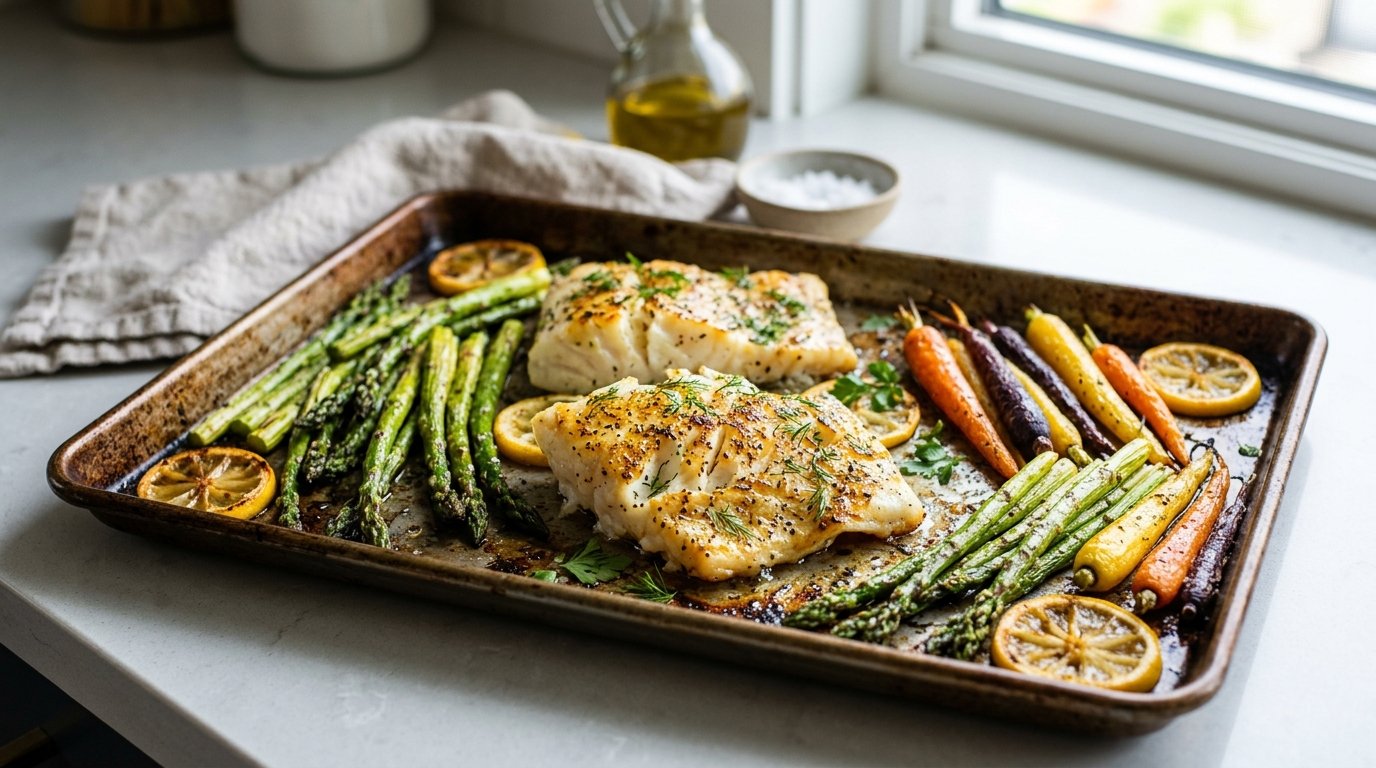
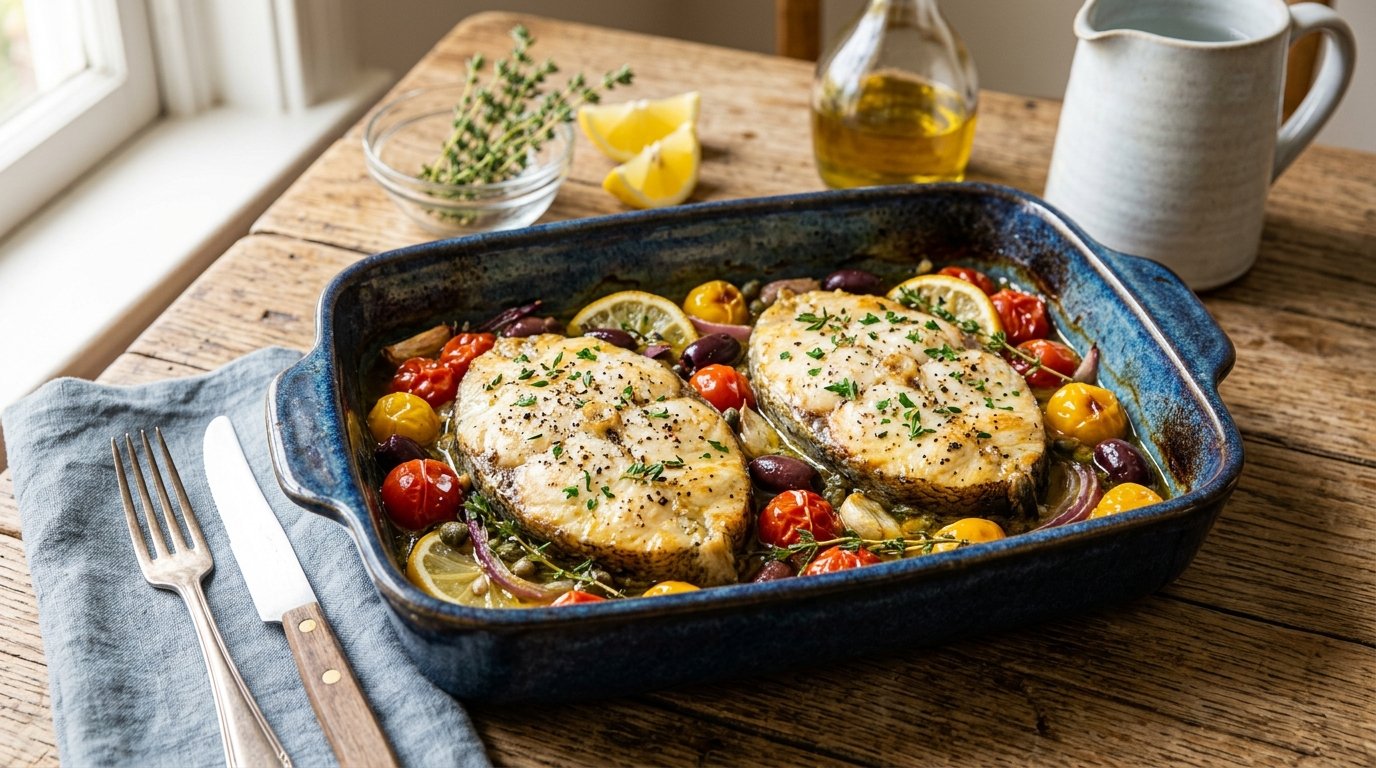
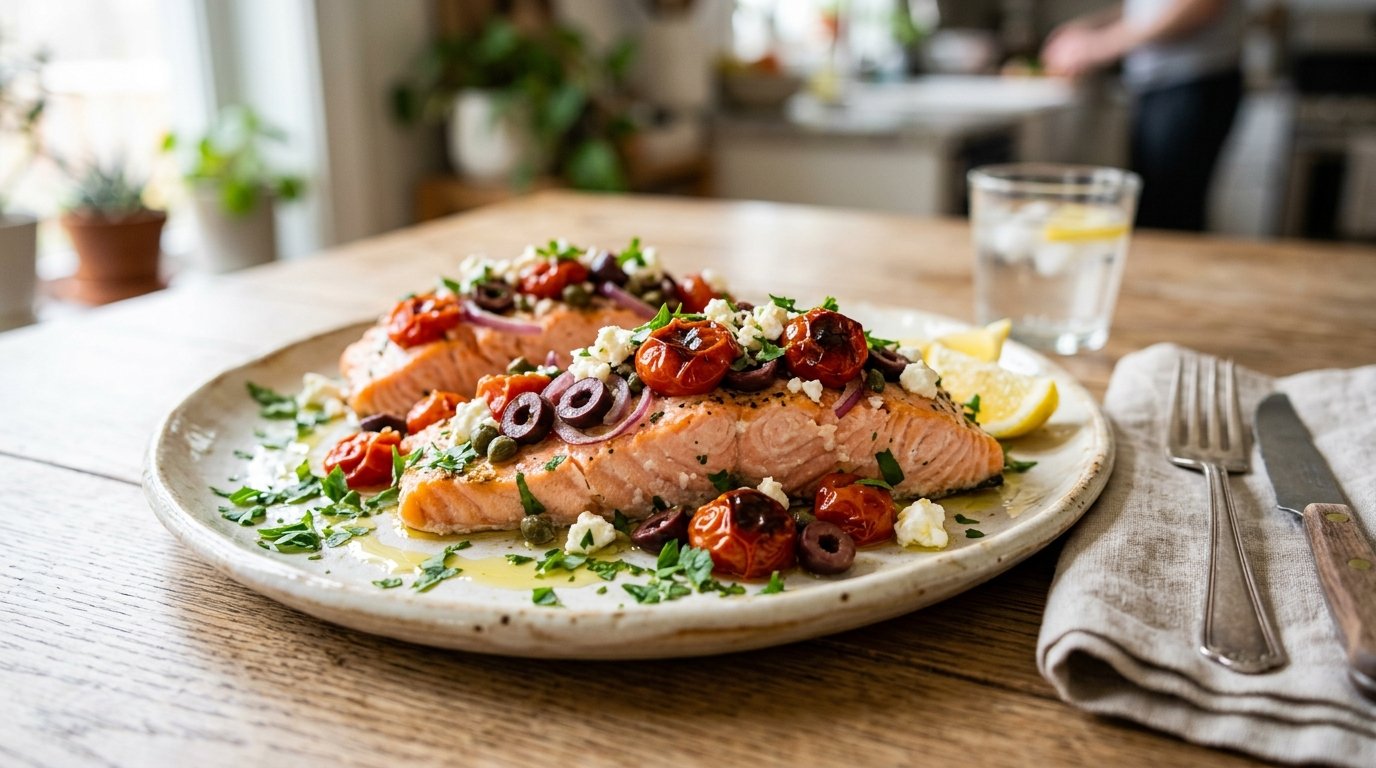
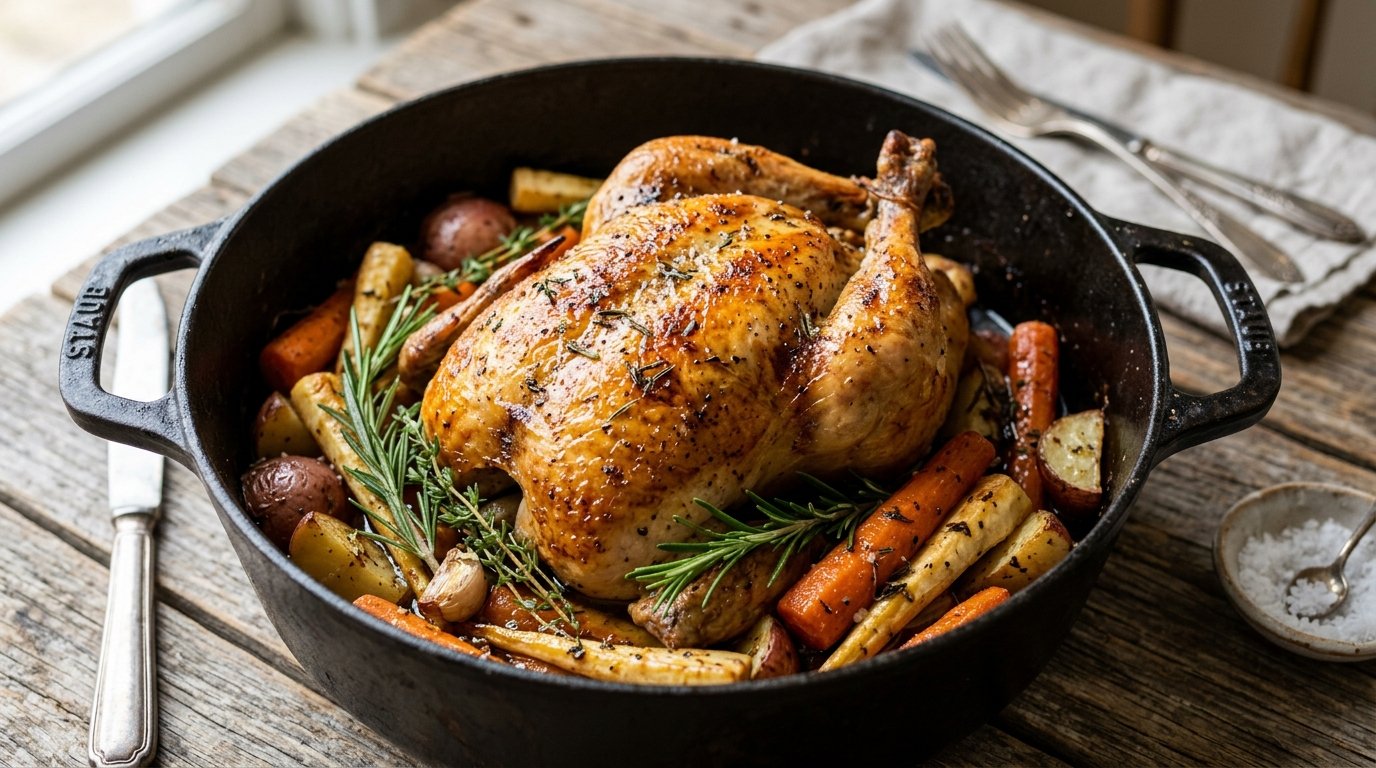
This dish exemplifies the beauty of efficient cooking. By sautéing aromatics first to build a flavor foundation, then roasting the seasoned fish directly atop them, you create a self-basting environment that keeps the seafood succulent. The asparagus, leeks, cherry tomatoes, and garlic not only serve as a colorful bed but also infuse the fish with herbal brightness as they caramelize in the oven. Served straight from the skillet, this meal brings the warmth of a seaside taverna to your dining table with remarkable ease.
If you have ever hesitated to cook a whole fish at home due to fear of overcooking or messy preparation, this One-Pan Roasted Fish recipe is designed to change your perspective. The video demonstration highlights a crucial technique: scoring the fish before seasoning. These diagonal cuts do more than look professional; they allow heat to penetrate the thickest parts of the fish evenly, ensuring the backbone area cooks at the same rate as the thinner tail. Combined with a generous rub of olive oil, salt, and pepper, this step guarantees flavorful, perfectly textured flesh all the way to the bone.
The one-pan approach is not just about convenience; it is a culinary strategy. As the fish roasts, its natural juices mingle with the olive oil and vegetable moisture, creating a rich, emulsified sauce at the bottom of the skillet. The leeks sweeten, the tomatoes burst, and the asparagus tenderizes, all while absorbing the essence of the sea. This symbiotic cooking process means every component enhances the other, resulting in a dish that feels cohesive and thoughtfully composed rather than simply assembled. It is wholesome, visually stunning, and deeply satisfying.
Why This Recipe Works
From a food science standpoint, success here relies on thermal mass management and moisture retention. Whole fish are dense and irregularly shaped; without scoring, the exterior often dries out before the interior reaches a safe temperature. The cuts increase surface area for seasoning absorption and create channels for heat transfer, effectively reducing the thermal gradient across the fillet. Additionally, placing the fish on a bed of vegetables acts as a natural trivet. This elevates the skin slightly above direct contact with the hottest part of the pan, preventing burning while allowing steam from the vegetables to gently cook the underside, keeping it moist.
The sequence of operations—sautéing vegetables before adding the fish—is equally critical. Raw vegetables release significant water when heated. If placed under the fish cold, they would steam the skin, making it soggy and unappealing. By sautéing them first, we drive off excess surface moisture and initiate caramelization. When the fish joins the pan, the vegetables are already partially cooked and stable, providing a flavorful, non-soggy base that supports the protein throughout the roasting process. This attention to detail ensures crispy skin, juicy flesh, and perfectly tender vegetables in every bite.
Why You’ll Love This Recipe
Minimal Cleanup: Everything cooks in a single oven-safe skillet, eliminating multiple pots and pans.
Restaurant Presentation: Serving a whole fish feels special and impressive, yet the technique is straightforward.
Balanced Nutrition: Provides lean protein, healthy fats from olive oil, and fiber-rich vegetables in one complete meal.
Flavor Infusion: The fish steams in its own juices and aromatic vegetable vapors, maximizing taste without heavy sauces.
Versatile Vegetables: Easily adaptable based on seasonal availability or personal preference.
Quick Weeknight Option: Despite looking elaborate, active prep time is under 20 minutes.
Ingredient Notes
Whole White Fish (Sea Bream/Branzino/Snapper)
Purpose: The centerpiece protein. Mild, flaky white fish with firm texture holds up well to roasting.
Substitutions: Trout, mackerel, or red snapper. Avoid delicate flatfish like sole which may fall apart.
Buying Tips: Ask your fishmonger to clean, scale, and gut the fish. Eyes should be clear/bulging, gills bright red, flesh firm/springy. Smell should be oceanic, not ammonia-like. Size: 1-1.5 lbs ideal for standard skillets.
Storage Tips: Use within 1-2 days of purchase. Store on ice in colander over bowl in fridge (drainage prevents sogginess). Pat dry thoroughly before cooking.
Asparagus
Purpose: Adds earthy flavor, vibrant green color, and textural contrast. Cooks quickly, matching fish timing.
Substitutions: Green beans, broccolini, or zucchini spears. Adjust cook time if using harder veg like carrots/potatoes (par-cook first).
Buying Tips: Choose stalks with tight, closed tips and firm stems. Avoid woody, limp, or yellowing spears. Thickness should match leek/tomato size for even roasting.
Storage Tips: Trim ends, stand upright in jar with inch of water, cover loosely with bag. Refrigerate up to 5 days. Wash just before use.
Leeks
Purpose: Mild onion sweetness that complements fish without overpowering. Rings hold shape and trap juices.
Buying Tips: Select firm, straight stalks with dark green tops and white bases. Avoid slimy, wilted, or cracked layers. Smaller leeks are often more tender/less fibrous.
Storage Tips: Store unwashed in plastic bag in crisper up to 1 week. Wash THOROUGHLY before use; dirt hides between layers. Slice, soak in water, drain to remove grit.
Cherry Tomatoes
Purpose: Burst of acidity/sweetness. Juices deglaze pan and add moisture to prevent drying.
Buying Tips: Look for plump, shiny skins with no wrinkles/soft spots. Vine-ripened often have superior flavor. Uniform size ensures even bursting.
Storage Tips: Store at room temperature away from direct sun. Refrigeration destroys texture/flavor. Use within 3-5 days of ripeness.
Garlic Cloves
Purpose: Aromatic depth. Whole cloves mellow during roasting, becoming sweet/spreadable.
Substitutions: Minced garlic (add later to prevent burning), shallots, or omit if sensitive.
Buying Tips: Firm heads with tight, papery skins. Avoid sprouting, soft, or moldy cloves. Freshness = potency.
Storage Tips: Keep in cool, dark, ventilated place. Do NOT refrigerate (humidity causes mold). Peeled cloves keep 1 week in oil (refrigerated); freeze minced garlic for convenience.
Extra Virgin Olive Oil
Purpose: Cooking fat, flavor carrier, and finishing element. Essential for Mediterranean profile.
Substitutions: Avocado oil (neutral, high heat), regular olive oil (lighter flavor). Avoid butter (burns at roasting temps).
Buying Tips: Dark glass bottle protects from light degradation. Harvest date within 18 months. Taste should be fruity, peppery, not rancid. Cold-pressed preferred.
Storage Tips: Store cool, dark place. Never refrigerate (clouds/solidifies). Use within 6 months of opening for peak flavor. Rancid oil ruins delicate dishes.
Fresh Rosemary & Thyme
Purpose: Woody herbs withstand high heat, releasing piney/citrus notes that pair classically with fish.
Substitutions: Oregano, marjoram, or dried herbs (use 1/3 amount, add earlier). Parsley/dill (add post-roast for freshness).
Buying Tips: Vibrant green needles/leaves, no yellowing/wilting. Smell should be potent/aromatic. Avoid bundled herbs tied tightly (promotes decay).
Storage Tips: Wrap in damp paper towel, store in bag in fridge up to 1 week. Freeze sprigs in oil for long-term. Add woody herbs early; delicate herbs late.
Kitchen Equipment
Oven-Safe Skillet (12-inch): Cast iron or stainless steel essential. Must transition from stovetop (sauté) to oven (roast) seamlessly. Non-stick often not oven-safe >400°F.
Sharp Chef’s Knife: For scoring fish cleanly and prepping vegetables uniformly. Dull knives tear skin/flesh.
Cutting Board: Stable surface for safe knife work. Separate boards for raw fish vs. produce if cross-contamination concern.
Tongs: For turning vegetables during sauté and handling hot fish safely. Silicone-tipped protects skillet surface.
Paper Towels: Critical for drying fish thoroughly before seasoning. Moisture = steam = soggy skin.
Measuring Spoons/Cups: For consistent oil/seasoning ratios. Precision matters in balancing salty fish with mild veg.
Instant-Read Thermometer: Ensures fish reaches safe 145°F (63°C) without overcooking. Visual cues can be misleading with whole fish.
Serving Platter (Optional): If transferring from skillet. Warm platter prevents rapid cooling.
Preparation Information
Prep Time: 15 Minutes
Cook Time: 25-30 Minutes
Total Time: 45 Minutes
Servings: 2-4
Step-by-Step Instructions
H3: Sauté Veggies
Heat 2 tbsp olive oil in oven-safe skillet over medium-high heat. Add asparagus, sliced leeks, cherry tomatoes, and whole garlic cloves. Sauté 5-7 minutes, stirring occasionally, until vegetables begin to soften and develop light golden spots. Season lightly with salt/pepper.
Why it matters: Pre-cooking removes excess moisture, preventing soggy fish skin. Caramelization builds flavor foundation. Light seasoning draws out veggie juices, enhancing pan sauce later.
Visual Cue: Vegetables glisten with oil. Leeks translucent at edges. Tomatoes slightly wrinkled but intact. Golden-brown spots visible on asparagus/leeks.
Texture Cue: Veggies tender-crisp, not mushy or raw-hard. Garlic fragrant but not browned/burnt.
Aroma Cue: Sweet onion/garlic scent mixes with grassy asparagus. No acrid/burnt smell indicates proper temp control.
Common Mistake: Overcrowding pan steams instead of sautés. Work in batches if needed. Don’t rush; proper browning takes time. Undercooking veggies leads to raw centers after fish roast time.
Pro Tip: Push veggies to sides/create well in center before adding fish. Ensures direct contact between fish belly and hot pan for even cooking.
H3: Score & Season Fish
Pat fish EXTREMELY dry inside/outside with paper towels. Using sharp knife, make 3-4 diagonal slashes (1/2 inch deep) on each side, cutting through skin into flesh. Rub generously with remaining olive oil, coarse salt, and black pepper. Massage seasoning into slashes/cavity.
Why it matters: Dry skin = crispy skin. Slashes allow heat penetration + seasoning absorption. Oil conducts heat + prevents sticking. Salt penetrates flesh during rest/cook.
Visual Cue: Skin matte/dry before oiling. Slashes clean/even, not jagged. Oil glistens uniformly. Salt crystals visible in cuts.
Texture Cue: Flesh firm, not slimy. Skin taut, not loose/wrinkled.
Mistake to Avoid: Cutting too deep hits bone, weakening structure. Too shallow = ineffective. Aim for 1/2 inch depth. Don’t skip drying step; wet fish steams, never crisps.
Tip: Let seasoned fish sit 5-10 mins at room temp before roasting. Allows salt to penetrate, reduces thermal shock in oven.
H3: Assemble in Pan
Nestle scored fish atop sautéed vegetables in skillet. Tuck fresh rosemary/thyme sprigs into cavity and around fish. Drizzle any remaining oil over fish/veg. Ensure fish sits securely, not tilted.
Why it matters: Vegetable bed elevates fish, promotes air circulation underneath. Herbs infuse steam with aroma during roast. Even placement ensures uniform cooking.
Visual Cue: Fish centered, stable. Herbs visible, not buried. Vegetables surround/support fish evenly. No pooling oil in one spot.
Texture Cue: Fish rests firmly on veg bed. Herbs springy, not crushed.
Safety Note: Handle fish gently to avoid tearing skin. Use wide spatula/tongs for transfer. Ensure skillet handle is oven-safe (wrap in foil if plastic/rubber).
H3: Roast Until Flaky
Transfer skillet to preheated 400°F (200°C) oven. Roast 20-25 minutes (depending on size) until fish flakes easily with fork and internal temp reaches 145°F (63°C). Vegetables should be tender/caramelized. Rest 5 minutes before serving.
Why it matters: High heat renders fat, crisps skin, cooks fish quickly to retain moisture. Resting allows juices to redistribute, preventing dryness. Carryover cooking raises temp 5-10°F.
Visual Cue: Skin golden-brown/crisp. Flesh opaque white, pulls away from bone easily. Vegetables blistered/softened. Juices bubble gently in pan.
Doneness Test: Fork twists into thickest part near bone; flakes separate effortlessly. Thermometer reads 145°F. Eyes turn white/cloudy (traditional sign). Remove immediately; residual heat continues cooking.
Expert Tips
Fish Selection is Key: Ask fishmonger for “pan-sized” whole fish (1-1.5 lbs). Larger fish require longer cook times, risking dry veggies. Smaller fish cook too fast, leaving veg raw. Branzino/sea bream ideal for this method.
Dryness = Crispiness: Cannot overstate importance. Pat fish dry MULTIPLE times. Leave uncovered in fridge 30 mins before cooking if very moist. Wet skin = rubbery, pale result.
Vegetable Size Consistency: Cut all veg to similar size. Asparagus trimmed to fit pan. Leeks 1/2-inch rings. Tomatoes whole. Uniformity ensures even roasting alongside fish.
Herb Timing Strategy: Woody herbs (rosemary/thyme) added pre-roast withstand heat. Delicate herbs (parsley/dill) added POST-roast preserve freshness/color. Never mix timing; each serves different purpose.
Pan Choice Matters: Cast iron retains heat best, promotes browning. Stainless steel works but may stick if not well-oiled. Avoid thin aluminum/non-stick; uneven heat = patchy cooking.
Common Mistakes
Soggy Fish Skin: Wet fish or overcrowded pan. Fix: Pat EXTREMELY dry. Sauté veggies first to remove moisture. Ensure space around fish for air circulation.
Overcooked/Dry Fish: Left in oven too long or no resting period. Fix: Use thermometer (pull at 140°F). Rest 5 mins minimum. Account for carryover cooking.
Raw Vegetables: Insufficient sauté time or large chunks. Fix: Sauté until tender-crisp BEFORE adding fish. Cut veg uniformly. Par-cook hard veg (potatoes/carrots) separately if using.
Burnt Herbs/Garlic: Added too early or oven too hot. Fix: Use woody herbs for roasting. Add delicate herbs post-cook. Monitor oven temp; 400°F ideal. Tent with foil if browning too fast.
Sticking to Pan: Insufficient oil or moved too early. Fix: Generous oil on fish/pan. Don’t move fish until fully cooked/flaky. Use well-seasoned cast iron. Let rest 2 mins before lifting.
Recipe Variations
Spicy Harissa Twist: Rub fish with harissa paste + lemon zest before roasting. Add chili flakes to veggies. North African heat complements mild fish beautifully.
Vegan Adaptation: Replace fish with firm tofu block or cauliflower steak. Marinate in soy/lemon/oil first. Same veggie base. Equally delicious plant-based option. Adjust cook time (tofu 20 mins, cauliflower 25-30 mins).
Chicken Thigh Swap: Use boneless skinless chicken thighs. Increase cook time to 30-35 mins. Ensure internal temp 165°F. Juicier than breast for roasting. Veggie base remains same.
Shrimp & Scallop Upgrade: Replace whole fish with large shrimp/scallops. Reduce cook time to 8-10 mins. Delicate seafood needs less heat. Veggie sauté time unchanged. Elegant surf variation.
Extra Cheesy Finish: Sprinkle feta/goat cheese over hot dish post-roast. Let melt 2 mins. Creamy tang contrasts salty fish. Indulgent Mediterranean twist.
Citrus Herb Brightener: Add orange/lemon slices to cavity + extra thyme. Zest over finished dish. Refreshing, aromatic profile perfect for spring/summer.
What to Serve With This Recipe
Grains: Fluffy couscous, quinoa pilaf, orzo pasta, or crusty sourdough bread for soaking up pan juices.
Drinks: Crisp white wine (Sauvignon Blanc/Pinot Grigio), rosé, sparkling water with citrus, or iced herbal tea.
Desserts: Light fruit sorbet, yogurt with honey/nuts, or dark chocolate square. Refreshing finish after rich main.
Garnishes: Lemon wedges, flaky sea salt, fresh parsley/dill, or chili oil drizzle for tableside customization.
Make Ahead & Meal Prep Tips
Prep Components Ahead: Clean/score fish, chop veggies up to 24 hours ahead. Store separately in fridge. Assemble/saute/roast day-of for best texture.
Marinate Fish (Optional): Briefly marinate fish in oil/lemon/herbs 30 mins pre-roast. Enhances flavor penetration. Don’t exceed 1 hour; acid “cooks” fish prematurely.
Leftovers Repurpose: Flake leftover fish into salads, grain bowls, or pasta. Pan juices make excellent dressing base. Transform yesterday’s dinner creatively.
Freezing Not Recommended: Cooked fish/veggies don’t freeze well (texture degrades). Best enjoyed fresh or within 2 days refrigerated.
Storage Instructions
Refrigerator: Store cooled leftovers in airtight container up to 3 days. Separate fish from veggies if possible to maintain texture.
Freezer: NOT RECOMMENDED. Fish becomes dry/grainy; veggies turn mushy upon thawing. Sauce separates. Enjoy fresh for optimal experience.
Avoid: Storing hot food sealed (condensation = sogginess). Cool completely first. Don’t store with fresh herb garnish; add post-reheat. Discard if sour smell/off-color develops.
Safety: Reheat to 165°F (74°C) internal temp before consuming. Never refreeze thawed leftovers. Label containers with date.
Reheating Instructions
Oven (Best): 300°F covered with foil 10-12 mins. Gentle heat preserves moisture. Uncover last 2 mins to crisp skin. Restores texture closest to fresh.
Air Fryer: 300°F 5-7 mins. Quick, efficient. Prevents sogginess better than microwave. Shake basket gently halfway. Spray lightly with oil if dried out.
Microwave (Last Resort): Medium power 1-min intervals, stirring between. Adds splash of water. Expect softer texture. Only if speed > quality. Cover loosely.
Stovetop: Skillet over low heat with splash of water/broth. Covered 3-5 mins. Gentle reheating preserves integrity. Flip fish carefully.
Note: Reheated dish won’t match fresh vibrancy. Accept slight softening. Always check internal temp reaches 165°F. Refresh with pinch of salt/herbs/lemon post-reheat.
Nutritional Information
Per serving (approximate, based on 1 lb fish / 4 servings):
Calories: 380
Protein: 32g
Carbohydrates: 12g
Fat: 24g
Fiber: 4g
Sugar: 5g
Sodium: 420mg
Note: Values vary based on fish size, olive oil amount, and vegetable proportions. High healthy fat content from EVOO/fish. Naturally gluten-free.
Troubleshooting Guide
Problem
Cause
Solution
Soggy fish skin
Wet fish / Overcrowded pan
Pat EXTREMELY dry. Sauté veggies first. Ensure space around fish.
Dry/overcooked fish
Left in too long / No rest
Pull at 140°F. Rest 5 mins. Account for carryover.
Raw vegetables
Insufficient sauté / Large chunks
Sauté until tender-crisp. Cut uniformly. Par-cook hard veg.
Burnt herbs/garlic
Added too early / Oven too hot
Use woody herbs pre-roast. Add delicate herbs post. Monitor temp.
Sticking to pan
Insufficient oil / Moved early
Generous oil. Don’t move until flaky. Use seasoned cast iron.
Bland flavor
Underseasoned / Poor quality
Salt generously. Use fresh herbs/EVOO. Finish with lemon/zest.
Frequently Asked Questions
1. Can I use frozen whole fish? Yes, but thaw COMPLETELY in fridge overnight first. Pat VERY dry before seasoning. Frozen fish releases more water; may need extra cook time 3-5 mins. Texture slightly less firm than fresh.
2. Why did my fish skin stick to the pan? Insufficient oil, wet skin, or moved too early. Next time: pat fish bone-dry. Use generous oil. Don’t move fish until fully cooked/flaky. Let rest 2 mins before lifting. Well-seasoned cast iron helps immensely.
3. Can I make this vegan? Absolutely. Substitute fish with firm tofu block or cauliflower steak. Marinate tofu in soy/lemon/oil first. Same veggie base. Equally delicious plant-based option. Adjust cook time (tofu 20 mins, cauliflower 25-30 mins).
4. How do I know when fish is done without thermometer? Fork test: Insert into thickest part near bone; twist gently. Flesh should flake easily/opaque white. Eyes turn white/cloudy. Flesh pulls away from bone. Visual/tactile cues reliable with practice. Thermometer always safest.
5. Can I add other vegetables? Yes! Bell peppers, zucchini, fennel, or artichoke hearts work well. Add based on cook time: harder veg (peppers/fennel) with initial sauté; softer (zucchini) with tomatoes. Maintain single-layer principle.
6. Why is my dish too salty? Fish naturally salty + seasoned veggies + briny olives (if added) = sodium overload. Next time: rinse olives briefly. Reduce added salt. Taste before salting! Balance with lemon/tomatoes.
7. Can I use dried herbs instead of fresh rosemary/thyme? Yes, but use 1/3 amount (1 tsp dried = 1 tbsp fresh). Add dried herbs WITH oil before roasting to rehydrate. Fresh herbs added post-roast retain brighter flavor. Both work; adjust quantity.
8. What fish works best for this recipe? Whole sea bream (branzino), snapper, trout, or mackerel. Mild, firm-fleshed white fish ideal. Avoid delicate flatfish (sole/flounder) which may fall apart. Ask fishmonger for “pan-sized” (1-1.5 lbs).
Final Thoughts
Mastering One-Pan Roasted Fish is more than learning a recipe—it’s embracing the philosophy that exceptional meals emerge from respecting ingredients and technique. The sizzle of vegetables hitting hot oil, the aroma of rosemary mingling with sea breeze, the satisfaction of that first flaky bite—these moments connect us to centuries of coastal culinary tradition while remaining utterly accessible today. This dish reminds us that comfort doesn’t require complexity; it demands attention, patience, and love. We encourage you to seek out the freshest fish your market offers, experiment with seasonal vegetables, and share your creations. Tag us, leave comments, rate the recipe—your feedback fuels our community and inspires fellow home cooks. Now grab that skillet and start roasting; your taste buds (and schedule) will thank you profoundly.