There is a profound difference between boiling vegetables and roasting them, and nowhere is this distinction more transformative than in soup making. This Roasted Vegetables Soup is not merely a puree of cooked produce; it is a celebration of caramelization, depth, and concentrated flavor that can only be achieved through high-heat oven cooking. By tossing cherry tomatoes, red onions, bell peppers, and whole garlic cloves in olive oil and herbs before roasting, we unlock sugars and develop complex Maillard reaction compounds that boiling simply cannot replicate.
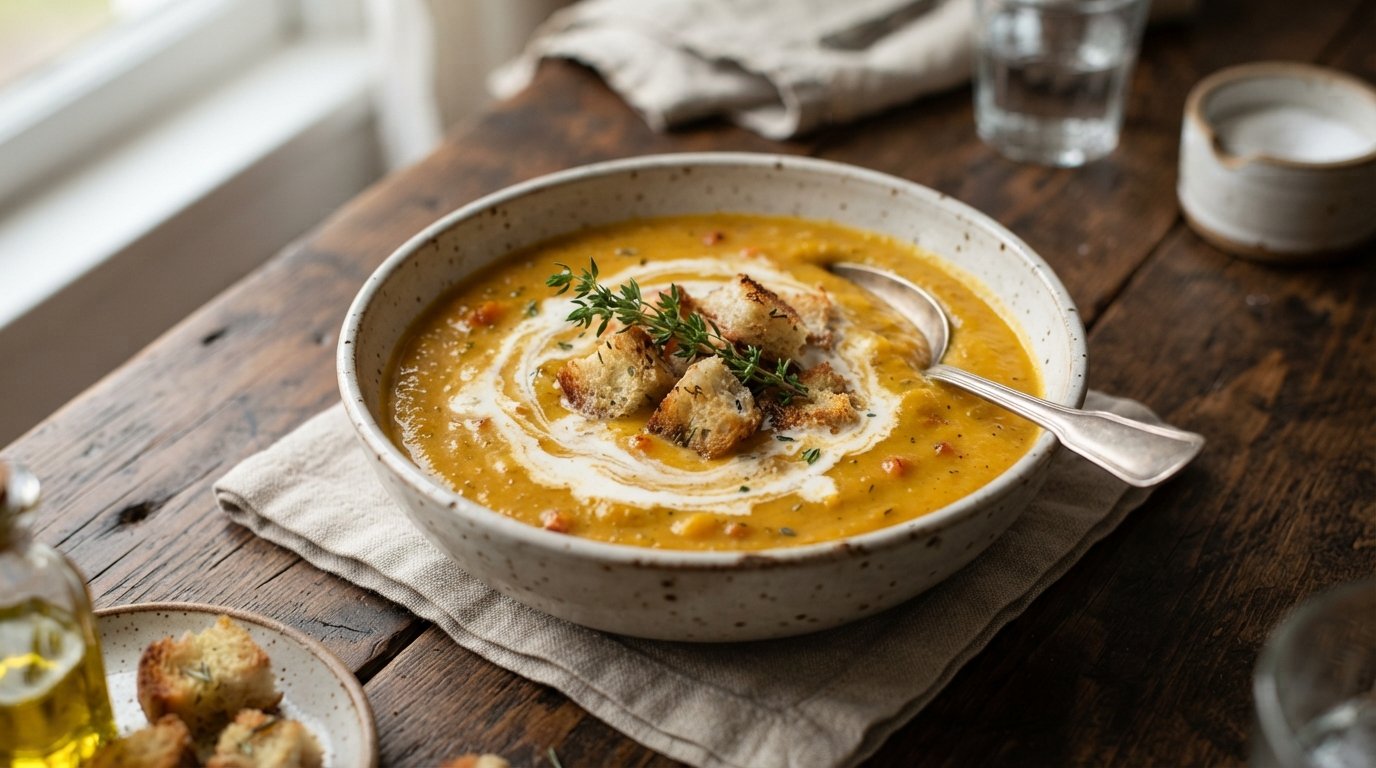
The result is a velvety, vibrant orange-gold soup that tastes like summer captured in a bowl. Unlike traditional vegetable soups that can sometimes taste watery or one-dimensional, this method ensures every spoonful has a rich, savory backbone balanced by the natural sweetness of roasted tomatoes and peppers. Whether you are looking for a comforting weeknight dinner, an elegant starter for a dinner party, or a way to use up a bounty of garden vegetables, this recipe delivers restaurant-quality results with minimal hands-on effort. It is vegan-friendly, naturally gluten-free, and deeply satisfying without relying on heavy creams or artificial thickeners.
Why This Recipe Works
The success of this Roasted Vegetables Soup lies in the chemistry of heat application. When vegetables are submerged in water, their temperature never exceeds 212°F (100°C). At this temperature, cell walls break down and flavors leach into the liquid, often resulting in a diluted taste. Roasting, however, exposes vegetables to temperatures of 400°F (200°C) or higher. This intense dry heat drives off moisture, concentrating the natural sugars and acids within the produce.
Simultaneously, the amino acids and reducing sugars on the surface of the vegetables undergo the Maillard reaction, creating hundreds of new flavor compounds responsible for nutty, toasted, and savory notes. The garlic, left whole in its skin or peeled but intact, becomes sweet and mellow rather than pungent. The red onion loses its sharp bite and transforms into a jammy, sweet base. When these deeply flavored components are blended with their own roasted juices and a touch of broth, they create an emulsion that is inherently thick and creamy without needing dairy. The starch from the vegetables themselves acts as a natural stabilizer, giving the soup a luxurious mouthfeel that feels indulgent yet remains light and wholesome.
Why You’ll Love This Recipe
Explosive Flavor: Roasting concentrates taste far beyond what stovetop simmering can achieve, creating a soup that is rich, sweet, and savory all at once.
Hands-Off Cooking: Once the vegetables are tossed and in the oven, you have 40+ minutes of free time. No standing over a stirring pot required.
Naturally Creamy Texture: The pectin and fibers from roasted tomatoes and peppers blend into a silk-smooth consistency without heavy cream or flour.
Vegan & Gluten-Free Friendly: A complete comfort meal that fits almost any dietary restriction without compromise.
Versatile Base: The fundamental technique works with whatever seasonal vegetables you have on hand, making it a zero-waste kitchen hero.
Visual Appeal: The vibrant color and glossy texture make it stunningly photogenic, perfect for sharing or impressing guests.
Budget Conscious: Uses affordable, accessible ingredients that stretch into a hearty meal for a crowd.
Ingredient Notes
Cherry Tomatoes (Red & Yellow)
Purpose: Provide acidity, sweetness, body, and vibrant color. Their high water content creates the soup’s liquid base when roasted.
Substitutions: Roma or plum tomatoes (quartered), canned whole peeled tomatoes (drained), or sun-dried tomatoes (rehydrated) for deeper intensity.
Buying Tips: Choose firm, glossy tomatoes with no wrinkles. Heirloom varieties add complexity but standard cherry tomatoes work perfectly. Smell them; they should have a distinct vine aroma.
Storage Tips: Store at room temperature, never refrigerate. Cold destroys flavor compounds and makes texture mealy. Use within 3-5 days.
Red Onion
Purpose: Adds sweetness, depth, and sulfurous complexity that balances tomato acidity. Turns jammy and mild when roasted.
Substitutions: Yellow onion (milder), shallots (more delicate), or leeks (white parts only). Avoid white onion which lacks sweetness.
Buying Tips: Choose heavy, firm bulbs with dry, papery skins. Avoid sprouting or soft spots. Larger onions are easier to cut into wedges that hold shape.
Storage Tips: Store in cool, dark, dry place with ventilation. Keep away from potatoes (ethylene gas causes spoilage). Lasts 2-3 months properly stored.
Substitutions: Orange or yellow peppers (sweeter), poblano (smokier/milder heat), or roasted red peppers from jar (reduce roasting time).
Buying Tips: Select heavy, firm peppers with taut skin and green stems. Wrinkled skin indicates age and bitterness. Red peppers are fully ripe and sweetest.
Storage Tips: Refrigerate in crisper drawer up to 1 week. Do not wash until ready to use; moisture accelerates decay.
Garlic Cloves
Purpose: Provides aromatic foundation and umami. Whole cloves roast to sweet, spreadable paste rather than burning.
Substitutions: Granulated garlic (1/4 tsp per clove), garlic powder (use sparingly), or roasted garlic paste from jar. Fresh is always superior.
Buying Tips: Choose firm, plump heads with tight, unbroken skins. Avoid green sprouts inside cloves (indicates age/bitterness). Organic often has better flavor.
Storage Tips: Store whole head in mesh bag in cool, dark place. Separated cloves last 1-2 weeks. Peeled minced garlic in oil lasts 1 week refrigerated (food safety note: keep cold).
Olive Oil & Fresh Herbs
Purpose: Lubricates vegetables for even browning, carries fat-soluble flavors, and adds richness. Herbs provide fresh aromatic lift.
Substitutions: Avocado oil (higher smoke point), melted butter (non-vegan), or ghee. Dried oregano/thyme if fresh unavailable (use 1/3 amount).
Buying Tips: Extra virgin olive oil for finishing/flavor; regular olive oil for roasting is fine. Fresh herbs should be vibrant, not wilted or slimy.
Storage Tips: Oil in cool, dark place. Herbs wrapped in damp paper towel in fridge crisper. Freeze excess herbs in oil ice cubes for later use.
Vegetable Broth & Seasoning
Purpose: Adjusts consistency, adds savory depth, and seasons throughout. Salt enhances natural vegetable flavors.
Substitutions: Water + bouillon, mushroom broth (umami boost), or reserved roasting pan drippings. Kosher salt preferred for even distribution.
Buying Tips: Low-sodium broth allows control over seasoning. Check labels for MSG/additives if sensitive. Freshly cracked black pepper essential.
Storage Tips: Broth freezes well in portions. Salt keeps indefinitely. Pepper loses potency after 6 months; replace regularly.
Kitchen Equipment
Large Rimmed Baking Sheet: Essential for single-layer roasting. Rim prevents oil/juice runoff. Half-sheet size (18×13″) ideal for this quantity.
Parchment Paper or Silicone Mat: Prevents sticking and simplifies cleanup. Direct contact with metal can cause scorching on sugary vegetables.
Large Pot or Dutch Oven: For combining roasted veggies with broth and blending. Heavy bottom prevents scorching during final simmer.
Immersion Blender (Stick Blender): Crucial for smooth texture directly in pot. Less messy than transferring to countertop blender. High-wattage (200W+) preferred.
Sharp Chef’s Knife & Cutting Board: For uniform vegetable cutting. Consistent size = even roasting. Stable board prevents slips.
Tongs or Spatula: For tossing vegetables in oil and scraping fond from baking sheet. Metal tongs grip better than silicone for hot veggies.
Measuring Cups/Spoons: Precision matters for broth ratio. Too much liquid = thin soup; too little = thick paste.
Step-by-Step Instructions
H3: Step 1 – Prep & Toss Vegetables
Preheat oven to 400°F (200°C). Line baking sheet with parchment. Halve cherry tomatoes, quarter red onion into wedges, dice red pepper into 1-inch chunks. Place all on sheet with whole garlic cloves. Drizzle generously with olive oil (approx. 3 tbsp). Add fresh thyme/oregano sprigs, salt, and pepper. Toss thoroughly with hands until evenly coated. Spread in single layer with space between pieces.
Why this matters: Uniform size ensures even cooking. Single layer prevents steaming; overcrowding creates soggy vegetables instead of caramelized ones. Oil conducts heat and promotes browning.
Visual Cue: Vegetables should glisten with oil but not pool. Colors vibrant and distinct. No overlapping piles.
Aroma Cue: Raw herbal scent mixed with fresh garlic. Should smell clean and bright, not musty.
Common Mistake: Crowding the pan. Overlapping vegetables steam each other, preventing browning. Use two sheets if necessary.
Professional Tip: Cut onions through root end to keep wedges intact during roasting. Halve garlic cloves if very large to ensure they soften through.
H3: Step 2 – Roast Until Caramelized
Roast on center rack for 35-45 minutes, rotating pan halfway through. Vegetables are done when tomatoes are burst and wrinkled, onions are deep golden-brown at edges, peppers are charred in spots, and garlic is soft and golden. Pan juices should be reduced and syrupy.
Why this matters: High heat drives Maillard reaction and caramelization. Rotating ensures even browning since ovens have hot spots. Syrupy juices indicate concentration of flavor.
Texture Cue: Tomatoes collapsed but not dried out. Onions tender-crisp at core, jammy at edges. Peppers blistered but not ash-blackened.
Color Cue: Deep amber, rust-red, and golden-brown tones. Pale colors mean under-roasted; black means burnt.
Aroma Cue: Sweet, toasted, slightly smoky fragrance. Burnt smell = reduce temp next time or shorten time.
Common Mistake: Under-roasting. Pale vegetables = bland soup. Trust the color; deep browning equals deep flavor. Don’t rush this step.
Professional Tip: If vegetables release excessive liquid near end, switch oven to broil for 2-3 mins watching constantly to evaporate and caramelize.
H3: Step 3 – Combine & Simmer
Transfer ALL roasted vegetables AND pan juices to large pot. Add 2-3 cups vegetable broth (start with 2). Bring to gentle simmer over medium heat. Cook uncovered 5-10 minutes to meld flavors and reduce slightly if too thin. Taste and adjust salt/pepper. Remove herb sprigs.
Why this matters: Pan juices contain concentrated flavor gold; never discard. Simmering integrates flavors and allows starches to hydrate fully. Reducing concentrates taste further.
Visual Cue: Mixture should look cohesive, not separated. Broth level just below veggie tops initially. Steam rising steadily.
Texture Cue: Vegetables extremely soft, falling apart easily. Liquid slightly thickened from released pectin.
Common Mistake: Adding too much broth upfront. Start low; you can always add more. Thin soup is harder to fix than thick soup.
Professional Tip: Scrape baking sheet with spatula to get every bit of fond. Deglaze sheet with splash of broth if stuck bits remain; add to pot.
H3: Step 4 – Blend Until Silky Smooth
Using immersion blender, puree directly in pot until completely smooth. Move blender around pot to catch all chunks. Blend 2-3 minutes minimum for ultra-silky texture. For extra refinement, pass through fine-mesh sieve. Stir in 1-2 tbsp olive oil or cream (optional) for gloss. Adjust seasoning final time.
Why this matters: Thorough blending breaks down fibers completely, creating luxurious mouthfeel. Sieving removes any tough skins/seeds for restaurant-smooth texture. Final oil/cream adds sheen and richness.
Texture Cue: Velvety, coating consistency. No graininess or chunks. Should flow slowly off spoon like heavy cream.
Visual Cue: Uniform vibrant orange-gold color. Glossy surface. No separation or wateriness.
Common Mistake: Under-blending. Grainy soup feels unfinished. Blend longer than you think necessary. Patience yields silkiness.
Professional Tip: Blend in batches if using countertop blender; vent lid to prevent steam explosion. Immersion blender safer and easier for hot soup.
Expert Tips for Maximum Flavor
Don’t Peel Tomatoes or Peppers: Skins contain flavor compounds and fiber that aid texture. Blending eliminates any toughness. Peeling wastes flavor and nutrients.
Roast Garlic Whole in Skin (Optional): For sweeter, milder garlic, roast entire head halved crosswise in foil packet alongside veggies. Squeeze paste into pot. Prevents burning and intensifies sweetness.
Acid Balance is Key: After blending, taste critically. If flat, add 1 tsp balsamic vinegar or lemon juice. Acid wakes up roasted flavors and brightens color. Add incrementally.
Use High-Quality Olive Oil for Finishing: The oil used for roasting can be standard grade. But drizzling premium EVOO over finished soup adds fruity, peppery notes that elevate the dish significantly.
Char Intentionally: Don’t fear some blackened edges on peppers/onions. Controlled charring adds smoky complexity that mimics fire-roasted depth. Just avoid acrid bitterness.
Blend Hot, Serve Hot: Soup texture degrades as it cools. Blend while piping hot for best emulsion. Reheat gently if needed before serving; never boil blended soup vigorously.
Common Mistakes to Avoid
Overcrowding Baking Sheet: Creates steam instead of roast. Result: soggy, pale vegetables and watery soup. Fix: Use multiple sheets. Space = crispness.
Under-Roasting Vegetables: Pale veggies = bland soup. Roasting is non-negotiable for flavor development. Fix: Trust color cues over timer. Deep brown = deep flavor.
Discarding Pan Juices: Liquid gold contains concentrated essence. Discarding = losing 50% of flavor. Fix: Scrape every drop into pot. Deglaze pan if needed.
Adding Too Much Broth Early: Dilutes flavor irreversibly. Fix: Start with minimal liquid. Reduce if too thick; can’t concentrate if too thin.
Under-Blending: Grainy texture feels amateurish. Fix: Blend 2-3 mins minimum. Sieve for perfection. Patience yields silk.
Burning Garlic: Bitter garlic ruins entire batch. Fix: Nestle garlic among veggies, not exposed on edges. Check frequently last 10 mins.
Skipping Acid Adjustment: Roasted veggies can taste flat without brightness. Fix: Always finish with vinegar/lemon juice to taste. Transforms good soup to great.
Recipe Variations
Spicy Harissa Twist: Add 1-2 tbsp harissa paste with broth. Top with cilantro and yogurt. North African warmth meets roasted sweetness.
Creamy Coconut Vegan: Replace broth with coconut milk. Add ginger and lime zest. Tropical richness complements roasted veggies beautifully.
Hearty Lentil Protein Boost: Add ½ cup red lentils with broth. They dissolve into soup, adding protein and thickness. Earthy flavor pairs perfectly.
Mediterranean Herb Garden: Load up on fresh basil, parsley, and oregano. Finish with feta crumbles and kalamata olives. Bright, briny, herbaceous.
Low-Carb/Keto Friendly: Omit carrots/potatoes if added. Increase zucchini/cauliflower. Use bone broth for protein. Verify carb counts.
Curried Golden Soup: Add 1 tbsp curry powder and turmeric with broth. Finish with mango chutney swirl. Warm spices enhance natural sweetness.
Umami Mushroom Depth: Sauté 8oz mushrooms before adding roasted veggies. Mushrooms add meaty savoriness that amplifies roasted flavors exponentially.
What to Serve With This Recipe
Balance the rich, velvety soup with contrasting textures and flavors:
Crusty Artisan Bread: Essential for dipping and soaking up every drop. Sourdough or ciabatta ideal.
Grilled Cheese Sandwich: Classic pairing. Crispy, cheesy contrast to smooth soup. Tomato soup’s best friend applies here too.
Green Salad with Vinaigrette: Arugula or mixed greens with lemon-shallot dressing cuts richness and adds freshness.
Croutons & Herb Oil: Homemade garlic croutons add crunch. Drizzle chili oil or basil oil for visual and flavor pop.
Roasted Chickpeas: Spiced, crispy chickpeas add protein and textural contrast. Sprinkle on top like gourmet garnish.
White Wine or Sparkling Cider: Crisp acidity cleanses palate between rich bites. Avoid heavy reds that overwhelm delicate soup.
Light Citrus Dessert: Lemon sorbet or grapefruit segments refresh palate after savory richness. Avoid heavy creams post-soup.
Make Ahead & Meal Prep Tips
Roast Veggies Ahead: Roast vegetables up to 3 days ahead. Store in airtight container in fridge. Flavors actually improve as they meld. Reheat gently before blending.
Freeze Unblended: Freeze roasted veggie mixture (with minimal broth) in portions up to 3 months. Thaw overnight, then blend fresh. Texture preserves better than pre-blended frozen soup.
Batch Blend & Portion: Blend full batch, portion into containers. Refrigerate 4 days or freeze 3 months. Label with date. Reheat gently from frozen.
Garnish Last-Minute: Never pre-add croutons, herbs, or cream. Store separately and add just before serving. Soggy garnishes ruin presentation and texture.
Broth Reduction Hack: Make double batch of roasted veggies. Blend half now, freeze half unblended. Saves active prep time for future meals.
Storage & Reheating Instructions
Storage
Refrigerator: Store cooled soup in airtight container up to 4-5 days. Surface may darken slightly; stir to reincorporate. Normal oxidation.
Freezer: Freeze in portion-sized containers leaving 1″ headspace for expansion. Up to 3 months. Thaw overnight in fridge before reheating.
Avoid: Storing with garnishes already added. Moisture migration makes croutons soggy and herbs slimy.
Reheating
Stovetop (Best): Medium-low heat in saucepan, stirring frequently. Add splash of water/broth if thickened. Gentle heat preserves texture and prevents scorching.
Microwave (Convenient): Medium power in 1-min intervals, stirring between. Cover loosely to prevent splatter. May separate slightly; whisk to re-emulsify.
Oven: Not recommended. Uneven heating and drying risk. Stovetop or microwave superior for liquid foods.
Air Fryer: Absolutely not. Designed for dry heat; will destroy soup texture and create mess. Use only for reheating bread/croutons alongside.
Nutritional Information
Estimates per serving (based on 1.5 cups, no cream):
Calories: 280 kcal
Protein: 5g
Carbohydrates: 22g
Fat: 20g
Fiber: 5g
Sugar: 12g (natural from vegetables)
Sodium: 450mg (varies with broth/salt)
Note: Values vary based on vegetable ratios, oil amount, and broth brand. Always check labels for precise tracking. Naturally vegan, gluten-free, dairy-free.
Troubleshooting Guide
Problem
Cause
Solution
Soup Too Thin/Watery
Too much broth or under-roasted veggies.
Simmer uncovered to reduce. Blend in roasted potato or white beans for thickness. Next time: less liquid, longer roast.
Soup Too Thick/Pasty
Insufficient liquid or over-reduced.
Whisk in warm broth/water gradually. Blend briefly to incorporate. Adjust seasoning after thinning.
Grainy/Gritty Texture
Under-blended or tough skins.
Blend longer (2-3+ mins). Pass through fine-mesh sieve. Ensure veggies fully softened before blending.
Bitter/Burnt Taste
Over-roasted garlic or chars.
Trim blackened bits before blending. Balance with acid (vinegar/lemon) and pinch of sugar. Prevention: watch garlic closely.
Flat/Bland Flavor
Under-seasoned or insufficient acid.
Add salt incrementally. Finish with vinegar/lemon juice. Boost with umami (soy sauce/miso) or herbs.
Separated/Oily Surface
Overheated after blending or too much oil.
Remove from heat. Whisk vigorously or blend briefly with immersion blender. Emulsion should re-form.
Frequently Asked Questions
1. Can I use frozen vegetables instead of fresh? Fresh is strongly preferred for roasting. Frozen veggies release excessive water and won’t caramelize properly. If using frozen, thaw completely, pat VERY dry, and increase roasting time by 15-20 mins. Expect less depth of flavor.
2. Why is my soup orange instead of red? Roasting concentrates carotenoids in tomatoes/peppers, shifting color toward orange-gold. This is normal and desirable! Indicates proper caramelization. Bright red often means under-roasted or raw-tomato dominant.
3. Can I make this in an Instant Pot? Not recommended. Pressure cooking steams vegetables, defeating the roasting purpose. You’ll get boiled vegetable soup, not roasted. Use oven for authentic flavor. IP only for reheating/pre-made roasted veggie blends.
4. How do I prevent splattering when blending hot soup? Always use immersion blender fully submerged before turning on. Move slowly upward. For countertop blender: fill max ½ full, remove center cap, cover with towel, start low speed. Steam pressure causes explosions; respect it.
5. Is this soup suitable for babies/toddlers? Excellent first food! Naturally smooth, nutrient-dense, no added sugar/salt needed. Omit pepper/chili. Blend extra-long for ultra-smooth texture. Introduce herbs gradually. Pediatrician-approved vegetable intake booster.
6. Can I add cheese or cream? Absolutely! Stir in ¼ cup heavy cream, coconut cream, or grated parmesan after blending. Adds richness and tang. For vegan: cashew cream or silken tofu blend works beautifully. Add off-heat to prevent curdling.
7. Why does my soup separate after sitting? Natural emulsion breakdown. Fat rises as soup cools/stores. Simply reheat gently and whisk/blend briefly to re-emulsify. Adding 1 tsp olive oil while reheating helps stabilize. Separation doesn’t indicate spoilage.
8. Can I roast other vegetables together? Yes! Carrots, zucchini, cauliflower, eggplant, fennel all work. Adjust cut size for even roasting. Dense veggies (carrots/potatoes) cut smaller; soft veggies (zucchini/tomatoes) larger. Experiment freely; roasting is forgiving.