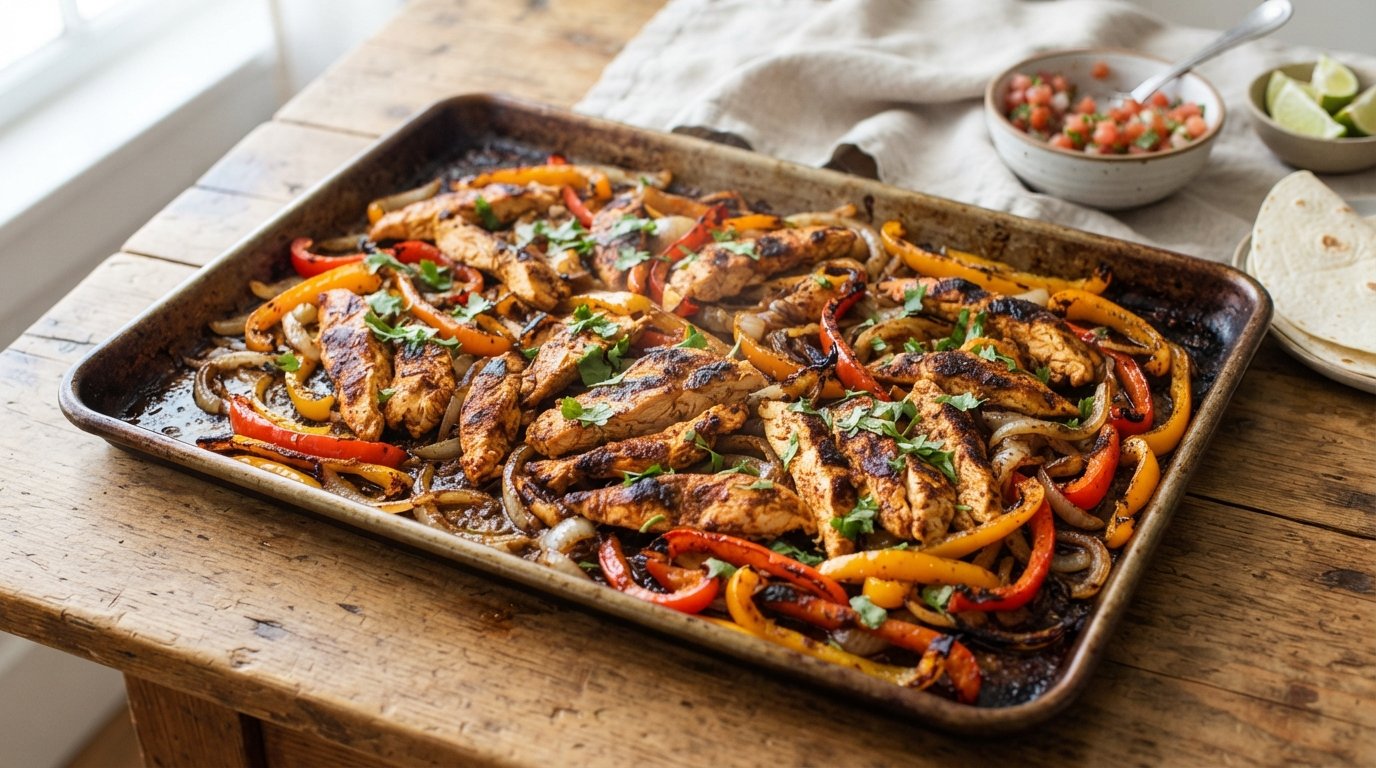
There is a specific kind of exhaustion that hits on a Wednesday evening. You want something vibrant, zesty, and deeply satisfying, but the idea of standing over three different skillets sounds like a punishment. Enter the sheet pan chicken fajitas. This recipe is the antidote to weeknight chaos, delivering all the sizzling, charred glory of restaurant-style fajitas with a fraction of the cleanup. By roasting boneless, skinless chicken thighs alongside colorful bell peppers, red onions, and jalapeños on a single parchment-lined baking sheet, you create a symphony of flavors where everything cooks in harmony.
The magic happens in the oven’s dry heat. Unlike sautéing, which can sometimes steam vegetables if the pan is crowded, roasting caramelizes the natural sugars in the peppers and onions while rendering the chicken thighs perfectly juicy. Topped with fresh garlic, cilantro, lime juice, and a drizzle of savory sauce before baking, this dish transforms simple ingredients into a fiesta on a tray. Whether you are feeding a family or meal prepping for lunches, these easy sheet pan fajitas prove that low-effort cooking doesn’t mean compromising on flavor. Let’s get that oven preheated and bring some brightness to your dinner table.
Why This Recipe Works
The success of these sheet pan chicken fajitas relies on two critical culinary principles: fat content and surface area. We use boneless, skinless chicken thighs instead of breasts because thighs have a higher intramuscular fat content. This fat renders during the high-heat roasting process, basting the meat from the inside out and preventing the dreaded dry, chalky texture often associated with oven-cooked chicken. Thighs also have a more robust flavor profile that stands up well to bold spices and acidic marinades.
Furthermore, the “sheet pan” method is essentially a controlled roast. By lining the pan with parchment paper, we prevent sticking without adding excessive oil, while still allowing hot air to circulate around the ingredients. The vegetables are sliced into uniform strips to match the cooking time of the chicken chunks. When we add fresh minced garlic, chopped cilantro, and lime juice before roasting (as seen in the video), the acids help tenderize the meat slightly, while the herbs infuse their oils directly into the chicken and veggies as they cook. The result is a cohesive dish where the marinade becomes a glaze, rather than a separate sauce.
Why You’ll Love This Recipe
One-Pan Cleanup: Parchment paper means no scrubbing burnt-on cheese or grease. Just crumple the paper and toss it. Your future self will thank you.
Juicy, Forgiving Protein: Chicken thighs are nearly impossible to overcook compared to breasts, making this recipe foolproof for beginners.
Vibrant Color Palette: The contrast of red, green, and yellow peppers against purple onions makes this dish visually stunning and appetizing.
Customizable Heat: Jalapeños are included, but you control the spice level. Leave seeds in for fire, remove them for mild warmth, or omit entirely for kid-friendly versions.
Meal Prep Champion: Components reheat beautifully and taste even better the next day as flavors meld. Perfect for taco bowls or wraps throughout the week.
Ingredient Notes
Boneless, Skinless Chicken Thighs
Purpose: The primary protein source. Chosen for superior moisture retention and flavor depth.
Buying Tip: Look for “air-chilled” thighs if available; they absorb marinades better and sear/roast more evenly than water-chilled varieties. Trim excess visible fat but leave the meat intact.
Substitution: Chicken breasts can be used, but reduce cook time by 5-7 minutes to prevent drying. Pound to even thickness first.
Prep: Cut into uniform 1.5-inch chunks. Consistent size ensures even cooking.
Bell Peppers (Red, Green, Yellow)
Purpose: Adds sweetness, crunch, and essential vitamins. Red and yellow peppers are sweeter when roasted; green peppers offer a more vegetal, bitter contrast.
Buying Tip: Choose firm, heavy peppers with taut skin. Avoid any with soft spots or wrinkles near the stem.
Prep: Slice into ½-inch thick strips. Too thin and they’ll burn; too thick and they won’t caramelize.
Red Onion
Purpose: Provides sharpness and color. Roasting transforms its pungency into mellow sweetness.
Substitution: White or yellow onion works, but red onion holds its shape better and looks more appealing in fajitas.
Prep: Slice into ¼-inch rings or half-rings. Separate layers so they roast evenly rather than clumping.
Jalapeños
Purpose: Adds authentic heat and fresh pepper flavor.
Heat Control: Seeds and white pith contain most of the capsaicin. Remove them for mild heat; keep them for spicy. Wear gloves when handling to avoid skin irritation.
Substitution: Serrano peppers for more heat; banana peppers for zero heat but similar texture.
Critical Note: Use FRESH garlic and cilantro. Powdered garlic lacks the volatile compounds needed here. Dried cilantro tastes like dust—skip it.
Prep: Mince garlic finely so it distributes evenly. Chop cilantro just before assembling to preserve volatile oils.
Lime Juice
Purpose: Acid balances fat and salt, brightens flavors, and helps tenderize chicken.
Tip: Always use fresh-squeezed lime. Bottled juice has a metallic, preservative-heavy taste that clashes with fresh ingredients.
Application: Squeeze over chicken and veggies before roasting AND serve with fresh wedges at the table. Double the acid impact.
Savory Sauce (Adobo/Enchilada/Taco Sauce)
Purpose: Adds umami, moisture, and cohesive flavor binding. The reddish-brown sauce poured in the video suggests an adobo or enchilada base.
Selection: Look for sauces with minimal sugar and recognizable ingredients. Chipotle adobo sauce (from canned chipotles) adds smoky depth. Mild enchilada sauce works for a traditional profile.
Quantity: ~2-3 tablespoons total. Enough to coat, not drown. Excess liquid steams instead of roasts.
Kitchen Equipment
Half Sheet Pan (18×13 inches): Standard size fits 8 thighs + veggies comfortably. Quarter sheets are too small for this volume.
Parchment Paper: Non-negotiable for easy cleanup and preventing sticking. Aluminum foil can work but may cause uneven browning on bottom.
Sharp Chef’s Knife: For uniform vegetable slicing and chicken cutting.
Cutting Board: Dedicated board for raw chicken to prevent cross-contamination.
Small Bowl & Whisk: For mixing sauce/garlic/lime if combining before pouring.
Tongs: For turning chicken halfway through roasting (optional but helpful).
Instant-Read Thermometer: Ensures chicken reaches safe 165°F (74°C) without guesswork.
Cook Time: 25–30 Minutes (Roasting at 400°F/200°C)
Total Time: 40–45 Minutes
Servings: 4 (Generous portion for 2 tacos each)
Step-by-Step Instructions
H3: Prep and Arrange the Sheet Pan
Line a half sheet pan with parchment paper. Arrange 8 boneless, skinless chicken thighs in a single layer on one side. On the other side, arrange sliced red onion rings, bell pepper strips (red, green, yellow), and jalapeño slices in a single layer. Do not overlap ingredients.
Why it matters: Single-layer arrangement ensures hot air circulates freely. Overlapping creates steam pockets, leading to soggy vegetables and pale chicken.
Visual Cue: Ingredients should have breathing room. If pan is crowded, use two pans or cook in batches.
Pro Tip: Place chicken on one side, veggies on the other. This allows you to remove veggies early if they finish faster, or rotate pan for even browning.
H3: Season and Add Aromatics
Sprinkle chicken and vegetables generously with salt and black pepper. Scatter minced fresh garlic and chopped fresh cilantro evenly over everything. Squeeze fresh lime juice liberally over the entire pan. Drizzle 2-3 tablespoons of savory sauce (adobo/enchilada/taco sauce) over chicken and veggies.
Why it matters: Salt draws out moisture initially but ultimately seasons deeply. Acid (lime) begins breaking down proteins. Sauce adds moisture and flavor cohesion.
Aroma Cue: You should immediately smell bright citrus, pungent garlic, and herbal cilantro.
Texture Cue: Ingredients should look glistening but not swimming in liquid.
Common Mistake: Adding garlic too early in high heat can burn it. Since we’re roasting at 400°F for 25 mins, mince finely and distribute under sauce/oil to protect it. Alternatively, add garlic in last 10 minutes.
H3: Roast to Perfection
Preheat oven to 400°F (200°C). Place pan in center rack. Roast for 25-30 minutes, rotating pan halfway through. Chicken is done when internal temperature reaches 165°F (74°C) and juices run clear. Vegetables should be tender-crisp with charred edges.
Why it matters: High heat promotes Maillard reaction (browning/flavor development). Rotating compensates for oven hot spots.
Visual Cue: Chicken develops golden-brown spots. Peppers blister and wrinkle slightly. Onions soften and caramelize at edges.
Texture Cue: Chicken feels firm but yields to pressure. Veggies are tender but not mushy.
Safety Note: NEVER rely solely on color/time. Always verify with thermometer. Undercooked poultry is a serious health risk.
H3: Rest and Assemble
Remove pan from oven. Let chicken rest 5 minutes before slicing or serving. This allows juices to redistribute. Warm tortillas separately. Assemble tacos with chicken, roasted veggies, diced avocado, and fresh cilantro. Serve with extra lime wedges.
Why it matters: Resting prevents juice loss when cutting. Warm tortillas are pliable and enhance eating experience.
Visual Cue: Chicken appears moist, not dry. Juices pool slightly on parchment.
Serving Tip: Spoon pan juices over assembled tacos. That liquid gold is concentrated flavor.
Expert Tips
Don’t Crowd the Pan: This is the #1 rule of roasting. If ingredients touch, they steam. Use two pans if necessary. Better to cook in batches than serve soggy fajitas.
Thighs > Breasts Every Time: For sheet pan recipes, thighs are superior. They tolerate longer cook times, stay juicy, and develop better crust. Save breasts for quick sautés.
Fresh Herbs Matter: Dried cilantro is useless here. If you can’t find fresh, skip it and add extra lime zest. But really, just buy fresh cilantro—it’s cheap and transformative.
Rotate the Pan: Ovens have hot spots. Rotate 180° halfway through cooking ensures even browning. Set a timer so you don’t forget.
Rest the Chicken: Cutting immediately releases precious juices onto the cutting board. Five minutes of patience = significantly juicier bites.
Warm Tortillas Properly: Dry skillet over medium heat, 30 seconds per side. Or wrap in damp towel and microwave 30 seconds. Cold tortillas crack and ruin the experience.
Common Mistakes
Soggy Vegetables: Caused by overcrowding or insufficient heat. Fix: Use single layer. Ensure oven is fully preheated to 400°F+. Pat veggies dry before seasoning if washed.
Dry Chicken: Overcooking or using breasts without adjustment. Fix: Use thighs. Check temp at 20 minutes. Pull at 160°F; carryover heat brings to 165°F. Rest 5 minutes.
Burnt Garlic: Added too early or minced too coarsely. Fix: Mince very finely. Bury under sauce/oil. Or add in last 10 minutes of roasting.
Bland Flavor: Under-seasoning or skipping acid. Fix: Be generous with salt. Always use fresh lime juice. Taste pan juices before serving; adjust seasoning if needed.
Uneven Cooking: Inconsistent sizing or no rotation. Fix: Cut chicken/veggies uniformly. Rotate pan halfway. Use thermometer, not just time.
Cold Tortillas: Serving straight from package. Fix: Always warm tortillas. It takes 2 minutes and elevates the entire dish.
Recipe Variations
Spicy Kick: Add 1 tsp cumin + ½ tsp cayenne to seasoning. Keep jalapeño seeds. Use chipotle adobo sauce instead of mild enchilada.
Vegetarian/Vegan: Replace chicken with extra-firm tofu (pressed, cubed) or chickpeas (drained, rinsed). Increase roasting time for tofu to 35-40 mins until crispy. Use vegan-friendly sauce.
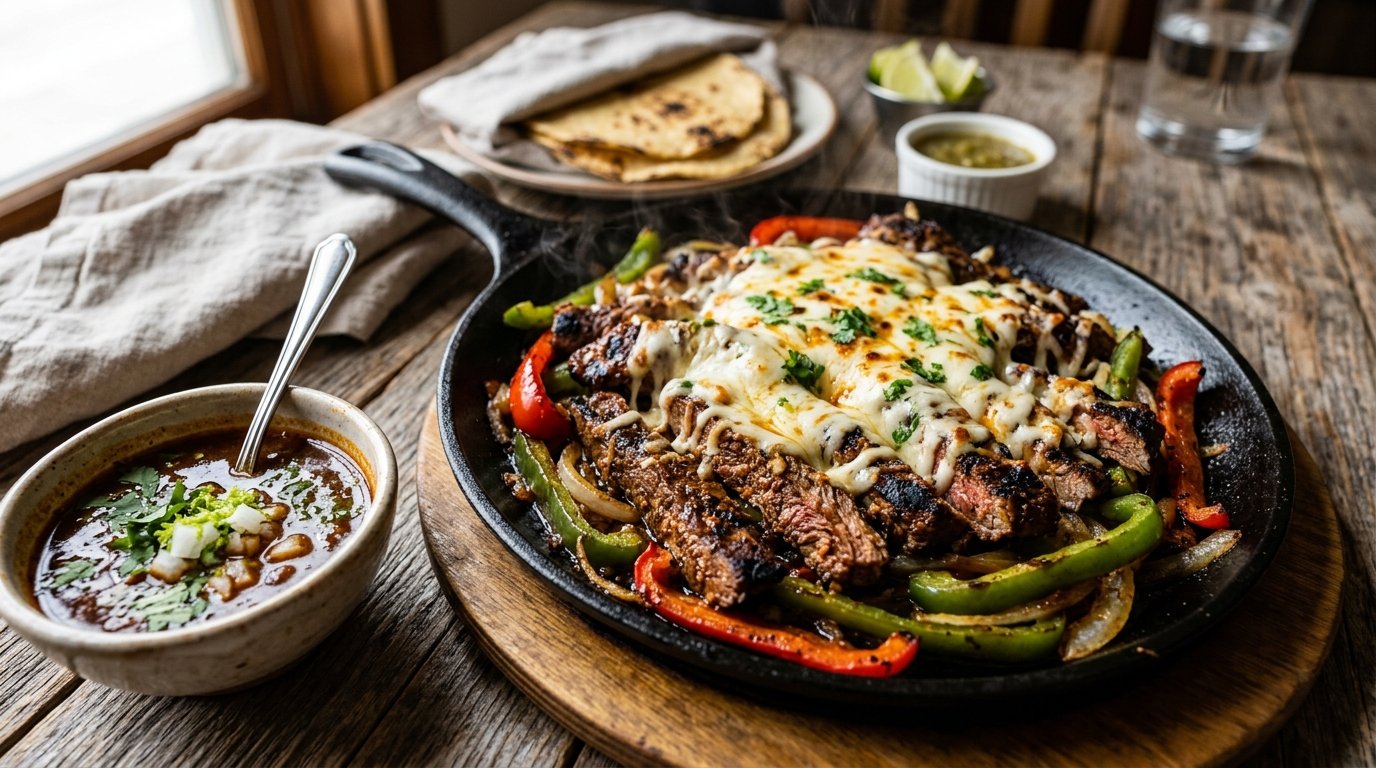
Steak Fajitas: Swap chicken for flank or skirt steak. Slice against grain after resting. Reduce cook time to 12-15 mins for medium-rare.
Shrimp Fajitas: Use large shrimp (peeled, deveined). Cook time drops to 8-10 mins. Add shrimp to pan with veggies for last 10 minutes only.
Low-Carb/Keto: Skip tortillas. Serve over cauliflower rice or in lettuce cups. Add shredded cheese and sour cream. Verify sauce is sugar-free.
Extra Cheesy: Sprinkle shredded Monterey Jack or cheddar over chicken/veggies in last 5 minutes of roasting. Broil 1-2 mins to melt/bubble.
Mediterranean Twist: Swap fajita spices for oregano, lemon, garlic. Use kalamata olives, cherry tomatoes, feta. Serve in pita with tzatziki.
Breakfast Fajitas: Add scrambled eggs and breakfast sausage. Top with salsa and avocado. Serve in tortilla or over hash browns.
What to Serve With This Recipe
Classic Sides: Mexican rice, refried beans, or elote (street corn) complement the main perfectly.
Fresh Salads: Simple arugula salad with lime vinaigrette cuts richness. Pico de gallo adds fresh crunch.
Dips & Sauces: Guacamole, sour cream, salsa verde, or queso blanco elevate every bite.
Drinks: Horchata, margaritas, or sparkling water with lime balance spice and salt.
Dessert: Churros with chocolate dipping sauce or tres leches cake provide sweet contrast.
Light Option: Cucumber-tomato salad with mint-lime dressing refreshes palate between tacos.
Make Ahead & Meal Prep Tips
Chop Ahead: Dice chicken, slice all veggies up to 2 days ahead. Store separately in airtight containers. Saves 15 mins on busy nights.
Marinate Overnight: Combine chicken with garlic, lime, spices, and sauce in bag/container. Refrigerate up to 24 hours. Flavors penetrate deeper.
Pre-Roast Components: Roast chicken and veggies fully. Store separately in fridge up to 4 days. Reheat gently before assembling. Prevents sogginess.
Freeze Raw: Freeze seasoned raw chicken chunks in bags up to 3 months. Thaw overnight in fridge before roasting. Veggies don’t freeze well raw.
Taco Bar Setup: Pre-warm tortillas, prep toppings, and arrange components buffet-style. Lets everyone build their own. Reduces stress for hosts.
Storage & Reheating Instructions
Storage
Refrigerator: Store cooked chicken and veggies in airtight container up to 4 days. Keep separate from tortillas/toppings to prevent sogginess.
Freezer: Freeze cooked chicken/veggies up to 3 months. Thaw overnight in fridge before reheating. Texture may soften slightly but flavor remains excellent.
Tortillas: Store unopened package at room temp. Once opened, refrigerate up to 1 week or freeze up to 3 months.
Reheating
Oven (Best): Spread on sheet pan. Cover loosely with foil. Bake at 350°F (175°C) for 10-12 mins until heated through. Removes foil last 2 mins to crisp edges.
Air Fryer: 350°F for 5-7 mins, shaking basket halfway. Excellent for restoring crispness to veggies/chicken.
Stovetop: Skillet over medium heat, 5-7 mins, stirring occasionally. Adds slight char. Best for small portions.
Microwave (Quick Fix): 1-2 mins on high, stirring halfway. Cover with damp paper towel to retain moisture. Expect softer texture.
Nutritional Information
Estimates per serving (chicken & veggies only, no tortillas/toppings):
Calories: 480
Protein: 38g
Carbohydrates: 18g
Fat: 28g
Fiber: 4g
Sugar: 8g
Sodium: 620mg
Note: Values vary based on chicken thigh size, sauce brand, and oil used. Tortillas/add-ons increase calories/carbs significantly.
Troubleshooting Guide
Problem
Cause
Solution
Chicken dry/tough
Overcooked or breasts used
Use thighs. Check temp at 20 mins. Pull at 160°F. Rest 5 mins.
Veggies soggy/mushy
Overcrowded pan or low oven temp
Single layer only. Ensure 400°F+ preheat. Pat veggies dry.
Flavor bland
Under-seasoned or skipped acid
Generous salt. Fresh lime juice essential. Taste pan juices; adjust.
Garlic burnt/bitter
Added too early or coarse mince
Mince finely. Bury under sauce. Add in last 10 mins next time.
Uneven browning
No rotation or oven hot spot
Rotate pan 180° halfway. Use convection setting if available.
Tortillas cracking
Served cold or overheated
Warm gently: dry skillet 30 sec/side OR damp towel microwave 30 sec.
Excess liquid on pan
Too much sauce or watery veggies
Reduce sauce quantity. Pat veggies dry. Don’t cover while roasting.
Frequently Asked Questions
1. Can I use chicken breasts instead of thighs? Yes, but adjust carefully. Breasts cook faster and dry out easily. Pound to even ½-inch thickness. Reduce cook time to 18-22 minutes. Check temp at 15 minutes. Brining breasts beforehand (30 mins in saltwater) helps retain moisture.
2. How do I prevent vegetables from getting soggy? Three keys: 1) Single layer—no overlapping. 2) High heat (400°F+)—promotes evaporation/caramelization. 3) Dry veggies—pat with paper towel after washing. Moisture is the enemy of crisp roasting.
3. Can I make this vegetarian? Absolutely. Substitute chicken with pressed extra-firm tofu (cubed) or canned chickpeas (drained/rinsed). Tofu needs 35-40 mins to crisp; chickpeas need 25-30 mins. Toss with same seasonings/sauce. Add extra veggies like zucchini or mushrooms.
4. What’s the best way to warm tortillas? Dry cast iron skillet over medium heat: 30 seconds per side until pliable and lightly charred. Alternative: Wrap stack in damp paper towel, microwave 30-45 seconds. Never serve cold—they crack and tear.
5. Can I freeze the cooked fajita mixture? Yes, up to 3 months. Cool completely before freezing in airtight container. Thaw overnight in fridge. Reheat in oven/air fryer to restore texture. Microwaving makes veggies mushy.
6. How spicy are the jalapeños? Variable! Seedless = mild warmth. Seeded = moderate heat. For fiery, include seeds + add serrano pepper. For zero heat, omit jalapeños entirely; bell peppers provide sufficient flavor. Always taste-test a tiny piece before adding to pan.
7. Can I prep this entirely ahead of time? Yes. Chop chicken/veggies up to 2 days ahead. Marinate chicken overnight. Store separately in fridge. Assemble on sheet pan just before roasting. This minimizes active cook time to 5 minutes.
8. What sauce should I use? The video shows a reddish-brown sauce—likely adobo (from canned chipotles) or mild enchilada sauce. Both work excellently. Avoid sugary BBQ sauces. For homemade: blend 2 tbsp tomato paste + 1 tsp cumin + ½ tsp smoked paprika + 2 tbsp water + squeeze lime.
9. How do I know when chicken is done without a thermometer? Not recommended, but if unavoidable: Cut into thickest piece. Juices must run CLEAR (not pink). Meat should be opaque white throughout, not translucent. Texture should feel firm, not rubbery or squishy. When in doubt, use thermometer. Safety first.
10. Can I add cheese to the sheet pan? Yes! In last 5 minutes of roasting, sprinkle shredded Monterey Jack, cheddar, or Oaxaca cheese over chicken/veggies. Return to oven until melted/bubbly. Broil 1-2 mins for golden spots. Watch closely—cheese burns fast.
Final Thoughts
These sheet pan chicken fajitas embody everything great about modern home cooking: bold flavor, minimal fuss, and maximum satisfaction. They transform humble ingredients into a celebration of color, texture, and taste—all on one pan. Whether you’re feeding hungry kids, impressing date night guests, or simply treating yourself to a vibrant weeknight meal, this recipe delivers consistently.