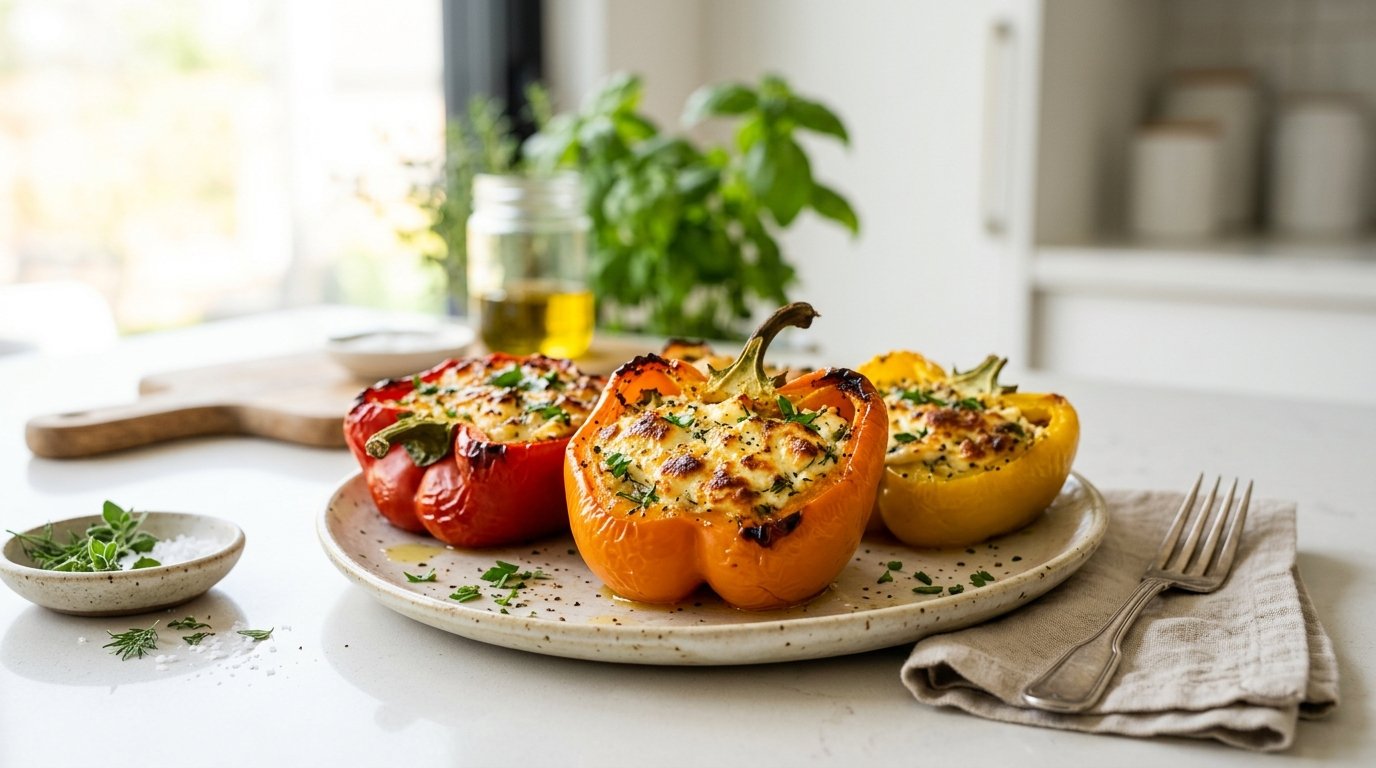
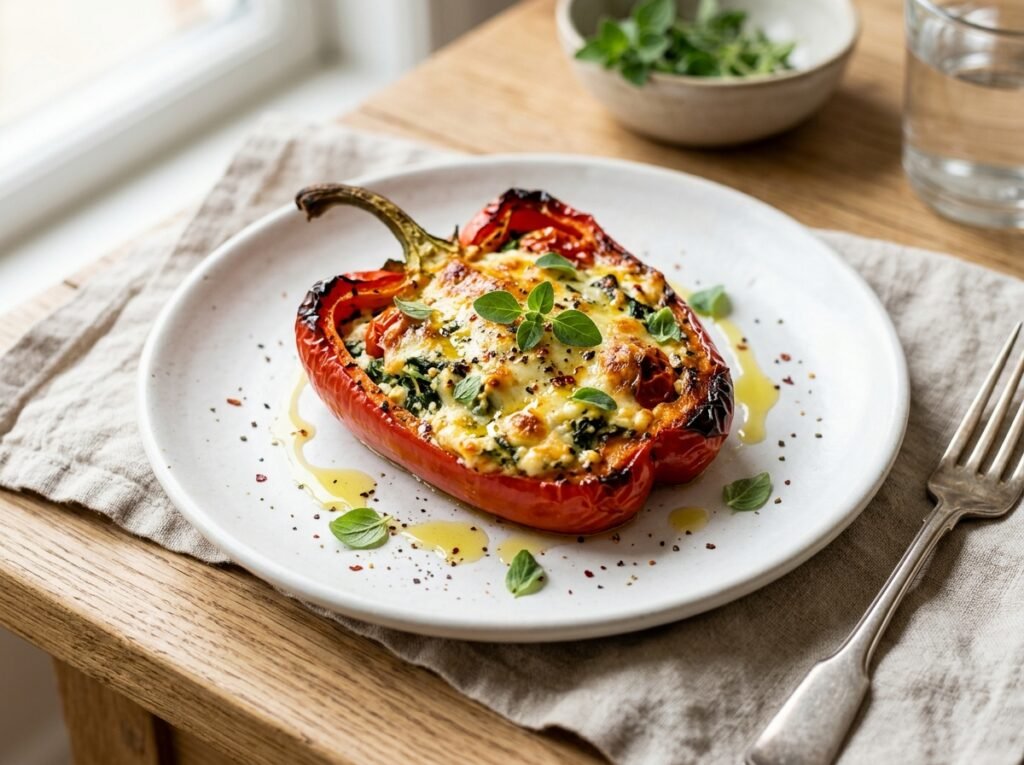
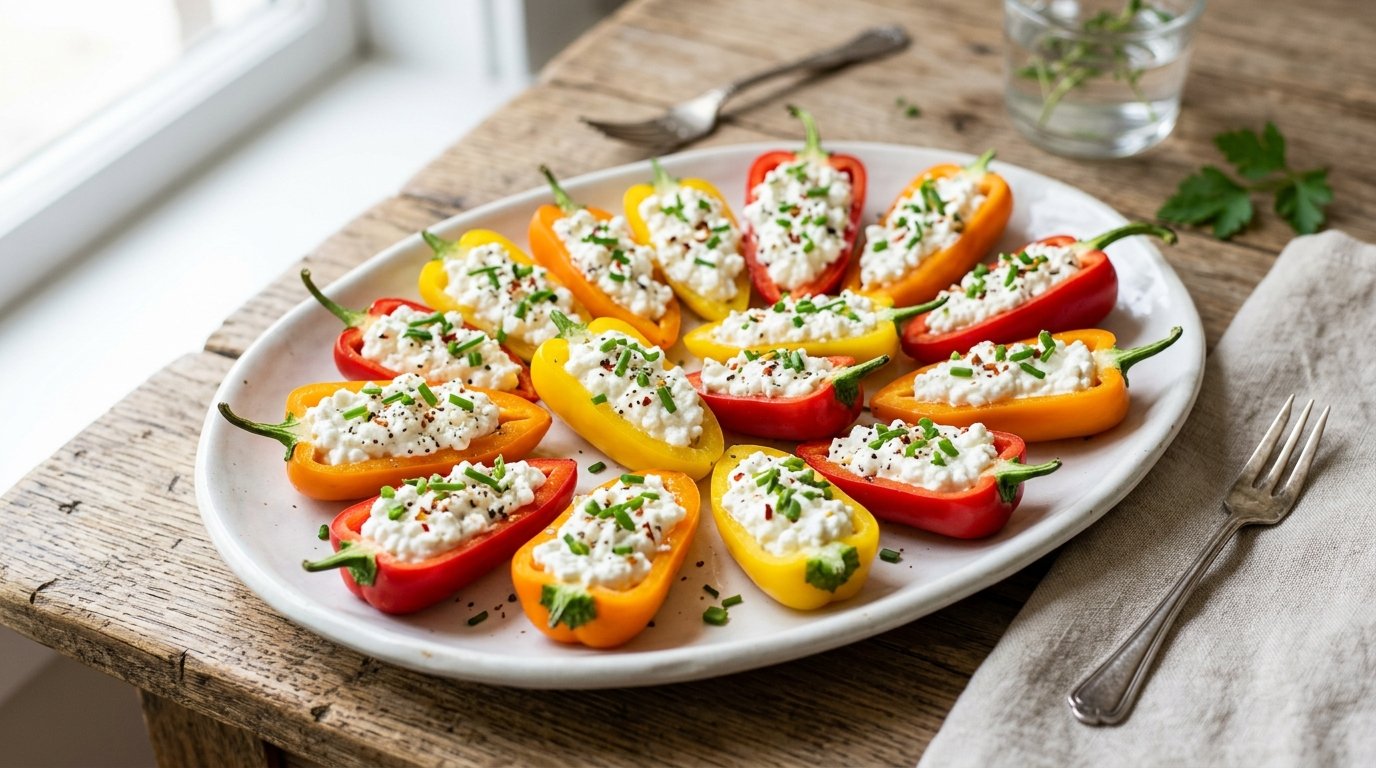
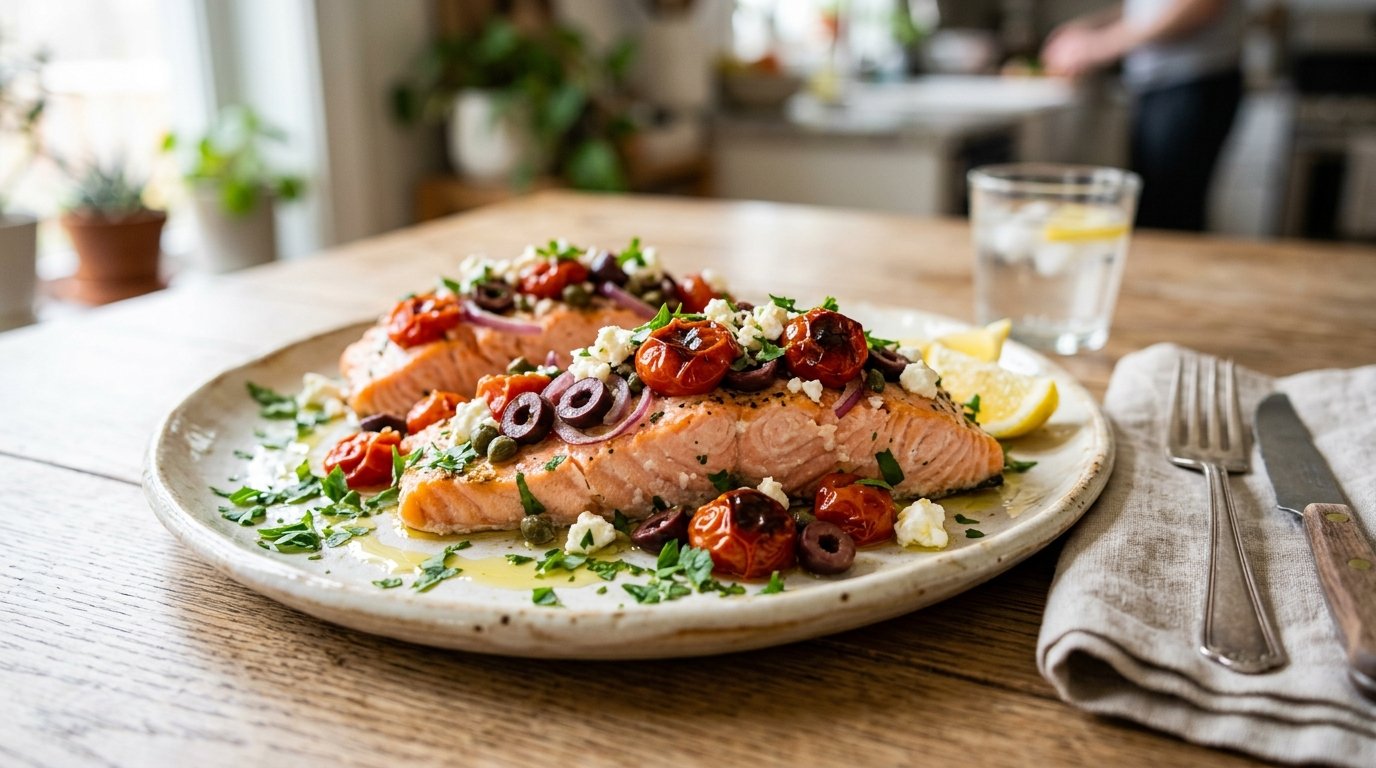
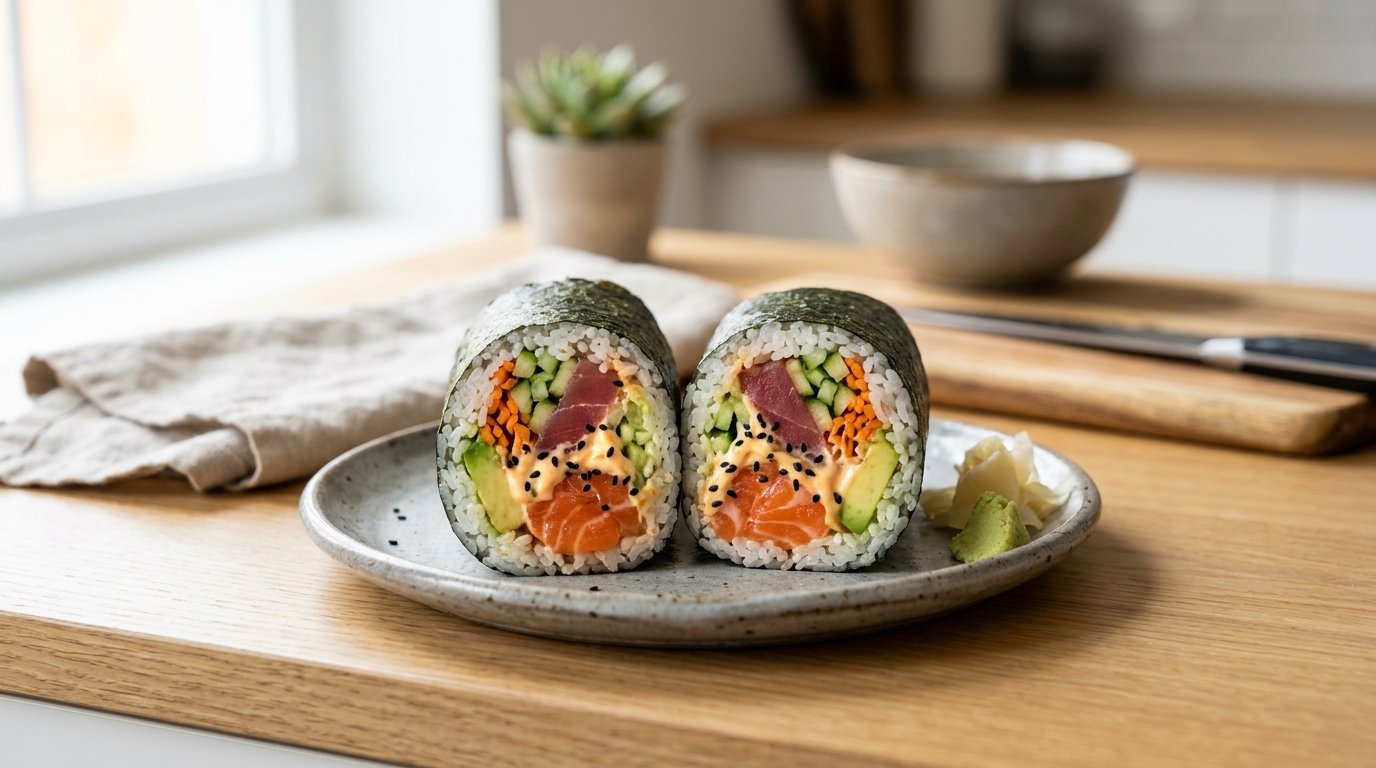
This recipe relies on the natural sweetness of roasted peppers to contrast beautifully with the savory, herb-infused feta filling. The roasting process caramelizes the peppers’ natural sugars while softening their texture to a melt-in-your-mouth consistency. Meanwhile, the feta mixture becomes warm and spreadable without losing its structural integrity, creating a luscious filling that oozes delightfully when cut. Served with a drizzle of extra virgin olive oil and fresh dill, these peppers are a testament to how minimal effort can yield maximum flavor.
If you have ever struggled to find a vegetable-forward dish that satisfies even the most devoted carnivores, these Feta Stuffed Peppers are your answer. Unlike traditional stuffed peppers loaded with rice and ground meat, this version focuses purely on the interplay between the pepper and the cheese. The video demonstration captures the essence of why this dish works so well: the visual contrast of vibrant red skin against creamy white filling, topped with emerald green dill and glistening olive oil. It is a dish that engages all the senses before you even take a bite.
The beauty of this recipe lies in its simplicity. There are no complex techniques or hard-to-find ingredients required. Instead, it relies on proper roasting to develop depth of flavor and a carefully balanced filling that enhances rather than overwhelms the pepper. Whether served warm as part of a mezze spread or at room temperature as a picnic staple, these peppers bring a touch of Mediterranean sunshine to any table. They prove that vegetarian cooking can be indulgent, satisfying, and utterly irresistible.
Why This Recipe Works
From a culinary science perspective, this recipe succeeds because of the Maillard reaction and fat solubility. Roasting peppers at high heat breaks down their cell walls, releasing moisture and concentrating sugars through caramelization. This process not only sweetens the pepper but also develops complex savory notes that raw or boiled peppers lack. The softened flesh becomes tender enough to yield easily to a fork while maintaining enough structure to hold the filling.
The feta filling leverages the unique properties of brined cheese. Unlike melting cheeses like mozzarella, feta retains some crumbly texture even when heated, providing pleasant textural contrast against the smooth pepper. Mixing it with cream cheese or yogurt creates a stable emulsion that melts smoothly without separating into oil and curds. Fresh herbs like dill contain volatile oils that are released during mixing and gentle heating, infusing the entire dish with aromatic freshness that cuts through the richness of the cheese and oil.
Why You’ll Love This Recipe
Effortless Elegance: Looks like a gourmet restaurant dish but requires minimal active preparation time.
Naturally Gluten-Free & Vegetarian: Inclusive dish that doesn’t compromise on flavor or satisfaction.
Versatile Serving Temperature: Delicious hot, warm, or at room temperature, making it ideal for buffets.
Customizable Heat Level: Choose sweet mini peppers for mild flavor or add chili flakes for spice.
Impressive Presentation: Vibrant colors and rustic styling make it photogenic and conversation-starting.
Ingredient Notes
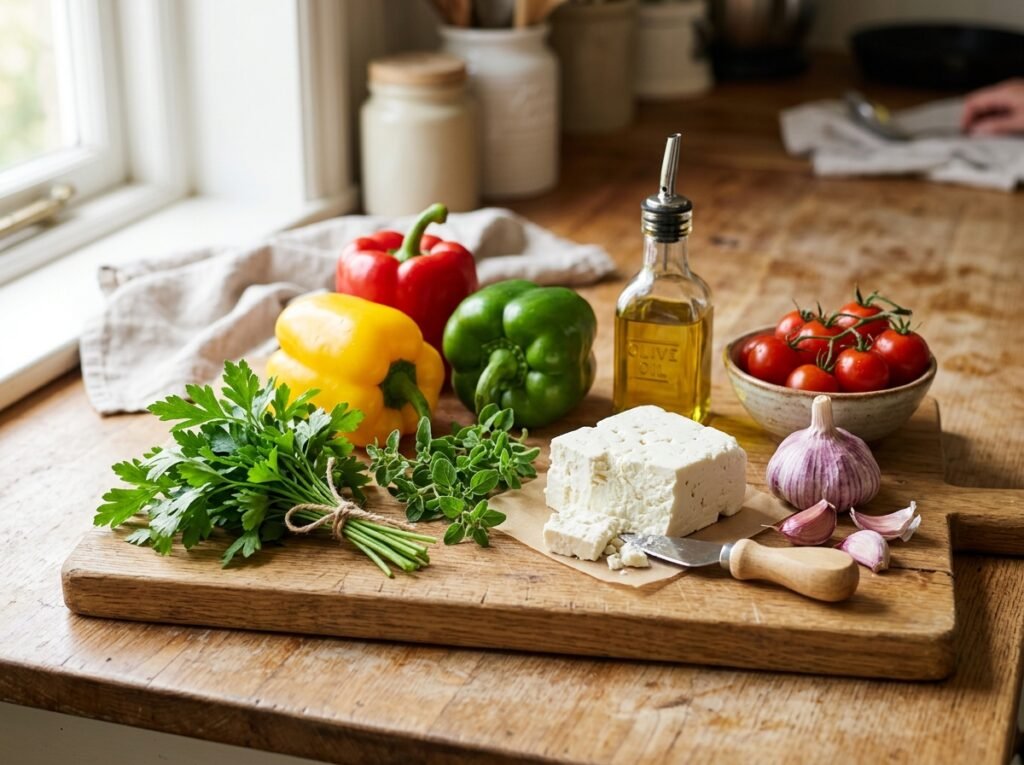
Sweet Mini Peppers (Red/Yellow/Orange)
Purpose: The vessel and primary flavor component. Provides sweetness, color, and structure.
Substitutions: Large bell peppers (cut into quarters), poblano peppers (for smoky heat), or banana peppers (tangier).
Buying Tips: Choose firm, glossy peppers with tight skin and green stems. Avoid wrinkled, soft, or blemished ones. Uniform size ensures even roasting. Red peppers are sweetest; yellow/orange are milder.
Storage Tips: Store unwashed in crisper drawer up to 1 week. Wash just before prepping to prevent mold. Keep away from ethylene-producing fruits like apples.
Feta Cheese (Block Preferred)
Purpose: Salty, tangy filling base. Provides protein, umami, and creamy texture when mixed.
Substitutions: Goat cheese (creamier, milder), ricotta salata (firmer, less tangy), or vegan feta (coconut oil-based).
Buying Tips: Buy block feta in brine, not pre-crumbled. Brine-packed feta is moister, creamier, and less salty/crumbly than dry crumbles. Check ingredient list for authentic sheep/goat milk content.
Storage Tips: Keep submerged in brine in fridge up to 3 weeks. Change brine weekly if homemade. Crumble just before use to preserve texture.
Fresh Dill
Purpose: Aromatic herb that adds brightness and cuts richness. Classic pairing with feta.
Substitutions: Fresh mint (refreshing), parsley (mild), chives (oniony), or dried dill (use 1/3 amount, less vibrant).
Buying Tips: Look for bright green, feathery fronds without yellowing or sliminess. Smell should be fresh, grassy, slightly anise-like. Avoid wilted bunches.
Storage Tips: Trim stems, place in glass of water like flowers, cover loosely with bag, refrigerate. Use within 3-4 days. Dry thoroughly before chopping to prevent sogginess.
Extra Virgin Olive Oil
Purpose: Cooking fat for roasting, finishing drizzle, and flavor carrier. Adds fruitiness and richness.
Substitutions: Avocado oil (neutral, high heat), regular olive oil (milder), or infused oils (garlic/chili).
Buying Tips: Dark glass bottle protects from light degradation. Harvest date within 18 months. Taste should be fruity, peppery, not rancid. Cold-pressed preferred.
Storage Tips: Store cool, dark place. Never refrigerate (clouds/solidifies). Use within 6 months of opening for peak flavor. Rancid oil ruins delicate dishes.
Garlic (Fresh Minced)
Purpose: Savory depth and pungency that complements feta’s saltiness.
Substitutions: Garlic powder (1/4 tsp per clove, milder), roasted garlic paste (sweeter, softer), or shallots (milder, sweeter).
Buying Tips: Firm bulbs with dry, papery skins. Avoid sprouting, soft, or moldy cloves. Fresh garlic has sharper flavor than aged.
Storage Tips: Store whole bulbs in cool, dark, ventilated place. Peeled/minced garlic keeps refrigerated 3-5 days in oil (food safety risk; use quickly). Freeze minced garlic in ice cube trays.
Kitchen Equipment
Sharp Chef’s Knife: For precise pepper halving and seed removal. Dull knives crush peppers, causing juice loss.
Small Spoon or Melon Baller: Essential for scooping seeds/membranes cleanly without tearing flesh.
Mixing Bowl: Medium size for combining feta filling. Glass or ceramic non-reactive.
Fork or Potato Masher: For breaking down feta and blending filling smoothly. Avoid overmixing to maintain texture.
Baking Dish (Glass/Ceramic): Oven-safe, fits peppers snugly in single layer. Glass retains heat evenly; ceramic distributes gently.
Pastry Brush (Optional): For brushing peppers with oil before roasting. Ensures even coating without pooling.
Tongs or Spatula: For transferring hot peppers safely. Silicone-tipped protects baking dish.
Measuring Spoons: For consistent herb/garlic ratios. Precision matters in balancing salty feta.
Preparation Information
Prep Time: 15 Minutes
Cook Time: 30-40 Minutes
Total Time: 55 Minutes
Servings: 6-8 Peppers
Step-by-Step Instructions
H3: Prep the Peppers
Wash peppers thoroughly. Slice each lengthwise through stem end, keeping stem intact for presentation. Use small spoon to scrape out seeds and white membranes completely. Rinse briefly if needed; pat VERY dry with paper towels.
Why it matters: Removing membranes eliminates bitterness and creates space for filling. Drying prevents steaming during roasting, ensuring caramelization instead of sogginess. Intact stem provides handle and visual appeal.
Visual Cue: Interior is clean, pale green/white. No black/brown seeds remaining. Exterior glossy, unbruised.
Texture Cue: Flesh feels firm, not limp. Surface matte/dry after patting.
Common Mistake: Tearing pepper walls while deseeding. Use gentle scraping motion, not digging. If tear occurs, patch with foil during roast or accept rustic look.
Pro Tip: Wear gloves if sensitive to capsaicin. Pepper oils can irritate skin/eyes. Work over sink to catch stray seeds.
H3: Make Herbed Feta Filling
In bowl, crumble feta with fork. Add minced garlic, chopped fresh dill, and 1-2 tbsp olive oil. Mix gently until combined but still slightly chunky. Taste; adjust seasoning if needed (feta varies in saltiness).
Why it matters: Gentle mixing preserves feta’s characteristic texture. Oil binds ingredients and adds moisture for creaminess when heated. Garlic/dill distribute evenly without becoming muddy.
Visual Cue: Mixture is cohesive but not smooth paste. Visible flecks of green dill and white feta. Glossy sheen from oil.
Texture Cue: Spreadable but holds shape. Not runny or grainy. Slightly resistant to spoon.
Mistake to Avoid: Overmixing creates homogenous, gluey filling. Stop when just combined. Don’t add salt yet; feta is already salty. Acid (lemon) optional but balances richness.
H3: Stuff Generously
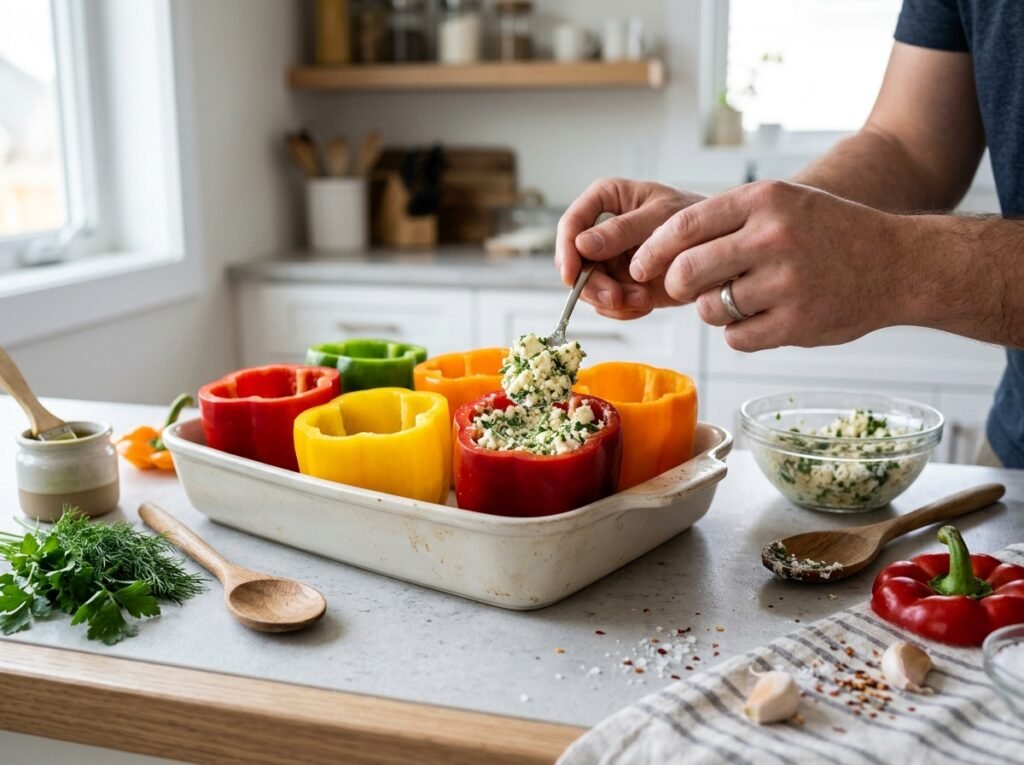
Spoon filling into each pepper half, pressing gently to pack. Mound slightly above rim; it will settle during roasting. Arrange stuffed peppers cut-side up in baking dish. Drizzle tops lightly with olive oil.
Why it matters: Packing ensures no air pockets that collapse during cooking. Mounding accounts for shrinkage. Oil on top promotes browning and prevents drying. Single layer ensures even heat exposure.
Visual Cue: Filling fills cavity completely, slight dome on top. Peppers nestled closely but not squished. Oil glistens on surface.
Texture Cue: Filling feels dense, not loose. Pepper walls support weight without bending.
Tip: Chill stuffed peppers 10 mins before roasting. Firms filling, prevents slumping. Use leftover filling as dip or spread.
H3: Roast Until Tender
Preheat oven to 400°F (200°C). Roast peppers 30-40 minutes until skins blister/char slightly and flesh is fork-tender. Filling should be warm, slightly golden on top. Rest 5 minutes before serving.
Why it matters: High heat caramelizes sugars and softens flesh efficiently. Blistering adds smoky complexity. Resting allows filling to set slightly, preventing spillage when cut.
Visual Cue: Skins wrinkle, develop dark spots. Flesh collapses slightly, looks translucent. Filling puffs, edges golden. Steam rises when removed.
Aroma Cue: Sweet roasted pepper scent mixes with herbal, cheesy aroma. No burnt smell indicates proper temp.
Pepper Selection Matters: Uniform size = even cooking. Sort peppers by size; roast larger ones longer or group separately. Thin-walled peppers cook faster; thick-walled need more time.
Feta Quality Dictates Flavor: Authentic Greek/Turkish feta (sheep/goat milk) has superior tang/texture vs. cow’s milk imitations. Taste before mixing; adjust garlic/herbs accordingly.
Oil Application Technique: Brush oil inside cavities before stuffing. Creates barrier preventing filling from sticking/leaking. Enhances flavor penetration into flesh.
Herb Timing: Add fresh herbs JUST before stuffing. Heat destroys delicate dill flavor/aroma. Dried herbs can be mixed earlier; they benefit from hydration in oil.
Serving Temperature Flexibility: Hot = gooey, dramatic cheese pull. Warm = balanced flavors, easier handling. Room temp = concentrated taste, portable. All are valid; choose based on occasion.
Common Mistakes
Watery/Soggy Peppers: Under-dried after washing or overcrowded pan. Fix: Pat EXTREMELY dry. Leave space between peppers for steam escape. Roast cut-side up initially.
Dry/Crumbly Filling: Low-fat feta or insufficient oil. Fix: Use full-fat block feta. Add 1-2 tbsp oil/yogurt/cream cheese to binding. Mix gently.
Burnt Tops/Raw Centers: Oven too hot or peppers too large. Fix: Tent with foil if browning too fast. Reduce temp to 375°F; extend time. Pierce thick peppers with fork to release steam.
Bland Flavor: Underseasoned filling or poor-quality feta. Fix: Taste filling before stuffing. Add lemon zest/juice, black pepper, or pinch of sugar to balance. Use premium feta.
Leaking Filling: Overstuffed or torn peppers. Fix: Leave 1/8″ headspace. Patch tears with foil. Chill before roasting to firm filling.
Recipe Variations
Spicy Harissa Feta: Mix 1-2 tbsp harissa paste into filling. Top with chili flakes post-roast. North African heat pairs beautifully with sweet peppers.
Spinach & Feta Spanakopita Style: Fold in 1 cup cooked, squeezed spinach + 1 egg yolk. Richer, heartier filling reminiscent of Greek pie.
Vegan Cashew Feta: Blend soaked cashews + lemon juice + nutritional yeast + miso. Dairy-free alternative with similar tang/creaminess.
Sun-Dried Tomato & Basil: Replace dill with basil; add 1/4 cup chopped sun-dried tomatoes. Italian twist with intense umami.
Low-Carb/Keto Boost: Add 1/4 cup crushed walnuts/almonds to filling. Increases healthy fats/protein; adds crunch contrast.
Lemon-Zest Brightener: Add zest of 1 lemon to filling. Cuts richness, adds floral note. Perfect for spring/summer servings.
Grains: Fluffy couscous, quinoa pilaf, or crusty sourdough bread for soaking up juices.
Salads: Greek salad (cucumber/tomato/olive), tabbouleh, or arugula with lemon vinaigrette.
Dips/Sauces: Tzatziki, hummus, or garlic aioli for complementary creamy elements.
Proteins: Grilled lamb chops, baked fish, or chickpea stew for complete Mediterranean meal.
Drinks: Crisp white wine (Assyrtiko/Sauvignon Blanc), ouzo, sparkling water with lemon, or mint lemonade.
Garnishes: Extra fresh dill, kalamata olives, lemon wedges, or flaky sea salt for finishing.
Make Ahead & Meal Prep Tips
Prep Components Ahead: Deseed peppers and make filling up to 24 hours ahead. Store separately in fridge. Assemble/stuff just before roasting for best texture.
Roast Ahead: Roast peppers fully; cool completely. Store covered in fridge up to 3 days. Reheat gently or serve room temp. Flavors meld/improve overnight.
Freeze Unroasted: Stuff peppers; freeze on tray until solid, then bag. Roast from frozen, adding 10-15 mins. Great for batch prep.
Filling Storage: Extra filling keeps refrigerated 3 days. Use as dip, sandwich spread, or omelet filler. Don’t waste!
Storage Instructions
Refrigerator: Store roasted peppers in airtight container up to 4 days. Separate layers with parchment to prevent sticking.
Freezer: Roasted peppers freeze well up to 2 months. Wrap individually. Thaw in fridge overnight. Texture softens slightly; still flavorful.
Avoid: Storing hot peppers sealed (steam = sogginess). Cool completely first. Don’t freeze with fresh herb garnish; add post-thaw.
Safety: Discard if slimy, sour-smelling, or moldy. Always reheat leftovers to 165°F (74°C).
Reheating Instructions
Oven (Best): 350°F for 10-15 mins covered with foil. Restores warmth without drying. Uncover last 5 mins to crisp top if desired.
Air Fryer: 320°F for 5-7 mins. Quick, efficient. Prevents sogginess better than microwave. Watch closely to prevent burning.
Microwave: 30-sec intervals on medium power. Makes peppers soft/soggy. Only if desperate. Place on paper towel to absorb moisture.
Stovetop: Skillet over low heat, covered. 5-8 mins with splash of water/oil. Gentle reheating preserves texture. Flip carefully.
Note: Values vary based on pepper size, feta brand, and oil amount. High healthy fat content from olive oil/feta. Naturally low-carb/keto-friendly.
Troubleshooting Guide
Problem
Cause
Solution
Soggy peppers
Wet after washing / Overcrowded
Pat EXTREMELY dry. Space peppers apart. Roast cut-side up first.
Dry/crumbly filling
Low-fat feta / No oil
Use full-fat block feta. Add oil/yogurt to binding. Mix gently.
Burnt tops/raw centers
Oven too hot / Large peppers
Tent with foil. Lower temp to 375°F; extend time. Pierce thick peppers.
Bland flavor
Poor feta / Underseasoned
Taste filling pre-stuff. Add lemon/zest/pepper. Use premium feta.
Leaking filling
Overstuffed / Torn peppers
Leave headspace. Patch tears. Chill before roasting.
Bitter taste
Membranes not removed
Scrape membranes thoroughly next time. Balance with acid/sugar now.
Frequently Asked Questions
1. Can I use large bell peppers instead of mini sweet peppers? Yes! Cut large peppers into quarters lengthwise. Remove seeds/membranes. Adjust roasting time: 40-50 mins at 400°F. Flesh is thicker; may need tenting with foil to prevent burning before tender.
2. Why did my feta filling turn grainy/oily? Overmixed or used low-quality/pre-crumbled feta. Next time: use block feta in brine; mix gently with fork; add oil gradually. Graininess can’t be fixed post-mix; repurpose as salad topping.
3. Can I make these vegan? Absolutely. Substitute feta with vegan feta (coconut oil/cashew-based) or homemade almond feta. Ensure olive oil is certified vegan. Flavor profile differs slightly but still delicious.
4. How do I prevent peppers from collapsing during roasting? Choose firm, thick-walled peppers. Don’t overstuffed; leave structure support. Roast cut-side UP initially 20 mins, then flip if needed. Chill stuffed peppers before roasting firms filling/walls.
5. Can I add other cheeses to the filling? Yes! Mix feta with goat cheese (creamier), ricotta (milder), or cream cheese (stable melt). Ratio: 2 parts feta : 1 part secondary cheese. Balances saltiness and improves texture.
6. Why are my peppers bitter? Membranes/seeds not fully removed OR overcooked. Scrape interiors meticulously next time. Reduce roasting time/temp if charring excessively. Balance existing bitterness with lemon/honey drizzle.
7. Can I grill these instead of roasting? Yes! Preheat grill to medium-high. Oil grates well. Grill cut-side DOWN 5-7 mins until charred. Flip; fill; close lid 5-8 mins until filling warm. Smoky flavor bonus! Monitor closely to prevent burning.
8. How do I know when peppers are done? Skin should blister/char slightly. Flesh yields easily to fork without resistance. Internal temp 165°F (74°C). Filling bubbles gently at edges. Visual/tactile cues are reliable indicators.
Final Thoughts
Creating these Feta Stuffed Peppers is a joyful reminder that exceptional food doesn’t require complexity—just quality ingredients and thoughtful technique. The alchemy of roasting transforms simple peppers into something transcendent, while the herbed feta filling adds a layer of creamy sophistication that lingers on the palate. Whether you’re hosting a summer gathering, preparing a healthy weeknight meal, or simply treating yourself to something special, this recipe delivers consistent delight. We encourage you to experiment with variations, share your creations, and join our community of home cooks who celebrate vegetable-centric cuisine. Leave a comment below with your favorite twist or rating—we love hearing how this recipe brings joy to your table. Happy roasting!