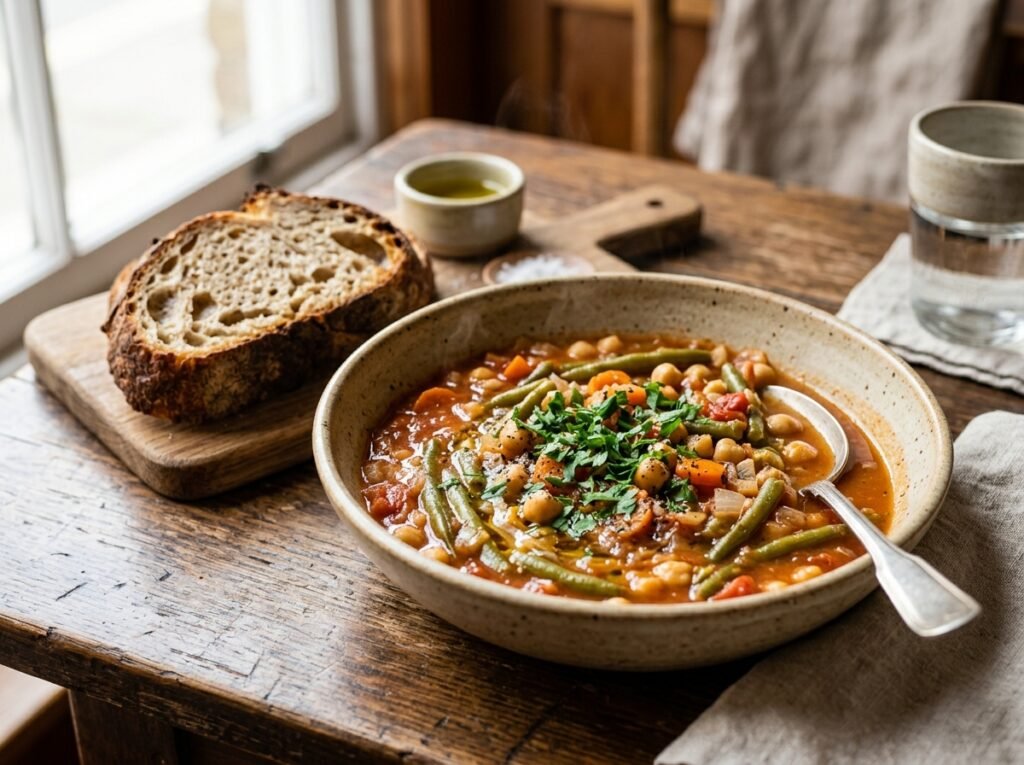
This recipe is designed for simplicity without sacrificing depth. The key lies in building layers of flavor starting with the sautéed aromatics and finishing with a refined tomato sauce that coats every ingredient. Rich in plant-based protein and fiber, this stew is as functional as it is tasty, making it an ideal weeknight dinner or a hearty side dish for larger gatherings. Served alongside crusty bread, it becomes a complete meal that satisfies both body and soul.
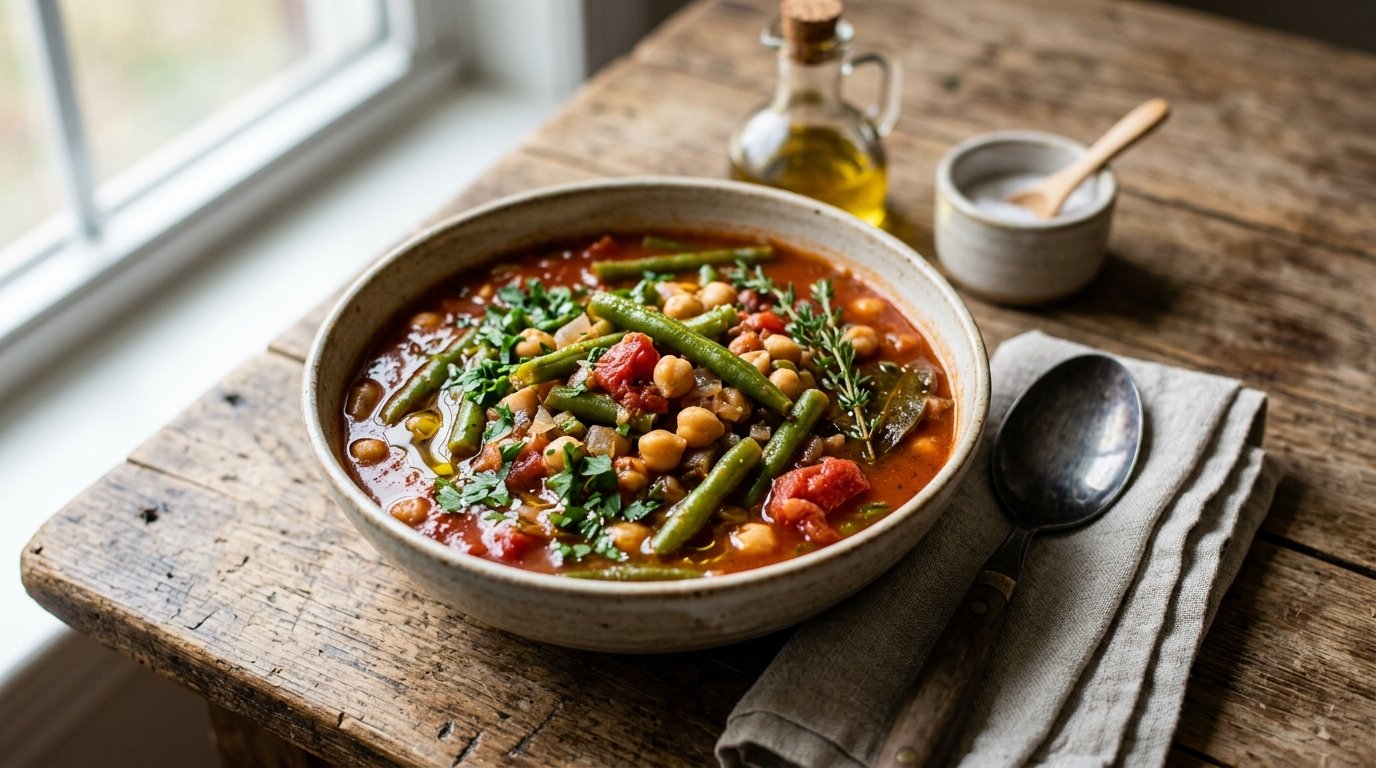
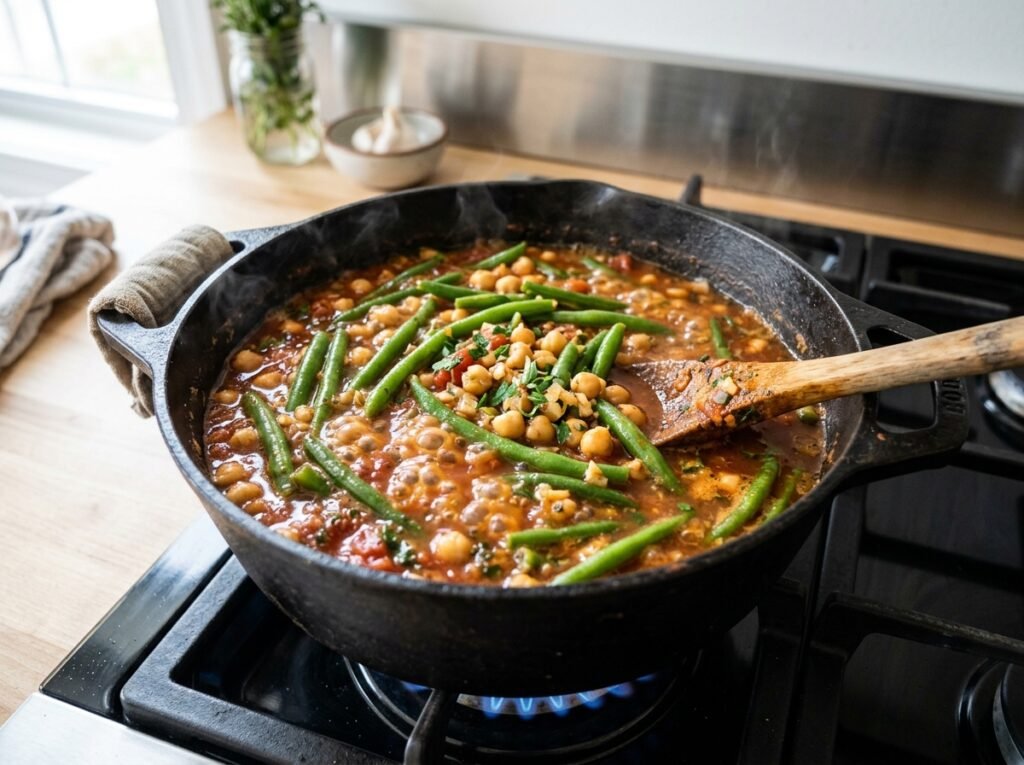
In the world of plant-based cooking, few dishes rival the rustic elegance of a well-made vegetable stew. This Green Bean & Chickpea Stew captures the essence of Mediterranean home cooking, where fresh produce and legumes take center stage. Unlike heavy meat-based stews that require hours of braising, this version comes together in under an hour while delivering a complex, savory profile that belies its simplicity. The video demonstration highlights a crucial technique: straining the tomato base to ensure a velvety texture that elevates the entire dish from ordinary to extraordinary.
The beauty of this recipe lies in its adaptability and nutritional density. Green beans provide a satisfying crunch and earthy sweetness, while chickpeas offer creamy texture and substantial protein. Together, they form a complete amino acid profile when paired with grains or bread. Whether you are vegan, vegetarian, or simply looking to incorporate more plants into your diet, this stew proves that compassionate eating can be incredibly indulgent. It is a dish that respects the ingredients, allowing their natural flavors to shine through a carefully constructed tomato foundation.
Why This Recipe Works
From a culinary science perspective, this stew succeeds because of how it manages texture and acidity. Sautéing the green beans and onions first triggers the Maillard reaction, developing caramelized notes that boiling alone cannot achieve. This step also softens the cellulose in the beans slightly, reducing their overall cooking time and preventing them from becoming mushy during the simmer. The addition of chickpeas at this stage allows them to absorb the aromatic oils from the sauté, infusing them with flavor from the inside out.
The strained tomato base is the secret weapon here. Raw or chunky tomato sauces can sometimes feel acidic or gritty against delicate vegetables. By passing the sauce through a fine-mesh sieve, we remove seeds and tough skins, creating a smooth emulsion that clings to the beans and chickpeas rather than pooling separately. This refinement balances the pH of the dish, mellowing the tomatoes’ sharpness and allowing the natural sweetness of the vegetables to emerge. The result is a cohesive stew where every spoonful offers a harmonious blend of creaminess, crunch, and silkiness.
Why You’ll Love This Recipe
Velvety Texture: Straining the tomato base creates a restaurant-quality mouthfeel that feels luxurious and refined.
Plant-Based Protein Powerhouse: Chickpeas and green beans combine to offer a filling, nutrient-dense meal without meat.
Quick & Accessible: Ready in 45 minutes using common pantry staples and fresh produce found at any grocery store.
Flavor Depth: Sautéing aromatics before simmering builds a complex flavor foundation often missing in quick veggie stews.
Versatile Serving: Works beautifully as a main course with bread, a side dish for grilled meats, or even a topping for grain bowls.
Budget Friendly: Relies on inexpensive ingredients that stretch far, making it economical for families and students alike.
Ingredient Notes
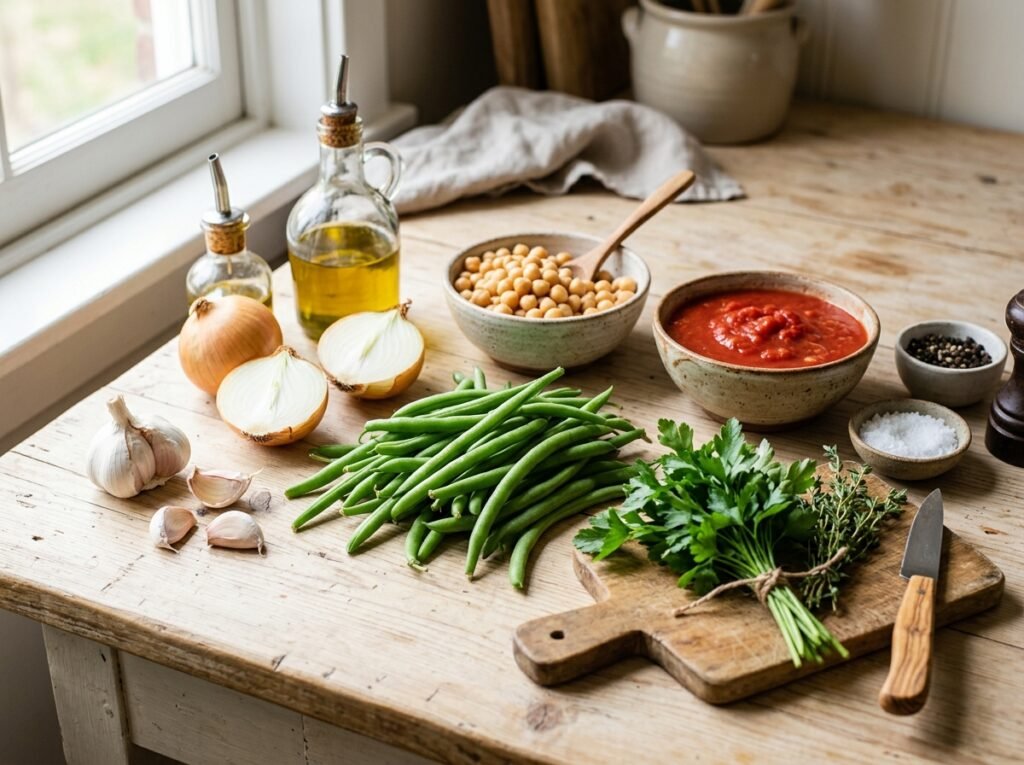
Fresh Green Beans
Purpose: Provides structural integrity, crunch, and fresh vegetal sweetness.
Substitutions: Frozen green beans (thawed), wax beans (yellow variety), or haricot verts (French style, cook faster).
Buying Tips: Look for firm, bright green pods that snap crisply when bent. Avoid limp, yellowing, or blemished beans. Thin beans are generally more tender than thick ones.
Storage Tips: Store unwashed in a perforated bag in the crisper drawer for up to 5 days. Wash just before cooking to prevent mold.
Canned Chickpeas (Garbanzo Beans)
Purpose: Adds creaminess, protein, fiber, and hearty substance to the stew.
Substitutions: Dried chickpeas (soaked overnight, boiled 1 hour before use), cannellini beans (creamier), or butter beans.
Buying Tips: Choose BPA-free cans if possible. Low-sodium versions allow better control over seasoning. Check expiration dates; older cans may have softer beans.
Storage Tips: Rinse thoroughly to remove excess sodium and starchy liquid. Unused portions keep refrigerated in water for 3 days or frozen for 3 months.
Yellow Onion
Purpose: Aromatic base that provides sweetness and savory depth when sautéed.
Substitutions: White onion (sharper), red onion (milder, colorful), or shallots (delicate, expensive).
Buying Tips: Select heavy, firm onions with dry, papery skins. Avoid sprouting or soft spots. Yellow onions are best for cooking due to balanced sugar/sulfur content.
Storage Tips: Keep in a cool, dark, ventilated place away from potatoes. Whole onions last weeks; cut onions keep refrigerated 7-10 days.
Smooth Tomato Base (Passata/Puree)
Purpose: Creates the stew’s liquid foundation, acidity, and umami richness.
Substitutions: Crushed tomatoes (blended then strained), tomato sauce (check sugar content), or fresh ripe tomatoes (peeled, seeded, blended).
Buying Tips: Italian passata is ideal—pureed, uncooked tomatoes with no additives. Avoid “tomato sauce” with herbs/spices unless desired. Glass bottles often indicate higher quality.
Storage Tips: Refrigerate opened jars/bottles up to 7 days. Freeze leftover tomato base in ice cube trays for easy portioning later.
Olive Oil
Purpose: Cooking fat for sautéing; adds fruity richness and carries fat-soluble flavors.
Substitutions: Avocado oil (neutral, high heat), vegetable oil (neutral), or ghee (if not vegan).
Buying Tips: Extra virgin for finishing/flavor; regular or light olive oil for sautéing to prevent burning. Cold-pressed retains more nutrients.
Storage Tips: Store in dark glass bottle away from heat/light. Use within 6 months of opening for peak freshness. Rancid oil ruins delicate dishes.
Kitchen Equipment
Large Pot or Dutch Oven: Essential for sautéing and simmering. Heavy bottom prevents scorching. 4-6 quart capacity ideal.
Fine-Mesh Sieve/Strainer: Critical for refining tomato base. Metal mesh preferred over plastic for durability and finer straining.
Wooden Spoon or Spatula: For stirring without scratching pot. Wood doesn’t conduct heat, protecting hands.
Sharp Chef’s Knife: For trimming green beans and slicing onions uniformly. Dull knives crush cells, releasing excess moisture.
Cutting Board: Stable surface for safe prep. Separate boards for produce vs. other items if cross-contamination concern.
Measuring Cups/Spoons: For consistent ratios. Liquid measuring cup for tomato base; dry cups for solids.
Ladle: For serving stew gently without breaking beans. Deep bowl ladle holds more liquid.
Tongs (Optional): Useful for handling hot pot or transferring strained solids if needed.
Preparation Information
Prep Time: 15 Minutes
Cook Time: 30 Minutes
Total Time: 45 Minutes
Servings: 4
Step-by-Step Instructions
H3: Sauté Beans & Onions
Heat 2 tbsp olive oil in large pot over medium-high heat. Add sliced onions and trimmed green beans. Cook 5-7 minutes, stirring frequently, until onions soften and beans turn bright green with slight browning spots.
Why it matters: Sautéing develops flavor through caramelization. Onions release sugars; beans lose raw edge. This step prevents watery stew later.
Visual Cue: Onions become translucent/golden at edges. Beans deepen to vivid green, shrink slightly. Steam rises actively.
Texture Cue: Onions yield to pressure but aren’t mushy. Beans crisp-tender, not rubbery or soft.
Tip: Warm tomato base slightly before straining if thick/cold. Heat thins it, easing passage. Tap sieve gently to encourage flow. Don’t force; let gravity work.
H3: Simmer & Meld Flavors
Bring to gentle boil, then reduce to low simmer. Cover partially. Cook 15-20 minutes, stirring occasionally, until beans are tender and sauce thickens slightly. Season with salt/pepper to taste.
Why it matters: Simmering cooks beans through without breaking them. Allows flavors to integrate. Partial cover retains heat/moisture while reducing excess liquid.
Visual Cue: Sauce bubbles softly, not violently. Volume reduces by ~1/4. Beans look plump, skin intact. Color deepens to rich rust-red.
Texture Cue: Beans pierce easily with fork but hold shape. Sauce coats back of spoon. Chickpeas creamy inside.
Doneness Test: Taste bean—it should be tender, not crunchy or mealy. Sauce should cling, not run off spoon. Adjust seasoning now; flavors concentrate as it reduces.
Expert Tips
Bean Prep Matters: Trim stem ends only; leave tips intact for presentation. Uniform 1.5-inch cuts ensure even cooking. Blanching beforehand isn’t necessary here; sautéing suffices.
Tomato Quality = Stew Quality: Invest in good passata. Cheap brands often contain added sugar/starch that masks true tomato flavor. Taste raw sauce; it should be bright, not flat.
Acid Balance: If stew tastes flat after simmering, add 1 tsp lemon juice or vinegar. Acid brightens flavors, mimicking freshness lost during cooking. Add incrementally; too much overpowers.
Herb Timing: Fresh herbs (parsley, basil) added at end preserve volatile oils. Dried herbs (oregano, thyme) added early infuse deeply. Never mix; use one type per batch for clarity.
Rest Before Serving: Let stew sit off heat 5-10 minutes. Flavors settle, textures relax. Hot stew can burn palate; resting improves tasting experience significantly.
Common Mistakes
Mushy Green Beans: Overcooked or boiled too vigorously. Fix: Sauté first; simmer gently; check doneness early. Beans should have bite.
Gritty/Sandy Texture: Unstrained tomato base. Fix: Always strain. If already cooked, blend briefly then strain (emergency fix). Prevention is key.
Bland Flavor: Underseasoned or rushed sauté. Fix: Salt each layer. Sauté until fragrant/browned. Finish with acid/herbs. Taste constantly.
Watery Stew: Too much liquid or insufficient reduction. Fix: Simmer uncovered last 5 mins to thicken. Start with less liquid; add more if needed. Chickpeas absorb some moisture.
Burnt Bottom: Heat too high or unstirred. Fix: Low simmer only. Stir occasionally, scraping bottom. Heavy-bottomed pot distributes heat evenly.
Recipe Variations
Spicy Harissa Twist: Add 1-2 tbsp harissa paste with tomato base. Top with chili flakes. North African warmth complements chickpeas beautifully.
Creamy Coconut Version: Replace 1/2 tomato base with coconut milk. Adds richness, subtle sweetness. Vegan-friendly indulgence.
Protein Boost: Add diced tofu or tempeh with chickpeas. Marinate in soy/ginger first. Increases satiety without altering core flavor.
Grain Bowl Base: Serve over quinoa, couscous, or rice. Turns stew into hearty main. Absorbs sauce wonderfully.
Winter Root Veg Addition: Add diced carrots/potatoes with onions. Extends cooking time 10 mins. Makes stew heartier for cold weather.
Lemon-Herb Brightener: Finish with zest/juice of 1 lemon + chopped dill/mint. Cuts richness, adds freshness. Perfect for spring/summer.
Smoky Paprika Depth: Stir in 1 tsp smoked paprika with chickpeas. Adds campfire note without meat. Pairs well with cumin.
What to Serve With This Recipe
Bread: Crusty sourdough, ciabatta, or pita for soaking up sauce. Essential for full experience.
Grains: Fluffy couscous, bulgur wheat, or basmati rice provide neutral base. Quinoa adds protein boost.
Salads: Simple cucumber-tomato salad with lemon vinaigrette. Tabbouleh for herbal contrast. Arugula with shaved parmesan (omit for vegan).
Dairy/Creamy Elements: Dollop of Greek yogurt or labneh (vegan alternative: cashew cream). Cools spice, adds tang.
Pickles: Olives, pickled turnips, or pepperoncini add salty/acidic punch. Cleanses palate between bites.
Drinks: Dry white wine (Sauvignon Blanc), sparkling water with lime, or mint lemonade. Avoid heavy reds; they overwhelm delicate veggies.
Make Ahead & Meal Prep Tips
Flavor Improves Overnight: Stew tastes better next day as flavors meld. Make ahead for stress-free entertaining. Reheat gently.
Component Prep: Sauté beans/onions/chickpeas up to 2 days ahead. Store separately. Combine with tomato base when ready to finish. Saves active cooking time.
Freezer Friendly: Freezes well up to 3 months. Cool completely before freezing. Thaw overnight in fridge. Texture may soften slightly; still delicious.
Batch Cooking: Double recipe; freeze half. Portion into individual containers for quick lunches. Label with date.
Storage Instructions
Refrigerator: Store in airtight container up to 5 days. Cool completely before sealing. Keeps flavors intact.
Freezer: Freeze in portion-sized containers up to 3 months. Leave headspace for expansion. Thaw in fridge overnight.
Avoid: Storing hot stew seals in steam, promoting spoilage. Don’t freeze glass jars without headspace; they crack. Discard if sour smell/off-color develops.
Safety: Reheat to 165°F (74°C) before consuming leftovers. Never refreeze thawed stew.
Reheating Instructions
Stovetop (Best): Medium-low heat, stirring occasionally. Add splash of water if thickened too much. Restores original texture perfectly.
Microwave: Covered dish, medium power, 1-min intervals, stirring between. Quick but may unevenly heat. Add water to prevent drying.
Oven: 350°F covered baking dish, 15-20 mins. Good for large batches. Uncover last 5 mins to reduce sauce if needed.
Slow Cooker: Low setting 1-2 hours. Ideal for keeping warm at parties. Add liquid to prevent scorching.
Note: Green beans may soften further upon reheating. Acceptable trade-off for convenience. Taste and adjust seasoning post-reheat.
Nutritional Information
Per serving (approximate):
Calories: 280
Protein: 10g
Carbohydrates: 38g
Fat: 10g
Fiber: 9g
Sugar: 8g
Sodium: 450mg
Note: Values vary based on olive oil amount, chickpea brand, and tomato base sodium content. High fiber/protein makes this exceptionally satiating.
Troubleshooting Guide
Problem
Cause
Solution
Mushy beans
Overcooked / Boiled hard
Sauté first; simmer gently; check early. Aim for tender-crisp.
Gritty texture
Unstrained tomatoes
Always strain. Emergency: blend then strain. Prevention best.
Bland flavor
Underseasoned / Rushed sauté
Salt layers; sauté until browned; finish with acid/herbs.
Watery stew
Too much liquid / No reduction
Simmer uncovered last 5 mins. Start with less; add more if needed.
Burnt bottom
High heat / Unstirred
Low simmer only. Stir occasionally. Use heavy pot.
Sour taste
Old tomatoes / Over-acidified
Balance with pinch of sugar/carrot. Next time: fresher tomatoes.
Frequently Asked Questions
1. Can I use dried chickpeas instead of canned? Yes! Soak 1 cup dried chickpeas overnight. Boil in fresh water 60-90 mins until tender. Drain/rinse before adding to stew. Adds 1+ hour prep but superior texture/flavor. Adjust salt accordingly.
2. Why strain the tomato base? Isn’t that wasteful? Not wasteful—essential for texture. Seeds/skins are indigestible and gritty. Saved solids can be composted or added to stock. The smooth sauce elevates the dish from rustic to refined. Worth the extra minute.
3. Can I make this in an Instant Pot? Absolutely. Sauté function for beans/onions/chickpeas. Add strained tomato base. Pressure cook HIGH 3 mins, quick release. Beans stay vibrant. Manual simmer mode works too but slower.
4. How do I prevent green beans from turning dull/grey? Avoid overcooking. Sauté briefly; simmer gently. Acid (tomato/lemon) helps retain color. Don’t cover tightly during sauté; steam dulls greens. Shock in ice water if pre-cooking (not needed here).
5. Is this stew gluten-free? Naturally yes! Verify tomato base label (some thickeners contain wheat). Serve with GF bread/grains if sensitive. Chickpeas/beans/tomatoes are inherently GF.
6. Can I add meat to this? Of course. Brown diced chicken/beef/lamb before sautéing veggies. Remove meat; proceed with recipe. Return meat during simmer. Adds protein/richness. Adjust cooking time for meat doneness.
7. Why does my stew taste metallic? Reactive pot (aluminum/copper) + acidic tomatoes = metallic ions leaching. Use stainless steel/enamel cast iron/glass. If already happened, add pinch of baking soda (neutralizes acid) or switch pots next time.
8. Can I use frozen green beans? Yes, but texture differs. Thaw completely; pat VERY dry before sautéing. They’ll be softer than fresh. Reduce sauté time; they cook faster. Still delicious, just less crisp.
Final Thoughts
Creating this Green Bean & Chickpea Stew is a celebration of simplicity done right. It reminds us that extraordinary meals don’t require exotic ingredients or hours of labor—just attention to technique and respect for quality produce. The act of straining the tomato base, though small, transforms the dish entirely, proving that refinement lies in the details. Whether you’re feeding a family, meal prepping for the week, or hosting friends, this stew delivers nourishment and joy in equal measure. We’d love to hear how you made it your own—share your variations, photos, or questions in the comments below. Your insights inspire our community and help fellow cooks discover the magic of plant-based comfort food. Don’t forget to rate the recipe if it brought warmth to your table!