Why this creamy chicken stew over polenta is a game-changer
Why This Recipe Works
The science behind roasting chicken & building sauce
Why You’ll Love This Recipe
Key benefits & flavor highlights
Ingredient Notes
Detailed breakdown of every component
Kitchen Equipment
Essential tools for success
Preparation Information
Time & yield details
Step-by-Step Instructions
Detailed cooking process with cues
Expert Tips
Professional secrets for perfect results
Common Mistakes
How to avoid pitfalls
Recipe Variations
Dietary swaps & flavor twists
What to Serve With This Recipe
Perfect pairings & sides
Make Ahead & Meal Prep
Planning strategies
Storage & Reheating
Keeping leftovers fresh
Nutritional Information
Approximate macro breakdown
Troubleshooting Guide
Solving common issues
Frequently Asked Questions
Answers to top reader queries
Final Thoughts
Encouragement to cook & share
Introduction
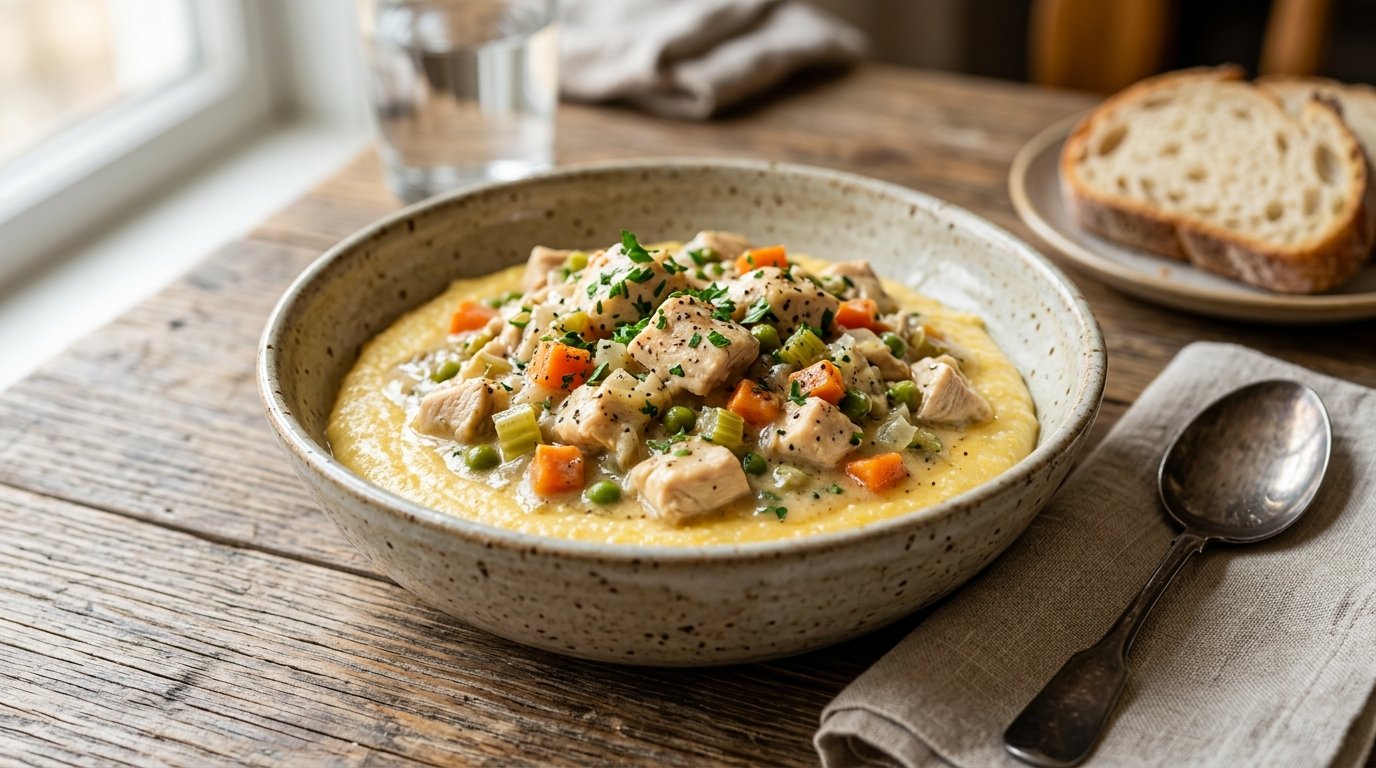
There is a distinct magic in combining tender, golden-brown protein with a velvety grain base, and this creamy chicken and vegetable stew over polenta captures that essence perfectly. Unlike traditional stews that simmer for hours, this recipe utilizes a high-heat roasting technique—inspired by wood-fired ovens—to sear the chicken quickly, locking in juices and creating a depth of flavor that slow-cooking simply cannot replicate. The result is a dish where succulent cubes of chicken and vibrant bell peppers swim in a rich, herb-flecked cream sauce, all resting atop a bed of buttery, smooth cornmeal. It is rustic yet refined, hearty enough for a winter evening but elegant enough for a dinner party. If you are searching for a meal that balances comfort with culinary sophistication, this creamy chicken and vegetable stew over polenta is exactly what your table needs.
Why This Recipe Works
The success of this dish lies in its separation of cooking methods. By roasting the chicken at high heat (mimicking a wood-fired environment) rather than boiling it in the sauce, we achieve superior texture and flavor. The Maillard reaction on the surface of the chicken creates complex savory notes that permeate the entire dish when combined with the vegetables. Meanwhile, the polenta acts as a neutral, creamy canvas that absorbs the luxurious sauce without becoming soggy, providing a textural contrast that elevates the eating experience. The addition of mushrooms adds natural umami, bridging the gap between the sweet peppers and the rich dairy, ensuring every spoonful is balanced and deeply satisfying.
Why You’ll Love This Recipe
Superior Texture: Roasting the chicken ensures it remains juicy and firm, avoiding the rubbery texture often found in boiled stews.
Vibrant Visuals: The contrast of red and green peppers against white mushrooms and golden chicken makes for a stunning presentation.
Versatile Base: Polenta is naturally gluten-free and offers a unique alternative to pasta or rice, adding a subtle corn sweetness.
One-Pan Sauce Efficiency: Building the sauce in the vegetable pan captures all the caramelized fond, maximizing flavor with minimal waste.
Restaurant-Quality Finish: The final emulsion of cream and pan juices creates a glossy, professional-grade sauce that coats every ingredient perfectly.
Ingredient Notes
For the Chicken
Chicken Breast or Thighs: Cut into uniform 1-inch cubes. Purpose: Uniformity ensures even roasting. Tip: Thighs are more forgiving and stay juicier under high heat; breasts are leaner but require precise timing. Substitution: Turkey breast works well for a lighter option.
Olive Oil: Used for tossing chicken before roasting. Purpose: Conducts heat and promotes browning. Buying Tip: Use a high-quality extra virgin olive oil for flavor, but ensure it has a decent smoke point.
Salt & Black Pepper: Seasoning the meat directly. Purpose: Enhances natural flavor. Tip: Season generously; the chicken needs to stand up to the rich cream sauce.
For the Vegetables & Sauce
Bell Peppers (Red & Green): Sliced into strips. Purpose: Adds sweetness, crunch, and color. Tip: Red peppers are sweeter; green peppers add a slight bitterness that balances the cream. Using both creates visual and flavor complexity.
Mushrooms (White/Button): Sliced. Purpose: Provides earthy umami and meaty texture. Substitution: Cremini mushrooms have a deeper flavor profile. Storage: Store in a paper bag in the fridge to prevent sliminess.
Heavy Cream: The foundation of the sauce. Purpose: Creates richness and emulsifies pan juices. Tip: Do not substitute with milk or half-and-half; they lack the fat content needed for a stable, luxurious sauce and may curdle.
Fresh Herbs (Parsley/Thyme): Chopped finely. Purpose: Adds freshness and cuts through richness. Tip: Add only at the very end of cooking to preserve volatile oils and bright green color.
For the Polenta
Cornmeal (Polenta Grade): Coarse or medium grind. Purpose: The starch base. Tip: Avoid “instant” polenta if possible; traditional coarse grind yields a superior, heartier texture. Buying Tip: Look for stone-ground cornmeal for better flavor.
Water or Broth: Liquid for cooking. Purpose: Hydration. Tip: Chicken broth significantly enhances flavor compared to water.
Butter & Parmesan Cheese: Stirred in at the end. Purpose: Enrichment and salinity. Tip: Always use freshly grated Parmesan; pre-grated cheese contains anti-caking agents that prevent smooth melting.
Kitchen Equipment
Wood-Fired Oven OR Conventional Oven: Capable of reaching 450°F–500°F (230°C–260°C).
Metal Roasting Pan: Essential for conducting high heat evenly to the chicken.
Large Skillet or Sauté Pan: Stainless steel or cast iron preferred for developing fond.
Medium Saucepan: Dedicated vessel for cooking polenta.
Whisk: Crucial for lump-free polenta.
Ladle: For generous serving.
Tongs: For handling hot chicken and vegetables.
Chef’s Knife & Cutting Board: For precise prep.
Preparation Information
Prep Time: 20 minutes
Cook Time: 35 minutes
Total Time: 55 minutes
Servings: 4
Dietary Tags: Gluten-Free (verify labels), High Protein
Step-by-Step Instructions
H3: Prepare and Roast the Chicken
Preheat your oven to its highest setting (ideally 450°F–500°F / 230°C–260°C). In a large metal bowl, toss the cubed chicken with olive oil, salt, and freshly cracked black pepper until evenly coated. Arrange the chicken in a single layer on a metal roasting pan. Why this matters: Crowding causes steaming; spacing allows for proper browning. Roast for 15–20 minutes, flipping halfway, until golden brown and cooked through (165°F/74°C internal temp). Remove and rest for 5 minutes. Visual Cue: Edges should be crisp and golden, not pale. Aroma Cue: Savory, roasted meat smell indicates Maillard reaction success.
H3: Sauté the Vegetables
While chicken rests, place a large skillet over medium-high heat. Add a drizzle of oil. Once shimmering, add sliced mushrooms, red bell peppers, and green bell peppers. Why this matters: High heat sears vegetables quickly, retaining crunch and brightness. Sauté for 5–7 minutes, stirring frequently. Texture Cue: Vegetables should be tender-crisp, not mushy. Color Cue: Peppers should remain vibrant; mushrooms should be golden brown. Common Mistake: Adding salt too early draws out moisture and steams veggies; salt near the end.
H3: Build the Cream Sauce
Reduce heat to medium-low. Pour heavy cream into the skillet with vegetables. Scrape the bottom vigorously with a wooden spoon to incorporate browned bits (fond). Why this matters: Fond is concentrated flavor; deglazing ensures nothing is wasted. Simmer gently for 3–5 minutes to thicken slightly. Texture Cue: Sauce should coat the back of a spoon. Warning: Do not boil vigorously; gentle simmer prevents cream separation.
H3: Combine Chicken and Finish Sauce
Add roasted chicken cubes back into the skillet. Stir gently to combine and heat through for 1–2 minutes. Taste and adjust seasoning. Stir in fresh chopped herbs immediately before removing from heat. Why this matters: Herbs added at the end retain fresh flavor and color. Visual Cue: Sauce should be glossy and opaque, clinging to chicken and veggies.
H3: Cook the Polenta
Bring 4 cups liquid (broth/water) to a boil in a saucepan. Slowly whisk in 1 cup polenta in a steady stream. Reduce heat to low; cook 20–30 minutes, stirring frequently, until thick and creamy. Stir in butter and grated Parmesan. Why this matters: Slow cooking hydrates cornmeal fully, eliminating grittiness. Texture Cue: Polenta should pull away from pot sides and feel smooth, not grainy. Common Mistake: Adding polenta too fast creates lumps; always stream slowly while whisking.
H3: Plating and Serving
Spoon a generous mound of polenta into wide, shallow bowls. Create a well in the center. Ladle creamy chicken and vegetable stew over polenta, allowing sauce to cascade. Garnish with extra herbs or black pepper. Serve immediately while steaming. Visual Cue: Contrast of yellow polenta, white sauce, and colorful veggies is key.
Expert Tips
The Wood-Fire Hack: No wood-fired oven? Use your broiler for the last 2 minutes of roasting to mimic char. Alternatively, add a drop of liquid smoke to the chicken marinade.
Cream Temperature: Cold cream shocks hot pans and can curdle. Let cream sit at room temperature for 10 minutes before adding, or temper it with a ladle of hot pan liquid first.
Polenta Patience: Undercooked polenta tastes raw and gritty. If unsure, cook 5 minutes longer with extra liquid. It’s hard to overcook if you keep stirring and adding liquid.
Vegetable Timing: If using softer veggies like zucchini or spinach, add them in the last 2 minutes of sautéing to prevent mushiness.
Seasoning Layers: Season chicken, vegetables, AND polenta separately. Relying solely on sauce salt leads to bland components.
Common Mistakes
Overcooking Chicken: Breast dries out fast. Pull at 160°F; carryover cooking reaches 165°F. Fix: Serve with extra sauce to mask dryness.
Boiling Cream Sauce: High heat breaks emulsion, causing greasy separation. Fix: Remove from heat; whisk in 1 tbsp cold water/cream to re-emulsify.
Dumping Polenta: Adding all at once creates unfixable lumps. Fix: Always stream slowly while whisking constantly.
Skipping Rest: Not resting chicken releases juices into sauce, making meat dry. Fix: Always rest 5 minutes before combining.
Recipe Variations
Spicy Arrabbiata Style: Add red pepper flakes and sun-dried tomatoes to sauce for heat.
Vegan Version: Substitute chicken with firm tofu/chickpeas; use coconut/oat cream; nutritional yeast instead of Parmesan.
Beef Stew Variant: Use cubed beef chuck; sear hard; braise in cream sauce 2 hours instead of roasting.
Seafood Twist: Replace chicken with shrimp/scallops; reduce roast time to 3-4 mins; add at very end.
Low-Carb/Keto: Skip polenta; serve over cauliflower mash or zucchini noodles.
Extra Cheesy: Stir mozzarella/fontina into sauce for stretchy texture.
Healthy Lightened-Up: Use tempered Greek yogurt instead of cream; increase vegetable ratio.
What to Serve With This Recipe
Side Salad: Arugula with lemon vinaigrette cuts richness perfectly.
Crusty Bread: Sourdough/ciabatta for dipping leftover sauce.
Roasted Asparagus: Green veggies complement earthy mushrooms.
Wine Pairing: Medium-bodied Chardonnay or Pinot Grigio pairs beautifully with cream sauce.
Dessert: Tiramisu or panna cotta continues Italian theme without heaviness.
Make Ahead & Meal Prep Tips
Sauce Base: Make creamy veggie sauce 2 days ahead; refrigerate. Reheat gently before adding chicken.
Polenta: Cooked polenta firms when cold. Reheat with splash of milk/broth + vigorous whisking to restore creaminess.
Chicken: Roast up to 3 days ahead; store separately to maintain texture. Add to sauce just before serving.
Freezing: Stew freezes well 3 months. Polenta does NOT freeze well (grainy texture); make fresh.
Storage & Reheating Instructions
Refrigerator
Store leftovers airtight up to 3 days. Keep polenta and stew separate if possible for best texture.
Freezer
Freeze stew portion only up to 3 months. Thaw overnight in fridge before reheating.
Reheating Methods
Stovetop (Best): Gently reheat stew in saucepan over low heat + splash of cream/broth. Reheat polenta separately with liquid, whisking constantly.
Microwave: Cover; heat 30-sec intervals, stirring between to prevent separation/hot spots.
Oven: Stew in covered oven-safe dish at 350°F 15-20 mins. Not recommended for polenta.
Air Fryer: Not suitable for creamy stews or polenta.
Nutritional Information
Approximate values per serving:
Calories: 620
Protein: 38g
Carbohydrates: 45g
Fat: 30g
Fiber: 4g
Sugar: 6g
Sodium: 720mg
Note: Values vary based on brands/portions.
Troubleshooting Guide
Problem
Cause
Solution
Sauce Separated/Greasy
Heat too high or cream boiled
Remove from heat. Whisk in 1 tbsp cold water/cream vigorously to re-emulsify.
Polenta Gritty/Raw
Undercooked or insufficient liquid
Continue cooking lowest heat + warm liquid gradually until smooth.
Chicken Dry/Tough
Overcooked or cut too small
Next time: use thighs/reduce time. Now: serve extra sauce to mask.
Vegetables Mushy
Over-sautéed or added too early
Sauté just until tender-crisp. Add delicate veggies last.
Sauce Too Thin
Insufficient reduction
Simmer uncovered longer to evaporate. Or mix 1 tsp cornstarch + cold water; stir in.
Polenta Too Thick/Stiff
Lost moisture cooling
Reheat with generous warm broth/milk, whisking aggressively.
Frequently Asked Questions
1. Can I use instant polenta for this recipe? Yes, instant polenta saves time (5-10 mins vs 30 mins). However, traditional coarse-ground offers superior heartier texture. If using instant, reduce liquid slightly as it absorbs less.
2. Why did my cream sauce curdle? Usually high heat or acidity. Ensure low heat when adding cream; avoid adding acidic ingredients (wine/tomatoes) directly to cream without reducing first. Full-fat heavy cream is most stable.
3. Can I make this dairy-free? Absolutely. Use full-fat coconut milk or canned oat cream. For polenta, use olive oil + nutritional yeast instead of butter/Parmesan. Flavor shifts slightly but remains delicious.
4. How do I know when polenta is done? Done when thick, creamy, and pulls away cleanly from pot sides when stirred. Should taste smooth, not gritty. If unsure, cook 5 mins longer; hard to overcook if adding liquid.
5. Can I use frozen vegetables? Fresh preferred for texture/flavor. Frozen mushrooms/peppers release excess water, diluting sauce. If using frozen, thaw/pat dry thoroughly before sautéing; expect thinner sauce.
6. What cut of chicken is best for roasting? Boneless skinless thighs ideal (higher fat = moist under high heat). Breast works but requires careful monitoring. Cut uniformly for even cooking.
7. Can I prepare polenta ahead of time? Yes, but it solidifies cold. Restore creaminess by reheating slowly with additional warm liquid (broth/milk/water), whisking constantly. Never microwave without liquid (becomes rubbery).
8. Is this recipe gluten-free? Naturally yes—chicken, veggies, cream, cornmeal are GF. Always verify labels on packaged items (broth/cream/polenta) for cross-contamination. Look for certified GF labels if sensitivity severe.
Final Thoughts
This creamy chicken and vegetable stew over polenta transcends simple comfort food—it’s a celebration of technique meeting tradition. The high-heat roasting transforms humble chicken into something extraordinary, while the polenta provides a canvas that honors the sauce’s richness. Whether you’re seeking solace after a long day or aiming to impress guests, this dish delivers on every level: