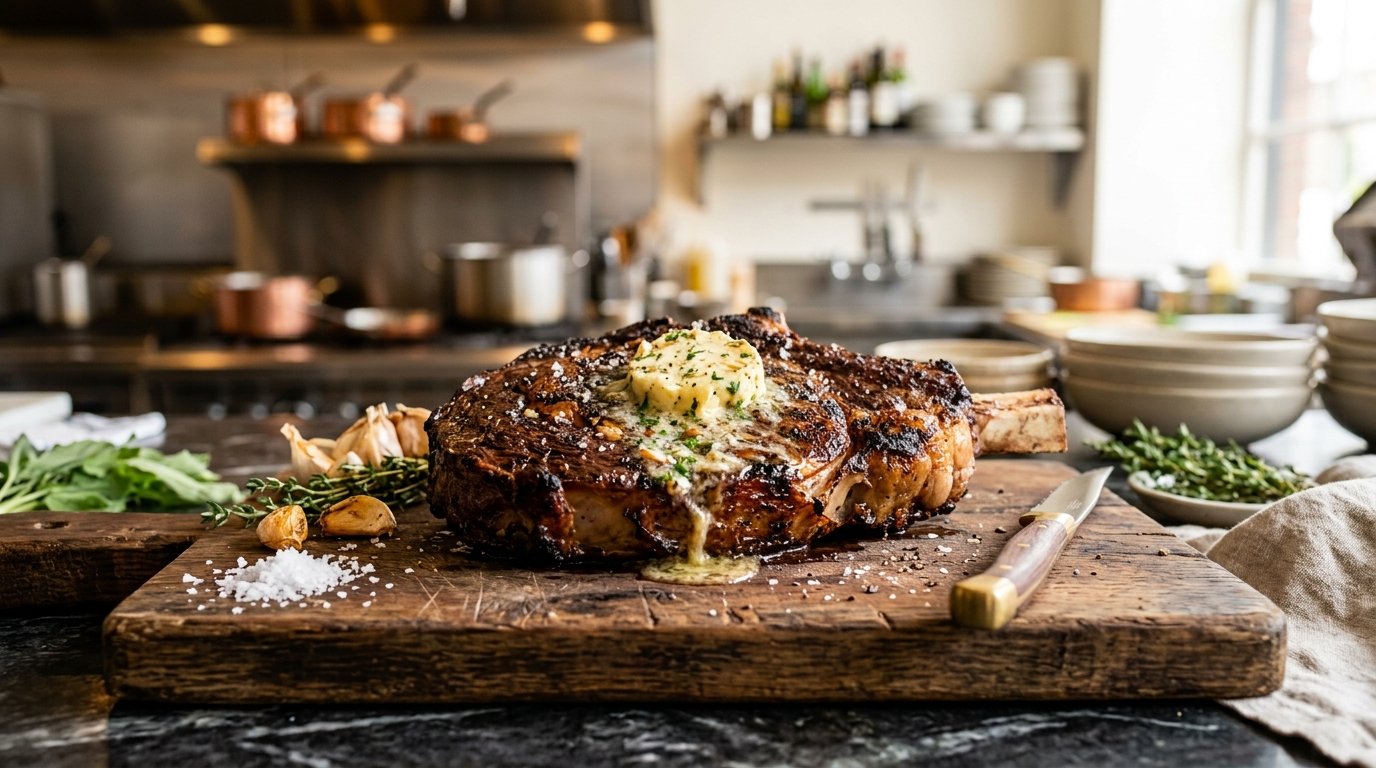
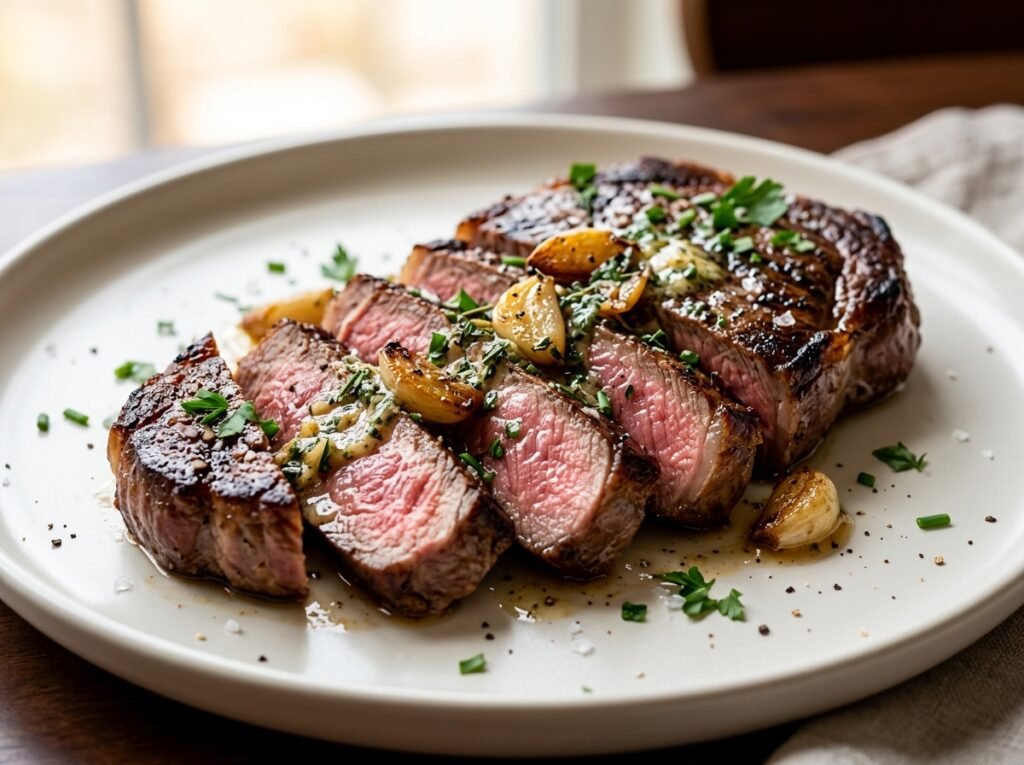
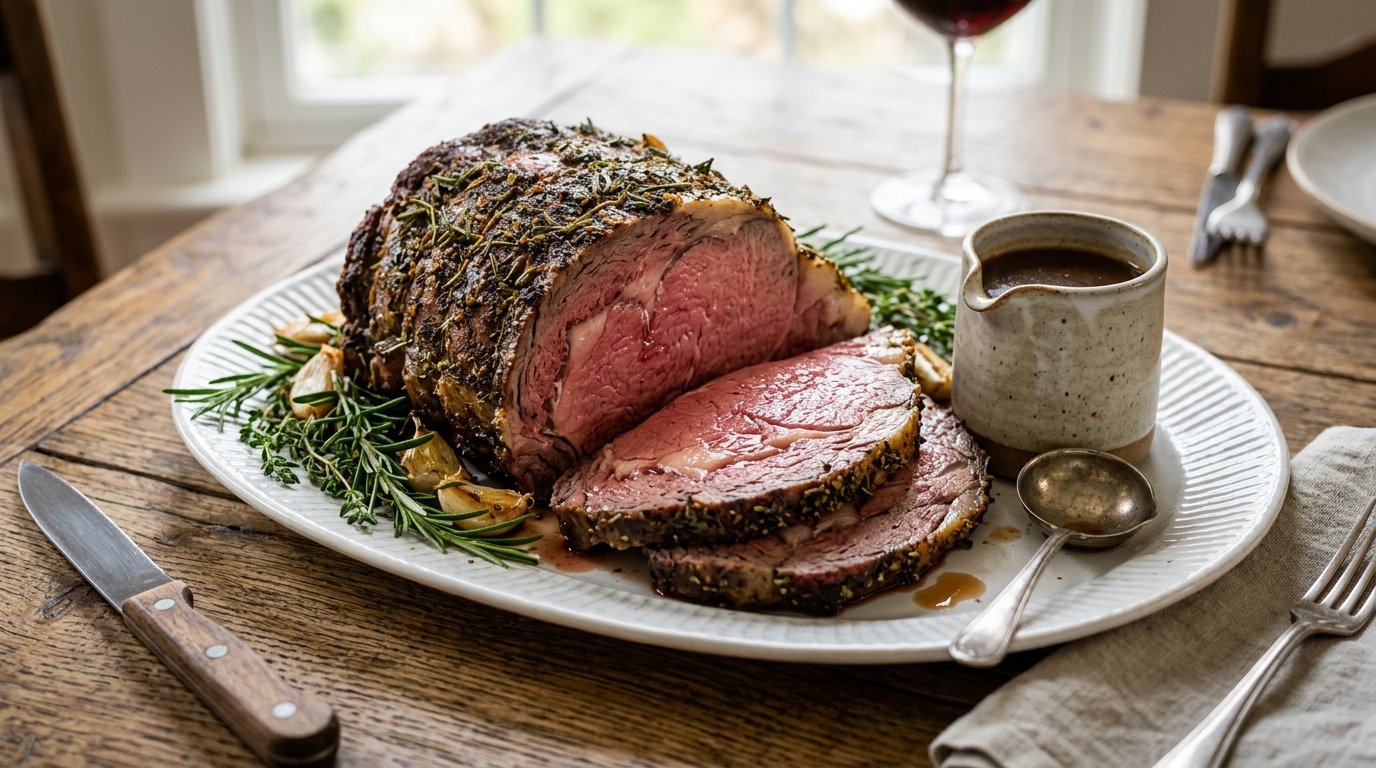
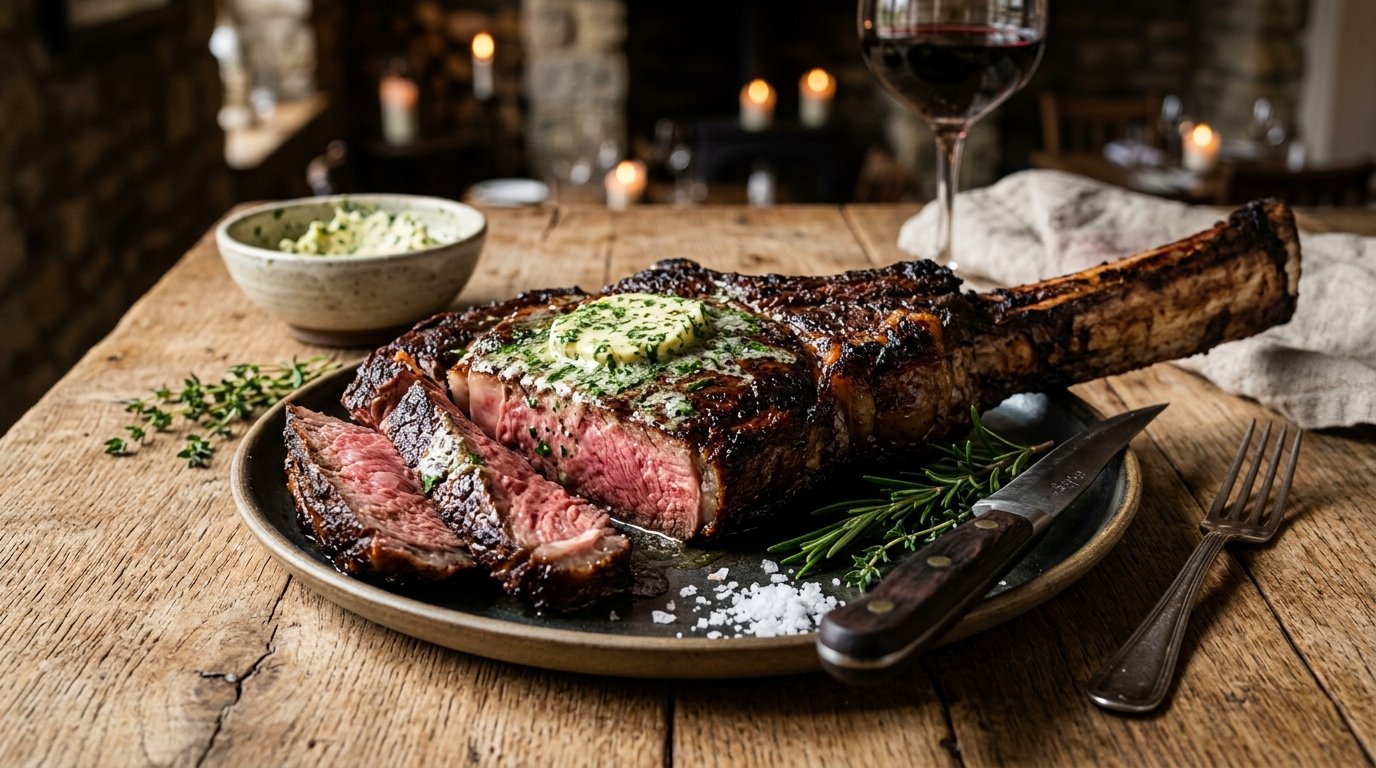
There is a distinct moment in cooking when a dish transcends its ingredients and becomes an experience. For steak lovers, that moment often arrives not with the sear itself, but with the first bite of melting, aromatic fat atop perfectly cooked beef. This garlic butter steak recipe elevates the classic pan-seared steak by introducing a secret weapon: roasted garlic compound butter. Unlike raw garlic which can burn and turn bitter in a hot pan, roasting whole cloves first creates a sweet, nutty, spreadable base that melds seamlessly with salted butter, fresh parsley, and tangy mustard.
The result is a sauce that doesn’t just sit on top of your steak; it integrates into the crust, basting the meat as it rests and delivering bursts of complex flavor with every slice. Whether you are celebrating an anniversary, hosting a dinner party, or simply treating yourself to a Tuesday night indulgence, mastering this garlic butter steak technique will permanently upgrade your weeknight repertoire. It’s approachable enough for beginners yet refined enough to impress seasoned gourmands. Let’s dive into the details of creating this culinary masterpiece.
Why This Recipe Works
The brilliance of this garlic butter steak lies in two fundamental culinary principles: controlled Maillard reaction and emulsification. First, by roasting the garlic separately before adding it to the butter, we eliminate the risk of burning. Raw minced garlic has a high sugar content that scorches instantly at steak-searing temperatures (400°F+), creating acrid notes. Roasted garlic, however, has already undergone caramelization, developing deep umami and sweetness that complements rather than competes with the beef.
Second, the compound butter acts as a finishing agent that leverages residual heat. When placed on the hot steak or in the warm pan during the final moments of cooking, the butter melts slowly, carrying the roasted garlic, herbs, and mustard into the meat’s surface. The mustard isn’t just for flavor; its lecithin content helps stabilize the emulsion, preventing the butter from separating into oil and solids. This creates a glossy, cohesive sauce that clings to the steak instead of pooling uselessly on the plate.
Why You’ll Love This Recipe
Flavor Depth: Roasted garlic offers a completely different profile than raw—sweet, mellow, and complex.
Versatility: The compound butter doubles as a topping for bread, vegetables, or fish.
Restaurant Quality: Achieves steakhouse-level richness without expensive equipment.
Make-Ahead Friendly: Compound butter can be prepared days in advance and frozen.
Visual Appeal: The golden-brown garlic specks against vibrant green parsley create stunning presentation.
Aromatic Experience: The scent of roasting garlic and sizzling butter fills the kitchen with irresistible warmth.
Ingredient Notes
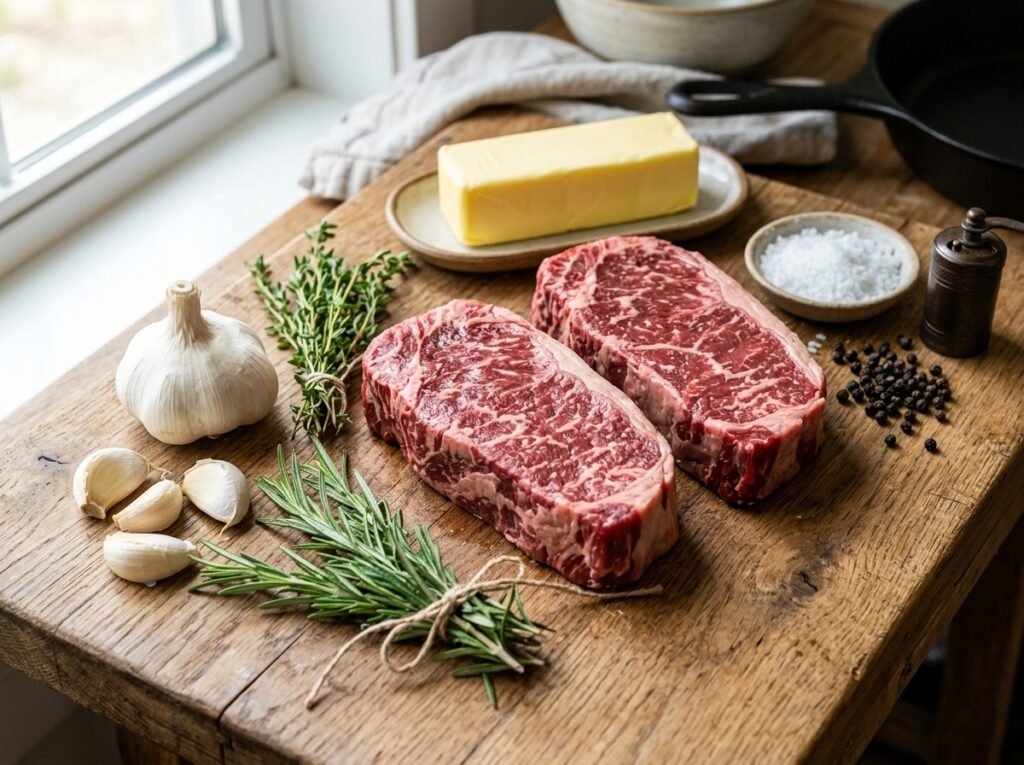
Success starts with quality ingredients. Here is what to look for:
Whole Garlic Cloves
Purpose: The foundation of the compound butter.
Buying Tip: Choose firm, heavy heads with tight skins. Avoid sprouting or soft cloves—they indicate age and bitterness.
Substitution: If short on time, use jarred roasted garlic, though fresh-roasted yields superior texture and flavor intensity.
Storage: Store unpeeled heads in a cool, dark place for up to 3 months. Peeled cloves last 1 week refrigerated.
Unsalted Butter
Purpose: Carries flavor and creates the sauce base.
Why Unsalted? Allows precise control over seasoning. Salted butter varies wildly in sodium content, making consistency impossible.
Fat Content: Use European-style butter (82%+ fat) if possible. Higher fat means less water, resulting in richer mouthfeel and better browning.
Temperature: Must be softened to room temperature (65-70°F) for proper mixing. Cold butter won’t incorporate; melted butter separates.
Fresh Parsley
Purpose: Adds brightness, color, and herbal contrast to rich fat.
Type: Flat-leaf (Italian) parsley is preferred over curly for its cleaner flavor and easier chopping.
Prep: Wash and dry thoroughly. Wet herbs dilute the butter and promote spoilage. Chop just before mixing to prevent oxidation (browning).
Substitution: Chives or tarragon work well; avoid woody herbs like rosemary unless finely minced.
Dijon Mustard
Purpose: Provides acidity, tang, and emulsifying properties.
Why Dijon? Smooth texture integrates seamlessly; grainy mustard creates unwanted texture. Its vinegar content balances the fat.
Substitution: Whole-grain mustard adds texture but changes mouthfeel. Yellow mustard is too vinegary and artificial-tasting.
Amount: Start with 1 tsp; you can always add more. Too much overwhelms the garlic.
Beef Steaks
Purpose: The canvas for the butter.
Best Cuts: Ribeye (marbling = flavor), New York Strip (balance of lean/tender), or Filet Mignon (lean canvas for bold butter).
Thickness: Aim for 1.5–2 inches. Thin steaks overcook before developing crust.
Prep: Pat completely dry. Moisture = steam = no sear. Season generously with kosher salt 40 mins before cooking (dry brine) or immediately before (no time to draw out moisture).
Neutral Oil (for roasting garlic)
Purpose: Conducts heat evenly during garlic roasting.
Type: Avocado, grapeseed, or light olive oil. High smoke point prevents burning.
Note: The oil used for roasting garlic is infused with flavor—save it! Drizzle over finished steak or toss with roasted vegetables.
Kitchen Equipment
Heavy-Bottomed Skillet: Cast iron or stainless steel essential for even heat retention and superior sear. Non-stick cannot achieve proper crust.
Small Saucepan or Oven-Safe Dish: For roasting garlic cloves gently.
Mixing Bowl: Medium-sized for combining compound butter.
Fork or Small Whisk: For mashing and emulsifying butter mixture.
Slotted Spoon: For removing roasted garlic from oil without excess grease.
Instant-Read Thermometer: Critical for accurate doneness. Guesswork leads to disappointment.
Tongs: For flipping steak safely. Never pierce meat—juices escape.
Cutting Board & Sharp Knife: For slicing steak against the grain post-rest.
Preparation Information
Prep Time: 15 Minutes (roasting garlic, making butter, prepping steak)
Cook Time: 20 Minutes (searing steak, resting)
Total Time: 35 Minutes
Servings: 2 large steaks or 4 smaller portions
Step-by-Step Instructions
H3: 1. Roast the Garlic Cloves
Peel 1-2 heads of garlic (yielding ~20-30 cloves). Heat 2 tbsp neutral oil in a small skillet over medium-low heat. Add cloves in a single layer. Cook gently, stirring occasionally, for 15-20 minutes until deeply golden brown and tender when pierced with a fork.
Why Low Heat? High heat burns the exterior before the interior softens. Patience yields creamy, sweet garlic.
Visual Cue: Color should resemble toasted almonds, not charcoal. Aroma shifts from sharp/pungent to sweet/nutty.
Pro Tip: If cloves start browning too fast, reduce heat or add a splash of water to steam briefly. Remove from heat immediately once done—they continue cooking off-heat.
H3: 2. Make the Compound Butter
Transfer roasted garlic to a bowl while still warm. Add ½ cup (1 stick) softened unsalted butter, ½ tsp coarse sea salt, ¼ tsp freshly cracked black pepper, 2 tbsp chopped flat-leaf parsley, and 1 tsp Dijon mustard. Mash vigorously with a fork until fully combined and uniform in color/texture.
Texture Check: Should be smooth and spreadable, not greasy or separated. If oily, chill 10 mins then re-mix.
Taste Test: Adjust seasoning now. Butter dulls flavors when cold; taste should be slightly assertive.
H3: 3. Prep and Sear the Steak
Pat steaks bone-dry. Season liberally with kosher salt and pepper. Heat cast iron skillet over high heat until smoking. Add 1 tbsp high-smoke-point oil. Place steaks in pan; do not move for 3-4 minutes to develop crust. Flip and cook another 3-4 minutes for medium-rare (internal temp 130-135°F).
Why High Heat? Essential for Maillard reaction—the chemical process creating flavorful brown crust.
Avoid Pressing: Never press steak with spatula. This squeezes out precious juices, guaranteeing dryness.
H3: 4. Baste and Rest
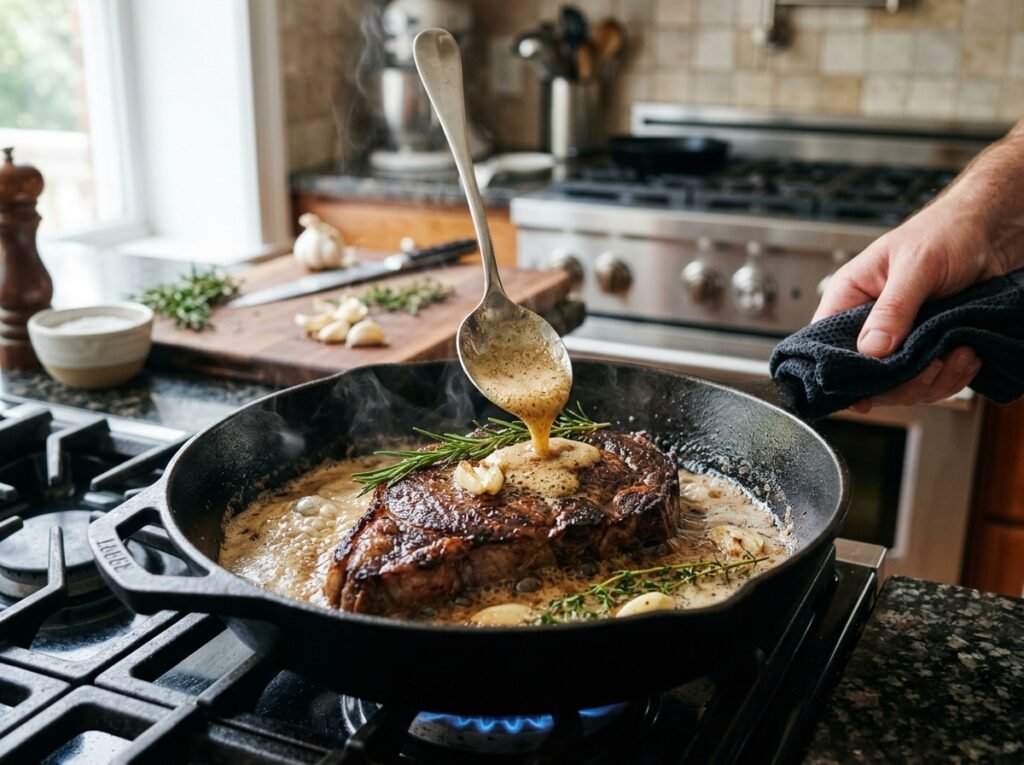
In the last minute of cooking, add 2-3 generous dollops of compound butter to the pan. Tilt pan slightly and spoon foaming butter continuously over steaks. Remove steaks to a warm plate or cutting board. Tent loosely with foil. Rest for 8-10 minutes.
Why Baste? Butter conducts heat gently, cooking the top surface while adding flavor. Foaming indicates water evaporating—perfect basting moment.
Resting Science: Muscle fibers relax during rest, reabsorbing juices. Cutting immediately releases them onto the board.
Butter Management: Don’t let butter burn. If it browns excessively, remove pan from heat briefly.
H3: 5. Slice and Serve
Slice steak against the grain into ½-inch thick pieces. Top with additional compound butter if desired. Garnish with flaky salt and microgreens. Serve immediately while butter is melting.
Against the Grain: Shortens muscle fibers, making each bite tender. With the grain = chewy.
Plating: Warm plates prevent butter from solidifying on contact. Pre-warm in oven at 200°F for 5 mins.
Expert Tips
Garlic Roasting Alternative: Roast garlic in oven at 350°F for 30-40 mins wrapped in foil with oil. More hands-off, less active monitoring.
Butter Temperature Hack: Microwave butter in 5-second bursts if forgotten. Goal is pliable, not liquid. Liquid butter breaks the emulsion.
Steak Thickness Matters: Thin steaks (<1 inch) cook too fast for proper crust development. Butterfly thicker cuts if needed, but maintain mass.
Salt Timing: Dry-brining (salting 40+ mins ahead) penetrates seasoning deeper and dries surface for better sear. If salting right before cooking, do it literally seconds before hitting pan—no time for moisture extraction.
Pan Choice: Enameled cast iron works but takes longer to heat. Bare cast iron or carbon steel responds fastest to temperature changes.
Common Mistakes
Burnt Garlic
Cause: Heat too high or walking away.
Fix: Start low and slow. Garlic goes from golden to burnt in seconds. Remove from pan before it looks done—it keeps cooking.
Prevention: Stay present. Stir frequently. Use thermometer if unsure (target 250-275°F internal for cloves).
Tough, Chewy Steak
Cause: Overcooking, cutting with grain, or not resting.
Fix: Use thermometer. Slice against grain. Rest minimum 8 mins.
Prevention: Practice makes perfect. Cook one test steak to learn your pan’s behavior.
Broken/Greasy Butter Sauce
Cause: Butter too hot or added to cold pan.
Fix: Remove from heat. Whisk in 1 tsp cold water or cream to re-emulsify.
Prevention: Add butter only when pan is hot but not smoking. Tilt pan to pool butter; don’t let it sit in direct heat.
Bland Flavor
Cause: Underseasoned steak or weak compound butter.
Fix: Taste butter before using. Season steak aggressively—much washes away during cooking.
Prevention: Salt steak 40 mins ahead. Boost butter with lemon zest or extra mustard if flat.
Recipe Variations
Spicy Harissa Butter: Replace mustard with 1 tbsp harissa paste. Add pinch of cayenne. Pairs beautifully with lamb or duck.
Blue Cheese Compound Butter: Swap parsley for crumbled blue cheese. Omit mustard. Ideal for bold palates and porterhouse cuts.
Vegan Version: Use plant-based butter (Miyoko’s or Earth Balance). Nutritional yeast replaces parmesan-like depth. Mushrooms stand in for steak.
Herbes de Provence Twist: Replace parsley with dried herbes de Provence. Add lavender pinch. Elegant for filet mignon.
Citrus-Garlic Butter: Add 1 tsp lemon zest + 1 tbsp juice to butter. Brightens rich cuts like ribeye.
Coffee-Rubbed Steak: Rub steak with espresso powder + brown sugar before searing. Compound butter remains classic. Deep, earthy contrast.
Low-Carb/Keto: Serve over cauliflower mash or zucchini noodles. Butter is naturally keto-friendly.
Extra Umami: Add 1 tsp white miso paste to compound butter. Fermented depth enhances beefiness without overpowering.
What to Serve With This Recipe
Balance the richness of garlic butter steak with contrasting textures and flavors:
Crispy Smashed Potatoes: Golden, crunchy exterior with fluffy interior. Soaks up butter beautifully.
Arugula Salad with Lemon Vinaigrette: Peppery greens cut through fat. Acid cleanses palate.
Creamed Spinach: Classic steakhouse side. Echoes buttery theme without redundancy.
Red Wine Reduction: Pan drippings + red wine + shallots. Intensifies beef flavor.
Wine Pairing: Cabernet Sauvignon (bold tannins cut fat), Malbec (fruit-forward balance), or Syrah (peppery notes match garlic).
Bread: Crusty sourdough or baguette. Mandatory for sopping up leftover butter.
Dessert: Dark chocolate tart or espresso panna cotta. Bitter/sweet contrasts savory finish.
Make Ahead Tips
Compound Butter: Prepare up to 5 days ahead. Store in airtight container in fridge. Flavors meld and improve over time.
Roasted Garlic: Keep in oil-filled jar in fridge for 2 weeks. Oil becomes infused bonus ingredient.
Steak Prep: Trim and season steaks up to 24 hrs ahead. Dry-brine in fridge uncovered—surface dries for superior crust.
Portion Control: Roll compound butter in parchment paper into logs. Freeze slices for instant portioning later.
Meal Prep Tips
Batch Roasting: Roast 3-4 heads of garlic at once. Freeze cloves in oil-filled ice cube trays. Pop out as needed.
Butter Logs: Shape compound butter into cylinders. Wrap tightly. Freeze up to 3 months. Slice frozen discs directly onto hot steak.
Steak Portioning: Buy family pack. Portion into individual servings. Vacuum seal. Freeze. Thaw in fridge 24 hrs before cooking.
Side Prep: Smash potatoes or blanch asparagus ahead. Reheat quickly while steak rests.
Storage Instructions
Refrigerator: Cooked steak lasts 3-4 days. Compound butter lasts 2 weeks. Store butter in airtight container; press plastic wrap directly on surface to prevent oxidation.
Freezer: Steak freezes well up to 3 months. Wrap tightly in plastic + foil. Compound butter freezes indefinitely. Label with date.
Safety: Never leave steak at room temp >2 hours. Cool completely before refrigerating. Reheat to 165°F if storing leftovers.
Reheating Instructions
Oven (Best): Preheat to 275°F. Place steak on rack over baking sheet. Warm 15-20 mins until 110°F internal. Finish with fresh compound butter. Preserves texture.
Sous Vide (Ideal): Seal steak in bag. Submerge in 130°F water bath 30-45 mins. Perfect edge-to-edge doneness. Sear briefly after if crust faded.
Stovetop: Low heat. Add splash of broth/butter. Cover. Warm gently 3-4 mins per side. Prevents further cooking.
Microwave (Last Resort): 30% power. 30-sec bursts. Flip between. Dries out meat. Only if desperate. Add butter post-reheat.
Air Fryer: Not recommended. Circulating air desiccates steak. Use only for reheating sides.
Nutritional Information
Approximate per serving (6oz ribeye + 2 tbsp butter):
Calories: 750 kcal
Protein: 48g
Carbohydrates: 3g
Fat: 60g
Fiber: 0g
Sugar: 1g
Sodium: 680mg
Note: Values vary significantly by cut, trim, and butter amount. Grass-fed beef tends to be leaner. Adjust for dietary tracking.
Troubleshooting Guide
Problem
Cause
Solution
Steak gray inside, no pink
Overcooked or pan too cool
Use thermometer. Ensure pan smokes before adding steak.
Butter separates/oily
Heat too high or cold butter added
Remove from heat. Whisk in cold liquid. Emulsify vigorously.
Garlic bitter/burnt
Heat excessive or timing off
Discard burnt batch. Next time: lower heat, watch closely.
Steak tough/chewy
Cut with grain or overcooked
Always slice against grain. Rest properly. Use thermometer.
Lack of crust
Moisture on surface or crowded pan
Pat dry thoroughly. Don’t overcrowd. High heat essential.
Butter too salty
Salted butter used or over-seasoned
Use unsalted butter. Taste before applying. Dilute with unsalted butter if needed.
Frequently Asked Questions
Can I use margarine instead of butter?
No. Margarine contains water and vegetable oils that separate and burn differently. The flavor and texture will be inferior. Stick to real butter for authentic results.
How do I know when garlic is perfectly roasted?
It should be golden brown (not dark brown), soft enough to mash easily with a fork, and smell sweet/nutty—not pungent or acrid. Taste one; it should be mild and caramelized.
Can I make compound butter without mustard?
Yes, but mustard aids emulsification and adds necessary acidity. Without it, butter may separate more easily. Substitute with ½ tsp lemon juice if avoiding mustard.
What if my steak is thicker than 2 inches?
Reverse sear: Oven at 250°F until 115°F internal (45-60 mins). Then sear in screaming-hot pan 1-2 mins per side for crust. Ensures even doneness.
Is it safe to eat rare steak?
Yes, if sourced from reputable butcher and handled properly. Surface bacteria are killed during sear; interior of whole muscle cuts is generally sterile. Ground beef must be cooked to 160°F.
Can I reuse the garlic-roasting oil?
Absolutely! Strain through fine mesh. Store in fridge up to 2 weeks. Use for sautéing vegetables, drizzling over bread, or as salad dressing base. Infused with subtle garlic essence.
Why does my compound butter turn green?
Parsley oxidizes when exposed to air/light. Minimize exposure: mix just before use, store covered tightly, add lemon juice (acid slows oxidation). Color change doesn’t affect safety or flavor significantly.
Can I grill instead of pan-sear?
Yes. Grill over direct high heat. Apply compound butter in last 2 mins of grilling, closing lid to melt. Or serve cold butter atop rested grilled steak. Charcoal adds smoky dimension.
Final Thoughts
Mastering this garlic butter steak is more than following steps—it’s understanding how heat, fat, and time interact to create something greater than the sum of its parts. The roasted garlic transforms from humble bulb to luxurious condiment. The compound butter becomes a vehicle for flavor that elevates humble beef to celebration-worthy status. Each element teaches patience, attention, and respect for ingredients.
I urge you to try this recipe exactly as written first. Feel the garlic’s transformation. Hear the steak’s sizzle. Watch the butter melt into golden pools. Then, experiment. Make it yours. Share your creations, your tweaks, your triumphs in the comments below. Did you add thyme? Try blue cheese? Discover a new favorite cut? Your insights enrich our community. Rate the recipe if it brought joy to your table. Happy cooking, and may your steaks always be juicy and your butter always golden.