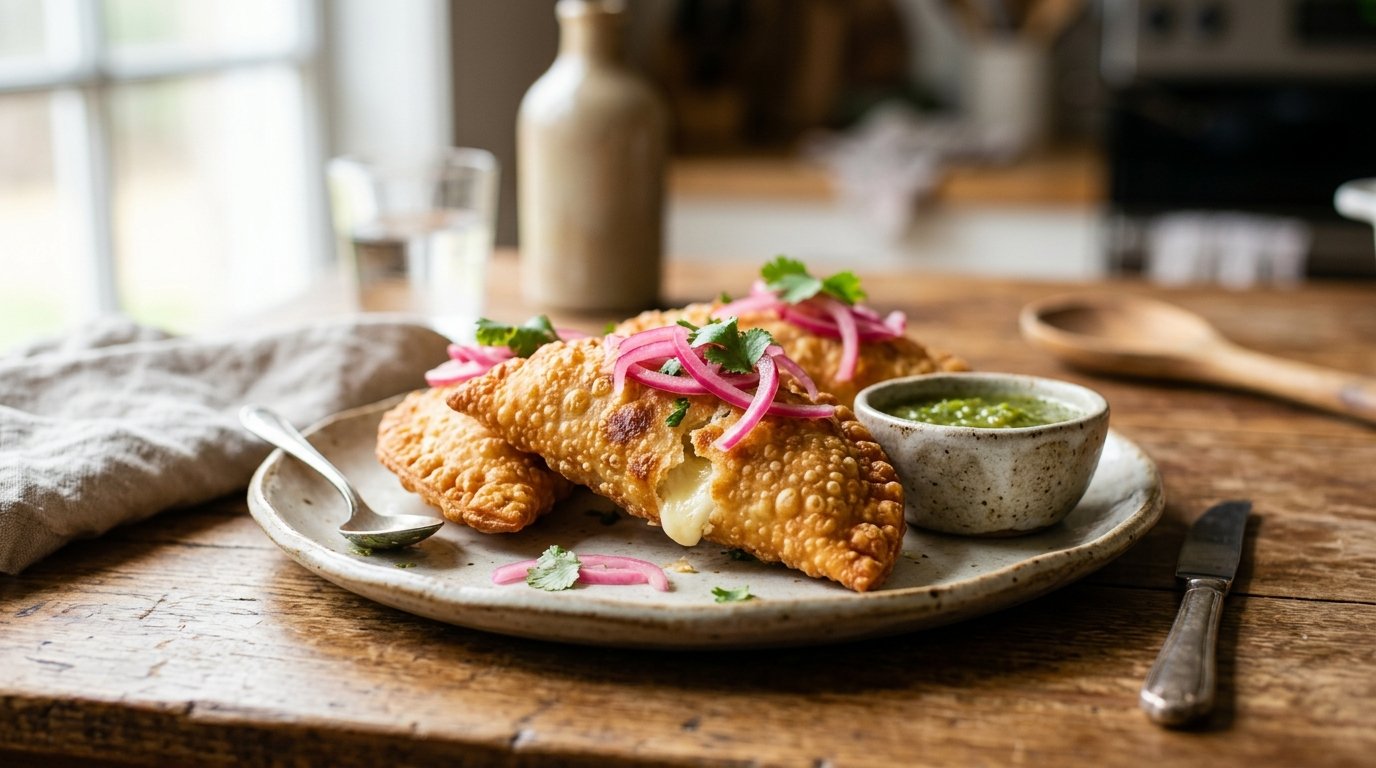
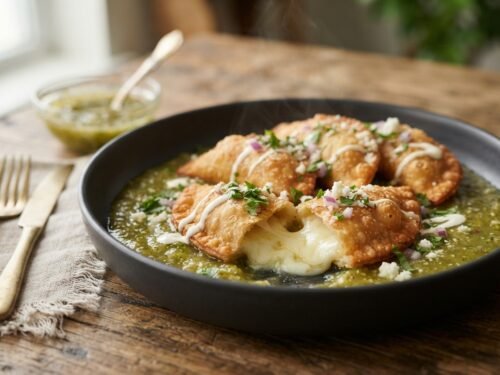
There is a moment of pure culinary anticipation when you pull apart a freshly fried empanada and watch molten cheese stretch into golden strands while steam escapes from the crispy shell. These fried cheese empanadas with salsa verde and pickled onions capture that magic perfectly, combining the satisfying crunch of deep-fried masa with the gooey richness of melted cheese and the bright, acidic punch of tangy green sauce. Unlike baked versions that can sometimes turn out dry or dense, frying creates an ethereal texture: shatteringly crisp on the outside, pillowy soft within, and explosively cheesy in the center.
This recipe elevates the humble cheese turnover into a gourmet experience through thoughtful technique and vibrant accompaniments. The use of fresh masa dough pressed thin ensures maximum surface area for crisping, while the generous cheese filling provides that coveted pull we all crave. But the true genius lies in the finishing touches—a ladle of zesty salsa verde cuts through the richness, crumbled cotija adds salty depth, and pickled red onions provide a sweet-tart crunch that balances every bite. Whether you’re hosting a game day gathering, exploring Latin street food at home, or simply treating yourself to something extraordinary, mastering these fried cheese empanadas will transform your snack repertoire forever.
Why This Recipe Works
The success of this dish hinges on three critical factors: dough hydration, sealing technique, and temperature control. Masa harina, when properly hydrated with warm water, forms a pliable yet sturdy dough that withstands high heat without cracking. The warmth activates the starches, creating a cohesive structure that puffs beautifully during frying rather than splitting open. This is why cold water or insufficient kneading leads to disaster—the dough lacks elasticity and fractures under thermal stress.
Sealing is equally paramount. The crimped edge isn’t merely decorative; it’s a functional barrier against cheese leakage. By pressing firmly and creating overlapping folds, you form a mechanical lock that expands with the melting cheese rather than bursting. Meanwhile, maintaining oil at exactly 375°F (190°C) ensures rapid crust formation before the cheese fully liquefies. Too cool, and the empanada absorbs oil and leaks; too hot, and the exterior burns while the interior remains raw. This precise thermal window creates the signature blistered, bubbly surface that defines authentic fried empanadas. Finally, the post-fry saucing transforms them from simple pastries into complex flavor bombs where acid, salt, heat, and fat harmonize perfectly.
Why You’ll Love This Recipe
Irresistible Cheese Pull: Achieves that viral-worthy stretch thanks to proper sealing and optimal frying temperature.
Perfect Texture Contrast: Shatteringly crisp exterior gives way to tender masa and molten cheese interior.
Balanced Flavor Profile: Rich, fatty filling is elevated by bright salsa verde, salty cotija, and tangy pickled onions.
Customizable Heat Level: Adjust salsa verde spiciness and add chilies to suit any palate.
Visually Stunning: Golden-brown blistered shells topped with vibrant green sauce and pink onions make beautiful presentation.
Versatile Serving Options: Works as appetizer, snack, light meal, or party centerpiece.
Authentic Technique: Uses traditional masa pressing and frying methods for genuine street food quality.
Satisfying Comfort Food: Combines universal loves—cheese, carbs, and crunch—in one irresistible package.
Ingredient Notes
Masa Harina (Corn Flour)
Purpose: Forms the dough base. Nixtamalized corn flour provides distinctive flavor, texture, and gluten-free structure essential for authentic empanadas.
Substitutions: Pre-made fresh masa (nixtamal) works excellently if available. Cornmeal cannot substitute—it lacks nixtamalization and won’t bind properly. Wheat flour creates entirely different pastry, not empanada.
*Buying Tips: Look for “Maseca” or similar brands labeled specifically for tortillas/empanadas. Avoid instant cornmeal or polenta. Check expiration date; old masa harina loses binding power and develops rancid notes.
*Storage Tips: Store in airtight container in cool, dark pantry up to 6 months. Refrigerate or freeze for longer storage to prevent oil oxidation. Always bring to room temperature before using.
Oaxaca Cheese (Queso Oaxaca)
*Purpose: Primary filling. String cheese with excellent melt and mild flavor that stretches dramatically when heated. Traditional choice for Mexican fried cheeses.
*Substitutions: Mozzarella (low-moisture part-skim) mimics stretch well. Asadero or Chihuahua cheese offer similar melt. Avoid pre-shredded bags—they contain anti-caking agents that inhibit smooth melting. Cotija alone doesn’t melt sufficiently for filling.
*Buying Tips: Buy block/string cheese, not pre-shredded. Fresh Oaxaca should be moist, elastic, and mildly milky. Dry/crumbly = old. Smell should be clean, not sour/ammonia-like.
*Storage Tips: Refrigerate tightly wrapped up to 2 weeks. Freeze for up to 3 months; thaw overnight in fridge before use. Never refreeze thawed cheese.
Tomatillos (for Salsa Verde)
*Purpose: Base of green sauce. Provides tartness, body, and vibrant color. Essential for authentic salsa verde flavor profile.
*Substitutions: Green tomatoes (unripe) work but lack tomatillo’s unique tartness. Canned tomatillos acceptable when fresh unavailable; drain/rinse well. No true substitute replicates exact flavor.
*Buying Tips: Choose firm, heavy tomatillos with intact papery husks. Husk should be dry/brown, fruit bright green underneath. Soft/yellow = overripe/sour. Remove husks/sticky residue before use.
*Storage Tips: Store unhulled in paper bag at room temp up to 2 weeks. Refrigerate hulled in sealed container up to 3 weeks. Freeze roasted/pureed for up to 6 months.
Red Onion (Pickled)
*Purpose: Adds sweet-tart crunch, color contrast, and acidity that cuts richness. Balances fatty cheese/crispy shell.
*Substitutions: White onion pickled similarly works. Shallots offer milder flavor. Raw red onion lacks necessary acidity/tender texture. Quick-pickling is non-negotiable for proper balance.
*Buying Tips: Select firm, heavy onions with dry skins/no sprouts. Purple/red varieties have best color/flavor for pickling. Avoid soft/moldy specimens.
*Storage Tips: Pickled onions keep refrigerated up to 3 weeks. Flavor improves after 24 hours. Store in brine liquid to maintain texture/acidity.
Vegetable Oil (for Frying)
*Purpose: Cooking medium. High smoke point neutral oil allows proper crisping without imparting flavor.
*Substitutions: Canola, grapeseed, avocado, or peanut oil all work. Avoid olive/coconut/butter—they burn or overpower. Lard traditional but changes flavor profile significantly.
*Buying Tips: Choose oils with smoke point >400°F. Neutral flavor essential. Avoid reused oil more than 2-3 times; degraded oil affects taste/texture/safety.
*Storage Tips: Store in cool/dark place. Discard if cloudy/smoky/rancid. Strain/reuse only if clean after frying. Never mix old/new oil.
Cotija Cheese (Garnish)
*Purpose: Salty, crumbly finish. Adds umami depth and textural contrast to smooth sauce/melty filling. Doesn’t melt completely, providing pleasant grit.
*Substitutions: Feta (saltier/tangier), ricotta salata, or aged parmesan work. Queso fresco milder/less salty. Avoid mozzarella/cheddar—they melt away instead of crumbling.
*Buying Tips: Buy block, crumble yourself. Aged cotija harder/saltier; young softer/milder. Both work; choose based on preference. Ensure no mold/discoloration.
*Storage Tips: Refrigerate tightly wrapped up to 3 months. Can freeze but texture becomes crumblier. Bring to room temp before crumbling for best texture.
Kitchen Equipment
Tortilla Press: Essential for uniform thin discs. Cast iron preferred for even pressure/heat retention. Plastic/metal work but may require more effort.
Plastic Sheets (Cut Ziplock Bags): Prevent sticking during pressing. Two sheets needed—one top, one bottom. Reusable if cleaned/dried properly.
Heavy-Bottomed Pot/Dutch Oven: Maintains stable oil temperature. Thin pots cause dangerous fluctuations. 3-4 qt capacity minimum for safe frying.
Candy/Deep Fry Thermometer: Non-negotiable for safety/quality. Visual cues unreliable. Calibrate regularly for accuracy.
Spider Skimmer/Slotted Spoon: Safe removal/draining. Long handle protects hands. Fine mesh prevents losing small pieces.
Wire Rack + Paper Towels: Draining station. Rack allows air circulation underneath; towels absorb excess oil. Prevents sogginess.
Blender/Food Processor: For smooth salsa verde. High-speed blender ideal. Pulse carefully to avoid overheating/watering down.
Small Saucepan: For quick-pickling onions. Even heating prevents scorching vinegar/sugar mixture.
Pastry Brush (Optional): For brushing excess oil off finished empanadas if desired. Silicone easiest to clean.
Preparation Information
Prep Time: 30 Minutes
Cook Time: 20 Minutes
Total Time: 50 Minutes
Servings: 6-8 Empanadas
Step-by-Step Instructions
Pressing the Masa Discs
Hydrate the Masa: Combine 2 cups masa harina with 1½–1¾ cups warm water (110°F/43°C) and ½ tsp salt in bowl. Mix with hands until dough forms ball. Knead 2-3 minutes until smooth/pliable/non-sticky. Cover damp cloth; rest 10 minutes.
Why warm water? Activates starches for better binding/elasticity. Cold water = crumbly dough. Hot water = cooked/gummy texture.
Texture Cue: Dough should feel like Play-Doh—holds shape, doesn’t crack when pressed, doesn’t stick excessively. Too dry = cracks; too wet = sticky/deforms.
Visual Cue: Uniform color, no dry streaks/wet patches. Smooth surface when kneaded.
Professional Tip: Resting hydrates fully, makes pressing easier. Keep covered always—masa dries fast. Re-knead dried bits back in or discard.
Portion and Press: Divide dough into 6-8 equal balls (golf ball size). Roll smooth. Place between two plastic sheets in tortilla press. Press firmly/evenly into 5-6 inch disc (⅛ inch thick). Peel plastic carefully.
Common Mistake: Pressing unevenly = misshapen empanadas that seal poorly. Apply steady, centered pressure. Rotate press slightly if needed.
Pro Tip: If cracks appear, dough too dry. Add water 1 tsp at a time; re-knead. If sticks, dough too wet or plastic not dry. Dust lightly with masa harina.
Filling and Sealing
Add Cheese Filling: Place ¼ cup shredded Oaxaca cheese in center of disc, leaving ½ inch border. Don’t overfill—cheese expands when melted.
Why border? Space needed for sealing. Overfilling = inevitable leakage. Better slightly less cheese than messy failure.
Temperature Cue: Cheese should be room temp/cold. Warm cheese melts prematurely during assembly = sealing nightmare.
Fold and Crimp Seal: Fold disc in half over cheese. Press edges together firmly starting from one end. Create overlapping crimps/folds along entire seam. Ensure complete seal with no gaps.
Why crimp? Mechanical lock prevents opening during frying. Simple press often fails under steam/cheese expansion pressure.
Technique: Use fork tines OR fingers to create tight, overlapping folds. Press hard enough to fuse dough layers. Inspect seam visually—no openings visible.
Critical Check: Gently tug sealed edge. Should resist pulling apart. If weak, reseal immediately. Leaks during frying = oil splatter + ruined empanada.
Pro Tip: Wet fingers slightly if dough dry—helps adhesion. Work quickly to prevent drying. Keep unused discs covered.
Deep Frying to Perfection
Heat Oil Properly: Fill pot 2-3 inches deep with oil. Heat to 375°F (190°C) over medium-high. Use thermometer. Wait until stable temperature reached.
Why precise temp? 375°F creates instant crust seal before cheese melts/explodes. Lower = greasy/leaky. Higher = burnt/raw.
Safety Cue: Oil shimmering, NOT smoking. Water droplet test: skitters/evaporates instantly. Never leave unattended. Keep lid nearby for emergencies.
Aroma Cue: Clean hot oil smell. Acrid/burning = too hot/degraded. Discard/change oil.
Fry in Batches: Carefully lower 2-3 empanadas into oil using spider skimmer. Do NOT crowd. Fry 2-3 minutes per side until golden-brown/blistered. Flip gently. Drain on wire rack.
Visual Cue: Surface bubbles vigorously upon entry. Color progresses pale → golden → deep amber with characteristic blisters/bubbles. Dark brown = overdone.
Doneness Test: Lift edge; should release easily, show crisp texture. Internal cheese melted (test one sacrificially first). Remove IMMEDIATELY when golden—carryover cooking continues.
Draining Protocol: Wire rack ABOVE paper towels. Allows air circulation underneath. Flat on towels = steam trapped = soggy bottom.
Saucing and Garnishing
Prepare Salsa Verde: Blend 6-8 roasted/peeled tomatillos, 1 jalapeño (stemmed), ½ cup cilantro, ¼ cup onion, 1 garlic clove, juice of 1 lime, ½ tsp salt until smooth. Adjust seasoning. Chill or serve room temp.
Why roast tomatillos? Develops complexity, reduces raw tartness, enhances sweetness. Boiling works but roasting superior for depth.
Texture Cue: Smooth but not watery. Thick enough to coat spoon, not run off empanada instantly. Blend briefly; overblending incorporates air = foamy.
Flavor Balance: Taste before serving. Should be bright/tart/salty/herbal. Adjust lime/salt/jalapeño as needed. Acid cuts fat; salt enhances all flavors.
Quick-Pickle Onions: Thinly slice ½ red onion. Submerge in mixture of ½ cup vinegar, ½ cup water, 1 tbsp sugar, 1 tsp salt. Let sit 15+ minutes. Drain before using.
Why pickle? Raw onion too harsh/sharp. Pickling tenderizes, adds sweet-tart balance, vibrant color. Essential counterpoint to rich cheese.
Color Cue: Turns bright pink/magenta. Indicates proper acid penetration. Pale = under-pickled; dull gray = over-pickled/oxidized.
Time Flexibility: 15 mins minimum; 1 hour ideal. Overnight = intensely flavored. Store refrigerated up to 3 weeks.
Assemble and Serve: Arrange fried empanadas on plate. Ladle warm/room-temp salsa verde generously over top. Sprinkle crumbled cotija. Scatter pickled onions. Garnish with fresh cilantro leaves. Serve IMMEDIATELY.
Why immediately? Crispness fades within minutes as steam/sauce softens shell. Peak experience lasts 5-10 minutes max.
Presentation Tip: Angle empanadas to showcase blistered texture. Pool sauce around base, not just on top. Contrast colors: gold/green/pink/white.
Serving Note: Provide napkins! Messy eating expected. Offer extra salsa/pickled onions on side for customization.
Expert Tips for Crispy, Leak-Free Empanadas
Dough Hydration is Everything: Too dry = cracks/leaks. Too wet = sticky/deformed. Adjust water gradually. Dough should be supple, not stiff/slack. Humidity affects hydration; adjust daily.
Seal Like Your Dinner Depends On It: Because it does. Double-check every seam. Weak seal = catastrophic leak. Crimp tightly; inspect visually/tactilely. Reseal doubts immediately.
Oil Temperature Discipline: Invest in good thermometer. Visual guesses fail constantly. Maintain 350-375°F range. Adjust heat BETWEEN batches, not during. Recovery time matters.
Don’t Overfill Temptation: Greedy filling = guaranteed leak. ¼ cup max per empanada. Cheese expands 2x when melted. Better modest filling than oily mess.
Drain Correctly: Wire rack essential. Flat draining = steam condensation = soggy underside. Blot gently with towel ONLY if excessively oily. Don’t press—crushes crispness.
Sauce Timing Matters: Sauce just before serving. Early saucing = rapid sogginess. Have components prepped; assemble à la minute. Peak crispness window is brief.
Batch Management: Fry small batches. Large batches crash oil temp. Plan workflow: press → fill/seal → fry → drain → sauce. Efficiency prevents cooling/drying issues.
Common Mistakes to Avoid
Cold Water for Dough: Creates crumbly, unworkable masa. Fix: Always use warm water (110°F). Test with wrist—should feel comfortably warm, not hot.
Skipping the Rest Period: Dough tough/cracks when pressed. Fix: Rest covered 10 minutes minimum. Hydration completes; gluten relaxes (yes, corn has proteins that benefit from resting).
Overcrowding Fryer: Oil temp plummets = greasy/leaky empanadas. Fix: Fry 2-3 max at once. Wait for temp recovery between batches. Patience prevents waste.
Under-Sealing Edges: Cheese explodes during frying. Fix: Crimp firmly; create overlapping folds. Inspect seams meticulously. Reseal ANY doubt.
Using Pre-Shredded Cheese: Melts poorly; grainy texture. Fix: Shred block cheese yourself. Worth 2-minute effort for superior melt/stretch.
Saucing Too Early: Shell turns mushy within minutes. Fix: Assemble immediately before serving. Have guests ready; sauce last step.
Ignoring Oil Degradation: Old oil = off-flavors/dangerous smoke points. Fix: Change oil after 2-3 uses. Strain between uses. Discard if dark/smoky/rancid-smelling.
Serving Lukewarm: Crispness lost; cheese congeals. Fix: Serve within 5 minutes of frying. Keep fried empanadas warm (not hot) in 200°F oven if batching. Sauce à la minute.
Recipe Variations
Spicy Chorizo & Cheese: Add cooked crumbled chorizo to cheese filling. Increases heat/richness. Reduce cheese slightly to accommodate meat volume. Drain chorizo fat well to prevent sogginess.
Vegetarian Rajas & Cheese: Roasted poblano strips + onion + cheese. Mild heat, smoky depth. Classic Mexican combination. Sauté rajas first to remove excess moisture.
Vegan Cashew Cheese: Blend soaked cashews + nutritional yeast + lemon + salt until creamy. Freeze-solidify before filling. Melts differently but satisfies craving. Use vegan masa (check lard content).
Beef Picadillo Style: Ground beef with raisins/almonds/spices + cheese. Sweet-savory complexity. Cook beef thoroughly; drain fat. Cool completely before filling.
Seafood Shrimp & Cheese: Chopped cooked shrimp + cheese + lime zest. Lighter/fresher profile. Ensure shrimp very dry; pat thoroughly. Delicate; fry slightly less time.
Extra Cheesy Bomb: Double cheese amount. Add cream cheese dollop for ultra-creamy center. Riskier for leaks; seal EXTRA carefully. Indulgent treat.
Healthy Baked Version: Brush with oil; bake 400°F 15-20 mins until golden. Less crisp but lighter. Spray oil helps browning. Still delicious; different texture.
Low-Carb/Keto Adaptation: Use almond/coconut flour dough. Higher fat cheese blend. Skip traditional salsa; use avocado crema. Net carbs ~8g/empanada. Texture differs significantly.
Dough Prep: Make masa dough up to 24 hours ahead. Store covered in fridge. Bring to room temp 30 mins before pressing. Cold dough cracks; warm dough shapes easily.
Salsa Verde Advance: Make salsa 1-3 days ahead. Flavors improve with time. Store refrigerated. Bring to room temp before serving for best flavor release.
Pickled Onions Prep: Pickle onions up to 1 week ahead. Flavor intensifies over time. Store refrigerated in brine. Drain before using.
Cheese Shredding: Shred cheese day-of for best melt. Pre-shredded loses moisture, melts poorly. Store shredded cheese airtight; use within 2 days.
Assembly Line Efficiency: Set up stations: dough → press → fill/seal → fry → drain → sauce. Batch process each step. Keeps workflow smooth; prevents bottlenecks.
Freezing Unfried Empanadas: Assemble completely; freeze on tray until solid. Transfer to bags. Fry from frozen, adding 1-2 minutes. Perfect for impromptu cravings.
Storage Instructions
Refrigerator (Components): Store cooked empanadas (unsauce) in airtight container up to 2 days. Salsa/pickled onions separate containers up to 1 week. Cheese/refried beans 3-5 days.
Freezer (Unfried): Freeze assembled unfried empanadas on tray until solid, then bag. Up to 2 months. Fry from frozen. Do NOT freeze fried empanadas; texture destroyed upon reheating.
Fried Empanadas (Leftovers): Best eaten fresh. If necessary, store unsauce in airtight container 1 day room temp or 2 days fridge. Reheat properly (see below). Quality degrades rapidly.
Signs of Spoilage: Discard empanadas if sour/smelly/moldy. Salsa if fizzy/off-odor. Pickled onions if slimy/cloudy brine. When in doubt, throw out. Food safety non-negotiable.
Reheating Instructions
Note: Fried empanadas lose crispness upon storage. Reheating restores some texture but never matches fresh.
Air Fryer (Best Method): 350°F 3-5 minutes. Restores crispness remarkably well. Shake halfway. Watch closely to prevent burning. Superior to oven/microwave.
Oven (Good Alternative): 375°F on wire rack 8-10 minutes. Wire rack allows air circulation. Flip halfway. Crispness returns partially. Better than microwave.
Stovetop (Skillet): Medium-low heat, dry skillet 2-3 mins per side. Press gently with spatula. Restores some crispness. Labor-intensive for batches. Good for 1-2 empanadas.
Microwave (Last Resort): 30-45 seconds ONLY. WILL be soggy. Mitigate by placing paper towel underneath. Acceptable compromise for speed. Texture compromised permanently.
Never Refreeze Thawed: Previously frozen/thawed empanadas become unsafe/grainy. Cook immediately after thawing. Plan portions wisely to avoid waste.
Nutritional Information
Per empanada (approximate):
Calories: 320
Protein: 12g
Carbohydrates: 28g
Fat: 18g
Fiber: 3g
Sugar: 2g
Sodium: 480mg
Calcium: 15% DV
Iron: 8% DV
Vitamin C: 12% DV (from salsa/pickled onions)
Note: Values vary by size, cheese amount, oil absorption. High sodium from cotija/salsa/pickling brine. Modify with low-sodium ingredients if needed. Cheese provides calcium/protein; masa offers fiber/iron. Enjoy as occasional indulgence.
Add water 1 tsp at a time; use warm water; rest dough 10 mins covered. Re-knead dried bits.
Greasy/soggy empanadas
Oil too cool, overcrowded, drained flat
Maintain 375°F; fry small batches; drain on wire rack. Change oil if degraded.
Burnt outside/raw inside
Oil too hot, dough too thick
Lower temp to 375°F; press thinner discs. Monitor color closely; remove when golden.
Cheese doesn’t stretch
Wrong cheese type, overcooked
Use Oaxaca/mozzarella block cheese. Fry just until golden; don’t overcook. Shred yourself.
Shell tough/hard
Overworked dough, overfried
Knead minimally; fry only until golden. Rest dough properly. Don’t overpress.
Salsa too watery
Overblended, unroasted tomatillos
Blend briefly; roast tomatillos first. Simmer salsa 5 mins to reduce if needed.
Pickled onions too sharp
Under-pickled, wrong vinegar
Pickle 1+ hour minimum; use apple cider/rice vinegar. Rinse briefly if still harsh.
Frequently Asked Questions
1. Can I bake these instead of frying? Yes, but texture differs significantly. Bake at 400°F 15-20 mins on parchment-lined sheet. Brush with oil for browning. Less crisp, more bread-like. Still tasty; manage expectations. Frying creates unique blistered texture impossible to replicate baking.
2. What if I don’t have a tortilla press? Use heavy平底锅/skillet + rolling pin. Place dough between plastic sheets; press firmly with pan bottom. Roll edges gently to even thickness. Requires more effort but works. Uniform thickness crucial for even cooking.
3. Can I use flour tortillas instead of masa? Technically yes, but becomes entirely different dish—more like calzone/turnover. Masa provides distinctive corn flavor/texture essential to authentic empanadas. Flour version valid but not traditional. Try both; compare preferences.
4. Why did my cheese leak everywhere? Usually poor sealing or overfilling. Crimp edges TIGHTLY; leave adequate border. Don’t exceed ¼ cup cheese. Oil temp too low also causes leaks (cheese melts before crust sets). Learn from mistakes; next batch perfect.
5. How do I know oil is ready without thermometer? Wooden spoon test: insert handle; steady bubbles = ready. Bread cube test: browns in 60 seconds = 375°F. Water droplet: skitters/evaporates instantly. UNRELIABLE methods. INVEST IN THERMOMETER. Safety/quality depend on precision.
6. Can I make these gluten-free? Masa empanadas ARE naturally gluten-free! Verify masa harina label for cross-contamination warnings. Some brands process in wheat facilities. Seek certified GF if celiac/sensitive. Fillings/sauces typically GF; check labels.
7. How spicy is the salsa verde? Depends on jalapeño quantity/seeds. Start with 1 seeded jalapeño; taste; add more/seeds gradually. Roasting reduces raw heat. Remove seeds/membranes for mild; include for fiery. Customize to your tolerance.
8. Can I freeze leftover fried empanadas? Not recommended. Texture becomes mealy/soggy upon reheating. Freeze UNFRIED assembled empanadas instead. Fry from frozen when needed. Quality preservation requires freezing pre-cook state.
9. What cheese melts best for stretching? Oaxaca (quesillo) is gold standard. Low-moisture mozzarella excellent substitute. Asadero/Chihuahua work well. Avoid pre-shredded (anti-caking agents inhibit melt). Fresh block cheese = superior stretch/gooeyness.
10. Can I add other fillings besides cheese? Absolutely! Cooked meats (chicken/beef/pork), vegetables (rajas/nopales), beans, potatoes all work. Ensure fillings COOL/DRY before assembling. Excess moisture = leak risk. Balance flavors/textures creatively.
Final Thoughts
Creating these fried cheese empanadas with salsa verde and pickled onions is more than following a recipe—it’s embracing the joyful chaos of handmade comfort food. The tactile satisfaction of pressing masa, the anticipatory sizzle of frying, the triumphant cheese pull when you finally bite in—each step connects you to generations of cooks who perfected this humble yet magnificent dish. Don’t strive for machine perfection; embrace the slight irregularities that make each empanada uniquely yours.