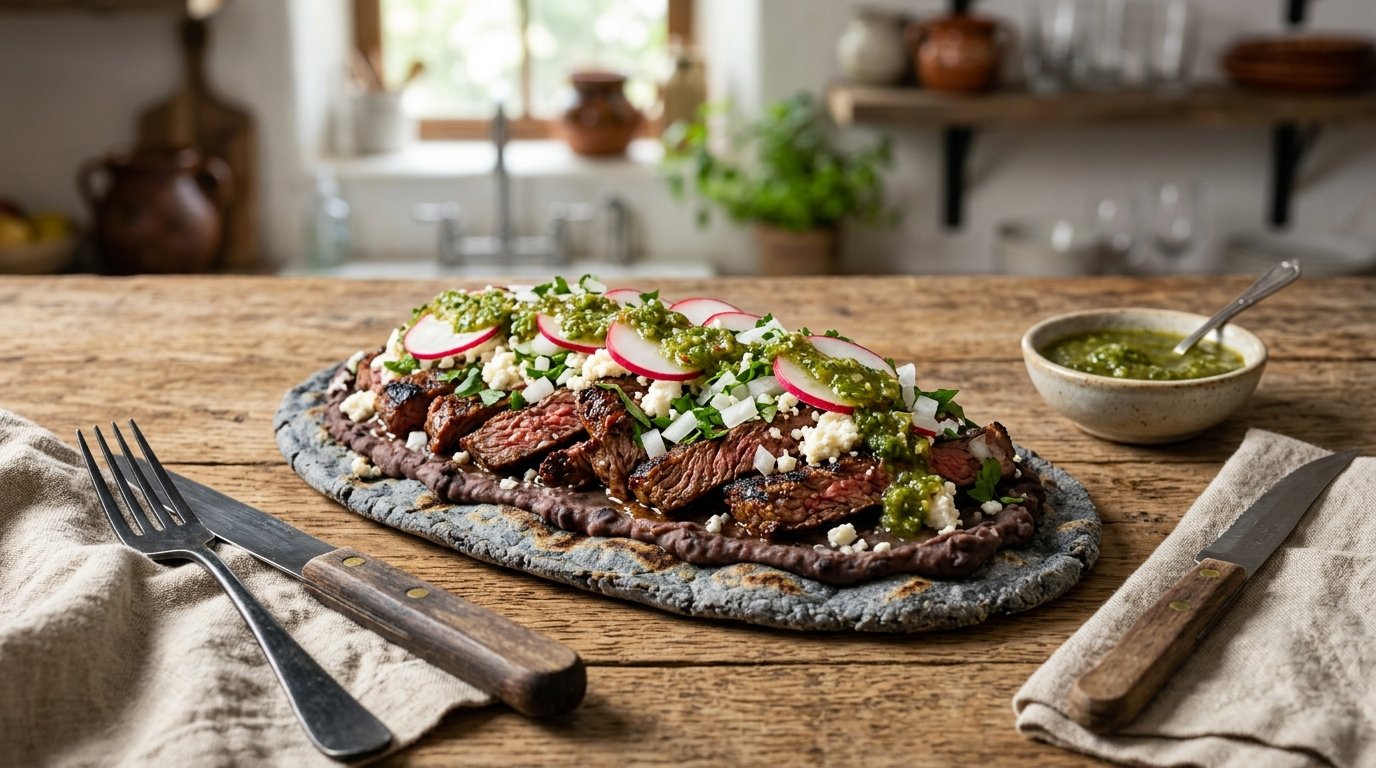
There is a distinct, earthy aroma that fills the air when masa hits a hot comal, a scent that instantly transports you to the bustling street markets of Mexico City. At the heart of this culinary tradition lies the authentic Mexican huarache, a dish named after the traditional sandal due to its distinctive oval shape. Unlike standard tortillas or sopes, huaraches are crafted from thick, hand-patted masa dough that creates a unique textural contrast: a crisp, charred exterior giving way to a soft, pillowy interior that serves as the perfect edible canvas for bold toppings.
This recipe celebrates the vibrant diversity of Mexican corn culture by utilizing naturally colored masa—blue, red, and yellow—derived from heritage corn varieties rather than artificial dyes. Topped with seared steak strips, fresh cilantro, sliced jalapeños, shredded cheese, and a drizzle of creamy salsa, these huaraches are more than just food; they are an experience. Whether you are a seasoned home cook looking to expand your repertoire or a curious foodie eager to explore authentic antojitos, mastering this authentic Mexican huarache recipe will bring the soulful flavors of the mercado directly to your kitchen table.
Why This Recipe Works
The magic of a great huarache lies in the specific hydration and thickness of the masa dough. Unlike tortillas which are thin and pliable, huarache masa is pressed thicker (about ¼ inch), creating a substantial base that can support heavy toppings without breaking. The high heat of the comal (or cast iron skillet) triggers the Maillard reaction on the surface, creating those signature dark spots and nutty flavor, while the interior steams gently in its own moisture, remaining tender and moist.
Using heritage blue or red corn not only provides stunning visual appeal but also offers a distinct nutritional profile and flavor complexity compared to standard white or yellow corn. Blue corn, in particular, has a slightly sweeter, nuttier taste and higher antioxidant content. When paired with the savory richness of grilled steak and the cooling creaminess of Mexican crema, the result is a balanced bite where no single element overpowers the others. The structural integrity of the thick masa ensures that every scoop delivers the perfect ratio of corn cake to topping, preventing the “soggy bottom” disaster common in lesser versions.
Why You’ll Love This Recipe
Vibrant Visual Appeal: Naturally colored blue and red masa makes for a stunning presentation that elevates any dinner party or family meal.
Superior Texture: The thick, hand-patted dough offers a satisfying chew and crispness that thin tortillas simply cannot replicate.
Customizable Canvas: The neutral, nutty flavor of the corn base pairs perfectly with endless topping combinations, from classic beans and cheese to gourmet proteins.
Gluten-Free Tradition: Made entirely from nixtamalized corn, this recipe is naturally gluten-free and deeply rooted in indigenous culinary wisdom.
Interactive Cooking: Shaping and cooking huaraches is a tactile, meditative process that connects you to centuries of culinary heritage.
Street Food Authenticity: Replicates the exact technique used by abuelas and market vendors, bringing genuine cultural flavors to your home.
Versatile Meal Option: Equally suitable as a hearty main course, a festive appetizer, or a vegetarian delight when topped with beans and nopales.
Ingredient Notes
Maseca or Fresh Masa Harina (Blue/Red/Yellow)
Purpose: The foundation. Nixtamalized corn flour provides structure, flavor, and nutrition. Heritage colors offer unique tastes and antioxidants.
Substitutions: If colored masa is unavailable, standard white or yellow Maseca works perfectly. For fresh masa (nixtamal ground same-day), reduce water slightly as it is wetter than dry flour.
Buying Tips: Look for “Maseca Tricolor” or specific heritage corn brands like Bob’s Red Mill Blue Corn Masa or local Latin markets. Ensure packaging is sealed and date is fresh; old masa harina loses leavening power and flavor.
Storage Tips: Store in an airtight container in a cool, dark pantry for up to 6 months. Refrigerate or freeze for longer shelf life to prevent rancidity of natural corn oils.
Beef Steak (Skirt, Flank, or Arrachera)
Purpose: Primary protein. These cuts have robust beef flavor and texture that stands up to bold toppings.
Substitutions: Chicken thighs, pork shoulder (carnitas style), or mushrooms (portobello/oyster) for vegetarian options. Avoid lean cuts like tenderloin which lack flavor and dry out easily.
Buying Tips: Choose meat with good marbling. Skirt steak is traditional for tacos/huaraches due to intense flavor. Ask butcher to trim excess silver skin.
Storage Tips: Marinate up to 24 hours refrigerated. Freeze raw marinated steak up to 3 months. Cooked steak keeps 3-4 days refrigerated.
Refried Beans (Frijoles Refritos)
Purpose: Traditional adhesive layer. Adds creaminess, salt, and umami depth. Prevents toppings from sliding off.
Substitutions: Whole black or pinto beans mashed with lard/oil. Bean dip works in pinch but lacks texture. Vegan butter/oil for dairy-free.
Buying Tips: Canned beans are convenient; look for brands with simple ingredients (beans, oil/fat, salt). Homemade is best for flavor control. Avoid “fat-free” versions as they lack necessary richness.
Storage Tips: Refrigerate leftovers up to 5 days. Freeze in portions up to 3 months. Reheat with splash water to restore creamy consistency.
Queso Fresco or Cotija Cheese
Purpose: Salty, crumbly finish. Doesn’t melt completely, providing textural contrast to soft masa and meat.
Substitutions: Feta (saltier, tangier), ricotta salata, or mild cheddar (melts more). Avoid mozzarella as it’s too mild/stretchy for this application.
*Buying Tips: Buy block cheese and crumble yourself for best texture. Pre-crumbled often contains anti-caking agents affecting melt/mouthfeel. Check labels for authenticity.
*Storage Tips: Refrigerate tightly wrapped up to 3 weeks. Can be frozen but texture becomes crumblier. Bring to room temp before serving for best flavor release.
Substitutions: Crème fraîche (tangier, thicker), plain Greek yogurt (healthier, tangier), or cashew cream (vegan). Regular sour cream works but is less pourable.
Buying Tips: Mexican crema is thinner, sweeter, less tangy than American sour cream. Look for “Crema Mexicana” in dairy section. Shake bottle before use if separated.
Storage Tips: Refrigerate up to 2 weeks unopened, 1 week opened. Do not freeze as it separates. Keep lid tight to prevent absorption of fridge odors.
Fresh Garnishes (Cilantro, Jalapeño, Onion)
Purpose: Brightness, crunch, heat. Essential for cutting richness of meat/cheese/beans.
Substitutions: Parsley if cilantro aversion exists (flavor differs greatly). Serrano peppers for more heat. Green onions for milder onion note.
Buying Tips: Choose vibrant green cilantro with no yellowing/wilting. Firm jalapeños with smooth skin. Heavy, firm onions with dry skins.
Storage Tips: Treat cilantro like flowers: trim stems, place in jar of water, cover loosely with bag, refrigerate. Lasts 1-2 weeks. Store jalapeños/onions in crisper drawer. Chop just before serving.
Kitchen Equipment
Comal or Cast Iron Skillet: Essential for authentic cooking. Retains heat evenly, creates proper char spots. Non-stick pans won’t achieve same texture/flavor.
Tortilla Press (Optional): Helpful for uniform thickness, but hand-patting is traditional and allows better shape control for oval huaraches.
Plastic Bags (Cut Open): Used with press or for hand-patting to prevent sticking. Ziplock bags cut along sides work perfectly.
Sharp Chef’s Knife: For slicing steak against grain, chopping garnishes precisely. Dull knives tear meat and bruise herbs.
Mixing Bowls: Large bowl for masa hydration. Smaller bowls for organizing toppings (mise en place is crucial).
Spatula/Turner: Thin metal spatula for flipping huaraches without tearing. Silicone spatulas may be too thick/flexible.
Measuring Cups/Spoons: For consistent masa hydration and seasoning accuracy.
Preparation Information
Prep Time: 45 Minutes
Cook Time: 20 Minutes
Total Time: 1 Hour 5 Minutes
Servings: 6 Huaraches
Step-by-Step Instructions
Preparing the Colored Masa Dough
Hydrate the Masa: In large bowl, combine 2 cups masa harina (blue/red/yellow) with 1½ – 1¾ cups warm water and ½ tsp salt. Mix with hands until dough forms. Knead 2-3 minutes until smooth, pliable, non-sticky.
Why this matters: Proper hydration ensures cooked huaraches are tender, not crumbly or gummy. Warm water activates starches for better binding. Salt enhances corn flavor.
Texture Cue: Dough should feel like Play-Doh: holds shape, doesn’t crack when pressed, doesn’t stick to hands. Too dry = cracks; too wet = sticks/deforms.
Visual Cue: Uniform color, no dry streaks or wet patches. Smooth surface when kneaded.
Professional Tip: Cover dough with damp cloth while working to prevent drying. Rest 10 minutes after kneading to fully hydrate; makes shaping easier.
Shaping the Huaraches
Portion and Roll: Divide dough into 6 equal balls (~ golf ball size). Roll each into smooth sphere. Place between two sheets of plastic (cut ziplock bag).
Why portion equally? Ensures even cooking time and consistent size. Uneven balls = some burn, some undercook.
Visual Cue: Balls should be crack-free, smooth. Size determines final huarache diameter (~4-5 inches).
Press and Shape: Flatten ball into disc using press or palm. Aim for ¼ inch thickness. Remove plastic. Gently stretch/pinch edges to form oval “sandal” shape. Create slight raised rim around edge.
Why oval with rim? Oval is traditional huarache shape. Rim contains toppings, prevents spillage. Thickness ensures proper texture contrast.
Texture Cue: Edges slightly thicker than center. Surface smooth, no cracks. Rim defined but not sharp.
Common Mistake: Making them too thin (= tostada) or too thick (= gordita). ¼ inch is sweet spot. Cracks mean dough too dry; add water tsp by tsp.
Pro Tip: Wet fingers slightly when pinching rim to seal cracks. Work quickly to prevent drying. Keep unused dough covered.
Comaling: The Traditional Cooking Method
Heat the Comal: Place comal/cast iron skillet over medium-high heat. No oil needed. Wait until surface is very hot (water droplet skitters/evaporates instantly).
Why no oil? Traditional huaraches are dry-cooked. Oil creates fried texture, not authentic charred/steamed contrast. Dry heat develops corn flavor.
Aroma Cue: Clean, hot metal smell. No smoke yet. If smoking heavily, reduce heat slightly.
Visual Cue: Surface shimmers slightly. Water test confirms readiness.
Cook First Side: Place shaped huaraches on hot comal. Cook undisturbed 2-3 minutes until bottom has dark brown spots and releases easily.
Color Cue: Pale dough → opaque → golden with dark char spots. Spots indicate caramelization, not burning.
Sound Cue: Gentle sizzle/hiss. Silence = pan too cold; loud aggressive spitting = too hot.
Doneness Test: Lift edge with spatula; should release cleanly. If stuck, cook 30 sec more. Never force!
Flip and Finish: Flip carefully. Cook second side 2-3 minutes until similarly spotted and puffed slightly. Transfer to towel-lined basket; cover to keep warm/soft.
Why cover after cooking? Steam trapped in towel keeps huaraches pliable. Exposed air dries them out, making them tough/crack when folded/topped.
Texture Cue: Exterior crisp-charred, interior soft-yielding. Should bend slightly without breaking.
Visual Cue: Puffed center indicates proper steam cooking inside. Even spotting on both sides.
Critical Timing: Don’t overcook! Thick masa continues cooking off heat. Overdone = hard/dry. Underdone = gummy/raw taste.
Grilling the Steak & Assembling
Season and Grill Steak: Season steak generously with salt, pepper, cumin, garlic powder. Grill/sear over high heat 2-3 min/side for medium-rare. Rest 5 minutes. Slice thinly against grain.
Visual Cue: Deep brown crust, pink/red interior for medium-rare. Gray throughout = overcooked.
Texture Cue: Yields to knife easily. Tough/resistant = overcooked or wrong cut.
Slicing Tip: Against grain shortens muscle fibers = tender bite. With grain = chewy/stringy.
Assemble Immediately: Spread 2 tbsp refried beans on warm huarache. Top with steak slices, onion, jalapeño, cilantro. Drizzle crema, sprinkle cheese. Serve at once.
Why assemble hot? Warm masa absorbs flavors better. Cold masa = waxy, unappetizing. Beans act as glue/barrier.
Layering Logic: Beans first (barrier/glue), then meat (main event), then fresh toppings (brightness), then sauces/cheese (finish). Order prevents sogginess/sliding.
Visual Cue: Vibrant colors: blue/red masa, brown meat, green herbs, white cheese/crema. Appetizing contrast.
Serving Tip: Provide extra salsa/crema on side. Huaraches are meant to be customized per bite. Eat with hands or fork/knife.
Expert Tips for Perfect Texture
Masa Hydration is Everything: Too dry = cracks/crumbly. Too wet = sticky/deformed. Adjust water gradually. Dough should be supple, not stiff or slack. Humidity affects hydration; adjust daily.
Comal Temperature Control: Medium-high is ideal. Too low = pale, tough, greasy-tasting. Too high = burnt outside, raw inside. Test with water droplet frequently. Adjust heat between batches.
Hand-Patting vs. Press: Press gives uniform thickness but round shape. Hand-patting allows oval shaping and textured surface (better sauce adhesion). Practice both; many prefer hand-patted for authenticity.
Keep Dough Covered: Masa dries fast. Always keep unused dough under damp cloth. Dry surface = cracks during shaping/cooking. Re-knead dried bits back in or discard.
Rest After Cooking: Covering cooked huaraches in towel is non-negotiable. Steam softens exterior, maintains pliability. Skipping this step = brittle, crack-prone bases.
Slice Meat Against Grain: Critical for tenderness. Identify muscle fiber direction; cut perpendicular. Short fibers = easy chew. Long fibers = tough, stringy bites.
Bean Barrier Technique: Always spread beans first. They protect masa from direct contact with wet toppings/sauces, preventing sogginess. Also adds flavor layer and helps toppings adhere.
Common Mistakes to Avoid
Overworking the Dough: Excessive kneading develops gluten-like structure in corn, making huaraches tough/chewy instead of tender. Fix: Knead just until smooth (2-3 mins). Handle gently when shaping.
Cooking on Low Heat: Results in pale, dense, bread-like texture instead of crisp-charred exterior. Fix: Preheat comal properly. Maintain medium-high heat. Adjust as needed but never go low.
Making Them Too Thin: Becomes tostada, not huarache. Lacks signature soft interior. Fix: Aim for ¼ inch thickness. Use ruler/finger guide initially until eye trained.
Skipping the Rest Period: Cutting steak immediately = juice loss = dry meat. Fix: Rest 5+ minutes tented with foil. Patience rewards with juiciness.
Assembling Too Early: Toppings sit on masa = sogginess. Fix: Assemble à la minute. Have components prepped; combine only when ready to eat.
Using Wrong Cheese: Mozzarella melts into gooey mess; feta may be too salty/tangy. Fix: Stick with queso fresco/Cotija for authentic crumbly texture/salt balance.
Ignoring Corn Quality: Old/stale masa harina lacks flavor, doesn’t hydrate well. Fix: Buy fresh, store properly. Taste raw dough; should smell sweet/corn-forward, not musty.
Recipe Variations
Spicy Chorizo Huarache: Replace steak with crumbled Mexican chorizo. Add pickled jalapeños, extra salsa verde. Intense heat/richness pairing.
Vegan Mushroom & Avocado: Sautéed oyster/portobello mushrooms with garlic/cumin. Top with sliced avocado, pico de gallo, vegan crema. Umami-rich, creamy, plant-based.
Chicken Tinga Style: Shredded chicken in chipotle-tomato sauce. Smoky-spicy profile. Pair with onion/cilantro/crema. Lighter than beef but equally flavorful.
Seafood Shrimp & Mango: Grilled shrimp with mango salsa, cabbage slaw, lime crema. Tropical, refreshing twist. Perfect for summer/hot weather.
Extra Cheesy Oaxaca Melt: Layer Oaxaca/Monterey Jack cheese under toppings. Broil briefly to melt before adding fresh garnishes. Gooey, indulgent comfort food.
Healthy Zucchini & Quinoa: Roasted zucchini, quinoa, black beans, avocado. High-fiber, protein-packed. Lighter alternative without sacrificing satisfaction.
Low-Carb/Keto Adaptation: Skip masa; use portobello caps or cheese crisps as base. Load with meat/cheese/avocado. Guilt-free indulgence. Note: Not traditional but satisfies craving.
Masa Dough Prep: Make dough up to 24 hours ahead. Store covered in fridge. Bring to room temp 30 mins before shaping. Cold dough cracks; warm dough shapes easily.
Component Prep: Chop all garnishes, slice steak (cook later), portion beans/cheese/crema day-of or night-before. Mise en place speeds assembly dramatically.
Pre-Cook Huaraches: Cook huaraches up to 2 hours ahead. Keep covered in towel at room temp. Reheat briefly on comal before assembling. Don’t refrigerate cooked masa; it hardens.
Marinate Steak Ahead: Marinate steak up to 24 hours refrigerated. Enhances flavor penetration. Cook just before serving for best texture/juiciness.
Party Assembly Line: Set up stations: masa → comal → beans → meat → toppings → sauces. Guests build custom huaraches. Interactive, efficient, fun.
Storage Instructions
Refrigerator (Components): Store cooked steak, beans, sauces separately in airtight containers 3-4 days. Fresh garnishes 2-3 days. Masa dough 24 hrs max refrigerated.
Freezer (Components): Cooked steak/beans freeze well 2-3 months. Masa dough freezes 3 months; thaw overnight in fridge. Fresh garnishes do NOT freeze well.
Cooked Huaraches: Best eaten fresh. Can store cooked (untopped) in airtight container 1 day room temp or 2 days fridge. Reheat on comal before topping. Refrigerated masa hardens; always reheat.
Signs of Spoilage: Discard masa if sour/smelly/moldy. Steak if slimy/off-odor. Beans if bubbly/sour. Fresh garnishes if wilted/slimy. When in doubt, throw out.
Reheating Instructions
Note: Assembled huaraches do not reheat well. Components reheat beautifully.
Comal/Skillet (Best for Masa): Reheat plain huaraches on dry comal/skillet medium heat 1-2 min/side. Restores crispness/pliability. Never microwave alone; makes rubbery/tough.
Skillet (For Steak): Reheat steak slices in skillet medium-low with splash water/broth 1-2 min stirring. Restores moisture/juiciness. Microwave makes tough/dry.
Microwave (Last Resort for Beans/Sauces): Heat beans/salsas 30-sec bursts stirring between. Acceptable compromise for speed. Texture alters slightly.
Oven (For Batches): Wrap plain huaraches in foil; bake 300°F 5-7 mins. Softens without drying. Unwrap last 2 mins for slight crisp if desired.
Note: Values vary by masa color, meat portion, topping amounts. Blue/red corn often higher in antioxidants/fiber than white. Beans add significant fiber/protein. Modify with leaner meat/less cheese for lighter version.
Troubleshooting Guide
Problem
Cause
Solution
Masa cracks when shaping
Too dry or old masa harina
Add water 1 tsp at a time; knead gently. Use fresh masa harina. Keep dough covered.
Increase heat to medium-high. Don’t disturb first 2-3 mins. Test heat with water droplet.
Burnt outside/raw inside
Heat too high or masa too thick
Lower heat slightly. Ensure ¼ inch thickness. Cook longer on lower heat if needed.
Huaraches hard after cooking
Not rested in towel or overcooked
Always cover cooked huaraches in damp towel 5+ mins. Reduce cook time next batch.
Toppings slide off
No bean barrier or assembled cold
Always spread beans first. Assemble while masa warm. Beans act as glue.
Steak tough/dry
Overcooked or sliced with grain
Cook to medium-rare max. Rest 5+ mins. Slice against grain. Use skirt/flank.
Masa sticks to plastic/comal
Too wet or comal not hot enough
Add masa harina tsp by tsp. Ensure comal screaming hot before placing. Use dry plastic.
Frequently Asked Questions
1. Can I use regular yellow/white masa instead of colored? Absolutely! Color is aesthetic/nutritional bonus, not functional requirement. Yellow/white masa cooks identically. Flavor differs slightly (blue=sweeter/nuttier); adjust seasonings to preference. Authenticity flexible; satisfaction paramount.
2. What if I don’t have a comal? Heavy cast iron skillet works excellently. Carbon steel pan also good. Avoid thin non-stick; can’t retain heat properly. Two skillets side-by-side mimic comal surface area for larger batches. Season cast iron well for best results.
3. Are huaraches gluten-free? Yes, traditionally made from 100% nixtamalized corn. Naturally gluten-free. Verify masa harina label for cross-contamination warnings if celiac. Some commercial brands process in facilities with wheat; seek certified GF if sensitive.
4. Can I make these ahead for a party? Prep components ahead: dough (refrigerate), chop garnishes, marinate meat. Cook huaraches 1-2 hrs ahead; keep covered in towel at room temp. Reheat briefly on comal before assembling. Assemble à la minute for best texture.
5. Why are my huaraches cracking when I cook them? Usually dough too dry or comal too hot. Add water gradually during mixing. Ensure comal medium-high, not blazing. Patch small cracks with wet finger before cooking. Severe cracks mean rehydrate dough.
6. Can I freeze cooked huaraches? Technically yes, but texture suffers. Masa becomes dense/grainy upon thawing/reheating. Better to freeze raw dough portions or cooked components separately. Assemble fresh for optimal experience. If freezing cooked, wrap tightly; reheat on comal with splash water.
7. What’s the difference between huarache, sope, and tlacoyo? All thick masa bases. Huaraches: oval, open-faced, various toppings. Sopes: round with pinched rim, smaller. Tlacoyos: oval, stuffed with beans/cheese inside masa, then topped. Shapes/sizes/fillings distinguish them. All delicious!
8. Can I use store-bought refried beans? Yes, convenient and acceptable. Look for quality brands with simple ingredients. Enhance by frying briefly with onion/garlic/lard for deeper flavor. Homemade always superior but canned saves time. Drain excess oil if greasy.
9. How do I know when masa is properly hydrated? Press small piece between fingers. Should form smooth ball without cracks or stickiness. Crack = add water. Sticky = add masa harina. Like modeling clay: pliable, holds shape, clean release. Practice builds intuition.
10. Can I make vegan huaraches? Easily! Skip meat/cheese/crema. Use beans, nopales, mushrooms, avocado as toppings. Vegan crema (cashew/coconut-based) replaces dairy. Ensure masa harina certified vegan (some contain lard traces). Flavor/texture still outstanding.
Final Thoughts
Creating authentic Mexican huaraches with blue corn masa and steak is more than following a recipe—it’s participating in a living culinary tradition that spans generations. The tactile joy of shaping masa, the aromatic dance of corn on hot comal, the vibrant assembly of colors and textures—each step connects you to the heart of Mexican street food culture. Don’t strive for machine perfection; embrace the handmade irregularities that give each huarache its soul.