Quick Recipe Summary
| Feature | Details |
|---|---|
| Prep Time | 25 Minutes |
| Cook Time | 15 Minutes |
| Total Time | 40 Minutes |
| Servings | 2 Large Quesadillas |
| Cuisine | Mexican / Tex-Mex Fusion |
| Course | Main Course / Lunch / Dinner |
| Difficulty | Medium (Assembly) |
| Calories | ~850 kcal per quesadilla |
Table of Contents
- Introduction
- Why This Recipe Works
- Why You’ll Love This Recipe
- Ingredient Notes
- Kitchen Equipment
- Step-by-Step Instructions
- Expert Tips for the Perfect Fold
- Common Mistakes to Avoid
- Recipe Variations
- What to Serve With This Recipe
- Make Ahead and Meal Prep Tips
- Storage Instructions
- Reheating Instructions
- Nutritional Information
- Troubleshooting Guide
- Frequently Asked Questions
- Final Thoughts
Introduction
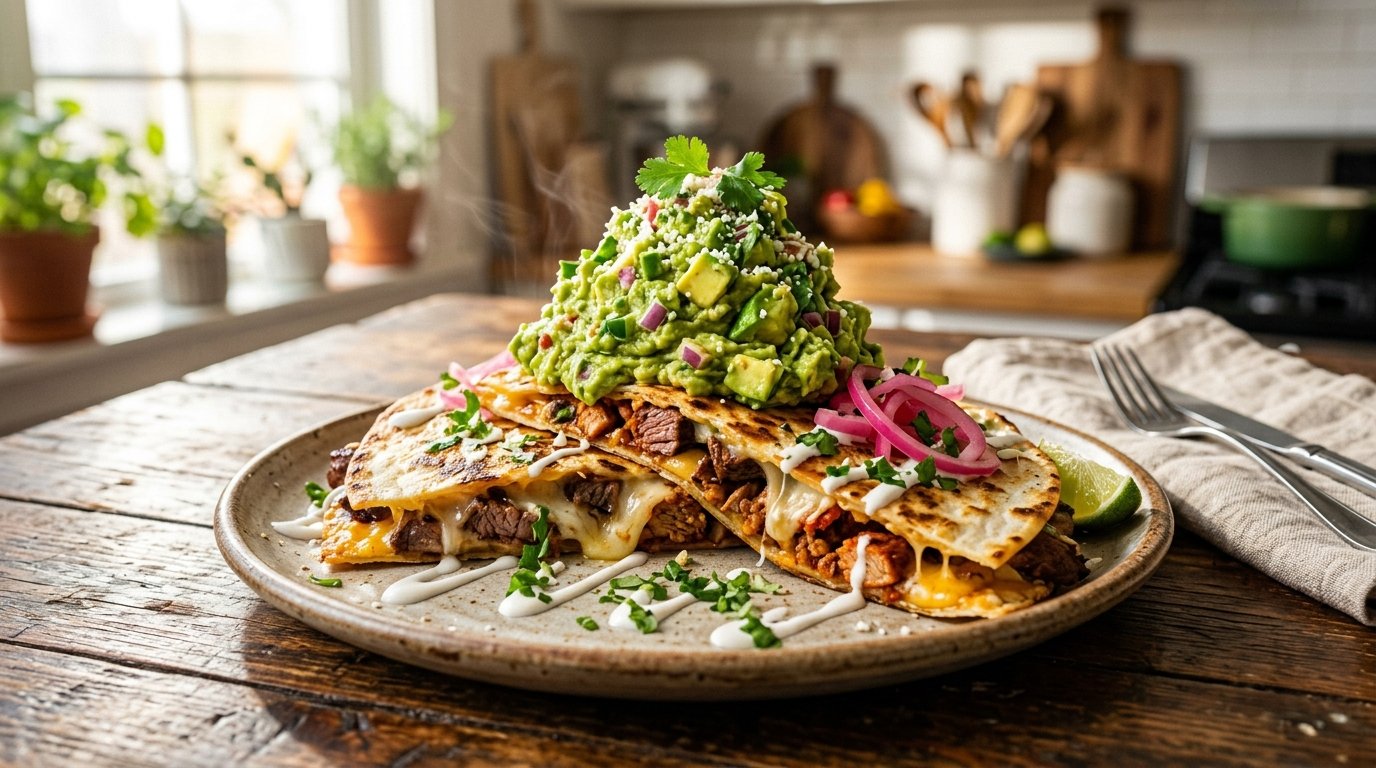
There is a specific moment in cooking when indulgence meets structural engineering, and nowhere is this more apparent than in the creation of a truly loaded quesadilla. This isn’t your average after-school snack; it is a culinary monument built on a foundation of molten cheese, stacked high with savory chopped steak and vibrant al pastor pork, then crowned with a veritable mountain of fresh guacamole. Mastering this loaded steak and al pastor quesadilla at home allows you to replicate the intense, multi-textural experience of your favorite taqueria while controlling the quality of every ingredient.
The secret to success lies not just in the abundance of fillings, but in the technique used to contain them. By creating a “cheese glue” base and utilizing a strategic folding method, you ensure that every bite delivers a perfect ratio of crispy tortilla, gooey dairy, tender meat, and cool, creamy avocado. Whether you are feeding a hungry crowd or treating yourself to an epic solo meal, this recipe transforms simple components into a cohesive masterpiece. Let’s dive into the architecture of the ultimate quesadilla.
Why This Recipe Works
The genius of this recipe lies in its layering strategy, which addresses the most common failure point of stuffed tortillas: leakage. By melting the cheese directly onto the tortilla first, you create an adhesive barrier that seals the surface and prevents juices from the meat and guacamole from soaking through and making the wrap soggy. This “cheese foundation” acts as both a flavor enhancer and a structural waterproofing layer.
Furthermore, the combination of proteins provides a complex flavor profile that keeps the palate engaged. The savory, iron-rich notes of the chopped steak contrast beautifully with the sweet, tangy, and slightly spicy profile of the al pastor (which traditionally includes pineapple and chilies). When these rich, warm elements are cut by the bright acidity of lime, the sharp bite of raw onion, and the fatty creaminess of guacamole, the result is a balanced bite that feels heavy yet refreshing. The heat of the freshly cooked meats also slightly wilts the cilantro and warms the salsa, melding the flavors together in real-time.
Why You’ll Love This Recipe
- Structural Integrity: Learn the professional folding technique that keeps even the most overstuffed quesadilla intact.
- Dual Protein Powerhouse: Enjoy the best of both worlds with savory steak and zesty al pastor in a single bite.
- Texture Contrast: Experience the interplay of crispy tortilla, stretchy cheese, tender meat, and cool, chunky guacamole.
- Customizable Heat: Control the spice level by adjusting the salsa and al pastor marinade to your exact preference.
- Visual Spectacle: The “cheese pull” reveal and the towering guacamole topping make this dish incredibly photogenic and fun to serve.
- Restaurant Quality at Home: Achieve taqueria-style results without needing a vertical trompo or commercial flattop grill.
- Satiating Comfort Food: A high-protein, high-fat meal that satisfies deep hunger cravings better than almost any other handheld option.
Ingredient Notes
Flour Tortillas (Large/Burrito Size)
- Purpose: The vessel. Large 10-12 inch flour tortillas are essential for holding the volume of fillings. They have enough surface area to fold securely without tearing.
- Substitutions: Corn tortillas can be used for a gluten-free option, but they are smaller and less pliable. You may need to use two corn tortillas per quesadilla or accept a smaller portion size. Whole wheat tortillas work but have a nuttier flavor that competes with the fillings.
- Buying Tips: Look for “street taco” or “burrito” size tortillas in the refrigerated section rather than the shelf-stable aisle. Fresh tortillas are softer, more pliable, and less likely to crack when folded. Brands like La Banderita or Guerrero are reliable standards.
- Storage Tips: Keep refrigerated until ready to use. Warm briefly in a dry skillet or microwave (wrapped in damp paper towel) before assembling to increase elasticity and prevent cracking.
Shredded White Cheese (Oaxaca or Mozzarella)
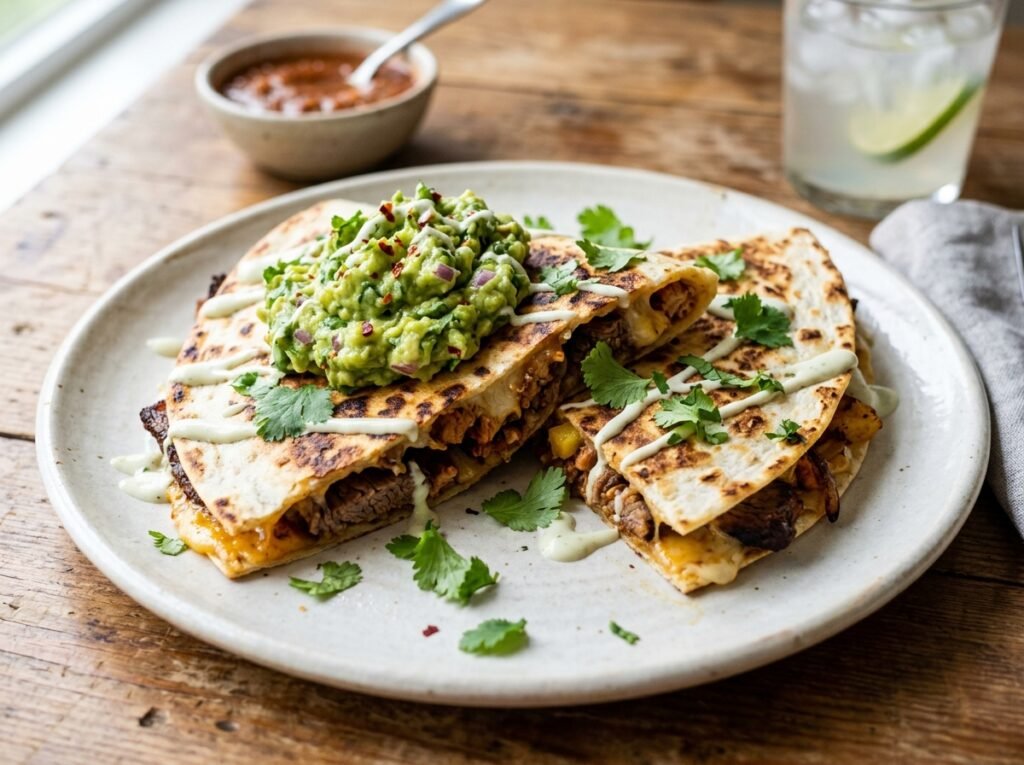
- Purpose: The structural glue and primary source of creaminess. Oaxaca cheese is traditional, offering a mild, buttery flavor and superior stretch. Low-moisture mozzarella is an excellent accessible substitute with similar melting properties.
- Substitutions: Monterey Jack melts well but has a sharper taste. Cheddar can be mixed in for color and flavor but doesn’t stretch as well alone. Avoid pre-shredded bagged cheese if possible; the anti-caking agents prevent smooth melting and can result in a grainy texture.
- Buying Tips: Buy block cheese and shred it yourself for the best melt. If buying Oaxaca, look for it sold in braided balls or loose strands in the Latin dairy section.
- Storage Tips: Store shredded cheese in an airtight container in the fridge for up to 5 days. Freeze for up to 3 months if necessary, though fresh is always superior for melting.
Chopped Steak (Carne Asada Style)
- Purpose: Provides savory depth, chew, and protein substance. Typically flank, skirt, or sirloin steak, grilled and diced small.
- Substitutions: Leftover roast beef, ground beef (taco style), or even mushrooms (for vegetarian) can work. Chicken thighs are a great alternative if beef isn’t preferred.
- Buying Tips: Choose steaks with good marbling for tenderness. Ask your butcher to trim excess hard fat. Pre-cooked carne asada from the deli counter saves significant time.
- Storage Tips: Cooked steak keeps in the fridge for 3-4 days. Reheat gently to avoid toughening. Freeze cooked diced steak for up to 3 months.
Al Pastor Meat
- Purpose: Adds sweetness, acidity, and spice. Traditionally marinated pork shoulder with guajillo chilies, achiote, vinegar, and pineapple.
- Substitutions: If you can’t find prepared al pastor, marinate thin pork slices in adobo sauce, pineapple juice, cumin, and oregano for 2 hours. Chorizo is a spicier, fattier alternative.
- Buying Tips: Many Latin markets sell pre-marinated raw al pastor or fully cooked reheatable versions. Check labels for pineapple content—real al pastor should have visible fruit chunks.
- Storage Tips: Raw marinated pork lasts 2 days in fridge. Cooked al pastor lasts 3-4 days. Freeze for up to 3 months.
Fresh Guacamole
- Purpose: The cooling, creamy counterpoint to hot, salty ingredients. Adds healthy fats and fresh herbal notes.
- Substitutions: Sliced avocado works but lacks the integrated seasoning. Sour cream or crema mexicana can add creaminess but lack the distinct avocado flavor.
- Buying Tips: Use Hass avocados that yield slightly to gentle pressure. Avoid rock-hard or mushy brown ones. Fresh limes and cilantro are non-negotiable for authentic flavor.
- Storage Tips: Make fresh daily. To store leftovers, press plastic wrap directly onto the surface to prevent browning. Keeps 1-2 days max.
Cilantro, Onion & Salsa
- Purpose: Freshness, crunch, acid, and moisture balance. Raw white onion provides sharp bite; cilantro adds herbaceous aroma; salsa ties everything together.
- Substitutions: Green onions for milder onion flavor. Parsley if cilantro is disliked (though flavor changes significantly). Pico de gallo instead of liquid salsa for less sogginess.
- Buying Tips: Choose firm, bright green cilantro with no yellowing. White onions should be heavy and firm. Salsa verde or roja depending on preference; medium heat is usually ideal to balance the rich meats.
- Storage Tips: Wash and dry cilantro thoroughly; store stems-down in water like flowers. Dice onion just before serving to prevent sulfurous smell. Salsa keeps weeks in fridge.
Kitchen Equipment
- Large Non-Stick Skillet or Griddle: Essential for even heating and easy flipping. Cast iron works but requires more oil and careful temperature management to prevent burning the tortilla before cheese melts.
- Spatula (Wide & Thin): For lifting and flipping the heavy quesadilla without breaking the seal. Silicone-edged spatulas are gentle on non-stick surfaces.
- Sharp Chef’s Knife: For dicing steak, chopping onions/cilantro, and cutting the finished quesadilla cleanly.
- Cutting Board: Large surface area for assembly and chopping. Wood or composite preferred.
- Cheese Grater: If shredding block cheese. Box grater or rotary grater works well.
- Tongs: For handling hot meat and flipping tortillas safely.
- Ladle or Spoon: For portioning guacamole and salsa precisely.
Preparation Information
- Prep Time: 25 Minutes
- Cook Time: 15 Minutes
- Total Time: 40 Minutes
- Servings: 2 Large Quesadillas
Step-by-Step Instructions
Building the Melted Cheese Foundation
- Warm the Tortilla: Place a large flour tortilla in a dry skillet over medium-low heat for 15-20 seconds per side. This makes it pliable and prevents cracking during folding. Remove and place on a clean cutting board or plate.
- Why this matters: Cold tortillas are brittle. Warming relaxes the gluten structure, allowing it to bend without splitting under the weight of fillings.
- Visual Cue: Tortilla should feel soft and warm to touch, with slight puffing but no browning yet.
- Texture Cue: Flexible, not stiff. Should drape over your hand without resistance.
- Create the Cheese Base: Immediately sprinkle ½ cup of shredded cheese evenly over the entire surface of the warm tortilla, leaving a ½-inch border around the edge. Return to skillet over medium heat for 1-2 minutes until cheese is fully melted and bubbling slightly at edges.
- Why this matters: Melting cheese directly on the tortilla creates the “glue” layer. It seals the pores of the bread and provides a sticky surface for meat to adhere to, preventing sliding.
- Visual Cue: Cheese transitions from opaque shreds to translucent, glossy pool. Small bubbles indicate proper melt temperature.
- Aroma Cue: Milky, buttery scent of melting dairy. No burnt smell—if browning too fast, reduce heat.
- Professional Tip: Don’t skip the border! Cheese touching the pan directly will burn and stick, making flipping impossible.
Layering the Proteins
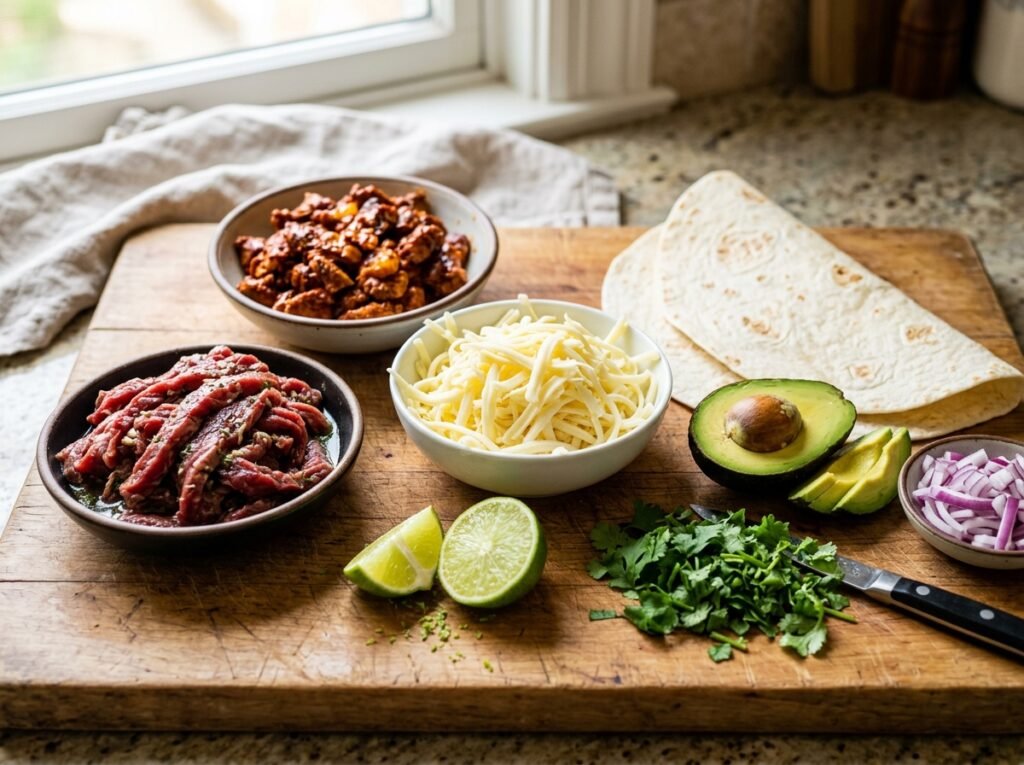
- Add Chopped Steak: Using tongs or a spoon, distribute ½ cup of warm chopped steak over one half of the cheese-covered tortilla. Press down gently to embed meat into the melted cheese.
- Why press down? This ensures the meat bonds with the cheese layer rather than sitting loosely on top, which causes sliding when folded.
- Temperature Cue: Meat should be hot/warm. Cold meat cools the cheese too quickly, reducing its adhesive quality.
- Visual Cue: Even distribution across the half-moon shape. No large gaps or piles.
- Layer Al Pastor: Add ½ cup of al pastor meat directly on top of or adjacent to the steak on the same half. Ensure pineapple chunks are distributed for bursts of sweetness.
- Flavor Balance: Placing both meats on one half creates a concentrated flavor zone that gets diluted perfectly when folded with the empty cheese half.
- Moisture Management: If al pastor is very saucy, drain excess liquid before adding. Too much liquid = soggy tortilla.
- Aroma Cue: Sweet-spicy chili aroma mixes with savory beef. Appetizing and complex.
The Fresh Toppings & Guacamole Mountain
- Add Fresh Elements: Sprinkle 2 tablespoons diced white onion and 2 tablespoons chopped cilantro over the meats. Drizzle 1-2 tablespoons salsa directly onto the pile.
- Why now? Adding fresh items before folding allows them to warm slightly from the meat heat, releasing aromatics without wilting completely.
- Texture Cue: Onion should remain crisp. Cilantro vibrant green. Salsa moist but not pooling.
- Common Mistake: Over-saucing. Excess salsa makes the fold slippery and leaky. Less is more here.
- Crown with Guacamole: Scoop ¼-⅓ cup guacamole and mound it centrally on top of the meat pile. Do not spread flat—create a “mountain” shape.
- Why mound? A centered mound stays contained within the fold. Spread guacamole migrates to edges and leaks out during cooking.
- Visual Cue: Bright green peak contrasting with red/brown meats. Chunky texture visible.
- Temperature Note: Guacamole should be cool/room temp. Hot guac turns brown and oily instantly.
Folding and Finishing
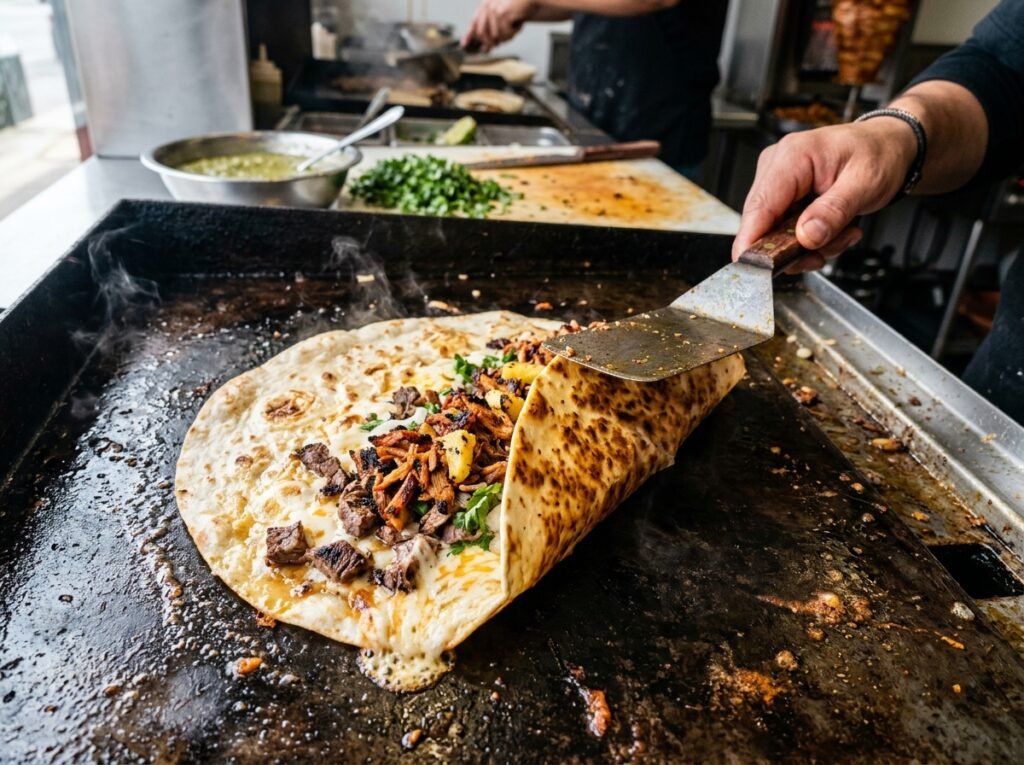
- Execute the Fold: Carefully lift the empty cheese-covered half and fold it over the loaded half, aligning edges. Press down firmly along the seam with your palm or spatula to seal.
- Technique: Use the “taco fold” or “half-moon” method shown. For extra security, you can do a tri-fold (like a burrito) if the filling is extremely voluminous, but half-moon is traditional for quesadillas.
- Seal Check: Run finger along edge to ensure cheese has bonded both layers. If gap exists, add tiny pinch of cheese inside seam and repress.
- Visual Cue: Neat half-circle shape. No filling visible at edges. Seam appears sealed, not gaping.
- Crisp the Exterior: Return folded quesadilla to skillet over medium heat. Cook 2-3 minutes per side, pressing occasionally with spatula, until golden brown spots appear and cheese is visibly melting through seams.
- Why press? Ensures even contact with pan for uniform crisping. Also helps internal cheese melt fully to bind everything.
- Color Cue: Golden brown blistered spots, not uniform dark brown. Pale = undercooked/soggy. Dark black = burnt/bitter.
- Sound Cue: Gentle sizzle indicates proper heat. Loud aggressive spitting = too hot/oil splatter. Silence = too cold/greasy absorption.
- Doneness Test: Lift edge with spatula; should release easily and show crisp texture. Internal cheese should be fully molten when squeezed gently.
- Rest and Slice: Transfer to cutting board. Let rest 1-2 minutes before slicing. Cut into 3-4 wedges with sharp knife using sawing motion.
- Why rest? Allows cheese to set slightly, preventing catastrophic spillage when cut. Also lets steam escape so tortilla stays crisp.
- Cutting Technique: Saw gently, don’t press down. Pressing squishes fillings out sides. Clean cuts showcase layers beautifully.
- Serving: Serve immediately while hot. Garnish with extra cilantro, lime wedge, and side of salsa/guac for dipping.
Expert Tips for the Perfect Fold
- The Double-Cheese Insurance Policy: If you’re nervous about leaks, add a thin second layer of cheese on TOP of the meats before folding. This creates a top seal that locks fillings in during the flip.
- Heat Management is Everything: Medium-low is your friend. High heat burns tortilla before cheese melts; low heat makes tortilla greasy and tough. Adjust based on your stove’s quirks.
- Dry Fillings Win: Pat cooked meats dry with paper towel before assembling. Excess grease/juice is the enemy of crispness. Save those juices for dipping sauce instead!
- Tortilla Temperature Matters: Always assemble on a warm tortilla. Cold tortillas crack; overheated tortillas become gummy. Aim for “body temperature” flexibility.
- Press, Don’t Smash: Firm pressure seals seams; violent smashing ruptures tortilla and forces fillings out. Think “gentle compression.”
- Skillet Surface: Non-stick is forgiving for beginners. Seasoned cast iron gives superior crust but requires confidence and adequate fat. Stainless steel is hardest—ensure proper preheating and fat coverage.
Common Mistakes to Avoid
- Overstuffing Beyond Capacity: More isn’t always better. Exceeding the tortilla’s structural limit guarantees failure. Fix: Stick to recommended portions. Make two thinner quesadillas instead of one bursting monster.
- Skipping the Cheese Seal: Putting fillings directly on bare tortilla = guaranteed leak. Fix: Always melt cheese first. It’s non-negotiable architecture.
- Using Cold Ingredients: Cold meat/cheese won’t bond properly. Fix: Warm all components before assembly. Room temp guac is fine; everything else should be hot/warm.
- Flipping Too Early: Flipping before bottom is crisp = torn tortilla and spilled guts. Fix: Wait for golden color and easy release. Patience prevents disasters.
- Cutting Immediately: Hot cheese flows like lava. Fix: Rest 1-2 minutes minimum. Sharp knife + gentle sawing = clean presentation.
- Wet Salsa/Guac: Excess moisture destroys crispness. Fix: Drain salsa; use thick guac. Pat veggies dry. Moisture control = texture preservation.
Recipe Variations
- Spicy Inferno: Add sliced jalapeños, habanero salsa, and chipotle powder to steak. Use pepper jack cheese. Warning: Not for the faint of heart!
- Vegetarian Delight: Replace meats with roasted poblano strips, black beans, corn, and zucchini. Add extra cheese and mushrooms for umami. Still structurally sound!
- Vegan Version: Use plant-based cheese (Violife/Miyoko’s melt best), seasoned jackfruit or lentils for “meat,” and vegan sour cream instead of guac. Cashew crema works wonderfully.
- Chicken Ranchero: Swap beef/pork for shredded chicken in ranchero sauce. Add roasted peppers and onions. Lighter but still flavorful.
- Seafood Fiesta: Use grilled shrimp or fish flakes. Add mango salsa and cabbage slaw instead of guac. Citrus-forward and refreshing.
- Extra Cheesy Bomb: Triple the cheese. Add queso dip inside AND outside. Serve with nacho cheese for dipping. Indulgence maximized.
- Healthy Swap: Use whole wheat or cauliflower tortillas. Load with extra veggies, lean turkey, and light guac. Reduce cheese by half. Still satisfying!
- Low-Carb/Keto: Use low-carb tortillas (Mission Carb Balance etc.). Increase meat/cheese ratio. Skip salsa sugar; use pico de gallo. Guac is your best friend here.
- Breakfast Quesadilla: Add scrambled eggs, bacon, and hash browns. Top with salsa verde. Morning fuel upgraded.
What to Serve With This Recipe
This quesadilla is a meal unto itself, but complementary sides elevate the experience:
- Mexican Rice or Beans: Arroz rojo or frijoles charros provide hearty starch to soak up any escaped juices. Classic pairing.
- Elotes/Esquites: Grilled corn with mayo, chili, and lime echoes the street food vibe. Sweet-savory contrast to rich quesadilla.
- Fresh Salad: Simple lettuce, tomato, cucumber with vinaigrette cuts richness. Palate cleanser between heavy bites.
- Chips & Extra Dip: Tortilla chips with additional guac, salsa, or queso for scooping. Extends the meal interactively.
- Beverages: Horchata, jamaica agua fresca, or Mexican Coke balance spice and salt. Beer (lager/pilsner) or margaritas for adult gatherings.
- Dessert: Churros, flan, or tres leches cake. Sweet finish to savory feast. Keep it light if quesadilla was massive.
- Pickled Vegetables: Escabeche (pickled carrots/onions/jalapeños) adds acid crunch that mirrors al pastor’s brightness.
Make Ahead and Meal Prep Tips
- Component Prep: Cook and dice steak/al pastor up to 3 days ahead. Store separately in airtight containers. Shred cheese day-of for best melt. Chop veggies morning of.
- Guacamole Strategy: Make guac max 4 hours ahead. Press plastic wrap directly on surface. Add lime juice generously to slow browning. Never prep day-before.
- Tortilla Warming Station: If serving crowd, keep tortillas warm in low oven (200°F) wrapped in foil. Assemble-to-order for optimal crispness.
- Freezer Friendly (Uncooked): Assemble quesadillas without guac/salsa. Wrap individually in parchment + foil. Freeze up to 2 months. Cook from frozen, adding 2-3 mins per side. Add fresh toppings post-cook.
- Party Assembly Line: Set up stations: tortillas → cheese → meats → toppings → fold → cook. Guests can customize while you manage grill. Efficient and interactive.
Storage Instructions
- Refrigerator (Cooked): Store leftover quesadillas in airtight container for 2-3 days. Expect some sogginess upon reheating. Separate components if possible.
- Freezer (Cooked): Not recommended. Texture degrades significantly. Tortilla becomes chewy/rubbery; cheese separates. Best eaten fresh or reheated same-day.
- Raw Components: Cooked meats freeze well (3 months). Shredded cheese freezes (3 months, texture changes slightly). Guacamole does NOT freeze well (turns brown/watery). Veggies best fresh.
- Safety Note: Discard if left at room temp >2 hours. Dairy/meat combo spoils quickly. When in doubt, throw it out.
Reheating Instructions
- Skillet (Best Method): Reheat in dry non-stick skillet over medium-low heat, covered, 2-3 mins per side. Restores crispness better than any other method. Uncover last minute to re-crisp.
- Air Fryer (Excellent): 350°F for 3-4 minutes, flipping halfway. Crisps exterior beautifully without sogginess. Watch closely to prevent burning.
- Oven (Good for Multiple): 375°F on wire rack (not sheet) for 8-10 minutes. Wire rack allows air circulation underneath. Flip halfway. Slower but effective for batches.
- Microwave (Last Resort): 30-45 seconds on plate. WILL be soggy. Mitigate by placing paper towel underneath to absorb moisture. Only use if speed trumps texture.
- Pro Tip: Always reheat WITHOUT fresh toppings (guac/salsa/cilantro). Add those fresh after reheating. Hot guac = sad guac.
Nutritional Information
Per quesadilla (approximate, varies by ingredient brands/amounts):
- Calories: 850
- Protein: 42g
- Carbohydrates: 58g
- Fat: 48g
- Fiber: 5g
- Sugar: 6g
- Sodium: 1,450mg
- Calcium: 35% DV
- Iron: 20% DV
Note: High sodium/fat content reflects restaurant-style indulgence. Modify with leaner meats, reduced cheese, and whole wheat tortillas for lighter version. Guacamole provides heart-healthy monounsaturated fats.
Troubleshooting Guide
| Problem | Cause | Solution |
|---|---|---|
| Tortilla cracks when folding | Too cold or stale | Warm tortilla 15-20 sec before assembling. Use fresh tortillas. Handle gently. |
| Cheese doesn’t melt fully | Heat too low or wrong cheese | Increase heat slightly. Use low-moisture mozzarella/Oaxaca. Cover skillet briefly to trap steam. |
| Fillings leak during cooking | Overstuffed or no cheese seal | Reduce filling amount. Always melt cheese base first. Press seam firmly. |
| Bottom burns before top heats | Heat too high | Lower to medium-low. Cover skillet briefly to melt top cheese. Flip more frequently. |
| Quesadilla soggy after cooking | Wet fillings or insufficient crisp time | Drain meats/salsa. Cook longer on lower heat to evaporate moisture. Rest on wire rack, not plate. |
| Guacamole turns brown | Oxidation or heat exposure | Make fresh. Press plastic wrap on surface. Add AFTER cooking, never before. |
| Meat slides out when cutting | No cheese adhesion or overfilled | Press meat into melted cheese during assembly. Let rest 2 mins before cutting. Use sharp knife. |
| Tortilla tough/chewy | Overcooked or old tortilla | Reduce cook time. Use fresh tortillas. Don’t overheat skillet. |
Frequently Asked Questions
1. Can I use corn tortillas instead of flour? Yes, but they’re smaller and less flexible. Use two corn tortillas per quesadilla (stacked with cheese between) or accept a smaller portion. Warm thoroughly to prevent cracking. Flavor will be more authentically Mexican but structurally challenging.
2. What’s the best cheese for melting? Oaxaca is gold standard—mild, stretchy, authentic. Low-moisture mozzarella is best supermarket substitute. Avoid pre-shredded (anti-caking agents hinder melt). Mix Monterey Jack for flavor if desired. Never use only cheddar—it oils out and doesn’t stretch.
3. How do I keep guacamole from browning? Acid (lime/lemon) slows oxidation. Press plastic wrap DIRECTLY on surface (no air gaps). Store in airtight container. Make as close to serving as possible. Never refrigerate cut avocados without protection.
4. Can I make this ahead for a party? Assemble components ahead; cook to order. Pre-assembled uncooked quesadillas can sit 30 mins max before tortilla gets soggy. Better to have guests wait 3 mins for fresh-crisp perfection than serve lukewarm soggy ones.
5. Is al pastor always pork? Traditionally yes (marinated pork shoulder). Some modern versions use chicken or beef, but purists insist on pork. For authenticity, use pork. For dietary needs, chicken al pastor marinade works surprisingly well.
6. Why does my cheese separate into oil? Overheating or wrong cheese type. High heat breaks emulsion. Use medium-low. Choose cheeses labeled “good melting.” Add pinch of cornstarch to shredded cheese if prone to separation (absorbs excess moisture).
7. Can I add vegetables inside? Absolutely! Roasted peppers, onions, mushrooms, spinach all work. Sauté first to remove moisture. Raw veggies release water during cooking = sogginess. Pre-cooked = structural integrity maintained.
8. How do I reheat without losing crispness? Skillet or air fryer only. Microwave = death sentence for texture. Covered skillet traps steam to melt cheese while direct contact re-crisps tortilla. Air fryer circulates hot air for even crispness. Both restore near-fresh quality.
9. What cut of steak is best for chopping? Flank, skirt, or sirloin. These have robust beef flavor and hold up to dicing. Avoid tenderloin (too lean/expensive) or chuck (too tough unless braised). Marinate briefly (30 mins) for extra tenderness.
10. Can I make this vegetarian/vegan? Yes! Veg: Swap meats for roasted veggies/beans/mushrooms. Vegan: Use plant-based cheese (Violife/Miyoko’s), jackfruit/lentil “meat,” vegan sour cream. Guac is naturally vegan. Structure remains identical—just swap proteins.
Final Thoughts
Creating this loaded steak and al pastor quesadilla is more than following a recipe—it’s mastering the art of edible architecture. Each layer serves a purpose, each technique solves a problem, and every bite rewards patience with explosive flavor and texture. Whether you’re cooking for one or feeding a crowd, the principles remain the same: respect the ingredients, control the moisture, and never underestimate the power of melted cheese as structural engineering.