Quick Recipe Summary
| Feature | Details |
|---|---|
| Prep Time | 30 Minutes |
| Cook Time | 15 Minutes (Assembly) |
| Total Time | 45 Minutes |
| Servings | 4 Large Sandwiches |
| Cuisine | Mexican / Jalisco-Style Street Food |
| Course | Main Course / Lunch / Dinner |
| Difficulty | Medium |
| Calories | ~780 kcal per sandwich |
Table of Contents
- Introduction
- Why This Recipe Works
- Why You’ll Love This Recipe
- Ingredient Notes
- Kitchen Equipment
- Step-by-Step Instructions
- Expert Tips for Authentic Flavor
- Common Mistakes to Avoid
- Recipe Variations
- What to Serve With This Recipe
- Make Ahead and Meal Prep Tips
- Storage Instructions
- Reheating Instructions
- Nutritional Information
- Troubleshooting Guide
- Frequently Asked Questions
- Final Thoughts
Introduction
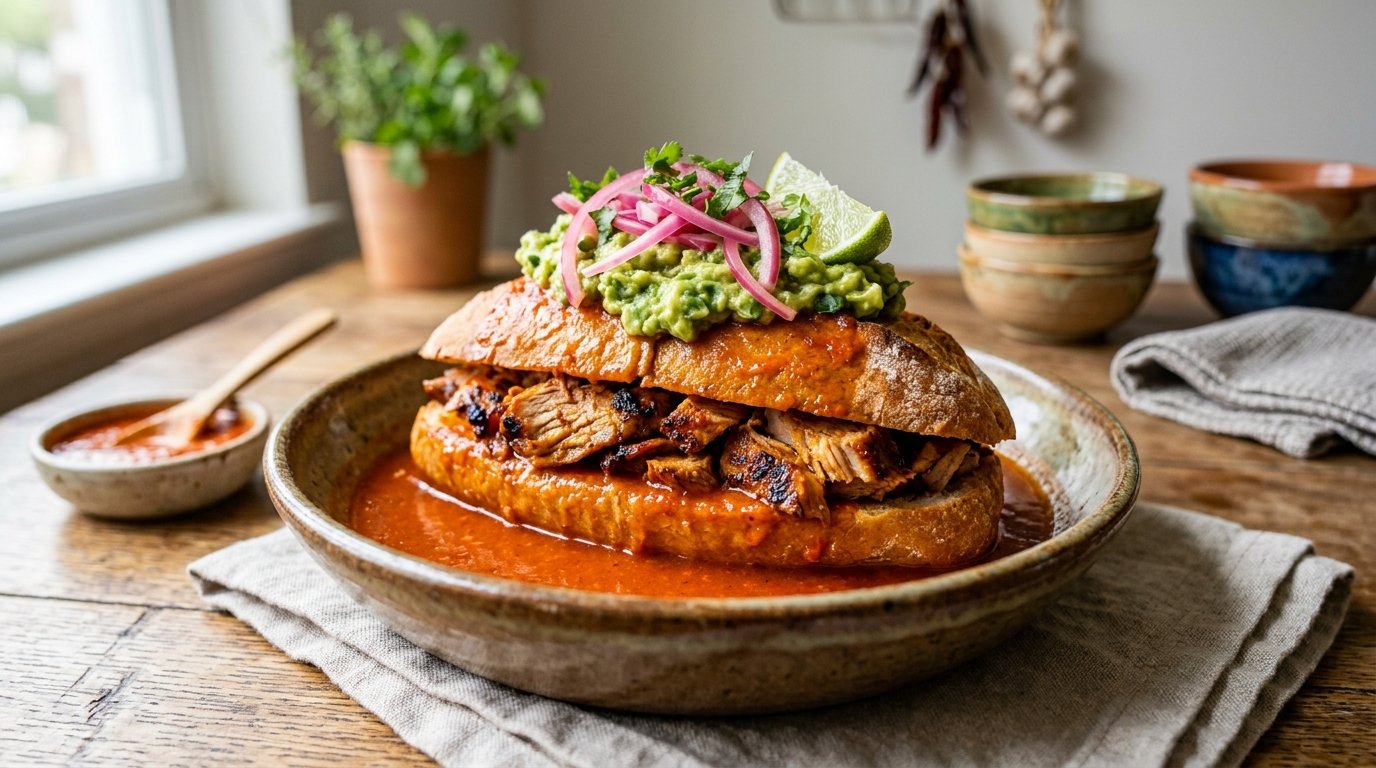
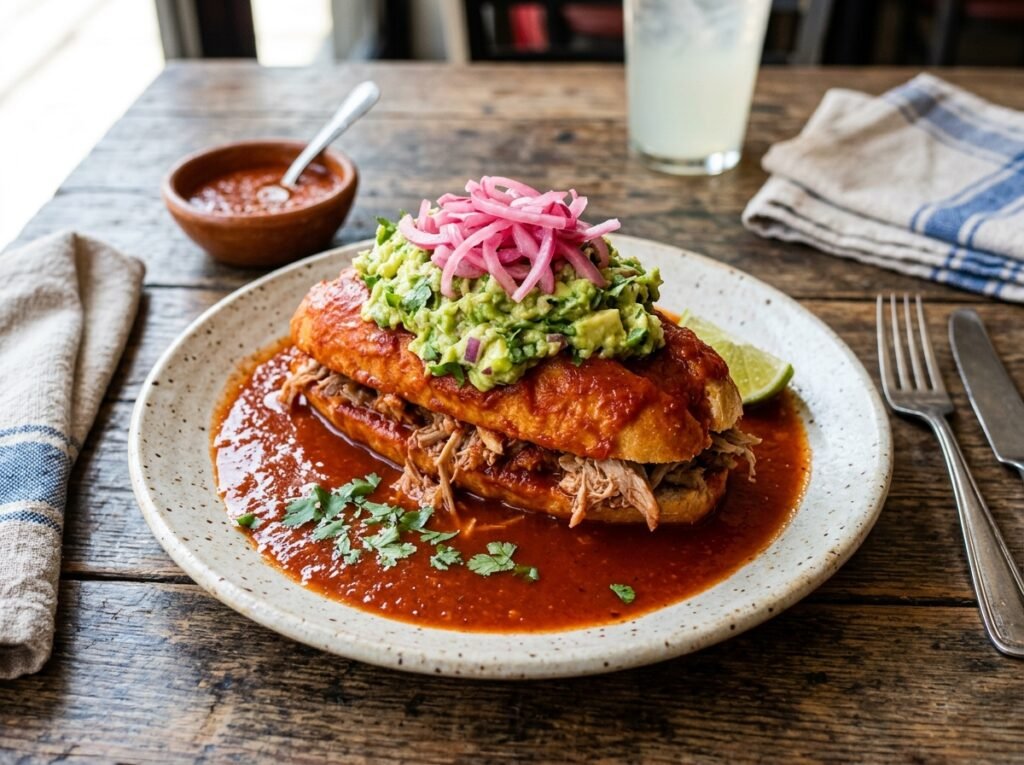
There is a distinct, soul-satisfying joy in biting into a perfectly constructed Mexican torta. It is more than just a sandwich; it is an architectural marvel of textures and flavors that defines street food culture. This authentic torta ahogada with al pastor and chunky guacamole takes the beloved concept of the “drowned sandwich” and elevates it with the sweet-spicy complexity of trompo-style pork and the creamy richness of fresh avocado. While traditional tortas ahogadas are often served submerged in broth, this version celebrates the assembly as much as the sauce, creating a handheld masterpiece where every ingredient shines before you decide to dunk it.
The magic lies in the layering. A crusty bolillo roll, toasted to golden perfection, serves as the foundation. It is slathered with refried beans that act as both flavor enhancer and moisture barrier, preventing the bread from disintegrating too quickly. Then comes the star: tender, marinated al pastor meat carved fresh, followed by a vibrant pile of onion and cilantro, a drizzle of tangy salsa, and finally, a mountain of chunky guacamole that adds cool, fatty luxury to the spicy heat. Whether you are recreating a favorite memory from Guadalajara or exploring Mexican cuisine for the first time, this recipe delivers an explosion of taste that is impossible to resist.
Why This Recipe Works
The success of this torta relies on the principle of structural integrity and flavor balancing. The bolillo roll is specifically chosen for its thick, crisp crust and soft interior, which can withstand the weight of generous fillings without collapsing immediately. Toasting the cut side creates a crucial seal that buys you time to eat before the bread becomes saturated.
Furthermore, the combination of ingredients hits every major taste receptor. The savory, slightly sweet al pastor provides umami depth. The refried beans add earthiness and creaminess. The raw white onion and cilantro offer a sharp, herbal crunch that cuts through the richness. The salsa introduces acidity and heat, while the chunky guacamole provides a cooling, fatty counterpoint that rounds out the spice. This interplay ensures that no single flavor dominates, creating a harmonious bite that keeps you coming back for more. The visual contrast of red meat, green guacamole, and white onion against the golden bread also makes this dish incredibly photogenic and appetizing.
Why You’ll Love This Recipe
- Restaurant-Quality at Home: Replicates the authentic taste and texture of professional taquerias using accessible techniques.
- Customizable Heat Level: Control the spice by adjusting the amount of salsa or choosing mild vs. hot chilies for the al pastor marinade.
- Texture Paradise: Experience the perfect crunch of toasted bread, tender meat, crisp veggies, and creamy avocado in every bite.
- High Protein Powerhouse: Loaded with pork and beans, making it a satisfying meal that fuels your day.
- Visually Stunning: The vibrant colors and generous portions make it a showstopper for social media or dinner parties.
- Versatile Base: The assembly method works with various proteins, allowing you to experiment once you master the basics.
- Crowd Pleaser: Universally loved flavors that appeal to both adventurous eaters and those new to Mexican cuisine.
Ingredient Notes
Bolillo Rolls (or Telera)
- Purpose: The essential vessel. Bolillos have a crisp crust and airy crumb that hold up to wet fillings better than standard sandwich bread.
- Substitutions: Telera rolls are the traditional alternative, slightly flatter and softer. French baguettes or hoagie rolls work in a pinch but lack the specific texture. Avoid soft hamburger buns as they will turn to mush instantly.
- Buying Tips: Look for fresh, day-old rolls at a Latin bakery. They should feel light and sound hollow when tapped. Stale rolls can be revived with a quick toast, but avoid rock-hard ones.
- Storage Tips: Store in a paper bag at room temperature for up to 2 days. Freeze for longer storage; thaw and toast before use. Never refrigerate as it accelerates staling.
Al Pastor Meat (Marinated Pork)
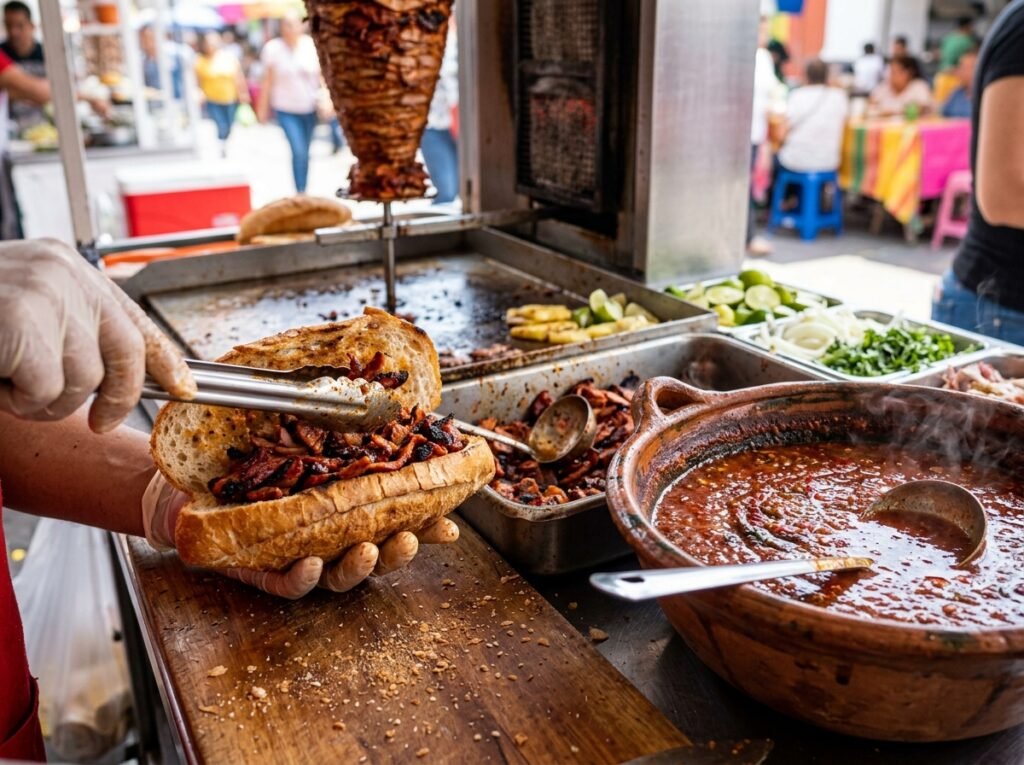
- Purpose: The protein star. Traditionally cooked on a vertical spit (trompo), it offers a unique sweet-spicy flavor profile from dried chilies, pineapple, and vinegar.
- Substitutions: If you cannot find pre-made al pastor, marinate pork shoulder slices in guajillo/ancho paste, achiote, cumin, oregano, vinegar, and pineapple juice for 4+ hours. Carnitas or grilled chicken are acceptable alternatives but change the flavor profile significantly.
- Buying Tips: Buy from a reputable Latin market or taqueria. Look for meat that is deep red-orange, not pale. Freshly carved meat is superior to pre-packaged deli slices.
- Storage Tips: Refrigerate cooked al pastor for up to 3 days. Freeze for up to 2 months. Reheat gently with a splash of water or broth to restore moisture.
Refried Beans (Frijoles Refritos)
- Purpose: Acts as a flavorful glue and moisture barrier. The fat content helps repel liquid from the salsa/guacamole, extending the bread’s structural life.
- Substitutions: Whole black or pinto beans mashed with lard/oil work well. Bean dip is too smooth; you want texture. Vegan butter/oil can replace lard for vegetarian versions.
- Buying Tips: Canned beans are convenient; look for brands with simple ingredients (beans, oil/fat, salt). Homemade is best for flavor control. Avoid “fat-free” versions as they lack the necessary richness and barrier properties.
- Storage Tips: Refrigerate leftovers for up to 5 days. Freeze in portions for up to 3 months. Reheat with a little water to restore creamy consistency.
Chunky Guacamole
- Purpose: Adds cooling creaminess, healthy fats, and fresh herbal notes. The chunks provide textural contrast to the smooth beans and tender meat.
- Substitutions: Sliced avocado works but lacks the integrated seasoning. Sour cream or crema mexicana can add creaminess but miss the distinct avocado flavor.
- Buying Tips: Use Hass avocados that yield slightly to gentle pressure. Bright green color indicates freshness. Fresh lime juice and cilantro are non-negotiable for authentic flavor.
- Storage Tips: Make fresh daily. To store leftovers, press plastic wrap directly onto the surface to prevent browning. Keeps 1-2 days max. Add extra lime juice to slow oxidation.
White Onion & Cilantro
- Purpose: Provides sharp bite, crunch, and herbal freshness. Essential for cutting through the richness of meat and beans.
- Substitutions: Red onion for milder flavor. Green onions (scallions) for delicate onion note. Parsley if cilantro is disliked (though flavor changes significantly).
- Buying Tips: Choose firm, heavy onions with dry skins. Cilantro should be bright green with no yellowing or sliminess. Wash and dry thoroughly before chopping.
- Storage Tips: Store onions in cool, dark place. Keep cilantro stems in water like flowers, covered loosely with bag in fridge. Lasts 1-2 weeks. Chop just before serving to prevent sulfurous smell.
Salsa (Red/Tomato-Based)
- Purpose: Adds acidity, heat, and moisture. Traditional torta ahogada uses a thin, vinegary tomato-chili sauce.
- Substitutions: Salsa verde (tomatillo) for tangier profile. Pico de gallo for chunkier texture. Hot sauce + tomato sauce mix for quick version.
- Buying Tips: Look for traditional Mexican salsas with visible seeds/chunks. Avoid overly sweet or ketchup-like sauces. Homemade is ideal for controlling heat/acidity balance.
- Storage Tips: Refrigerate for up to 1 week. Freeze for up to 3 months. Thaw in fridge overnight; texture may soften but flavor remains.
Kitchen Equipment
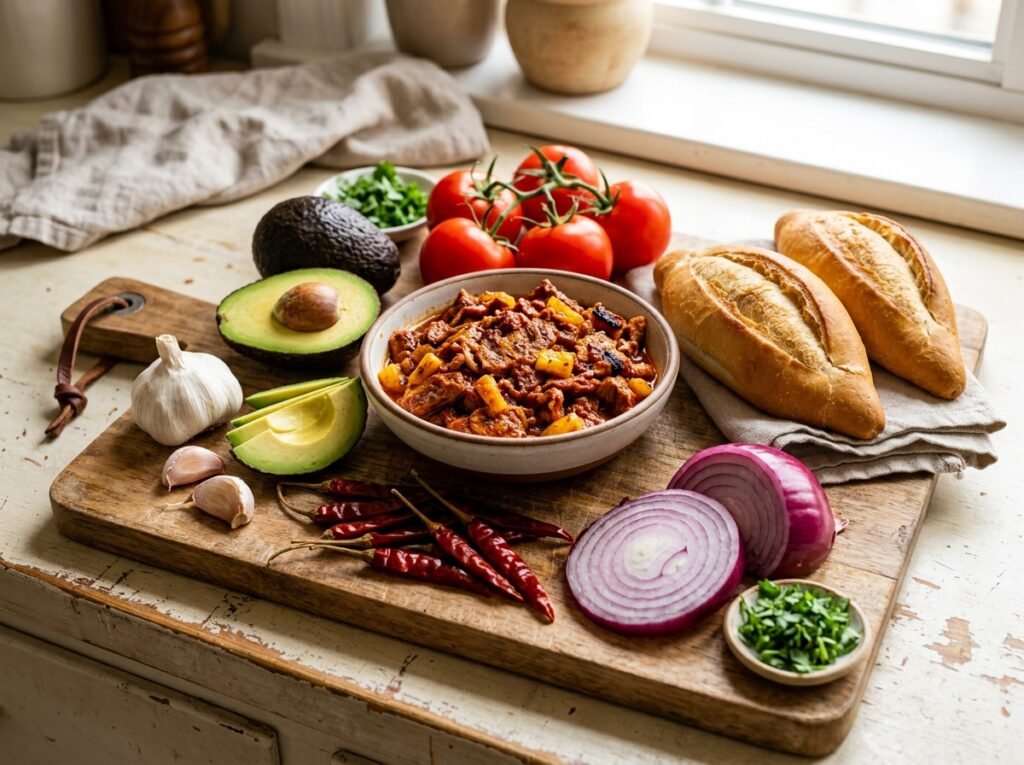
- Sharp Chef’s Knife: Essential for slicing rolls cleanly and chopping vegetables precisely. Dull knives crush bread and bruise herbs.
- Cutting Board: Large surface area for assembly. Wood or composite preferred for knife care.
- Skillet or Griddle: For toasting rolls and reheating meat. Cast iron retains heat beautifully for even browning.
- Mixing Bowls: For preparing guacamole and holding prepped ingredients. Stainless steel or glass recommended.
- Spatula/Spoon: For spreading beans and scooping guacamole. Silicone spatulas are gentle on bread.
- Tongs: For handling hot meat and rolls safely.
- Measuring Cups/Spoons: For consistent seasoning and portioning.
Preparation Information
- Prep Time: 30 Minutes
- Cook Time: 15 Minutes (Assembly/Toasting)
- Total Time: 45 Minutes
- Servings: 4 Large Sandwiches
Step-by-Step Instructions
Preparing the Al Pastor Meat
- Reheat Gently: If using leftover or store-bought al pastor, warm it in a skillet over medium-low heat with a splash of water or broth. Stir frequently to prevent drying.
- Why this matters: Cold meat cools the entire sandwich and feels waxy. Gentle reheating restores juiciness and releases aromatic oils.
- Visual Cue: Meat glistens with moisture, not dry or burnt edges. Steam rises gently.
- Aroma Cue: Sweet-spicy chili-pineapple fragrance intensifies. No sour or stale smells.
- Professional Tip: Do not overcook. Al pastor is already cooked; you are just warming it. High heat = tough, dry meat.
Making the Chunky Guacamole
- Mash Avocados Roughly: Halve and pit ripe avocados. Scoop flesh into bowl. Mash with fork until mostly smooth but with visible chunks (pea-sized).
- Why chunks? Texture contrast is key. Smooth guac slides off; chunks cling to meat and provide satisfying bites.
- Visual Cue: Vibrant green mixture with distinct avocado pieces. Not uniform puree.
- Texture Cue: Creamy yet substantial. Should hold shape when spooned, not run like soup.
- Season Generously: Fold in ¼ cup finely diced white onion, 2 tbsp chopped cilantro, juice of 1 lime, and ½ tsp salt. Taste and adjust.
- Why season now? Salt enhances avocado flavor; lime prevents browning and adds brightness. Onion/cilantro distribute evenly when folded gently.
- Color Cue: Bright green with flecks of white/purple onion and green herb. No brown spots.
- Common Mistake: Over-mashing turns guac gluey. Stop when desired chunkiness achieved. Over-liming makes it sour; add gradually.
Toasting the Bolillo Rolls
- Slice and Butter Lightly: Cut rolls horizontally, leaving hinge intact if desired. Brush cut sides lightly with melted butter or oil.
- Why butter/oil? Promotes even browning and adds flavor. Dry toasting can burn spots; fat conducts heat gently.
- Visual Cue: Thin, even coating. Not dripping or pooled.
- Toast Until Golden: Place cut-side down on hot skillet/griddle over medium heat. Press gently. Cook 1-2 minutes until golden brown and crisp. Flip briefly to warm top if needed.
- Why toast? Creates moisture barrier. Warm bread absorbs flavors better than cold. Crisp exterior contrasts soft interior.
- Color Cue: Even golden-brown crust. No black char marks.
- Texture Cue: Firm to touch, slight resistance when pressed. Soft inside, crisp outside.
- Pro Tip: Watch closely! Bread burns fast. Remove when fragrant and colored. Let cool 30 seconds before filling to set crust.
Layering the Fillings
- Spread Refried Beans: Apply generous layer (2-3 tbsp) to bottom half of toasted roll. Spread evenly to edges.
- Why beans first? Acts as glue for meat. Fat content repels moisture from salsa/guac, protecting bread. Earthy flavor base complements pork.
- Visual Cue: Smooth, even layer covering bread surface. No bare spots.
- Texture Cue: Creamy, spreadable consistency. Not dry or crumbly.
- Pile On Al Pastor: Add ½-¾ cup warm al pastor meat over beans. Distribute evenly.
- Why pile high? Tortas are meant to be generous. Meat is main event; skimping ruins balance.
- Visual Cue: Mounded meat covering beans completely. Juices visible but not pooling excessively.
- Temperature Cue: Meat should be warm/hot. Cold meat = sad sandwich.
- Add Onion, Cilantro & Salsa: Sprinkle 2 tbsp diced onion, 1 tbsp cilantro over meat. Drizzle 1-2 tbsp salsa evenly.
- Why layer order? Veggies add crunch between meat layers. Salsa moistens meat slightly, enhancing flavor integration.
- Color Cue: White onion, green cilantro, red salsa against brown meat. Vibrant contrast.
- Moisture Management: Don’t drown meat yet. Save heavy salsa application for after guac or serve on side for dipping.
The Grand Assembly
- Mountain of Guacamole: Spoon ¼- cup chunky guacamole over salsa/onion layer. Mound generously; don’t spread flat.
- Why mound? Visual drama. Centered mound stays contained when closed. Spread guac migrates to edges, causing leaks.
- Visual Cue: Bright green peak contrasting with red/brown below. Chunky texture visible.
- Temperature Note: Guac should be cool/room temp. Hot guac turns brown/oily instantly.
- Close and Press Gently: Fold top half of roll over filling. Press down lightly with palm to compact slightly. Serve immediately.
- Why press? Helps layers adhere. Prevents collapse when bitten. Don’t smash; preserve airiness.
- Structural Check: Roll should hold shape without gaping. Fillings visible but contained.
- Serving Tip: Wrap bottom half in parchment paper for easy handling. Provide napkins! Serve with extra salsa for dipping (“ahogada” style).
Expert Tips for Authentic Flavor
- Bread Temperature Matters: Always toast rolls just before assembling. Warm bread absorbs flavors; cold bread repels them. Timing is everything.
- Guac Freshness is Non-Negotiable: Brown guacamole ruins the experience. Make it last-minute. If prepping ahead, store with pit and plastic wrap pressed on surface. Discard if discolored.
- Meat Moisture Control: Al pastor should be juicy but not swimming. Drain excess marinade/juices before piling. Too much liquid = soggy bread disaster.
- Bean Barrier Technique: Ensure beans cover entire bread surface, especially edges. Uncovered areas become soak zones. Thickness matters; thin layer won’t protect.
- Salsa Application Strategy: For true “ahogada” experience, serve salsa on side for dipping. For assembled version, apply sparingly inside; let diner control sogginess level.
- Onion Soak Trick: If raw onion is too harsh, soak diced onion in ice water 10 mins, drain, pat dry. Removes bite while keeping crunch. Essential for sensitive palates.
- Avocado Ripeness Test: Perfect guac needs perfectly ripe avos. Should yield to gentle thumb pressure like cheek skin. Hard = bland/chunky; Mushy = oxidized/bitter.
Common Mistakes to Avoid
- Using Stale/Wrong Bread: Soft rolls dissolve; hard rolls hurt teeth. Fix: Use fresh bolillos/teleras. Toast properly. Revive stale rolls with steam then toast.
- Overloading with Salsa Inside: Guaranteed sogginess. Fix: Apply salsa sparingly inside; serve extra on side. Let diner customize wetness.
- Cold Meat/Guac: Temperature clash kills enjoyment. Fix: Warm meat thoroughly. Keep guac cool but not icy. Assemble quickly to maintain temps.
- Skipping the Bean Layer: Bread soaks through instantly. Fix: Never omit beans. They are structural engineer AND flavor enhancer.
- Mushing Guacamole: Gluey texture slides off. Fix: Mash gently; leave chunks. Fold ingredients; don’t blend.
- Assembling Too Early: Sandwich collapses before eating. Fix: Assemble à la minute. Prep components ahead; combine only when ready to serve.
- Uneven Filling Distribution: One bite all meat, next all guac. Fix: Layer deliberately. Spread each component evenly across bread surface.
Recipe Variations
- Spicy Inferno: Add minced habanero/serrano to guacamole. Use extra-hot salsa. Marinate pork with ghost pepper powder. Warning: Not for faint-hearted!
- Vegetarian Delight: Replace al pastor with roasted cauliflower steaks or seasoned jackfruit. Use vegan refried beans (check lard content). Cashew crema replaces dairy if used. Still structurally sound!
- Vegan Version: Vegan al pastor (soy curls/mushrooms). Vegan beans. Guac naturally vegan. Ensure bread has no egg/dairy. Top with pickled onions for tang.
- Chicken Tinga Twist: Swap pork for shredded chicken in chipotle-tomato sauce. Smoky-spicy profile differs but equally delicious. Adjust salsa pairing accordingly.
- Beef Barbacoa Style: Use slow-cooked beef cheek/shank. Richer, deeper flavor. Pair with onion-cilantro and avocado. Heavier than al pastor; balance with extra lime.
- Seafood Sensation: Grilled shrimp or fish fillets. Lighter protein. Use mango-avocado salsa instead of red. Citrus-forward profile. Perfect for summer.
- Extra Cheesy Bomb: Add melted Oaxaca/Monterey Jack cheese under meat. Stretchy, salty contrast. Broil briefly before adding cold toppings. Indulgence maximized.
- Healthy Swap: Whole wheat bolillo. Extra veggies (lettuce, tomato, radish). Reduce beans/guac portions. Increase onion/cilantro. Still satisfying, lighter macros.
- Low-Carb/Keto: Lettuce wrap or cloud bread instead of roll. Skip beans. Increase meat/guac ratio. Use sugar-free salsa. Guac is your best friend here.
- Breakfast Torta: Scrambled eggs, chorizo, cheese. Top with salsa/guac. Morning fuel upgraded. Add hash browns for crunch.
What to Serve With This Recipe
This torta is a meal unto itself, but complementary sides elevate the experience:
- Mexican Rice or Beans: Arroz rojo or frijoles charros provide hearty starch to soak up escaped juices. Classic pairing.
- Elotes/Esquites: Grilled corn with mayo, chili, lime echoes street food vibe. Sweet-savory contrast to rich sandwich.
- Fresh Salad: Simple lettuce, tomato, cucumber with vinaigrette cuts richness. Palate cleanser between heavy bites.
- Chips & Extra Dip: Tortilla chips with additional guac, salsa, or queso for scooping. Extends meal interactively.
- Beverages: Horchata, jamaica agua fresca, or Mexican Coke balance spice/salt. Beer (lager/pilsner) or margaritas for adult gatherings.
- Dessert: Churros, flan, or tres leches cake. Sweet finish to savory feast. Keep light if torta was massive.
- Pickled Vegetables: Escabeche (pickled carrots/onions/jalapeños) adds acid crunch mirroring al pastor brightness.
Make Ahead and Meal Prep Tips
- Component Prep: Cook/reheat al pastor up to 3 days ahead. Store separately. Make guac morning-of (max 4 hrs ahead with proper storage). Chop veggies day-of.
- Bean Batch Prep: Make large batch refried beans. Freeze in portions. Thaw overnight; reheat with splash water. Saves active prep time.
- Roll Toasting Station: If serving crowd, keep rolls warm in low oven (200°F) wrapped in foil. Toast just before assembling for optimal crispness.
- Salsa Prep: Make salsa 1-2 days ahead; flavors improve. Store refrigerated. Bring to room temp before serving for best flavor release.
- Party Assembly Line: Set up stations: rolls → beans → meat → veggies → salsa → guac → close. Guests customize while you manage grill. Efficient and interactive.
Storage Instructions
- Refrigerator (Components): Store cooked meat, beans, salsa separately in airtight containers 3-4 days. Guac 1-2 days max (surface protection critical). Veggies 2-3 days.
- Freezer (Components): Meat/beans freeze well 2-3 months. Salsa freezes 3 months. Guac does NOT freeze well (turns brown/watery). Rolls freeze 2 months; toast before use.
- Assembled Sandwiches: NOT recommended. Bread becomes soggy, guac browns, textures degrade. Always assemble fresh. Leftover assembled torta: discard or repurpose (see below).
- Safety Note: Discard assembled torta left at room temp >2 hours. Dairy/meat combo spoils quickly. When in doubt, throw it out.
Reheating Instructions
Note: Assembled tortas do not reheat well. Components reheat beautifully.
- Skillet (Best for Meat/Beans): Reheat meat/beans in skillet over medium-low heat with splash water/broth. Stir frequently. Restores moisture/flavor.
- Oven (For Rolls): Warm rolls 350°F 3-5 mins. Restores crispness. Wrap in foil if softening desired. Never microwave rolls alone; they become chewy/rubbery.
- Microwave (Last Resort for Components): Heat meat/beans 30-sec bursts stirring between. WILL alter texture. Acceptable compromise for speed.
- Repurpose Leftovers: Transform leftover components into quesadillas, nachos, rice bowls, or scrambled eggs. Creative reuse prevents waste while honoring ingredients.
- Avoid Reheating Guac: Turns brown/oily/bitter. Always make fresh. If unavoidable, stir vigorously with lime juice; accept compromised quality.
Nutritional Information
Per sandwich (approximate):
- Calories: 780
- Protein: 38g
- Carbohydrates: 72g
- Fat: 38g
- Fiber: 12g
- Sugar: 8g
- Sodium: 1,250mg
- Vitamin C: 35% DV
- Potassium: 25% DV
- Iron: 20% DV
Note: Values vary by roll size, meat portion, guac amount. High sodium from beans/salsa/meat. Modify with low-sodium beans, less salsa, whole grain roll for healthier version. Guac provides heart-healthy monounsaturated fats.
Troubleshooting Guide
| Problem | Cause | Solution |
|---|---|---|
| Bread soggy/collapsed | No bean barrier, too much salsa, assembled early | Always use bean layer. Apply salsa sparingly inside. Assemble à la minute. Serve salsa on side. |
| Guacamole brown/oxidized | Exposed to air, old avocados, made too early | Press plastic wrap on surface. Use ripe avos. Make fresh. Add extra lime juice. Discard if discolored. |
| Meat dry/tough | Overcooked/reheated, lean cut | Reheat gently with liquid. Use fatty cuts (shoulder/butt). Marinate adequately. Don’t overheat. |
| Sandwich falls apart | Wrong bread, overfilled, not pressed | Use bolillos/teleras. Toast properly. Press gently when closing. Wrap in parchment for handling. |
| Flavors bland/unbalanced | Underseasoned components, cold ingredients | Season each layer adequately. Warm meat/toast bread. Taste guac/salsa before assembling. Adjust lime/salt. |
| Onion too harsh/pungent | Raw sulfur compounds, old onion | Soak diced onion in ice water 10 mins. Use fresh onions. Substitute red/green onion if sensitive. |
| Beans too dry/crumbly | Over-reduced, no fat, old batch | Reheat with splash water/broth. Add fat (lard/oil/butter). Blend briefly if needed. Make fresh batch. |
| Roll too hard/stale | Old bread, over-toasted, wrong type | Use fresh bolillos. Toast lightly. Revive stale rolls with steam then toast. Store properly. |
Frequently Asked Questions
1. Can I use regular sandwich bread? Technically yes, but strongly discouraged. Soft bread dissolves instantly under wet fillings. Bolillos/teleras have structural integrity designed for this. If desperate, toast bread heavily and use minimal salsa inside. Expect compromised experience.
2. What if I can’t find al pastor? Marinate pork shoulder thinly sliced in guajillo/ancho paste, achiote, cumin, oregano, vinegar, pineapple juice 4+ hours. Grill/sear until charred. Or use carnitas, barbacoa, chicken tinga. Flavor differs but still delicious. Authenticity flexible; satisfaction paramount.
3. How do I prevent guacamole from browning? Acid (lime/lemon) slows oxidation. Press plastic wrap DIRECTLY on surface (no air gaps). Store in airtight container. Make as close to serving as possible. Never refrigerate cut avocados without protection. Pit doesn’t actually help; myth debunked.
4. Is this recipe gluten-free? Traditional bolillos contain gluten. Use certified GF rolls or lettuce wraps. Verify beans/salsa labels for hidden gluten. Guac/meat naturally GF. Cross-contamination risk in shared kitchens; communicate dietary needs clearly.
5. Can I make this vegetarian/vegan? Absolutely! Veg: Roasted veggies, mushrooms, jackfruit instead of meat. Vegan: Ensure beans cooked without lard. Use vegan bread. Guac naturally vegan. Top with pickled onions, radishes. Flavor/texture still outstanding.
6. Why is my torta falling apart when I bite it? Structural failure usually from: wrong bread, no bean barrier, over-saucing, not pressing when closing. Fix: Use proper rolls. Always bean layer. Control salsa. Press gently. Wrap in parchment. Eat over plate!
7. Can I prepare components ahead for a party? Yes! Prep meat, beans, salsa, chop veggies ahead. Make guac max 4 hrs ahead with proper storage. Toast rolls just before serving. Set up assembly station. Guests build fresh. Optimal freshness maintained.
8. What’s the difference between torta ahogada and regular torta? Ahogada means “drowned.” Traditionally served submerged in broth/salsa. This recipe celebrates assembly first, dipping optional. Regular tortas focus on dry assembly. Both delicious; ahogada embraces controlled sogginess as feature, not bug.
9. How spicy is al pastor typically? Medium heat traditionally. Sweet-spicy balance from chilies/pineapple. Varies by vendor/recipe. Some mild, some fiery. Taste before assembling. Adjust salsa/guac heat accordingly. Customize to your tolerance.
10. Can I freeze assembled tortas? Strongly no. Bread becomes soggy/mushy upon thawing. Guac browns/oxidizes. Textures destroyed. Freeze components separately. Assemble fresh. Quality preservation requires separation. Patience rewarded with superior eating experience.
Final Thoughts
Creating this authentic torta ahogada with al pastor and chunky guacamole is more than following a recipe—it’s embracing the vibrant, unapologetic spirit of Mexican street food. Each layer tells a story: the humble bean, the fiery pork, the cool avocado, the crisp bread. Together, they create something greater than the sum of parts—a symphony of flavor and texture that nourishes body and soul.