
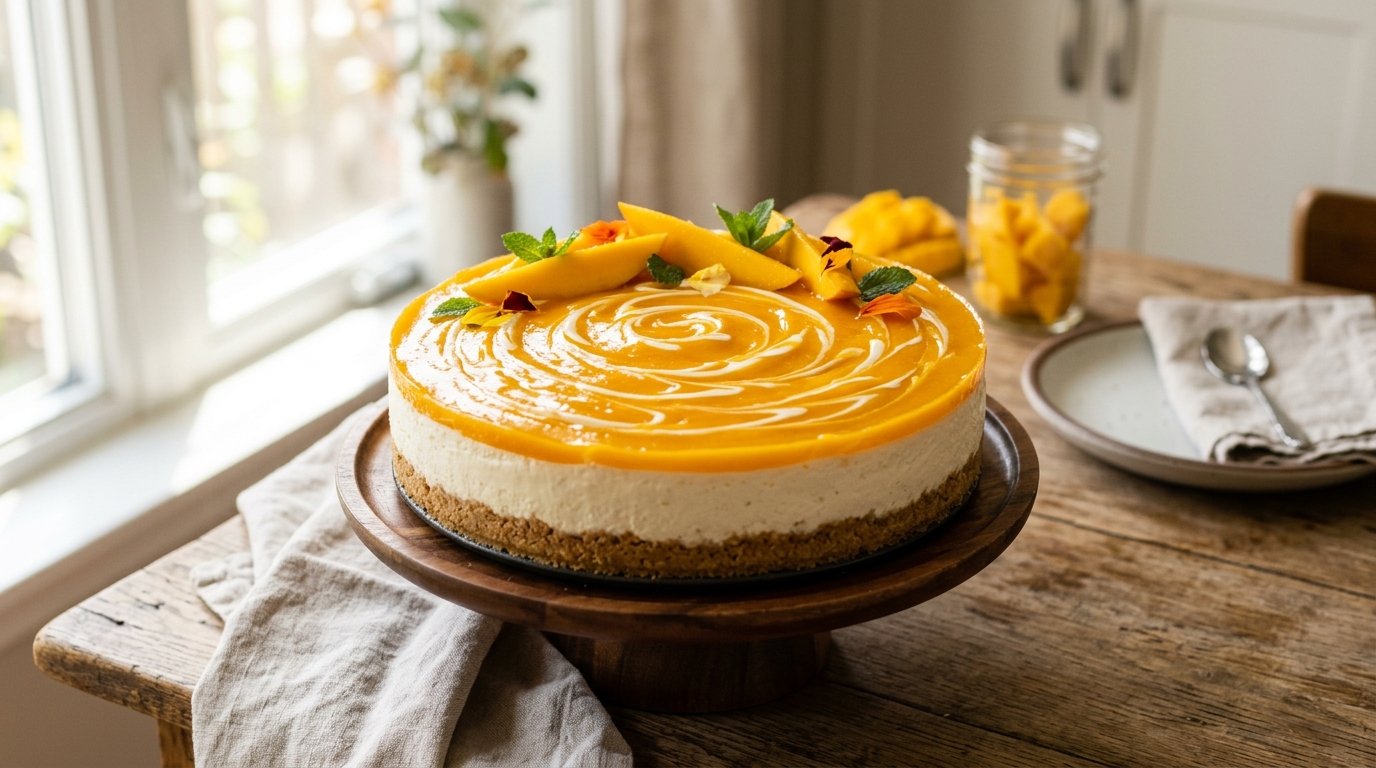
Quick Recipe Summary
| Feature | Details |
|---|---|
| Prep Time | 30 Minutes |
| Chill Time | 4 Hours (Minimum) |
| Total Time | 4 Hours 30 Minutes |
| Servings | 10-12 Slices |
| Cuisine | American / Tropical Fusion |
| Course | Dessert |
| Difficulty | Easy / Intermediate |
| Calories | ~380 kcal per slice |
Table of Contents
- Introduction
- Why This Recipe Works
- Why You’ll Love This Recipe
- Ingredient Notes
- Kitchen Equipment
- Step-by-Step Instructions
- Expert Tips for a Sliceable Cheesecake
- Common Mistakes to Avoid
- Recipe Variations
- What to Serve With This Recipe
- Make Ahead and Meal Prep Tips
- Storage Instructions
- Reheating Instructions
- Nutritional Information
- Troubleshooting Guide
- Frequently Asked Questions
- Final Thoughts
Introduction
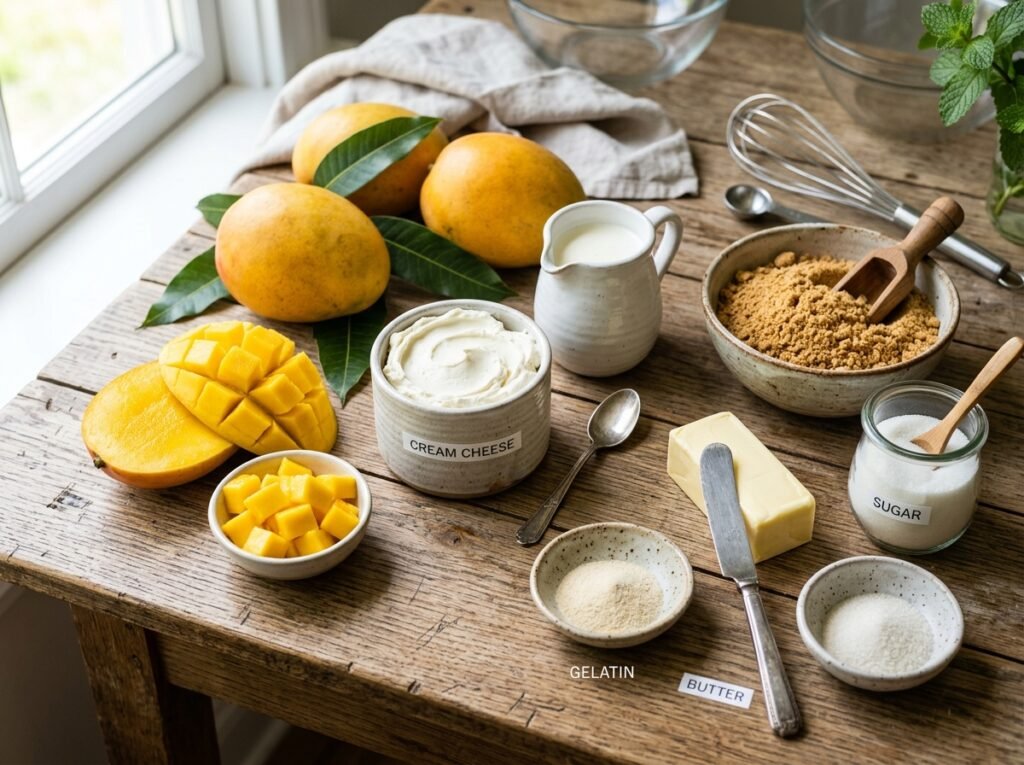
There is a specific kind of magic that happens when you combine the bright, tropical sweetness of ripe mangoes with the rich, velvety texture of cream cheese. This no-bake mango cheesecake captures that essence perfectly, offering a dessert that feels indulgent yet refreshingly light. Unlike traditional baked cheesecakes that require water baths and careful temperature monitoring to prevent cracking, this version relies on the power of chilling and proper emulsification to achieve a flawless, creamy set. It is the ultimate summer showstopper, requiring no oven time and delivering a flavor profile that transports you straight to a sun-drenched orchard.
For home bakers who love bold fruit flavors but dread the complexity of baking, this recipe is a revelation. The process is straightforward: a buttery graham cracker crust provides a salty-sweet foundation, while a blender-smooth filling incorporates fresh mango puree directly into the dairy base. The result is a cheesecake that is uniformly yellow-orange, intensely fruity, and incredibly smooth. Whether you are hosting a backyard barbecue, celebrating a birthday, or simply craving something sweet on a hot afternoon, mastering this no-bake mango cheesecake will elevate your dessert game without heating up your kitchen.
Why This Recipe Works
The science behind a successful no-bake cheesecake lies in the balance of fat, sugar, and structure. In baked versions, eggs provide the protein network that sets the cake as it coagulates in the oven. Here, we rely on the high fat content of full-fat cream cheese and the stabilizing properties of whipped cream (or condensed milk, depending on the variation) to create a firm yet creamy texture. By blending the mango directly with the cream cheese, we ensure that the fruit’s natural pectin and sugars integrate fully into the fat matrix, preventing separation and creating a homogenous, vibrant filling.
Furthermore, the use of a high-speed blender is crucial for texture. Mango flesh can be fibrous, and even small chunks can disrupt the silky mouthfeel expected of a cheesecake. Blending ensures a completely smooth puree that emulsifies seamlessly with the dairy. When this mixture is gently folded with aerated whipped cream, air bubbles are trapped within the fat structure. Upon chilling, these fats solidify around the air pockets, resulting in a mousse-like consistency that is firm enough to slice cleanly but soft enough to melt on the tongue. This structural integrity, combined with the intense flavor of real fruit, makes this recipe superior to many gelatin-heavy alternatives.
Why You’ll Love This Recipe
- Zero Oven Required: Perfect for hot summer days when turning on the oven is out of the question.
- Intense Fruit Flavor: Uses real mango puree throughout the filling, not just as a topping, ensuring every bite is packed with tropical taste.
- Silky Smooth Texture: The blender method eliminates lumps and fibers, creating a luxurious, velvety mouthfeel.
- Vibrant Natural Color: Ripe mangoes provide a stunning golden-yellow hue without any artificial food coloring.
- Beginner Friendly: No tempering eggs, no water baths, and no risk of cracks. If you can blend and fold, you can make this.
- Customizable Sweetness: The natural sweetness of mango allows you to control added sugar, making it less cloying than some traditional recipes.
- Make-Ahead Champion: Actually improves in flavor and texture after chilling, making it an ideal stress-free party dessert.
Ingredient Notes
Graham Crackers (or Digestive Biscuits)
- Purpose: Forms the structural base of the crust. Provides a salty, buttery contrast to the sweet, creamy filling.
- Substitutions: Digestive biscuits (common in UK/Asia), vanilla wafers, or shortbread cookies. For gluten-free, use GF graham crackers or almond flour mixed with butter.
- Buying Tips: Look for standard honey graham crackers. Avoid cinnamon-flavored ones unless you want that spice note. Stale crackers actually work better as they absorb butter more readily.
- Storage Tips: Store crumbs in an airtight container if pre-crushing. Whole crackers keep well in pantry. Freeze crust (unfilled) for up to 1 month.
Unsalted Butter
- Purpose: Binds the crumbs together and adds richness. Melts during pressing to coat crumbs, then re-solidifies in fridge to hold crust shape.
- Substitutions: Coconut oil (solid state) for dairy-free. Margarine works but may alter flavor/texture slightly.
- Buying Tips: Use high-quality European-style butter (higher fat content) for best binding and flavor. Always unsalted to control sodium level.
- Storage Tips: Melted butter can be stored in fridge for weeks. Clarified butter/ghee also works and has higher smoke point if toasting crumbs.
Full-Fat Cream Cheese
- Purpose: The primary body and tang of the cheesecake. Fat content is essential for setting without baking.
- Substitutions: Mascarpone (richer, milder). Neufchâtel (lower fat, softer set – not recommended for no-bake). Vegan cream cheese (check stability; some brands don’t set well).
- Buying Tips: MUST be full-fat brick style. Tub/spreadable cream cheese contains added water/stabilizers that will prevent proper setting. Bring to room temp before blending.
- Storage Tips: Refrigerate until ready to use. Do not freeze raw cream cheese as texture becomes grainy upon thawing.
Ripe Mangoes (Fresh or Frozen)
- Purpose: Primary flavor agent and natural sweetener. Provides color, moisture, and pectin.
- Substitutions: Canned mango pulp (unsweetened) is excellent alternative when fresh is out of season. Peach or apricot nectar can substitute but changes flavor profile significantly.
- Buying Tips: Fresh: Choose fragrant, yielding fruit with no green stems. Frozen: Buy unsweetened chunks; avoid syrup-packed. Ripeness is key – underripe mango = bland/tart cheesecake.
- Storage Tips: Fresh ripe mangoes: fridge 3-5 days. Frozen: keep frozen until blending. Thaw partially for easier blending but don’t let get watery.
Heavy Whipping Cream
- Purpose: Adds airiness and lightness. Stabilizes the filling when whipped to stiff peaks.
- Substitutions: Coconut cream (chilled overnight) for dairy-free. Cool Whip (stabilized whipped topping) for easier handling but different flavor/texture.
- Buying Tips: Minimum 36% fat content. Avoid “light” creams as they won’t whip properly. Chill bowl/beaters beforehand for faster whipping.
- Storage Tips: Keep refrigerated. Freeze leftover cream in ice cube trays for future coffee/cooking use.
Granulated Sugar & Vanilla Extract
- Purpose: Balances acidity of cream cheese/mango. Enhances overall flavor perception.
- Substitutions: Powdered sugar (dissolves faster, smoother texture). Honey/agave (adjust liquid content). Almond extract (complements mango beautifully).
- Buying Tips: Pure vanilla extract only. Imitation vanilla tastes chemical against delicate fruit. Fine-grain sugar blends better than coarse.
- Storage Tips: Indefinite shelf life. Store vanilla away from heat/light to preserve potency.
Kitchen Equipment
- High-Speed Blender: Essential for smoothing mango puree and integrating cream cheese. A food processor can work but may leave fibrous bits.
- 9-Inch Springform Pan: The standard vessel. Removable sides allow clean release without damaging delicate crust/filling.
- Electric Hand Mixer or Stand Mixer: For whipping cream to stiff peaks and beating cream cheese smoothly.
- Rubber Spatula: Crucial for folding whipped cream gently without deflating air bubbles. Silicone spatulas scrape bowls cleanly.
- Measuring Cups/Spoons: Accuracy matters in no-bake desserts where ratios determine set.
- Parchment Paper: Lines bottom of springform pan for easy removal and prevents sticking.
- Offset Spatula: For smoothing top of filling evenly before chilling. Creates professional finish.
Preparation Information
- Prep Time: 30 Minutes
- Chill Time: 4 Hours (Minimum)
- Total Time: 4 Hours 30 Minutes
- Servings: 10-12 Slices
Step-by-Step Instructions
Creating the Perfect Crumb Crust
- Crush the Crackers: Place 1½ cups graham cracker crumbs in a bowl. Pour ⅓ cup melted unsalted butter over crumbs. Mix thoroughly with fork or hands until all crumbs are moistened and resemble wet sand.
- Why this matters: Even coating ensures crust holds together when pressed. Dry spots = crumbly collapse. Too much butter = greasy/soggy crust.
- Visual Cue: Mixture should clump when squeezed but break apart easily. Not powdery, not pooling liquid.
- Texture Cue: Moist, cohesive. Holds shape briefly when released.
- Professional Tip: Pulse crackers in food processor for uniform crumbs. Large chunks create uneven crust that’s hard to slice through.
- Press into Pan: Transfer mixture to 9-inch springform pan lined with parchment on bottom. Press firmly and evenly across bottom and 1 inch up sides using flat-bottomed glass or measuring cup. Chill 15 minutes while preparing filling.
- Why press firmly? Compaction creates density needed to support heavy filling. Loose crust = crumbling slices.
- Visual Cue: Uniform thickness (~¼ inch bottom, consistent side height). No gaps or thin spots.
- Common Mistake: Pressing too hard compacts crumbs into concrete-like hardness. Firm but not crushing pressure is ideal.
- Pro Tip: Chill crust before adding filling. Cold butter firms up, preventing sogginess when wet filling is added.
Blending the Mango Filling
- Prepare Mango Puree: Peel and dice 2 large ripe mangoes (approx. 2 cups). Blend in high-speed blender until completely smooth. Strain through fine mesh sieve if fibrous. Measure exactly 1½ cups puree.
- Why strain? Fibers create gritty texture. Sieve ensures silkiness. Measure after straining as volume decreases.
- Color Cue: Vibrant orange-yellow. Pale = underripe; brownish = oxidized/overripe.
- Aroma Cue: Intensely sweet, floral mango scent. Sour/fermented smell = discard.
- Texture Cue: Thick, pourable consistency like heavy cream. Watery = excess liquid; chunky = insufficient blending.
- Beat Cream Cheese: In stand mixer with paddle attachment, beat 16 oz softened cream cheese + ¾ cup sugar + 1 tsp vanilla on medium-low 2-3 minutes until smooth, creamy, no lumps. Scrape bowl frequently.
- Why low speed? High speed incorporates too much air = bubbles in finished cheesecake. Low speed = dense, smooth emulsion.
- Visual Cue: Pale yellow, glossy, uniform. No white streaks or lumps visible.
- Temperature Cue: Cream cheese MUST be room temp (65-70°F). Cold cheese = lumpy batter regardless of mixing time.
- Critical Step: Overbeating warms cheese, breaking emulsion. Stop when smooth. If lumpy, warm bowl slightly over warm water bath while mixing.
- Combine Mango & Cheese: Add 1½ cups mango puree to beaten cream cheese. Mix on low 30 seconds until just incorporated. Scrape bowl.
- Why gentle mix? Preserves emulsion. Vigorous mixing breaks fat structure = runny filling.
- Color Cue: Uniform pale orange. Marbled = insufficient mixing; dull = overmixed/oxidized.
- Consistency Check: Should be thick but pourable. If too thin, chill 10 mins before folding. If too thick, add 1 tbsp cream.
Folding for Airiness
- Whip the Cream: In separate chilled bowl, whip 1 cup heavy cream to stiff peaks. Beaters should leave defined trails that hold shape.
- Why stiff peaks? Soft peaks = collapsed filling. Stiff peaks = stable structure. Overwhipped = grainy/buttery.
- Visual Cue: Glossy, holds peak upright when beater lifted. Not curdled or separated.
- Sound Cue: Slapping sound changes to quieter swish as cream thickens. Listen carefully near end.
- Pro Tip: Add 1 tbsp powdered sugar to cream for stability. Cornstarch (½ tsp) also helps prevent weeping.
- Fold Gently: Add ⅓ whipped cream to mango-cheese mixture. Fold with rubber spatula to lighten base. Add remaining cream. Fold gently until no white streaks remain.
- Why fold? Cutting motion preserves air bubbles. Stirring deflates = dense/heavy cheesecake.
- Technique: Cut down center, sweep along bottom, lift up and over. Rotate bowl ¼ turn each fold. 8-10 folds max.
- Visual Cue: Uniform pale orange, slightly aerated. Still thick but lighter than pre-fold mixture.
- Common Mistake: Overfolding deflates cream. Underfolding leaves streaks. Stop when just combined.
Assembly and Chilling
- Pour into Crust: Pour filling into chilled crust. Tap pan firmly on counter 3-4 times to release air bubbles. Smooth top with offset spatula.
- Why tap? Trapped air bubbles create holes in sliced cheesecake. Tapping forces them to surface/pop.
- Visual Cue: Surface smooth, level, bubble-free. Edges neat against crust.
- Leveling Tip: Tilt pan slightly while pouring to distribute evenly. Spatula drag creates swirl marks; smooth immediately.
- Chill Thoroughly: Cover loosely with plastic wrap (don’t touch surface). Refrigerate minimum 4 hours, preferably overnight.
- Why cover loosely? Prevents fridge odors/flavors absorbing. Tight wrap sticks to surface = ruined finish.
- Time Matters: 4 hours = minimum set. Overnight = optimal texture/flavor melding. Rushing = soft/messy slices.
- Doneness Test: Center should jiggle slightly like Jell-O when shaken gently. Firm edges, wobbly center = perfect. Liquid center = under-set.
Garnishing and Serving
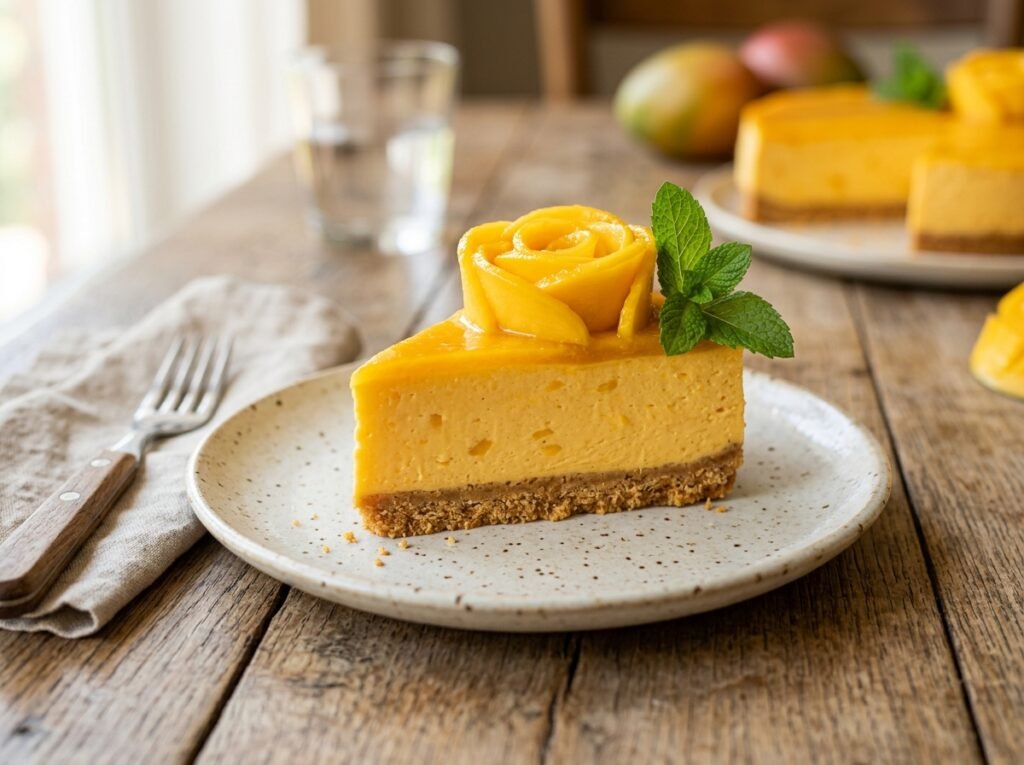
- Top with Fresh Mango: Just before serving, arrange 1 cup diced fresh mango on top. Optional: drizzle mango coulis or sprinkle toasted coconut.
- Why last minute? Fresh fruit releases juice over time = soggy top. Add right before serving for pristine appearance.
- Presentation Tip: Arrange cubes in concentric circles or scattered naturally. Contrast colors pop against pale filling.
- Serving Technique: Dip knife in hot water, wipe dry between cuts. Clean cuts = professional presentation. Warm knife melts filling slightly for cleaner release.
Expert Tips for a Sliceable Cheesecake
- Room Temperature Dairy is Non-Negotiable: Cold cream cheese = lumpy batter. Cold cream = slow whipping/deflation. Plan ahead: set out dairy 1-2 hours before starting. Speed-soak cream cheese: microwave 10 sec intervals, checking frequently.
- Mango Ripeness Dictates Success: Underripe mango = tart/grainy filling. Overripe = fermented/off-flavors. Perfectly ripe = sweet/smooth/vibrant. Taste puree before adding; adjust sugar if needed.
- Fold, Never Stir: This cannot be overstated. Folding preserves the air incorporated into whipped cream. That air = light texture. Stirring = dense brick. Practice folding technique with water/food coloring first if unsure.
- Chill Crust Before Filling: Warm crust melts filling bottom = soggy layer. 15 min fridge time firms butter, creates barrier. Bonus: cold crust helps filling set faster from bottom up.
- Strain Your Puree: Even “smooth” blended mango has micro-fibers. Fine mesh sieve catches them. Result: restaurant-quality silkiness. Worth extra 2 minutes effort.
- Hot Knife for Clean Slices: Run blade under hot tap water, dry completely, cut. Repeat each slice. Heat melts filling slightly at cut line = smooth edge. Wiping prevents smearing.
- Patience During Chilling: Resist urge to check/set early. No-bake cheesecakes need time for fats to crystallize fully. 4 hours minimum; 8+ ideal. Rushing guarantees disappointment.
Common Mistakes to Avoid
- Using Reduced-Fat Cream Cheese: Lower fat = weaker structure = collapsing/soupy cheesecake. Fix: ALWAYS use full-fat brick cream cheese. No exceptions for no-bake.
- Overmixing After Adding Mango: Breaks emulsion = separation/oiliness. Fix: Mix on LOW speed, briefly. Just until combined. Scrape bowl once, mix 10 sec more if needed.
- Adding Warm Mango Puree: Heat melts cream cheese fat = runny filling. Fix: Ensure puree is room temp or chilled. Never add hot/warm fruit to dairy base.
- Under-Chilling: Soft/messy slices. Fix: Respect minimum 4-hour chill. Overnight is better. Set timer; don’t guess.
- Skipping Parchment Liner: Crust sticks to pan = broken release. Fix: Always line bottom. Grease lightly if concerned about sliding.
- Cutting Before Fully Set: Jagged edges, filling smears. Fix: Wait until center jiggles uniformly. Hot knife technique essential.
- Topping Too Early: Fruit juices bleed into filling = stained/mushy top. Fix: Garnish immediately before serving. Store components separately if prepping ahead.
Recipe Variations
- Passion Fruit Twist: Replace half mango puree with passion fruit pulp. Seeds add crunch/tartness. Tropical intensity amplified. Adjust sugar up slightly.
- Coconut Mango Dream: Substitute ½ cup coconut cream for whipping cream. Toasted coconut flakes in crust. Enhanced tropical profile. Dairy-light option.
- Spicy Mango Chili: Add ¼ tsp cayenne or Tajín to filling. Pinch of salt enhances heat/sweet contrast. Unexpected sophistication. Start small; build to taste.
- Vegan Version: Use vegan cream cheese + coconut cream + agar-agar (1 tsp dissolved in 2 tbsp water, heated) for setting. Maple syrup instead of sugar. Texture differs slightly but delicious.
- Low-Sugar/Keto: Sugar-free sweetener (erythritol/monk fruit). Almond flour crust + butter. Full-fat dairy maintains richness. Net carbs ~8g/slice.
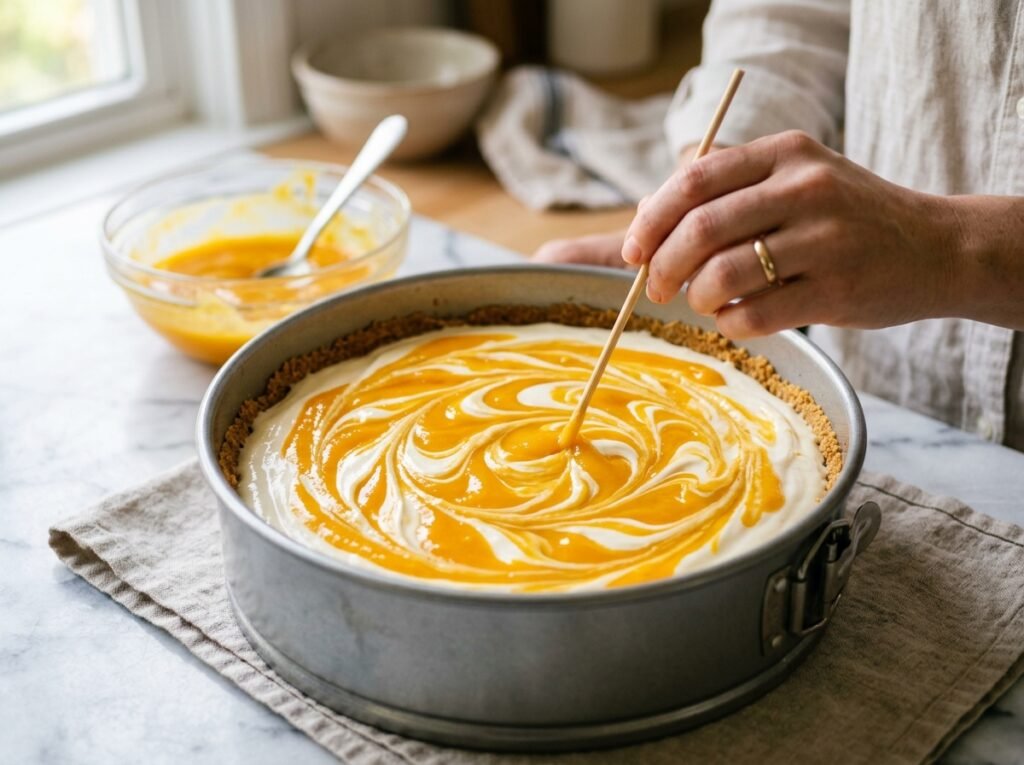
- Berry Swirl Marble: Reserve ½ cup plain cheesecake batter. Fold raspberry/puree into reserved portion. Layer/swirl with mango batter. Visual stunner; dual flavor.
- Lime Zest Brightener: Add zest of 2 limes to filling. Citrus cuts richness, enhances mango. Classic pairing. Avoid juice (too acidic/wet); zest only.
- Chocolate Drizzle Finish: Melt dark chocolate; drizzle over set cheesecake before mango topping. Bittersweet contrast to sweet fruit. Elegant restaurant-style finish.
- Mini Cheesecake Jars: Layer crust crumbs, filling, mango in individual glasses. No slicing needed. Perfect for parties/portions. Chill same timeframe.
What to Serve With This Recipe
This cheesecake shines alongside complementary flavors and textures:
- Fresh Fruit Salad: Berries, kiwi, pineapple echo tropical theme. Acidic fruits cut richness. Light, refreshing contrast.
- Whipped Cream Dollop: Extra cloud of unsweetened cream balances sweet filling. Simple elegance.
- Mango Coulis: Intensifies fruit flavor. Drizzle plate artistically. Professional plating touch.
- Toasted Coconut Flakes: Adds crunch/nuttiness. Sprinkle generously. Textural contrast to smooth filling.
- Espresso or Coffee: Bitterness cuts sweetness perfectly. Post-dinner digestif pairing. Hot/cold contrast delightful.
- Sparkling Wine/Prosecco: Bubbles cleanse palate. Celebratory pairing. Fruity notes complement mango.
- Shortbread Cookies: Buttery crunch contrasts creamy filling. Tea-time classic. Dipping optional.
- Vanilla Bean Ice Cream: Hot/cold, creamy/creamy indulgence. Scoop beside slice. Ultimate decadence.
Make Ahead and Meal Prep Tips
- Crust Prep: Make crust 2 days ahead. Wrap tightly in plastic; freeze or refrigerate. Thaw 15 min if frozen before filling. Saves active prep time.
- Puree Ahead: Blend/strain mango puree up to 3 days ahead. Store airtight in fridge. Bring to room temp before using. Prevents last-minute rushing.
- Full Cheesecake Advance: Make entire cheesecake 2 days ahead. Flavors meld/improve. Cover tightly; store fridge. Add fresh topping day-of. Ideal for stress-free entertaining.
- Component Station: Pre-measure all ingredients; have equipment ready. Mise en place prevents errors. Especially crucial for folding step; can’t pause mid-process.
- Batch Doubling: Recipe scales easily. Use two pans or larger pan. Adjust chill time slightly (+1 hour for thicker cake). Great for crowds.
Storage Instructions
- Refrigerator: Store covered loosely with plastic wrap or in airtight container up to 5 days. Quality peaks days 2-3. Day 5 still safe but texture softens slightly.
- Freezer: Wrap individual slices or whole cake tightly in plastic + foil. Freeze up to 2 months. Thaw overnight in fridge before serving. Texture may soften slightly but still enjoyable.
- Countertop: NEVER leave at room temp >2 hours. Dairy-based dessert spoils rapidly. Food safety non-negotiable. Discard if left out accidentally.
- Signs of Spoilage: Sour smell, mold, excessive weeping/separation, slimy texture. When in doubt, throw out. Fresh ingredients = shorter shelf life than preservative-laden commercial versions.
Reheating Instructions
Note: Cheesecake is served chilled. Reheating is NOT recommended as it destroys texture/structure. However, if accidentally warmed:
- Re-Chill Only: Return to fridge 2+ hours to re-set. Texture may soften permanently but safe to eat if not spoiled.
- Never Microwave/Oven/Air Fryer: Heat melts fats = soup. Ruins irreversibly. Accept loss or repurpose as smoothie base/milkshake.
- Repurposing Leftovers: Blend softened cheesecake with milk/yogurt for mango smoothie. Freeze as popsicles. Use as frosting for cupcakes. Creative salvage prevents waste.
- Prevention is Key: Serve chilled; return leftovers to fridge promptly. Use insulated carrier for transport. Plan portion sizes to minimize leftovers needing storage.
Nutritional Information
Per slice (based on 12 servings):
- Calories: 380
- Protein: 5g
- Carbohydrates: 42g
- Fat: 22g
- Fiber: 1g
- Sugar: 32g
- Sodium: 210mg
- Vitamin C: 45% DV
- Calcium: 8% DV
- Vitamin A: 20% DV
Note: Values approximate; vary by mango ripeness, exact brands, portion size. High vitamin C from fresh mango. Moderate fat from cream cheese/cream. Enjoy as occasional treat; balance with lighter meals.
Troubleshooting Guide
| Problem | Cause | Solution |
|---|---|---|
| Cheesecake won’t set/runny | Under-chilled, low-fat cheese, overmixed | Chill longer (overnight). Use full-fat brick cheese next time. Fold gently; don’t overmix. Add 1 tsp gelatin (bloomed) if desperate fix. |
| Crust falls apart/crumbles | Insufficient butter, loose pressing, warm crust | Increase butter 1-2 tbsp. Press FIRMLY. Chill crust before filling. Bind with egg white (bake 10 min) if persistent issue. |
| Filling has lumps/grainy | Cold cream cheese, unstrained mango, overbeaten | Soften cheese fully next time. Strain puree. Mix low/slow. Warm bowl slightly over water bath to smooth existing lumps. |
| Cracks on surface | Overmixed (air bubbles), rapid temp change | Mix gently; tap out bubbles. Chill gradually (not freezer first). Cover loosely; avoid drafts. Cracks cosmetic; hide with topping. |
| Too sweet/cloying | Overripe mango, excess sugar | Reduce sugar ¼ cup next time. Add lime zest/juice to balance. Serve with unsweetened whipped cream/bitter coffee. |
| Bland/lack of mango flavor | Underripe fruit, insufficient puree | Use RIPE mangoes. Increase puree to 2 cups (reduce cream slightly). Add mango extract (¼ tsp) as booster. |
| Weeping/watery layer on top | Overwhipped cream, unstable emulsion | Whip cream to STIFF peaks only. Fold gently. Ensure puree not watery (drain excess liquid). Chill uncovered first hour to set surface. |
| Sticks to pan/hard to remove | No parchment, warm knife | ALWAYS line pan. Run hot knife between cake/pan edge before releasing. Dip knife in hot water for clean slices. |
Frequently Asked Questions
1. Can I use canned mango instead of fresh? Yes! Unsweetened canned mango pulp is excellent, especially off-season. Drain excess liquid; measure 1½ cups pulp. Often sweeter/smoother than fresh. Adjust added sugar down slightly. Convenient and consistent.
2. Why did my cheesecake crack? Usually overmixing (trapped air expands/contracts) or rapid temperature changes. Mix gently; tap out bubbles. Chill gradually. Cracks are cosmetic; cover with mango topping. Prevention: low-speed mixing, gradual cooling.
3. Can I make this dairy-free/vegan? Absolutely. Use vegan cream cheese + coconut cream + agar-agar (1 tsp bloomed in 2 tbsp water, heated) for setting. Maple syrup instead of sugar. Almond crust. Texture slightly different but delicious. Test small batch first.
4. How do I know when it’s fully set? Center should jiggle uniformly like Jell-O when gently shaken. Edges firm; center wobbly. NOT liquid/sloshy. If unsure, chill 2 more hours. Better over-set than under-set. Overnight chilling eliminates guesswork.
5. Can I freeze this cheesecake? Yes, up to 2 months. Wrap tightly in plastic + foil. Thaw overnight in fridge. Texture may soften slightly but still enjoyable. Freeze individual slices for portion control. Never refreeze thawed cheesecake.
6. Why is my crust soggy? Warm crust + wet filling = sogginess. Chill crust 15+ min before filling. Ensure filling not too thin/watery. Some moisture absorption normal; excessive = technique issue. Bake crust 10 min at 350°F if prone to sogginess.
7. Can I reduce the sugar? Yes, if mangoes very ripe. Reduce to ½ cup or omit entirely. Taste puree first; adjust accordingly. Mango provides significant natural sweetness. Less sugar = brighter fruit flavor. Balance with pinch salt.
8. What pan size works best? 9-inch springform is standard. 8-inch = taller/thicker slices (add 30 min chill). 10-inch = thinner/wider (reduce chill 30 min). Adjust ingredient quantities proportionally. Springform essential for clean release.
9. Can I add gelatin for extra stability? Optional but helpful in warm climates/humid conditions. Bloom 1 tsp gelatin in 2 tbsp cold water; dissolve in ¼ cup warm mango puree; fold into filling. Ensures firm set. Not necessary if chilled properly.
10. How far ahead can I make this? Up to 3 days ahead refrigerated. Flavors improve day 2. Add fresh topping day-of. Freeze up to 2 months. Perfect make-ahead dessert. Stress-free entertaining guaranteed.
Final Thoughts
Creating this no-bake mango cheesecake is more than following a recipe—it’s embracing the joy of simple, elegant desserts that celebrate seasonal fruit. The process teaches patience (chilling!), precision (folding!), and appreciation for quality ingredients (ripe mangoes!). Each slice delivers a burst of sunshine, proving that impressive desserts don’t require complex techniques or hours of oven time.