Quick Recipe Summary
| Detail | Information |
|---|---|
| Prep Time | 15 minutes |
| Cook Time | 45–60 minutes |
| Total Time | 1 hour 15 minutes |
| Servings | 4–6 (as appetizer) or 2–3 (main) |
| Cuisine | American BBQ / Fusion |
| Course | Appetizer / Main Course |
| Difficulty | Easy |
| Calories | ~380 kcal per serving |
Table of Contents
- Introduction
- Why This Recipe Works
- Why You’ll Love This Smoked Spam
- Ingredient Notes
- Kitchen Equipment
- Preparation Information
- Step-by-Step Instructions
- Expert Tips for Smoking Spam
- Common Mistakes to Avoid
- Recipe Variations
- What to Serve With This Recipe
- Make Ahead & Meal Prep Tips
- Storage & Reheating Instructions
- Nutritional Information
- Troubleshooting Guide
- Frequently Asked Questions
- Final Thoughts
Introduction
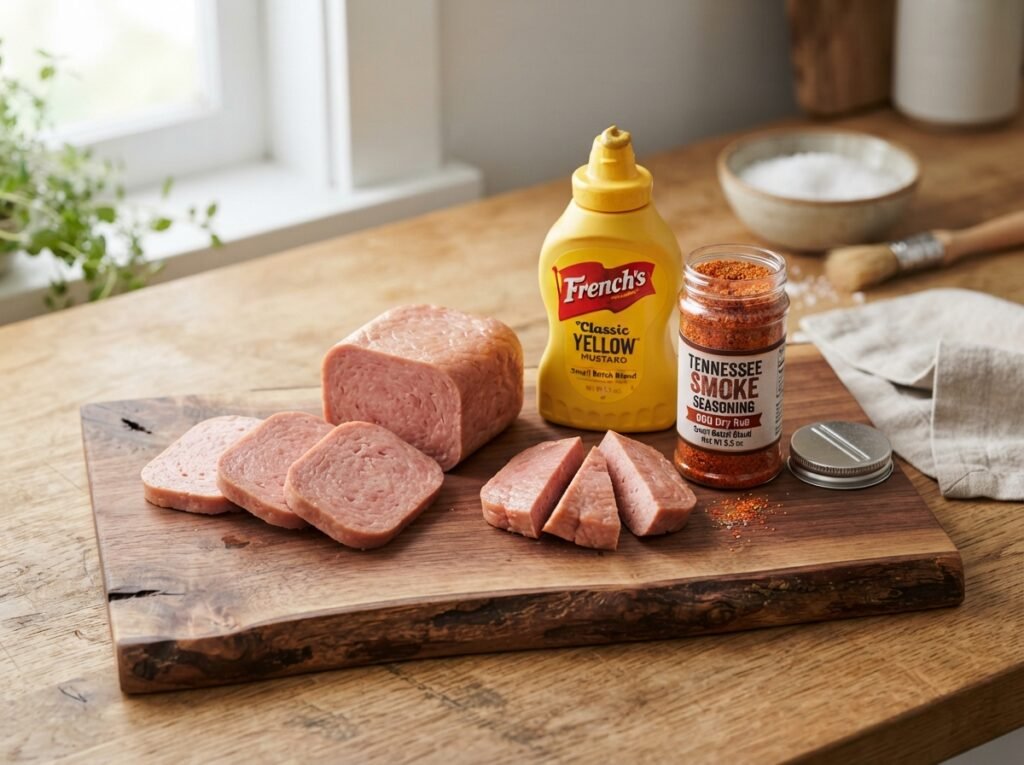
There is a distinct joy in taking an humble, pantry-staple ingredient and elevating it through the transformative power of live fire. This Over the Fire Cooking recipe for Smoked Spam with Mustard Glaze does exactly that. It takes the familiar, salty comfort of canned luncheon meat and infuses it with rich hickory smoke, a savory spice rub, and a tangy, warm mustard sauce that turns it into a gourmet barbecue experience.
If you have ever been skeptical about smoking processed meats, this recipe will change your mind. The dense texture of Spam acts as a perfect sponge for smoke flavor, while the fat content renders down during the cook to create a caramelized, crispy exterior that contrasts beautifully with the tender interior. Whether you are hosting a backyard BBQ, looking for a unique game-day appetizer, or simply want to experiment with your smoker, this dish delivers bold flavors with minimal effort. It proves that great barbecue isn’t just about expensive cuts of beef; it’s about technique, patience, and respecting the ingredients you have.
Why This Recipe Works
The success of this smoked spam recipe lies in the balance of salt, smoke, fat, and acid. Spam is inherently salty and fatty. If cooked plain, it can be overwhelming. By introducing a mustard binder and a “Tennessee Smoke” seasoning blend, we add layers of complexity—earthy spices, garlic, onion, and paprika—that complement rather than compete with the meat’s natural flavor.
The smoking process itself is crucial. Unlike grilling, which uses direct high heat, smoking uses low, indirect heat (typically 225°F–250°F). This gentle environment allows the smoke particles to penetrate the dense protein structure without burning the exterior. The fat within the spam slowly renders, basting the meat from the inside out, while the surface dries slightly to form a pellicle—a tacky skin that helps smoke adhere better.
Finally, the warm mustard glaze serves as a finishing agent. Adding acid (mustard/vinegar) and sweetness (brown sugar) at the end cuts through the richness of the rendered fat and the intensity of the smoke. It creates a glossy, sticky coating that makes each bite visually appealing and texturally satisfying. This multi-layered approach transforms a simple block of meat into a sophisticated culinary creation.
Why You’ll Love This Smoked Spam
- Unexpectedly Gourmet: Elevates a budget-friendly ingredient into a show-stopping BBQ dish.
- Incredible Texture: Achieves a crispy, caramelized bark on the outside while staying juicy inside.
- Smoke Flavor Bomb: The dense texture absorbs smoke better than many traditional meats.
- Simple Ingredients: Requires only a few pantry staples plus your favorite smoker.
- Versatile Serving: Works perfectly as a standalone appetizer, sandwich filler, or breakfast side.
- Crowd Pleaser: Even skeptics who claim to hate Spam often love this preparation.
- Low Active Effort: Most of the time is hands-off smoking; prep takes less than 15 minutes.
- Great Leftovers: Tastes even better the next day as the smoke flavor mellows and settles.
Ingredient Notes
The Star: Spam (Luncheon Meat)
- Purpose: Provides the base protein, fat, and salt. Its uniform density ensures consistent cooking and smoke absorption.
- Substitutions: While Spam is iconic, you can use other pressed pork loaves like Treet or generic “luncheon meat.” For a different texture, try thick-cut bacon-wrapped tofu (though cooking times will vary).
- Buying Tips: Look for “Classic” or “Original” variety for the best fat-to-meat ratio. Avoid “Lite” versions for smoking, as they lack the necessary fat to stay moist and develop a good crust.
- Storage Tips: Unopened cans last years in the pantry. Once opened, wrap tightly in plastic and refrigerate for up to 5 days.
The Binder: Yellow Mustard
- Purpose: Acts as an adhesive for the dry rub. The vinegar in mustard also helps tenderize the surface slightly.
- Substitutions: Dijon mustard works well for a sharper flavor. Olive oil can be used if you dislike mustard, but it won’t provide the same tangy base note.
- Buying Tips: Standard yellow mustard is ideal because it’s mild and won’t overpower the smoke. Avoid honey mustard or spicy brown mustards unless you want those specific flavors dominant.
The Rub: Tennessee Smoke Seasoning
- Purpose: Adds savory depth, color, and complements the wood smoke. Typically contains paprika, garlic powder, onion powder, brown sugar, and black pepper.
- Substitutions: Make your own mix: 2 tbsp paprika, 1 tbsp brown sugar, 1 tsp garlic powder, 1 tsp onion powder, ½ tsp black pepper, ½ tsp cayenne. Any BBQ rub works in a pinch.
- Buying Tips: Check the label for salt content. Since Spam is already very salty, choose a rub that is lower in sodium or omit added salt entirely.
The Glaze Components
- Mustard & Brown Sugar: Creates the sweet-tangy finish. Dark brown sugar adds molasses notes that pair beautifully with smoke.
- Liquid Base: The video shows a liquid being whisked in the pan. This is likely apple cider vinegar, water, or bourbon to thin the mustard/sugar into a pourable sauce. Apple cider vinegar adds a fruity acidity that balances the pork.
Kitchen Equipment
- Smoker: Offset smoker, pellet grill, or charcoal kettle setup for indirect heat. Essential for authentic smoke flavor.
- Cast Iron Skillet: For making the glaze directly over the coals/fire. Retains heat beautifully and adds rustic charm.
- Sharp Chef’s Knife: For slicing the spam into uniform ¾-inch thick slabs. Uniformity ensures even cooking.
- Cutting Board: Sturdy board for safe slicing.
- Sheet Pan: For holding sliced spam during the seasoning phase.
- Silicone Basting Brush: For applying mustard binder evenly without wasting product.
- Whisk: For emulsifying the glaze ingredients smoothly.
- Heat-Resistant Gloves: Crucial for handling hot skillets and adjusting smoker vents safely.
- Meat Thermometer: Optional but helpful to ensure internal temp reaches at least 140°F for food safety and optimal texture.
Preparation Information
- Prep Time: 15 Minutes
- Cook Time: 45–60 Minutes
- Total Time: 1 Hour 15 Minutes
- Servings: 4–6 (Appetizer portions)
Step-by-Step Instructions
Slicing and Prepping the Meat
Remove the Spam from the can and place it on a cutting board. Using a sharp knife, slice the block into uniform ¾-inch thick slabs. Arrange them in a single layer on a sheet pan. Why it matters: Uniform thickness is critical for even smoking. Thin slices will dry out before thicker ones absorb smoke. ¾-inch is the sweet spot—thick enough to stay juicy, thin enough to get a good bark. Visual Cue: Slices should be smooth, not jagged. A clean cut prevents crumbling during handling. Pro Tip: Chill the Spam in the fridge for 30 minutes before slicing. Cold fat firms up, making cleaner cuts easier and preventing the meat from squishing.
The Mustard Binder & Seasoning
Using a silicone brush, apply a thin, even coat of yellow mustard to both sides of each spam slice. Immediately sprinkle generously with Tennessee Smoke Seasoning (or your chosen rub), pressing gently to adhere. Let sit for 10–15 minutes while the smoker preheats. Why it matters: The mustard doesn’t add strong flavor after cooking; it primarily acts as glue. The resting period allows the salt in the rub to draw out slight moisture, creating a tacky surface (pellicle) that grabs smoke particles more effectively. Texture Cue: Surface should feel slightly damp and tacky, not wet or dripping. Common Mistake: Applying too much mustard. A thin film is all you need. Excess mustard creates a slimy barrier that prevents bark formation.
Smoking to Perfection
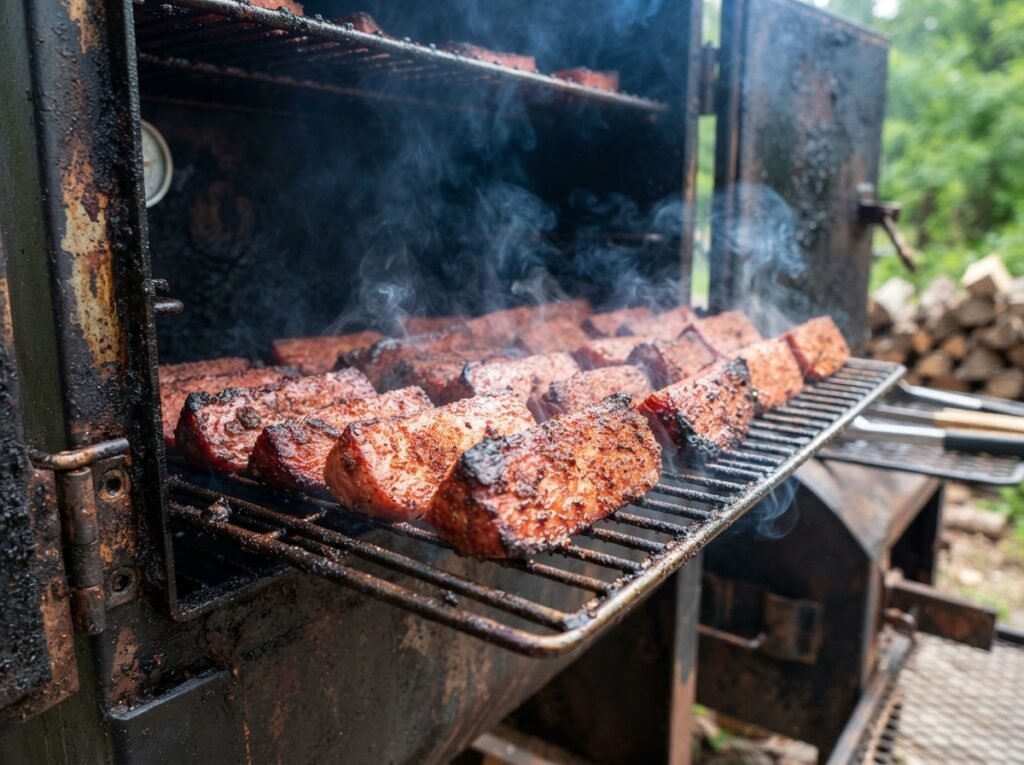
Preheat your smoker to 225°F–250°F (107°C–121°C) using hickory, apple, or cherry wood chunks/chips. Place the seasoned spam slices directly on the smoker grate, leaving space between pieces for airflow. Smoke for 45–60 minutes, until the exterior is deep mahogany brown and slightly firm to the touch. Why it matters: Low and slow smoking allows smoke penetration without burning the sugars in the rub. Hickory provides classic BBQ punch; fruit woods like apple/cherry offer sweeter, milder smoke that pairs nicely with pork. Aroma Cue: You should smell sweet, smoky pork—not acrid or bitter smoke. Blue, thin smoke is good; thick white smoke indicates dirty combustion and bad flavor. Visual Doneness Cue: Exterior should be dark reddish-brown with a dry, matte finish. Edges may curl slightly. Internal temp should read 140°F+ on thermometer.
Creating the Warm Mustard Glaze
While spam smokes, place a cast iron skillet directly over the hot coals or burner of your smoker/grill. Add ¼ cup brown sugar, 2 tbsp mustard, and 2 tbsp apple cider vinegar (or water/bourbon). Whisk constantly over heat until sugar dissolves and mixture bubbles gently into a smooth, glossy sauce. Remove from heat. Why it matters: Heating the glaze activates the aromatics and melds the flavors. The warmth helps the sauce cling to the hot spam upon contact. Making it in the smoker infuses subtle ambient smoke into the sauce itself. Texture Cue: Sauce should coat the back of a spoon, not run off like water. Bubbles should be small and steady, not violent boiling. Chef Tip: If glaze gets too thick, add a teaspoon of liquid. Too thin? Simmer 30 seconds longer. Consistency should be like warm maple syrup.
Final Assembly and Serving
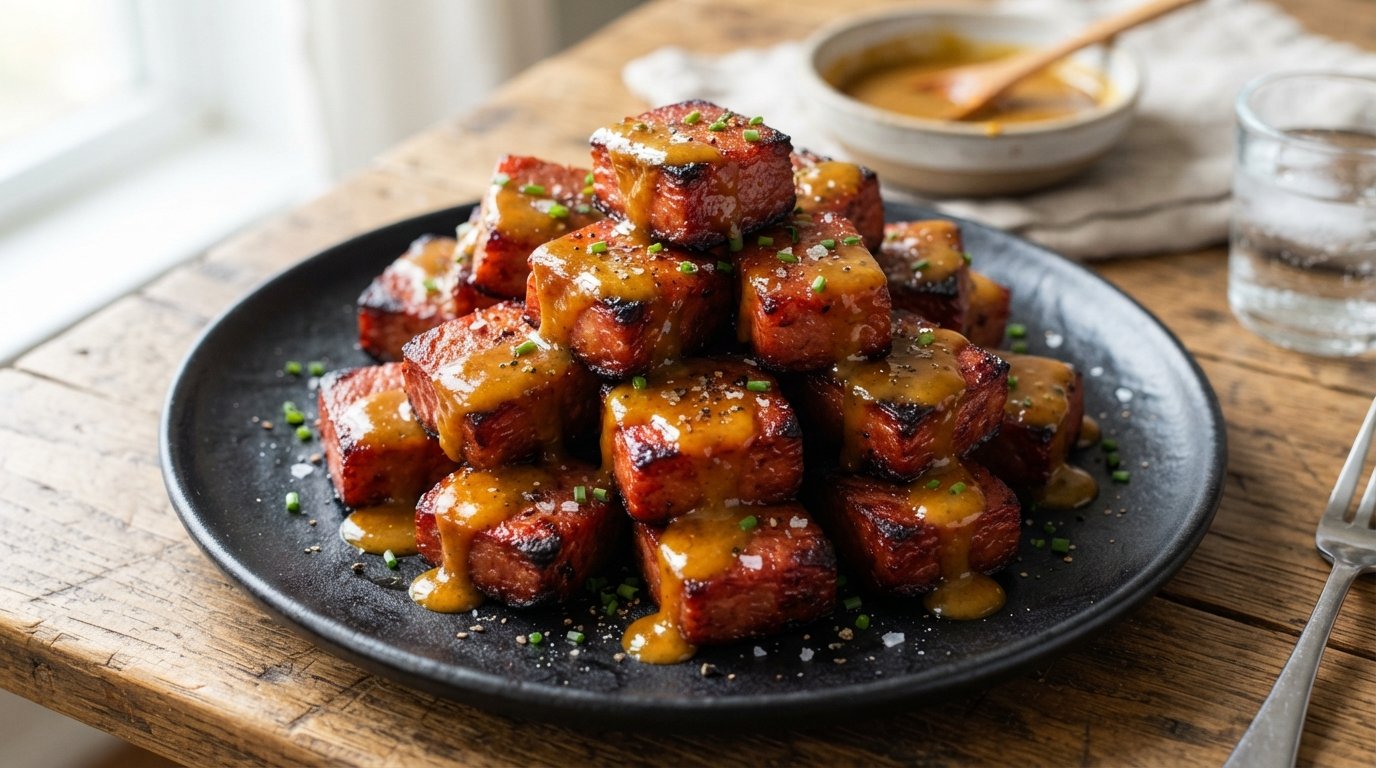
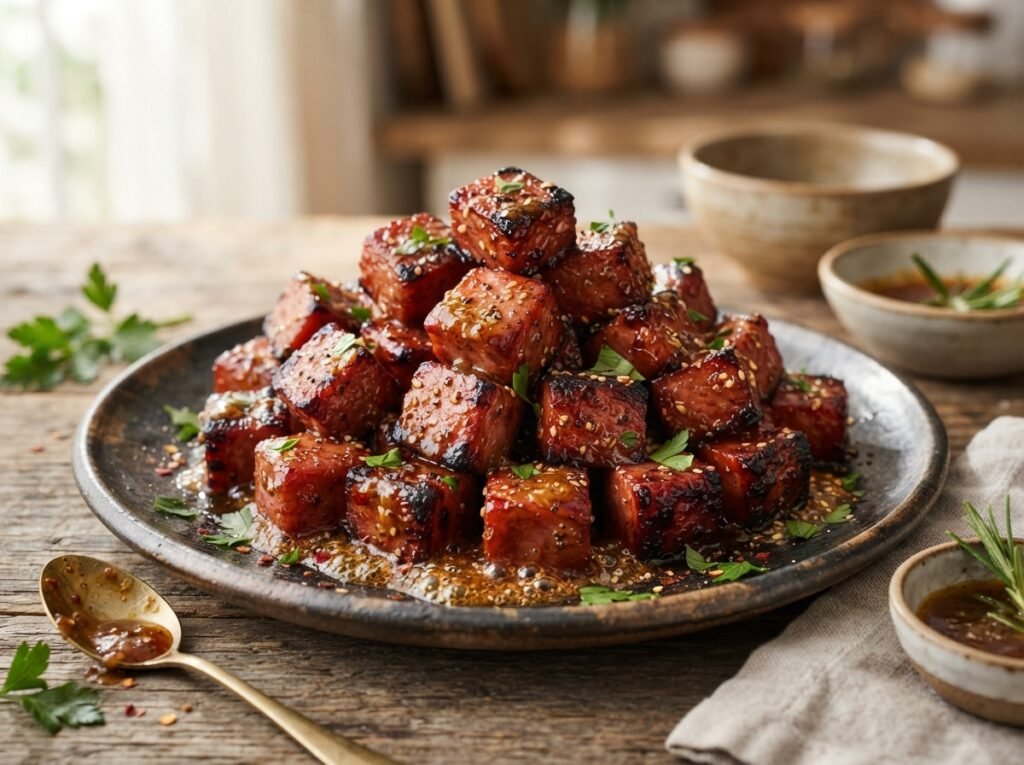
Transfer smoked spam slices to a serving platter. While still hot, drizzle or brush generously with the warm mustard glaze. Serve immediately while the contrast between hot, smoky meat and tangy sauce is at its peak. Why it matters: Heat is essential for the glaze to set properly and for the fat to remain rendered. Cold spam + cold glaze = waxy, unappealing texture. Visual Cue: Glistening, amber-colored coating over dark smoked meat. Steam rising slightly indicates perfect serving temp. Plating Tip: Stack slices slightly overlapping for visual impact. Garnish with fresh parsley or chives if desired for color contrast.
Expert Tips for Smoking Spam
- Don’t Over-Smoke: Spam absorbs smoke rapidly due to its density. 45–60 minutes is usually sufficient. Beyond 90 minutes, it can become bitter and overly salty. Trust your nose—if it smells intensely smoky, it’s done.
- Use Mild Wood First: If new to smoking spam, start with apple or cherry wood. Hickory can be aggressive. You can always increase smoke intensity next time, but you can’t undo bitterness.
- Pat Dry Before Binding: After chilling and slicing, pat slices lightly with paper towel before applying mustard. Excess surface moisture dilutes the binder and steams instead of smokes.
- Glaze at the End, Not During: Unlike ribs, spam doesn’t benefit from multiple glaze layers during smoking. The high sugar content would burn at smoking temps. Always glaze post-cook.
- Rest Briefly: Let smoked spam rest 5 minutes after pulling from smoker before glazing. This allows juices to redistribute slightly, though less critical than with whole muscles.
Common Mistakes to Avoid
- Skipping the Binder: Rub falls off in the smoker, resulting in bland, patchy flavor. Always use mustard or oil.
- High Heat Smoking: Temps above 275°F cause exterior to burn before smoke penetrates. Low and slow is non-negotiable for this recipe.
- Over-Glazing: Drowning the spam in sauce masks the smoke flavor and makes it soggy. Less is more—a light, even coat is ideal.
- Using Wet Wood: Soaked wood chips produce acrid, white smoke. Use dry wood chunks/chips for clean, blue smoke. Moisture belongs in the meat, not the fuel.
- Crowding the Grate: Blocking airflow creates hot spots and uneven smoke distribution. Leave 1–2 inches between slices.
- Ignoring Salt Content: Spam + salty rub = inedible. Always taste your rub first. If it tastes very salty, reduce quantity or choose low-sodium version.
Recipe Variations
- Spicy Kick: Add 1 tsp cayenne or chipotle powder to the rub. Mix sriracha into the glaze for heat that builds with each bite.
- Sweet & Sour Twist: Replace mustard glaze with pineapple juice + brown sugar reduction. Tropical sweetness pairs amazingly with smoke.
- Bacon-Wrapped Luxury: Wrap each spam slice in half-strip of bacon before smoking. Secure with toothpick. Adds crunch, extra smoke, and decadent fat.
- Maple Bourbon Glaze: Swap mustard for pure maple syrup + 1 oz bourbon in the glaze. Rich, complex, and distinctly autumnal.
- Korean-Inspired: Use gochujang + soy sauce + sesame oil as glaze. Garnish with toasted sesame seeds and scallions. Umami bomb!
- Vegetarian Option: Use extra-firm pressed tofu or seitan loaf. Press thoroughly to remove water. Smoke time may reduce to 30–40 mins. Glaze works identically.
- Breakfast Style: Serve smoked spam slices alongside scrambled eggs and toast. The smoky-salty profile replaces traditional ham perfectly.
- Low-Carb/Keto: Omit brown sugar in glaze; use erythritol or monk fruit sweetener. Ensure rub has no added sugar. Still delivers massive flavor.
What to Serve With This Recipe
- Mac & Cheese: Creamy, cheesy pasta balances the smoky saltiness. Classic BBQ pairing.
- Coleslaw: Crunchy, vinegary slaw cuts through richness and refreshes palate.
- Grilled Corn on Cob: Sweet charred corn complements smoke and mustard notes.
- Pickled Vegetables: Quick-pickled onions, jalapeños, or cucumbers add bright acid contrast.
- Craft Beer: Amber ale, IPA, or smoked porter stand up to bold flavors without being overwhelmed.
- Iced Tea: Unsweetened or lightly sweetened tea cleanses palate between bites.
- Cornbread: Slightly sweet, crumbly bread soaks up glaze and offsets salt.
- Green Salad: Simple arugula salad with lemon vinaigrette adds freshness and lightness.
Make Ahead & Meal Prep Tips
- Slice & Season Ahead: Slice and apply binder/rub up to 24 hours ahead. Refrigerate uncovered to dry surface further (better bark!). Bring to room temp 30 mins before smoking.
- Pre-Make Glaze: Glaze can be made 3 days ahead. Store in jar in fridge. Reheat gently in skillet or microwave before serving. Flavors improve overnight!
- Smoke Ahead: Smoke spam up to 3 days ahead. Cool completely, store airtight in fridge. Reheat gently before glazing. Smoke flavor actually deepens over time.
- Freeze Cooked: Fully cooked, unglazed spam freezes well for 2 months. Thaw in fridge overnight, reheat, then glaze fresh. Do NOT freeze glazed—texture suffers.
- Party Prep: For crowds, smoke double batch. Keep unglazed slices warm in oven (200°F) until ready to serve. Glaze individually as guests arrive for maximum impact.
Storage & Reheating Instructions
Refrigerator
Store cooled, unglazed smoked spam in airtight container for up to 5 days. Glazed leftovers keep 3 days max (sauce may separate). Always reheat before eating.
Freezer
Wrap unglazed slices tightly in plastic wrap, then foil. Freeze up to 2 months. Label with date. Thaw in refrigerator 24 hours before reheating. Do not refreeze after thawing.
Reheating Methods
- Air Fryer (Best): 350°F for 3–5 minutes. Restores crisp exterior beautifully. Glaze after reheating.
- Oven: 325°F on wire rack over sheet pan for 8–10 minutes. Even heating, retains moisture. Glaze last 2 minutes.
- Stovetop: Medium-low heat in skillet, 2–3 mins per side. Gentle reheating prevents drying. Add splash of water if sticking. Glaze off heat.
- Microwave (Last Resort): 50% power, 30-second bursts. Prevents rubbery texture. Cover with damp paper towel. Glaze after. Least recommended method.
Nutritional Information
Estimates per serving (based on 3 slices + 1 tbsp glaze)
- Calories: 380 kcal
- Protein: 14g
- Carbohydrates: 18g
- Fat: 28g
- Fiber: 0g
- Sugar: 12g
- Sodium: 980mg
Note: Values vary significantly based on spam brand, rub salt content, and glaze portion size. High sodium is inherent to processed pork products.
Troubleshooting Guide
| Problem | Cause | Solution |
|---|---|---|
| Bitter Taste | Dirty smoke (white/thick) or over-smoked. | Use dry wood, aim for thin blue smoke. Limit smoke time to 60 mins max. |
| Rub Fell Off | No binder or surface too wet. | Always use mustard/oil binder. Pat dry before binding. Press rub firmly. |
| Soggy Exterior | Glazed too early or trapped steam. | Glaze ONLY after smoking. Don’t cover while hot. Rest uncovered. |
| Too Salty | Rub had salt + spam is salty. | Use salt-free rub next time. Rinse spam briefly? No—pat dry instead. Balance with sweet glaze. |
| Dry Interior | Overcooked or too thin slices. | Stick to ¾-inch thickness. Monitor temp (pull at 140°F). Reduce smoke time. |
| Glaze Separated | Heat too high or insufficient emulsifier. | Whisk vigorously over LOW heat. Add tiny bit of water/oil to re-emulsify. |
| Uneven Color | Hot spots in smoker or crowded grate. | Rotate slices halfway. Ensure adequate spacing. Calibrate smoker temp. |
Frequently Asked Questions
1. Can I smoke Spam in a regular oven? You can bake it (350°F for 20-25 mins), but you won’t get true smoke flavor. Add liquid smoke to the glaze (½ tsp) as a compromise, but it’s not the same as real wood smoke.
2. Is Spam already cooked? Why smoke it? Yes, Spam is pre-cooked. Smoking is purely for flavor enhancement and texture transformation. It adds smokiness, creates a crispy bark, and warms the fat to render properly—things baking alone can’t achieve.
3. What wood is best for smoking Spam? Apple, cherry, or pecan are top choices—they’re mild and sweet, complementing pork without overpowering. Hickory works but use sparingly. Avoid mesquite; it’s too strong for spam’s delicate balance.
4. Can I use a gas grill instead of a smoker? Yes! Set up for indirect heat (burners on one side, food on other). Add soaked wood chips in a smoker box or foil pouch over lit burners. Maintain 225°F–250°F. Results are very close to dedicated smokers.
5. How do I reduce the saltiness? Serve with unsalted sides (plain rice, unsalted crackers). Use salt-free rub. Increase glaze sweetness slightly. Pair with acidic elements (pickles, citrus) to counterbalance salt perception.
6. Can I smoke other canned meats this way? Absolutely! Vienna sausages, corned beef hash (pressed into patties), or even canned chicken work. Adjust times based on thickness/density. Spam remains the gold standard due to its ideal fat/protein ratio.
7. Is the mustard flavor strong in the final dish? No. Mustard’s role is primarily functional (binder) and subtle flavor enhancer. The vinegar cooks off, leaving only a faint tang that supports, never dominates, the smoke and pork flavors.
8. Can I make this gluten-free? Yes! Most Spam varieties are GF. Verify your seasoning rub and mustard labels for hidden gluten. Tamari-based glazes work for Asian variations. Naturally GF when using certified ingredients.
Final Thoughts
This Over the Fire Cooking adventure with Smoked Spam proves that culinary creativity knows no bounds. It challenges preconceptions about convenience foods and demonstrates how fundamental techniques—smoking, balancing flavors, respecting texture—can elevate any ingredient. Whether you’re a pitmaster seeking new projects or a curious home cook wanting to impress, this recipe delivers unforgettable results with approachable steps.