Quick Recipe Summary
| Feature | Details |
|---|---|
| Prep Time | 20 Minutes |
| Cook Time | 10 Minutes |
| Total Time | 30 Minutes |
| Servings | 4-6 (8-12 sticks) |
| Cuisine | American / Fusion Comfort Food |
| Course | Appetizer / Snack |
| Difficulty | Intermediate |
| Calories | ~350 kcal per serving |
These crispy fried cheese sticks rely on temperature control and proper sealing techniques to prevent the dreaded cheese explosion during frying. By freezing the coated sticks before cooking, you ensure the exterior crisps up before the interior liquefies completely. The oat coating not only adds a nutty flavor profile but also provides a sturdier crust that holds up better against the intense heat of deep frying. This recipe transforms simple block cheese into an elegant, shareable delicacy that pairs beautifully with marinara, ranch, or spicy honey dipping sauces.
Table of Contents
- Introduction
- Why This Recipe Works
- Why You’ll Love This Recipe
- Ingredient Notes
- Kitchen Equipment
- Preparation Information
- Step-by-Step Instructions
- Expert Tips for Leak-Free Frying
- Common Mistakes to Avoid
- Recipe Variations
- What to Serve With This Recipe
- Make Ahead & Meal Prep Tips
- Storage & Reheating Instructions
- Nutritional Information
- Troubleshooting Guide
- Frequently Asked Questions
- Final Thoughts
Introduction
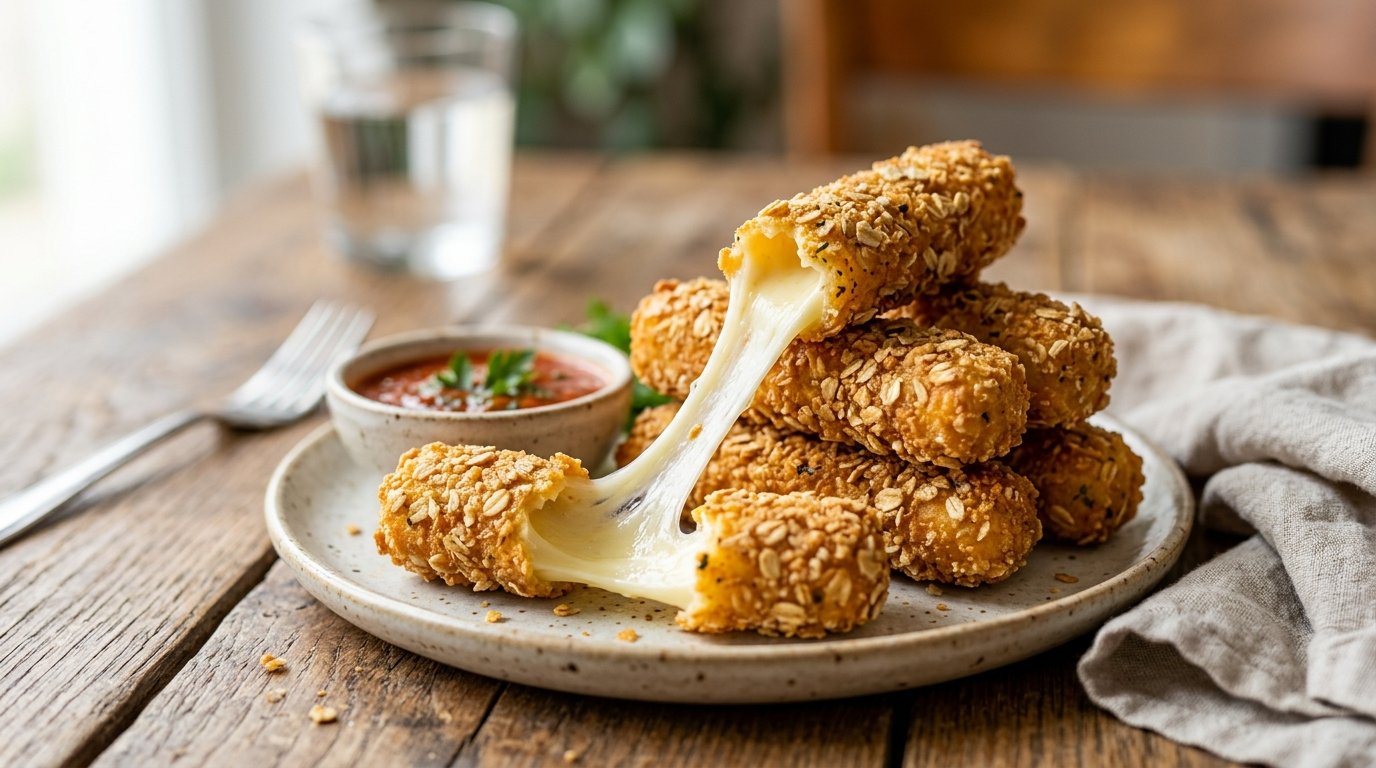
Achieving the perfect balance between a shatteringly crisp exterior and a lava-like cheese interior is the holy grail of fried appetizers. These crispy fried cheese sticks solve the common problem of leakage through a meticulous breading protocol and strategic freezing time. Unlike standard panko-coated versions, the oat-based crust seen here offers a denser, more cohesive shell that locks in moisture while providing a delightful textural contrast.
The visual appeal of pulling apart a golden-brown stick to reveal long, elastic strands of melted cheese is unmatched in the world of finger foods. This recipe demystifies the process, breaking down each step from selecting the right cheese block to monitoring oil temperature with precision. Whether you are a seasoned home cook or a beginner looking to impress, mastering these fried cheese sticks will elevate your entertaining repertoire and satisfy even the most demanding cheese cravings. Let’s dive into the science and art of making them perfectly every time.
Why This Recipe Works
The success of any fried cheese application depends entirely on thermal dynamics and barrier construction. Cheese has a low melting point and high fat content, meaning it transitions from solid to liquid rapidly when exposed to heat. If the outer crust is porous or thin, the expanding steam and liquefied fat will breach the surface instantly.
This recipe employs a triple-layer defense system. First, the flour adheres to the smooth cheese surface, creating a dry base. Second, the egg wash acts as a glue, binding the flour to the final coating. Third, the crushed oats provide a thick, insulating layer that slows heat transfer. This insulation is critical; it allows the exterior to reach frying temperature and crisp up before the internal cheese fully liquefies. Additionally, the mandatory freezing step solidifies the fat within the cheese, buying you precious seconds of frying time to achieve that golden color without catastrophe.
Why You’ll Love This Recipe
- Superior Crunch: The oat coating creates a uniquely textured crust that stays crispy longer than traditional breadcrumbs.
- Leak-Resistant Design: The triple-dip method combined with freezing virtually eliminates the risk of messy oil spills.
- Customizable Cheese: While mozzarella is standard, you can experiment with cheddar, pepper jack, or gouda for different flavor profiles.
- Visual Spectacle: Perfect for social media or parties; the cheese pull is guaranteed to be photogenic.
- Quick Preparation: From fridge to fryer in under 30 minutes, making it an ideal last-minute appetizer.
Ingredient Notes
Quality ingredients are non-negotiable when there are so few components. Each element plays a specific structural or flavor role.
The Core Components
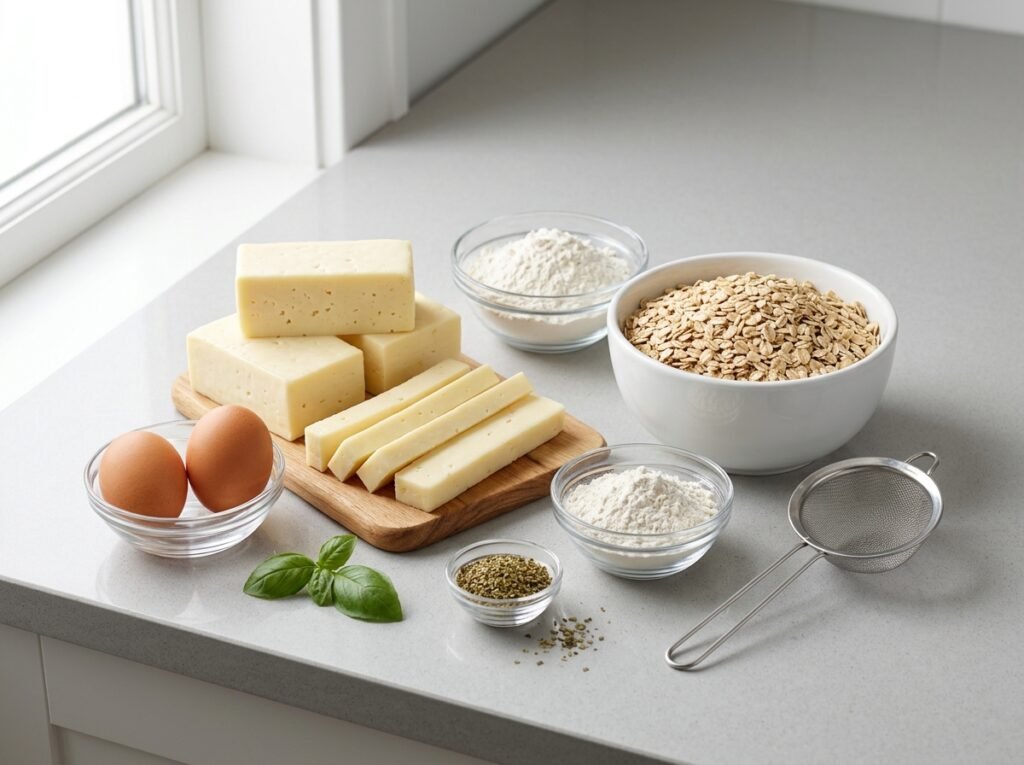
- Block Mozzarella Cheese: Do not use pre-shredded or string cheese. You need a solid block of low-moisture, whole milk mozzarella. Low-moisture cheese has less water content, which means less steam pressure during frying and a better melt. High-moisture fresh mozzarella will explode.
- All-Purpose Flour: Provides the initial dry layer for adhesion. Seasoning the flour with salt and pepper ensures the cheese itself is flavored, not just the crust.
- Eggs: Act as the binding agent. Whisk thoroughly to break up chalazae and create a uniform yellow wash. Adding a splash of water or milk thins the egg slightly, helping it coat the sticky flour layer more evenly.
- Rolled Oats (Old Fashioned): The star of the show. Unlike instant oats, rolled oats have structure. They must be pulsed in a food processor or blender until they resemble coarse sand. Too fine = pasty coating; too coarse = falls off. Aim for a texture similar to panko but denser.
Optional Enhancements
- Seasonings: Garlic powder, onion powder, paprika, or dried oregano can be mixed into the flour or oat mixture for added depth.
- Oil for Frying: Use a neutral oil with a high smoke point like vegetable, canola, or peanut oil. Olive oil will burn and impart a bitter taste.
Kitchen Equipment
- Food Processor or Blender: Essential for pulsing oats to the correct consistency.
- Three Shallow Bowls: For setting up the breading station (flour, egg, oats). Wide bowls make dipping easier.
- Heavy-Bottomed Pot or Dutch Oven: Retains heat better than thin pans, maintaining consistent oil temperature.
- Deep Fry Thermometer: Critical for safety and quality. Guessing oil temp leads to greasy or burnt sticks.
- Spider Strainer or Slotted Spoon: For safely lowering and retrieving sticks from hot oil.
- Wire Rack: For draining. Paper towels trap steam and soften the crust; wire racks keep them crisp.
- Baking Sheet + Parchment Paper: For the freezing stage.
Preparation Information
- Prep Time: 20 Minutes (Pulsing oats, cutting cheese, breading)
- Cook Time: 10 Minutes (Frying in batches)
- Total Time: 30 Minutes (Plus 30 mins freeze time recommended)
- Servings: 4-6 (Yields approx. 8-12 sticks depending on cut size)
Step-by-Step Instructions
Follow this precise workflow to achieve leak-proof crispy fried cheese sticks.
Phase 1: Preparing the Breading Station
H3: Set Up for Efficiency
- Process the Oats: Place rolled oats in a food processor. Pulse 5-7 times until they look like coarse crumbs.
- Visual Cue: Texture should resemble rough sand or panko. No whole flakes visible, but not powdery dust.
- Why it matters: Whole oats won’t stick; oat flour becomes gummy. Coarse crumbs create air pockets for crunch.
- Prepare Bowls:
- Bowl 1: All-purpose flour mixed with ½ tsp salt, ¼ tsp pepper, and optional garlic powder.
- Bowl 2: Eggs whisked with 1 tbsp water until uniform.
- Bowl 3: Processed oats.
- Cut the Cheese: Slice the cold block of mozzarella into sticks approximately ½ inch thick, ½ inch wide, and 3 inches long.
- Texture Cue: Cheese should be firm and cold. If it feels soft or sweaty, chill it for 15 minutes before cutting.
- Pro Tip: Uniform size ensures even cooking. Smaller sticks cook faster but leak easier; larger sticks take longer to crisp.
Phase 2: The Triple-Dip Technique
H3: Build the Protective Barrier
- Dredge in Flour: Roll a cheese stick in flour, shaking off excess. Ensure all sides and ends are covered.
- Why shake off? Excess flour creates a barrier that prevents egg from sticking, leading to bald spots in the crust.
- Visual Cue: Matte white finish, no shiny cheese showing.
- Dip in Egg: Submerge floured stick into egg wash. Roll gently to coat completely. Let excess drip off for 2 seconds.
- Texture Cue: Surface should feel tacky and wet, not dripping.
- Common Mistake: Skipping the drip pause causes batter to pool and slide off during frying.
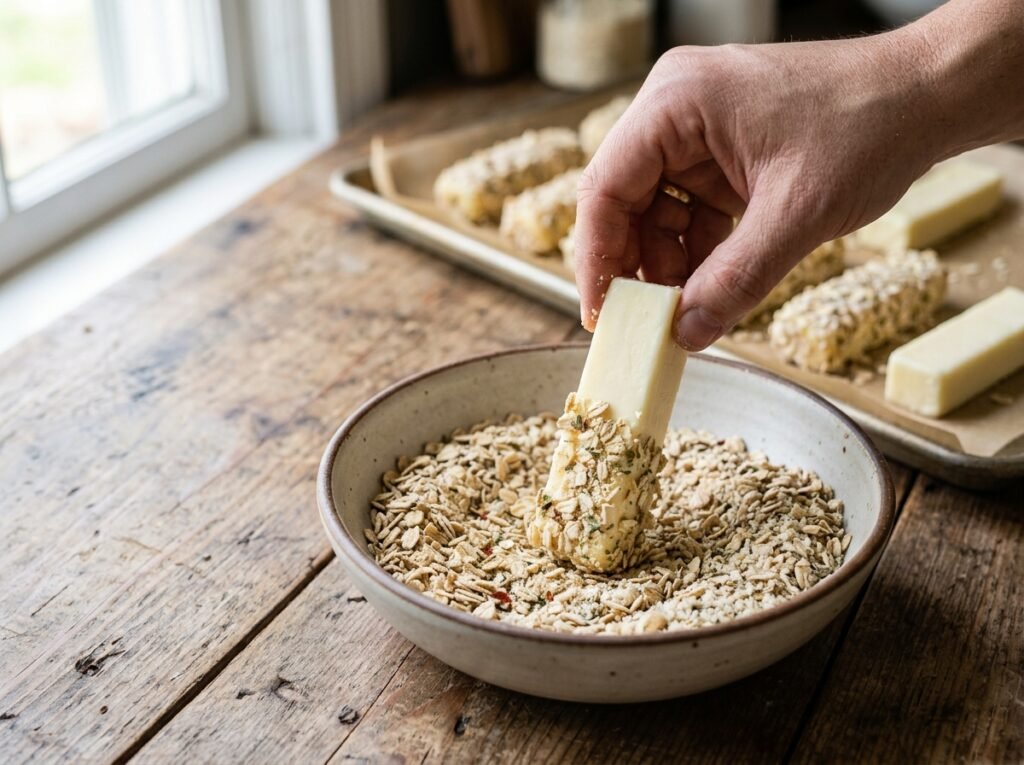
- Coat in Oats: Press the egg-washed stick firmly into the oat mixture. Roll and press again to ensure adhesion.
- Critical Step: PRESS the oats on. Gravity isn’t enough. You need mechanical adhesion.
- Visual Cue: Uniform golden-beige coating. No gaps, especially at the ends. Ends are the weakest points for leaks.
Phase 3: Freezing for Structural Integrity
H3: Solidify Before Frying
- Arrange on Tray: Place breaded sticks on a parchment-lined baking sheet. Do not let them touch.
- Freeze: Place tray in freezer for minimum 30 minutes, ideally 1 hour.
- Why freeze? Solidifies the cheese fat. Creates a thermal buffer. Hardens the egg binder.
- Visual Cue: Sticks should feel rock hard to the touch. Frost may form on surface; this is normal and helpful.
- Professional Tip: Do not skip this step. Room-temp breaded cheese will leak 90% of the time.
Phase 4: Deep Frying to Golden Perfection
H3: Execute with Precision
- Heat Oil: Fill pot with 2-3 inches of oil. Heat to 375°F (190°C).
- Temperature Check: Use thermometer. 350°F is too cool (greasy); 400°F is too hot (burnt outside, cold inside).
- Test: Drop a single oat crumb. It should sizzle vigorously and turn golden in 15 seconds.
- Fry in Batches: Carefully lower 3-4 frozen sticks into oil using spider strainer. Do not overcrowd.
- Visual Cue: Vigorous bubbling immediately upon entry. Bubbling should subside after 30 seconds as crust sets.
- Timing: Fry for 60-90 seconds MAX. Watch color, not clock.
- Monitor Color: Remove when deep golden brown.
- Color Cue: Rich amber/golden brown. Pale yellow = undercooked/soggy. Dark brown = burnt/bitter.
- Aroma Cue: Nutty toasted oat smell. Acrid smell = burning.
- Drain Properly: Transfer immediately to wire rack. Let rest 2 minutes before serving.
- Why rest? Internal heat continues cooking cheese slightly. Resting allows crust to set and steam to escape upward, not sideways.
Expert Tips for Leak-Free Frying
- Cheese Temperature is Key: Keep cheese COLD until the moment it hits the oil. Warm cheese melts too fast. If your kitchen is hot, work in batches and keep unused cheese in the fridge.
- Seal the Ends: The ends are where leaks happen. When coating in oats, cup the stick in your hand and roll it vertically to pack oats onto the cut surfaces. Extra attention here pays off.
- Oil Recovery Time: Wait for oil to return to 375°F between batches. Adding cold sticks drops temp; frying at 340°F guarantees grease absorption and leakage.
- Double Coat Option: For extra insurance, repeat the egg-oat step. Double-coated sticks have thicker walls. Increase fry time by 15-20 seconds.
- Use a Thermometer: Visual estimation of oil temp is unreliable. $10 thermometer saves wasted cheese and oil. Non-negotiable tool.
Common Mistakes to Avoid
- Leaking Cheese: Caused by warm cheese, thin coating, or low oil temp. Fix: Freeze longer. Press oats harder. Verify 375°F.
- Soggy Crust: Caused by overcrowding pan or draining on paper towels. Fix: Fry fewer at a time. Always use wire rack.
- Burnt Outside, Cold Inside: Oil too hot or sticks too thick. Fix: Lower to 365°F. Cut sticks thinner (⅜ inch).
- Coating Falling Off: Egg too thick or flour not shaken off. Fix: Thin egg with water. Shake flour vigorously. Press oats firmly.
- Greasy Taste: Oil degraded or temp too low. Fix: Use fresh oil. Maintain 375°F. Don’t reuse oil more than 2-3 times.
Recipe Variations
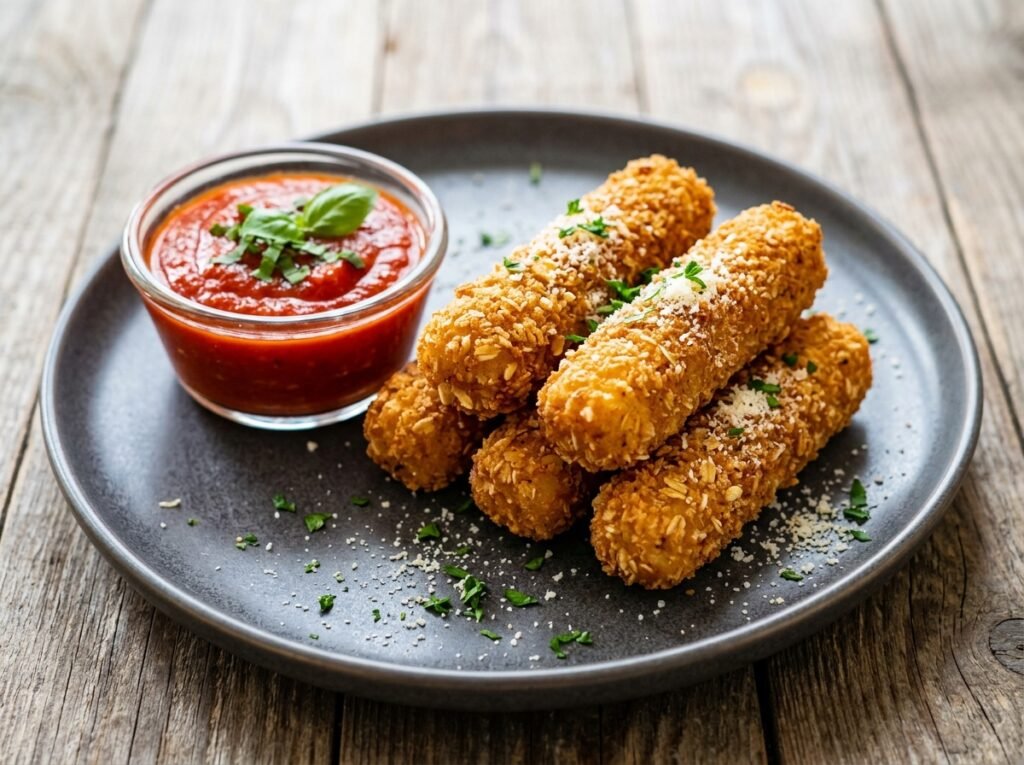
- Spicy Kick: Add 1 tsp cayenne or chipotle powder to flour. Use pepper jack cheese instead of mozzarella. Serve with sriracha aioli.
- Italian Herb: Mix dried basil, oregano, and parmesan into oat coating. Use provolone cheese. Dip in marinara.
- Vegan Alternative: Use firm tofu blocks pressed and frozen, or vegan mozzarella shreds formed into logs. Use flax egg (1 tbsp ground flax + 3 tbsp water) as binder.
- Sweet Version: Use sweetened condensed milk frozen into logs. Coat in cinnamon-sugar oats. Fry quickly (30 secs). Dust with powdered sugar.
- Low-Carb/Keto: Replace oats with crushed pork rinds or almond flour. Use full-fat mozzarella. Fry in avocado oil.
- Extra Cheesy Blend: Mix mozzarella with sharp cheddar or gouda. Cheddar adds flavor but leaks easier; keep ratio 70/30 mozzarella/cheddar.
- Gluten-Free: Use GF all-purpose flour blend. Ensure oats are certified GF. Almond flour coating also works well.
What to Serve With This Recipe
Balance the richness with acidic, fresh, or contrasting accompaniments.
- Marinara Sauce: Classic pairing. Acidic tomato cuts through fatty cheese. Warm it first for best experience.
- Ranch Dressing: Creamy herbaceous contrast. Cool temperature offsets hot cheese.
- Spicy Honey: Drizzle over sticks post-fry. Sweet heat complements salty cheese beautifully. Trendy and addictive.
- Arugula Salad: Peppery greens with lemon vinaigrette cleanse palate. Lightness balances heaviness.
- Pickled Jalapeños: Vinegar tang and heat cut richness. Adds crunch texture contrast.
- Craft Beer: IPA or lager carbonation scrubs palate. Hops complement fried flavors.
Make Ahead & Meal Prep Tips
- Bread & Freeze Ahead: Complete breading and freezing up to 1 month ahead. Store in airtight freezer bag. Fry directly from frozen; add 15-20 seconds to cook time.
- Pre-Process Oats: Pulse oats and store in airtight container up to 1 week. Saves assembly time.
- Pre-Cut Cheese: Cube cheese and store in fridge up to 3 days. Keep sealed to prevent drying.
- Party Prep: Bread entire batch day before. Freeze overnight. Fry in batches during event. Keeps host out of kitchen.
Storage & Reheating Instructions
Storage
- Refrigerator: Cooked sticks keep 2 days max. Crust softens significantly. Store in airtight container with paper towel to absorb moisture.
- Freezer: Uncooked breaded sticks freeze 1 month. Cooked sticks freeze poorly; crust becomes soggy upon thawing. Always freeze uncooked.
Reheating
- Air Fryer (Best): 375°F for 3-4 minutes. Restores crispness effectively. Shake basket halfway.
- Oven: 400°F on wire rack for 5-7 minutes. Better than microwave. Broil last minute for color.
- Stovetop: Skillet with ¼ inch oil over medium heat. 1-2 minutes per side. Revives crispness but adds grease.
- Microwave: NOT RECOMMENDED. Makes crust rubbery and cheese explodes. Only use if desperate; 15-second bursts.
Nutritional Information
Estimates per serving (3 sticks)
- Calories: 350 kcal
- Protein: 18g
- Carbohydrates: 22g
- Fat: 22g
- Saturated Fat: 10g
- Cholesterol: 85mg
- Sodium: 450mg
- Fiber: 2g
- Sugar: 1g
Note: Values vary based on cheese brand, oil absorption, and portion size.
Troubleshooting Guide
| Problem | Cause | Solution |
|---|---|---|
| Cheese Leaks Out | Cheese too warm, coating thin, oil too cool. | Freeze longer. Double coat. Verify 375°F. Seal ends firmly. |
| Crust Falls Off | Flour not shaken, egg too thick, oats not pressed. | Shake flour well. Thin egg. Press oats mechanically. |
| Soggy/Greasy | Oil <350°F, overcrowded, drained on paper. | Maintain 375°F. Fry fewer. Use wire rack. |
| Burnt Outside | Oil >400°F, sticks too thick. | Lower temp. Cut thinner. Watch color closely. |
| Hard/Cold Center | Oil too hot, fried too long. | Lower to 365°F. Reduce time. Trust color over timer. |
| Bland Flavor | Unseasoned coatings. | Salt/pepper flour. Add spices to oats. Season cheese lightly. |
Frequently Asked Questions
1. Can I use string cheese? No. String cheese is designed to stretch, not melt uniformly. It often leaks or doesn’t melt properly. Block mozzarella has consistent density and melt behavior essential for frying.
2. Why did my coating fall off in the oil? Usually due to excess flour preventing egg adhesion, or not pressing oats firmly enough. Shake flour vigorously after dredging. Cup oats in hand and press onto stick during coating.
3. Can I bake these instead of frying? Baking yields inferior results. Cheese leaks before crust sets without rapid oil heat. If necessary, spray heavily with oil and bake at 425°F on wire rack. Expect some leakage. Air fryer is better alternative.
4. How do I know oil is ready without thermometer? Drop wooden chopstick in oil. Steady stream of bubbles around stick = ready. No bubbles = too cool. Violent bubbling = too hot. Thermometer is strongly recommended though.
5. Can I reuse the frying oil? Yes, 2-3 times if filtered and stored properly. Cool completely. Strain through cheesecloth. Store in dark, cool place. Discard if dark, foamy, or smells rancid.
6. Why freeze the sticks? Freezing solidifies cheese fat, creating thermal buffer. Allows crust to set before cheese liquefies. Prevents leakage. Essential step for success. Minimum 30 minutes required.
7. What cheese melts best? Low-moisture whole milk mozzarella. High moisture = steam explosions. Aged cheeses = oil separation. Fresh mozzarella = watery mess. Stick to block low-moisture mozz.
8. Can I make these gluten-free? Yes. Use GF flour blend and certified GF oats. Almond flour or crushed pork rinds also work as coating. Ensure all ingredients certified GF if celiac.
Final Thoughts
Mastering these crispy fried cheese sticks is a rite of passage for any home cook who loves bold, indulgent flavors. The satisfaction of biting into that perfect golden crust and experiencing the molten cheese pull is worth every minute of careful preparation. Remember, patience during the freezing stage and precision with oil temperature are your best friends in the kitchen.