Quick Recipe Summary
| Feature | Details |
|---|---|
| Prep Time | 10 Minutes |
| Cook Time | 8 Minutes |
| Total Time | 18 Minutes |
| Servings | 2 |
| Cuisine | Asian-Inspired / Fusion |
| Course | Breakfast / Brunch |
| Difficulty | Easy |
| Calories | ~350 kcal per serving |
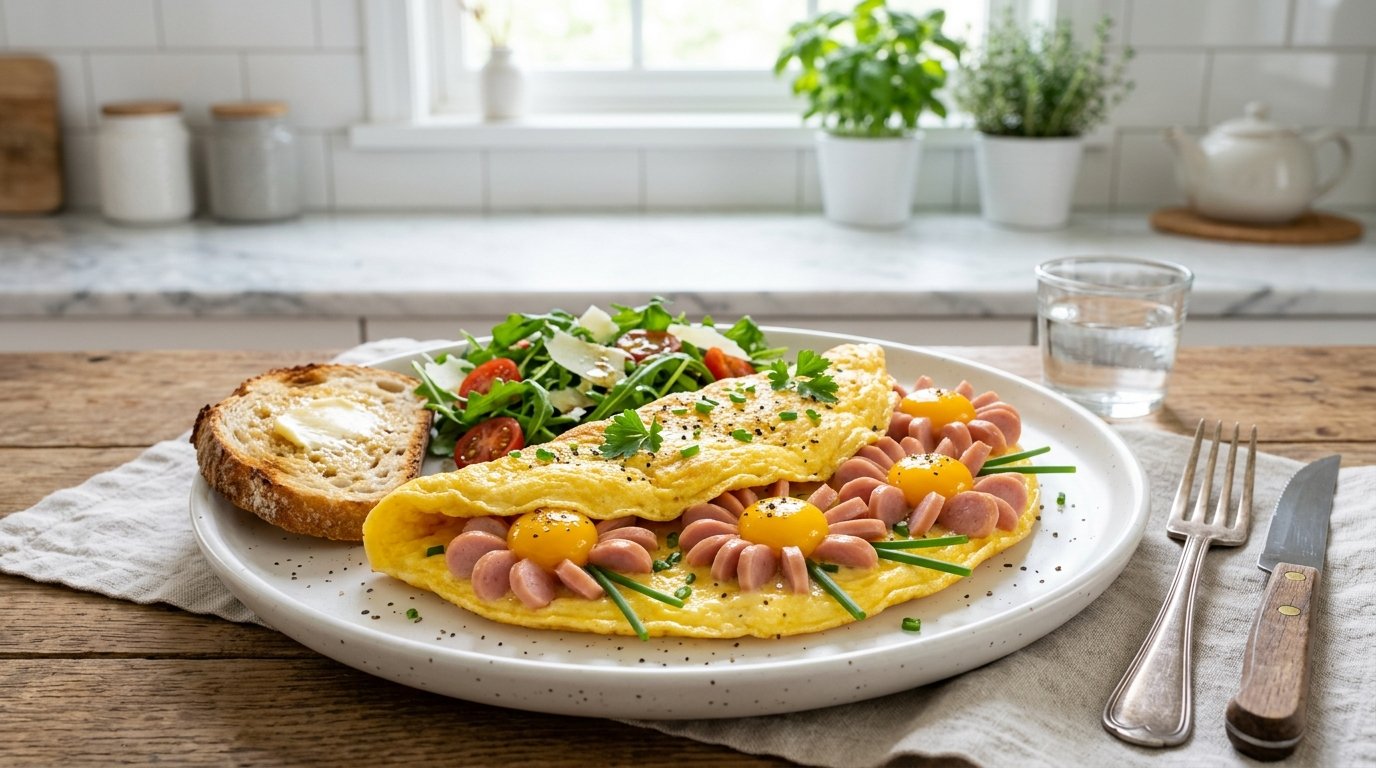
This flower sausage omelet is a testament to how presentation can elevate humble ingredients. The technique involves slicing sausages lengthwise without cutting all the way through, allowing them to fan out like petals when cooked. As the egg sets around the meat, it creates a cohesive, golden disc that is easy to flip and serve. It is a quick, high-protein meal that requires minimal cleanup and delivers maximum visual impact, making it an ideal choice for busy mornings that still deserve a touch of elegance.
Table of Contents
- Introduction
- Why This Recipe Works
- Why You’ll Love This Recipe
- Ingredient Notes
- Kitchen Equipment
- Preparation Information
- Step-by-Step Instructions
- Expert Tips for Perfect Presentation
- Common Mistakes to Avoid
- Recipe Variations
- What to Serve With This Recipe
- Make Ahead & Meal Prep Tips
- Storage & Reheating Instructions
- Nutritional Information
- Troubleshooting Guide
- Frequently Asked Questions
- Final Thoughts
Introduction

Breakfast is often the most rushed meal of the day, but it shouldn’t be the least inspired. This flower sausage omelet bridges the gap between convenience and creativity, offering a solution for those who want something more exciting than plain toast or scrambled eggs. The concept is simple yet transformative: by modifying the shape of the sausage before it hits the pan, you unlock a new textural experience where every bite offers a mix of crispy edges and tender meat, all bound together by custard-like eggs.
The beauty of this dish lies in its accessibility. You don’t need fancy equipment or exotic ingredients—just a good non-stick pan or wok, some eggs, and your favorite sausages. The result is a hearty, protein-packed meal that looks like it came from a boutique café. Whether you are trying to entice picky eaters to finish their breakfast or simply want to start your day with a smile, this recipe delivers on both flavor and fun. Let’s explore how to master this blooming breakfast masterpiece.
Why This Recipe Works
The success of the flower sausage omelet relies on physics and heat distribution. When you slice the sausage lengthwise but leave the base intact, you increase the surface area exposed to the pan. This allows the “petals” to crisp up faster and curl outward naturally as they cook, creating the signature flower shape without any forced manipulation.
Simultaneously, the egg acts as a structural binder. Pouring the egg mixture over the arranged sausages fills the gaps between the petals, locking them in place once coagulated. This prevents the sausage pieces from scattering when you flip the omelet. The aromatics—scallions and cilantro—are added while the egg is still liquid, ensuring they embed into the curd rather than sitting loosely on top, which guarantees flavor in every bite. The final flip reveals a beautifully browned, uniform surface that hides the intricate work done on the other side, making for a perfect reveal when served.
Why You’ll Love This Recipe
- Visual Wow Factor: The radial sausage arrangement looks stunning in the pan and on the plate, making breakfast feel special.
- Kid-Friendly Fun: The flower shape transforms processed meat into something playful, encouraging children to eat their protein.
- One-Pan Efficiency: Everything cooks in a single vessel, minimizing cleanup and maximizing flavor retention.
- Customizable Flavor: Works with any type of sausage—beef, pork, chicken, or turkey—and adapts to various spice levels.
- Quick & Satisfying: Ready in under 20 minutes, providing a substantial meal that fuels your morning without the wait.
Ingredient Notes
Quality ingredients ensure the best texture and flavor for your flower sausage omelet.
Proteins
- Sausages (Frankfurters/Hot Dogs): Choose high-quality sausages with a good snap. Avoid overly soft or mushy varieties, as they won’t hold the petal shape well. Beef or pork franks offer richer flavor, while chicken or turkey are leaner options.
- Substitutions: Vegan sausages work well if they have a firm texture. Spam or luncheon meat can also be used but may require gentler handling.
- Buying Tips: Look for sausages with natural casings for better texture. Check sodium content if watching salt intake.
- Storage Tips: Keep refrigerated until ready to use. Freeze for up to 2 months if buying in bulk.
- Eggs: Fresh eggs provide better structure and color. Large eggs are standard; adjust quantity based on pan size.
- Substitutions: Liquid egg whites for lower fat, though yolks provide richness and color.
- Buying Tips: Check expiration dates. Cage-free or pasture-raised often have deeper orange yolks.
- Storage Tips: Store in the main body of the fridge, not the door, to maintain consistent temperature.
Aromatics & Fats
- Scallions (Green Onions): Provide fresh, sharp contrast to the rich sausage and egg. Use both green and white parts for layered flavor.
- Substitutions: Chives for milder flavor; shallots for sweetness.
- Buying Tips: Choose firm, bright green stalks without wilting or yellowing.
- Storage Tips: Wrap in damp paper towel and store in crisper drawer for up to 2 weeks.
- Cilantro (Coriander): Adds herbal brightness. Essential for the authentic aroma seen in the video.
- Substitutions: Parsley if you dislike cilantro’s soapy taste. Thai basil for anise notes.
- Buying Tips: Look for vibrant leaves, no black spots. Smell should be fresh, not slimy.
- Storage Tips: Treat like flowers; trim stems and place in water in fridge.
- Cooking Oil: Neutral oil with high smoke point (vegetable, canola, or grapeseed).
- Purpose: Prevents sticking and conducts heat for even browning.
- Substitutions: Butter for flavor (watch heat), ghee for nuttiness.
- Storage Tips: Store in cool, dark place. Discard if rancid smell develops.
Kitchen Equipment

- Non-Stick Skillet or Wok (10-12 inch): Essential for easy flipping. Carbon steel woks work if well-seasoned.
- Sharp Knife: For precise sausage slicing. Dull knives crush the meat.
- Cutting Board: Stable surface for prep.
- Small Bowl & Whisk/Fork: For beating eggs evenly.
- Silicone Spatula or Turner: Heat-resistant tool for loosening edges and flipping.
- Plate: For sliding the finished omelet out safely.
Preparation Information
- Prep Time: 10 Minutes
- Cook Time: 8 Minutes
- Total Time: 18 Minutes
- Servings: 2
Step-by-Step Instructions
Follow this guide to create a perfect flower sausage omelet.
Phase 1: Preparing the Sausage Petals
H3: Create the Flower Shape
- Slice Lengthwise: Take one sausage and make 4-6 lengthwise cuts starting from one end, stopping about ½ inch from the other end. Do not cut all the way through.
- Why it matters: Leaving the base intact keeps the “petals” connected, allowing them to fan out as a single unit rather than separate strips.
- Visual Cue: Sausage should look like an unopened umbrella or octopus tentacles.
- Texture Cue: Cuts should be clean, not jagged.
- Repeat: Prepare 2-3 sausages depending on pan size. More sausages = fuller flower.
Phase 2: Cooking the Base
H3: Set the Foundation
- Heat Pan: Place skillet/wok over medium heat. Add 1 tbsp oil. Swirl to coat.
- Aroma Cue: Oil should shimmer but not smoke. Smoking means too hot; eggs will burn before sausage cooks.
- Arrange Sausages: Place cut sausages in center of pan, cut-side down initially to sear the interior, then flip so cut-side faces UP. Arrange in a circle, fanning out the petals radially.
- Visual Cue: Petals should spread outward like a sunburst. Center should be relatively clear for the egg pool.
- Professional Tip: Press down gently with spatula to ensure contact with pan. This helps petals crisp and hold shape.
- Common Mistake: Crowding the pan. Leave space between sausages for egg to flow.
Phase 3: Adding Eggs and Aromatics
H3: Bind and Flavor
- Beat Eggs: Whisk 3-4 eggs with pinch of salt until uniform yellow. No streaks of white.
- Pour Eggs: Slowly pour beaten eggs into the center of the sausage ring, letting it flow naturally between petals.
- Why slowly? Prevents displacing the sausage arrangement. Controlled flow ensures even distribution.
- Visual Cue: Egg should fill gaps but not submerge sausage tops completely. Tops should remain visible.
- Add Aromatics: Immediately sprinkle chopped scallions and cilantro over the wet egg.
- Timing: Must be done while egg is liquid so herbs adhere. Adding later means they fall off when flipped.
- Distribution: Scatter evenly for consistent flavor. Don’t pile in center.
Phase 4: The Flip and Finish
H3: Execute the Turn
- Set the Bottom: Cook undisturbed for 2-3 minutes until edges are set and bottom is lightly golden.
- Visual Cue: Edges pull away slightly from pan. Surface looks matte, not glossy wet.
- Texture Cue: Shake pan gently; omelet should move as one unit. If it jiggles excessively, cook longer.
- Flip: Slide spatula under edge to loosen. Use plate-assist method or confident wrist flick to flip.
- Technique: Plate method is safest for beginners. Slide omelet onto plate, invert pan over plate, flip back.
- Visual Cue: Revealed side should be golden brown with embedded herbs. Sausage petals now face down, cooking in residual heat.
- Finish: Cook other side 1-2 minutes until set. Slide onto serving plate.
- Doneness: Eggs should be fully set but not rubbery. Sausage should be heated through and slightly crisped.
Expert Tips for Perfect Presentation
- Pan Size Matters: Use a pan that matches your sausage count. Too large = thin, sparse omelet. Too small = overcrowded, hard to flip. 10-inch is ideal for 2-3 sausages.
- Heat Control is Crucial: Medium heat is the sweet spot. High heat burns eggs before sausage heats. Low heat makes eggs pale and rubbery. Adjust if browning too fast.
- Oil Quantity: Don’t skimp. Enough oil creates a fry effect on sausage petals, giving crispness. Too little = sticking and tearing during flip.
- Herb Timing: Add herbs immediately after pouring egg. If you wait until egg sets, herbs won’t stick and will scatter when flipped.
- Rest Before Serving: Let omelet rest 1 minute off heat. Residual heat finishes cooking center gently. Makes flipping onto plate cleaner.
Common Mistakes to Avoid

- Cutting Sausage All Way Through: Results in loose strips, not a flower. Fix: Always leave ½ inch base intact. Practice on one sausage first.
- Flipping Too Early: Egg not set = breakage and mess. Fix: Wait until edges are firm and bottom releases easily. Patience prevents disaster.
- Overcrowding Pan: No room for egg = dry, sausage-heavy bite. Fix: Use fewer sausages or larger pan. Egg should be visible between petals.
- High Heat: Burnt bottom, raw top. Fix: Reduce to medium. Cover pan briefly if top isn’t setting but bottom is browning.
- Forgetting Herbs: Bland flavor profile. Fix: Always add scallions/cilantro while egg is wet. They are integral, not optional garnish.
Recipe Variations
- Spicy Kick: Add chili flakes or sriracha to beaten eggs. Use spicy chorizo sausage. Top with sliced jalapeños.
- Cheesy Delight: Sprinkle shredded cheddar or mozzarella over egg before flipping. Cheese melts into curd, adding gooey richness.
- Veggie Boost: Mix diced bell peppers, spinach, or mushrooms into egg. Adds color, nutrients, and texture contrast.
- Low-Carb/Keto: Skip sausage or use turkey/chicken version. Add extra eggs or egg whites. Serve with avocado instead of rice/bread.
- Sweet-Savory Twist: Add a dash of cinnamon or nutmeg to eggs. Use apple-chicken sausage. Drizzle with maple syrup post-cook.
- Protein Power: Add diced ham, bacon bits, or tofu to egg mixture. Increases satiety and flavor complexity.
- Herb Garden: Swap cilantro for dill, basil, or mint. Changes flavor profile dramatically. Dill pairs well with salmon sausage.
What to Serve With This Recipe
Balance the richness with fresh, acidic, or starchy sides.
- Steamed Rice: Classic pairing. Absorbs flavors and adds comforting bulk.
- Fresh Fruit Salad: Mango, pineapple, or berries cut through savory richness. Adds brightness.
- Pickled Vegetables: Kimchi, pickled radish, or cucumber. Acid and crunch cleanse palate.
- Toast or Bread: Buttered sourdough or brioche. Perfect for scooping up stray egg bits.
- Miso Soup: Warm, umami-rich broth complements the omelet without competing.
- Iced Tea or Coffee: Refreshing beverages balance the hearty meal. Citrus-infused tea works well.
Make Ahead & Meal Prep Tips
- Pre-Slice Sausages: Cut sausages up to 2 days ahead. Store in airtight container in fridge. Saves morning prep time.
- Chop Herbs in Advance: Wash, dry, and chop scallions/cilantro. Store in damp paper towel in container. Lasts 3-4 days.
- Beat Eggs Ahead: Whisk eggs night before. Store covered in fridge. Shake before using. Note: Color may darken slightly; flavor unchanged.
- Freeze Cooked Omelets: Wrap individually in foil/plastic. Freeze up to 1 month. Reheat in oven/toaster oven for best texture. Microwave makes rubbery.
Storage & Reheating Instructions
Storage
- Refrigerator: Store leftovers in airtight container up to 3 days. Separate layers with parchment if stacking.
- Freezer: Freeze cooked omelets flat on tray first, then bag. Prevents sticking. Keeps 1 month. Quality declines after.
Reheating
- Oven/Toaster Oven (Best): 350°F (175°C) for 5-8 minutes. Restores crispness to sausage petals. Covers loosely with foil if browning too much.
- Air Fryer: 350°F for 3-4 minutes. Excellent for reviving texture. Shake basket halfway.
- Microwave (Quick Fix): 30-second bursts at 50% power. Prevents rubberiness. Cover with damp paper towel to retain moisture. Expect softer texture.
- Stovetop: Medium-low heat in non-stick pan. 2-3 minutes per side. Revives crispness better than microwave. Add tiny bit of oil if needed.
Nutritional Information
Estimates per serving (based on 2 servings)
- Calories: 350 kcal
- Protein: 22g
- Carbohydrates: 8g
- Fat: 26g
- Fiber: 1g
- Sugar: 3g
- Sodium: 850mg
- Cholesterol: 380mg
Note: Values vary based on sausage type, oil amount, and egg size. Check labels for precise data.
Troubleshooting Guide
| Problem | Cause | Solution |
|---|---|---|
| Omelet Breaks When Flipping | Egg not set enough or pan not non-stick. | Cook longer until edges release. Use better pan. Try plate-flip method. |
| Sausage Petals Don’t Fan Out | Cuts too shallow or sausage too soft. | Cut deeper (but not through). Use firmer sausage. Press down in pan to encourage spreading. |
| Bottom Burns, Top Raw | Heat too high. | Lower to medium. Cover pan briefly to steam-set top. Move pan off heat if browning too fast. |
| Herbs Fall Off | Added after egg set. | Always add herbs while egg is liquid. Press gently into egg with spatula. |
| Sausage Sticks to Pan | Not enough oil or pan not seasoned. | Add more oil. Ensure pan is properly preheated. Use non-stick or well-seasoned carbon steel. |
| Eggs Rubber | Overcooked or heat too high. | Remove from heat while still slightly jiggly. Carryover heat finishes cooking. Lower temp next time. |
Frequently Asked Questions
1. Can I use different types of sausages? Absolutely! Beef, pork, chicken, turkey, or vegan sausages all work. Just ensure they are firm enough to hold shape. Soft sausages may collapse. Adjust cooking time based on thickness.
2. How do I prevent the omelet from sticking? Use a quality non-stick pan or well-seasoned wok. Ensure adequate oil. Don’t move omelet until bottom is set and releases naturally. Patience is key.
3. Can I make this without a wok? Yes! Any 10-12 inch non-stick skillet works. Wok’s sloped sides help with flipping, but flat pans are fine. Just be careful when turning.
4. Is this recipe gluten-free? Naturally yes, if sausages are GF. Check labels for fillers. Eggs, herbs, and oil are inherently GF. Great option for celiac or sensitive diets.
5. Can I add cheese? Definitely! Shredded cheddar, mozzarella, or feta add richness. Sprinkle over egg before flipping so it melts into the curd. Watch heat to prevent burning.
6. How do I know when it’s done? Edges should be golden and release from pan. Center should be set but not dry. Sausage should be heated through and slightly crisped. Internal temp 160°F for safety.
7. Can I prep this the night before? You can prep components (slice sausage, chop herbs, beat eggs) ahead. Cook fresh for best texture. Reheated omelets lose crispness. Assembly takes only minutes.
8. What if my sausage petals close up? They may curl inward as they cook. Gently press open with spatula while frying. Or accept the closed shape; flavor is same. Using firmer sausage helps maintain openness.
Final Thoughts
This flower sausage omelet is more than just breakfast; it’s a celebration of creativity in the kitchen. It reminds us that cooking doesn’t have to be complicated to be delightful. With just a few simple cuts and a bit of patience, you can transform ordinary ingredients into something extraordinary. Whether you’re cooking for yourself or sharing with loved ones, this dish brings a smile to the table and satisfaction to the palate.