Quick Recipe Summary
| Detail | Information |
|---|---|
| Prep Time | 45 minutes |
| Cook Time | 8–10 minutes |
| Total Time | 1 hour |
| Servings | 4 (approx. 12 dumplings) |
| Cuisine | Vietnamese / Chinese Fusion |
| Course | Appetizer / Dim Sum |
| Difficulty | Intermediate |
| Calories | ~180 kcal per serving (3 dumplings) |
Table of Contents
- Introduction
- Why This Recipe Works
- Why You’ll Love These Rose Shrimp Dumplings
- Ingredient Notes
- Kitchen Equipment
- Preparation Information
- Step-by-Step Instructions
- Expert Tips for Delicate Wrappers
- Common Mistakes to Avoid
- Recipe Variations
- What to Serve With This Recipe
- Make Ahead & Meal Prep Tips
- Storage & Reheating Instructions
- Nutritional Information
- Troubleshooting Guide
- Frequently Asked Questions
- Final Thoughts
Introduction

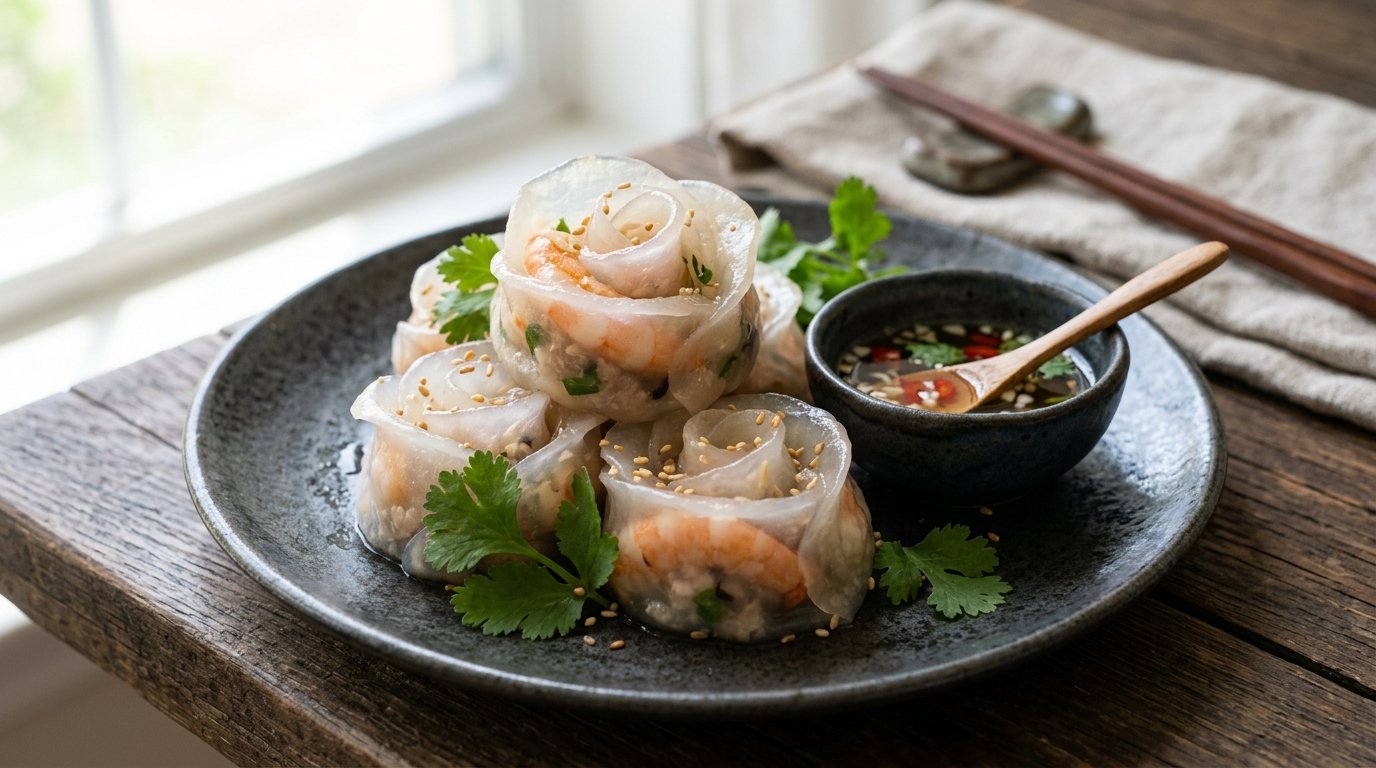
There is a moment in every great meal where presentation elevates flavor into an unforgettable experience. These Rose Shrimp Dumplings are exactly that kind of magic—a dish that transforms humble rice paper wrappers into delicate, edible flowers filled with sweet, bouncy shrimp. Known traditionally as Há cảo hoa hồng bằng bánh tráng, this recipe bridges Vietnamese ingenuity with classic Chinese dim sum aesthetics, creating a visually stunning appetizer that tastes as exquisite as it looks.
Unlike traditional har gow which requires making translucent wheat-starch dough from scratch—a process demanding precision and practice—this version uses store-bought rice paper sheets. This clever shortcut democratizes the recipe, allowing home cooks to achieve restaurant-quality elegance without specialized ingredients or advanced pastry skills. The natural pink hue comes from red cabbage and lemon juice, proving that vibrant color doesn’t require artificial dyes. Whether you’re hosting a special dinner, celebrating Lunar New Year, or simply want to impress guests with your culinary artistry, these Rose Shrimp Dumplings deliver sophistication and flavor in equal measure. They prove that beauty and taste can coexist harmoniously on a single plate.
Why This Recipe Works
The success of these Rose Shrimp Dumplings lies in three fundamental principles: hydration control, structural layering, and thermal transformation. Rice paper is essentially dehydrated starch. When briefly dipped in liquid, it rehydrates just enough to become pliable but retains enough integrity to hold shape during steaming. The key is timing—too brief and it cracks; too long and it becomes gummy. This precise hydration creates the perfect canvas for folding.
Layering three overlapping rice paper sheets is crucial for achieving the rose petal effect. Single sheets are too thin to create defined petals; they tear and lack structure. Triple layers provide the necessary thickness and opacity to mimic flower petals while remaining translucent enough to showcase the filling. The overlap pattern ensures each “petal” has distinct edges that separate beautifully during steaming, creating the iconic rose silhouette.
Finally, steaming activates the starches in the rice paper, transforming them from stiff/crisp to soft/chewy while setting the shrimp filling. The gentle moist heat preserves the delicate pink color (which would fade under direct high heat) and allows the wrapper to conform to the folded shape without breaking. The result is a dumpling that is simultaneously sturdy enough to hold its form yet tender enough to melt in your mouth—a textural paradox achieved through careful technique.
Why You’ll Love These Rose Shrimp Dumplings
- Edible Art: Each dumpling resembles a blooming rose—stunning presentation requires zero artistic skill.
- No Dough Making: Skip the wheat starch/flour mixing. Rice paper wrappers are instant and foolproof.
- Natural Coloring: Vibrant pink comes from red cabbage + lemon, not artificial dyes. Safe and beautiful.
- Gluten-Free Friendly: Rice paper is naturally GF. Perfect for celiac/gluten-sensitive guests.
- Light & Fresh: Steamed preparation keeps calories low while maximizing flavor and texture.
- Interactive Fun: Folding roses is meditative and enjoyable. Great activity for kids/families.
- Versatile Occasions: Ideal for dim sum brunch, holiday parties, romantic dinners, or tea time.
- Impressive Yet Accessible: Looks like master chef creation; achievable by confident home cooks.
Ingredient Notes
Rice Paper Wrappers (Round, 8-inch)
- Purpose: The wrapper/petal base. Must be thin enough to layer transparently but strong enough to fold without tearing. Standard spring roll size works best.
- Substitutions: None really. Wonton/dumpling skins won’t achieve translucency/rose effect. Stick to rice paper.
- Buying Tips: Look for “spring roll” or “rice paper” in Asian markets. Check expiration date; old wrappers become brittle/crack easily. Avoid thick/”banh trang” meant for dry rolling—they’re too stiff for delicate folding.
- Storage Tips: Store in cool, dry place away from sunlight. Keep sealed in original packaging. Once opened, use within 1-2 months. Humidity is enemy #1; add silica packet if available.
Raw Shrimp (Medium/Large, Peeled/Deveined)
- Purpose: Primary filling. Provides sweetness, bounce, and protein. Chopping creates better texture integration than whole shrimp.
- Substitutions: Crawfish, crab meat, or firm white fish (cod/halibut) minced. Plant-based shrimp alternative for vegan version.
- Buying Tips: Fresh or frozen (thawed/patted VERY dry). Avoid pre-cooked shrimp—they become rubbery when steamed again. Size doesn’t matter since chopping; medium/large easiest to handle.
- Storage Tips: Refrigerate raw shrimp 1-2 days max. Freeze up to 3 months. Pat DRY before mixing; excess moisture = soggy filling/wrapper issues.
Red Cabbage & Lemon Juice

- Purpose: Natural pink dye. Anthocyanins in cabbage react with acid (lemon) to create vibrant pink/magenta. Also adds subtle tang to dipping water.
- Substitutions: Beet juice (deeper red), butterfly pea flower + lemon (blue-to-purple), or omit for plain white dumplings. Food-grade pink coloring if natural isn’t priority.
- Buying Tips: Firm, heavy cabbage with crisp leaves. Bright yellow lemons = juicier. Avoid greenish/yellowing cabbage (bitter/old).
- Storage Tips: Cabbage: refrigerate unwashed in crisper 2-3 weeks. Lemon: room temp 1 week, fridge 2-3 weeks. Prepare dye fresh; stored dye loses vibrancy.
Scallions, Ginger, Sesame Oil, White Pepper, Cornstarch
- Purpose: Flavor foundation + binder. Scallions/ginger add aroma/freshness. Sesame oil provides nuttiness. White pepper gives earthy heat. Cornstarch binds juices, prevents sogginess.
- Substitutions: Chives (milder), garlic powder (if fresh unavailable), black pepper (different heat profile), tapioca starch (alternative binder).
- Buying Tips: Quality matters. Real sesame oil (not flavored). Fresh ginger > powdered. White pepper has distinct earthy heat vs. black pepper’s sharpness.
- Storage Tips: Soy/sesame oil: pantry/fridge after opening. Ginger: freeze grated in ice cube trays. Spices: airtight containers away from light/heat. Replace annually.
Kitchen Equipment
- Bamboo Steamer (8-10 inch): Essential for authentic steaming. Bamboo absorbs excess moisture, preventing soggy bottoms. Metal steamers work but trap more condensation. Line with parchment/cabbage leaves to prevent sticking.
- Shallow Plate/Bowl of Water: For hydrating rice paper. Wide enough to submerge wrapper fully. Room temp water hydrates evenly; cold water slows process. Add cabbage-lemon dye here.
- Mixing Bowls (Medium): For combining filling. Glass/stainless steel preferred over plastic (doesn’t retain odors/fat).
- Chopsticks or Wooden Spoon: For mixing filling vigorously in one direction. Metal spoons can overwork meat/shrimp.
- Sharp Knife & Cutting Board: For chopping shrimp/scallions/ginger uniformly. Dull knives crush rather than cut, releasing excess moisture.
- Small Sieve/Strainer: For straining cabbage dye if desired (removes bits). Optional but ensures smooth coloring liquid.
- Tongs or Spatula: For removing dumplings gently from steamer. Silicone tips protect delicate wrappers. Metal tongs can tear rice paper.
- Measuring Spoons: Accuracy matters for balanced seasoning. Too much salt = inedible; too little = bland. Eyeballing leads to inconsistency.
Preparation Information
- Prep Time: 45 Minutes
- Cook Time: 8–10 Minutes
- Total Time: 1 Hour
- Servings: 4 (Approx. 12 Dumplings)
Step-by-Step Instructions
Creating the Natural Pink Dye
Chop ½ cup red cabbage into small pieces. Place in bowl. Squeeze juice of ½ lemon directly over cabbage. Add 1 cup warm water. Stir and let steep 5-10 minutes until water turns vibrant pink/magenta. Strain if desired. Use this colored water for hydrating rice paper. Why it matters: Anthocyanins in cabbage are pH-sensitive. Acid (lemon) shifts color from purple/blue to pink/red. Warm water extracts color faster. Steeping time determines intensity; longer = deeper pink. Straining removes cabbage bits that could stain wrappers unevenly. This natural dye is safe, edible, and creates the signature rose hue. Visual Cue: Water transforms from clear to bright pink/magenta. Cabbage pieces may lighten slightly. Color should be vivid, not pale/watery. Texture Cue: Liquid smooth/thin, not viscous. No floating debris if strained. Aroma Cue: Mild cabbage/lemon scent. Fresh and clean. No sour/fermented smell. Common Mistake: Using cold water = slow extraction/pale color. Skipping lemon = purple/blue instead of pink. Over-steeping (>15 mins) = bitter taste transfers to wrappers. Under-steeping (<5 mins) = faint color. Pro Tip: Test dye on scrap rice paper piece before committing. Adjust lemon/cabbage ratio if needed. More lemon = brighter pink. More cabbage = deeper magenta. Dye fades slightly during steaming; aim for slightly darker than desired final color.
Preparing the Shrimp Filling
Finely chop ½ lb raw shrimp. In bowl, combine shrimp, 2 finely chopped scallions, 1 tsp grated ginger, 1 tsp sesame oil, ½ tsp white pepper, 1 tsp cornstarch, pinch salt. Mix VIGOROUSLY in ONE DIRECTION with chopsticks/spoon for 2 minutes until mixture becomes sticky/paste-like. Cover; refrigerate 15 mins. Why it matters: Mixing in one direction aligns proteins, creating springy/bouncy texture. Vigorous mixing develops stickiness that binds filling, preventing crumbling. Refrigerating firms fats/proteins, making wrapping easier and preventing leakage during steam. Cornstarch absorbs excess moisture, protecting wrapper integrity. Seasoning now ensures flavor penetrates shrimp. Visual Cue: Mixture transforms from loose/grainy to cohesive/sticky mass. Color deepens slightly. Surface looks glossy/moist, not dry/crumbly. Texture Cue: Feels tacky/adhesive when lifted. Holds shape when scooped. Not watery/separated. Aroma Cue: Sweet shrimp, fresh ginger, nutty sesame, sharp scallion. Balanced and appetizing. No raw/fishy odor. *Doneness Cue (Raw): N/A – this is prep. But ensure shrimp is patted DRY before mixing; excess water ruins texture. Taste-test small cooked patty before wrapping. Adjust seasoning NOW. Can’t fix bland filling after wrapping. Chef Tip: Chop shrimp by hand, not food processor. Hand-chopped retains pleasant bite; processed becomes mushy. Leave some pieces slightly larger for textural contrast. Ensure all ingredients are COLD before mixing; warmth activates proteins prematurely, affecting texture.
Hydrating and Layering Wrappers
Fill shallow plate with pink cabbage-lemon water. Dip first rice paper wrapper 3-5 seconds until pliable but still slightly firm. Lay flat on bamboo board/mat. Immediately dip second wrapper, lay OVERLAPPING first by ⅓. Dip third wrapper, overlap second by ⅓. You now have triple-layered strip. Work quickly to prevent drying. Why it matters: Brief dip hydrates wrapper just enough to be flexible without tearing. Overlapping creates continuous petal surface; gaps cause breaks in rose shape. Triple layers provide thickness for defined petals while maintaining translucency. Speed prevents premature drying/cracking. Room temp water hydrates evenly; hot water over-softens instantly. Visual Cue: Wrappers translucent/pliable, not opaque/stiff or slimy/mushy. Overlaps seamless, no gaps. Triple layer uniform thickness. Texture Cue: Smooth/slightly tacky. Layers adhere gently, not fused. Flexible without resistance. Aroma Cue: Mild rice/cabbage-lemon scent. Subtle and fresh. No sour/wet paper smell. Common Mistake: Over-soaking = gummy/sticky mess that tears. Under-soaking = cracks/breaks during folding. Gaps between layers = broken petals. Working too slowly = dried edges that won’t seal. Practice hydration timing on scraps first. Pro Tip: Have filling ready BEFORE hydrating wrappers. Assembly must be immediate. Keep unused wrappers covered damp towel to prevent drying. If layer starts drying mid-process, dab edge with wet finger to reactivate. Don’t re-dip entire sheet—it’ll become mushy.
The Rose Folding Technique

Place 1 tbsp shrimp filling along center of triple-layered strip. Fold bottom edge up over filling. Roll upward tightly once to enclose filling completely. Continue rolling, but as you roll, gently flare outer edges outward like petals. Stop when rose shape forms. Pinch base firmly to seal. Repeat. Why it matters: Tight initial roll secures filling, prevents bursting during steam. Flaring edges creates petal effect; straight rolling = cylinder, not rose. Pinching base seals dumpling, maintains shape during cook. Gentle handling prevents tearing delicate hydrated wrappers. Consistent size ensures even steaming. Visual Cue: Rose shape emerges with defined petals. Filling enclosed securely. Base pinched/tapered. Petals flared outward, not tucked inward. Translucent layers show shrimp/scallion flecks. Texture Cue: Rose holds shape when lifted. Base firm/sealed. Petals delicate but intact. Not loose/bulky or compressed/squished. Aroma Cue: Raw shrimp/ginger/scallion fragrance. Fresh and savory. No off-odors. *Doneness Cue (Raw): N/A – this is assembly. But ensure no tears/holes. Test one by pressing gently; shouldn’t split. If fragile, reduce dip time next round. Uniform size = even cooking. Chef Tip: Don’t overfill. 1 tbsp max. Excess filling bursts petals during steam. Practice folding with empty wrappers first to master petal flaring motion. Wet fingers slightly when pinching base; helps seal without tearing. Work on bamboo mat; wood absorbs excess moisture, preventing sticking.
Steaming to Perfection
Line bamboo steamer with parchment paper (poke holes) or cabbage leaves. Arrange roses seam-side DOWN, spaced 1 inch apart. Steam over BOILING water 8-10 minutes. DO NOT lift lid during cook. Remove carefully with tongs/spatula. Serve IMMEDIATELY warm with dipping sauce. Why it matters: Seam-side down seals seam during steam, preventing opening/unraveling. Spacing prevents sticking/fusing. Boiling water generates consistent steam; simmering = insufficient heat/cooking. Lid lifting releases steam, extends cook time, risks sogginess. 8-10 mins ensures shrimp cooks through (165°F/74°C) and wrappers set properly. Immediate serving preserves texture; cooled rice paper hardens/becomes chewy. Visual Cue: Wrappers turn fully translucent/glossy. Pink color intensifies slightly. Shrimp visible through wrapper turns opaque/pink. Steam rises steadily. Roses hold shape, don’t collapse. Texture Cue: Wrapper soft/chewy/translucent. Filling firm/bouncy. Base sealed/intact. Not mushy/soggy or hard/crispy. Aroma Cue: Sweet shrimp, fragrant ginger/scallion, steamy warmth. Irresistible and complex. Common Mistake: Undercooking = unsafe shrimp/raw wrapper texture. Overcooking = mushy wrappers/shrunken roses. Crowding steamer = sticking/fused dumplings. Lifting lid early = lost steam/uneven cook. Serving cold = hardened/chewy texture. Always serve warm. Pro Tip: Pre-boil water BEFORE placing steamer. Cold start = prolonged cook time = soggy wrappers. Check water level midway; add boiling water if low. Never add cold water—it stops steaming. Use timer; visual cues vary by steamer type/heat source. Err on side of slight overcook vs. undercook for safety.
Expert Tips for Delicate Wrappers
- Hydration Timing Is Everything: 3-5 seconds MAX. Longer = gummy/sticky disaster. Shorter = cracking/breaking. Practice makes perfect. Test one first; adjust based on brand/thickness.
- Triple Layer Non-Negotiable: Single sheets tear/lack petal definition. Double layers borderline. Triple = ideal thickness/translucency balance. Don’t skimp.
- Work Fast During Assembly: Hydrated wrappers dry/crack in minutes. Have filling/prep station ready. Assemble immediately after dipping. Efficiency = success.
- Seam-Side Down Always: Seals seam during steam, prevents unraveling. Also creates stable base. Flipping mid-cook destroys rose shape.
- Boiling Water Essential: Simmering steam = insufficient heat/long cook = soggy wrappers. Rolling boil = consistent intense steam. Maintain vigorous boil throughout.
- Serve Warm Immediately: Rice paper hardens/chews when cooled. Texture window is narrow. Plate right out of steamer. No photoshoot delays unless accepting compromised texture.
- Pinch Base Firmly: Loose base = unraveling during steam/eating. Seal is structural foundation. Wet fingers help pinch without tearing.
- Dye Intensity Matters: Color fades slightly during steam. Aim for slightly darker pink than desired final. Test on scrap wrapper first. Adjust lemon/cabbage ratio accordingly.
Common Mistakes to Avoid
- Over-Soaking Wrappers: Gummy/sticky mess that tears/sticks to everything. 3-5 secs max. Err on side of under-soaked; you can always dab water later.
- Single-Layer Wrappers: Tears easily, lacks petal definition. Always use triple overlap. Structural integrity depends on it.
- Overfilling: Bursts petals during steam. 1 tbsp max. Less is more for elegant shape.
- Lifting Lid During Steam: Loses steam, undercooks filling, sogs wrappers. Trust timing. Peek ONLY at end. Steam is invisible cook.
- Serving Cold: Hardens/chews unpleasantly. Serve PIPING HOT. Warm plates. Eat immediately. Re-steam briefly if needed.
- Crowding Steamer: Sticks/fuses together. Space 1 inch apart. Cook in batches if necessary. Patience pays.
- Using Thick Rice Paper: Designed for dry spring rolls, not delicate dumplings. Too stiff/crack-prone. Use thin “spring roll” wrappers specifically.
- Skipping Base Pinch: Unravels during cook/eating. Seal is critical. Wet fingers help pinch without tearing.
Recipe Variations
- Spicy Kick: Add ½ tsp chili flakes/Sriracha to filling. Drizzle with chili oil post-steam. Use spicy dipping sauce. For extreme heat, add minced Thai chilies.
- Vegetarian Option: Replace shrimp with finely chopped mushrooms (shiitake/oyster), tofu, or textured vegetable protein. Add 1 tsp miso/soy for umami. Same wrapping/steaming method.
- Vegan Adaptation: Use mushroom/tofu filling. Ensure soy sauce vegan. Coconut cream + lime dipping sauce. Nutritional yeast adds cheesy umami. Verify rice paper vegan (some contain egg).
- Chicken Version: Ground chicken thighs (juicier than breast). Add 1 tsp sesame paste/oil for moisture. Lighter flavor. Pairs beautifully with ginger-scallion sauce.
- Pork Variation: Ground pork (80/20). Richer/heavier flavor. Add star anise/five-spice for Chinese-inspired profile. Hearty winter variation.
- Seafood Only: Omit pork. Use shrimp + crab/crawfish. Delicate/sweet flavor. Reduce cook time 1 min. Elegant appetizer option. Handle gently.
- Extra Cheesy Bomb: NOT recommended. Cheese leaks/melts excessively, ruining wrapper integrity. Stick to traditional fillings. If insisting, use minimal cream cheese inside, sealed tightly.
- Healthy/Low-Fat: Use ground turkey/chicken breast. Reduce oil to ½ tsp. Load up on veggie fillings (cabbage/carrots/zucchini). Steam-only method (skip sear) for lowest fat.
- Low-Carb/Keto: Replace rice paper with cheese shells (baked parmesan circles) or lettuce cups. Cauliflower rice filler. Net carbs drop significantly. High fat/protein satisfies.
- High-Protein Boost: Add edamame/hemp seeds to filling. Use extra shrimp/pork ratio. Protein powder pinch in filling (unflavored). Serves athletes/bodybuilders.
What to Serve With This Recipe
- Black Vinegar + Ginger: Classic dumpling sauce. Acidic/savory cuts richness. Thinly sliced ginger adds warmth. Traditional pairing.
- Chili Oil/Crisp: Adds heat, crunch, aroma. Homemade or store-bought. Drizzle or dip. Essential for spice lovers.
- Soy Sauce + Sesame Oil: Simple, savory, nutty. Lets delicate dumpling flavor shine. Minimalist elegance.
- Steamed Jasmine Rice: Neutral base soaks up sauces/juices. Extends meal satisfyingly. Fragrant complement.
- Simple Cucumber Salad: Cool/crisp/acidic contrast. Rice vinegar/sesame dressing. Cleanses palate between rich bites.
- Hot & Sour Soup: Warm/spicy/tangy starter. Echoes dumpling flavors. Comforting liquid contrast.
- Thai Iced Tea/Mango Smoothie: Sweet/creamy beverages balance savory/spicy elements. Refreshing non-alcoholic options.
- Mochi Ice Cream: Sweet/chewy dessert finale. Textural echo of dumpling wrapper. Perfect ending note.
Make Ahead & Meal Prep Tips
- Filling Prep Ahead: Mix filling up to 24 hrs ahead. Store airtight fridge. Flavors meld/improve. Bring to room temp 15 mins before wrapping. Saves active prep time.
- Dye Prep Ahead: Make cabbage-lemon dye up to 2 days ahead. Store jar fridge. Color may deepen; test before use. Shake before hydrating wrappers.
- Wrap Ahead: Assemble dumplings up to 2 hrs ahead. Store on parchment-lined tray, covered damp towel, fridge. Prevents drying/cracking. Do NOT freeze unwrapped.
- Freeze Wrapped Dumplings: Flash-freeze on tray 1 hr, then bag. Up to 3 months. Cook from frozen: add 2-3 mins steam time. No thaw needed. Ideal meal prep.
- Garnish Prep Ahead: Chop scallions, toast sesame seeds up to 3 days ahead. Store separate containers. Scallions: stems in water. Sesame: airtight jar. Grab-and-go finish.
Storage & Reheating Instructions
Refrigerator
Store leftover dumplings in airtight container up to 2 days. Texture declines after 24 hrs. Best consumed within 48 hrs. Sauce/garnishes store separately.
Freezer
Freeze cooked dumplings (no sauce/garnish) up to 2 months. Cool completely first. Reheat from frozen. Sauce/garnishes make fresh. Unglazed freezes better than sauced.
Reheating Methods
- Steamer (BEST): Gentle reheating preserves chewiness. 3-5 mins over boiling water. Restores texture closest to original. Monitor closely to prevent sogginess.
- Microwave (LAST RESORT): 30-sec bursts. Covers damp paper towel. Makes wrapper gummy/chewy, loses delicate texture. Only if speed > quality. Expect significant quality loss.
- Stovetop Steamer: Similar to bamboo steamer. Medium heat, tight lid. 3-4 mins. Good alternative if no bamboo steamer.
- Oven/Air Fryer: NOT recommended. Dry heat hardens/crisps rice paper unpleasantly. Destroys delicate chewy texture. Avoid entirely.
Nutritional Information
Estimates per serving (3 dumplings, no sauce)
- Calories: 180 kcal
- Protein: 14g
- Carbohydrates: 18g
- Fat: 6g
- Fiber: 1g
- Sugar: 1g
- Sodium: 320mg
Note: Values vary based on shrimp quantity, oil usage, wrapper size. Moderate protein/carbs/fat makes this balanced indulgence. Sodium significant from soy sauce/filling seasoning.
Troubleshooting Guide
| Problem | Cause | Solution |
|---|---|---|
| Wrapper Torn/Broken | Over-soaked / under-soaked / rough handling. | Dip 3-5 secs max. Handle gently. Patch small tears with water dab. Practice improves technique. |
| Rose Unraveled | Base not pinched firmly / seam-side up / overfilled. | Pinch base tightly. Always seam-side down. Reduce filling to 1 tbsp max. |
| Pale/White Color | Insufficient dye / over-diluted / short steep time. | Increase cabbage/lemon ratio. Steep 10+ mins. Test on scrap wrapper. Aim for darker pink pre-steam. |
| Mushy/Soggy Wrappers | Over-steamed / lid lifted / water touched wrappers. | Steam 8-10 mins max. Keep lid sealed. Don’t splash water on dumplings. Use parchment lining. |
| Hard/Chewy Texture | Undercooked / served cold / over-dried before steam. | Ensure full 8-10 min steam. Serve IMMEDIATELY warm. Keep covered damp towel pre-steam. |
| Filling Crumbly/Falling Out | Undermixed / lean shrimp / no cornstarch. | Mix vigorously one direction 2 mins. Add cornstarch. Chill filling before wrapping. |
| Petals Fused Together | Crowded steamer / touched during cook / over-hydrated. | Space 1 inch apart. Don’t touch until set. Dip wrappers correctly. Use parchment between layers if stacking unavoidable. |
| Bland Flavor | Underseasoned filling / weak dipping sauce. | Taste-test filling before wrapping. Adjust soy/ginger/sesame. Make robust dipping sauce. Salt shrimp adequately. |
Frequently Asked Questions
1. Can I use regular white rice paper instead of dyed? Yes, but you’ll lose the signature rose aesthetic. White dumplings still taste delicious and fold identically. The pink color is purely visual; flavor unchanged. Great option if cabbage/lemon unavailable or prefer minimalist look.
2. How do I know when dumplings are done? Visual: Wrappers fully translucent/glossy. Shrimp visible through wrapper turns opaque/pink. Internal: Shrimp reaches 165°F (74°C). Cut one open if unsure. Better safe than sorry with seafood.
3. Can I make these gluten-free? Naturally yes IF using certified GF rice paper and tamari (instead of regular soy sauce). Most rice papers are GF, but verify label. Safe for celiac/gluten-sensitive when verified.
4. Why did my wrappers crack while folding? Under-soaked or dried out. Dip 3-5 secs. Keep unused wrappers covered damp towel. Work quickly. If cracks appear, dab water on crack to reseal. Prevention > repair.
5. Can I pan-fry these instead of steam? Not recommended. Pan-frying crisps/browns rice paper, destroying delicate rose shape and translucent beauty. Steaming preserves form/color/texture. Stick to steam for intended result.
6. How spicy is the dipping sauce typically? Varies wildly by recipe. Classic black vinegar-ginger is mild/tangy. Chili oil versions range from gentle warmth to incendiary. Start mild; add gradually. Offer on side for customization.
7. Can I add vegetables to filling? Absolutely! Finely chopped cabbage, carrots, zucchini, mushrooms work well. Squeeze out excess moisture FIRST. Wet veggies = soggy filling/wrapper issues. Adds nutrition/texture. Limit to ¼ cup total to maintain structure.
8. Are these suitable for kids? Yes! Fun to fold/eat. Mild filling appeals to young palates. Cut into bite-sized pieces. Offer plain dipping sauce. Interactive meal encourages adventurous eating. Supervise hot steamer access.
9. Can I double this recipe? Yes, but steam IN BATCHES. Steamer capacity limits quantity. Overcrowding = sticking/fused dumplings. Prepare double filling/wrappers ahead. Steam sequentially. Keep first batch warm in steamer (lid on, heat off) while cooking second.
10. What dipping sauce pairs best? Classic: Black vinegar + ginger + soy. Spicy: Chili oil + garlic + sesame. Creamy: Peanut + lime + sriracha. Tangy: Ponzu + scallion. Experiment! Dumplings are versatile canvas. Offer multiple options for guests.
Final Thoughts
These Rose Shrimp Dumplings represent the beautiful intersection of tradition and innovation. They honor the spirit of Asian dumpling culture while embracing modern shortcuts that make gourmet accessible to everyone. The result is a dish that feels both familiar and revolutionary—delicate yet sturdy, simple yet sophisticated, quick yet deeply satisfying. Whether you’re feeding a crowd or treating yourself, these dumplings deliver joy in every bite.