Quick Recipe Summary
| Feature | Details |
|---|---|
| Prep Time | 20 Minutes |
| Cook Time | 15 Minutes (Tapioca) |
| Total Time | 35 Minutes |
| Servings | 4 |
| Cuisine | Chinese / Southeast Asian Fusion |
| Course | Dessert / Beverage |
| Difficulty | Easy |
| Calories | ~320 kcal per serving |
Table of Contents
- Introduction
- Why This Recipe Works
- Why You’ll Love This Recipe
- Ingredient Notes
- Kitchen Equipment
- Preparation Information
- Step-by-Step Instructions
- Expert Tips for Perfect Texture
- Common Mistakes to Avoid
- Recipe Variations
- What to Serve With This Recipe
- Make Ahead & Meal Prep Tips
- Storage Instructions
- Nutritional Information
- Troubleshooting Guide
- Frequently Asked Questions
- Final Thoughts
Introduction

There is a specific kind of tropical bliss that comes from sipping a perfectly balanced, icy-cold dessert drink on a warm afternoon. This creamy mango sago with coconut milk and tapioca pearls captures that essence in a glass. It is a beloved classic in Cantonese and Southeast Asian cuisine, often found in bustling tea shops and dim sum parlors, but making it at home allows you to control the sweetness and texture to your exact preference.
Unlike simple fruit smoothies, this beverage offers a complex textural experience. The chewiness of the sago (tapioca pearls), the crisp bite of fresh mango cubes, and the velvety smoothness of the blended mango-coconut base create a symphony of sensations. Whether you are looking for a refreshing summer treat, a unique party beverage, or a comforting sweet ending to a meal, this mango sago recipe delivers authentic flavor with modern convenience. Let’s explore how to build this layered masterpiece right in your kitchen.
Why This Recipe Works
The success of any great mango sago lies in the balance of three distinct components: the fruit, the starch, and the dairy alternative.
- Dual-Texture Mango: We use two forms of mango. Freshly diced cubes provide structural integrity and bursts of pure fruit flavor. Blended mango creates a thick, nectar-like base that carries the coconut milk and coats the tongue. This contrast prevents the drink from being either too chunky or too uniform.
- Coconut Milk as Emulsifier: Coconut milk is richer and fattier than regular milk, which helps suspend the blended mango particles and creates a luxurious mouthfeel. Its natural sweetness complements the tartness of ripe mangoes without needing excessive added sugar.
- Properly Cooked Sago: Small tapioca pearls (sago) have a delicate, gelatinous chew that is distinct from large boba pearls. When cooked correctly—boiled until translucent then shocked in cold water—they remain separate and springy rather than clumping into a gummy mass. They act as edible confetti throughout the drink.
Why You’ll Love This Recipe
- Authentic Tea Shop Flavor: Replicates the taste of high-end Asian dessert houses using accessible ingredients.
- Customizable Sweetness: Ripe mangoes are naturally sweet; you can adjust added sugar based on your fruit’s ripeness.
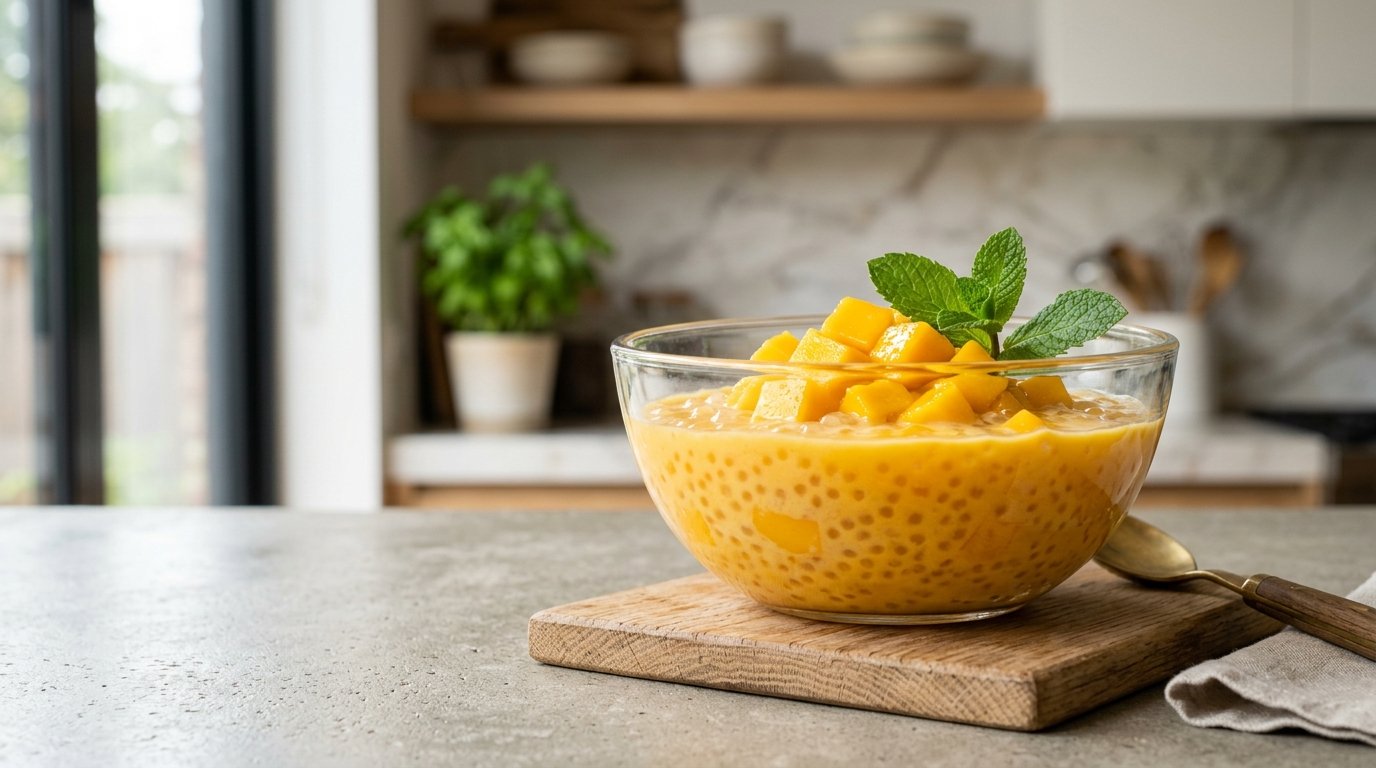
- Visual Appeal: The vibrant yellow-orange hue against white coconut milk and clear pearls makes for stunning presentation.
- Refreshing Yet Filling: The combination of fruit fiber, coconut fat, and tapioca starch makes it satisfying enough to be a light snack or dessert.
- Naturally Gluten-Free: A safe and delicious option for those with gluten sensitivities.
Ingredient Notes
Quality ingredients are non-negotiable for this creamy mango sago. Here is what you need to know.
The Stars
- Ripe Mangoes: Choose Ataulfo (Honey/Champagne) or Alphonso varieties if possible. They are fiberless, intensely sweet, and have a deep orange color. Avoid green-skinned mangoes unless they yield slightly to pressure; unripe mango will make the drink sour and stringy. You need about 2 large or 3 medium mangoes.
- Small Tapioca Pearls (Sago): These are tiny (2-3mm), unlike large bubble tea pearls. They cook faster and have a softer, more delicate chew. Look for “small sago” or “mini tapioca pearls” in Asian grocery stores.
- Coconut Milk: Use full-fat canned coconut milk for richness. Carton coconut milk beverage is too watery and will dilute the flavor. Shake the can well before opening to incorporate the cream.
- Evaporated Milk (Optional): The video shows pouring from cans that resemble evaporated milk. This adds a creamy, slightly caramelized dairy note that bridges the gap between coconut and mango. If avoiding dairy, stick to coconut milk alone or use oat milk creamer.
Enhancers
- Ice Cubes: Essential for temperature and dilution. As ice melts, it balances the intense sweetness of the mango nectar.
- Lime Wedge: A squeeze of fresh lime juice brightens the heavy coconut flavor and enhances the mango’s acidity.
- Simple Syrup (Optional): Only needed if mangoes are under-ripe. Dissolve equal parts sugar and water.
Kitchen Equipment

- Blender: High-speed preferred for silky smooth mango puree.
- Medium Saucepan: For boiling tapioca pearls.
- Strainer/Colander: For rinsing cooked sago.
- Glass Pitcher: For mixing the coconut milk base and chilling.
- Tall Serving Glasses: Clear glass showcases the layers and colors best.
- Sharp Knife & Cutting Board: For dicing mango.
- Long Spoon or Straw: Wide straw recommended for sipping pearls.
Preparation Information
- Prep Time: 20 Minutes (Peeling/dicing mango, measuring liquids)
- Cook Time: 15 Minutes (Boiling sago)
- Total Time: 35 Minutes
- Servings: 4 Tall Glasses
Step-by-Step Instructions
Follow this precise workflow to achieve the perfect creamy mango sago.
Phase 1: Preparing the Fruit Base
H3: Maximize Mango Flavor and Texture
- Score and Dice: Slice mango cheeks off the pit. Score flesh in a crosshatch pattern without cutting through skin. Push skin inward to pop cubes out. Slice cubes off into a bowl.
- Visual Cue: Cubes should be uniform ½-inch pieces. Uniformity ensures consistent biting experience.
- Texture Cue: Flesh should yield easily to knife. Stringy resistance indicates fibrous variety; blend these portions instead of dicing.
- Separate Portions: Reserve ½ cup of diced mango for garnish/topping. Place remaining mango into blender.
- Why separate? Blending all mango destroys texture contrast. Topping cubes provide visual appeal and fresh bursts.
- Blend Base: Add reserved mango to blender with ½ cup coconut milk. Blend on high until completely smooth and vibrant orange.
- Aroma Cue: Intense floral, tropical sweetness. No grassy or raw starch smell.
- Consistency Check: Should pour like heavy cream, not water. If too thick, add splash more coconut milk.
Phase 2: Cooking the Tapioca Pearls
H3: Achieve Perfect Chew
- Boil Water: Bring 4 cups water to rolling boil. Ratio is critical: 1 part sago to 10 parts water prevents sticking.
- Add Sago: Pour in ½ cup small tapioca pearls. Stir immediately to prevent clumping.
- Visual Cue: Pearls sink initially, then float when cooking. Center should turn translucent, not white/opaque.
- Simmer: Reduce heat to medium-low. Cover partially. Cook 10-12 minutes, stirring occasionally.
- Doneness Test: Remove one pearl, rinse under cold water. Bite center. Should be soft with slight chew, no hard white core. Hard core = undercooked; mushy = overcooked.
- Shock and Rinse: Drain immediately. Rinse under COLD running water for 30 seconds.
- Why shock? Stops cooking process instantly. Removes surface starch that causes clumping. Creates glossy, springy texture.
- Sweeten (Optional): Toss rinsed sago with 1 tsp sugar or syrup while warm. Prevents sticking during storage.
Phase 3: Creating the Coconut Milk Mixture
H3: Build the Creamy Foundation
- Combine Liquids: In glass pitcher, mix remaining coconut milk (and evaporated milk if using). Stir gently.
- Temperature: Keep chilled. Warm coconut milk separates and tastes greasy.
- Layer Sago: Add cooked, cooled tapioca pearls to pitcher. Stir gently to distribute.
- Visual Cue: Pearls should settle at bottom but remain suspended when stirred. Clumping means insufficient rinsing.
- Chill Base: Refrigerate mixture 10-15 minutes while prepping glasses. Cold base preserves ice integrity during assembly.
Phase 4: Blending and Assembly
H3: Construct the Visual Masterpiece
- Prepare Glasses: Fill tall glasses ¾ full with ice cubes. Large cubes melt slower, preserving dilution balance.
- Pour Coconut Base: Ladle coconut milk-sago mixture over ice, filling glass halfway.
- Technique: Pour slowly over back of spoon to minimize turbulence. Keeps pearls settled at bottom initially.
- Float Mango Puree: Gently pour blended mango mixture over coconut layer. Aim for center of glass, letting it flow outward.
- Visual Effect: Creates marbled swirls of yellow and white. Do not stir! Swirling is intentional aesthetic.
- Garnish: Top with reserved fresh mango cubes. Add lime wedge on rim.
- Serving Note: Provide wide straw or long spoon. Drink immediately before layers fully merge.
Expert Tips for Perfect Texture
- Mango Ripeness Testing: Smell stem end. Ripe mango smells intensely sweet and fruity. No smell = underripe. Sour/fermented smell = overripe. Color is unreliable indicator; rely on scent and gentle squeeze.
- Sago Storage Trick: If not using immediately, store rinsed sago in simple syrup in fridge. Sugar coating prevents retrogradation (hardening) of starch. Use within 24 hours for best texture.
- Blender Temperature: Chill blender jar 10 mins before blending mango. Friction heats puree; starting cold preserves fresh flavor and vibrant color.
- Coconut Milk Selection: Read labels. Some brands add guar gum or carrageenan as stabilizers. These help suspension but can create slimy mouthfeel. Choose brands with minimal ingredients: coconut, water, salt.
- Ice Quality: Use filtered water ice. Tap water ice clouds the drink and introduces off-flavors. Clear ice melts cleaner and looks professional.
Common Mistakes to Avoid

- Gummy Sago: Caused by insufficient water ratio or skipping cold rinse. Fix: Always use 1:10 water ratio. Shock thoroughly. Store in syrup if holding.
- Stringy Mango Puree: Caused by fibrous mango variety or over-blending. Fix: Use Ataulfo/Alphonso mangoes. Blend just until smooth; don’t pulverize. Strain through fine mesh if fibers persist.
- Separated Coconut Milk: Caused by temperature shock or acidic mango. Fix: Keep coconut milk chilled. Add mango puree last, don’t blend together. Stir gently before serving if separation occurs.
- Watery Drink: Caused by melting ice or watery mango. Fix: Use large ice cubes. Ensure mango is ripe/sweet, not watery-unripe. Serve immediately after assembly.
- Bland Flavor: Caused by under-ripe fruit or weak coconut milk. Fix: Taste mango before blending. Add simple syrup if needed. Use full-fat canned coconut milk, not beverage carton.
Recipe Variations
- Vegan/Dairy-Free: Omit evaporated milk. Use only coconut milk. Add 1 tbsp coconut cream for extra richness. Naturally vegan-friendly.
- Pomelo Sago (Classic Variation): Add pomelo segments alongside mango. Pomelo’s bitter-sweet citrus contrasts beautifully with sweet mango. Traditional pairing.
- Passion Fruit Twist: Blend 2 passion fruits with mango. Adds tart complexity and crunchy seeds. Reduces need for lime.
- Low-Sugar Version: Use monk fruit or erythritol syrup instead of sugar. Rely entirely on ripe mango sweetness. Coconut milk provides perceived sweetness via fat content.
- Extra Chewy: Mix small sago with large boba pearls. Dual texture experience. Cook large pearls separately; combine after rinsing.
- Frozen Slushie Style: Freeze blended mango-coconut mixture 2 hours. Scrape with fork before pouring over sago. Creates granita-like texture.
- Coffee Mango Fusion: Add 1 shot espresso to coconut milk base. Unexpected but delightful bitterness cuts sweetness. Trendy café variation.
What to Serve With This Recipe
Balance sweetness with savory, salty, or spicy accompaniments.
- Salted Crackers or Pretzels: Salty crunch contrasts sweet creaminess. Cleanses palate between sips.
- Spicy Spring Rolls: Vietnamese-style rolls with chili dipping sauce. Heat and herbs complement tropical sweetness.
- Coconut Macaroons: Reinforces coconut theme. Crumbly texture contrasts smooth drink.
- Green Tea: Unsweetened jasmine or sencha. Tannins cut richness. Traditional pairing in tea houses.
- Fresh Fruit Platter: Lychee, dragon fruit, rambutan. Extends tropical theme without competing flavors.
- Savory Dim Sum: Har gow, siu mai. Salty dumplings balance sweet dessert course.
Make Ahead & Meal Prep Tips
- Cook Sago Ahead: Prepare tapioca pearls up to 24 hours in advance. Store in simple syrup, refrigerated. Re-rinse briefly before use if sticky.
- Pre-Dice Mango: Cut mango cubes up to 12 hours ahead. Store in airtight container with lime juice to prevent oxidation/browning.
- Blend Base Ahead: Blend mango-coconut mixture up to 6 hours ahead. Refrigerate. Stir before serving; separation is natural.
- Chill Components: Keep all elements cold until assembly. Warm components melt ice rapidly, diluting drink.
- Party Prep Station: Set up assembly line: ice → sago-coconut → mango puree → garnish. Guests can self-assemble. Interactive and fun.
Storage Instructions
- Refrigerator: Store assembled drinks max 2 hours. Ice melts, layers merge, sago hardens. Store components separately up to 24 hours.
- Freezer: Freeze blended mango base in ice cube trays. Use as flavored ice cubes later. Prevents dilution. Do not freeze assembled drink; texture ruins.
- Sago Storage: Cooked sago keeps 2 days refrigerated in syrup. Discard if cloudy, sour-smelling, or overly hard.
- Fresh Mango: Diced mango keeps 2 days refrigerated. Freeze excess for future smoothies. Thaw before use; texture softens.
Nutritional Information
Estimates per serving (based on 4 servings)
- Calories: 320 kcal
- Protein: 3g
- Carbohydrates: 48g
- Fat: 14g
- Saturated Fat: 12g
- Cholesterol: 0mg
- Sodium: 45mg
- Fiber: 2g
- Sugar: 32g (natural + added)
Note: Values vary based on mango sweetness, coconut milk brand, and added sugar.
Troubleshooting Guide
| Problem | Cause | Solution |
|---|---|---|
| Sago Hardens in Fridge | Starch retrogradation. | Store in simple syrup. Re-soak in warm water 2 mins before use. Cannot fully reverse; prevention key. |
| Puree Too Thick | Over-blended or fibrous mango. | Thin with coconut milk or water. Strain through sieve. Next time, blend less aggressively. |
| Layers Mix Immediately | Poured too fast or densities similar. | Pour mango puree slowly over spoon. Chill both layers before assembly. Density difference creates separation. |
| Drink Too Sweet | Over-ripe mango or excess syrup. | Add lime juice or unsweetened coconut milk. Dilute with ice water. Balance next batch with less ripe fruit. |
| Coconut Milk Curdled | Acidic mango or temperature shock. | Blend mango and coconut separately. Combine gently at end. Use room-temp coconut milk if blending unavoidable. |
| Sago Clumps Together | Insufficient water or skipped rinse. | Always use 1:10 ratio. Rinse thoroughly cold. Store in syrup. Separate clumps manually before serving. |
Frequently Asked Questions
1. Can I use large boba pearls instead of sago? Yes, but texture differs significantly. Large pearls are chewier/gummier; sago is delicate/gelatinous. Adjust cooking time (large pearls need 20+ mins). Soak in brown sugar syrup for traditional boba flavor.
2. Why is my mango puree grayish? Oxidation from exposure to air or metal blender blades. Use ceramic/plastic blender if possible. Add lime juice immediately after blending. Serve promptly. Color doesn’t affect taste.
3. Can I make this without coconut milk? Substitute with whole milk, oat milk, or almond milk. Flavor profile changes dramatically—loses tropical richness. Add 1 tbsp coconut extract to compensate. Dairy-free versions work best with oat milk creamer.
4. How do I know when sago is done? Translucent throughout with tiny white dot center. Dot disappears when fully cooked but becomes mushy. Aim for slight dot = perfect chew. Test frequently near end of cook time.
5. Can I use frozen mango? Yes, but thaw completely first. Frozen mango often has added sugar/water; adjust sweetener accordingly. Texture may be softer; blend thoroughly. Fresh mango always superior for topping cubes.
6. Why add evaporated milk? Adds creamy depth and subtle caramelized notes that coconut milk lacks. Bridges mango-coconut flavors. Optional; omit for vegan/lighter version. Regular milk works but lacks richness.
7. How long does assembled drink last? Best consumed within 30 minutes. Ice melts, diluting flavor. Sago absorbs liquid, losing chew. Layers merge aesthetically. Components stored separately last 24 hours.
8. Can I reduce sugar? Absolutely. Ripe Ataulfo mangoes need zero added sugar. Taste before sweetening. Coconut milk provides perceived sweetness. Lime juice enhances natural fruit sweetness perception.
Final Thoughts
This creamy mango sago with coconut milk and tapioca pearls is more than a beverage—it’s a portable vacation. The interplay of textures and temperatures creates an experience that transcends simple refreshment. Each sip offers something new: the cool creaminess, the burst of tropical fruit, the playful chew of sago.