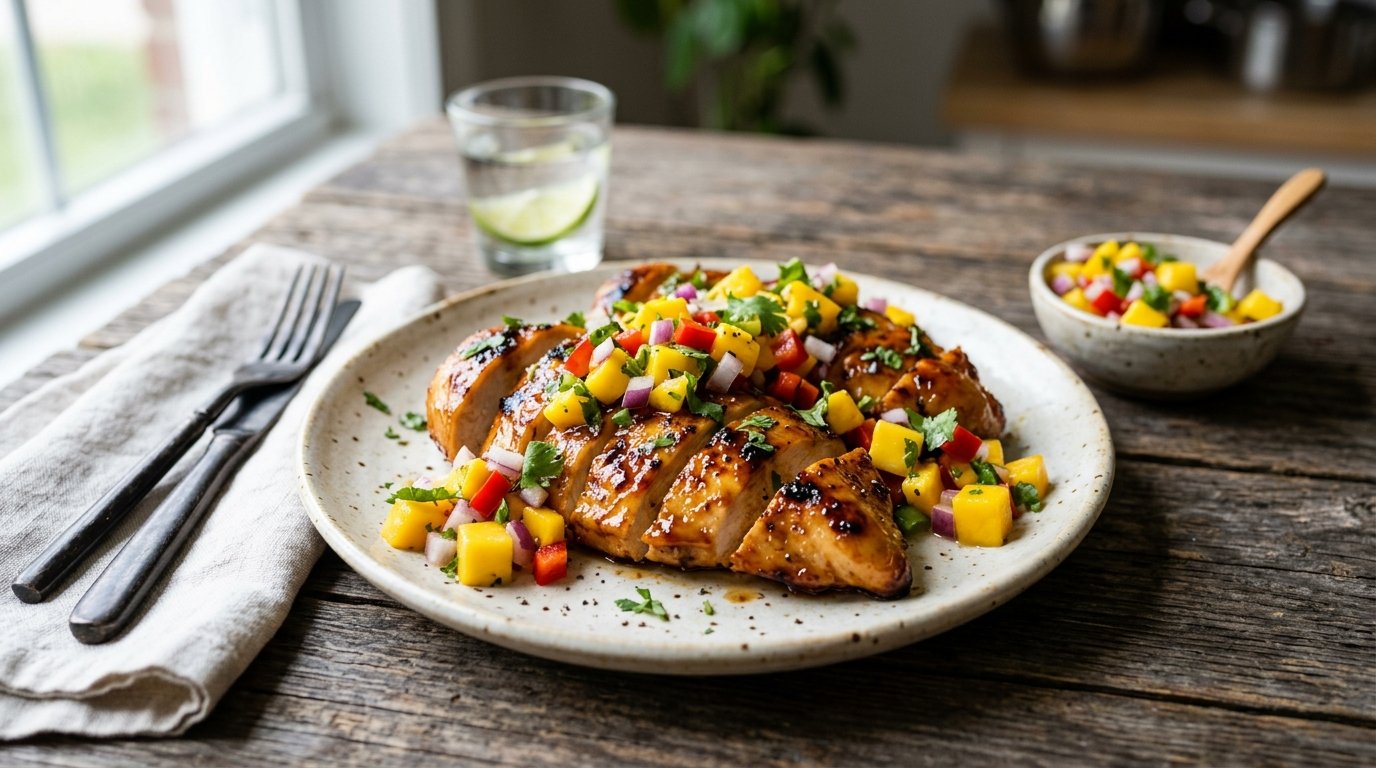
There are few things in the culinary world as universally satisfying as the combination of crispy, golden-brown chicken skin coated in a glistening, sweet-and-sour glaze. This sticky honey lime chicken recipe delivers exactly that experience, pairing succulent pan-seared thighs with a vibrant, fresh mango salsa that cuts through the richness with bright acidity and tropical sweetness. It is a dish that feels like a restaurant-quality meal but comes together in under an hour using simple, accessible ingredients found in any well-stocked kitchen.
The secret to this dish lies in the contrast. While the chicken develops a deep mahogany crust and a tacky, caramelized coating from reduced honey and lime juice, the accompanying salsa remains cool, chunky, and refreshing. This interplay of hot and cold, rich and bright, savory and sweet creates a complex flavor profile that keeps every bite exciting. Whether you are looking for a quick weeknight dinner that doesn’t compromise on flavor or a impressive dish for casual entertaining, this recipe proves that bold, balanced cooking doesn’t require hours of prep or obscure techniques.
Why This Recipe Works
This recipe succeeds because it leverages the unique properties of bone-in, skin-on chicken thighs. Unlike lean breasts, thighs contain intramuscular fat and connective tissue that render down during cooking, keeping the meat juicy even when exposed to high heat. The skin acts as a protective barrier and a canvas for crisping; when rendered properly, it becomes shatteringly crisp while the fat bastes the meat from within.
Furthermore, the glaze technique relies on reduction rather than thickening agents. By simmering honey, lime juice, and pan drippings together, water evaporates and sugars concentrate, creating a naturally sticky syrup that clings to the chicken without becoming cloying. The addition of fresh lime slices directly into the pan infuses the sauce with aromatic citrus oils as they caramelize, adding a depth of flavor that bottled juice simply cannot replicate. Finally, the mango salsa isn’t just a garnish—it’s a functional component that provides necessary acid and texture to balance the intense sweetness and saltiness of the main protein.
Why You’ll Love This Recipe
Perfect Texture Contrast: Crispy skin, tender meat, sticky glaze, and crunchy salsa create a multi-sensory eating experience.
One-Pan Efficiency: The chicken cooks and glazes in a single skillet, minimizing cleanup while maximizing flavor development through fond (browned bits).
Balanced Flavor Profile: Sweet honey, tart lime, salty soy/umami, and fresh fruit prevent palate fatigue common in heavy glazed dishes.
Forgiving Cooking Method: Thighs are nearly impossible to overcook compared to breasts, making this ideal for confident results every time.
Visually Stunning: The amber glaze, charred lime wheels, and jewel-toned salsa make for beautiful plating straight from the stove.
Pantry-Friendly Base: Honey, limes, garlic, and rice are staples; only the fresh mango requires a specific produce trip.
Ingredient Notes
Bone-In, Skin-On Chicken Thighs
Purpose: The foundation. Skin provides crispiness and fat; bone ensures even cooking and moisture retention.
Substitutions: Boneless, skinless thighs work but won’t get as crispy. Chicken breasts can be used but must be pounded thin and cooked less time to avoid dryness. Drumsticks work but take longer to cook through.
Buying Tips: Look for plump thighs with intact, unblemished skin. Avoid packages with excessive liquid (indicates water injection). Organic/free-range often has better texture and flavor.
Storage: Use within 1-2 days of purchase. Pat completely dry before cooking—moisture is the enemy of crisp skin. Freeze up to 9 months if needed.
Honey (Raw or Wildflower Preferred)
Purpose: Primary sweetener and glazing agent. Its viscosity and sugar composition allow for perfect stickiness without crystallizing too quickly.
Substitutions: Maple syrup or agave nectar work but have different flavor profiles. Brown sugar + water can mimic texture but lacks honey’s floral notes. Avoid artificial syrups—they don’t reduce properly.
Buying Tips: Raw/unfiltered honey has more complex flavor than processed clover honey. Local honey adds regional terroir. Ensure it’s pure honey, not “honey blend.”
Storage: Keep at room temp indefinitely. Crystallization is natural; gently warm to reliquefy. Never refrigerate.
Fresh Limes (Juice & Wheels)
Purpose: Acid balances sweetness; wheels caramelize for aroma and garnish. Juice deglazes pan and tenderizes meat slightly.
Substitutions: Lemons work but are less aromatic. Yuzu or calamansi offer unique twists. Bottled juice lacks volatile oils essential for fresh brightness—avoid if possible.
Buying Tips: Choose heavy-for-size limes with smooth, shiny skin. Roll firmly on counter before juicing to break internal membranes and maximize yield. Green = unripe/sour; yellow-green = peak ripeness.
Storage: Room temp for 3-5 days; fridge for 2+ weeks. Juice freezes well in ice cube trays for future use.
Ripe Mango
Purpose: Sweet, juicy base for salsa. Provides texture contrast and tropical freshness against rich chicken.
Substitutions: Pineapple offers similar acidity/sweetness. Peach or nectarine work in season. Papaya is milder but still effective. Canned mango (in juice, not syrup) is acceptable off-season but drain well.
Buying Tips: Smell stem end—should be fragrant and sweet. Gentle give when squeezed indicates ripeness. Avoid bruises or shriveling. Color varies by variety; don’t rely solely on red blush.
Storage: Ripen at room temp. Refrigerate once ripe to slow decay. Cut fruit lasts 2-3 days in airtight container.
Jasmine Rice
Purpose: Neutral, fluffy base that absorbs glaze and complements tropical flavors. Fragrance enhances overall sensory experience.
Substitutions: Basmati works but is less sticky. Short-grain sushi rice is too glutinous. Cauliflower rice for low-carb. Quinoa or couscous for grain variation.
Buying Tips: New crop jasmine has superior fragrance. Look for whole grains, not broken. Thai Hom Mali certification guarantees authenticity.
Storage: Dry rice lasts years in airtight container. Cooked rice keeps 3-4 days refrigerated. Freeze portions for quick reheating.
Fresh Cilantro & Scallions
Purpose: Herbal freshness and oniony bite in salsa. Cuts richness and adds color.
Substitutions: Parsley if cilantro aversion exists. Thai basil or mint for different herbal note. Chives代替 scallions for milder onion.
Buying Tips: Cilantro should be vibrant green, no yellow/wilt. Scallions firm with white bulbs and crisp greens. Wash thoroughly—grit hides in layers.
Storage: Treat like flowers: trim stems, place in water, cover loosely with bag. Lasts 1-2 weeks. Chop just before use to prevent oxidation.
Kitchen Equipment
Large Cast Iron or Stainless Steel Skillet (12-inch): Essential for even heat distribution and achieving proper sear/crispiness. Non-stick won’t develop fond or crisp skin effectively.
Sharp Chef’s Knife & Cutting Board: For dicing mango, slicing limes, chopping herbs. Dedicated board for raw chicken prevents cross-contamination.
Tongs: For safely flipping chicken and removing limes. Metal tongs withstand high heat better than silicone.
Measuring Cups/Spoons: Accurate honey/lime ratios crucial for glaze balance. Eyeballing leads to overly sweet or sour results.
Medium Mixing Bowl: For combining salsa ingredients. Stainless steel or glass preferred over plastic (stains/odors).
Instant-Read Thermometer: Critical for food safety and perfect doneness. Target 165°F internal temp for chicken.
Fine Mesh Strainer (Optional): For straining glaze if lime pulp/seeds fall in during reduction. Ensures silky sauce texture.
Rice Cooker or Saucepan: For perfectly cooked jasmine rice. Rice cooker frees up stovetop space for chicken.
Step-by-Step Instructions
H3: Prepare the Mango Salsa First
Dice ripe mango into ½-inch cubes. Finely chop scallions (white and light green parts), cilantro, and red bell pepper (if using). Combine in bowl with fresh lime juice, pinch of salt, and optional chili flakes. Toss gently and let sit 10-15 minutes while prepping chicken. Why this matters: Resting allows flavors to meld and mango to macerate slightly, releasing juices that become part of the dressing. Cold salsa contrasts beautifully with hot chicken. Visual Cue: Vibrant colors should remain distinct, not muddy. Texture Cue: Chunky, not mushy. Pro Tip: Add lime juice last to prevent mango from breaking down too much. Taste before serving; adjust salt/acidity as needed.
H3: Dry and Season Chicken Thoroughly
Pat chicken thighs completely dry with paper towels—inside and out, especially under skin. Season generously with kosher salt and black pepper on both sides. Let sit at room temp 15-20 minutes. Why drying matters: Surface moisture creates steam instead of sear, preventing crisp skin. Room temp meat cooks more evenly than cold. Visual Cue: Skin should look matte, not shiny/wet. Aroma Cue: Clean, seasoned smell—no raw poultry odor. Common Mistake: Skipping drying step = soggy skin. Seasoning too early draws out moisture; season just before cooking or after drying/resting.
H3: Sear Chicken Skin-Side Down
Heat skillet over medium-high heat until shimmering. Add neutral oil (avocado/canola) to coat bottom. Place chicken skin-side down; do not crowd. Press gently with spatula to ensure full skin contact. Cook undisturbed 6-8 minutes until deep golden brown and skin releases easily from pan. Flip and cook flesh-side 4-5 minutes until 160°F internal. Remove chicken to plate; pour off excess fat leaving ~1 tbsp. Why undisturbed searing matters: Moving chicken prematurely tears developing crust. Rendering fat slowly creates crispiness without burning. Visual Cue: Skin turns amber → mahogany. Edges lift slightly when ready to flip. Sound Cue: Steady sizzle, not violent spitting (means too hot/oil splattering). Professional Tip: If skin sticks, it’s not ready—wait 30 seconds longer. Properly seared skin releases naturally.
H3: Create the Sticky Glaze
Return skillet to medium heat. Add honey, fresh lime juice, and reserved pan drippings/fond. Scrape bottom vigorously with wooden spoon to incorporate browned bits. Add lime wheels. Simmer 3-5 minutes, stirring occasionally, until reduced by half and coats back of spoon. Why reduction matters: Concentrates flavors and achieves sticky consistency. Fond adds savory depth missing from plain honey-lime mix. Visual Cue: Bubbles transition from large/fast to small/slow. Sauce thickens visibly. Aroma Cue: Sweet citrus caramelization—not burnt sugar. Texture Cue: Syrupy, not watery. Critical: Watch closely near end—honey burns fast. Remove from heat immediately when desired thickness reached.
H3: Glaze Chicken and Finish
Return chicken to skillet skin-side up. Spoon glaze over each piece repeatedly for 1-2 minutes, allowing sauce to cling and set slightly. Arrange charred lime wheels around chicken. Why basting matters: Builds multiple layers of glossy coating. Heat re-warms chicken without overcooking. Visual Cue: Deep amber sheen with visible specks of lime zest/caramel. Texture Cue: Tacky to touch, not wet/runny. Plating Tip: Serve immediately while glaze is warm and fluid. Cold glaze hardens and loses appeal. Garnish with extra lime wheel and cilantro sprig for color pop.
Expert Tips
Skin Dryness Is Non-Negotiable: Air-dry chicken uncovered in fridge 4-24 hours before cooking for ultimate crispiness. Paper towel patting is minimum; air-drying is pro-level.
Glaze Temperature Control: Honey scorches above 300°F. Reduce heat to medium-low during reduction. If bubbling violently, pull pan off heat briefly. Burnt honey tastes bitter and ruins entire dish.
Lime Wheel Technique: Slice limes ¼-inch thick. Char cut-side down in skillet 1-2 mins before adding glaze. Caramelization intensifies citrus flavor and prevents raw bitterness.
Salsa Timing: Make salsa max 1 hour ahead. Longer sitting makes mango mushy and herbs wilted. Assemble just before serving for peak freshness/crunch.
Deglazing Safety: Hot pan + cold liquid = violent steam burst. Stand back, use long-handled spoon, add liquid slowly while scraping. Protect hands/face.
Salt Balance: Honey masks salt perception. Underseasoned chicken tastes bland despite sweet glaze. Be generous with salt during seasoning phase—you can’t fix it later.
Common Mistakes
Soggy Chicken Skin: Caused by moisture, overcrowding, or insufficient heat. Fix: Dry thoroughly. Cook in batches if needed. Ensure pan is properly preheated. Don’t move chicken prematurely.
Burnt/Bitter Glaze: Honey overheated or reduced too long. Fix: Monitor constantly. Use thermometer if unsure. Start over with fresh honey if burnt—cannot salvage bitterness.
Mushy Salsa: Over-mixed or sat too long. Fix: Fold gently. Add lime juice last. Serve within 30 mins of assembly. Drain excess liquid if pooling occurs.
Dry Chicken Meat: Overcooked or lean cut used. Fix: Use thighs. Check temp at 155°F—carryover reaches 165°F. Rest 5 mins before serving to retain juices.
Glaze Too Thin/Watery: Insufficient reduction or too much lime juice. Fix: Continue simmering. Add tsp honey if needed. Strain if lumpy. Next time, measure liquids precisely.
Sticking/Broken Skin: Pan not hot enough or moved too soon. Fix: Preheat properly. Wait for natural release. Use adequate oil. Repair torn skin by pressing flat during sear.
Recipe Variations
Spicy Sriracha-Honey Version: Add 1-2 tbsp sriracha or gochujang to glaze. Top salsa with sliced jalapeños or Fresno chilies. Heat balances sweetness beautifully.
Low-Carb/Keto Adaptation: Replace honey with monk fruit syrup or allulose. Serve over cauliflower rice or zucchini noodles. Skip mango; use diced cucumber/radish in salsa.
Vegan Alternative: Use firm tofu or tempeh pressed/dried thoroughly. Pan-fry same method. Glaze works identically. Salsa remains unchanged. Excellent plant-based option.
Beef Short Rib Swap: Braise short ribs until tender, then crisp skin/fat under broiler. Glaze same way. Richer, heavier version for special occasions.
Shrimp/Prawn Upgrade: Peel/devein large shrimp. Sear 2-3 mins total. Glaze 1 min max. Delicate protein needs gentle handling. Cook salsa separately to avoid warming.
Extra Cheesy Twist: Melt mozzarella/provolone over chicken last 2 mins of cooking. Drizzle glaze over cheese. Fusion comfort food—unexpected but delicious.
Healthy Lighter Option: Bake chicken at 400°F instead of pan-sear (less oil). Use half honey/half maple. Increase salsa portion. Serve over quinoa instead of rice.
High-Protein Boost: Add edamame or chickpeas to salsa. Use Greek yogurt-based raita alongside. Double chicken portion. Ideal for athletes/active lifestyles.
Citrus Herb Swap: Replace lime with orange/yuzu. Use mint/basil instead of cilantro. Different tropical profile—brighter, less tart. Pairs wonderfully with duck or pork.
What to Serve With This Recipe
Steamed Jasmine Rice: Traditional base that soaks up glaze. Fragrance complements tropical elements. Essential for authentic experience.
Coconut Rice: Cook rice in coconut milk/water mixture. Adds creamy richness that mirrors glaze’s sweetness. Elevates dish to restaurant level.
Grilled Bok Choy or Gai Lan: Charred greens with garlic-oyster sauce provide bitter contrast. Cleanses palate between rich bites.
Pickled Daikon & Carrot Slaw: Vinegary crunch cuts through sweetness. Classic Vietnamese accompaniment that works perfectly here.
Thai Iced Tea or Lychee Soda: Sweet, creamy beverages echo dessert-like qualities of glaze. Refreshing against spicy/salty notes.
Crispy Spring Rolls: Textural contrast to soft chicken/rice. Dipping sauce ties courses together. Great appetizer starter.
Light Lager or Riesling: Crisp beers cut richness. Off-dry whites match sweetness without overpowering. Avoid heavy reds—they clash.
Make Ahead & Meal Prep Tips
Salsa Prep: Dice mango/herbs up to 24 hrs ahead. Store separately in airtight containers. Combine with lime juice max 1 hr before serving. Prevents sogginess.
Chicken Prep: Pat dry and season up to 24 hrs ahead. Keep uncovered on rack in fridge to air-dry skin further. Enhances crispiness significantly. Do not marinate in acid >2 hrs or texture becomes mushy.
Glaze Base: Mix honey/lime/garlic up to 3 days ahead. Store in jar. Reduces day-of stress. Flavors meld and improve. Shake before using.
Rice Batch Cooking: Cook double batch. Portion into containers. Freeze up to 3 months. Reheat with splash of water to restore fluffiness. Saves 20 mins on busy nights.
Full Assembly Line: For parties, set up stations: rice → chicken → glaze → salsa. Keeps workflow efficient. Glaze chicken in batches to maintain temperature/texture.
Leftover Transformation: Shred leftover chicken into fried rice with extra salsa. Or fold into lettuce wraps with hoisin. Zero waste, new meal.
Storage & Reheating Instructions
Refrigerator
Store chicken and glaze separately from salsa up to 3 days. Salsa best consumed within 24 hrs (mango degrades). Keep chicken in shallow container to cool quickly. Discard if slimy or sour odor develops.
Freezer
Cooked chicken freezes well up to 3 months. Wrap tightly in foil/plastic. Glaze freezes separately in small containers. Salsa does NOT freeze well—texture destroys. Thaw chicken overnight in fridge before reheating.
Reheating
Oven (Best for Crispness): 350°F on wire rack 10-12 mins. Restores skin crispness. Brush with fresh glaze halfway. Avoid microwave sogginess.
Air Fryer: 350°F 5-7 mins. Excellent for single portions. Spritz lightly with oil/water to prevent drying. Watch closely—glaze burns fast.
Stovetop: Low heat in skillet with splash of water/glaze. Cover 3-4 mins to steam gently. Uncover to re-crisp skin. Best for preserving texture.
Microwave (Last Resort): 50% power 1-min bursts. Cover with damp paper towel. Will soften skin significantly. Only use if speed outweighs quality loss. Add fresh salsa post-reheat.
Nutritional Information
Per Serving (1 Chicken Thigh + ½ Cup Rice + ¼ Cup Salsa)
Calories: 580
Protein: 32g
Carbohydrates: 68g
Fat: 18g
Fiber: 3g
Sugar: 38g
Sodium: 420mg
Note: Values vary based on chicken size, honey amount, and rice type. Sugar primarily from honey/mango—natural sources. Sodium moderate due to minimal added salt. High carb count reflects rice+honey combo.
Troubleshooting Guide
Problem
Cause
Solution
Skin not crispy
Moisture, low heat, crowding
Dry thoroughly. Preheat pan properly. Cook in batches. Don’t move prematurely.
Glaze too thin
Insufficient reduction
Simmer longer. Add tsp honey. Next time, measure liquids precisely.
Salsa watery
Over-mixed or old mango
Drain excess liquid. Add fresh mango next time. Serve immediately after mixing.
Chicken dry
Overcooked or lean cut
Use thighs. Check temp early. Rest before serving. Pound breasts thin if using.
Glaze burnt
Heat too high
Start over. Monitor constantly. Use thermometer. Reduce heat to medium-low.
Rice gummy
Too much water/stirring
Rinse rice before cooking. Use correct ratio (1:1.25 for jasmine). Don’t stir during cook.
Salsa bland
Underseasoned or unripe mango
Add salt/lime/chili. Use perfectly ripe mango. Let rest 10 mins before serving.
Frequently Asked Questions
Can I use chicken breasts instead of thighs? Yes, but adjust technique. Pound to even ½” thickness. Sear 4-5 mins per side max. Internal temp 160°F (carryover to 165°F). Brine 30 mins first to prevent dryness. Skinless won’t crisp—broil last 2 mins with glaze for color.
How do I know when mango is perfectly ripe? Smell stem end—should be intensely fragrant. Gentle yield to palm pressure (not finger poke). Skin may have slight wrinkles near stem. Color varies by variety; rely on scent/touch over appearance. Unripe = hard/no smell. Overripe = mushy/fermented odor.
Can I make the glaze ahead of time? Yes, store refrigerated up to 5 days. Reheat gently before using. May thicken when cold—warm to restore pourability. Flavors actually improve overnight. Do not freeze—texture changes upon thawing.
Is this recipe gluten-free? Naturally yes! Verify honey brand (some process with wheat). Tamari instead of soy if adding umami. Rice is GF. Always check labels if celiac/sensitive. Cross-contamination risk in shared kitchens.
Why did my lime wheels turn bitter? Over-charred or pith included. Slice thinly (¼”). Char cut-side only 1-2 mins. Remove pith if sensitive to bitterness. Alternatively, use zest-only for infusion without pith risk.
Can I substitute another fruit for mango? Pineapple is closest match (acid/sweet balance). Peach/nectarine work in season. Papaya milder. Kiwi too tart. Banana too soft. Canned fruit OK if drained well—but fresh always superior for texture.
How do I prevent chicken from sticking to pan? Ensure pan is properly preheated (water droplet dances). Use adequate oil. Don’t move chicken until it releases naturally (6-8 mins). If stuck, wait 30 secs—crust will release. Never force it.
Is the glaze supposed to be super sticky/tacky? Yes, that’s the goal! Reduced honey-lime should coat spoon thickly and cling to chicken. If runny, reduce longer. If hard/candy-like, over-reduced—add tsp lime juice to loosen. Perfect glaze is fluid when hot, tacky when warm.
Final Thoughts
This sticky honey lime chicken recipe embodies the joy of balancing bold flavors with thoughtful technique. The marriage of crispy, caramelized chicken and bright, fresh salsa creates a dish that’s greater than the sum of its parts—a testament to how simple ingredients can shine when treated with care and precision. Whether you’re cooking for family, friends, or simply treating yourself to a moment of culinary delight, this recipe delivers consistent satisfaction and memorable flavors. Don’t be intimidated by the glaze or salsa prep; each step builds toward that magical first bite where sweet, sour, savory, and fresh converge.