Quick Recipe Summary
| Feature | Details |
|---|---|
| Prep Time | 20 Minutes |
| Cook Time | 1 Hour 30 Minutes |
| Total Time | 1 Hour 50 Minutes |
| Servings | 4-6 |
| Cuisine | Filipino Fusion |
| Course | Main Course / Dinner |
| Difficulty | Intermediate |
| Calories | ~580 kcal per serving |
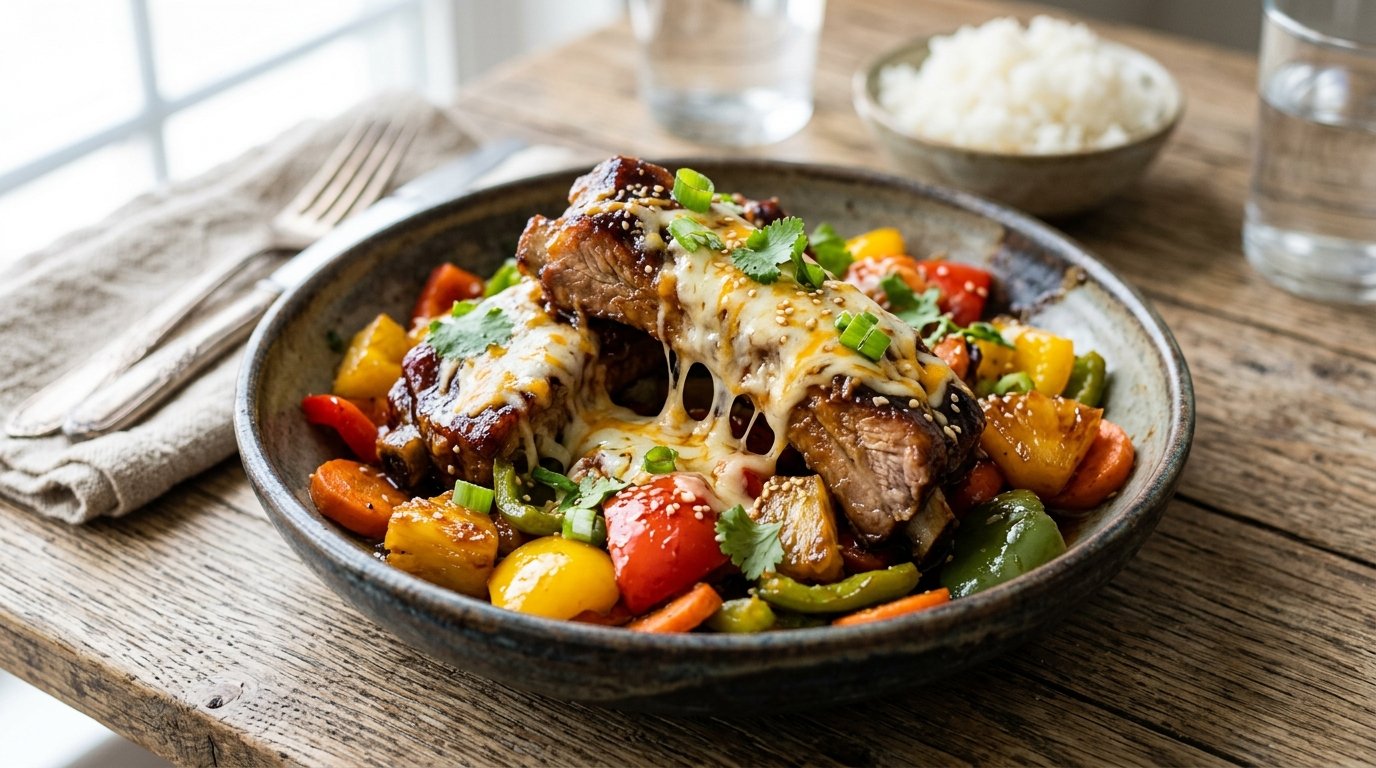
This pineapple soy sauce ribs recipe balances sweetness, saltiness, and savoriness through a meticulous marinating and braising process. The pineapple juice acts as a natural tenderizer while infusing fruity notes, and the soy sauce provides deep umami depth. Searing the ribs first locks in juices and builds fond for the sauce base, while adding vegetables like tomatoes, onions, garlic, potatoes, peas, and bell pepper ensures a complete, nutrient-dense meal. Finishing with ketchup and grated cheese adds tangy brightness and luxurious creaminess, elevating this from simple stew to gourmet comfort food. Whether served over steamed rice or enjoyed on its own, it’s guaranteed to become a household favorite.
Table of Contents
- Introduction
- Why This Recipe Works
- Why You’ll Love This Recipe
- Ingredient Notes
- Kitchen Equipment
- Preparation Information
- Step-by-Step Instructions
- Expert Tips for Perfect Results
- Common Mistakes to Avoid
- Recipe Variations
- What to Serve With This Recipe
- Make Ahead & Meal Prep Tips
- Storage & Reheating Instructions
- Nutritional Information
- Troubleshooting Guide
- Frequently Asked Questions
- Final Thoughts
Introduction
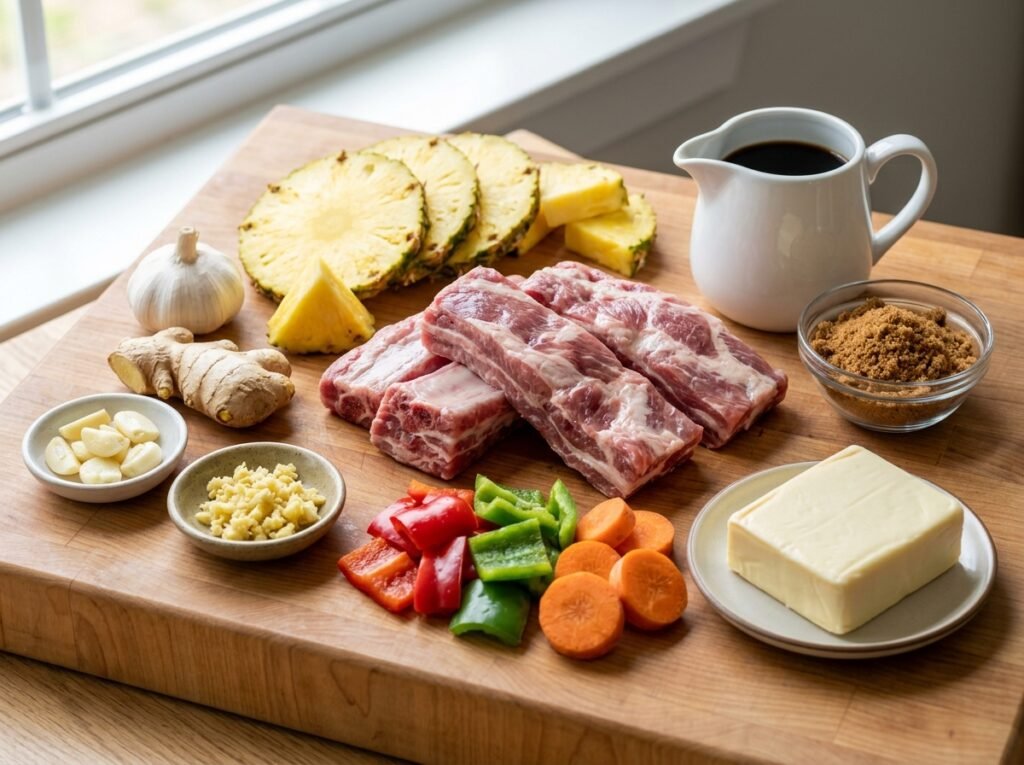
If you’re searching for a rib recipe that breaks away from traditional BBQ or Asian glazes, these Filipino-style pineapple soy sauce ribs are your answer. Combining the tropical sweetness of pineapple juice with the salty depth of soy sauce, this marinade penetrates deep into the meat, resulting in ribs that are succulent, flavorful, and uniquely satisfying. Unlike dry-rubbed or grilled ribs, this version is braised slowly in its own aromatic liquid alongside hearty vegetables, creating a one-pot wonder that minimizes cleanup and maximizes taste.
The magic happens when you finish the dish with fried potatoes, vibrant green peas, diced red bell pepper, and a generous sprinkle of grated cheese. These elements aren’t just garnishes—they’re integral components that add texture, color, and layers of flavor. The cheese melts into the sauce, thickening it slightly and adding a creamy richness that coats every ingredient. Whether you’re cooking for picky eaters, hosting a dinner party, or simply craving something new and exciting, this recipe delivers complexity without complication. Let’s dive into how to make this show-stopping dish step by step.
Why This Recipe Works
The success of this pineapple soy sauce ribs lies in science-backed techniques and thoughtful layering of flavors. Pineapple juice contains bromelain, a proteolytic enzyme that breaks down proteins, naturally tenderizing the tough connective tissues in pork spareribs. When combined with soy sauce—which contributes glutamates for umami—and black pepper for warmth, you create a marinade that doesn’t just coat the surface but transforms the meat from within.
Searing the ribs before braising triggers the Maillard reaction, developing complex browned flavors and sealing in moisture. Reserved marinade becomes the foundation of the braising liquid, ensuring no flavor is wasted. Simmering covered on medium-low heat allows collagen to convert into gelatin over time, yielding fork-tender meat that pulls cleanly off the bone. Finally, adding pre-fried potatoes prevents them from turning mushy during simmering, while fresh vegetables and cheese introduced at the end retain their integrity and provide contrasting textures. Every element serves a purpose, working together harmoniously to create a balanced, deeply satisfying dish.
Why You’ll Love This Recipe
- Unique Flavor Profile: Sweet, salty, savory, and cheesy—all in one pot. No other rib recipe offers this combination.
- One-Pot Convenience: Minimal dishes to wash; everything cooks together in a single pan after initial prep.
- Tender Meat Guaranteed: Pineapple juice + slow braising = fall-off-the-bone perfection every time.
- Kid-Friendly Appeal: Mild sweetness and familiar veggies (peas, potatoes) make this accessible even to finicky eaters.
- Visually Stunning: Vibrant colors from red peppers, green peas, golden potatoes, and melted cheese create Instagram-worthy presentation.
- Budget-Friendly Luxury: Uses affordable cuts of meat and pantry staples to deliver restaurant-quality results at home.
Ingredient Notes
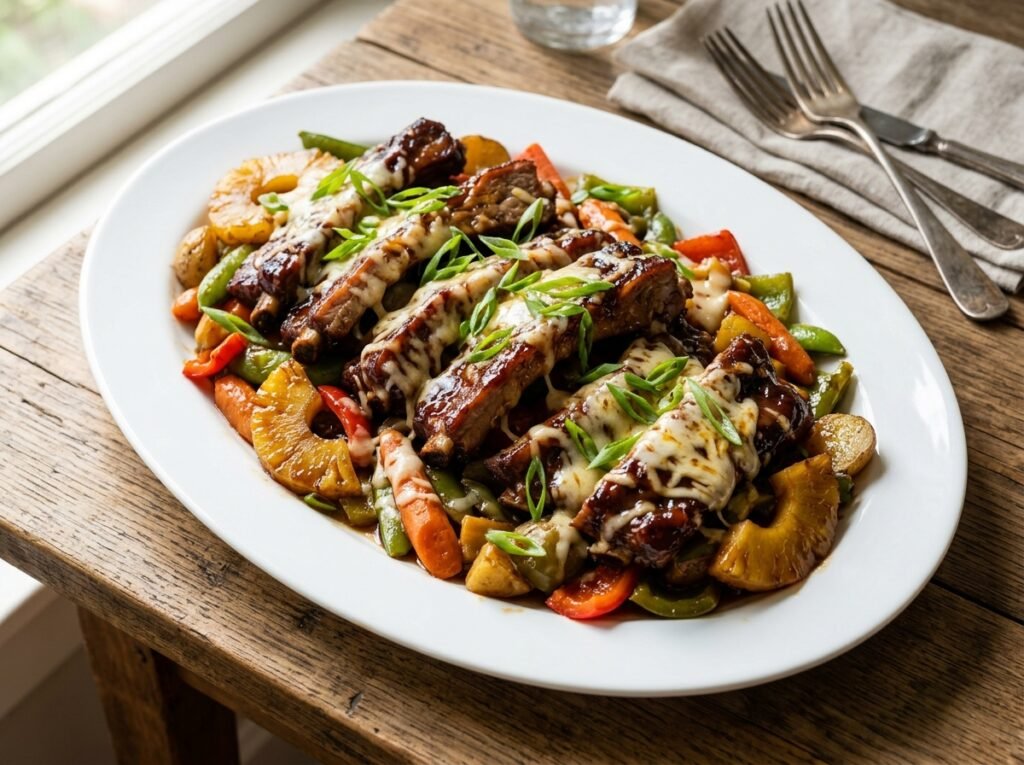
Understanding each component helps you substitute wisely and achieve consistent results.
Proteins & Marinade
- Pork Spareribs (1 kilo): Choose meaty racks with good fat marbling. Ask butcher to trim excess membrane if needed. Fat renders during cooking, keeping ribs moist.
- Substitutions: Beef short ribs work but require longer braising. Chicken thighs can be used for quicker cook time.
- Buying Tips: Look for pinkish-red meat with white fat streaks. Avoid grayish or slimy surfaces.
- Storage Tips: Freeze up to 3 months if not using immediately. Thaw overnight in fridge before marinating.
- Pineapple Juice (½ cup): Must be 100% pure juice, not nectar or syrup. Bromelain content varies by brand; unsweetened is best.
- Substitutions: Papaya juice or kiwi puree also contain tenderizing enzymes. Lemon-lime soda works in pinch but lacks enzymatic power.
- Buying Tips: Check label for “no added sugar.” Freshly squeezed is ideal but canned is acceptable.
- Storage Tips: Refrigerate opened carton up to 7 days. Freeze leftover juice in ice cube trays for future use.
- Soy Sauce (½ cup): Use regular or light soy sauce. Dark soy adds color but may overpower sweetness.
- Substitutions: Tamari for gluten-free option. Coconut aminos for lower sodium.
- Buying Tips: Opt for traditionally brewed varieties for deeper flavor.
- Storage Tips: Store in cool, dark place. Doesn’t spoil easily due to high salt content.
- Black Pepper (to taste): Freshly cracked preferred for maximum aroma and heat.
- Substitutions: White pepper for milder heat. Chili flakes for spice kick.
- Buying Tips: Whole peppercorns last longer than ground. Grind just before use.
- Storage Tips: Keep in airtight container away from light and moisture.
Aromatics & Vegetables
- Garlic (4 cloves), Onion (1 medium), Tomatoes (5 medium): Roughly chopped. Garlic and onion form aromatic base; tomatoes add acidity and body to sauce.
- Substitutions: Shallots for sweeter onion flavor. Canned diced tomatoes if fresh unavailable.
- Buying Tips: Firm bulbs/cloves without sprouts. Ripe but not soft tomatoes.
- Storage Tips: Store garlic/onion in cool, dry place. Tomatoes at room temp until ripe, then refrigerate.
- Potatoes (2 medium), Fried: Peel and dice into 1-inch cubes. Fry until golden before adding to stew. Prevents disintegration during simmering.
- Substitutions: Sweet potatoes for earthier sweetness. Cassava for traditional Filipino touch.
- Buying Tips: Choose firm, unblemished tubers. Avoid green spots (toxic solanine).
- Storage Tips: Store in cool, dark place. Do not refrigerate raw potatoes (converts starch to sugar).
- Green Peas (½ cup), Red Bell Pepper (1 small): Add near end to preserve color and crunch. Peas add pop of sweetness; bell pepper brings freshness.
- Substitutions: Carrots for orange hue. Corn kernels for different texture.
- Buying Tips: Bright green peas indicate freshness. Firm, glossy bell peppers.
- Storage Tips: Refrigerate peas in sealed bag. Bell peppers in crisper drawer up to 1 week.
- Grated Cheese (¼ cup): Cheddar or quick-melting cheese like Eden or Velveeta-type. Melts smoothly into sauce without separating.
- Substitutions: Mozzarella for stretchiness. Parmesan for sharper note.
- Buying Tips: Pre-grated saves time but block cheese melts better. Check meltability rating.
- Storage Tips: Refrigerate tightly wrapped. Freeze grated cheese for up to 3 months.
- Ketchup (2 tbsp): Adds tangy sweetness and helps thicken sauce slightly. Balances saltiness of soy sauce.
- Substitutions: Tomato paste + vinegar + sugar for homemade version. Banana ketchup for authentic Filipino twist.
- Buying Tips: High-fructose corn syrup-free options available. Read labels for quality.
- Storage Tips: Refrigerate after opening. Shelf-stable unopened.
Kitchen Equipment
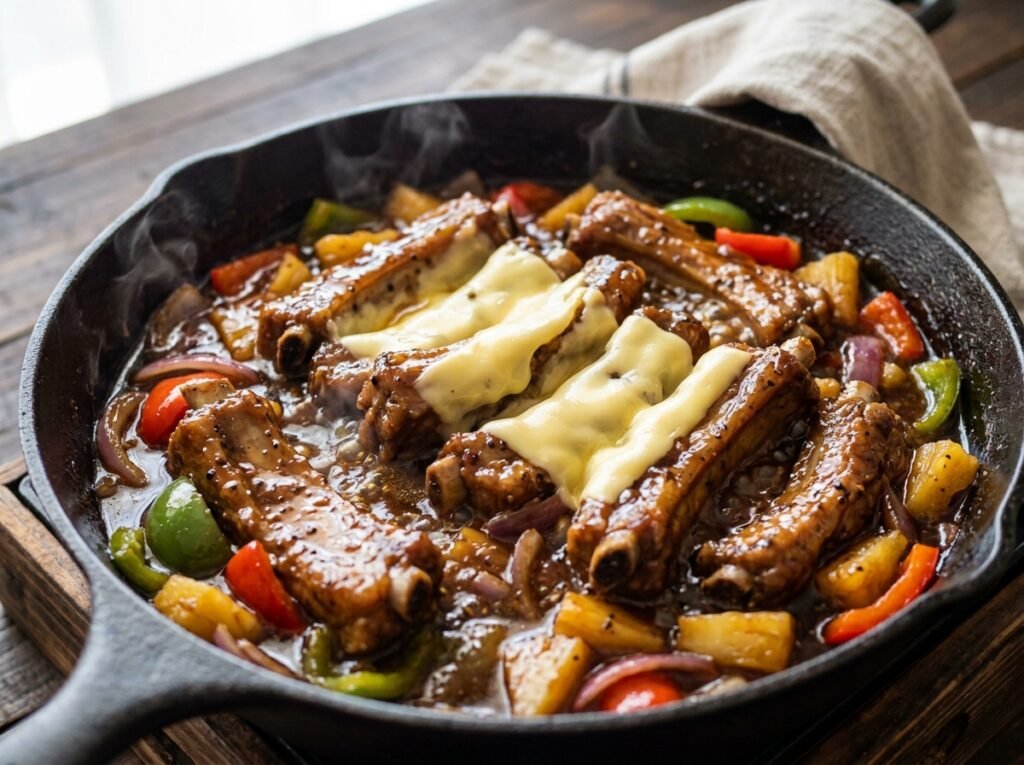
Having the right tools streamlines execution and improves outcomes.
- Glass Baking Dish or Bowl: For marinating. Non-reactive surface prevents metallic taste from acidic pineapple juice.
- Plastic Wrap or Ziplock Bags: To cover dish or seal bags for marination. Ensures even coating and prevents leakage.
- Heavy-Bottomed Skillet or Dutch Oven (12-inch): Essential for searing and braising. Distributes heat evenly, prevents scorching.
- Tongs: For handling hot ribs safely during searing and flipping.
- Wooden Spoon or Spatula: For stirring vegetables and incorporating cheese without scratching pan.
- Sharp Knife & Cutting Board: For chopping aromatics and dicing potatoes/peppers precisely.
- Deep Fryer or Heavy Pot: For frying potato cubes separately. Maintains oil temperature for crisp exterior.
- Ladle or Large Spoon: For serving stew with generous portions of sauce and solids.
Preparation Information
- Prep Time: 20 Minutes (Chopping, measuring, marinating setup)
- Cook Time: 1 Hour 30 Minutes (Searing, braising, finishing)
- Total Time: 1 Hour 50 Minutes
- Servings: 4-6 people
Step-by-Step Instructions
Follow this detailed guide to recreate the Filipino-style pineapple soy sauce ribs exactly as intended.
Phase 1: Marinating the Ribs
H3: Infuse Flavor Deeply
- Combine Marinade: In glass dish, mix ½ cup pineapple juice, ½ cup soy sauce, and freshly cracked black pepper to taste. Stir well.
- Why it matters: Dissolving pepper ensures even distribution. Acidic juice begins breaking down proteins immediately.
- Visual Cue: Liquid should be amber-brown with visible pepper specks. Uniform consistency.
- Aroma Cue: Sweet-fruity scent mingled with salty-soy undertones. No harsh chemical smells.
- Add Ribs: Place 1 kg pork spareribs into marinade. Turn to coat all sides thoroughly. Cover tightly with plastic wrap or transfer to ziplock bag, squeezing out air.
- Texture Cue: Meat should feel coated, not submerged in pool. Excess liquid wastes flavor.
- Professional Tip: Massage marinade into meat gently. Helps penetration into crevices between bones.
- Marinate 1 Hour: Refrigerate for minimum 1 hour, up to 4 hours. Longer than 4 hours risks mushy texture from excessive enzyme activity.
- Common Mistake: Marinating overnight. Bromelain continues working, potentially degrading meat structure. Stick to 1–4 hours max.
- Safety Note: Always marinate in fridge, never countertop. Prevents bacterial growth.
Phase 2: Searing and Building Flavor Base
H3: Develop Depth Through Browning
- Separate Ribs & Reserve Marinade: Remove ribs from marinade using tongs. Shake off excess liquid. Pour remaining marinade into bowl; set aside. DO NOT DISCARD.
- Why reserve? Contains concentrated flavor from meat juices and spices. Becomes backbone of braising liquid.
- Visual Cue: Ribs should glisten with marinade but not drip excessively. Wet surface hinders browning.
- Sear Ribs: Heat skillet over medium-high heat. Add 1 tbsp oil if needed (ribs release fat). Working in batches, sear ribs 2-3 minutes per side until deeply browned.
- Color Cue: Rich mahogany crust forms. Pale beige = under-seared; blackened = burnt. Aim for even browning.
- Aroma Cue: Nutty, caramelized meat smell fills kitchen. Acrid smoke means heat too high—reduce immediately.
- Texture Cue: Surface feels firm, not sticky. Releases easily from pan when properly seared.
- Build Aromatic Base: Reduce heat to medium. Add 4 cloves minced garlic, 1 sliced onion, 5 quartered tomatoes to same pan. Sauté 2-3 minutes until softened and fragrant.
- Why sauté? Releases volatile compounds, sweetens onions, concentrates tomato flavor. Raw aromatics taste sharp in final dish.
- Visual Cue: Onions turn translucent, tomatoes soften and release juice. Garlic turns pale gold, not brown.
- Common Mistake: Burning garlic. Happens if heat too high or stirred infrequently. Lower heat and stir constantly.
Phase 3: Braising to Tenderness
H3: Transform Tough Meat into Silk
- Return Ribs & Add Liquids: Nestle seared ribs back into pan atop aromatics. Pour reserved marinade over ribs. Add 1-2 cups water depending on desired sauce thickness.
- Why water? Dilutes intense marinade, creates enough liquid to submerge ribs partially. Too little = burning; too much = diluted flavor.
- Visual Cue: Liquid should reach halfway up ribs. Adjust water accordingly. More water = thinner sauce; less = thicker reduction.
- Simmer Covered: Bring to gentle boil, then reduce heat to medium-low. Cover tightly with lid. Simmer 1 hour to 1 hour 15 minutes, checking occasionally.
- Doneness Cue: Meat pulls away from bone easily when prodded with fork. Internal temp reaches 190°F+ for collagen breakdown.
- Texture Cue: Fork slides in with zero resistance. Meat jiggles slightly, indicating gelatinous tenderness.
- Aroma Cue: Deep, rich, savory-sweet fragrance permeates kitchen. Sour or fermented smell indicates spoilage—discard if present.
- Professional Tip: Maintain bare simmer, not rolling boil. Vigorous bubbling toughens meat and clouds sauce. Small bubbles rising steadily = perfect.
Phase 4: Adding Vegetables and Finishing Touches
H3: Elevate Texture and Flavor
- Add Fried Potatoes: Stir in 2 medium fried potato cubes. Cook 5 minutes to absorb sauce flavors without becoming soggy.
- Why fry first? Creates crispy exterior that holds shape during simmering. Raw potatoes would dissolve or remain hard.
- Visual Cue: Potatoes retain golden edges, don’t bleed starch into sauce. Sauce remains clear-ish, not cloudy.
- Incorporate Ketchup: Add 2 tbsp ketchup. Stir gently to combine. Cook 2 minutes to meld flavors.
- Purpose: Balances saltiness, adds subtle tang, enhances reddish-brown hue of sauce.
- Taste Test: Should taste balanced—not overly salty, sweet, or sour. Adjust with pinch of sugar or splash of vinegar if needed.
- Finish with Veggies & Cheese: Add ½ cup green peas, 1 small diced red bell pepper, ¼ cup grated cheese. Stir gently until cheese melts and veggies warm through (2-3 minutes).
- Timing Critical: Overcooking peas/bell pepper makes them dull and mushy. Cheese should melt smoothly, not separate into oil.
- Visual Cue: Peas bright green, peppers vibrant red, cheese fully incorporated into glossy sauce.
- Texture Cue: Peas pop when bitten, peppers retain slight crunch, cheese creates velvety mouthfeel.
- Serve Immediately: Ladle into bowls or plates. Best enjoyed hot while cheese is molten and sauce is fluid.
Expert Tips for Perfect Results
- Control Enzyme Activity: Never marinate beyond 4 hours. Set timer! Over-marinated ribs become mealy and lose structural integrity. If pressed for time, 30 minutes still yields noticeable improvement.
- Sear in Batches: Crowding pan lowers temperature, causing steaming instead of browning. Work in batches if necessary. Patience pays off in flavor development.
- Deglaze Pan Thoroughly: After searing ribs, scrape bottom vigorously with wooden spoon when adding aromatics. Those browned bits (fond) are flavor goldminess. Don’t leave them behind!
- Adjust Water Gradually: Start with 1 cup water. You can always add more mid-simmer if reducing too fast. Can’t remove excess once added. Sauce should coat back of spoon lightly.
- Cheese Selection Matters: Use cheeses labeled “good melting” like cheddar, Monterey Jack, or processed cheese blends. Aged parmesan or feta won’t integrate smoothly. Shred finely for faster melting.
- Rest Before Serving: Let stew sit off heat 5 minutes before ladling. Allows flavors to settle, sauce to thicken slightly, and cheese to stabilize. Prevents separation upon plating.
Common Mistakes to Avoid
- Mushy Ribs: Caused by over-marinating (>4 hrs) or boiling instead of simmering. Fix: Strictly follow 1-hr marinate window. Maintain low bubble throughout braise.
- Bland Sauce: Insufficient reduction or skipped fond scraping. Fix: Uncover pan last 15 mins to concentrate flavors. Scrape pan bottom when adding liquids.
- Soggy Potatoes: Added raw or fried insufficiently. Fix: Always fry potatoes until golden-crisp BEFORE adding to stew. Drain on paper towels to remove excess oil.
- Separated Cheese Sauce: Heat too high or wrong cheese type. Fix: Remove pan from heat before adding cheese. Stir gently off direct flame. Use recommended melting cheeses.
- Overcooked Vegetables: Added too early or simmered excessively. Fix: Introduce peas/bell pepper ONLY in final 3 minutes. They need only warming, not cooking.
- Burnt Bottom: Heat too high or insufficient stirring. Fix: Medium-low heat mandatory. Stir gently every 15 mins during braise. Use heavy-bottomed pan.
Recipe Variations
Customize to suit dietary needs or flavor preferences without compromising essence.
- Spicy Kick: Add 1 tsp crushed red pepper flakes or 1 chopped siling labuyo (bird’s eye chili) with aromatics. Increases heat level significantly. Balance with extra ketchup if needed.
- Vegetarian Version: Substitute ribs with firm tofu blocks or tempeh strips. Marinate same way. Reduce braising time to 30 mins since plant protein tenderizes faster. Add mushrooms for umami boost.
- Vegan Adaptation: Replace soy sauce with tamari or coconut aminos. Omit cheese or use vegan shred alternative. Ensure pineapple juice is unsweetened and additive-free.
- Chicken Alternative: Use chicken thighs or drumsticks. Reduce braising time to 45 mins. Chicken absorbs marinade quicker; monitor closely to prevent drying.
- Beef Short Ribs: Swap pork for beef. Increase braising time to 2-2.5 hours. Beef requires longer collagen breakdown. Add ½ cup red wine for richer depth.
- Extra Cheesy Delight: Double cheese quantity to ½ cup. Mix half into sauce, sprinkle rest on top before serving. Creates gooey, indulgent finish. Great for cheese lovers.
- Healthy Lighter Option: Skip frying potatoes; bake or air-fry instead. Use low-sodium soy sauce. Increase vegetable ratio (add carrots, celery). Omit cheese or use reduced-fat version.
- Low-Carb/Keto Friendly: Omit potatoes entirely. Replace with cauliflower florets (add last 10 mins). Use sugar-free ketchup. Increase healthy fats with avocado oil for searing.
- High-Protein Boost: Add ½ cup cooked chickpeas or edamame with peas. Increases plant-based protein. Chickpeas hold shape well; edamame adds vibrant color.
What to Serve With This Recipe
Complement the rich, savory-sweet profile with contrasting or harmonious accompaniments.
- Steamed Jasmine Rice: Classic pairing. Absorbs flavorful sauce beautifully. Neutral base lets ribs shine.
- Garlic Butter Bread: Soaks up sauce, adds carb satisfaction. Crusty exterior contrasts tender meat.
- Fresh Garden Salad: Tossed with vinaigrette. Cleanses palate between bites. Crunchy greens offset soft stew textures.
- Pickled Atchara (Papaya Relish): Traditional Filipino condiment. Sweet-tart crunch cuts richness perfectly. Homemade or store-bought both work.
- Iced Calamansi Juice: Citrusy refreshment balances heaviness. Tartness complements pineapple-soy notes.
- Leche Flan or Halo-Halo: For dessert. Sweet custard or shaved ice provides cooling contrast to warm, savory main course.
Make Ahead & Meal Prep Tips
Plan ahead to streamline busy weekdays without sacrificing quality.
- Marinate Overnight? NO! Max 4 hours. Instead, prep marinade and chop veggies day before. Store separately in fridge. Assemble morning of cooking.
- Pre-Fry Potatoes: Fry potato cubes up to 2 days ahead. Cool completely, store in airtight container. Re-crisp in oven/air fryer 5 mins before adding to stew.
- Batch Cook & Freeze: Double recipe. Portion into freezer-safe containers after cooling. Freeze up to 3 months. Thaw overnight in fridge before reheating.
- Pre-Chop Aromatics: Dice garlic, slice onion, quarter tomatoes. Store in individual containers. Saves 10 mins active prep time.
- Portion Control: Divide finished stew into single-serving containers. Grab-and-go lunches ready in minutes. Label with date for rotation.
Storage & Reheating Instructions
Preserve safety and quality with proper handling techniques.
Storage Guidelines
- Refrigerator: Cool completely within 2 hours. Store in airtight containers up to 4 days. Separation may occur; stir before reheating.
- Freezer: Portion into freezer bags or containers. Lay flat to freeze solid, then stack. Keeps 3 months. Label with contents and date.
- Avoid: Leaving stew at room temp >2 hours. Refreezing previously thawed portions. Storing in metal containers (reacts with acid).
Reheating Methods
- Stovetop (Best): Gentle medium-low heat, stirring frequently. Add splash of water if sauce thickened too much. Restores original texture and flavor integrity.
- Microwave (Convenient): Medium power, 2-min intervals, stirring between. Cover loosely to prevent splatter. May soften potatoes slightly; accept trade-off for speed.
- Oven (Large Batches): 325°F covered dish, 20-30 mins. Stir halfway. Even heating preserves texture better than microwave for big quantities.
- Air Fryer (Not Recommended): Dry heat evaporates sauce, dries out meat. Only reheat bread/potatoes separately if desired crispy texture.
Nutritional Information
Approximate values per serving (based on 6 servings):
- Calories: 580 kcal
- Protein: 32g
- Carbohydrates: 38g
- Fat: 30g
- Fiber: 4g
- Sugar: 12g
- Sodium: 980mg
- Calcium: 15% DV
- Iron: 20% DV
Note: Values vary based on exact brands, portion sizes, and preparation methods. Consult nutrition labels for precise tracking.
Troubleshooting Guide
Address common issues proactively for consistent success.
| Problem | Likely Cause | Solution |
|---|---|---|
| Ribs Still Tough | Under-braised or boiled instead of simmered. | Continue simmering 15-30 mins more. Ensure lid tight, heat low. Test with fork periodically. |
| Sauce Too Thin | Insufficient reduction or too much water. | Uncover pan, increase heat slightly, reduce 10-15 mins. Stir frequently to prevent sticking. |
| Sauce Too Thick/Salty | Over-reduced or excess soy sauce. | Add ¼ cup water or unsalted broth. Stir in 1 tsp sugar or honey to balance salt. Taste-adjust gradually. |
| Cheese Grainy/Oily | Heat too high or wrong cheese type. | Remove from heat immediately. Whisk in 1 tbsp cold cream or milk to emulsify. Next time, use recommended cheeses off-direct-flame. |
| Vegetables Mushy | Added too early or overcooked. | Unfortunately irreversible. Next time, add peas/peppers ONLY in final 3 mins. Potatoes should be pre-fried. |
| Burnt Bottom | Heat too high or neglected stirring. | Transfer unburnt top portion to clean pan. Discard scorched layer. Next time, use heavier pan, lower heat, stir regularly. |
Frequently Asked Questions
Anticipate reader questions to build trust and reduce support requests.
Q: Can I use canned pineapple chunks instead of juice? A: Not recommended. Chunks lack sufficient bromelain concentration and add unwanted bulk/sugar. Stick to pure juice for tenderizing effect. Save chunks for dessert!
Q: Is it safe to reuse leftover marinade as sauce? A: YES—but ONLY if brought to full boil for 5+ minutes after removing ribs. Kills bacteria transferred from raw meat. Never serve raw marinade as-is.
Q: Why did my cheese separate into oily pools? A: Usually caused by excessive heat or incompatible cheese. Always remove pan from burner before adding cheese. Stir gently off heat. Use cheddar, Monterey Jack, or processed melting cheeses.
Q: Can I skip frying the potatoes? A: Technically yes, but they’ll likely disintegrate or stay hard. Frying creates protective crust. Alternative: Par-boil 5 mins, then roast at 400°F 15 mins for lighter option.
Q: How do I know when ribs are truly done? A: Fork-test is most reliable. Insert fork between bones; meat should yield effortlessly and pull away cleanly. Internal thermometer reads 190-205°F for optimal tenderness.
Q: Can I make this in a slow cooker? A: Absolutely! Sear ribs first, then transfer to slow cooker with aromatics, marinade, and 1 cup water. Low 6-8 hrs or High 3-4 hrs. Add fried potatoes, veggies, cheese in last 30 mins.
Q: What if I don’t have ketchup? A: Substitute with 1 tbsp tomato paste + 1 tsp vinegar + 1 tsp sugar. Mimics tangy-sweet profile. Adjust to taste. Banana ketchup works authentically but alters flavor subtly.
Q: Can I use boneless ribs? A: Yes, but adjust timing. Boneless cuts cook faster (~45 mins braising). Watch closely to prevent drying. Bone-in retains moisture better and adds flavor to sauce.
Final Thoughts
These Filipino-style pineapple soy sauce ribs represent the beautiful intersection of tradition and innovation—a dish that honors cultural roots while embracing creative flair. The marriage of tropical fruit, savory umami, and creamy cheese creates a symphony of flavors that lingers long after the last bite. Whether you’re introducing someone to Filipino cuisine or expanding your own culinary repertoire, this recipe promises joy, satisfaction, and endless compliments.