Quick Recipe Summary
| Feature | Details |
|---|---|
| Prep Time | 10 Minutes |
| Cook Time | 20 Minutes |
| Total Time | 30 Minutes |
| Servings | 2-3 |
| Cuisine | Korean Fusion / Street Food |
| Course | Main Course / Snack |
| Difficulty | Easy |
| Calories | ~650 kcal per serving |
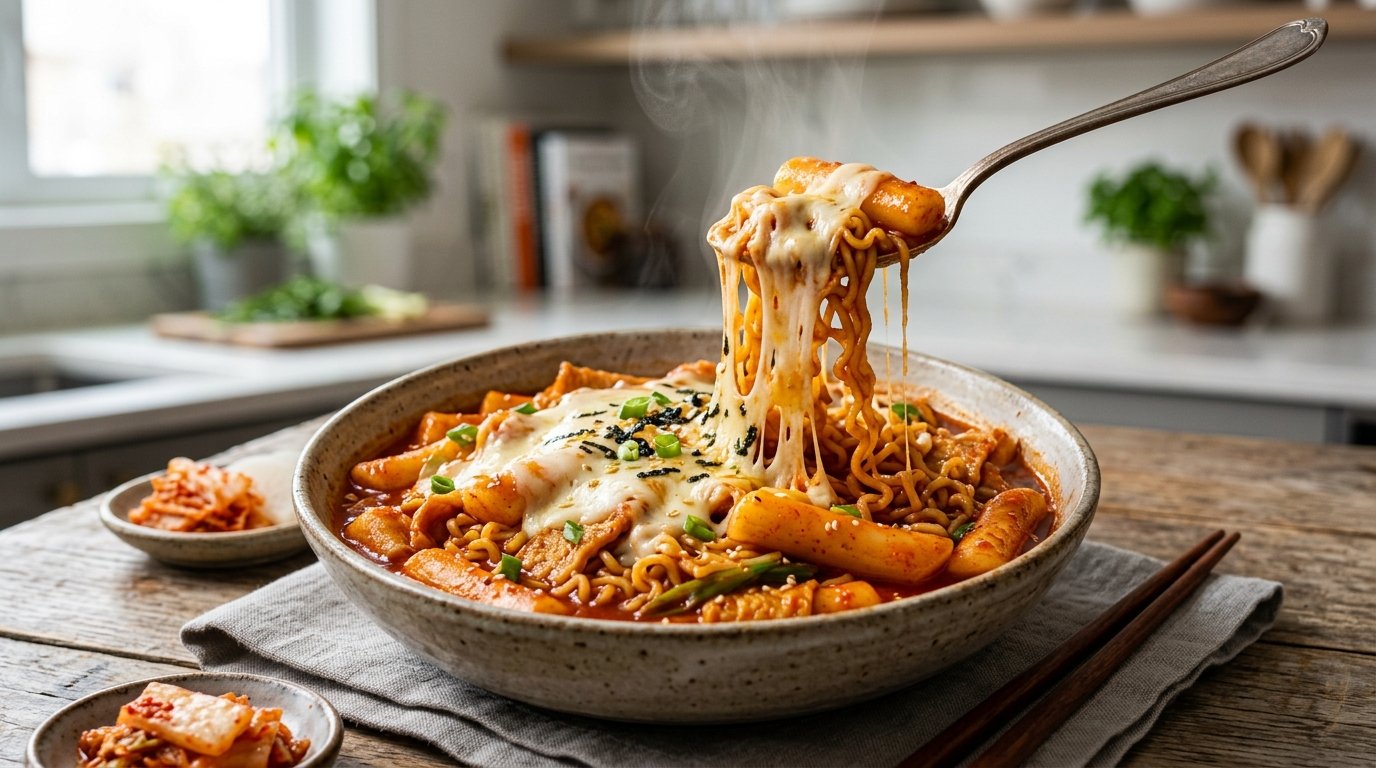
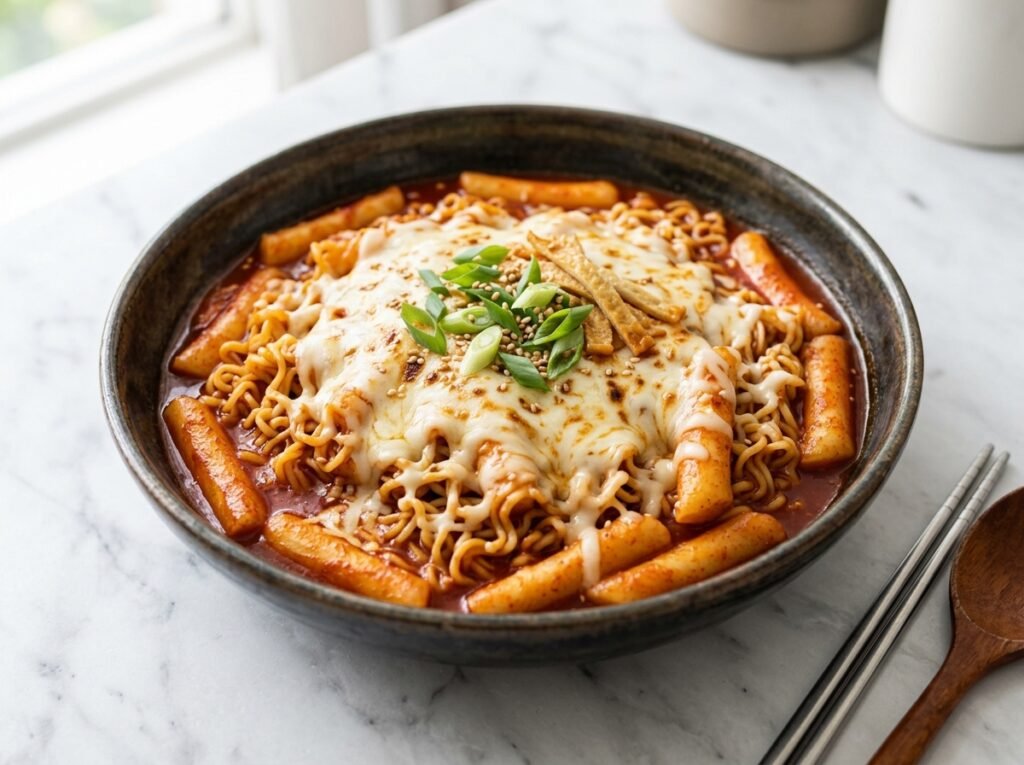
This cheesy ramyeon tteokbokki relies on a balanced sauce base of gochujang, soy sauce, sugar, and garlic to create the signature sweet-spicy glaze that coats every ingredient. The addition of ramen noodles adds a hearty, slurpable element that soaks up the rich broth, while the final layer of shredded mozzarella creates an irresistible cheese pull that defines modern Korean comfort food. Cooking everything together in one pan ensures the flavors meld perfectly, making cleanup a breeze and maximizing flavor absorption. It is a customizable canvas where heat levels, cheese amounts, and noodle types can be adjusted to suit any palate, ensuring this dish remains a versatile favorite for years to come.
Table of Contents
- Introduction
- Why This Recipe Works
- Why You’ll Love This Recipe
- Ingredient Notes
- Kitchen Equipment
- Preparation Information
- Step-by-Step Instructions
- Expert Tips for Authentic Texture
- Common Mistakes to Avoid
- Recipe Variations
- What to Serve With This Recipe
- Make Ahead & Meal Prep Tips
- Storage & Reheating Instructions
- Nutritional Information
- Troubleshooting Guide
- Frequently Asked Questions
- Final Thoughts
Introduction
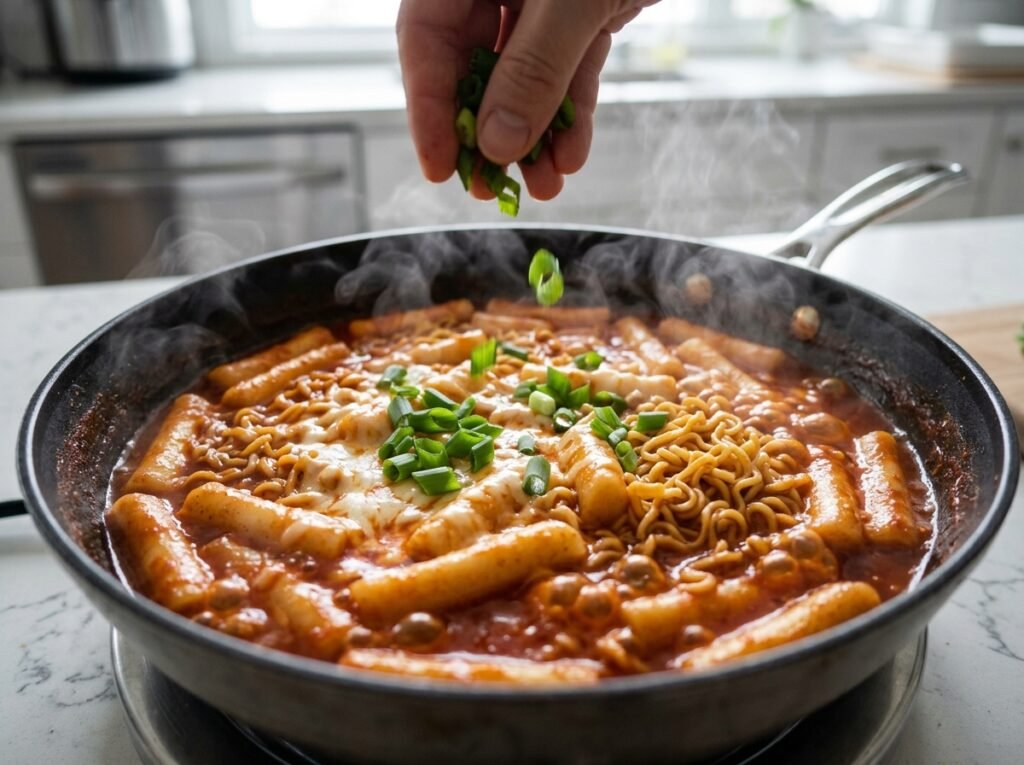
There is a specific kind of magic that happens when starch meets spice and dairy in a hot pan. This cheesy ramyeon tteokbokki captures that alchemy perfectly, offering a textural symphony that has captivated food lovers worldwide. Originating from the creative evolution of traditional tteokbokki (spicy rice cakes), this version incorporates ramyeon (Korean instant noodles) and cheese to create a heavier, more satisfying meal that transcends its street food roots.
The appeal lies not just in the flavor, but in the experience. Watching the sauce bubble and thicken, seeing the noodles soften and absorb the crimson broth, and finally witnessing the cheese melt into a gooey crown—it is culinary theater at its finest. For home cooks, this recipe is a gateway into Korean cuisine that requires no specialized equipment or hard-to-find techniques. With just a few pantry staples and some fresh aromatics, you can recreate a dish that feels both nostalgic and excitingly new. Let’s dive into how to master this cheesy, spicy masterpiece.
Why This Recipe Works
The success of cheesy ramyeon tteokbokki hinges on the science of starch gelatinization and emulsion. Rice cakes (garae-tteok) are made from short-grain rice flour, which gives them their distinctive dense, chewy texture. When simmered in liquid, the outer layer gelatinizes, creating a soft exterior while maintaining a springy core. This same starchy surface acts as a sponge, absorbing the seasoned broth far better than wheat pasta would.
Simultaneously, the ramen noodles provide a contrasting texture—softer, wavier, and more porous. As they cook in the reducing sauce, they release additional starch, which naturally thickens the broth into a glossy glaze rather than a watery soup. The addition of cheese at the end introduces fat and protein, which coats the tongue and moderates the capsaicin heat from the chili flakes and gochujang. This balance of sweet, salty, spicy, and creamy prevents palate fatigue, allowing you to enjoy every bite without overwhelming your senses. The green onions added early infuse the oil and broth with aromatic depth, bridging the gap between the sharp spices and mild dairy.
Why You’ll Love This Recipe
- One-Pan Simplicity: Minimal cleanup and maximum flavor integration make this perfect for weeknights or lazy weekends.
- Customizable Heat: Control the spice level by adjusting red pepper flakes and gochujang quantity to suit your tolerance.
- Texture Heaven: The combination of chewy rice cakes, slurpy noodles, and stretchy cheese satisfies multiple cravings simultaneously.
- Budget-Friendly: Uses affordable, accessible ingredients like instant noodles and frozen rice cakes without sacrificing quality.
- Visual Appeal: The vibrant red sauce contrasted with white cheese and green onions makes for stunning food photography and presentation.
- Comfort Food Factor: Warm, carb-heavy, and cheesy—this dish triggers immediate feelings of coziness and satisfaction.
Ingredient Notes
Understanding your ingredients ensures the best possible outcome for your cheesy ramyeon tteokbokki.
The Sauce Foundation
- Gochujang (Korean Chili Paste): The heart of the dish. Provides deep umami, fermented complexity, and moderate heat. Do not substitute with sriracha or generic chili paste; the flavor profile is entirely different.
- Substitutions: If unavailable, mix 2 tbsp tomato paste + 1 tbsp soy sauce + 1 tsp cayenne + ½ tsp sugar. It won’t be identical but works in a pinch.
- Buying Tips: Look for brands with “fermented soybean” as the first ingredient. Avoid versions with excessive corn syrup.
- Storage Tips: Refrigerate after opening. Keeps for months due to high salt/fermentation content.
- Soy Sauce: Adds salinity and dark color. Use regular or light soy sauce, not dark/mushroom soy which can overpower.
- Substitutions: Tamari for gluten-free. Coconut aminos for lower sodium (adjust sweetness accordingly).
- Buying Tips: Traditionally brewed varieties offer superior depth over chemical hydrolyzed versions.
- Storage Tips: Store in cool, dark place. Does not require refrigeration but lasts longer when chilled.
- Sugar: Balances the intense heat and saltiness. White granulated sugar is standard; brown sugar adds molasses notes.
- Substitutions: Honey, maple syrup, or corn syrup. Liquid sweeteners integrate faster but may alter viscosity slightly.
- Buying Tips: Standard white sugar is fine. No need for specialty sugars here.
- Storage Tips: Keep dry and sealed to prevent clumping.
- Red Pepper Flakes (Gochugaru optional): Adds visual speckles and extra heat. Fine Korean chili powder integrates best, but standard crushed red pepper works.
- Substitutions: Cayenne powder (use sparingly, it’s hotter). Paprika for color without heat.
- Buying Tips: Freshness matters. Old flakes lose potency and turn brown. Buy small quantities frequently.
- Storage Tips: Store in airtight container away from light. Freeze for long-term preservation.
- Garlic: Fresh minced garlic provides pungent aroma and savory backbone. Powder lacks the necessary bite.
- Substitutions: Garlic paste (tube) is acceptable. Powder is last resort.
- Buying Tips: Firm bulbs, no sprouts. Pre-minced jarred garlic often tastes metallic.
- Storage Tips: Cool, dark, ventilated place. Do not refrigerate whole bulbs.
The Stars
- Rice Cakes (Garae-tteok): Cylindrical, finger-length rice cakes. Frozen is standard and often fresher than “fresh” refrigerated ones which can be sour.
- Substitutions: Flat oval rice cakes work too. Mochi is NOT a substitute (too sweet/sticky).
- Buying Tips: Check packaging date. Avoid if hardened or discolored. Soak in warm water 10 mins before cooking if very hard.
- Storage Tips: Freeze immediately if not using. Thaw before cooking for even texture.
- Ramyeon Noodles: Korean-style curly instant noodles (e.g., Shin Ramyun, Neoguri). Their alkaline texture holds up better in sauce than Italian pasta.
- Substitutions: Udon noodles (thicker, chewier). Spaghetti (different texture but functional).
- Buying Tips: Discard seasoning packet unless you want extra salt/spice. We are building our own sauce.
- Storage Tips: Pantry stable. Keep dry.
- Mozzarella Cheese: Low-moisture, part-skim shredded mozzarella melts best. Fresh mozzarella balls are too wet and won’t stretch properly.
- Substitutions: Monterey Jack, Provolone, or Cheddar-Jack blend. Avoid pre-shredded bagged cheese (anti-caking agents prevent smooth melt).
- Buying Tips: Block cheese grated yourself yields superior melt and flavor.
- Storage Tips: Refrigerate tightly wrapped. Grate only what you need; freeze remainder.
- Green Onions (Scallions): Add freshness and cut through richness. Use both white and green parts.
- Substitutions: Chives (add at end only). Shallots (milder, sweeter).
- Buying Tips: Crisp, bright green tops. No wilting or yellowing.
- Storage Tips: Wrap in damp paper towel, store in crisper drawer. Lasts 1-2 weeks.
Kitchen Equipment
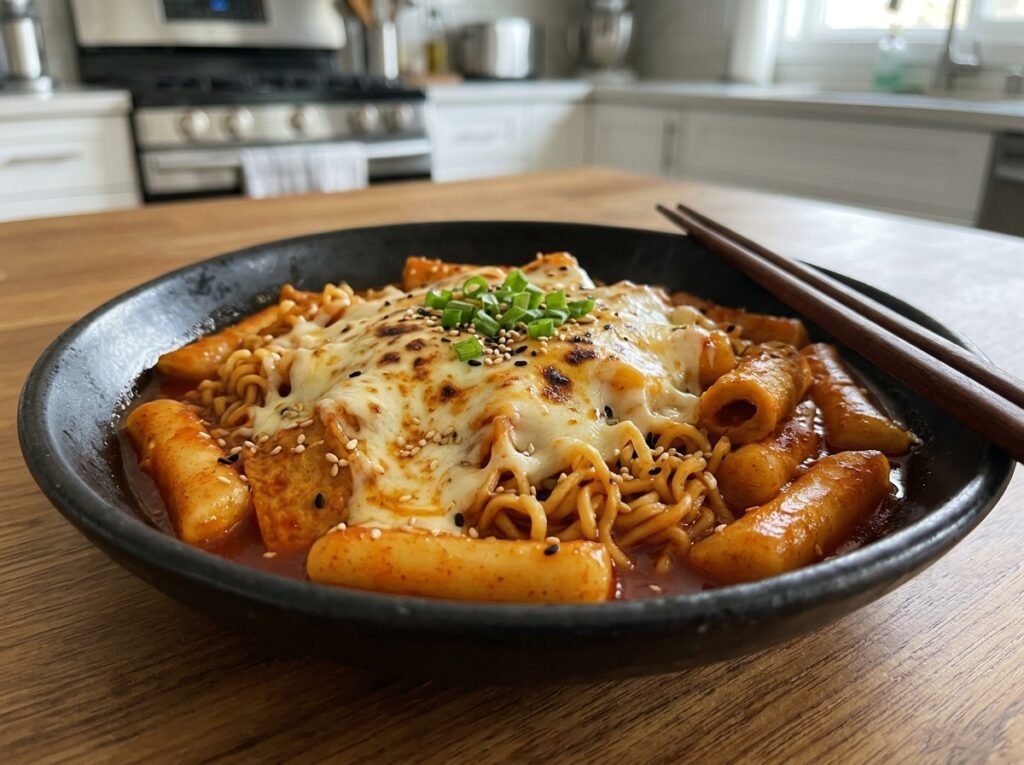
- Large Non-Stick Skillet or Wok (12-inch+): Essential for tossing ingredients without sticking and accommodating the volume of noodles/cakes. Deep sides prevent splatter.
- Wooden Spoon or Silicone Spatula: For stirring sauce and scraping fond. Metal can scratch non-stick surfaces.
- Measuring Spoons/Cups: Precision matters for sauce balance. Eyeballing gochujang can lead to overly salty or bland results.
- Tongs: For lifting noodles and distributing cheese evenly.
- Lid (Optional): Helps steam rice cakes initially if they are very hard, but remove later to reduce sauce.
- Cheese Grater (if using block): Box grater or microplane for fresh shreds.
Preparation Information
- Prep Time: 10 Minutes (Chopping, measuring, soaking rice cakes)
- Cook Time: 20 Minutes (Simmering, reducing, melting)
- Total Time: 30 Minutes
- Servings: 2-3 (Generous portions)
Step-by-Step Instructions
Follow this precise workflow to achieve the perfect cheesy ramyeon tteokbokki.
Phase 1: Building the Flavor Base
H3: Create the Umami Bomb
- Combine Sauce Ingredients: In your cold skillet, add 3 tbsp gochujang, 2 tbsp soy sauce, 2 tbsp sugar, 1 tbsp minced garlic, and 1 tsp red pepper flakes.
- Why cold start? Prevents gochujang from burning or seizing before liquids are added. Allows ingredients to meld as heat rises gradually.
- Visual Cue: Thick, dark red paste with visible garlic bits and pepper flecks. Uniform consistency.
- Add Water: Pour in 2 cups water. Whisk or stir vigorously to dissolve gochujang and sugar completely.
- Texture Cue: Smooth, opaque reddish-brown liquid. No lumps of paste remaining.
- Aroma Cue: Pungent garlic and fermented chili scent begins to bloom as mixture warms.
- Bring to Simmer: Turn heat to medium-high. Bring mixture to a gentle boil.
- Visual Cue: Large bubbles breaking surface steadily. Steam rising visibly.
- Common Mistake: Boiling too violently evaporates water too fast before rice cakes soften. Aim for active simmer, not rolling boil.
Phase 2: Simmering Rice Cakes and Noodles
H3: Cook Starches to Perfection
- Add Rice Cakes & Green Onions: Drop in 300g rice cakes and half the chopped green onions (white/light green parts). Stir to submerge.
- Why now? Rice cakes take longer to soften than noodles. Early addition ensures they cook through without becoming mushy.
- Visual Cue: Cakes sink initially, then float as they hydrate and expand slightly.
- Texture Cue: After 5-7 mins, cakes should yield to pressure but still have resistance. Not hard, not squishy.
- Add Ramen Noodles: Place noodle block into center of pan. Do not separate yet. Let sit 1 minute to soften slightly, then gently separate with tongs.
- Why wait? Prevents noodles from breaking apart prematurely. Softened edges separate cleanly.
- Visual Cue: Noodles absorb red sauce, turning from pale yellow to orange-red. Broth level reduces noticeably.
- Professional Tip: Push noodles down occasionally to ensure even coating. Top layers dry out if left exposed.
- Reduce Sauce: Continue simmering 3-5 minutes until sauce thickens to a glossy, coating consistency.
- Visual Cue: Bubbles become slower, larger, and lazier. Sauce clings to spoon and leaves trail. Noodles look glazed, not soupy.
- Aroma Cue: Sweet-spicy caramelized scent intensifies. Raw garlic smell disappears.
- Doneness Check: Taste a rice cake. Should be chewy throughout, no hard center. Noodle should be tender but springy (al dente).
Phase 3: The Cheesy Finish
H3: Melt for Maximum Pull
- Remove from Heat: Turn off burner. Residual heat is sufficient for melting cheese without separating oils.
- Why off heat? Direct flame causes mozzarella to break, releasing grease and becoming rubbery. Gentle warmth preserves elasticity.
- Add Cheese: Sprinkle 1 cup shredded mozzarella evenly over top. Cover with lid for 1-2 minutes.
- Visual Cue: Cheese transitions from white shreds to translucent, bubbly molten layer. Edges begin to brown slightly.
- Texture Cue: Surface jiggles when pan shaken. Cheese stretches when lifted, not snaps.
- Garnish & Serve: Uncover. Scatter remaining green onion tops (dark green parts) over cheese. Serve immediately in pan or transfer to bowls.
- Why fresh garnish? Adds color contrast and fresh allium bite that cuts through rich cheese. Wilts slightly from residual heat but retains vibrancy.
- Serving Tip: Provide chopsticks and spoons. Cheese pull requires lifting technique; spoon catches drips.
Expert Tips for Authentic Texture
- Rice Cake Hydration: If using frozen rice cakes that are rock-hard, soak in warm tap water for 10-15 minutes before cooking. This reduces simmer time and prevents uneven cooking (soft outside, hard inside). Fresh/refrigerated cakes skip this step.
- Noodle Timing: Add noodles only after rice cakes are 80% done. Overcooked ramen turns mushy and absorbs too much sauce, leaving none for the cakes. Al dente noodles finish cooking in residual heat during cheese melt phase.
- Cheese Quality Matters: Pre-shredded bagged cheese contains cellulose powder to prevent clumping. This powder inhibits melting, resulting in grainy, oily cheese. Always grate your own from a block for silky, stretchy results.
- Sauce Reduction Patience: Do not rush the reduction phase. Watery sauce dilutes flavor and prevents proper coating. If sauce reduces too fast, add splash of water. If too thin, simmer uncovered longer. Glossy sheen = correct viscosity.
- Heat Management: Maintain medium heat during simmer. High heat burns sugar/gochujang at bottom, creating bitter scorched bits. Low heat doesn’t reduce sauce effectively. Adjust as needed based on pan material (cast iron retains heat; thin aluminum loses it fast).
Common Mistakes to Avoid
- Mushy Rice Cakes: Caused by overcooking or using old/dried-out cakes without soaking. Fix: Monitor texture closely. Soak hard cakes beforehand. Remove from heat when chewy, not soft.
- Broken Noodles: Caused by adding dry noodles too early or stirring aggressively. Fix: Soften noodles 1 min before separating. Use tongs, not spoon, to toss gently.
- Greasy/Separated Cheese: Caused by high heat or wrong cheese type. Fix: Remove from heat before adding cheese. Use low-moisture mozzarella. Never boil cheese.
- Bland Sauce: Caused by insufficient reduction or low-quality gochujang. Fix: Reduce until glossy. Taste before adding noodles; adjust seasoning if needed. Use reputable gochujang brand.
- Burnt Bottom: Caused by high heat or lack of stirring. Fix: Medium heat only. Stir frequently during reduction. Scrape bottom when adding noodles to incorporate fond.
- Too Salty: Caused by using ramen seasoning packet + soy sauce + gochujang. Fix: Discard ramen seasoning packet entirely. Our homemade sauce provides ample salt.
Recipe Variations
Customize this cheesy ramyeon tteokbokki to suit dietary needs or flavor preferences.
- Spicy Lover’s Edition: Double red pepper flakes. Add 1 tbsp gochugaru (Korean chili powder). Include sliced jalapeños or bird’s eye chilies with green onions. Warning: Intense heat!
- Vegetarian/Vegan: Omit fish-based gochujang (check label; many contain shrimp/fish). Use vegan gochujang or miso-chili blend. Substitute cheese with vegan mozzarella or omit entirely. Add mushrooms/tofu for protein.
- Protein Boost: Add cooked ground beef, sliced sausage, or boiled eggs during simmer phase. Seafood like shrimp or fish cakes work beautifully. Add in last 3 minutes to avoid overcooking.
- Creamy Rose Version: Stir in ¼ cup heavy cream or milk after removing from heat, before adding cheese. Creates pink-hued, milder sauce popular in modern cafes. Reduces spice intensity significantly.
- Low-Carb/Keto: Replace rice cakes with konjac yarn noodles or zucchini sticks. Use shirataki ramen. Skip sugar; use erythritol. Cheese remains essential for fat content.
- Extra Cheesy Indulgence: Mix mozzarella with cheddar or provolone for deeper flavor. Add cream cheese dollops before melting for tangy richness. Top with fried egg post-melt for runny yolk bonus.
- Sweet Potato Twist: Add cubed sweet potato with rice cakes. Natural sweetness complements spicy sauce. Adds earthy depth and vibrant orange color. Cook until fork-tender before adding noodles.
What to Serve With This Recipe
Balance the rich, spicy-sweet profile with refreshing or contrasting accompaniments.
- Pickled Radish (Danmuji): Classic pairing. Crunchy, sweet-tangy slices cleanse palate between bites. Available jarred at Asian markets.
- Kimchi: Fermented cabbage adds probiotic tang and extra spice. Complements gochujang base perfectly.
- Fried Dumplings (Mandu): Crispy exterior contrasts soft tteokbokki. Dipping in same sauce unifies meal.
- Steamed Rice: Neutral base absorbs leftover sauce. Essential if sauce is particularly spicy or salty.
- Iced Barley Tea (Boricha): Traditional Korean beverage. Nutty, caffeine-free, and refreshing. Cuts richness effectively.
- Soft-Boiled Egg: Jammy yolk adds creaminess and protein. Place atop cheese before serving for luxurious finish.
Make Ahead & Meal Prep Tips
- Sauce Base Prep: Mix gochujang, soy sauce, sugar, garlic, and pepper flakes up to 1 week ahead. Store refrigerated. Flavors meld and deepen. Bring to room temp before cooking.
- Rice Cake Soak: Soak frozen rice cakes night before. Drain and store refrigerated. Reduces morning prep to zero.
- Vegetable Chop: Slice green onions and store in airtight container with damp paper towel. Keeps crisp 3-4 days.
- Portion Control: Divide cheese into individual servings. Prevents waste and ensures consistent melt per portion.
- Batch Cooking Note: Tteokbokki does NOT reheat well. Rice cakes harden upon cooling. Best consumed fresh. If prepping, cook components separately and assemble/reheat gently day-of.
Storage & Reheating Instructions
Storage
- Refrigerator: Store leftovers in airtight container up to 2 days. Rice cakes will harden significantly. Separate cheese if possible to prevent sogginess.
- Freezer: Not recommended. Rice cakes become grainy and crack upon thawing. Cheese separates and becomes oily. Sauce may discolor.
Reheating
- Stovetop (Best Method): Transfer to skillet. Add 2-3 tbsp water. Cover and steam over medium-low heat 5-7 mins, stirring occasionally. Restores moisture and softens rice cakes. Add fresh cheese if desired.
- Microwave (Quick Fix): Place in microwave-safe bowl. Add 1 tbsp water. Cover loosely. Heat 1-min intervals, stirring between. Rice cakes may remain slightly firm. Acceptable compromise for speed.
- Air Fryer/Oven: NOT recommended. Dry heat further dehydrates rice cakes and burns cheese. Only use if reheating plain noodles/rice cakes without sauce.
- Revival Tip: If rice cakes are extremely hard, soak in hot water 5 mins before reheating. Drain well, then proceed with stovetop method.
Nutritional Information
Estimates per serving (based on 3 servings)
- Calories: 650 kcal
- Protein: 18g
- Carbohydrates: 95g
- Fat: 22g
- Fiber: 3g
- Sugar: 18g
- Sodium: 1,200mg
- Calcium: 25% DV
- Iron: 15% DV
Note: Values vary based on specific brands, portion sizes, and cheese amount. Sodium is high due to gochujang/soy sauce; reduce if sensitive.
Troubleshooting Guide
| Problem | Cause | Solution |
|---|---|---|
| Rice Cakes Hard/Crunchy | Undercooked or old/dry cakes. | Simmer 5 more mins covered. Add splash water. Next time, soak frozen cakes beforehand. |
| Sauce Too Watery | Insufficient reduction or too much water. | Uncover, increase heat slightly. Reduce 3-5 mins until glossy. Stir frequently to prevent burning. |
| Sauce Too Thick/Burnt | Over-reduced or heat too high. | Add ¼ cup water immediately. Stir to deglaze burnt bits. Lower heat. Next time, monitor reduction closely. |
| Cheese Greasy/Oily | High heat or wrong cheese type. | Remove from heat. Stir in 1 tbsp cold cream/milk to emulsify. Next time, use low-moisture mozzarella off-heat. |
| Noodles Mushy | Overcooked or added too early. | Unfortunately irreversible. Next time, add noodles later. Cook al dente; residual heat finishes them. |
| Too Spicy | Excess pepper flakes/gochujang. | Add 1 tbsp sugar/honey. Stir in ¼ cup cream/milk. Serve with extra rice or pickled radish to balance. |
Frequently Asked Questions
1. Can I use regular spaghetti instead of ramyeon? Yes, but texture differs. Spaghetti is smoother and less porous, absorbing less sauce. Cook spaghetti separately to al dente, then add to sauce for final 2 mins. Ramyeon’s curly shape and alkaline texture are superior for this dish.
2. Is gochujang very spicy? Moderately. It’s more sweet/umami than fiery. Heat comes primarily from added red pepper flakes. Adjust flakes to control spice. Gochujang itself is manageable for most palates.
3. Can I make this without cheese? Absolutely. Traditional tteokbokki has no cheese. Omit cheese and garnish with sesame seeds/seaweed. Sauce will be shinier and spicier-forward. Cheese is a modern addition, not mandatory.
4. Why did my rice cakes crack? Usually from rapid temperature change or old/dried cakes. Soak frozen cakes in warm water before cooking. Avoid boiling violently; gentle simmer prevents stress fractures. Fresh cakes rarely crack.
5. Can I use instant rice cakes? “Instant” rice cakes are pre-cooked and softer. Reduce simmer time to 3-4 mins max. They absorb sauce faster but can become mushy if overcooked. Monitor texture closely.
6. Is this dish gluten-free? Not inherently. Gochujang often contains wheat. Ramyeon noodles are wheat-based. Use certified GF gochujang and rice noodles/shirataki for GF version. Always check labels.
7. Can I add vegetables like carrots or cabbage? Yes! Add firm veggies (carrots, cabbage) with rice cakes. Soft veggies (spinach, bean sprouts) add in last 2 mins. Increases nutrition and volume. Adjust water if adding lots of veggies.
8. How do I prevent sticking? Use non-stick pan. Stir frequently during reduction. Ensure adequate liquid. If sticking occurs, add splash water and scrape immediately. Thin layer of oil before starting helps.
Final Thoughts
This cheesy ramyeon tteokbokki is more than just a recipe—it’s an invitation to explore the vibrant, comforting world of Korean street food from your own kitchen. The interplay of textures, the balance of flavors, and the sheer joy of that first cheesy noodle pull make it a dish worth mastering. Don’t be intimidated by the ingredient list; each component plays a vital role in creating something greater than the sum of its parts.