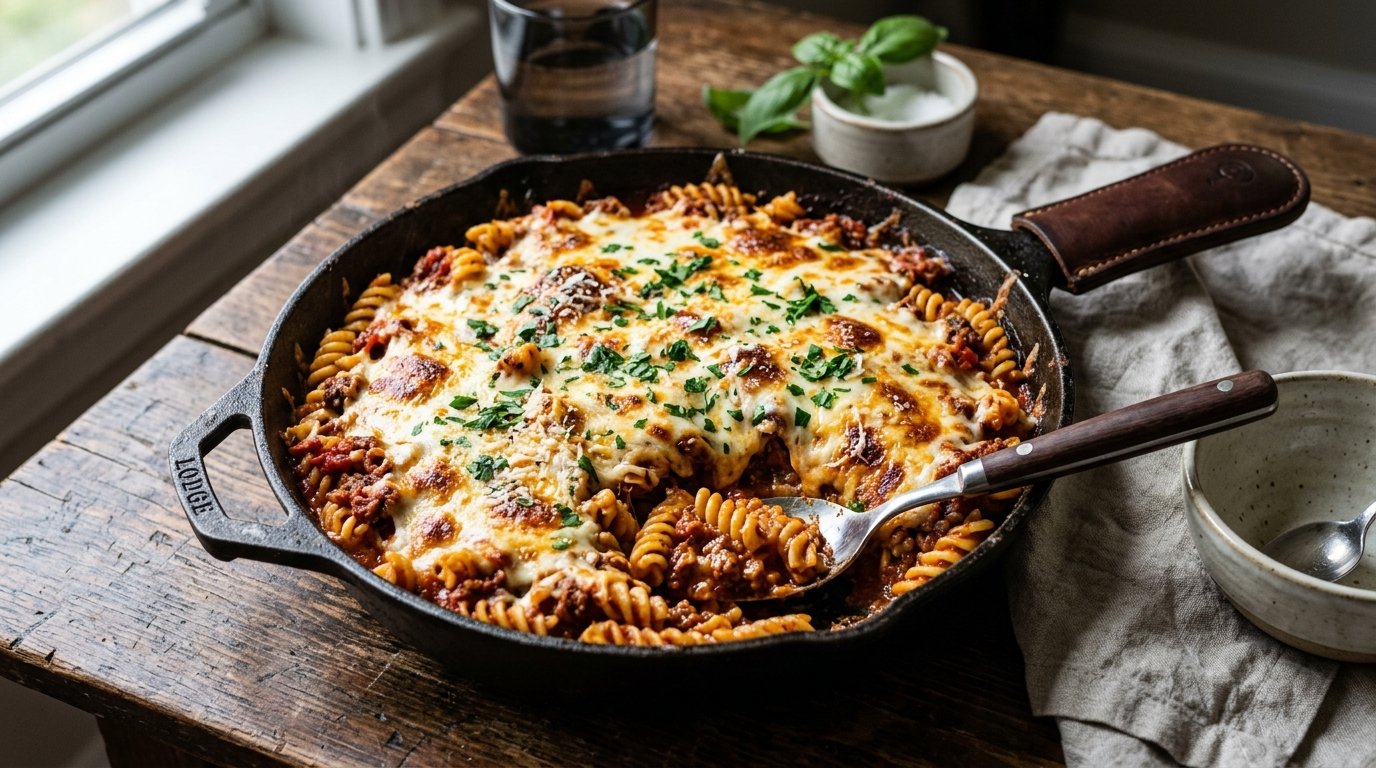
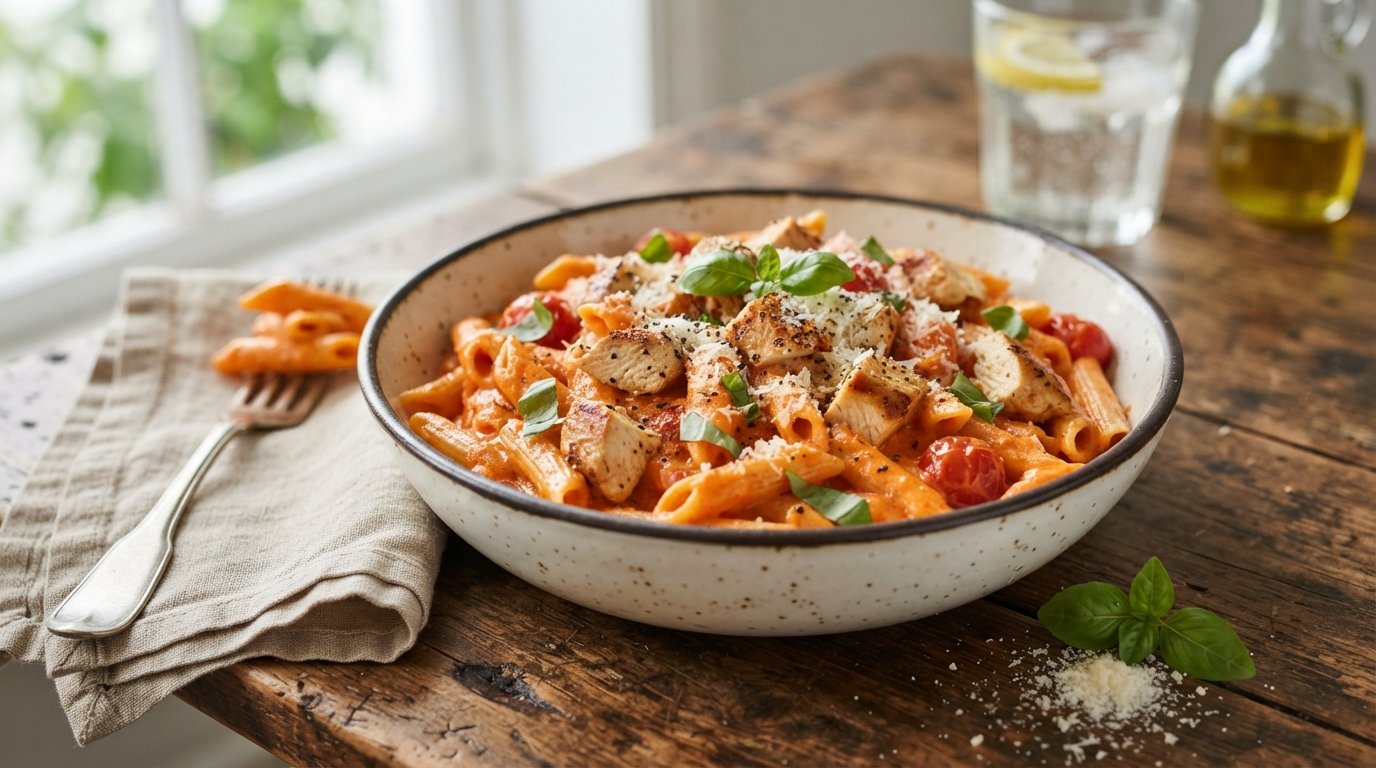
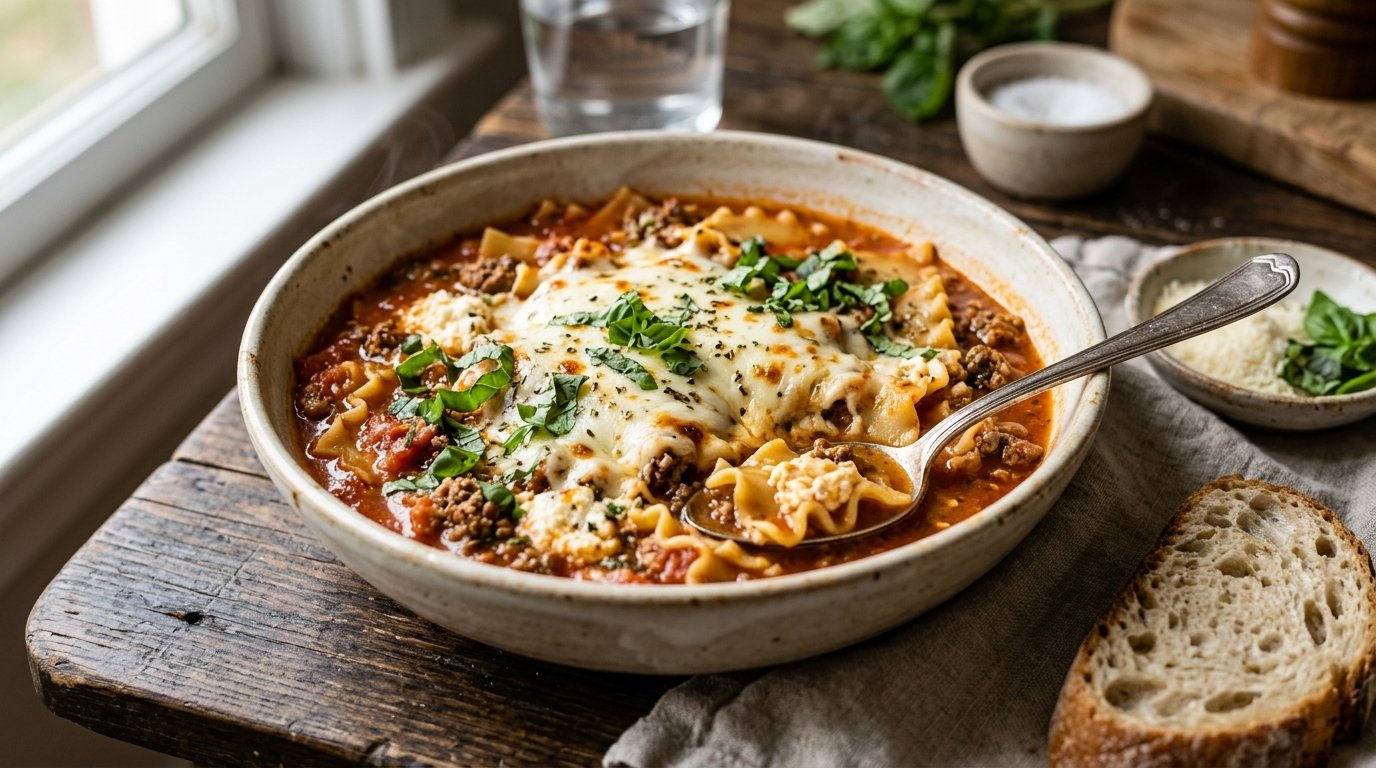
This cheesy beef pasta bake combines browned ground beef, rotini pasta, fresh tomatoes, and a creamy cheese sauce in one skillet. It comes together in under 40 minutes with no oven required, making it a reliable weeknight dinner recipe for families who want comfort food without the cleanup.
Introduction
Ground beef, pasta, and cheese sound simple until you actually try to balance the sauce so it clings instead of pooling at the bottom of the pan. This cheesy beef pasta bake solves that problem with a technique lifted straight from restaurant kitchens: building the sauce directly in the same skillet used to brown the meat. The result is a dish that tastes slow cooked but takes less time than delivery. It works for busy weeknights, potlucks, and anyone who wants a one pan pasta bake without extra dishes piling up in the sink.
The appeal goes beyond convenience. A skillet pasta bake gives a cook control over every stage, from how much fond builds up under the beef to how thick the cream sauce turns out before the pasta goes in. Boxed pasta dinners rely on powdered cheese packets that never fully dissolve, leaving a gritty finish no amount of stirring fixes. Building the sauce from scratch, with real dairy and freshly shredded cheese, avoids that problem entirely and gives a texture closer to what a neighborhood Italian restaurant would plate.
The Ingredients That Actually Matter
A pasta bake lives or dies on ingredient ratios, not fancy additions. Skip the extras and focus on what builds flavor and texture.
Ground beef (80/20 blend) for enough fat to season the pan naturally Rotini or fusilli pasta, which holds sauce better than penne because of its spiral shape Fresh diced tomatoes instead of canned, for brightness that cuts through the richness Garlic and yellow onion, sautéed before the beef goes in A shredded cheese blend, ideally mozzarella and a sharp cheddar or Colby Jack Heavy cream or half and half to build the sauce base Fresh parsley for garnish and a hit of color
A home cook using a KitchenAid stand mixer for weeknight baking might assume this dish needs an oven step. It does not. The skillet does all the work, which is part of why this recipe reads as an easy pasta bake recipe rather than a project.
Building the Sauce Without Breaking It
Cream sauces split when they hit high heat too fast or when acidic tomatoes get added before the dairy has a chance to stabilize. Getting the order right is the difference between a silky finish and a grainy one.
Brown the beef fully before adding aromatics, so the fond on the pan bottom flavors the sauce later Cook garlic for no more than 30 seconds; burnt garlic turns bitter fast Add the diced tomatoes after the beef, letting them soften for two minutes before the cream goes in Lower the heat before pouring in cream, since a rolling boil is what causes curdling Stir the pasta into the sauce off heat for the last minute so it absorbs liquid without turning mushy
A restaurant line cook working a Sunday dinner rush would recognize this order immediately: sauce built in stages, not dumped in all at once. Home cooks using an All-Clad or Tramontina stainless skillet get the best fond because stainless holds heat evenly, unlike thin nonstick pans that scorch garlic before the beef finishes browning.
Cheese Selection and the Melt Test
Not every cheese melts the same way, and this matters more in a stovetop pasta bake than in an oven-baked one, since there is no broiler step to finish browning.
Mozzarella melts smooth but adds little flavor on its own Sharp cheddar brings tang and color but can turn oily if overheated A pre-shredded blend from a brand like Sargento works in a pinch, though block cheese shredded at home melts more evenly because it lacks the anti-caking starch coating Parmesan, added at the very end, sharpens the whole dish without overwhelming it Cream cheese, stirred in with the sauce base, adds body for anyone who wants a thicker, creamier finish
A common mistake is adding all the cheese at once over high heat, which causes it to seize into rubbery clumps instead of melting into the sauce. Pulling the pan off heat first, then folding cheese in gradually, keeps the texture smooth.
Serving, Storing, and Reheating
This dish holds up well as a make ahead dinner, which makes it useful beyond a single weeknight meal.
Serve straight from the skillet with parsley scattered on top for a rustic, family style presentation Portion into individual bowls for a more restaurant style plating, using a shallow bowl rather than a flat plate so the sauce stays contained Store leftovers in an airtight container, such as one from Pyrex or OXO, for up to four days Reheat gently on the stovetop with a splash of milk to loosen the sauce, since microwaving alone often dries it out Freeze portions for up to two months, though the cream sauce texture softens slightly after thawing
A meal-prep household stocking a Sunday lunch rotation could double this recipe and freeze half, giving a second dinner with almost no extra effort during the week it gets reheated.
Kitchen Tools That Make This Easier
The right equipment shortens prep time and prevents the sauce mishaps that ruin a pasta bake before it reaches the table.
A wide stainless steel skillet, at least 12 inches across, gives the beef room to brown instead of steam A fine mesh strainer drains pasta faster than a colander and catches stray noodles that slip through wider holes A microplane grates fresh Parmesan finer than a box grater, so it melts into the sauce instead of sitting in clumps Tongs work better than a spoon for folding pasta into sauce, since they distribute the sauce evenly without crushing the noodles A digital instant-read thermometer confirms the beef has reached 160°F, which matters more than color alone when judging doneness
A weeknight cook working with a Lodge or Made In skillet gets more even heat than someone using a thin aluminum pan, and that difference shows up directly in how well the fond develops before the aromatics go in. Cheap pans heat unevenly, which means parts of the beef brown while other parts steam, and that uneven start carries through to the final sauce.
Adjusting the Recipe for Different Households
Not every kitchen wants the same version of this dish, and small swaps keep it flexible without losing the core technique.
Swap ground beef for ground turkey or Italian sausage for a lighter or spicier profile Use gluten-free rotini from a brand like Barilla for anyone avoiding wheat, though it needs a shorter cook time to avoid becoming mushy in the sauce Add spinach or chopped kale in the last two minutes of cooking for a version that sneaks in vegetables without changing the core flavor Reduce cream and add a splash of pasta water instead for a lighter, less rich sauce Double the recipe for a party dinner recipe that feeds a crowd straight from one large skillet, skipping individual plating altogether
A parent packing school lunches might portion this into small containers for the next day, while someone hosting a casual Friday dinner could serve it family style with garlic bread on the side and a simple green salad to balance the richness.
Common Mistakes and How to Fix Them
Two scenarios come up often enough to address directly.
In the first, a home cook adds pasta straight from boiling water without draining it well, which waters down the sauce and leaves it thin. The fix is simple: drain thoroughly and even let the pasta sit for a minute before adding it to the skillet.
In the second, someone reheats leftovers in the microwave on high power, which breaks the cream sauce and leaves oily separation on top. Reheating slowly on the stovetop over medium-low heat, stirring in a little milk, brings the sauce back together without ruining the texture.
Wrap Up
A cheesy beef pasta bake earns its place in a weekly dinner rotation because it delivers restaurant-level comfort food from one skillet and under 40 minutes. Getting the sauce order right, choosing cheese that melts evenly, and storing leftovers properly are what separate a forgettable pasta dish from one that gets requested again. This recipe works equally well as a quick weeknight dinner recipe or a dish prepped ahead for a busier week.
FAQs
Can I use a different pasta shape for this bake? Yes, though rotini and fusilli hold sauce best because of their ridges and spirals. Penne or medium shells work as substitutes, though smooth shapes like spaghetti tend to slide the sauce off instead of holding it.
Do I need to bake this in the oven at all? No. This version is built entirely on the stovetop, which keeps it faster than traditional baked pasta casseroles that need 25 to 30 minutes in the oven just to melt the cheese on top.
How do I keep the cream sauce from curdling? Lower the heat before adding cream, and avoid boiling the sauce once dairy is in the pan. Adding cold cream straight from the refrigerator to a very hot pan is the most common cause of a split, grainy sauce.