Quick Recipe Summary
| Detail | Information |
|---|---|
| Prep Time | 20 minutes |
| Cook Time | 35–40 minutes |
| Total Time | 60 minutes |
| Servings | 6–8 slices |
| Cuisine | French-Inspired / Fusion |
| Course | Main Course / Brunch / Appetizer |
| Difficulty | Intermediate |
| Calories | ~380 kcal per slice |
Table of Contents
- Introduction
- Why This Recipe Works
- Why You’ll Love This Crispy Potato Ham and Cheese Roll
- Ingredient Notes
- Kitchen Equipment
- Preparation Information
- Step-by-Step Instructions
- Expert Tips for Perfect Structure
- Common Mistakes to Avoid
- Recipe Variations
- What to Serve With This Recipe
- Make Ahead & Meal Prep Tips
- Storage & Reheating Instructions
- Nutritional Information
- Troubleshooting Guide
- Frequently Asked Questions
- Final Thoughts
Introduction

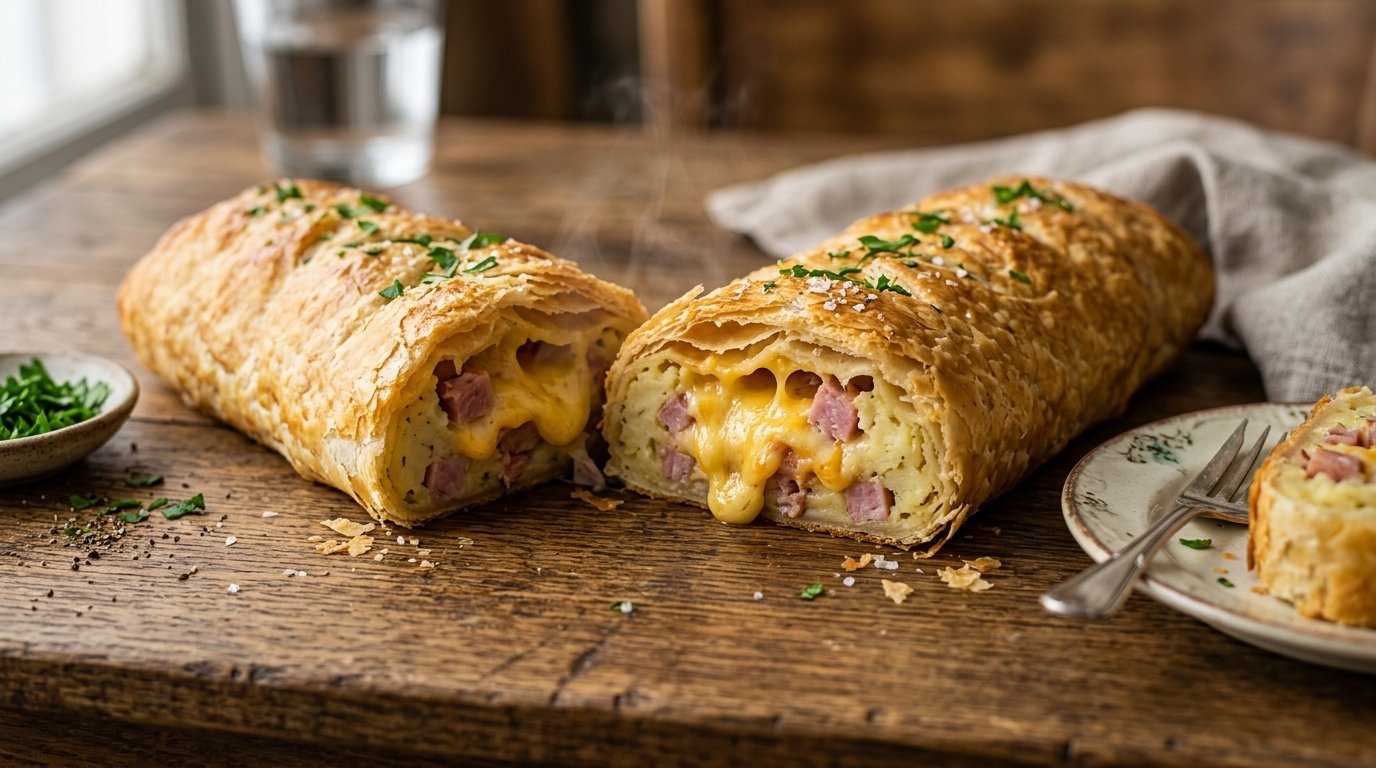
There is a specific kind of culinary magic that happens when you transform humble potatoes into something elegant, structural, and deeply satisfying. This Crispy Potato Ham and Cheese Roll is exactly that kind of magic—a dish that defies expectations by using a baked potato-and-cheese crust as the vessel for a savory, creamy filling. It’s part gratin, part pastry, and entirely delicious.
Unlike traditional rolls that rely on yeast or puff pastry, this recipe uses thinly sliced potatoes bound together with melted cheese to create a flexible yet sturdy “dough.” Once baked golden and crisp, it becomes the perfect canvas for a rich herb cream cheese and layers of delicate ham. The result is a stunning spiral of textures: shatteringly crisp edges, tender potato layers, cool creamy filling, and salty meat. Whether you are hosting a brunch, looking for an impressive appetizer, or simply want to elevate your weeknight dinner, this Crispy Potato Ham and Cheese Roll delivers restaurant-quality presentation with approachable techniques.
Why This Recipe Works
The success of this Crispy Potato Ham and Cheese Roll relies on three critical factors: moisture control, binding agents, and thermal timing. Potatoes are naturally high in water content. If not managed correctly, they release steam during baking, resulting in a soggy, unrollable mess. By slicing them thinly (approx. 1/8 inch) and overlapping them tightly, we maximize surface area for evaporation while creating a cohesive sheet. The shredded cheese acts as both a flavor enhancer and a structural binder; as it melts and browns, it fuses the potato slices into a single, pliable unit that can withstand rolling without cracking.
The two-stage baking process is non-negotiable. The first bake at a higher temperature (400°F/200°C) drives off moisture and creates the essential crispy crust. Attempting to roll raw or under-baked potatoes will result in breakage. Cooling the base slightly before adding the filling is equally important; if the potato sheet is piping hot, the cream cheese will melt instantly and slide out during rolling. A warm-but-not-hot temperature allows the filling to set slightly upon contact, maintaining its position within the spiral.
Finally, the choice of fillings balances richness with acidity. The herb cream cheese provides necessary fat and tang to cut through the starchiness of the potatoes, while the ham adds salt and umami. Rolling the assembly while the components are still slightly warm ensures they meld together seamlessly, creating distinct yet unified layers in every slice. This thoughtful engineering transforms simple ingredients into a sophisticated centerpiece.
Why You’ll Love This Crispy Potato Ham and Cheese Roll
- Gluten-Free Innovation: Uses potatoes instead of flour, making it naturally gluten-free without sacrificing structure.
- Stunning Visual Appeal: The spiral cross-section is inherently photogenic and impressive for guests.
- Texture Contrast: Combines crispy edges, tender potato, creamy filling, and soft ham in one bite.
- Versatile Serving: Works equally well as a main course, brunch item, or party appetizer.
- Customizable Fillings: Easily adapted for different dietary needs or flavor preferences.
- Make-Ahead Friendly: Components can be prepped in advance for stress-free entertaining.
- Comfort Food Elevated: Takes familiar flavors (potato, ham, cheese) and presents them in a novel way.
- Satisfying & Hearty: Protein and carb-rich enough to serve as a complete meal.
Ingredient Notes
Potatoes (Yukon Gold or Russet)
- Purpose: Forms the structural base/crust. Yukon Golds hold shape better and have buttery flavor; Russets are starchier and crispier.
- Substitutions: Sweet potatoes (sweeter/softer), parsnips (earthy/nuttier), or zucchini (must be salted/drained thoroughly).
- Buying Tips: Choose firm, smooth-skinned potatoes with no green spots or sprouts. Uniform size ensures even slicing. Avoid waxy new potatoes—they lack the starch needed for binding.
- Storage Tips: Store in cool, dark, dry place. Do not refrigerate raw potatoes (starch converts to sugar, causing browning/bitterness). Use within 1-2 weeks.
Shredded Cheese (Mozzarella/Gruyère)
- Purpose: Binds potato slices and adds flavor/crispness. Mozzarella melts smoothly; Gruyère adds nuttiness.
- Substitutions: Cheddar (sharper), Fontina (excellent melt), Provolone, or vegan melting cheese. Avoid pre-shredded bags (anti-caking agents prevent proper melting/binding).
- Buying Tips: Buy block cheese and shred yourself for superior melt and texture. Look for low-moisture varieties for better crisping.
- Storage Tips: Wrap tightly in wax paper then foil. Grate only what you need; pre-grated cheese dries out and molds faster.
Cream Cheese & Fresh Herbs
- Purpose: Provides creamy, tangy filling that contrasts with starchy potato. Herbs add freshness/aroma.
- Substitutions: Ricotta (lighter/grainier), goat cheese (tangier), mascarpone (richer/sweeter). Dill, chives, parsley, or thyme work best.
- Buying Tips: Full-fat cream cheese spreads easier and tastes richer. Fresh herbs > dried for vibrant color/flavor. Ensure cream cheese is softened to room temp before mixing.
- Storage Tips: Cream cheese lasts 2 weeks opened. Fresh herbs stored stem-down in water like flowers last longer. Chop herbs just before use to prevent oxidation.
Ham (Deli-Sliced)

- Purpose: Adds salt, protein, and savory depth. Thin slices roll easily without tearing.
- Substitutions: Turkey, chicken, prosciutto (saltier/crispier when baked), smoked salmon, or roasted vegetables for vegetarian version.
- Buying Tips: Choose high-quality deli ham with minimal additives/water. Avoid honey-glazed or overly sweet hams—they clash with savory filling. Thickness matters: too thick = hard to roll; too thin = tears easily.
- Storage Tips: Keep sealed in fridge. Use within 3-5 days of opening. Freeze unused portions for future recipes.
Kitchen Equipment
- Mandoline Slicer (Optional but Recommended): Ensures uniform 1/8-inch potato slices. Critical for even cooking/rolling. Use guard for safety!
- Rimmed Baking Sheet: Standard half-sheet pan (13×18″) provides ideal surface area. Parchment paper prevents sticking.
- Sharp Chef’s Knife: For trimming edges post-bake and slicing final roll cleanly.
- Offset Spatula: Essential for spreading cream cheese evenly without tearing potato base.
- Mixing Bowl: For combining cream cheese and herbs.
- Rolling Pin (Optional): Helps flatten potato sheet slightly if uneven after baking.
- Plastic Wrap: Crucial for rolling technique—prevents sticking/breaking.
- Cooling Rack: Allows air circulation under baked potato sheet to prevent sogginess.
Preparation Information
- Prep Time: 20 Minutes
- Cook Time: 35–40 Minutes
- Total Time: 60 Minutes
- Servings: 6–8 Slices
Step-by-Step Instructions
Creating the Potato-Cheese Base
Preheat oven to 400°F (200°C). Line baking sheet with parchment paper. Slice 3 large potatoes into uniform 1/8-inch rounds using mandoline. Arrange slices in tight, overlapping rows covering entire pan surface (like shingles). Sprinkle generously with 1.5 cups shredded cheese, ensuring coverage between gaps. Press down gently with hand to adhere. Why it matters: Uniform thickness ensures even cooking—thin slices burn, thick ones stay raw. Overlapping creates continuous sheet without gaps. Cheese fills voids and binds slices via melted fat/protein matrix. Pressing ensures contact for proper adhesion. Visual Cue: Pan fully covered, no bare parchment visible. Cheese distributed evenly, not clumped. Texture Cue: Layers feel compact but not crushed. Cheese sits loosely on top, not embedded yet. Aroma Cue: Raw potato smell initially. No seasoning aroma yet—that comes later. Common Mistake: Gaps between slices cause weak points that crack during rolling. Overcrowding leads to steaming instead of crisping. Aim for snug overlap. Pro Tip: Lightly spray parchment with oil before arranging potatoes. Prevents sticking during transfer/rolling. Salt potatoes lightly now if desired (cheese/ham add salt later).
Baking the Crust
Bake 35–40 minutes until edges are deep golden brown and center is set/crisp. Remove from oven. Let cool on rack 10–15 minutes until warm but manageable. Trim uneven edges with knife for neat rectangle. Flip onto fresh parchment if bottom isn’t crisp (optional). Why it matters: High heat drives off moisture, creating crisp exterior essential for structural integrity. Under-baking = soggy/unrollable. Over-baking = brittle/cracks. Cooling firms up cheese/potato bond, making rolling possible without breaking. Trimming ensures clean spiral appearance. Visual Cue: Edges dark golden/brown. Center pale gold but opaque (not translucent/raw). Surface looks dry/crisp, not wet/shiny. Texture Cue: Firm to touch, slight give in center. Edges snap when pressed. Not floppy or mushy. Aroma Cue: Toasted potato, caramelized cheese, nutty browned notes. No raw starch smell. Doneness Cue: Internal temp should reach ~200°F (93°C) for fully cooked potato. Visual browning is primary indicator. Chef Tip: Rotate pan halfway through baking if oven has hot spots. Uneven browning causes weak areas that tear during rolling.
Preparing the Herb Cream Filling
While potato base cools, mix 8oz softened cream cheese, 2 tbsp chopped fresh herbs (dill/chives/parsley), ½ tsp black pepper, and pinch of salt in bowl. Stir until smooth and uniform. Taste and adjust seasoning. Chill 5 mins if too soft. Why it matters: Softened cream cheese spreads easily without tearing potato base. Herbs distribute evenly for consistent flavor. Chilling firms mixture slightly, preventing oozing during rolling. Seasoning now ensures balanced flavor throughout—not just surface-level. Visual Cue: Smooth, creamy consistency. Flecks of green herbs visible uniformly. No lumps or streaks. Texture Cue: Spreadable but holds shape. Not runny or stiff. Coats spatula evenly. Aroma Cue: Fresh herbal fragrance dominates. Tangy cream cheese undertone. No sour/spoiled notes. Common Mistake: Cold cream cheese tears potato base. Overmixing incorporates air bubbles that create gaps in filling. Mix gently until just combined. Pro Tip: Add 1 tsp lemon juice or Dijon mustard for brightness/acidity that cuts richness. Optional but recommended.
Assembly and Rolling
Spread herb cream cheese evenly over cooled potato base, leaving 1-inch border on all sides. Layer 6–8 slices ham over cream cheese, overlapping slightly. Using parchment paper underneath, lift edge closest to you and roll tightly away from you, using paper to guide/support. Seal seam-side down. Wrap tightly in plastic wrap. Refrigerate 30 mins to set. Why it matters: Border prevents filling leakage during rolling/sealing. Ham layer adds structural support and flavor distribution. Parchment-assisted rolling prevents breakage/sticking. Tight roll ensures compact spiral. Chilling sets filling, firms potato, and makes slicing clean. Visual Cue: Even cream cheese layer, no bare spots. Ham covers filling completely. Roll is tight, uniform cylinder. No gaps or bulges. Texture Cue: Roll feels firm but yielding. Not loose/squishy or rock-hard. Seam adheres securely. Aroma Cue: Combined aromas of potato, cheese, herbs, ham. Balanced and appetizing. Common Mistake: Rolling too loosely creates gaps that collapse when sliced. Leaving border too small causes leakage. Rushing chill time = messy slices. Patience is key. Chef Tip: Score seam lightly with knife before chilling to help it adhere. Weight roll gently with another pan while chilling for tighter set.
Final Bake and Slicing
Unwrap chilled roll. Place seam-side down on baking sheet. Bake 10–15 mins at 375°F (190°C) to warm through and crisp exterior further. Rest 5 mins. Slice with sharp serrated knife into 1-inch rounds. Wipe knife between cuts for clean presentation. Why it matters: Final bake reheats filling, melds flavors, and re-crisps exterior softened during assembly/chilling. Resting allows juices/filling to redistribute—cutting immediately causes oozing/collapse. Serrated knife saws through crisp crust without squishing soft interior. Wiping knife prevents smearing. Visual Cue: Exterior re-goldens slightly. Filling visible at ends looks set, not liquid. Steam rises gently. Texture Cue: Exterior crisp again. Interior warm, creamy, cohesive. Not cold/dense or hot/melty. Aroma Cue: Warmed herbs/cheese/potato aroma intensifies. Inviting and comforting. Doneness Cue: Internal temp ~140°F (60°C) for warmed-through filling. Exterior should feel crisp to touch. Pro Tip: Chill roll 10 mins before slicing if filling seems too soft. Cold knife cuts cleaner than warm one. Dip knife in hot water, wipe dry between cuts for pristine slices.
Expert Tips for Perfect Structure

- Mandoline is Non-Negotiable: Hand-sliced potatoes vary in thickness, causing uneven cooking/weak spots. Invest in affordable mandoline with guard. Safety first—use finger guard ALWAYS.
- Cheese Selection Matters: Low-moisture cheeses (mozzarella, gruyère, cheddar) bind better than high-moisture (fresh mozzarella, ricotta). Pre-shredded contains cellulose that inhibits melting/binding. Always shred block cheese.
- Cool Before Rolling: Hot potato base + cold cream cheese = thermal shock = cracking. Warm (not hot) base allows gentle rolling without breakage. Test temperature: should feel like warm bath water, not scalding.
- Parchment is Your Friend: Never attempt rolling bare-handed. Parchment provides non-stick surface and structural support. Plastic wrap over parchment adds extra security against sticking/breaking.
- Chill Thoroughly Before Slicing: Warm roll = collapsed spiral. 30-min minimum chill sets filling, firms potato, and ensures clean cuts. Longer chill (up to 2 hrs) improves slice definition.
- Serrated Knife Technique: Saw gently, don’t press down. Pressure squishes soft interior. Let knife do work. Wipe blade after each cut to prevent dragging/smearing.
- Trim Edges Post-Bake: Irregular edges create weak points that unravel during rolling. Trim to neat rectangle BEFORE adding filling. Saves frustration and ensures professional appearance.
Common Mistakes to Avoid
- Under-Baking Potato Base: Results in soggy, unrollable sheet. Must be crisp/golden throughout. Extend bake time if needed. Visual/tactile cues > timer.
- Overfilling: Too much cream cheese/ham causes bursting/leakage during rolling. Stick to measured amounts. Less is more for structural integrity.
- Rolling Too Tightly/Loosely: Too tight = cracks/breaks. Too loose = gaps/collapse. Aim for firm but gentle pressure. Practice makes perfect.
- Skipping Chill Time: Warm roll slices messily. Filling oozes, layers separate. Respect the 30-min chill. It’s not optional.
- Using Wrong Knife: Dull or straight-edged knife crushes roll. Serrated knife is essential for clean cuts through crisp crust/soft interior.
- Ignoring Moisture Control: Wet potatoes = steam = sogginess. Dry potatoes thoroughly if washed. Don’t overcrowd pan. High heat drives off moisture.
- Rushing Assembly: Hasty spreading/rolling leads to tears/uneven layers. Take time. Precision pays off in final presentation.
- Serving Immediately After Final Bake: Hot filling slides out. 5-min rest allows setting. Patience ensures perfect slice.
Recipe Variations
- Spicy Kick: Add red pepper flakes/cayenne to cream cheese. Use pepper jack cheese. Swap ham for spicy chorizo/salami. Drizzle sriracha/hot honey before serving.
- Vegetarian Option: Replace ham with roasted mushrooms, sun-dried tomatoes, spinach, or artichoke hearts. Sauté veggies first to remove excess moisture. Umami-rich and satisfying.
- Vegan Adaptation: Use vegan cream cheese/shredded cheese. Replace ham with marinated tofu/tempeh/seitan. Nutritional yeast adds cheesy flavor. Coconut cream cheese works surprisingly well.
- Chicken Version: Swap ham for shredded rotisserie chicken or diced grilled chicken breast. Mix chicken into cream cheese for integrated filling. Adds lean protein.
- Beef Upgrade: Use thinly sliced roast beef or pastrami. Richer, beefier flavor profile. Pair with horseradish cream cheese for classic combo.
- Seafood Twist: Smoked salmon + capers + dill cream cheese. Elegant, briny, luxurious. Perfect for brunch/appetizers. Handle gently—salmon tears easily.
- Extra Cheesy: Double cheese in base AND filling. Add fontina/provolone to cream cheese mix. Broil 1-2 mins post-final bake for bubbly top. Indulgent and decadent.
- Healthy/Low-Fat: Use part-skim mozzarella/light cream cheese. Reduce ham portion. Add grated zucchini/carrots to potato base for veggie boost. Lower calorie density.
- Low-Carb/Keto: Replace potatoes with thin-sliced cauliflower/zucchini (salt/dry thoroughly). Use full-fat dairy. Net carbs drop significantly. Texture differs but flavor shines.
- High-Protein Boost: Add Greek yogurt to cream cheese mix. Use turkey ham/chicken. Sprinkle hemp seeds/pumpkin seeds on filling. Increases protein without compromising texture.
What to Serve With This Recipe
- Mixed Green Salad: Light vinaigrette-dressed greens cut richness. Arugula, spinach, or butter lettuce work best. Refreshing contrast.
- Tomato Basil Soup: Classic pairing. Acidic tomato balances creamy/savory roll. Comfort food synergy.
- Roasted Vegetables: Asparagus, broccoli, or Brussels sprouts add color/nutrition. Simple olive oil/herb roast complements without competing.
- Pickled Onions/Cucumbers: Bright acid crunch cleanses palate. Quick-pickle in vinegar/sugar/salt. Elevates presentation.
- Sparkling Wine/Mimosas: Effervescence cuts fat. Citrus notes complement herbs. Perfect brunch beverage.
- Mustard Sauce: Whole grain or Dijon mustard on side adds tangy punch. Traditional pairing for ham/potato dishes.
- Fresh Fruit Platter: Berries, melon, or citrus provide sweet/acidic balance. Light dessert alternative.
- Herb-Infused Olive Oil: Drizzle over sliced roll for added richness/aroma. Rosemary, thyme, or garlic oil enhances flavors.
Make Ahead & Meal Prep Tips
- Potato Base Ahead: Bake potato-cheese base up to 24 hrs ahead. Cool completely, store covered at room temp. Re-crisp in 375°F oven 5 mins before assembling. Saves active prep time.
- Cream Cheese Filling Ahead: Mix filling up to 3 days ahead. Store airtight in fridge. Bring to room temp 15 mins before spreading for easy application. Flavors meld beautifully.
- Assembled Roll Ahead: Assemble and chill roll up to 12 hrs ahead. Keep wrapped tightly in plastic. Final bake just before serving. Ideal for entertaining—minimal last-minute effort.
- Slice & Freeze: Slice cooled roll, freeze individual portions on tray, then bag. Reheat in oven/air fryer. Convenient grab-and-go meals. Texture slightly softer but still good.
- Pre-Slice Potatoes: Mandoline-slice potatoes up to 24 hrs ahead. Submerge in ice water to prevent browning. Drain/dry THOROUGHLY before assembling. Water = enemy of crispness.
Storage & Reheating Instructions
Refrigerator
Store whole or sliced roll in airtight container up to 3 days. Filling may soften slightly but remains safe/tasty. Best consumed within 48 hrs for optimal texture.
Freezer
Freeze whole roll (unbaked after assembly) up to 2 months. Wrap tightly in plastic then foil. Thaw overnight in fridge before final bake. Frozen baked slices keep 1 month; reheat directly from frozen.
Reheating Methods
- Oven (Best): 375°F for 10-15 mins (whole) or 5-8 mins (slices). Restores crispness perfectly. Cover loosely with foil if browning too fast.
- Air Fryer: 350°F for 5-7 mins (slices). Faster, crisper results. Shake basket halfway. Ideal for single servings.
- Microwave (Last Resort): 30-sec bursts on medium power. Softens crust significantly. Only if speed > texture. Cover with damp paper towel to prevent drying.
- Stovetop: Skillet over medium-low heat, covered, 3-5 mins per side. Gentle reheating preserves moisture. Risk of uneven heating. Monitor closely.
Nutritional Information
Estimates per slice (based on 8 slices)
- Calories: 380 kcal
- Protein: 18g
- Carbohydrates: 32g
- Fat: 22g
- Fiber: 3g
- Sugar: 2g
- Sodium: 680mg
Note: Values vary based on potato size, cheese type/amount, ham brand. High sodium from cheese/ham. Moderate carbs/fat make this satiating.
Troubleshooting Guide
| Problem | Cause | Solution |
|---|---|---|
| Potato Base Cracks When Rolling | Under-baked / too hot / rolled too tightly. | Bake longer until crisp. Cool to warm (not hot). Roll gently with parchment support. Patch cracks with extra cheese before rolling. |
| Filling Oozes Out During Slicing | Overfilled / insufficient chill / cut too soon after baking. | Reduce filling quantity. Chill min 30 mins. Rest 5 mins post-final bake. Use sharp serrated knife. |
| Base Soggy/Not Crisp | Potatoes too thick / overcrowded / under-baked. | Slice thinner (1/8″). Don’t overlap excessively. Bake longer/higher temp. Ensure parchment isn’t trapping steam. |
| Roll Unravels When Sliced | Rolled too loosely / seam not sealed / insufficient chill. | Roll tighter next time. Press seam firmly. Chill longer (1+ hr). Score seam before chilling. |
| Cheese Didn’t Bind Potatoes | Wrong cheese type / pre-shredded / under-baked. | Use block cheese, shred fresh. Choose low-moisture varieties. Bake until cheese is bubbly/browned. |
| Cream Cheese Too Stiff/Hard to Spread | Not softened / over-chilled. | Bring to room temp 30 mins. Microwave 10-sec bursts if needed. Mix with splash milk/cream to loosen. |
| Ham Tears During Rolling | Slices too thin / dry / rolled too aggressively. | Use thicker deli ham. Pat dry if moist. Roll gently with parchment support. |
| Slices Look Messy/Smear | Knife not sharp / not wiped / roll too warm. | Use sharp serrated knife. Wipe blade between cuts. Chill roll longer before slicing. |
Frequently Asked Questions
1. Can I use sweet potatoes instead? Yes, but texture/flavor changes. Sweet potatoes are softer/sweeter, less crisp. Reduce bake time slightly (check at 30 mins). Pairs beautifully with goat cheese/bacon instead of ham/cream cheese. Adjust seasoning accordingly.
2. How do I prevent the potato base from sticking to parchment? Lightly spray/oil parchment before arranging potatoes. Ensure base is fully crisp before removing—if stuck, it’s under-baked. Slide spatula underneath gently to release. Fresh parchment for rolling prevents re-sticking.
3. Can I make this without a mandoline? Possible but challenging. Use sharpest knife possible, slice as thinly/uniformly as you can. Expect some variation—adjust bake time accordingly. Mandoline strongly recommended for consistent results/safety.
4. Why did my roll collapse when slicing? Insufficient chilling / cut while too warm / knife not sharp. Chill min 30 mins (longer if needed). Use sharp serrated knife. Saw gently, don’t press. Rest 5 mins post-bake before slicing.
5. Can I freeze the assembled roll before final bake? Yes! Wrap tightly in plastic/foil. Freeze up to 2 months. Thaw overnight in fridge before final bake. May need extra 2-3 mins bake time. Convenient for meal prep/entertaining.
6. What cheese works best for binding? Low-moisture mozzarella, Gruyère, or cheddar. Avoid fresh mozzarella/ricotta—they’re too wet. Pre-shredded contains anti-caking agents that inhibit melting. Always shred block cheese for best results.
7. Can I add vegetables to the filling? Yes! Roasted peppers, spinach, mushrooms, or sun-dried tomatoes work well. Sauté/cook first to remove excess moisture. Wet veggies = soggy roll. Pat dry thoroughly before adding.
8. How do I know when the potato base is done? Edges deep golden brown, center set/opaque (not translucent). Should feel firm/crisp to touch, not soft/floppy. Internal temp ~200°F (93°C). Visual/tactile cues > timer. Err on side of over-browning for crispness.
9. Can I use leftover mashed potatoes? Not recommended. Mashed potatoes lack structure/sliceability needed for this recipe. They’ll spread/mush instead of forming cohesive sheet. Stick to sliced raw potatoes for proper texture.
10. Is this recipe gluten-free? Naturally yes! Potatoes, cheese, ham, cream cheese are GF. Verify ham/cream cheese labels for hidden gluten (some brands use fillers). Safe for celiac/gluten-sensitive diets when verified.
Final Thoughts
This Crispy Potato Ham and Cheese Roll is more than just a recipe—it’s a testament to creativity in the kitchen. By reimagining humble potatoes as a structural element, we unlock endless possibilities for flavorful, visually stunning dishes. The combination of textures and tastes creates an experience that lingers long after the last bite. Whether you’re impressing guests or treating yourself to something special, this roll delivers satisfaction and joy in equal measure.