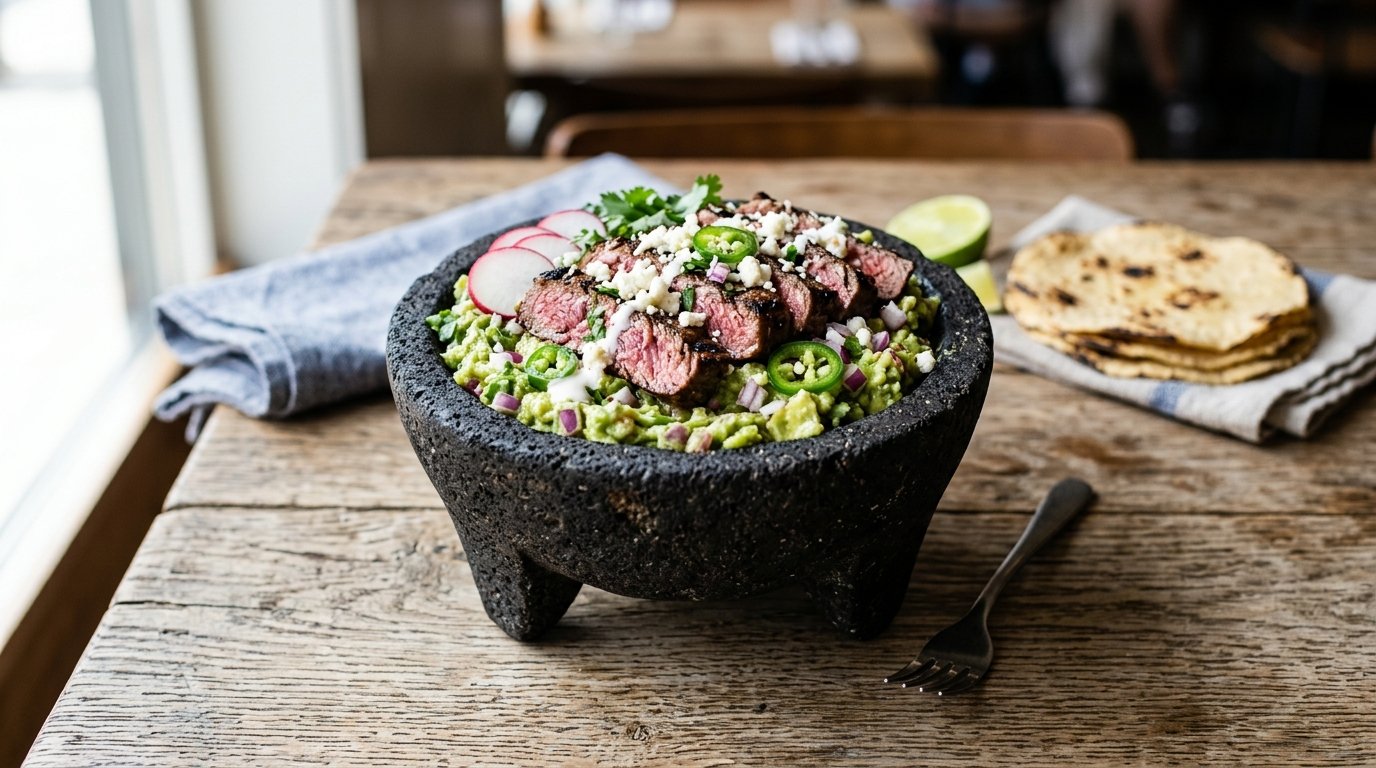
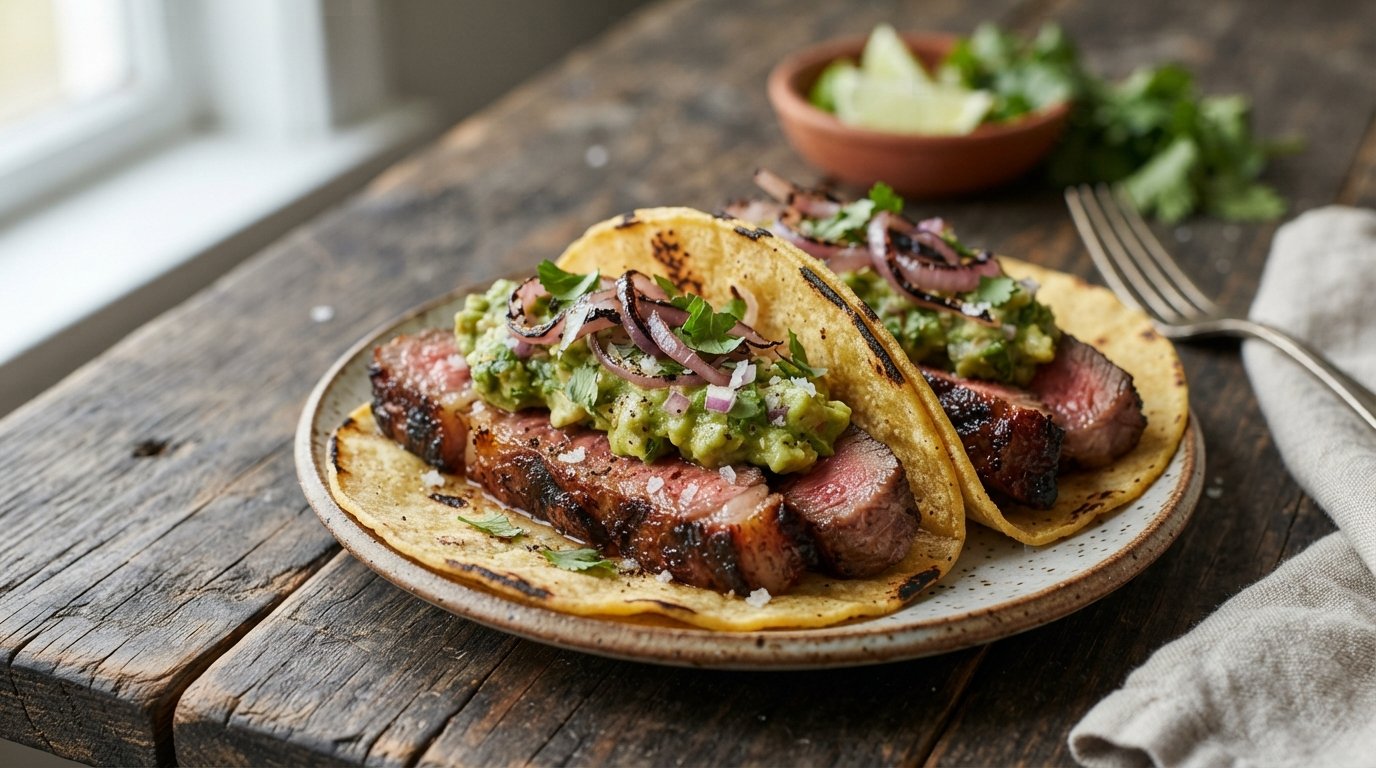
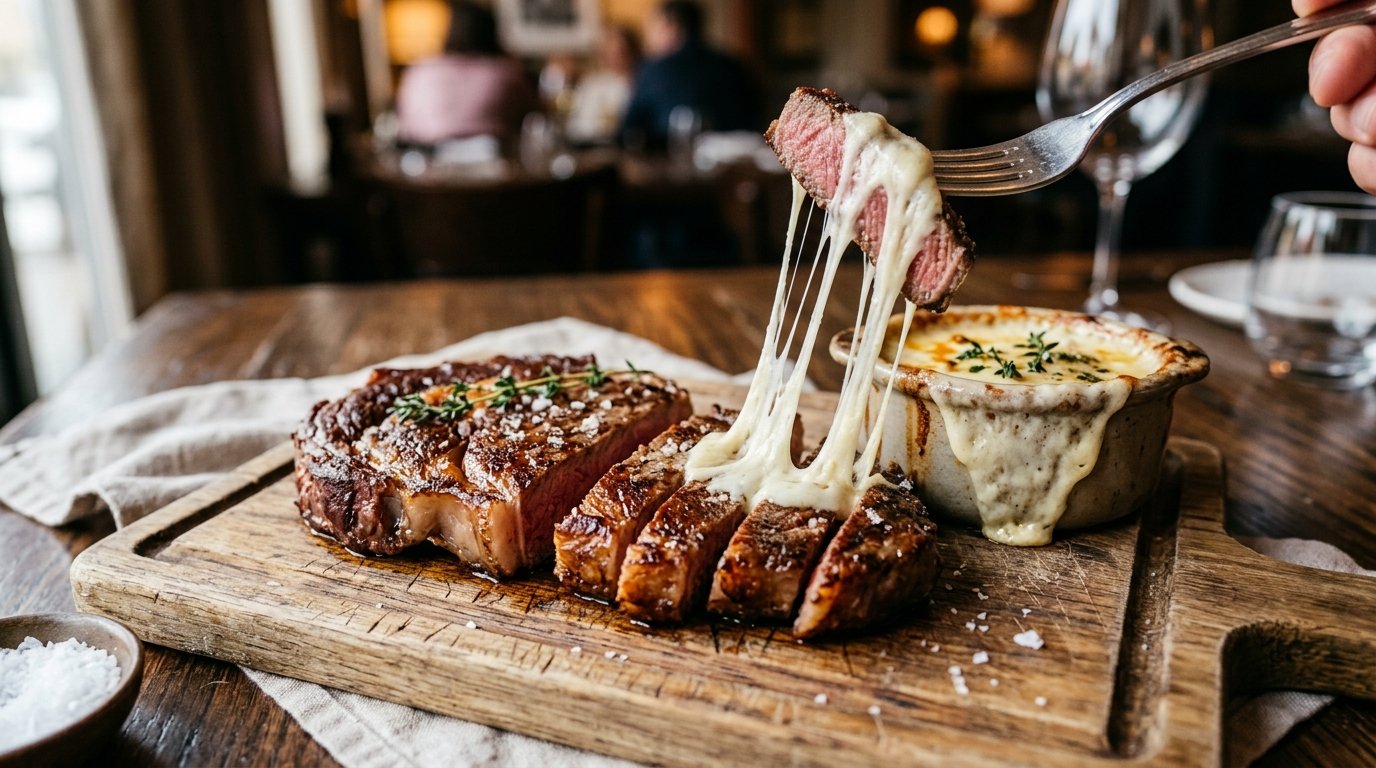
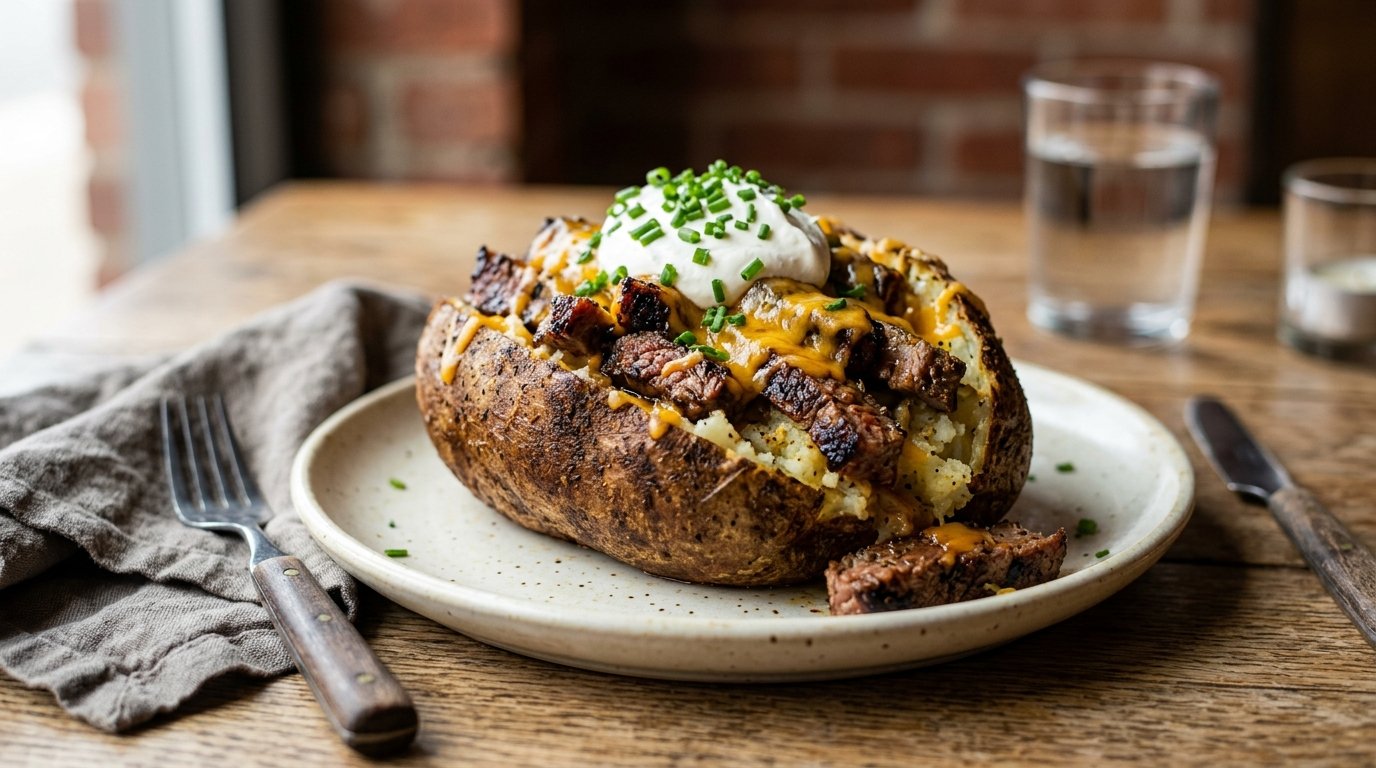
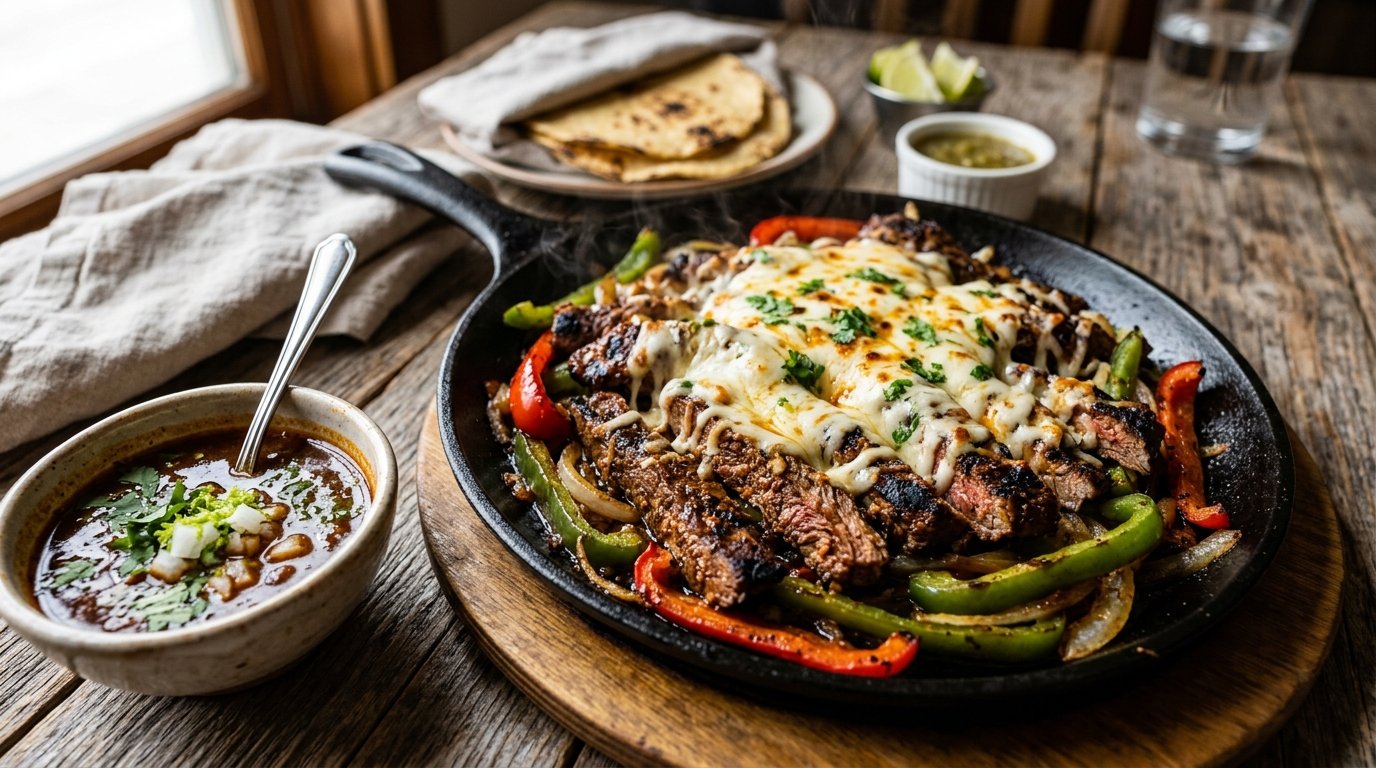
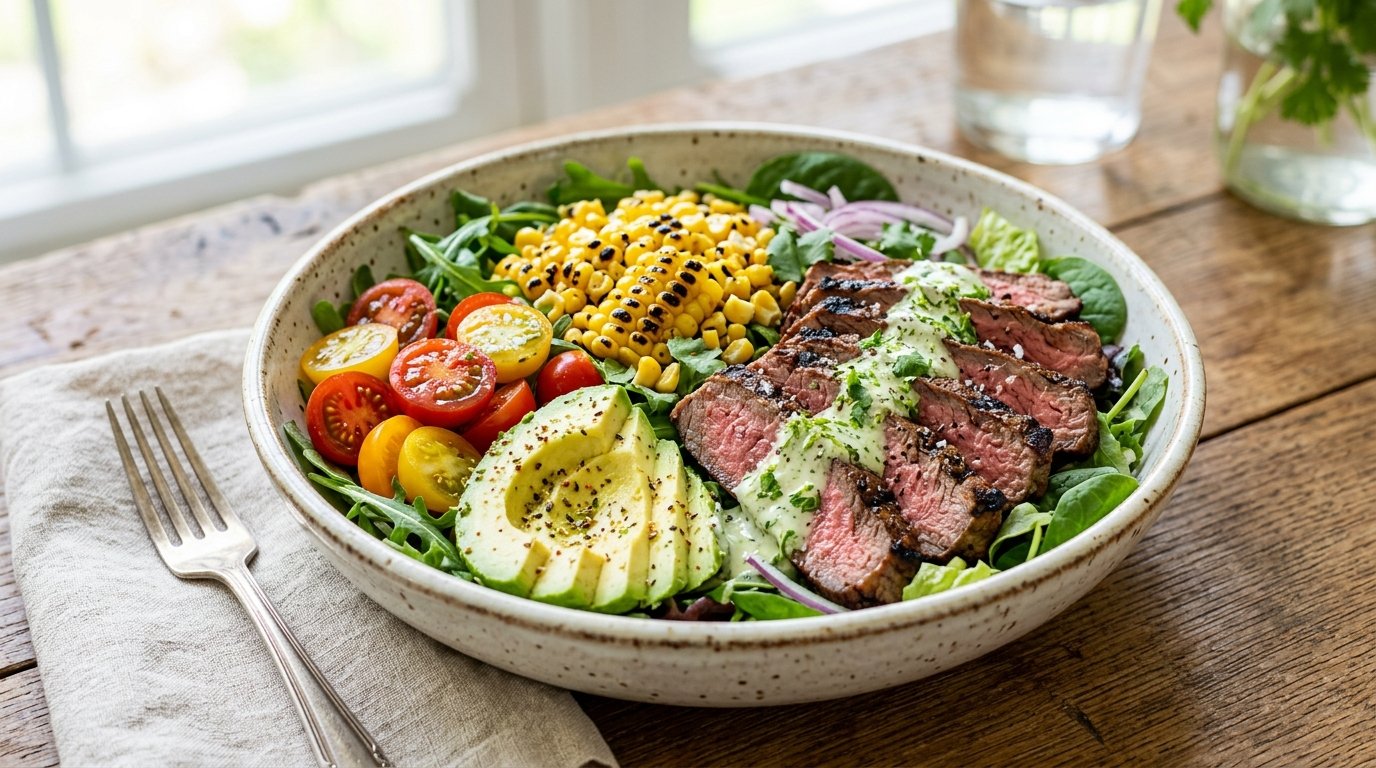
The magic of a Loaded Guacamole Molcajete with Steak lies in its deliberate contrast. Guacamole, on its own, is rich, fatty, and creamy. While delicious, it can sometimes benefit from a textural counterpoint. By introducing crispy chicharrón (pork rinds), you add a massive, audible crunch. The seared steak cubes provide a chewy, umami-packed, and savory element that turns the dip into a substantial meal.
Furthermore, the cooking methods used for the toppings are designed to maximize flavor. Searing the steak at high heat triggers the Maillard reaction, creating complex, roasted flavors. Charring the green onions (cebollitas) over an open flame or in a hot skillet softens their sharp bite and introduces a sweet, smoky depth. Finally, pan-frying the queso panela creates a beautiful, caramelized crust on the outside while keeping the inside soft and milky. When all these elements are combined in the rustic, earthy vessel of a molcajete, the result is a harmonious, multi-sensory culinary experience.
Why You’ll Love This Recipe
Ultimate Texture Contrast: You get creamy, crunchy, chewy, and melty all in one single bite.
Visually Stunning: Served in a traditional molcajete, this dish is a showstopper that looks like it came straight from a high-end Mexican cantina.
Highly Customizable: While the classic version features beef, the base guacamole and cooking techniques can easily be adapted for chicken, seafood, or vegetarian diets.
Perfect for Sharing: It is inherently a communal dish, making it the perfect centerpiece for parties, family gatherings, or date nights.
Nutrient-Dense: Packed with healthy fats from the avocado, high-quality protein from the steak and cheese, and fresh vitamins from the cilantro and onions.
Ingredient Notes
To achieve the authentic flavor and texture profile of this dish, ingredient selection is paramount. Here is a detailed breakdown of what you need and why.
The Guacamole Base
Avocados: You must use Hass avocados. They have a higher fat content than other varieties, which yields a creamier, richer texture.
Buying Tips: Look for avocados that yield slightly to gentle pressure. If they are rock hard, they need 2-3 days to ripen at room temperature. If they are mushy, they are overripe and may taste fermented.
Substitutions: No true substitution exists for Hass avocados in guacamole, though you can mix in a small amount of tomatillo for a tangier, salsa-verde style dip.
Tomatoes: Roma (plum) tomatoes are best because they have fewer seeds and less water content, preventing your guacamole from becoming a watery soup.
White Onion & Cilantro: White onion provides a sharper, cleaner bite than yellow or red onion. Fresh cilantro is non-negotiable for authentic flavor; dried cilantro will not work here.
Lime Juice: Freshly squeezed lime juice is essential. It adds necessary acidity to cut the fat of the avocado and prevents enzymatic browning (oxidation).
The Steak (Carne Asada)
Purpose: Provides the savory, chewy, protein-rich centerpiece of the dish.
Buying Tips:Skirt steak or flank steak are the traditional cuts for carne asada. They have a robust, beefy flavor and a distinct grain that holds up well to high-heat searing. Sirloin or strip steak can also be used if skirt is unavailable.
Substitutions: For a leaner option, use tenderloin, though you will sacrifice some of the traditional beefy flavor.
The Chicharrón (Pork Rinds)
Purpose: Acts as both a topping and a sturdy, flavorful scoop for the guacamole.
Buying Tips: Look for “cuerito” or standard fried pork rinds in the Latin aisle of your grocery store. You want them to be light, puffy, and very crispy. Avoid the dense, hard, un-puffed varieties.
Storage Tips: Keep them in an airtight container at room temperature. If they go stale, you can crisp them up in a 350°F oven for 5 minutes.
The Cheese (Queso Panela)
Purpose: Adds a milky, salty, and slightly tangy element. Panela is chosen specifically because it holds its shape when heated and develops a beautiful golden crust without melting into a liquid puddle.
Buying Tips: Queso Panela is a fresh, unaged Mexican cheese. If you cannot find it, Queso Fresco is an acceptable substitute, though it is more crumbly and won’t brown quite as perfectly. Halloumi cheese is another excellent alternative if you want a squeaky, fry-able cheese.
The Cebollitas (Green Onions)
Purpose: Adds a sweet, smoky, and slightly charred allium flavor that bridges the gap between the fresh guacamole and the heavy meat.
Buying Tips: Look for fresh green onions (scallions) with bright green, unwilted tops and firm, white bulbs.
Kitchen Equipment
Molcajete: A traditional Mexican mortar made of volcanic rock (basalt). If you don’t have one, a large, heavy ceramic or wooden bowl will work, though you lose the rustic presentation and the slight mineral flavor a well-seasoned molcajete imparts.
Tejolote: The volcanic stone pestle used with the molcajete.
Cast-Iron Skillet or Grill Pan: Essential for getting a hard, restaurant-quality sear on the steak and the cheese.
Sharp Chef’s Knife: For dicing the tomatoes, onions, and slicing the steak against the grain.
Tongs: For flipping the steak and handling the hot cheese.
Begin by dicing your Roma tomatoes, white onion, and cilantro. If you like a bit of heat, finely mince a jalapeño or serrano pepper (remove the seeds for less heat). Place these ingredients into your molcajete. Add a generous pinch of coarse sea salt. Using the tejolote (pestle), gently mash and grind the ingredients together.
Why this matters: Grinding the tomatoes, onions, and cilantro with the salt releases their essential oils and juices, creating a flavorful “salsa base” before the avocado is even added. This ensures every bite of the guacamole is evenly seasoned.
Visual & Texture Cues: You want a coarse, chunky paste. Do not puree it completely; you want to retain some texture.
Step 2: Incorporate the Avocados
Cut your ripe Hass avocados in half, remove the pits, and scoop the flesh into the molcajete over the tomato-onion base. Add a squeeze of fresh lime juice. Using the tejolote, gently mash and fold the avocado into the base.
Texture Cue: Aim for a chunky, rustic consistency. Over-mashing will make the guacamole gummy. Leave some larger chunks of avocado for textural contrast.
Aroma Cue: The sharp, bright scent of the lime and cilantro should immediately hit your nose, cutting through the rich, earthy smell of the avocado.
Professional Tip: Taste the guacamole now. Adjust the salt and lime juice to your preference. It should be slightly over-seasoned, as the unseasoned steak and chicharrón will balance it out later.
Step 3: Sear the Carne Asada
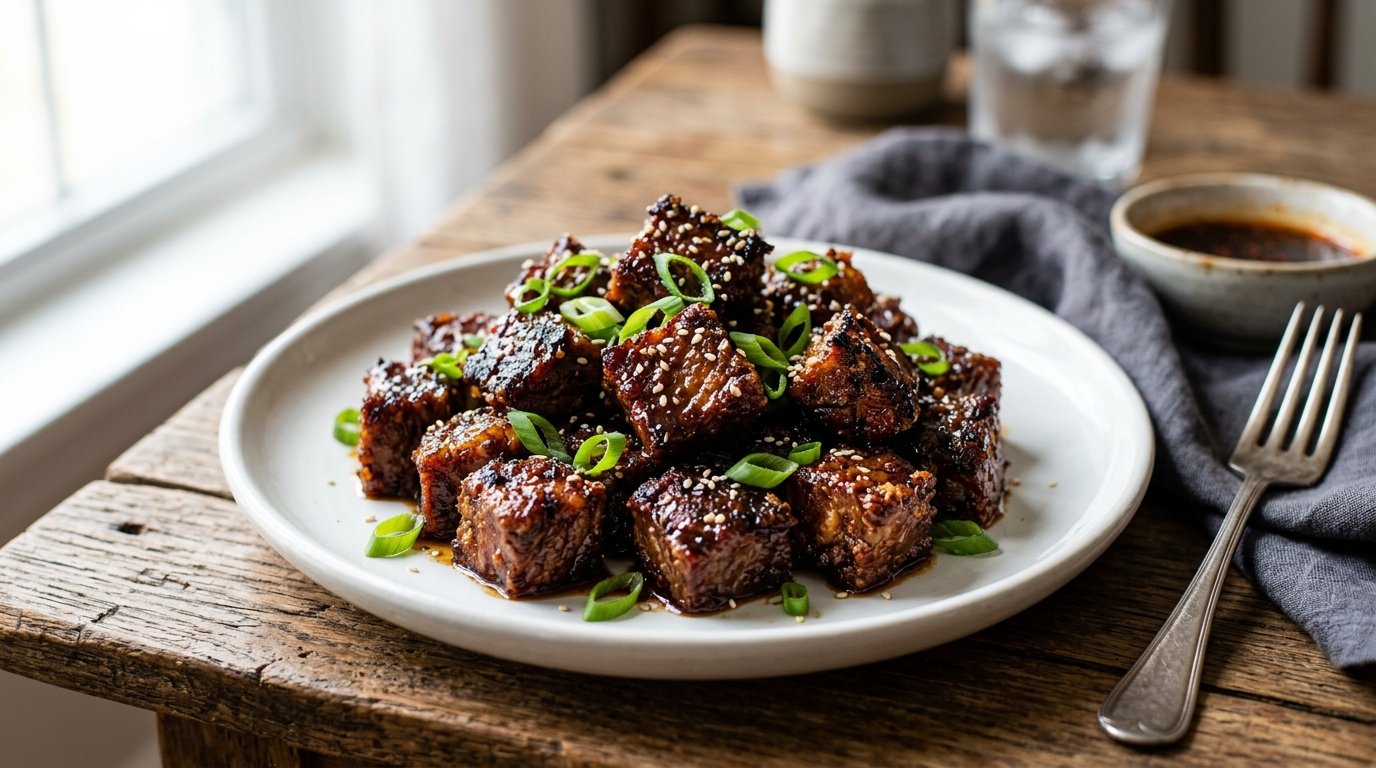
Cut your skirt or flank steak into 1-inch cubes. Pat them completely dry with paper towels—moisture is the enemy of a good sear. Season the cubes generously with salt and pepper. Heat your cast-iron skillet over high heat until it is smoking slightly. Add a high-smoke-point oil (like canola or avocado oil). Add the steak cubes in a single layer, ensuring they are not overcrowded. Sear for 2-3 minutes per side until a deep brown crust forms.
Why this matters: High heat and dry meat are required for the Maillard reaction. If the pan is crowded, the meat will steam and turn gray instead of browning.
Visual & Aroma Cues: The meat should develop a dark, mahogany crust. The kitchen will smell intensely of roasted beef and caramelized proteins. Remove from the pan and let rest for 5 minutes.
Step 4: Grill the Cebollitas and Fry the Queso Panela
While the steak rests, wipe out the skillet. Slice the queso panela into thick rounds (about 1/2 inch thick). Add a small drizzle of oil to the skillet over medium-high heat. Fry the cheese rounds for 2-3 minutes per side until they develop a beautiful, golden-brown, blistered crust. Remove and set aside. Next, place the whole green onions (cebollitas) in the same skillet (or over an open flame if you have a gas stove). Char them, turning occasionally, until the outer layers are blackened and the insides are tender and sweet.
Visual Cues: The cheese should look like a toasted marshmallow—golden and slightly puffed. The green onions should have distinct black char marks.
Step 5: Assemble the Molcajete
Now for the grand finale. Smooth the top of your guacamole slightly with the back of a spoon. Pile the rested, seared steak cubes in the center. Arrange the charred green onions on one side, leaning them against the steak. Fan out the crispy chicharrón around the edges of the molcajete. Finally, place the golden, pan-fried queso panela rounds on top of the guacamole or tucked alongside the steak.
Serving Tip: Serve immediately while the steak and cheese are still warm. The contrast of the hot toppings against the cool guacamole is a key part of the experience.
Expert Tips
Season the Molcajete: If your molcajete is new, it needs to be “cured” or seasoned before use. Grind uncooked white rice and salt in the bowl until it turns into a gray powder. Discard the powder and rinse. This removes loose volcanic grit and prepares the porous stone for food.
Rest the Steak: Never cut or serve steak immediately after searing. Letting it rest for 5 minutes allows the muscle fibers to relax and reabsorb the juices. If you cut it right away, the juices will bleed out into the guacamole, making it watery.
Use the Right Oil for Searing: Do not use extra virgin olive oil or butter to sear the steak. Their smoke points are too low, and they will burn at the high temperatures required for a proper crust. Use avocado, grapeseed, or canola oil.
Keep the Chicharrón Dry: Do not place the chicharrón directly into the wet guacamole until the very last second before eating, or they will instantly become soggy. Arrange them on the rim of the molcajete for dipping.
Common Mistakes
Watery Guacamole:
Why it happens: Using watery tomatoes, over-mashing, or adding the lime juice too early without mixing it into the avocado properly.
How to fix: Always use Roma tomatoes and remove the watery seed pockets. If your guac is too wet, fold in a little more mashed avocado to absorb the excess liquid.
Gray, Steamed Steak:
Why it happens: Overcrowding the pan or not drying the meat before cooking.
How to fix: Cook the steak in batches if necessary. Ensure the pan is screaming hot before the meat touches it.
Cheese Sticking to the Pan:
Why it happens: The pan wasn’t hot enough, or you tried to flip the cheese before a crust formed.
How to fix: Let the queso panela sear undisturbed for at least 2 minutes. It will naturally release from the cast iron once the crust is fully formed.
Recipe Variations
Spicy Molcajete: Add a roasted and peeled poblano or jalapeño pepper to the guacamole base. You can also toss the seared steak cubes in a spicy chipotle adobo sauce before adding them to the bowl.
Chicken (Pollo Asado): Swap the beef for boneless, skinless chicken thighs. Marinate them in achiote paste and orange juice, grill until charred, and chop into bite-sized pieces.
Seafood (Camarones al Ajillo): Replace the steak with large, garlic-butter sautéed shrimp. The sweetness of the shrimp pairs beautifully with the creamy avocado and crunchy chicharrón.
Vegetarian / Vegan: Omit the steak and chicharrón. Instead, load the molcajete with roasted sweet potato cubes, black beans, grilled corn, and crispy roasted chickpeas for crunch. Use vegan cheese or omit it entirely.
Extra Cheesy: If you prefer a meltier cheese, swap the Queso Panela for Oaxaca cheese or Asadero cheese. Melt it directly over the hot steak cubes before adding them to the molcajete.
What to Serve With This Recipe
Because this dish is rich and heavy, it pairs best with light, acidic, or refreshing accompaniments.
Side Dishes: Mexican red rice (Arroz Rojo) or simple cilantro-lime rice to soak up any leftover guacamole. Elote (Mexican street corn) is also a fantastic, thematic side.
Salads: A crisp, acidic jicama and cucumber salad with lime juice, chili powder, and Tajín cuts through the richness of the meat and cheese perfectly.
Drinks: A cold, crisp Mexican lager (like Modelo Especial or Pacifico) with a lime wedge is the classic pairing. For a cocktail, a spicy Margarita or a Paloma (grapefruit soda and tequila) works beautifully. Non-alcoholic options include Agua de Jamaica (hibiscus tea) or Horchata.
Desserts: Keep it light and fruity. Fresh mango slices with a squeeze of lime and a dash of chili salt, or a simple scoop of coconut or mango sorbet.
Make Ahead & Meal Prep Tips
Guacamole: Guacamole is best made fresh, but if you must prep it ahead, press plastic wrap directly onto the surface of the guacamole to eliminate air exposure, which causes browning. It will keep in the fridge for up to 24 hours.
Vegetables: You can dice the tomatoes, onions, and cilantro up to a day in advance and store them in separate airtight containers in the fridge.
Steak: You can cut the steak into cubes and season it up to 12 hours in advance. Keep it covered in the fridge. Bring it to room temperature for 30 minutes before searing.
Storage Instructions
Refrigerator: Store leftover components separately if possible. Keep the guacamole in an airtight container with plastic wrap pressed against the surface. Store the cooked steak and cheese in separate containers. They will last for up to 3 days.
Freezer: Guacamole does not freeze well (the texture becomes mushy and watery upon thawing). Cooked steak can be frozen for up to 3 months, but the quality of the sear will degrade. It is highly recommended to only make what you will eat fresh.
Reheating Instructions
Steak: Reheat the steak cubes in a hot skillet over medium-high heat for 1-2 minutes just to warm them through. Do not microwave, as it will make the meat tough and rubbery.
Cheese: Pan-fry the leftover queso panela again in a dry skillet for 1 minute per side to re-crisp the crust.
Guacamole: Guacamole should never be reheated. Serve it cold or at room temperature. If it has browned slightly on top, just scrape off the oxidized layer; the guacamole underneath will still be bright green and fresh.
Nutritional Information
Approximate values per serving (based on 6 servings):
Calories: 450 kcal
Protein: 28g
Carbohydrates: 18g
Fat: 32g
Fiber: 9g
Sugar: 4g
Sodium: 580mg
Note: Nutritional values are estimates and will vary based on the specific cuts of meat used, the amount of oil used for frying, and the size of the avocados.
Troubleshooting Guide
Problem
Cause
Solution
Avocados are hard/unripe
Purchased too early.
Place them in a brown paper bag with a banana or apple at room temperature for 1-2 days to speed up ripening.
Guacamole turned brown
Oxidation from exposure to air.
Always press plastic wrap directly onto the surface. Add a bit more lime juice. Scrape off the top brown layer before serving.
Steak is tough and chewy
Overcooked or cut with the grain.
Cook to medium-rare/medium. Always slice or cube the steak against the grain to shorten the muscle fibers.
Cheese is rubbery
Overcooked or wrong cheese type.
Use Queso Panela or Halloumi. Cook just until golden brown on the outside; do not overcook.
Chicharrón is stale/soggy
Exposed to humidity.
Revive them by spreading on a baking sheet and baking at 350°F (175°C) for 5-7 minutes until crisp.
Frequently Asked Questions
1. Can I use a regular bowl instead of a molcajete? Yes, absolutely. While a traditional volcanic stone molcajete adds a beautiful rustic presentation and a subtle mineral flavor, a large ceramic, wooden, or glass bowl will work perfectly fine for mixing and serving the guacamole.
2. What is the best cut of meat for carne asada? Skirt steak and flank steak are the traditional and best choices. They have a high fat content and a robust flavor that stands up to high-heat grilling. Sirloin tip or strip steak can be used as a leaner alternative.
3. Can I make this dish ahead of time for a party? It is best to assemble the molcajete right before serving to maintain the temperature contrasts and the crunch of the chicharrón. However, you can prep all the individual components (chop veggies, cut meat, fry cheese) a few hours in advance and assemble them when your guests arrive.
4. Is Queso Panela the same as Queso Fresco? No. Queso Panela is a pressed, unaged cheese that holds its shape beautifully when heated, making it ideal for frying. Queso Fresco is a crumbly, moist cheese that is usually used as a cold garnish. If you can’t find Panela, Halloumi is the best substitute for frying.
5. How do I prevent my guacamole from browning? The enemy of guacamole is oxygen. To prevent browning, ensure your avocados are perfectly ripe, use plenty of fresh lime juice, and most importantly, press plastic wrap directly against the surface of the guacamole if storing it in the fridge.
6. Can I use pre-made chicharrón from the store? Yes, store-bought pork rinds are perfectly fine and save a lot of time. Just make sure to buy the plain, salted variety rather than flavored ones (like chili lime), which might clash with the flavors of your guacamole.
7. What if I don’t like cilantro? Cilantro is a polarizing herb due to a genetic trait that makes it taste like soap to some people. If you dislike it, simply omit it. You can substitute it with finely chopped fresh parsley or green onions to maintain the fresh, herbal element.
8. How spicy is this recipe? As written, this recipe is mild. The heat level is entirely dependent on whether you add jalapeño or serrano peppers to the guacamole base. You can easily control the spice level by removing the seeds and veins from the peppers, or omitting them entirely.
Final Thoughts
Creating a Loaded Guacamole Molcajete with Steak is more than just following a recipe; it is about embracing the vibrant, communal spirit of Mexican cuisine. It is a dish that demands to be shared, passed around the table, and enjoyed with your hands. The combination of the rich, creamy guacamole, the smoky, charred steak, the satisfying crunch of the chicharrón, and the savory, golden cheese creates a flavor profile that is deeply comforting and incredibly exciting.