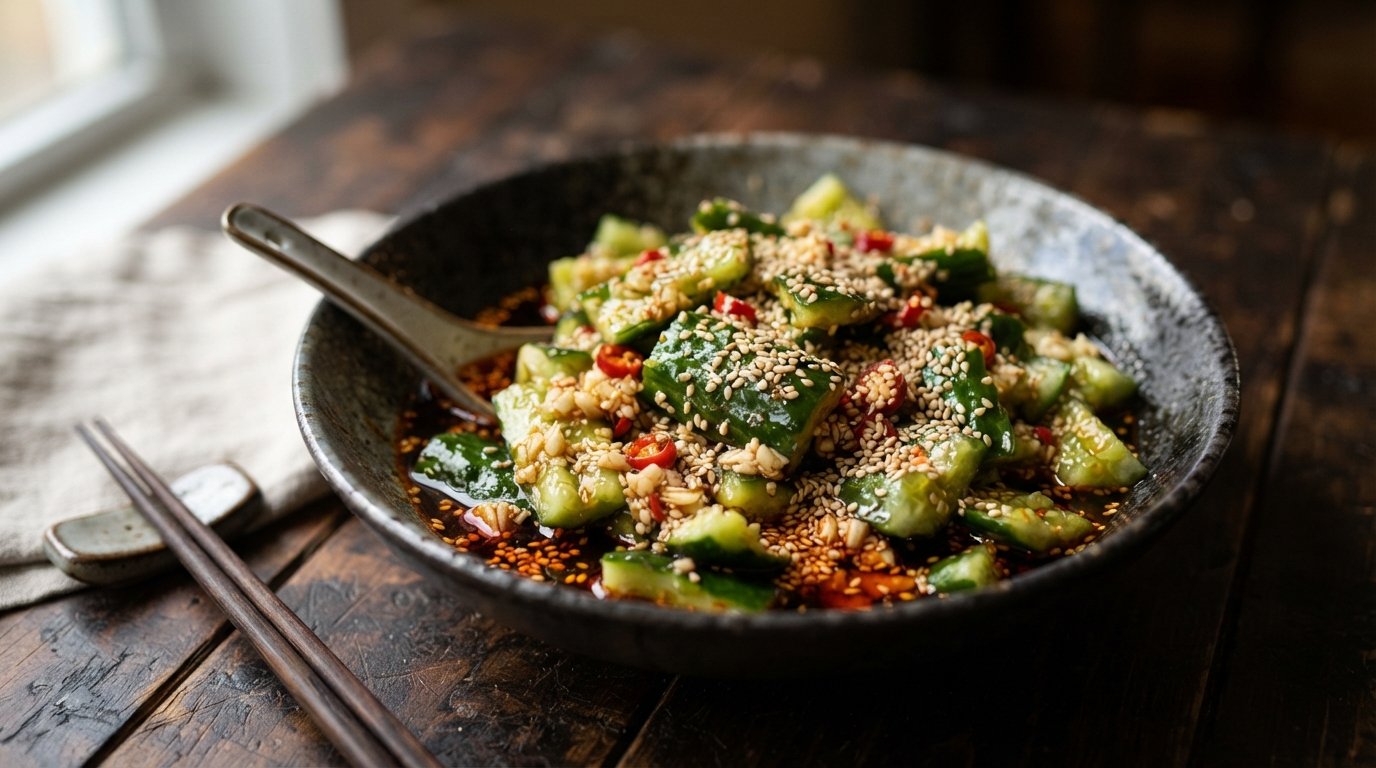
If you have ever wondered why restaurant-style cucumber salad tastes infinitely better than the one you make at home, the secret isn’t in the sauce—it is in the technique. This Smashed Cucumber Salad relies on a specific culinary method that transforms ordinary cucumbers into crisp, flavor-absorbing vessels. Unlike slicing, which creates smooth surfaces that repel dressing, smashing creates irregular, jagged edges and internal fractures. These micro-cracks act as capillaries, soaking up the savory soy-vinegar emulsion while maintaining a satisfying crunch that sliced cucumbers simply cannot achieve.
This dish is a staple in Chinese cuisine for good reason. It balances salty, sour, nutty, and spicy notes in perfect harmony, providing a refreshing palate cleanser against rich, oily mains. Whether you are looking for a quick weeknight side, a vibrant potluck contribution, or a low-carb snack that actually satisfies, this recipe delivers. In just ten minutes of active prep, you can create a dish that looks elegant, tastes complex, and feels incredibly fresh. Let’s dive into the art of the smash.
Why This Recipe Works
The science behind Smashed Cucumber Salad lies in surface area and cellular disruption. When you slice a cucumber with a knife, you sever cells cleanly, leaving a relatively smooth exterior. Dressing sits on top or slides off. When you smash a cucumber with the flat side of a cleaver or a rolling pin, you rupture cell walls unevenly. This mechanical action releases some moisture immediately (which we manage later) but, more importantly, creates a textured landscape of ridges and valleys.
These irregular surfaces increase the effective surface area by nearly double compared to slicing. Furthermore, the broken fibers inside the cucumber become spongy. When tossed with the acidic rice vinegar and salty soy sauce, osmosis pulls the seasoning deep into the flesh rather than letting it pool at the bottom of the bowl. The sesame oil then coats these rough edges, locking in the aroma and adding a glossy sheen that makes the dish visually appetizing. The result is a cucumber that tastes seasoned throughout, not just on the skin.
Why You’ll Love This Recipe
Superior Texture: The signature “smash” technique guarantees a crunch that holds up even after marinating, avoiding the mushiness common in sliced salads.
Rapid Preparation: No cooking required. From fridge to table in under 15 minutes including marinating time.
Flavor Absorption: The jagged edges soak up 3x more dressing than sliced cucumbers, ensuring every bite is packed with umami.
Dietary Friendly: Naturally vegan, gluten-free (if using tamari), keto-friendly, and low-calorie without sacrificing satisfaction.
Versatile Heat Level: Easily adjustable from mild and garlicky to fiery and numbing based on your chili preference.
Budget Staple: Cucumbers are inexpensive year-round, making this an economical way to add freshness to any meal.
Visual Appeal: The rustic, irregular chunks look artisanal and intentional, elevating simple ingredients into something special.
Ingredient Notes
Persian or English Cucumbers
Purpose: The star of the show. Their thin skins and small seeds require no peeling or deseeding, preserving texture and nutrients.
Substitutions: Regular slicing cucumbers work but must be peeled and deseeded first to avoid bitterness and toughness. Kirby cucumbers are excellent for extra crunch.
Buying Tips: Choose firm, dark green cucumbers with no yellowing or soft spots. They should feel heavy for their size, indicating high water content and freshness.
Storage Tips: Store unwrapped in the crisper drawer. Moisture accelerates rot; keep them dry until ready to use. Use within 5-7 days for optimal crunch.
Soy Sauce (or Tamari)
Purpose: Provides the foundational umami and saltiness. Essential for balancing the acidity of the vinegar.
Substitutions: Tamari for gluten-free; coconut aminos for soy-free/low-sodium; fish sauce (use sparingly) for non-vegan depth.
Buying Tips: Look for naturally brewed soy sauce with minimal additives. Avoid “chemically brewed” varieties which taste metallic.
Storage Tips: Refrigerate after opening to preserve flavor and prevent oxidation. Shelf life is 1-2 years refrigerated.
Rice Vinegar
Purpose: Adds bright, clean acidity that cuts through the richness of sesame oil and enhances the cucumber’s natural sweetness.
Substitutions: Apple cider vinegar (milder); white wine vinegar (sharper); black vinegar (Chinkiang) for authentic, complex maltiness.
Buying Tips: Unseasoned rice vinegar is preferred. Seasoned versions contain added sugar and salt, which throws off the dressing ratio.
Storage Tips: Store in pantry away from light. Does not require refrigeration but lasts longer when chilled.
Toasted Sesame Oil
Purpose: The aromatic finish. Its nutty fragrance signals “Asian cuisine” to the brain and coats the tongue, prolonging flavor perception.
Substitutions: Chili oil for heat-focused variation; perilla oil for Korean twist; walnut oil for earthy depth. Never substitute with raw sesame oil.
Buying Tips: Always buy toasted/dark sesame oil. Light sesame oil has almost no flavor. Check expiration dates; sesame oil goes rancid quickly.
Storage Tips: Refrigerate after opening. Rancid sesame oil smells like crayons—discard immediately if detected.
Fresh Garlic & Chili
Purpose: Garlic provides pungent warmth; fresh chili adds vibrant heat and color contrast. Both infuse the dressing instantly.
Substitutions: Garlic powder (1/4 tsp per clove) in emergencies; dried chili flakes instead of fresh; gochugaru for smoky Korean heat.
Buying Tips: Firm garlic bulbs with tight skins. Fresh red chilies should be glossy and taut, not wrinkled.
Storage Tips: Garlic keeps months in cool, dark place. Chilies last 1-2 weeks refrigerated in paper bag.
Toasted Sesame Seeds
Purpose: Visual garnish and textural contrast. Adds nutty crunch and professional plating finish.
Substitutions: Crushed peanuts; furikake; chopped scallions; nori strips.
Buying Tips: Buy pre-toasted or toast yourself in dry pan 2-3 mins until golden. Raw seeds lack flavor and crunch.
Storage Tips: Store in airtight container in freezer to prevent rancidity. Lasts 6+ months frozen.
Kitchen Equipment
Heavy Cleaver or Chef’s Knife: Essential for the smashing technique. The broad, flat blade distributes force evenly. A narrow paring knife will slip and cause injury.
Cutting Board: Stable, non-slip surface. Wood or bamboo preferred; plastic can groove and harbor bacteria from repeated smashing.
Small Mixing Bowl: For whisking dressing. Glass or ceramic allows you to see emulsification.
Large Serving Bowl: Wide enough to toss cucumbers without splashing dressing.
Measuring Spoons: Precision matters in balancing salty/sour/nutty ratios.
Optional: Rolling Pin: Alternative to cleaver for smashing. Safer for beginners but less efficient.
Step-by-Step Instructions
H3: Step 1 – Smash the Cucumbers
Wash cucumbers thoroughly. Place one on cutting board. Using flat side of heavy cleaver, strike firmly down the length of the cucumber, applying pressure until it cracks open into irregular chunks. Repeat for all cucumbers. Cut large pieces into bite-sized segments (approx. 1.5 inches).
Why this matters: Smashing creates the signature texture and maximizes surface area for dressing absorption. Uniform sizing ensures even marinating.
Visual Cue: Cucumbers should split along natural seams, creating jagged, uneven edges—not clean slices. Flesh should appear fractured, not smooth.
Texture Cue: Pieces should hold together but yield slightly to pressure. If they turn to mush, you hit too hard; if they barely crack, apply more force.
Common Mistake: Slicing instead of smashing. This defeats the purpose. Commit to the violence! Also, don’t smash so hard that pieces fly—cup hand over cucumber while striking.
Professional Tip: Angle the cleaver slightly and use wrist flick, not arm swing. Control prevents accidents and ensures consistent cracking.
H3: Step 2 – Prepare the Dressing
In small bowl, combine 3 tbsp soy sauce, 2 tbsp rice vinegar, 1 tbsp toasted sesame oil, 2 cloves minced garlic, and 1-2 finely chopped fresh red chilies. Whisk vigorously for 15 seconds until emulsified and fragrant.
Why this matters: Emulsifying integrates the oil into the aqueous base, preventing separation and ensuring even coating. Minced garlic releases allicin (flavor compound) only when crushed.
Aroma Cue: Sharp garlic pungency balanced by nutty sesame and tangy vinegar. Should smell inviting, not harsh.
Visual Cue: Mixture should appear slightly cloudy and unified, not separated into oil pools and dark liquid.
Common Mistake: Adding sesame oil first—it coats other ingredients and prevents proper mixing. Always whisk liquids first, then drizzle oil while whisking.
Professional Tip: Taste dressing before adding to cucumbers. It should taste slightly too strong—cucumbers will dilute it during marinating.
H3: Step 3 – Combine and Marinate
Place smashed cucumber chunks in large bowl. Pour dressing over cucumbers. Toss gently but thoroughly with hands or tongs, ensuring every crevice is coated. Let sit at room temperature for 10-15 minutes, tossing once halfway.
Why this matters: Room temperature marinating allows faster flavor penetration than cold fridge. Tossing redistributes settled dressing and ensures even seasoning.
Texture Cue: Cucumbers will soften slightly but retain crunch. Surface should glisten with dressing, not sit in puddles.
Color Cue: Green intensifies as dressing penetrates. Red chili flecks distribute evenly.
Common Mistake: Over-marinating (>30 mins). Cucumbers release excess water, becoming soggy and diluting dressing. Set timer!
Professional Tip: Massage dressing into cucumbers gently with clean hands for 30 seconds. Body heat and pressure accelerate absorption without damaging texture.
H3: Step 4 – Garnish and Serve
Transfer to serving bowl. Sprinkle generously with toasted sesame seeds. Optional: drizzle extra sesame oil or chili oil on top. Serve immediately or chill briefly.
Why this matters: Sesame seeds add final textural contrast and visual polish. Extra oil on top enhances aroma upon serving.
Visual Cue: Glossy, vibrant green cucumbers speckled with red chili and golden sesame seeds. Dressing should coat, not pool.
Aroma Cue: Nutty sesame dominates initially, followed by garlic-chili warmth as you eat.
Common Mistake: Adding sesame seeds during marinating—they get soggy and lose crunch. Always garnish last.
Professional Tip: Chill serving bowl 10 mins before plating. Cold bowl maintains cucumber crispness longer at table.
Expert Tips for Maximum Flavor & Crunch
Salt Before Smashing (Optional): For extra-crisp results, sprinkle smashed cucumbers with ½ tsp salt, let drain 10 mins, then rinse and pat dry before dressing. This removes excess water upfront, preventing sogginess during marinating. Skip if short on time—the standard method still works well.
Toast Your Own Sesame Seeds: Pre-toasted seeds often sit stale on shelves. Toast raw seeds in dry skillet 2-3 mins over medium heat, shaking constantly, until golden and fragrant. Cool completely before using. The difference in aroma is night and day.
Use Freshly Minced Garlic: Pre-minced jarred garlic lacks potency and contains preservatives that alter flavor. Mince fresh cloves just before dressing preparation for maximum enzymatic activity and pungency.
Balance Acidity Dynamically: Cucumbers vary in water content. After 10-min marinate, taste. If bland, add splash of soy sauce. If sharp, add pinch of sugar or more sesame oil. Adjust after initial marinate, not before.
Serve at Cool Room Temp: Ice-cold cucumbers mute flavors. Remove from fridge 5 mins before serving. The slight warmth unlocks volatile aromatics in sesame oil and garlic.
Double-Batch Dressing: Make extra dressing and store separately. Toss cucumbers with half now, reserve rest for tableside topping. Prevents over-marinating and lets guests customize intensity.
Common Mistakes to Avoid
Slicing Instead of Smashing: Creates smooth surfaces that repel dressing. Result: bland, watery salad. Fix: Commit to smashing. Use cleaver flat-side. Practice on one cucumber first.
Over-Marinating: >30 mins causes excessive water release and sogginess. Fix: Set timer. Taste at 10 mins. Drain excess liquid if marinating longer.
Using Light Sesame Oil: Has negligible flavor. Fix: Only use dark/toasted sesame oil. Check label for “toasted” or “dark.”
Adding Seeds Too Early: Sesame seeds become mushy if mixed in during marinate. Fix: Garnish immediately before serving.
Skipping Garlic Mincing: Whole or coarse garlic doesn’t infuse properly. Fix: Mince finely or grate on microplane for maximum surface area.
Using Warm Cucumbers: Warmth accelerates spoilage and softens texture prematurely. Fix: Keep cucumbers chilled until smashing. Work quickly.
Imbalanced Dressing: Too much vinegar = mouth-puckering; too much soy = overwhelmingly salty. Fix: Whisk thoroughly. Taste before adding. Remember cucumbers dilute.
Recipe Variations
Spicy Sichuan Style: Add 1 tsp Sichuan peppercorn oil and ½ tsp chili crisp to dressing. Numbing-spicy profile pairs perfectly with rich mains.
Vegan Umami Boost: Replace soy sauce with mushroom-based vegan Worcestershire + ½ tsp miso paste. Deepens savoriness without animal products.
Low-Sodium Version: Use reduced-sodium soy sauce + extra rice vinegar + pinch of sugar. Maintains balance with less salt.
Herbaceous Twist: Add 2 tbsp chopped cilantro or Thai basil to dressing. Fresh herbs brighten the profile beautifully.
Nutty Crunch Upgrade: Substitute sesame seeds with crushed roasted peanuts or cashews. Adds protein and different textural note.
Sweet-Sour Variation: Add 1 tsp honey or maple syrup to dressing. Balances heat for those sensitive to spice.
As Appetizer: Serve alongside edamame, steamed buns, or soup. Starts meal refreshingly.
With Beverages: Crisp lager, jasmine tea, or yuzu soda. Enhances cleansing effect.
Make Ahead & Meal Prep Tips
Prep Components Separately: Smash cucumbers and store dry in airtight container up to 24 hrs. Make dressing and store separately up to 3 days. Combine just before serving for peak crunch.
Marinate Briefly Ahead: Can marinate up to 30 mins ahead. Drain excess liquid before storing. Re-toss with fresh dressing splash before serving.
Garnish Last-Minute: Never pre-add sesame seeds or fresh herbs. Store separately and add right before eating.
Batch Dressing: Double or triple dressing recipe. Stores 1 week refrigerated. Shake before using. Saves time for future batches.
Cucumber Selection: Buy firm cucumbers 1-2 days ahead. They improve slightly in fridge as starches convert to sugars, enhancing natural sweetness.
Storage Instructions
Refrigerator: Store leftover Smashed Cucumber Salad in airtight container up to 2 days. Texture degrades after 24 hrs; best consumed same day.
Freezer: Not recommended. Freezing ruptures cell walls completely, turning cucumbers to mush upon thawing. Discard if frozen accidentally.
Dressing Only: Store unused dressing in jar up to 1 week refrigerated. Shake well before reuse. Garlic flavor intensifies over time.
Dry Cucumbers: Unused smashed cucumbers (undressed) store 24 hrs in container lined with paper towel to absorb moisture.
Reheating Instructions
Do Not Reheat: This is a cold salad. Heating destroys texture and alters flavor profile negatively.
If Too Cold: Remove from fridge 5-10 mins before serving. Room temp enhances flavor perception.
Reviving Leftovers: If slightly soggy, drain excess liquid. Toss with fresh splash of sesame oil and vinegar. Add new sesame seeds. Do not expect original crunch.
Safety Note: Discard if left at room temp >2 hrs. Cucumbers are high-moisture; bacterial growth risk increases rapidly.
Nutritional Information
Estimates per serving (based on 1 medium cucumber + 1 tbsp dressing):
Calories: 85 kcal
Protein: 2g
Carbohydrates: 6g
Fat: 6g
Fiber: 1g
Sugar: 3g
Sodium: 480mg
Note: Values vary based on soy sauce brand, cucumber size, and exact dressing ratios. Always check labels for precise tracking.
Troubleshooting Guide
Problem
Cause
Solution
Salad Too Watery
Over-marinated or didn’t drain excess liquid.
Drain liquid immediately. Toss with fresh dressing splash. Next time, limit marinate to 15 mins max.
Bland Flavor
Insufficient dressing or cucumbers too watery.
Add soy sauce + sesame oil incrementally. Taste after each addition. Ensure dressing was emulsified properly.
Too Salty
Too much soy sauce or insufficient acid.
Add rice vinegar + pinch of sugar. Dilute with undressed cucumber chunks if possible.
Mushy Texture
Over-smashed or old cucumbers.
Next time, use firmer cucumbers and lighter smashing force. Avoid over-marinating.
Sesame Oil Bitter
Rancid oil or overheated during toasting.
Discard. Use fresh toasted sesame oil. Never heat sesame oil directly; always add off-heat.
Garlic Too Harsh
Garlic minced too fine or sat too long.
Next time, mince coarser or add garlic just before serving. Balance with extra sesame oil.
Frequently Asked Questions
1. Can I use regular slicing cucumbers? Yes, but peel them first and scoop out seeds with spoon. The skin is tough and bitter; seeds are watery and bland. Persian/English cucumbers are superior due to thin skin and small seeds.
2. Why does my salad get watery after sitting? Cucumbers are 95% water. Salt and acid draw out moisture via osmosis. This is normal. To minimize, salt-smash-drain before dressing, or serve immediately after 10-min marinate. Never store dressed salad >24 hrs.
3. Is this salad spicy? Mildly, from fresh chili. Heat level is fully customizable. Omit chili for mild version; add chili oil or extra fresh chilies for fiery version. Seeds contain most heat—remove them for milder flavor.
4. Can I make this without sesame oil? Technically yes, but it loses signature aroma. Substitute with chili oil, perilla oil, or neutral oil + toasted sesame seeds blended into paste. Sesame oil is irreplaceable for authentic flavor.
5. How do I prevent garlic from turning blue/green? Acid reacts with sulfur compounds in garlic, causing harmless color change. Prevent by using fresher garlic, minimizing acid contact time, or adding garlic just before serving. Color doesn’t affect safety or taste.
6. Can I add other vegetables? Absolutely. Radishes, bell peppers, carrots, or edamame complement well. Add just before serving to maintain crunch. Avoid high-water veggies like tomatoes—they exacerbate sogginess.
7. Is this salad keto-friendly? Yes. Cucumbers are low-carb. Ensure soy sauce is sugar-free (most are). Sesame oil and seeds are keto-approved. Net carbs ~3g per serving. Perfect for low-carb diets.
8. Why restaurant versions taste better? Restaurants use ultra-fresh cucumbers, freshly toasted sesame oil, and precise timing. They also often salt-drain cucumbers before dressing. Replicate by using premium ingredients and strict timing.
Final Thoughts
Mastering Smashed Cucumber Salad is about embracing simplicity and technique over complexity. The humble cucumber, when treated with respect and the right mechanical action, becomes something extraordinary. This recipe proves that exceptional food doesn’t require expensive ingredients or hours of labor—just understanding how texture influences flavor absorption.