Quick Recipe Summary
| Feature | Details |
|---|---|
| Prep Time | 20 minutes |
| Cook Time | 1 hour 30 minutes |
| Total Time | 1 hour 50 minutes |
| Servings | 4-6 |
| Cuisine | American Comfort Food |
| Course | Main Course / Dinner |
| Difficulty | Easy |
| Calories | ~650 kcal per serving |
Table of Contents
- Introduction
- Why This Recipe Works
- Why You’ll Love This Recipe
- Ingredient Notes
- Kitchen Equipment
- Preparation Information
- Step-by-Step Instructions
- Expert Tips
- Common Mistakes
- Recipe Variations
- What to Serve With This Recipe
- Make Ahead Tips
- Meal Prep Tips
- Storage Instructions
- Reheating Instructions
- Nutritional Information
- Troubleshooting Guide
- Frequently Asked Questions
- Final Thoughts
Introduction
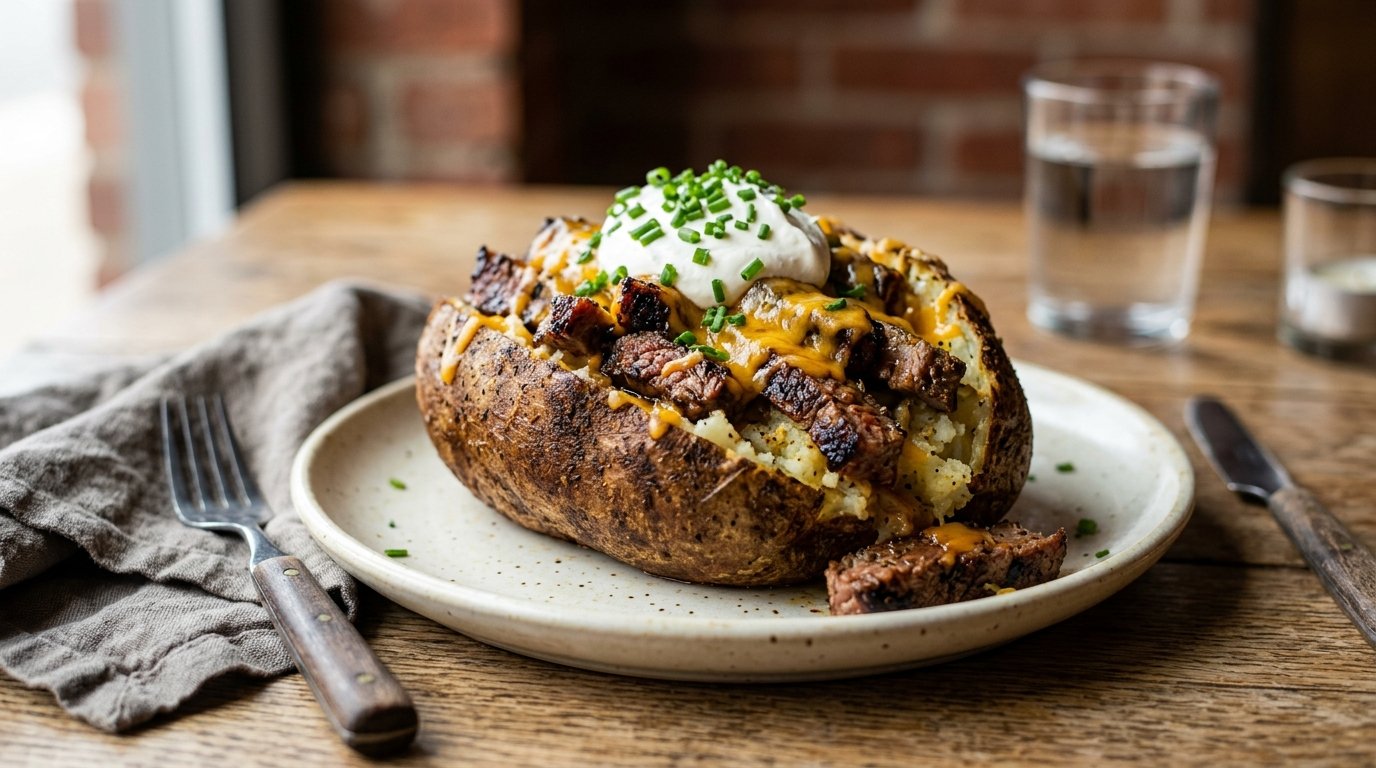
There is nothing quite like the comfort of a hot, fluffy baked potato loaded with savory toppings. These loaded steak and cheese baked potatoes take the classic spud to an entirely new level of indulgence. Imagine tender, seared steak cubes nestled inside a perfectly crisp-skinned potato, smothered in gooey melted cheddar, crispy bacon bits, cool sour cream, and fresh green onions. It is a meal that feels like a hug on a plate, combining the hearty satisfaction of a steak dinner with the nostalgic comfort of a loaded potato.
Whether you are looking for a show-stopping weeknight dinner or a crowd-pleasing dish for game day, this recipe delivers. The contrast between the crispy potato skin, the creamy interior, the juicy steak, and the sharp cheese creates a symphony of textures and flavors that will have everyone asking for seconds. Best of all, it is surprisingly simple to assemble once your components are prepped, making it accessible for home cooks of all skill levels. Let’s dive into how to make these steak and cheese baked potatoes your new family favorite.
Why This Recipe Works
This recipe succeeds because it treats each component with respect before bringing them together. Instead of just throwing cold leftovers onto a potato, we sear the steak cubes in a hot cast-iron skillet to develop a rich, caramelized crust (the Maillard reaction) while keeping the interior juicy. We bake the potatoes until the skins are crisp and the insides are pillowy soft. Finally, we melt the cheese directly over the steak and potato so it acts as a delicious glue, binding the flavors together. The addition of cool sour cream and fresh scallions at the end provides a necessary brightness and temperature contrast that cuts through the richness of the meat and cheese.
Why You’ll Love This Recipe
- Restaurant-Quality at Home: Achieves the same flavor profile as a high-end steakhouse side dish but as a main course.
- Customizable Toppings: Easily adaptable to picky eaters; kids can have just cheese and bacon while adults enjoy the full steak experience.
- One-Pan Assembly: While there are two cooking vessels (skillet and oven), the assembly happens on a single sheet pan for easy cleanup.
- High Protein & Satiating: The combination of beef and potatoes keeps you full for hours, preventing late-night snacking.
- Visual Appeal: The cheese pull and vibrant green onions make this dish incredibly photogenic for social media or family dinners.
Ingredient Notes
Russet Potatoes
- Purpose: The structural base. Russets are high in starch and low in moisture, which yields a fluffy interior and crispy skin when baked.
- Substitutions: Yukon Golds can be used for a creamier, waxier texture, though the skin won’t get as crisp. Avoid red or fingerling potatoes as they are too waxy.
- Buying Tips: Choose potatoes that are firm, heavy for their size, and free of sprouts, green spots, or soft blemishes. Medium-to-large uniform sizes ensure even cooking.
- Storage Tips: Store in a cool, dark, well-ventilated place (like a pantry). Never store raw potatoes in the fridge, as the cold converts starch to sugar, altering flavor and texture.
Steak (Sirloin or Ribeye)
- Purpose: The protein star. Provides savory, umami-rich bites that complement the mild potato.
- Substitutions: Flank steak, skirt steak, or even leftover roast beef work well. For a budget option, chuck roast cut small and braised briefly can substitute, though searing is preferred here.
- Buying Tips: Look for good marbling (white fat streaks) for flavor and tenderness. Ask your butcher to cube it, or slice against the grain yourself.
- Storage Tips: Keep refrigerated until ready to cook. If freezing, thaw in the fridge overnight.
Sharp Cheddar Cheese
- Purpose: Melty, tangy binder. Sharp cheddar has a stronger flavor that stands up to the beef and doesn’t get lost.
- Substitutions: Monterey Jack for better meltability, Pepper Jack for heat, or Gruyère for a nuttier profile. Avoid pre-shredded bagged cheese if possible, as anti-caking agents prevent smooth melting.
- Buying Tips: Buy a block and shred it yourself for the best cheese pull.
- Storage Tips: Wrap tightly in parchment paper then plastic wrap; avoid direct plastic contact which can cause sweating.
Bacon Bits
- Purpose: Salty, crunchy texture contrast.
- Substitutions: Real cooked bacon crumbled, pancetta, or prosciutto chips. Vegetarian bacon bits can be used for a meat-free crunch.
- Buying Tips: Check labels; many “bacon bits” are soy-based. For this recipe, real pork bacon offers superior flavor.
- Storage Tips: Store cooked bacon in an airtight container in the fridge for up to 5 days.
Sour Cream & Green Onions
- Purpose: Cooling agent and fresh aromatic finish.
- Substitutions: Greek yogurt (higher protein, tangier), crème fraîche, or chives instead of green onions.
- Buying Tips: Full-fat sour cream melts better and tastes richer than low-fat versions.
- Storage Tips: Keep dairy refrigerated. Wash and dry green onions thoroughly before chopping to prevent sogginess.
Kitchen Equipment
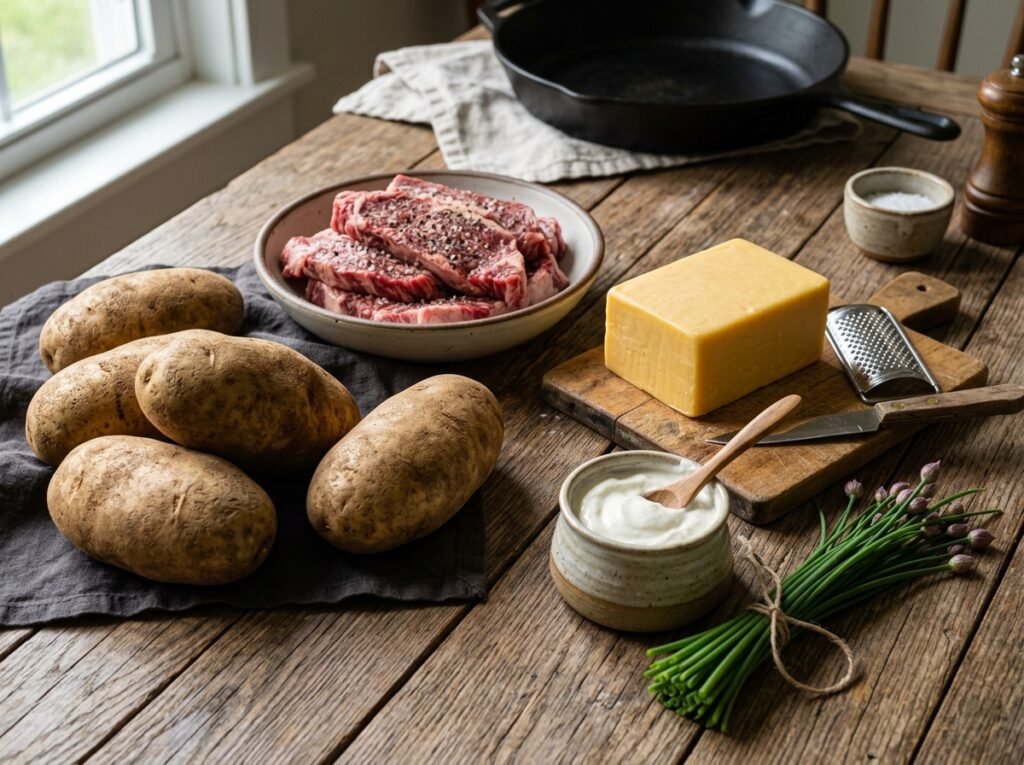
- Cast Iron Skillet: Essential for achieving a hard sear on the steak cubes without steaming them. Retains heat beautifully.
- Rimmed Baking Sheet: For baking the potatoes and assembling the final dish. Line with parchment paper or foil for easy cleanup.
- Sharp Chef’s Knife & Cutting Board: For cubing steak and slicing potatoes safely.
- Tongs: For flipping steak and handling hot potatoes.
- Fork: To pierce potatoes before baking (prevents exploding) and to fluff the interior.
- Oven Mitts: Potatoes retain heat for a long time; protect your hands.
- Cheese Grater: If using block cheese.
- Small Bowls: For organizing mise en place (toppings).
Preparation Information
- Prep Time: 20 minutes
- Cook Time: 1 hour 30 minutes (includes potato baking time)
- Total Time: 1 hour 50 minutes
- Servings: 4-6 large potatoes
Step-by-Step Instructions
H3: Bake the Potatoes to Perfection
Start by preheating your oven to 400°F (200°C). Scrub the russet potatoes clean under running water and pat them completely dry—moisture is the enemy of crispy skin. Pierce each potato 4-5 times with a fork to allow steam to escape during baking. Rub each potato lightly with olive oil or vegetable oil and season generously with kosher salt. Place them directly on the oven rack or on a baking sheet lined with foil. Bake for 60-75 minutes, depending on size. They are done when a knife slides in with zero resistance and the internal temperature reaches 205°F (96°C). Why this matters: High heat and oil create a barrier that crisps the skin while the interior steams in its own jacket. Skipping the oil results in leathery, tough skin.
H3: Sear the Steak Cubes
While the potatoes bake, prepare your steak. Cut 1 lb of sirloin or ribeye into ½-inch cubes. Pat the meat very dry with paper towels; wet meat steams instead of searing. Heat a cast-iron skillet over medium-high heat until smoking hot. Add a high-smoke-point oil (avocado or grapeseed). Add steak cubes in a single layer—do not overcrowd the pan, or they will braise in their own juices. Sear undisturbed for 2-3 minutes per side until a deep brown crust forms. Season with salt and pepper only after searing to avoid drawing out moisture prematurely. Remove from heat and let rest for 5 minutes. Visual Cue: You want a mahogany-brown exterior, not gray. Aroma Cue: A rich, nutty, roasted smell indicates proper caramelization.
H3: Assemble the Loaded Potatoes
Once potatoes are baked and steak is rested, reduce oven temp to 350°F (175°C) if you plan to melt cheese immediately, or keep warm. Slice each potato lengthwise down the center, stopping about ½ inch from the ends. Use a fork to gently push the ends toward the center to open the potato wide, creating a “boat.” Fluff the interior flesh with the fork to create nooks for toppings. Spoon the seared steak cubes generously into the opening. Sprinkle a handful of shredded sharp cheddar over the steak. Why this matters: Opening the potato while hot allows steam to escape, preventing sogginess. Layering cheese over steak ensures it melts into the meat rather than sliding off.
H3: Melt and Garnish
Place the assembled potatoes back in the oven for 5-8 minutes, just until the cheese is bubbly and fully melted. Watch closely to prevent burning. Remove from oven. Immediately top with a dollop of cold sour cream, a sprinkle of crispy bacon bits, and freshly sliced green onions. Serve immediately while the cheese is still stretching. Texture Cue: The cheese should be viscous and glossy, not oily or separated. The sour cream should remain distinct and cool against the hot potato.
Expert Tips
- The Double-Bake Method: For extra-crispy skins, bake the potatoes once, scoop out most of the flesh, mix it with butter/cream, stuff it back in, and bake again. However, for this loaded version, the single-bake method shown preserves more structural integrity to hold the heavy steak topping.
- Rest Your Meat: Always let the steak rest for 5 minutes after searing. This allows the muscle fibers to relax and reabsorb juices. Cutting immediately causes all the flavorful liquid to run out onto the cutting board.
- Shred Your Own Cheese: Pre-shredded cheese contains cellulose powder to prevent clumping. This powder inhibits melting, resulting in a grainy texture. Buying a block and grating it yourself guarantees a silky, smooth melt.
- Season Every Layer: Don’t just salt the steak. Lightly season the potato interior and even the cheese layer. Bland potatoes can ruin an otherwise perfect dish.
- Use a Thermometer: Potato doneness is subjective by touch. An instant-read thermometer taking the guesswork out. Pull at 205°F for fluffy, 210°F for very soft.
Common Mistakes
- Overcrowding the Skillet: Placing too many steak cubes in the pan drops the temperature rapidly. The meat releases water and boils in its own juices instead of searing. Fix: Cook in batches. It takes 2 minutes longer but yields restaurant-quality crust.
- Microwaving the Potatoes: While faster, microwaving creates a gummy, wet interior and rubbery skin. Fix: Always use the oven. If short on time, microwave for 5 minutes to start, then finish in the oven for 20 minutes to crisp the skin.
- Adding Cold Toppings Too Early: Putting sour cream on before the cheese is melted cools the entire dish rapidly. Fix: Melt cheese first, then add cold garnishes right before serving.
- Using Waxy Potatoes: Red or yellow potatoes have less starch and more sugar/water. They won’t get fluffy. Fix: Stick to Russets or Idaho potatoes for baking.
- Slicing Potatoes Before Baking: Cutting raw potatoes exposes too much surface area, drying them out. Fix: Bake whole, slice only when ready to load.
Recipe Variations
- Spicy Southwest: Swap cheddar for pepper jack. Top with diced jalapeños, pico de gallo, and a drizzle of chipotle crema. Add cumin to the steak seasoning.
- Chicken Ranch: Substitute steak with grilled chicken breast cubes. Use ranch dressing instead of sour cream. Top with blue cheese crumbles and celery leaves.
- Vegetarian Mushroom Swiss: Replace steak with sautéed cremini mushrooms and caramelized onions. Use Swiss or Gruyère cheese. Finish with fresh thyme.
- BBQ Beef: Toss seared steak cubes in your favorite BBQ sauce before loading. Use smoked gouda instead of cheddar. Top with fried onion strings.
- Breakfast Style: Use diced ham or sausage instead of steak. Top with a fried egg, hollandaise sauce, and chives.
- Low-Carb/Keto: Skip the potato entirely. Use large portobello mushroom caps or halved spaghetti squash as the vessel. Load with steak and cheese as directed.
- Extra Cheesy Four-Course: Mix cheddar, mozzarella, parmesan, and fontina for a complex cheese blend. Broil for 1 minute at the end for a golden-brown cheese crust.
- Healthy Lightened-Up: Use sweet potatoes instead of russets (lower glycemic index). Use Greek yogurt instead of sour cream. Reduce cheese by half and increase veggies like roasted broccoli or spinach.
What to Serve With This Recipe
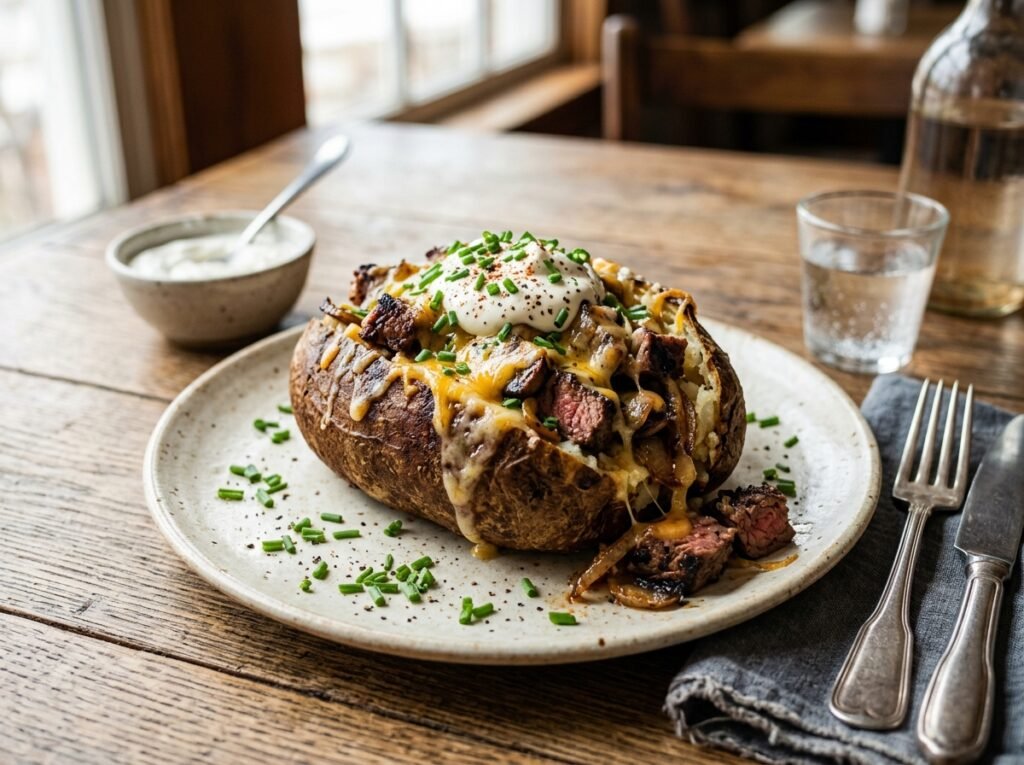
Since this dish is rich and hearty, pair it with lighter, acidic sides to balance the palate:
- Side Salads: A crisp Caesar salad, arugula salad with lemon vinaigrette, or a simple cucumber tomato salad.
- Vegetables: Steamed green beans with almonds, roasted asparagus with balsamic glaze, or garlic sautéed spinach.
- Soups: A cup of French onion soup or a light tomato basil bisque makes a great starter.
- Drinks: A bold Cabernet Sauvignon or Malbec pairs beautifully with the steak and cheese. For non-alcoholic, try sparkling water with lime or an iced tea.
- Dessert: Keep it light after such a heavy meal. Fresh berries with whipped cream, lemon sorbet, or a small fruit tart.
Make Ahead Tips
- Potatoes: Bake potatoes up to 2 days ahead. Cool completely, wrap individually in foil, and refrigerate. Reheat in a 350°F oven for 15-20 minutes before loading.
- Steak: Sear steak cubes up to 1 day ahead. Store in an airtight container. Reheat gently in a skillet or microwave before assembling to avoid overcooking.
- Toppings: Chop green onions, cook bacon, and shred cheese up to 3 days ahead. Store separately in airtight containers.
- Assembly: Do NOT assemble fully ahead of time. The potato will become soggy. Wait until ready to serve to combine hot components.
Meal Prep Tips
- Component Prep: Sunday meal prep can focus on prepping individual components. Bake a batch of potatoes, sear a large batch of steak, and portion toppings into containers.
- Lunch Boxes: These travel reasonably well if kept warm. Use an insulated container. Pack sour cream and green onions separately to add fresh upon eating.
- Freezer Friendly: Fully assembled loaded potatoes do NOT freeze well. The potato texture becomes grainy and watery upon thawing. Freeze components separately if necessary.
Storage Instructions
- Refrigerator: Store leftover loaded potatoes in an airtight container for up to 3-4 days. Keep toppings mixed in; separating them after assembly is messy and impractical.
- Freezer: Not recommended for assembled potatoes. However, plain baked potatoes (without toppings) can be frozen for up to 3 months. Wrap tightly in plastic then foil. Thaw in fridge overnight before reheating and adding fresh toppings.
- Safety: Never leave cooked potatoes or steak at room temperature for more than 2 hours. Refrigerate promptly.
Reheating Instructions
- Oven (Best Method): Preheat to 350°F. Place potatoes on a baking sheet. Cover loosely with foil to prevent cheese from burning. Heat for 15-20 minutes until internal temp reaches 165°F. Remove foil for last 2 minutes to re-crisp cheese.
- Air Fryer: Excellent for restoring crispness. Reheat at 350°F for 5-7 minutes. Watch closely as air fryers can burn cheese quickly.
- Microwave (Fastest): Place on microwave-safe plate. Cover with damp paper towel to retain moisture. Heat in 30-second intervals, checking frequently. Note: Skin will be soft, not crisp. Add fresh cheese/garnish after heating to revive texture.
- Stovetop: Not recommended for whole potatoes. Can reheat steak filling separately in a skillet, then spoon back into warmed potato.
Nutritional Information
Approximate values per serving (based on 6 servings):
- Calories: 650 kcal
- Protein: 38g
- Carbohydrates: 52g
- Fat: 32g
- Fiber: 5g
- Sugar: 3g
- Sodium: 850mg
Note: Values vary based on potato size, steak cut, and amount of cheese/sour cream used. Use a nutrition calculator with your specific brands for precise tracking.
Troubleshooting Guide
- Potato Skin Too Tough: Likely under-oiled or under-salted. Next time, rub generously with oil and coarse salt before baking. Ensure oven is fully preheated to 400°F.
- Cheese Oily/Separated: Overheated or wrong cheese type. Sharp cheddar can break if heated too aggressively. Lower oven temp to 350°F for melting. Mix with a little cornstarch (¼ tsp per cup) to stabilize emulsion.
- Steak Chewy/Tough: Overcooked or wrong cut. Sirloin can toughen past medium. Sear quickly over high heat; don’t cook through in the pan. Let rest before cutting. Consider using tenderloin or ribeye for guaranteed tenderness.
- Soggy Potato Interior: Potato was pierced insufficiently, trapping steam. Or topped while still steaming excessively. Ensure adequate piercing. Let potato rest 5 minutes after baking before slicing to allow steam to dissipate.
- Bland Flavor: Under-seasoned. Potatoes need significant salt. Steak needs salt AND pepper. Cheese adds salt, but balance is key. Taste potato flesh before loading; adjust seasoning if needed.
Frequently Asked Questions
Q: Can I use sweet potatoes instead of russets? A: Yes, but the texture and flavor will differ significantly. Sweet potatoes are denser, sweeter, and have thinner skins. They pair excellently with black beans, corn, and spicy toppings but may clash with traditional steak and cheddar profiles. Adjust baking time as sweet potatoes often cook faster.
Q: How do I know when the steak cubes are done? A: For ½-inch cubes, 2-3 minutes per side over high heat usually achieves medium-rare to medium. Use an instant-read thermometer; pull at 130-135°F for medium-rare. Remember, residual heat will carry them another 5 degrees. Better to slightly undercook since they’ll be in a hot potato.
Q: Can I make this vegetarian? A: Absolutely! Substitute steak with portobello mushrooms, cauliflower steaks, or plant-based meat crumbles. Sauté mushrooms in butter with garlic and thyme for umami depth. Use vegetarian bacon bits and ensure cheese is rennet-free if strict vegetarian.
Q: Why are my potatoes gummy inside? A: Gummy texture usually means overworking the potato flesh with a mixer or masher, or using the wrong variety. For baked potatoes, always fluff with a fork, never mash. Stick to high-starch russets. Also, ensure potatoes are fully cooked; undercooked starch feels waxy/gummy.
Q: Can I prep these for a party and hold them? A: Yes, but timing is crucial. Bake potatoes and sear steak ahead. Hold potatoes in a 200°F oven wrapped in foil for up to 2 hours. Sear steak just before serving or reheat gently. Assemble and melt cheese right before guests arrive. Set up a topping bar so guests can customize.
Q: Is it safe to eat the potato skin? A: Yes, and it’s highly nutritious! The skin contains nearly half the fiber and significant potassium. Just scrub thoroughly to remove dirt. Avoid skins with green tinges (solanine toxin) or deep eyes/blemishes.
Q: What cut of steak is best for cubing? A: Sirloin tip, top sirloin, or ribeye are ideal. They’re tender enough for quick searing but affordable enough for cubing. Avoid lean cuts like round or flank unless marinated and sliced very thin, as they can become chewy when cubed and seared.
Q: Can I use pre-cooked steak leftovers? A: Yes, this is a fantastic way to use leftover steak! Simply warm the cubes gently in a skillet with a splash of broth or butter to refresh moisture. Avoid microwaving leftover steak directly as it toughens. Load onto hot potatoes and proceed with cheese melting.
Final Thoughts
These loaded steak and cheese baked potatoes prove that comfort food doesn’t have to be complicated to be extraordinary. By focusing on technique—proper searing, perfect baking, and thoughtful layering—you elevate humble ingredients into something truly special. Whether you’re feeding a hungry family after soccer practice or impressing friends at a casual dinner party, this dish delivers consistent wow-factor. Don’t be intimidated by the multiple components; each step is straightforward and forgiving. Once you master this recipe, you’ll find yourself returning to it again and again, tweaking toppings and experimenting with cheeses. So grab those russets, fire up the skillet, and treat yourself to the ultimate loaded potato experience. Have you tried this recipe? Leave a comment below with your favorite variations or tips—I’d love to hear how you made it your own! Don’t forget to rate the recipe if you enjoyed it. Happy cooking!