
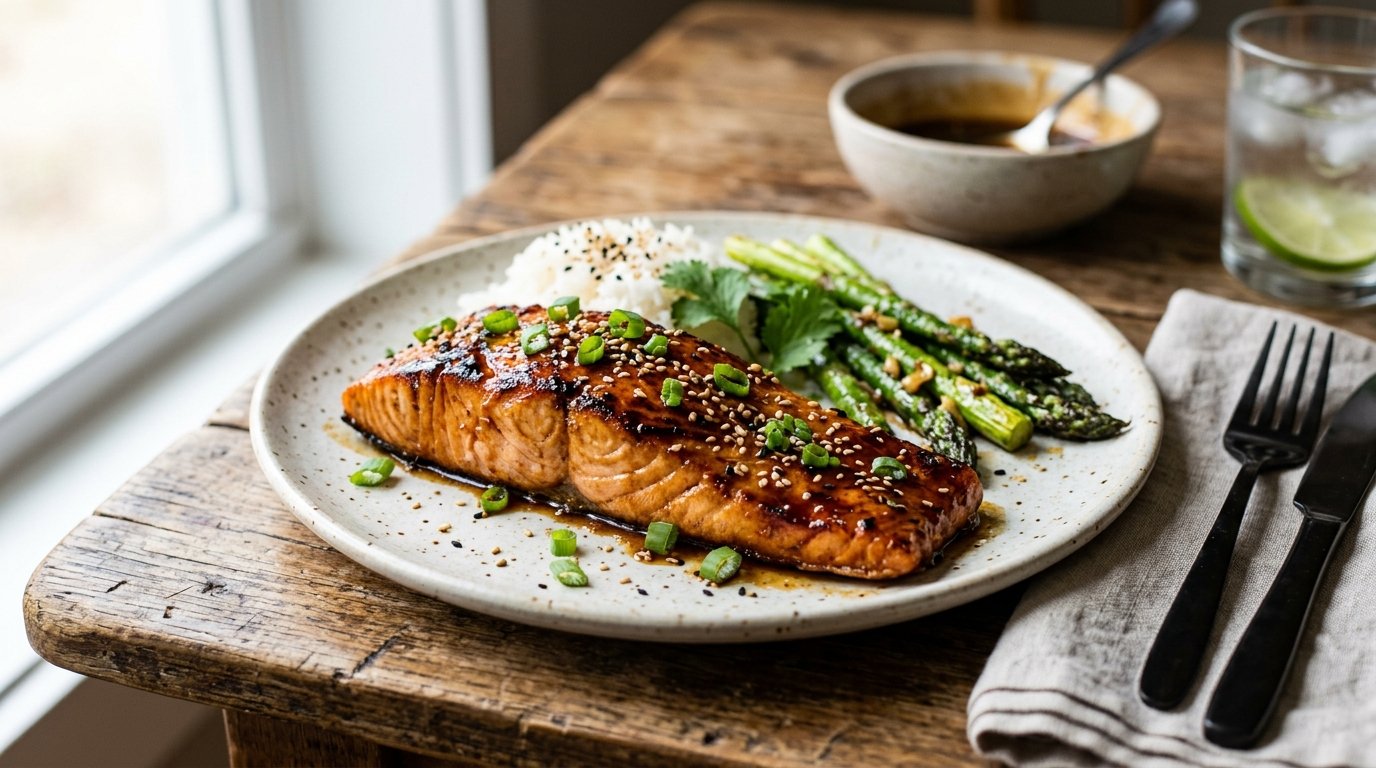
Quick Recipe Summary
| Prep Time | 10 Minutes |
|---|---|
| Cook Time | 12 Minutes |
| Total Time | 22 Minutes |
| Servings | 4 |
| Cuisine | Asian Fusion / American |
| Course | Main Course |
| Difficulty | Easy |
| Calories | ~450 kcal per serving |
Table of Contents
- Introduction
- Why This Recipe Works
- Why You’ll Love This Recipe
- Ingredient Notes
- Kitchen Equipment
- Step-by-Step Instructions
- Expert Tips for Perfectly Crispy Skin
- Common Mistakes to Avoid
- Recipe Variations
- What to Serve With This Recipe
- Make Ahead & Meal Prep Tips
- Storage & Reheating Instructions
- Nutritional Information
- Troubleshooting Guide
- Frequently Asked Questions
- Final Thoughts
Introduction
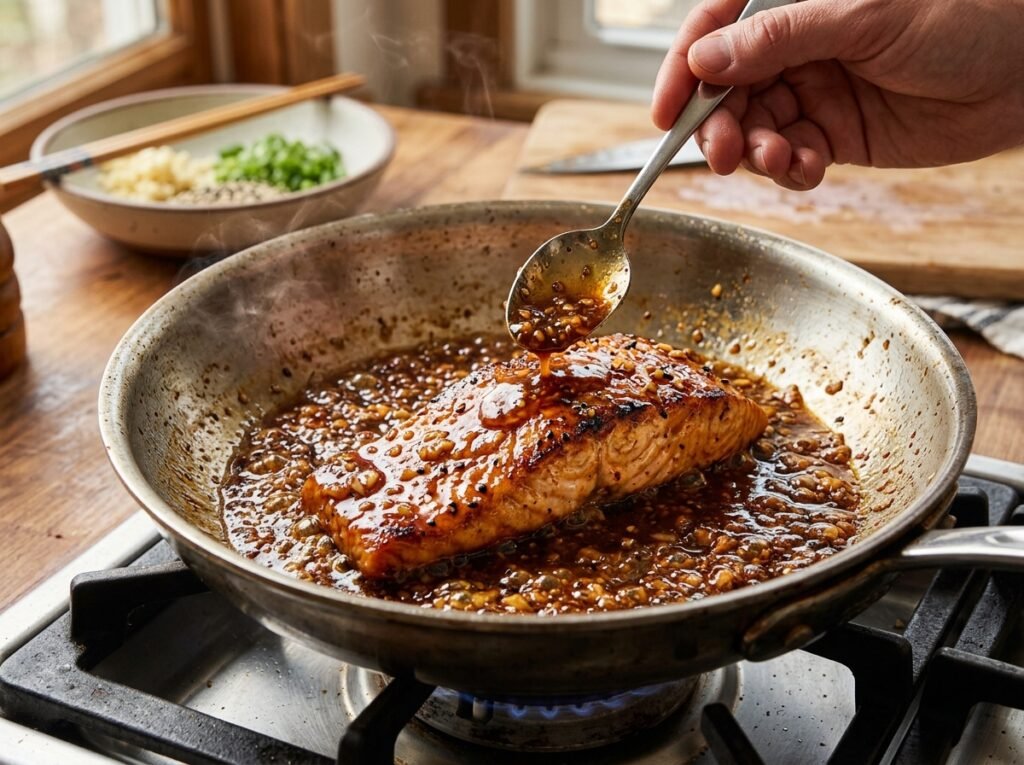
There is a specific moment in cooking when you realize that restaurant-quality seafood doesn’t require a professional kitchen or hours of prep; it simply requires respecting the ingredient and mastering a few key techniques. This Honey Garlic Soy Glazed Salmon is the epitome of weeknight elegance, delivering a shatteringly crisp skin and tender, flaky flesh coated in a sticky, sweet-savory glaze that balances umami, acidity, and richness in every bite. The combination of honey’s floral sweetness, garlic’s pungent warmth, and soy sauce’s deep saltiness creates a flavor profile that is both comforting and exciting, transforming humble salmon fillets into a centerpiece-worthy dish.
Unlike baked salmon that can sometimes emerge dry or bland, pan-searing this fish ensures a textural contrast that elevates the entire eating experience. The high heat of the skillet renders the fat beneath the skin, creating a golden-brown crust that acts as a barrier against moisture loss, while the quick glaze application at the end adds a glossy finish without overcooking the delicate protein. Whether you are hosting a dinner party, meal prepping for the week, or simply craving something nourishing yet indulgent, this recipe proves that exceptional food is accessible to everyone. It bridges the gap between healthy eating and pure comfort, making it a staple for anyone who loves bold flavors and perfect execution.
Why This Recipe Works
The success of this Honey Garlic Soy Glazed Salmon lies in the science of thermal transfer and emulsion. Salmon is an oily fish with a thick layer of subcutaneous fat directly beneath the skin. When placed skin-side down in a hot pan, this fat renders slowly, effectively frying the skin from the inside out while the direct contact with the metal creates the Maillard reaction—that complex browning process responsible for deep, savory flavors and irresistible crunch. Starting with a cold pan or wet skin would steam the fish instead of searing it, resulting in a rubbery, pale exterior that lacks character.
Furthermore, the timing of the glaze is critical. Honey contains sugars that caramelize rapidly but burn easily. By adding the honey-garlic-soy mixture only after the salmon is nearly cooked through and flipping it briefly, we allow the sauce to thicken and cling to the flesh without scorching. The lemon juice added at the very end provides necessary acid to cut through the richness of the oil and honey, balancing the palate and brightening the overall flavor profile. This sequential approach ensures that each component—crisp skin, moist flesh, and glossy glaze—is perfected individually before coming together in harmony.
Why You’ll Love This Recipe
- Restaurant-Quality Texture: Achieves glass-like crispy skin and buttery-soft interior that rivals high-end seafood establishments.
- Balanced Flavor Profile: The interplay of sweet honey, salty soy, pungent garlic, and bright lemon prevents the dish from being one-dimensional or cloying.
- Speed & Simplicity: From fridge to table in under 25 minutes, making it ideal for busy weeknights without sacrificing quality.
- Versatile Base: The glaze works beautifully with other fatty fish like trout or arctic char, and pairs well with diverse sides from rice to roasted vegetables.
- Nutrient-Dense: Packed with omega-3 fatty acids, high-quality protein, and essential vitamins, supporting heart and brain health.
- Visual Appeal: The glossy amber glaze and vibrant pink flesh make for stunning plating that looks as good as it tastes.
- Kid-Friendly: The sweet-savory glaze appeals to younger palates who might reject plain fish, while adults appreciate the sophisticated depth.
Ingredient Notes
Salmon Fillets (Skin-On)
- Purpose: Primary protein. Skin protects flesh during searing and becomes edible crisp. Center-cut fillets ensure even thickness and cooking.
- Substitutions: Steelhead trout, arctic char, or branzino (adjust cook time). Skinless fillets work but won’t achieve same crispness; reduce oil slightly.
- Buying Tips: Look for bright orange-pink flesh with distinct white marbling (fat lines). Flesh should spring back when pressed. Avoid dull color, gaping muscle fibers, or ammonia smell. Wild-caught has deeper flavor; farmed is fattier/more forgiving.
- Storage Tips: Store in coldest part of fridge, use within 2 days. Freeze up to 3 months if vacuum-sealed. Thaw overnight in fridge, never room temp. Pat bone-dry before cooking.
Honey (Raw or Clover Preferred)
- Purpose: Natural sweetener that caramelizes into sticky glaze. Balances salt/acid. Floral notes complement salmon’s richness.
- Substitutions: Maple syrup (deeper/earthier), agave nectar (milder/vegan), or brown rice syrup (less sweet/thicker). Avoid corn syrup; lacks complexity/burns faster.
- Buying Tips: Raw/unfiltered retains enzymes/flavor. Check labels for “pure honey”; many commercial brands are adulterated. Darker honeys (buckwheat) offer bolder flavor but may overpower delicate fish.
- Storage Tips: Store at room temperature indefinitely. Crystallization is natural; warm jar in hot water to reliquefy. Never refrigerate; accelerates crystallization.
Soy Sauce (Low-Sodium Preferred)
- Purpose: Umami backbone and salt source. Fermented depth enhances salmon’s natural savoriness. Low-sodium allows better control over salinity.
- Substitutions: Tamari (gluten-free), coconut aminos (soy-free/sweeter), or fish sauce (use sparingly; intense umami). Avoid teriyaki sauce; too sweet/thick for this glaze.
- Buying Tips: Naturally brewed preferred over chemical hydrolysis. Check ingredients: soybeans, wheat, salt, water. Refrigerate after opening to preserve flavor/prevent oxidation.
- Storage Tips: Shelf-stable unopened. Refrigerate opened bottle. Lasts 1-2 years refrigerated. Discard if cloudy/smells off.
Fresh Garlic & Lemon
- Purpose: Garlic provides aromatic pungency; lemon adds acidity/brightness. Both cut through fat/sweetness. Freshness is non-negotiable.
- Substitutions: Garlic powder (1/4 tsp per clove; less potent). Bottled lemon juice (avoid; lacks volatile oils/zest). Lime juice works but changes profile.
- Buying Tips: Firm garlic bulbs with tight skins. Heavy lemons = juicier. Bright yellow skin = ripe. Organic preferred for zesting (no wax/pesticides).
- Storage Tips: Garlic in cool/dark place. Lemons at room temp 1 week or fridge 1 month. Roll firmly on counter before juicing to maximize yield. Zest before juicing.
Neutral Oil (Avocado or Grapeseed)
- Purpose: High smoke point fat for searing. Prevents sticking/promotes even browning. Doesn’t impart competing flavor.
- Substitutions: Canola, vegetable, or light olive oil. Avoid extra virgin olive oil (low smoke point/burns), butter (burns), or coconut oil (flavor clash).
- Buying Tips: Refined oils have higher smoke points (>400°F). Check expiration; rancid oil ruins dish. Avocado oil ideal for high-heat searing.
- Storage Tips: Cool/dark place. Discard if smells acrid/paint-like. Never reuse oil from searing fish; carries strong odor/flavor.
Kitchen Equipment
- Cast Iron or Stainless Steel Skillet (12-inch): Essential for heat retention/even searing. Non-stick pans cannot achieve same level of crispness. Seasoned cast iron ideal.
- Fish Spatula (Thin/Flexible): Slides under delicate fillets without breaking flesh. Angled edge gets under skin perfectly. Sturdy handle for leverage.
- Paper Towels: For patting salmon bone-dry. Moisture is enemy #1 of crisp skin. Use multiple sheets; change if saturated.
- Small Whisk & Bowl: For mixing glaze smoothly. Ensures honey/soy/garlic integrate fully. Prevents clumping/burning.
- Instant-Read Thermometer: Crucial for perfect doneness. Visual cues unreliable. Ensures 125-130°F internal temp for medium-rare. Prevents overcooking.
- Tongs: For handling lemon/hot pan safely. Long handles keep hands away from heat/splatter.
- Measuring Spoons/Cups: Precision matters for glaze balance. Too much honey = burnt/sticky; too much soy = salty/overpowering.
Step-by-Step Instructions
H3: Step 1 – Dry & Season the Salmon
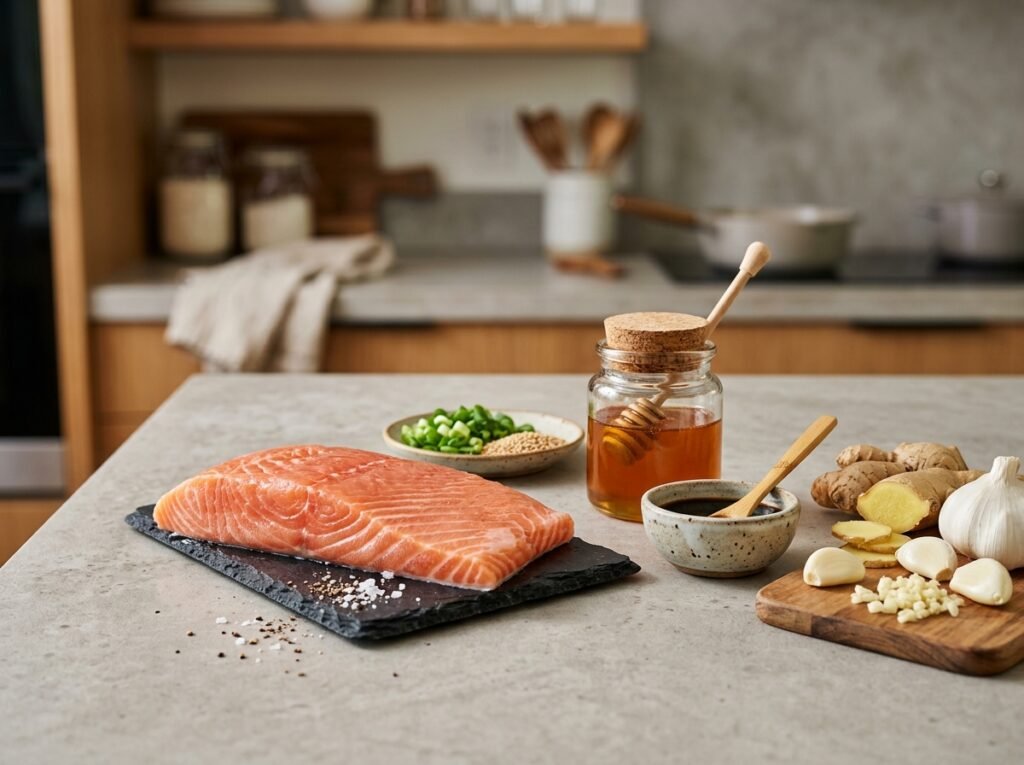
Remove salmon from fridge 15 mins before cooking. Pat fillets COMPLETELY dry with paper towels, pressing firmly on skin and flesh. Season both sides generously with salt and pepper just before cooking. Do NOT season early; salt draws out moisture, creating steam barrier.
- Why this matters: Bone-dry surface ensures immediate sear vs. steaming. Salt penetrates surface quickly; early salting makes skin wet/rubbery. Room temp promotes even cooking; cold fish shocks pan, dropping temp dangerously.
- Visual Cue: Skin looks matte/dull, not shiny/wet. Flesh feels tacky, not slimy. No visible moisture droplets.
- Texture Cue: Skin taut/firm. Flesh springs back when pressed gently. Not soft/mushy.
- Aroma Cue: Clean ocean scent. No ammonia/sour notes. Salt enhances natural sweetness.
- Common Mistake: Skipping drying step. Results in soggy skin/violent splatter. Fix: Pat thoroughly. Air-dry 10 mins if possible. Change towels if wet.
- Professional Tip: Score skin lightly (3 shallow cuts) if fillets are very thick. Helps heat penetrate/render fat evenly. Don’t cut into flesh.
H3: Step 2 – Sear Skin-Side Down
Heat 1 tbsp neutral oil in skillet over MEDIUM-HIGH heat until shimmering (not smoking). Place salmon SKIN-SIDE DOWN. Press gently with spatula 5-10 seconds to prevent curling. Cook UNDISTURBED 4-6 mins until skin is deep golden/crispy and flesh turns opaque 2/3 up side.
- Why this matters: Hot oil triggers instant crust formation. Pressing ensures full skin contact; gaps = uneven cooking. Undisturbed searing allows fond development; moving prematurely tears skin. Opacity rise indicates heat penetration.
- Visual Cue: Skin turns amber/deep gold. Edges crisp/darkened. Flesh color changes from translucent pink to opaque coral from bottom up. Bubbles form around edges.
- Texture Cue: Skin crackles when tapped with spatula. Flesh yields slightly but holds shape. Not hard/rubbery.
- Aroma Cue: Nutty/toasted oil + sweet seafood scent. Burnt smell = heat too high; reduce immediately.
- Common Mistake: Moving fish too soon. Tears skin/ruins presentation. Fix: Wait until skin releases naturally (4+ mins). Properly seared fish doesn’t stick.
- Professional Tip: Reduce heat to MEDIUM after initial sear if browning too fast. Goal is crisp skin, not burnt skin. Adjust dynamically.
H3: Step 3 – Flip & Add Glaze
Flip salmon carefully using fish spatula. Cook flesh-side down 1-2 mins. Pour pre-mixed glaze (honey, soy, garlic) OVER fillets. Tilt pan to pool sauce. Spoon sauce over fish continuously 30-60 seconds until glossy/thickened. Squeeze fresh lemon juice over top. Remove from heat IMMEDIATELY.
- Why this matters: Brief flesh-side cook sets exterior without drying. Glaze applied late prevents burning. Spooning coats evenly/reduces sauce rapidly. Lemon added off-heat preserves brightness/volatile oils. Residual heat finishes cooking gently.
- Visual Cue: Sauce bubbles vigorously then thickens to syrupy consistency. Coats fish in glossy amber film. Lemon juice creates steam/aroma burst.
- Texture Cue: Glaze tacky/sticky, not runny/hard. Fish flakes easily but holds together. Not dry/chalky.
- Aroma Cue: Caramelized honey + garlicky soy + citrus zest. Complex/inviting bouquet. Acrid smell = sauce burning; remove instantly.
- Common Mistake: Overcooking in glaze. Honey burns/sauce turns bitter. Fix: 30-60 secs MAX. Watch constantly. Remove when glossy, not dark.
- Professional Tip: Have glaze pre-mixed BEFORE flipping. Timing is critical; no time to measure mid-cook. Mise en place saves disaster.
H3: Step 4 – Rest & Plate
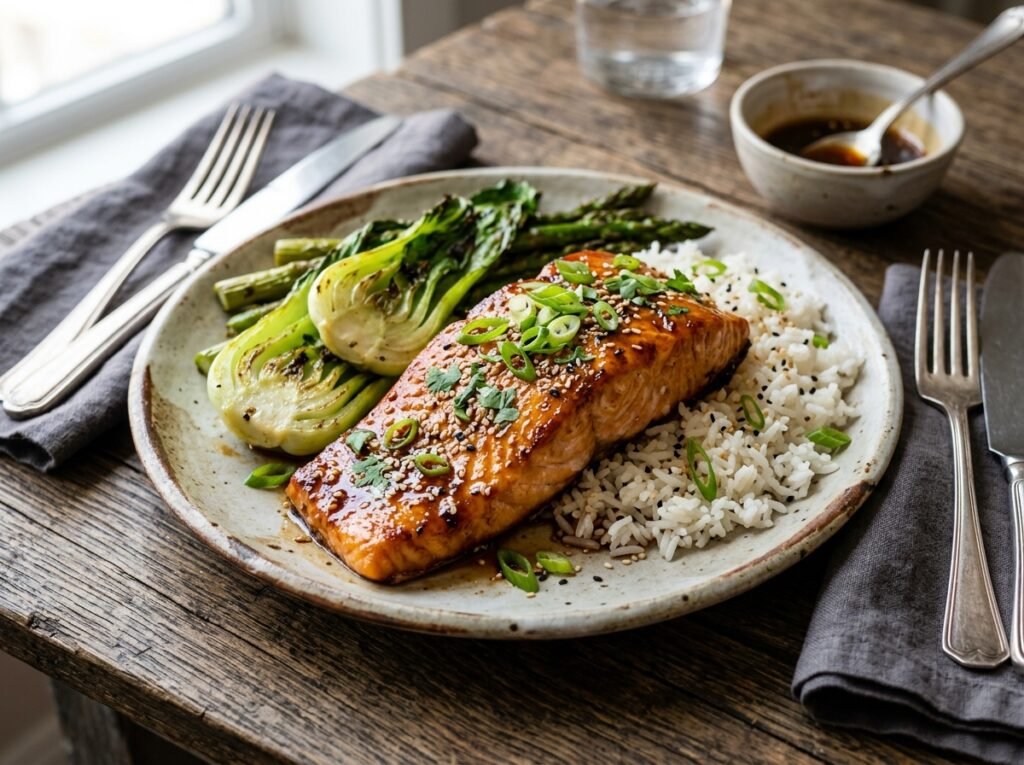
Transfer salmon to warm plates SKIN-SIDE UP. Let rest 2-3 mins. Garnish with fresh dill and lemon wedges. Serve IMMEDIATELY while skin is crisp and glaze is warm.
- Why this matters: Resting allows juices to redistribute; cutting immediately releases moisture onto plate. Skin-up preserves crispness; sauce pools underneath. Warm plates prevent thermal shock/congealing fats. Immediate service = peak texture/flavor.
- Visual Cue: Glossy glaze glistens. Dill vibrant green. Steam rising subtly. Skin intact/crisp-looking.
- Texture Cue: Skin shatters when bitten. Flesh moist/flaky. Glaze sticky/sweet-savory. Not dry/soggy.
- Aroma Cue: Fresh dill + lemon + caramelized glaze. Bright/appetizing finish.
- Common Mistake: Serving immediately off heat. Juices haven’t settled; fish may be slightly under-temp. Fix: 2-3 min rest minimum. Carryover cooking finishes job.
- Professional Tip: Wipe plate rims clean before serving. Presentation matters. A messy rim distracts from beautiful food.
Expert Tips for Perfectly Crispy Skin
- Dryness is Non-Negotiable: Moisture = steam = soggy skin. Pat bone-dry. Air-dry 10 mins uncovered in fridge if possible. Desiccated surface = maximum crisp.
- Cold Pan Start Option: For extra-crispy skin, start salmon in COLD pan skin-down. Turn heat to medium-high. Render fat slowly as pan heats. Flip when skin releases/crisps. Takes longer but guarantees glass-like texture.
- Press Firmly Initially: Salmon curls when hitting hot pan. Press gently but firmly 5-10 secs with spatula. Ensures full skin contact. Release once set. Prevents uneven cooking/pale spots.
- Don’t Crowd the Pan: Overcrowding drops temp/creates steam. Cook max 2-3 fillets at a time (depending on pan size). Space between fillets essential for air circulation/crisping.
- Thermometer Accuracy: Pull at 125-130°F for medium-rare. Carryover raises temp 5-10°F. Overcooked salmon = dry/rubber. Trust tool, not clock. Calibrate regularly.
- Glaze Timing Mastery: Have glaze ready BEFORE flipping. Seconds matter. Pre-mix in small bowl. Pour/spoon efficiently. Hesitation = burnt sugar/bitter sauce.
Common Mistakes to Avoid
- Wet Salmon Skin: Creates steam barrier, prevents crisping. Fix: Pat bone-dry. Air-dry if possible. Moisture = soggy failure.
- Moving Fish Too Soon: Tears skin, ruins presentation. Fix: Wait 4+ mins. Test release with spatula. Proper sear = non-stick.
- Adding Glaze Too Early: Burns honey, creates bitter sauce. Fix: Apply ONLY in last 30-60 secs. Watch constantly. Remove when glossy.
- Overcooking Salmon: Dry/rubber texture irreversible. Fix: Pull at 125-130°F. Rest 2-3 mins. Trust thermometer.
- Using Non-Stick Pan: Cannot achieve true crispness. Fix: Cast iron/stainless steel only. Season well/oil properly.
- Serving Skin-Side Down: Traps steam, softens crisp skin. Fix: Always plate skin-up. Preserves texture/integrity.
- Skipping Rest Period: Juices escape, fish dries out. Fix: Rest 2-3 mins minimum. Allows redistribution/carryover cooking.
Recipe Variations
- Spicy Gochujang Glaze: Replace honey with gochujang + maple syrup. Add ginger/scallions. Fiery/sweet/umami bomb. Korean-inspired twist.
- Miso-Ginger Butter: Swap soy/honey for white miso + grated ginger + butter. Rich/creamy/nutty. Finish with sesame seeds. Japanese fusion elegance.
- Maple-Balsamic Reduction: Use maple syrup + balsamic vinegar + thyme. Earthy/tangy/sweet. Pairs beautifully with roasted root veggies. Autumnal profile.
- Citrus-Herb Marinade: Marinate salmon 30 mins in orange juice + zest + rosemary. Grill instead of pan-sear. Bright/herbaceous/summer vibes.
- Low-Carb/Keto: Skip honey; use erythritol/monk fruit. Increase soy/tamari ratio. Add chili oil for fat. Verify net carbs. Indulgence without guilt.
- Vegan Adaptation: Use firm tofu steaks or tempeh. Same glaze technique. Press tofu thoroughly. Pan-sear identically. Surprisingly similar texture/flavor absorption.
- Extra Cheesy Comfort: Top glazed salmon with crumbled feta/goat cheese last 30 secs. Salty/creamy contrast. Mediterranean twist.
- Smoky Chipotle-Honey: Add chipotle powder/adobo to glaze. Smoky heat balances sweetness. Garnish with cilantro/lime. Southwestern flair.
What to Serve With This Recipe
Balance the rich, sweet-savory salmon with fresh, acidic, or starchy accompaniments:
- Steamed Jasmine Rice or Quinoa: Neutral base absorbs glaze beautifully. Adds substance/fiber. Classic pairing.
- Roasted Asparagus or Broccolini: Charred bitter greens cut richness. Adds color/fiber. Simple lemon-garlic seasoning complements salmon.
- Cucumber-Avocado Salad: Cool/creamy contrast to warm/glazed fish. Refreshing palate cleanser. Lime-cilantro dressing echoes citrus notes.
- Garlic Butter Noodles: Udon or linguine tossed in garlic butter. Carby comfort that soaks up extra glaze. Indulgent pairing.
- Sparkling Water with Lime: Effervescence/acidity cleanses palate between bites. Better than still water/sweet soda.
- Pinot Gris or Sauvignon Blanc: Crisp white wine with good acidity complements salmon’s fat/glaze’s sweetness. Avoid oaky Chardonnay.
- Mango Sorbet: Light/fruity dessert continues tropical/citrus theme. Avoid heavy/chocolate desserts that compete with savory glaze.
Make Ahead & Meal Prep Tips
- Pre-Mix Glaze: Combine honey/soy/garlic up to 3 days ahead. Refrigerate. Flavors meld/improve. Bring to room temp before using. Saves active prep time.
- Portion Salmon: Cut fillets to uniform size/thickness ahead. Store airtight up to 24 hrs. Ensures even cooking. Saves assembly stress.
- Prep Garnishes: Chop dill, slice lemon wedges ahead. Store separately in airtight containers. Freshness preserved. Assembly line efficiency.
- Reheat Smartly: Leftovers reheat best in oven/air fryer (see below). Microwave destroys texture. Plan portions accordingly to minimize waste.
- Freeze Raw Salmon: Freeze individual fillets vacuum-sealed up to 3 months. Thaw overnight in fridge. Cook from thawed state. Convenient future meals.
Storage & Reheating Instructions
Storage
- Refrigerator: Store cooled salmon in airtight container up to 2 days. Glaze may darken; flavor intensifies. Separate from sides to prevent sogginess.
- Freezer: Not recommended for glazed salmon. Texture degrades significantly upon thawing. Freeze plain cooked salmon (no glaze) up to 1 month. Add fresh glaze upon reheating.
Reheating
- Oven (Best): 300°F (150°C) for 8-10 mins, covered with foil. Preserves moisture. Uncover last 2 mins to re-crisp skin slightly. Rest 2 mins.
- Air Fryer: 300°F (150°C) for 3-4 mins. Excellent revival method. Skin-side up. Watch closely to prevent burning glaze. Spray lightly with oil if dried out.
- Stovetop: Skillet over LOW heat, skin-side down, covered 3-5 mins. Gentle steam reheats flesh; pan re-crisps skin. Flip briefly if needed.
- Microwave (Last Resort): 50% power in 30-sec bursts. Cover with damp paper towel. Will soften skin/glaze. Only use if texture isn’t priority.
Nutritional Information
Estimates per serving (based on 6oz salmon + glaze):
- Calories: 450 kcal
- Protein: 34g
- Carbohydrates: 18g
- Fat: 28g
- Fiber: 0g
- Sugar: 14g (mostly from honey)
- Sodium: 680mg (varies with soy sauce brand)
Note: Values vary based on salmon size/fat content, glaze amount, and soy sauce sodium. Always check labels for precise tracking.
Troubleshooting Guide
| Problem | Cause | Solution |
|---|---|---|
| Skin Not Crispy/Soggy | Wet skin or pan not hot enough. | Pat bone-dry next time. Ensure oil shimmers before adding fish. Press firmly initially. Extend sear time 1-2 mins. |
| Glaze Burnt/Bitter | Added too early or heat too high. | Next time: Add glaze ONLY in last 30-60 secs. Reduce heat if bubbling violently. Scrape burnt bits; salvage unburnt portions. |
| Salmon Dry/Rubber | Overcooked. | Pull at 125-130°F next time. Rest 2-3 mins. Use thermometer. Carryover cooking finishes job. |
| Sauce Too Thin/Watery | Insufficient reduction or too much liquid. | Simmer glaze 30 secs longer before spooning. Ensure honey/soy ratio correct (more honey = thicker). |
| Fish Sticks to Pan | Pan not hot enough or moved too soon. | Ensure oil shimmers. Wait until skin releases naturally (4+ mins). Properly seared fish doesn’t stick. |
| Glaze Too Salty/Sweet | Imbalanced ratio. | Next time: Taste glaze BEFORE adding. Adjust honey/soy ratio. Add splash lemon/vinegar to balance excess salt/sweet. |
Frequently Asked Questions
1. Can I use skinless salmon fillets? Yes, but you’ll lose the crispy skin element. Reduce oil slightly. Cook flesh-side down first 3-4 mins, flip 1-2 mins. Glaze applies same way. Texture differs but still delicious.
2. Why does my salmon release white stuff (albumin)? Albumin is coagulated protein pushed out by heat. Minimal amounts normal. Excessive albumin indicates overcooking or too-high heat. Reduce temp, shorten time. Wipe off before serving; harmless but unappealing.
3. Can I make the glaze ahead of time? Absolutely. Mix honey/soy/garlic up to 3 days ahead. Refrigerate. Bring to room temp before using. Flavors meld beautifully. Saves active prep time during cooking.
4. How do I know when salmon is done without a thermometer? Flesh turns opaque pink/orange, flakes easily with fork, feels firm but yields slightly to pressure. Translucent/raw center = undercooked. Dry/chalky = overcooked. Thermometer removes guesswork; highly recommended.
5. Can I substitute tamari for soy sauce? Yes, tamari is gluten-free and often richer/less salty. Use same quantity. Adjust salt in seasoning if needed. Coconut aminos work but are sweeter; reduce honey slightly.
6. Why did my glaze seize/harden on the fish? Pan too hot or honey burned. Sugar caramelizes then burns rapidly. Fix: Lower heat immediately. Add splash warm water/lemon juice to loosen. Prevent: Add glaze late, watch constantly.
7. Can I grill this salmon instead of pan-searing? Yes, but skin won’t get as crispy. Oil grates well. Cook skin-side down 4-6 mins over medium-high indirect heat. Flip, add glaze last 30-60 secs. Good smoky flavor alternative.
8. Is this recipe suitable for meal prep? Glazed salmon reheats reasonably well (oven/air fryer best). Skin loses some crispness but flavor remains excellent. Store glaze separately if possible; add fresh upon reheating for best texture.
Final Thoughts
Mastering Honey Garlic Soy Glazed Salmon is about embracing simplicity and precision. The sizzle of the pan, the aroma of caramelizing honey, the sight of golden-crisp skin—these sensory cues guide you to perfection. This recipe proves that exceptional seafood doesn’t require complexity; it demands respect for technique, quality ingredients, and mindful execution. Whether you’re a novice cook or seasoned home chef, this dish rewards attention to detail with unforgettable flavor and texture.