Quick Recipe Summary
| Prep Time | 15 Minutes |
|---|---|
| Cook Time | 0 Minutes (No-Cook) |
| Total Time | 15 Minutes |
| Servings | 4 as a side dish |
| Cuisine | Modern American / Fusion |
| Course | Side Dish / Appetizer |
| Difficulty | Easy |
| Calories | ~120 kcal per serving |
Table of Contents
- Introduction
- Why This Recipe Works
- Why You’ll Love This Recipe
- Ingredient Notes
- Kitchen Equipment
- Step-by-Step Instructions
- Expert Tips for Perfect Ribbons & Dressing
- Common Mistakes to Avoid
- Recipe Variations
- What to Serve With This Recipe
- Make Ahead & Meal Prep Tips
- Storage Instructions
- Reheating Instructions
- Nutritional Information
- Troubleshooting Guide
- Frequently Asked Questions
- Final Thoughts
Introduction

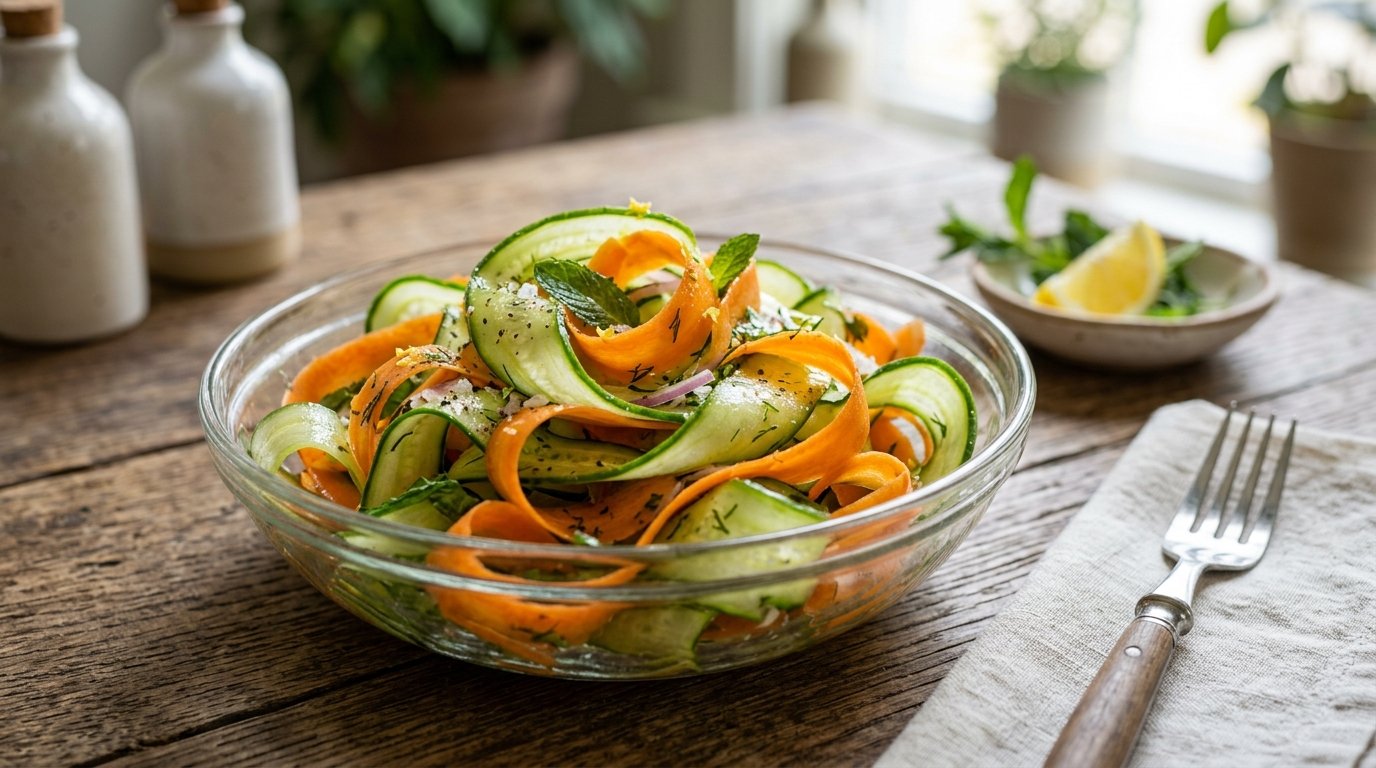
There is a specific kind of culinary satisfaction that comes from transforming humble, crisp vegetables into an elegant, restaurant-worthy side dish using nothing more than a peeler and a bright, acidic dressing. This Ribboned Cucumber and Carrot Salad with Lemon Vinaigrette is the epitome of fresh, vibrant eating. By shaving cucumbers and carrots into delicate ribbons rather than chopping them, we dramatically increase the surface area, allowing every strand to be perfectly coated in the zesty lemon-olive oil emulsion. The result is a salad that is light yet deeply flavorful, crunchy yet tender, and visually stunning on any table.
This recipe proves that simplicity, when executed with intention, yields extraordinary results. The contrast between the cool, watery crunch of cucumber, the sweet earthiness of carrot, and the sharp bite of red onion is balanced beautifully by the acidity of fresh lemon juice and the richness of extra virgin olive oil. Whether you are looking for a quick weeknight side, a refreshing potluck contribution, or a low-carb base for grilled proteins, this salad delivers consistent, crave-worthy freshness. It requires no cooking, minimal active time, and ingredients you likely already have, making it an indispensable addition to your culinary repertoire.
Why This Recipe Works
The success of this Ribboned Cucumber and Carrot Salad with Lemon Vinaigrette lies in the physics of surface area and the chemistry of emulsification. Traditional chopped salads often suffer from uneven dressing distribution; large chunks remain bland while smaller pieces become soggy. Ribboning creates thin, uniform strands that maximize contact with the vinaigrette. This ensures that every bite is seasoned consistently, and the thin vegetable strips absorb just enough acid to “cook” slightly (denature) without losing their essential crunch.
Furthermore, the technique of whisking the dressing separately before tossing is critical. Oil and vinegar are immiscible liquids; vigorous whisking creates a temporary emulsion where tiny oil droplets are suspended in the acidic base. This stable mixture clings to the hydrophobic surfaces of the cucumber and carrot ribbons far better than separated oil and vinegar would. The addition of fresh parsley not only adds color but also introduces volatile aromatic compounds that elevate the sensory experience, making the salad taste brighter and more complex than the sum of its parts.
Why You’ll Love This Recipe
- Elegant Presentation: The ribboned technique transforms simple vegetables into a sophisticated, nest-like arrangement that looks professional and intentional.
- Superior Texture: Thin ribbons offer a delicate crunch that is easier to eat and more pleasant than thick chunks, while still retaining freshness.
- Rapid Preparation: From washing to plating in under 15 minutes, this is faster than boiling pasta or roasting vegetables.
- Naturally Dietary-Friendly: Inherently vegan, gluten-free, dairy-free, paleo, and Whole30 compliant without any substitutions needed.
- Versatile Base: Serves equally well as a standalone side, a bed for grilled chicken/fish, or a topping for grain bowls.
- Budget-Conscious: Relies on affordable, accessible produce that is available year-round in most regions.
- Refreshing Palate Cleanser: The bright acidity and high water content make it the perfect counterpoint to rich, heavy, or spicy main courses.
Ingredient Notes
English or Persian Cucumbers
- Purpose: Primary volume and crunch component. Their thin skin and small seeds eliminate the need for peeling/deseeding, preserving texture and nutrients.
- Substitutions: Regular slicing cucumbers (must peel and deseed first), zucchini (raw, ribboned similarly), or jicama (sweeter/crunchier). Avoid pickling cucumbers; too seedy/bitter raw.
- Buying Tips: Choose firm, dark green specimens with no yellowing or soft spots. Heavier = higher water content = crisper salad. Avoid shriveled ends.
- Storage Tips: Store unwrapped in crisper drawer up to 1 week. Moisture accelerates rot; keep dry until prep. Wash just before use.
Large Carrots
- Purpose: Adds sweetness, color contrast, and structural integrity. Orange hue makes salad visually appealing against green cucumber/purple onion.
- Substitutions: Rainbow carrots (visual variety), parsnips (earthier/sweeter), or daikon radish (peppery/white). Baby carrots work but may be less sweet/flavorful.
- Buying Tips: Select straight, smooth carrots with vibrant color. Avoid cracked, limp, or sprouting tops. Flexible = old/dehydrated. Snap test: should break cleanly, not bend.
- Storage Tips: Remove greens if attached (they draw moisture). Store in perforated bag in crisper up to 3 weeks. Revive limp carrots in ice water 30 mins before use.
Red Onion
- Purpose: Provides sharp, pungent bite and purple color accent. Raw onion adds necessary complexity to balance sweet carrot/mild cucumber.
- Substitutions: Shallots (milder/sweeter), scallions (gentler/green color), or white onion (sharper/harsher). Soak sliced onion in ice water 10 mins to mellow harshness if sensitive.
- Buying Tips: Firm, heavy bulbs with tight, papery skins. Avoid sprouting, soft, or moldy onions. Smell should be clean/pungent, not sour/fermented.
- Storage Tips: Store in cool, dark, ventilated place (not fridge) up to 1 month. Keep away from potatoes (ethylene gas causes spoilage).
Extra Virgin Olive Oil (EVOO)

- Purpose: Richness, mouthfeel, and carrier for fat-soluble flavors. Emulsifies with acid to coat ribbons evenly. Quality directly impacts final taste.
- Substitutions: Avocado oil (milder/higher smoke point), walnut oil (nutty/rich), or grapeseed oil (neutral). Avoid refined vegetable oils; lack flavor complexity.
- Buying Tips: Choose harvest-dated EVOO in dark glass/tin. Taste before buying; should be fruity/grassy/peppery. Not all “extra virgin” is equal; seek reputable producers.
- Storage Tips: Store in cool, dark place. Use within 3-6 months of opening. Heat/light destroy quality rapidly. Never refrigerate (clouds/solidifies).
Fresh Lemon Juice & Zest
- Purpose: Acidity balances richness, brightens flavors, and prevents oxidation (browning). Zest adds aromatic citrus oils without additional liquid.
- Substitutions: Lime juice/zest (tropical/tart), rice vinegar (milder/asian profile), or apple cider vinegar (fruity/tangy). Bottled lemon juice lacks brightness/volatile oils.
- Buying Tips: Heavy lemons = juicier. Bright yellow skin = ripe. Avoid green-tipped or blemished fruit. Organic preferred for zesting (no wax/pesticides).
- Storage Tips: Room temp up to 1 week; fridge up to 1 month. Roll firmly on counter before juicing to maximize yield. Zest before juicing.
Fresh Flat-Leaf Parsley
- Purpose: Herbal freshness, color contrast, and aromatic lift. Complements lemon/olive oil classic pairing. Adds visual appeal.
- Substitutions: Cilantro (soapy/herbal), dill (anise/fresh), mint (cool/sweet), or chives (mild/oniony). Dried herbs lack volatility/freshness; avoid.
- Buying Tips: Vibrant green leaves, no yellowing/wilting. Stems should be crisp, not slimy. Smell should be clean/herbal, not musty.
- Storage Tips: Treat like flowers: trim stems, place in glass of water, cover loosely with bag, refrigerate. Use within 5-7 days. Wash/dry just before use.
Kitchen Equipment
- Y-Shaped Vegetable Peeler: Essential for creating long, uniform ribbons. Swivel blade follows vegetable contour smoothly. Avoid straight peelers; harder to control for ribbons.
- Sharp Chef’s Knife & Cutting Board: For thinly slicing red onion and chopping parsley. Stable board prevents slips. Dull knife crushes onion cells, releasing excessive sulfur/tears.
- Large Mixing Bowl: Wide enough to toss ribbons gently without breaking. Glass/ceramic preferred for easy cleaning/non-reactive surface. Metal can react with acid.
- Small Whisk & Measuring Spoons/Cups: For emulsifying dressing precisely. Consistent ratios ensure balanced flavor. Whisk incorporates air/stabilizes emulsion better than fork/spoon.
- Salad Spinner or Clean Towels: For drying washed vegetables thoroughly. Excess water dilutes dressing and causes sogginess. Critical step often skipped.
- Microplane or Fine Grater: For zesting lemon efficiently. Removes only outer colored layer, avoiding bitter white pith. Essential for maximum aroma.
- Tongs or Salad Servers: For gentle tossing. Hands can bruise delicate ribbons. Tongs distribute dressing evenly without crushing.
Step-by-Step Instructions
H3: Step 1 – Prep & Ribbon Vegetables
Wash and dry cucumbers/carrots thoroughly. Trim ends. Using Y-peeler, shave lengthwise into long, thin ribbons. Rotate vegetable as you peel to expose new surface. Stop when you reach seedy core (discard or save for stock). Slice red onion into thin half-moons. Chop parsley finely.
- Why this matters: Thorough drying prevents watery salad. Lengthwise ribbons are longer/more elegant than crosswise. Rotating ensures even thickness. Removing seedy core avoids bitterness/sogginess. Thin onion slices integrate better; thick chunks overpower.
- Visual Cue: Ribbons translucent at edges, flexible but not broken. Uniform width (~1/8 inch). Onion slices semi-transparent. Parsley bright green, no brown bits.
- Texture Cue: Ribbons crisp, snap when bent. Onion yielding but not mushy. Parsley tender, not woody.
- Aroma Cue: Fresh cucumber/carrot scent. Pungent onion. Herbal parsley. No sour/fermented smells.
- Common Mistake: Peeling too thick/thin. Thick = chewy/raw. Thin = breaks/mushy. Fix: Adjust peeler angle/pressure. Practice on one vegetable first.
- Professional Tip: Chill peeled ribbons in ice water 10 mins before dressing. Enhances crispness and removes excess starch/bitterness. Drain/dry thoroughly after.
H3: Step 2 – Make the Lemon Vinaigrette
In small bowl or jar, combine 3 tbsp EVOO, 1 tbsp fresh lemon juice, ½ tsp lemon zest, ¼ tsp salt, ¼ tsp black pepper. Whisk vigorously 30 seconds until emulsified and slightly thickened. Taste and adjust: more acid if flat, more oil if sharp, more salt if bland.
- Why this matters: Emulsification ensures even coating. Salt dissolves in acid, distributing seasoning uniformly. Zest adds aroma without liquid. Tasting BEFORE tossing prevents over/under-seasoning entire salad. Acid/oil ratio critical for balance.
- Visual Cue: Opaque, creamy-yellow mixture. No separation/oil pools. Small bubbles on surface.
- Texture Cue: Smooth, slightly viscous. Coats back of spoon. Not watery or greasy.
- Aroma Cue: Bright citrus, grassy olive oil, peppery spice. Inviting, fresh bouquet.
- Common Mistake: Adding oil too fast. Prevents emulsion. Fix: Drizzle oil slowly while whisking constantly. Start with acid/base, add oil gradually.
- Professional Tip: Let dressing sit 5 mins before using. Allows salt to dissolve fully and flavors to meld. Re-whisk before pouring (emulsion may separate slightly).
H3: Step 3 – Combine & Dress Gently
Place ribbons, onion, and parsley in large bowl. Pour dressing over top. Using tongs or hands, toss GENTLY but thoroughly for 30-60 seconds. Ensure every ribbon is coated. Do NOT over-toss; delicate ribbons can bruise/break.
- Why this matters: Gentle tossing preserves ribbon integrity. Over-tossing releases water from vegetables, diluting dressing and causing sogginess. Coating every strand ensures consistent flavor. Timing matters; dress just before serving to maintain crunch.
- Visual Cue: Ribbons glossy, evenly coated. No dry patches or pooled dressing at bottom. Colors vibrant, not dull/wilted.
- Texture Cue: Crisp, yielding. Not limp/soggy or dry/uncoated.
- Aroma Cue: Unified scent of vegetables, herbs, citrus, oil. Balanced, appetizing.
- Common Mistake: Dressing too early. Vegetables release water, salad becomes watery/soggy. Fix: Dress MAX 15 mins before serving. Ideally, dress immediately before plating.
- Professional Tip: Taste AFTER tossing. Vegetables absorb seasoning; may need pinch more salt/acid. Adjust incrementally. Better under-seasoned initially; can always add more.
H3: Step 4 – Plate & Serve Immediately

Transfer to serving platter or individual plates. Arrange ribbons in loose nests or piles. Garnish with extra parsley/lemon zest if desired. Serve IMMEDIATELY while crisp and chilled. Do NOT let sit dressed >15 mins.
- Why this matters: Immediate service preserves texture/flavor. Sitting allows osmosis; vegetables release water, dressing separates, crunch diminishes. Visual presentation enhances appetite. Loose arrangement prevents compaction/sogginess.
- Visual Cue: Vibrant, glossy mound. Ribbons distinct, not clumped/matted. Garnish fresh, not wilted. Steam/chill visible (if chilled).
- Texture Cue: Peak crispness. Juicy but not wet. Crunch audible when bitten.
- Aroma Cue: Maximum freshness/volatility. Citrus/herbal notes prominent. Fades with time.
- Common Mistake: Letting salad sit dressed. Sogginess inevitable. Fix: Prep components separately. Assemble/dress ONLY when ready to serve. Communicate timing to guests.
- Professional Tip: Chill serving plates 10 mins before plating. Cold plate maintains salad temperature/crispness longer. Warm plate accelerates wilting/water release.
Expert Tips for Perfect Ribbons & Dressing
- Peeler Sharpness is Critical: Dull peeler tears/crushes vegetables instead of slicing cleanly. Results in ragged, uneven ribbons that break easily. Sharpen or replace peeler regularly. Test on potato first; should glide smoothly.
- Dry Vegetables Religiously: Even trace moisture dilutes dressing and prevents adhesion. Use salad spinner + towel pat-down. Wet ribbons = sad, watery salad. Non-negotiable step.
- Emulsify Properly: Whisk vigorously 30+ seconds. Emulsion should hold 1-2 mins before separating. If breaks, add 1 tsp warm water and re-whisk. Stable emulsion = even coating = better flavor.
- Salt Strategically: Salt draws out moisture. Add salt to dressing, NOT directly to vegetables pre-dressing. Salt in dressing seasons evenly without premature water release. Adjust post-toss if needed.
- Zest Before Juicing: Zesting removes aromatic oils from peel. Juicing afterward is easier (softened fruit). Never zest after juicing; fruit too soft/slips. Microplane > grater for fine, fluffy zest.
- Serve Chilled, Not Frozen: Refrigerate components 30 mins before assembly. Ice-cold vegetables taste blander and can numb palate. Cool (not frozen) optimizes flavor perception and crunch.
Common Mistakes to Avoid
- Over-Peeling Ribbons: Too thin = breaks/mushy. Too thick = chewy/raw. Fix: Aim for 1/8-inch thickness. Adjust peeler pressure/angle. Practice consistency.
- Dressing Too Early: Vegetables release water, salad becomes soggy. Fix: Dress MAX 15 mins before serving. Ideally, dress immediately before plating.
- Under-Drying Vegetables: Water dilutes dressing, prevents coating. Fix: Spin + towel dry thoroughly. Moisture = enemy of crispness.
- Using Bottled Lemon Juice: Lacks brightness/volatile oils. Tastes flat/metallic. Fix: ALWAYS use fresh lemons. Roll/juice/zest properly.
- Over-Tossing Salad: Bruises ribbons, releases water. Fix: Toss gently 30-60 secs max. Stop when evenly coated. Delicate handling preserves texture.
- Skipping Emulsification: Oil/vinegar separate, uneven coating. Fix: Whisk vigorously 30+ secs. Add oil slowly. Stable emulsion = better salad.
- Serving Warm/Room Temp: Limp texture, muted flavors. Fix: Chill components 30 mins. Serve cold/crisp. Temperature affects perception significantly.
Recipe Variations
- Spicy Chili-Lime: Add ½ tsp chili flakes or 1 minced jalapeño to dressing. Swap lemon for lime. Top with toasted sesame seeds. Fiery, tropical twist.
- Asian-Inspired Sesame-Ginger: Use rice vinegar + soy sauce + sesame oil + grated ginger. Add edamame/scallions. Toasted sesame seed garnish. Umami-rich, savory profile.
- Mediterranean Herb Garden: Add kalamata olives, cherry tomatoes, feta cheese. Use oregano/mint in dressing. Olive oil/lemon base. Classic Greek-inspired variation.
- Creamy Yogurt Dressing: Replace oil/vinegar with Greek yogurt + lemon + garlic + dill. Tangy, protein-rich, lighter mouthfeel. Great for meal prep (holds up better).
- Low-Carb/Keto Boost: Add avocado slices, hemp seeds, or crushed walnuts. Increase olive oil ratio. Verify net carbs. Healthy fats enhance satiety.
- Sweet & Savory Fruit: Add mandarin orange segments, pomegranate arils, or sliced strawberries. Honey/maple syrup in dressing. Festive, colorful, sweet-tart balance.
- Protein-Powered: Top with grilled chicken, shrimp, salmon, or chickpeas. Transforms side into complete meal. Lemon vinaigrette complements all proteins beautifully.
- Herb Swap Adventure: Replace parsley with cilantro, dill, mint, or basil. Each herb transforms flavor profile dramatically. Experiment based on cuisine/main course pairing.
What to Serve With This Recipe
Balance the bright, acidic salad with rich, savory, or hearty accompaniments:
- Grilled Chicken or Fish: Lemon vinaigrette cuts through charred/rich proteins perfectly. Classic pairing. Light, healthy meal.
- Crusty Bread or Pita: Soaks up excess dressing. Adds satisfying carb element. Garlic bread elevates further.
- Quinoa or Couscous Bowl: Neutral grain base absorbs dressing. Adds substance/fiber. Makes salad a complete grain bowl.
- Roasted Vegetables: Warm roasted sweet potatoes, beets, or Brussels sprouts contrast cool/crisp salad. Temperature/textural harmony.
- Sparkling Water or White Wine: Effervescence/acidity cleanses palate. Sauvignon Blanc/Pinot Grigio complement lemon/herbs beautifully.
- Hummus or Baba Ganoush: Creamy dips contrast crisp salad. Middle Eastern theme. Scoop with pita or veggies.
- Light Sorbet or Fruit Salad: Refreshing dessert continues fresh/citrus theme. Avoid heavy/chocolate desserts that clash.
Make Ahead & Meal Prep Tips
- Prep Components Separately: Ribbon/dry vegetables up to 24 hours ahead. Store in airtight containers with paper towel to absorb moisture. Dress JUST before serving.
- Make Dressing Ahead: Whisk dressing up to 3 days ahead. Refrigerate. Flavors meld/improve. Re-whisk before using (emulsion may separate).
- Chill Serving Ware: Chill plates/bowls 30 mins before assembly. Maintains salad temperature/crispness longer during service.
- Pre-Chop Herbs: Chop parsley up to 12 hours ahead. Store in damp paper towel in airtight container. Prevents wilting/browning.
- Portion for Grab-and-Go: Layer undressed ribbons in jars. Add dressing in separate small container. Shake/toss when ready to eat. Prevents sogginess during transport.
Storage Instructions
- Refrigerator (Undressed): Store ribboned vegetables in airtight container with paper towel up to 24 hours. Crispness diminishes after that. Always dry thoroughly before storing.
- Refrigerator (Dressed): Consume within 1-2 hours max. Vegetables release water rapidly once dressed. Sogginess unavoidable beyond this window. Not recommended for leftovers.
- Freezer: NOT recommended. Freezing ruptures cell walls. Thawed vegetables become mushy/watery. Texture destroyed irreversibly. Discard if frozen accidentally.
- Dressing Only: Store leftover dressing in airtight jar up to 1 week refrigerated. Re-whisk before reuse. Flavors intensify over time.
Reheating Instructions
- Do Not Reheat: This is a cold salad. Heating destroys texture, wilts vegetables, separates dressing. Serve chilled or at cool room temperature only.
- If Components Were Prepped Ahead: Bring chilled vegetables to cool room temp 10 mins before dressing. Ice-cold veggies mute flavors. Dress/toss immediately before serving.
- Leftover Undressed Veggies: Can be added to stir-fries, soups, or smoothies. Do NOT attempt to revive as salad once wilted/dried out. Repurpose creatively.
- Leftover Dressing: Use as marinade for chicken/fish, drizzle over roasted veggies, or whisk into grain bowls. Versatile condiment. Don’t waste!
Nutritional Information
Estimates per serving (based on standard portion):
- Calories: 120 kcal
- Protein: 2g
- Carbohydrates: 12g
- Fat: 8g
- Fiber: 3g
- Sugar: 6g (natural from vegetables)
- Sodium: 150mg (varies with salt added)
Note: Values vary based on vegetable size, oil amount, and seasoning. Always check labels for precise tracking. Naturally vegan/gluten-free/dairy-free.
Troubleshooting Guide
| Problem | Cause | Solution |
|---|---|---|
| Salad Watery/Soggy | Vegetables not dried or dressed too early. | Spin/towel dry thoroughly next time. Dress MAX 15 mins before serving. Drain excess liquid if occurs. |
| Ribbons Broken/Mushy | Peeled too thin or over-tossed. | Adjust peeler to 1/8-inch. Toss gently 30-60 secs max. Handle delicately. |
| Dressing Separated/Oily | Not emulsified properly or sat too long. | Whisk vigorously 30+ secs. Add 1 tsp warm water to re-emulsify. Re-whisk before using. |
| Bland/Flat Flavor | Underseasoned or bottled juice used. | Taste dressing BEFORE tossing. Add salt/acid incrementally. ALWAYS use fresh lemon. |
| Onion Too Harsh/Pungent | Sliced too thick or not soaked. | Slice thinner. Soak in ice water 10 mins before adding. Rinse/dry before using. |
| Vegetables Brown/Oxidized | Exposed to air too long before dressing. | Prep/dress immediately. Acid in dressing prevents browning. Store undressed components airtight. |
Frequently Asked Questions
1. Can I use a mandoline instead of a peeler? Yes, but set to thinnest setting (~1/8 inch). Mandoline creates wider, flatter slices vs. peeler’s curled ribbons. Texture differs slightly but still delicious. USE GUARD! Mandolines are extremely sharp. Safety first.
2. Why did my salad turn watery after 30 minutes? Osmosis. Salt/acid draws water from vegetable cells. Unavoidable chemistry. Fix: Dress immediately before serving. Undressed components keep crisp for hours. Accept that dressed salad has limited lifespan.
3. Can I substitute apple cider vinegar for lemon juice? Yes, but flavor profile shifts. ACV is fruitier/milder. Reduce quantity to 2 tsp (less acidic than lemon). Add pinch of sugar if too tart. Still delicious, just different character.
4. How do I prevent red onion from turning my salad pink? Acid reacts with anthocyanins in red onion. Natural reaction. Minimize by soaking onion in ice water 10 mins before adding. Rinse/dry thoroughly. Some bleeding unavoidable; embrace as rustic charm.
5. Can I add avocado to this salad? Yes, but add JUST before serving. Avocado oxidizes/browns quickly when exposed to acid/air. Toss gently to coat. Best eaten immediately. Doesn’t store well dressed.
6. Is this salad suitable for meal prep? Components yes, assembled salad no. Prep/dry/store vegetables separately up to 24 hrs. Make dressing ahead. Assemble/dress ONLY when ready to eat. Prevents sogginess/waste.
7. What’s the best way to zest a lemon without pith? Use microplane/grater. Apply light pressure. Rotate lemon frequently. Stop when you see white pith. Pith = bitter. Only colored zest contains aromatic oils. Practice improves speed/safety.
8. Can I use dried parsley instead of fresh? Not recommended. Dried herbs lack volatile oils/freshness. Flavor dusty/muted. If desperate, use 1 tsp dried = 1 tbsp fresh. Rub between palms to release oils. Fresh always superior for this salad.
Final Thoughts
Creating the perfect Ribboned Cucumber and Carrot Salad with Lemon Vinaigrette is about respecting simplicity and mastering technique. The transformation of ordinary vegetables into an extraordinary dish through thoughtful preparation and balanced seasoning is a testament to the power of mindful cooking. This recipe proves that elegance doesn’t require complexity; it demands attention to detail, quality ingredients, and timely execution.