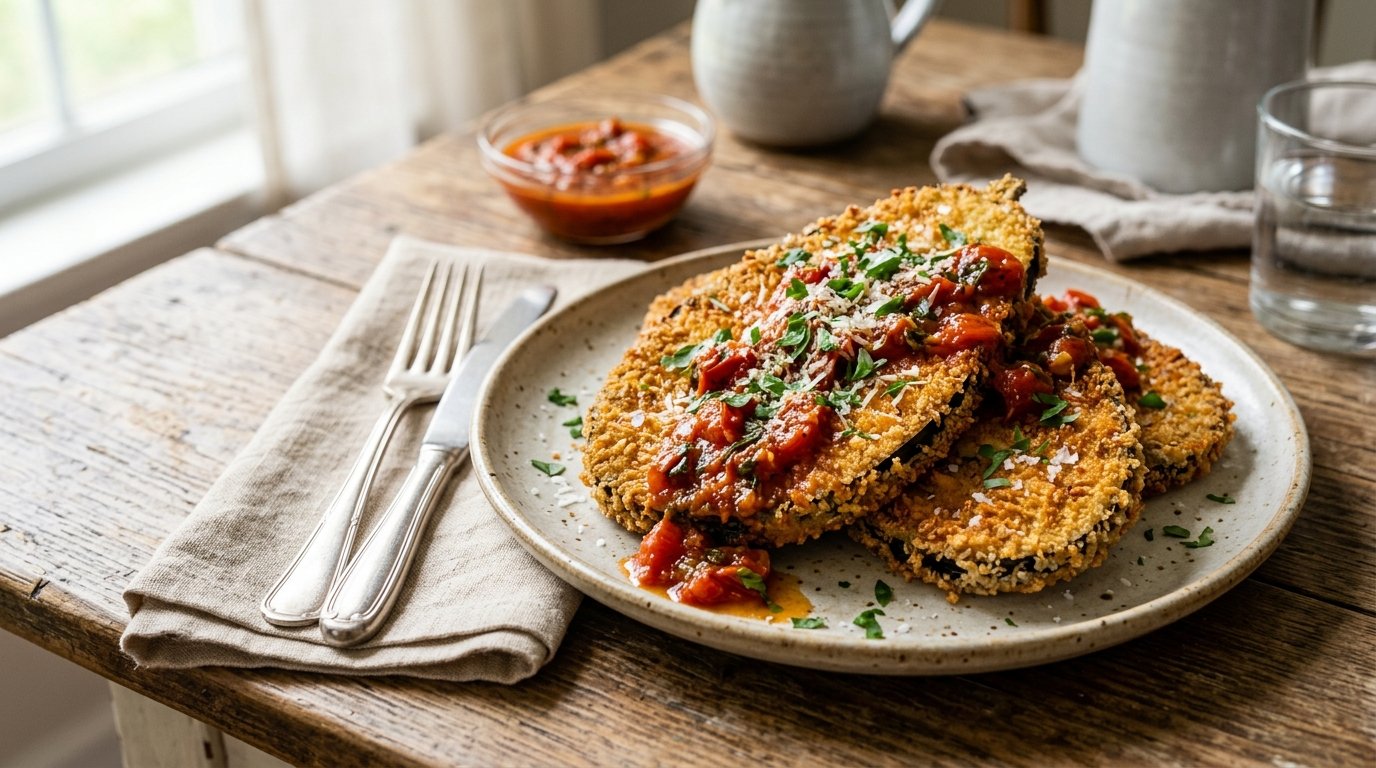
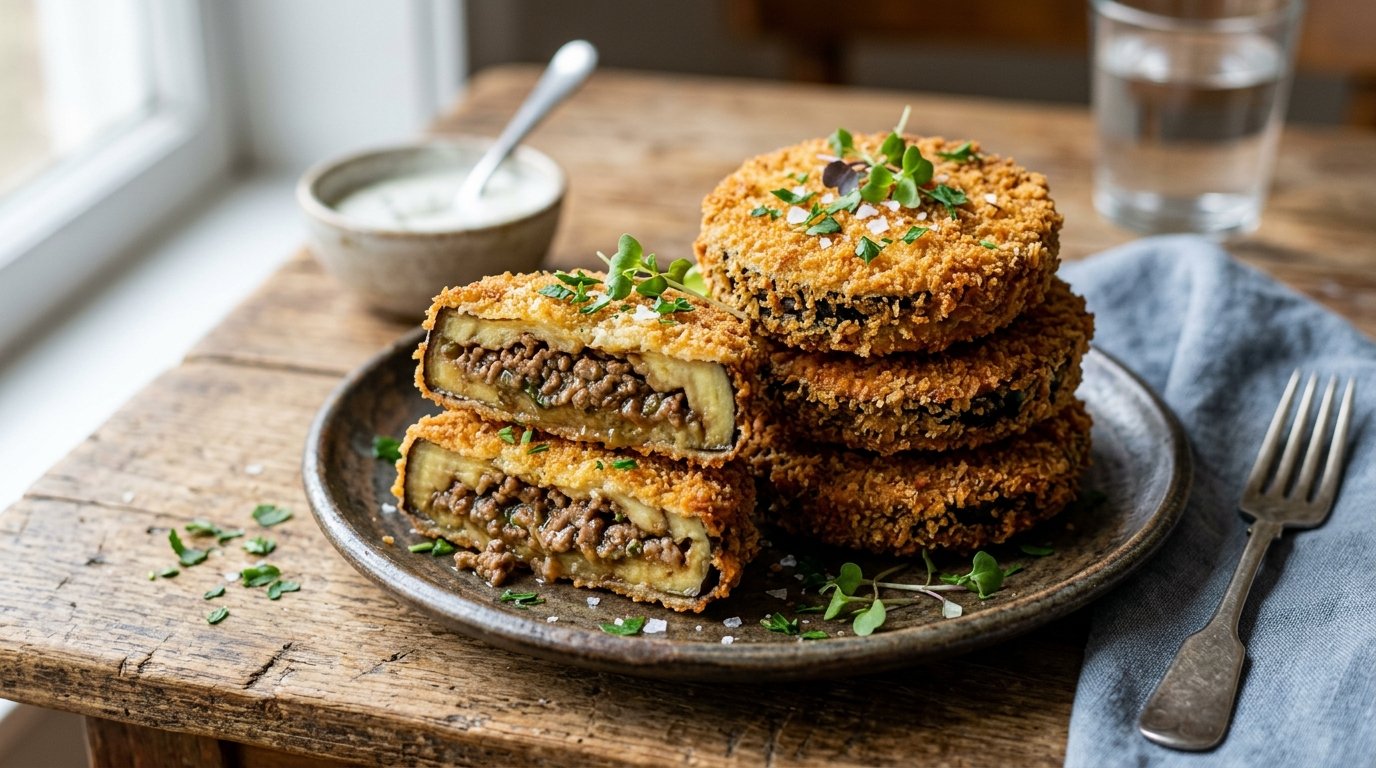
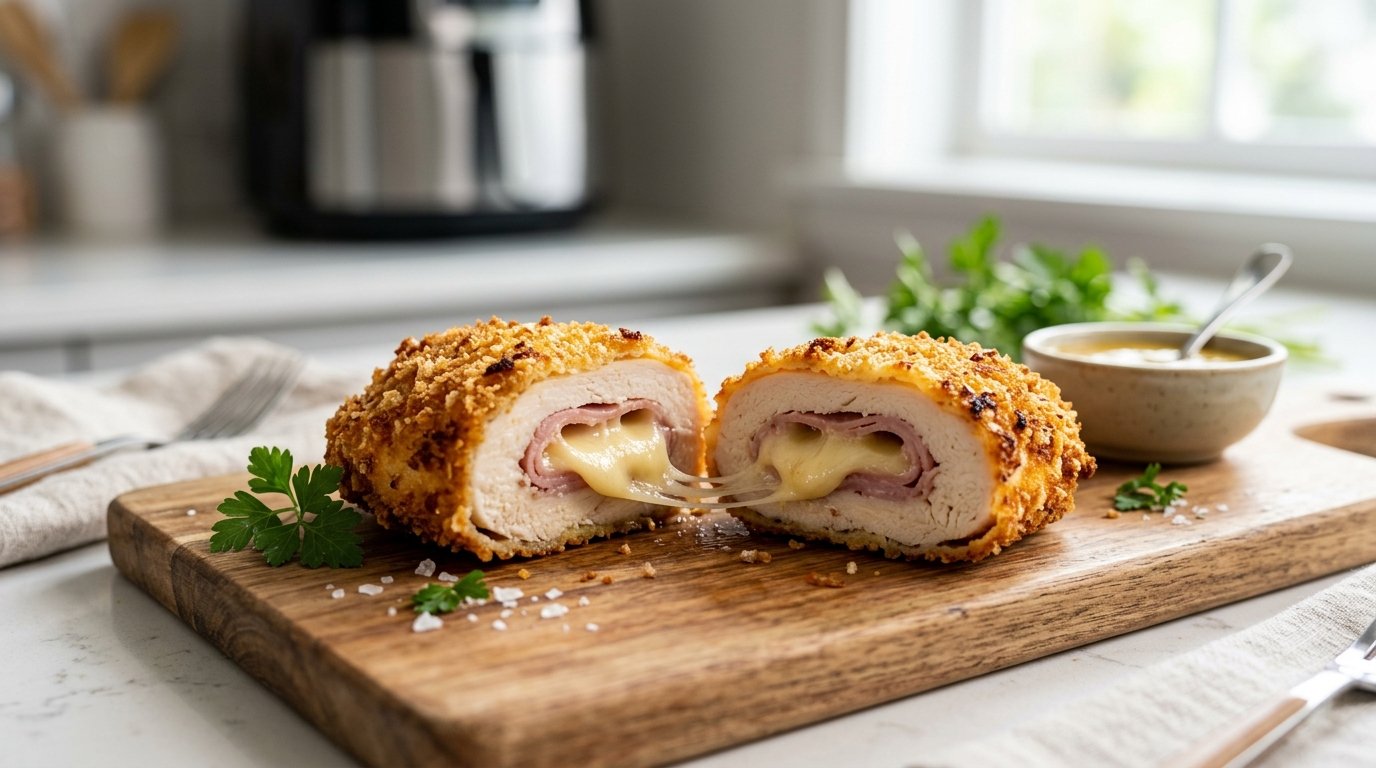
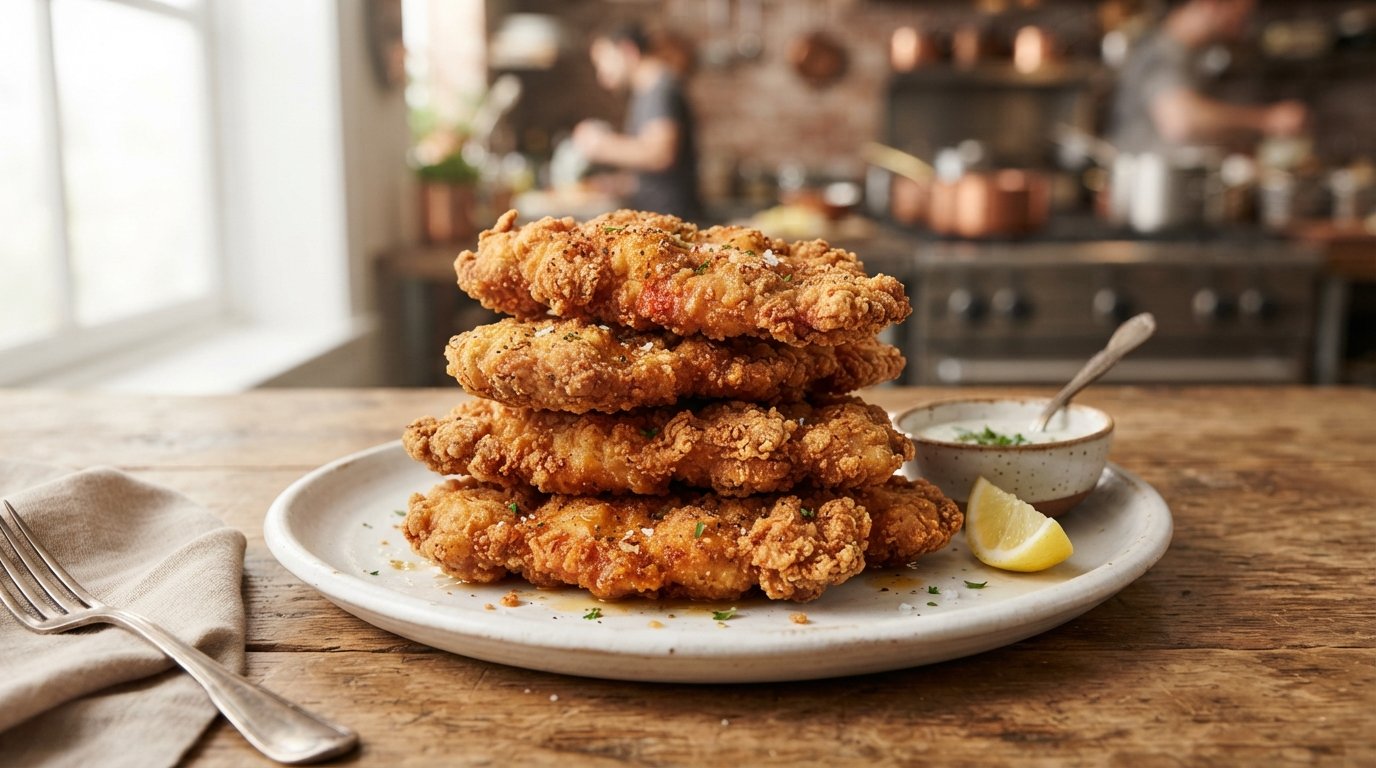
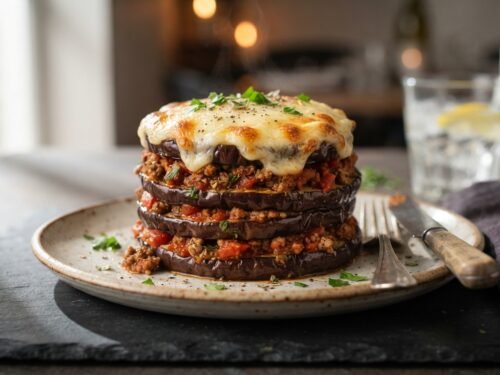
There is a specific kind of culinary alchemy that occurs when you transform a humble, often misunderstood vegetable into a dish that rivals any meat-based entrée in texture and satisfaction. These Crispy Roasted Eggplant Cutlets with Tomato Garlic Sauce are the epitome of this transformation. By roasting whole eggplants until they are impossibly tender, then breading and pan-frying them to golden perfection, we achieve a contrast of textures that is nothing short of magical: a shatteringly crisp exterior giving way to a creamy, melt-in-your-mouth interior, all nestled in a vibrant, garlicky tomato sauce.
This recipe challenges the notion that vegetarian meals must be secondary or bland. The roasting step is crucial; it concentrates the eggplant’s natural sweetness and eliminates the sponginess that can make fried eggplant greasy. When combined with the acidity of roasted cherry tomatoes and the pungent warmth of slow-roasted garlic, the result is a deeply flavorful, comforting dish that feels both rustic and refined. Whether you are a committed vegetarian, a flexitarian looking to reduce meat consumption, or simply a lover of bold Mediterranean flavors, this dish delivers an experience that is hearty, healthy, and utterly delicious.
Why This Recipe Works
The success of these Crispy Roasted Eggplant Cutlets with Tomato Garlic Sauce lies in a two-stage cooking process that addresses eggplant’s unique challenges. Eggplant is essentially a sponge; if fried raw, it absorbs oil voraciously, becoming heavy and greasy. By roasting it whole first, we accomplish three things simultaneously: we cook the flesh through to a custard-like tenderness, we evaporate excess moisture (preventing oil absorption later), and we caramelize the natural sugars, developing a depth of flavor that boiling or steaming cannot achieve.
Furthermore, the breading technique is engineered for adhesion and crunch. The roasted eggplant, once peeled and flattened, has a delicate surface. Dredging it in flour creates a dry base for the egg wash to cling to, while the seasoned breadcrumbs provide the structural integrity needed for frying. The final element—the sauce made from the very tomatoes and garlic roasted alongside the eggplant—creates a cohesive flavor profile. The acidity of the tomatoes cuts through the richness of the fried cutlet, while the sweet, mellow roasted garlic binds everything together, ensuring every bite is balanced and complex.
Why You’ll Love This Recipe
Unbeatable Texture: Achieves the holy grail of eggplant cooking: crispy outside, creamy inside, without being greasy or mushy.
Flavor Depth: Roasting vegetables concentrates their essence, creating a sauce and cutlet with layers of sweet, savory, and tangy notes.
Vegetarian Powerhouse: A satisfying main course that proves plants can be the star of the show, not just a side dish.
Visual Appeal: The golden-brown cutlets against the vibrant red sauce and fresh green herbs make for stunning, restaurant-quality plating.
Versatile Base: The fundamental technique works with zucchini, portobello mushrooms, or even chicken, making it a template for endless variations.
Comfort Food Elevated: Combines the nostalgia of fried comfort food with the sophistication of roasted vegetable preparations.
Naturally Meat-Free: No processed meat substitutes required; whole foods deliver superior nutrition and flavor.
Ingredient Notes
Globe Eggplants (Medium-Large)
Purpose: Primary protein/vegetable component. Globe varieties have the ideal flesh-to-skin ratio and hold shape well during roasting/frying.
Substitutions: Japanese/Chinese eggplants (slender/sweeter, adjust roast time), zucchini (softer, requires less roast time), or portobello mushrooms (meaty/umami-rich). Avoid small Italian eggplants; too seedy/bitter.
Buying Tips: Choose heavy, firm eggplants with smooth, glossy skin. Avoid wrinkles, soft spots, or brown patches. Heavy = moist/fresh. Light = dry/old. Stem should be green/fresh, not shriveled.
Storage Tips: Store at cool room temperature (not fridge) up to 3 days. Refrigeration damages texture/cold injury. Use quickly; eggplant deteriorates fast. Wash just before use.
Cherry Tomatoes (Red/Yellow Mix)
Purpose: Sauce base. Roasting bursts them, releasing juices/sugars that form the foundation of the sauce. Sweetness balances eggplant bitterness.
Buying Tips: Plump, firm, vibrant color. Avoid shriveled/moldy stems. Smell should be sweet/earthy. Mixed colors add visual appeal/flavor complexity.
Storage Tips: Room temperature only. Refrigeration destroys flavor/texture. Use within 3-5 days. Wash just before roasting.
Whole Garlic Head
Purpose: Aromatic backbone. Roasting transforms harsh/raw garlic into sweet, spreadable paste. Infuses oil/sauce with mellow depth.
Substitutions: Pre-peeled cloves (roast separately, may burn faster), garlic powder (add to breadcrumbs/sauce, lacks freshness), or shallots (milder/sweeter). Whole head essential for slow caramelization.
Buying Tips: Firm, heavy bulbs with tight, papery skins. Avoid sprouting/soft/moldy cloves. Multiple cloves = easier peeling post-roast.
Storage Tips: Cool, dark, ventilated place (not fridge). Lasts months. Separate cloves as needed. Peel post-roast; skins slip off easily.
Storage Tips: Airtight container, cool/dark place. Freeze for long-term storage. Stale breadcrumbs = soggy coating. Refresh in oven 350°F 5 mins if needed.
Eggs & Olive Oil
Purpose: Egg wash binds breading. Olive oil roasts vegetables/fries cutlets. Adds richness/flavor. High smoke point essential for frying.
Substitutions: Flax/chia eggs (vegan binder), aquafaba (chickpea water foam). Avocado/grapeseed oil for frying (higher smoke point). Extra virgin for roasting/drizzling; light/refined for frying.
Buying Tips: Fresh eggs for best binding. Olive oil: extra virgin for roasting/flavor; refined for high-heat frying. Avoid “olive oil blend” (often adulterated).
Storage Tips: Eggs refrigerated. Oil cool/dark place. Discard oil if foamy/smoky/acrid. Never reuse frying oil more than 2-3 times.
Kitchen Equipment
Rimmed Baking Sheet: Essential for roasting. Rim contains juices/oil. Line with parchment paper for easy cleanup/non-stick. Heavy-gauge metal prevents warping.
Three Shallow Dishes (Breading Station): For flour, egg wash, breadcrumbs. Wide enough to coat cutlets fully. Prevents cross-contamination/clumping.
Large Skillet (Cast Iron/Stainless Steel): For frying. Retains heat evenly. Non-stick optional but less crisp results. Heavy bottom prevents hot spots/burning.
Common Mistake: Under-roasting eggplant. Results in tough/bitter cutlets. Fix: Squeeze test; should feel like ripe avocado. Extend time 10 mins if needed.
Professional Tip: Prick eggplant skin 3-4 times with fork before roasting. Prevents steam buildup/explosion. Allows heat penetration. Saves 10 mins roast time.
H3: Step 2 – Prep Roasted Eggplant for Breading
Remove eggplants from oven. Let cool 10 mins (manageable heat). Split lengthwise. Scoop out flesh onto cutting board; discard skin. Gently press/flatten flesh into ½-inch thick cutlets. Season both sides with salt/pepper. Pat dry with paper towels to remove excess moisture.
Why this matters: Cooling prevents burning hands/mushy texture. Removing skin eliminates chewiness/bitterness. Flattening creates uniform thickness for even frying. Drying prevents soggy breading/oil splatter. Seasoning penetrates flesh.
Visual Cue: Flesh pale green/cream. Smooth surface. No large chunks/skin bits. Cutlets uniform thickness. Paper towels show moisture absorption.
Texture Cue: Yielding but holds shape. Not watery/mushy or dry/crumbly. Slightly tacky surface.
Aroma Cue: Mild/sweet eggplant. No raw/bitter scent. Seasoning fragrant.
Common Mistake: Skipping drying step. Wet cutlets = breading slides off/frying splatters. Fix: Press firmly with towels. Change towels if saturated. Air-dry 5 mins if very wet.
Professional Tip: Chill flattened cutlets 15 mins in fridge. Firms structure/makes breading adhere better. Cold cutlets hit hot oil = crisper crust.
H3: Step 3 – Bread Cutlets Using Three-Station Method
Set up three dishes: (1) ½ cup flour + ½ tsp salt/pepper, (2) 2 beaten eggs + 1 tbsp water, (3) 1 cup breadcrumbs + ¼ cup grated Parmesan + 1 tsp dried oregano + ½ tsp garlic powder. Dredge cutlet in flour (shake excess), dip in egg (coat fully), press into breadcrumbs (adhere firmly). Place on wire rack. Repeat for all cutlets.
Why this matters: Flour dries surface/creates tooth for egg. Egg acts as glue. Breadcrumbs provide crunch/flavor. Pressing ensures adhesion. Wire rack prevents sogginess. Seasoning each layer builds flavor depth.
Visual Cue: Cutlets uniformly coated. No bare spots. Breadcrumbs adhere firmly. Surface textured/not smooth. Color pale gold/herb-speckled.
Texture Cue: Coating dry/crisp to touch. Adheres when lifted. Not clumpy/wet.
Common Mistake: Overloading breading station. Wet flour = gummy coating. Fix: One hand wet (egg), one dry (flour/crumbs). Shake excess at each stage. Refresh flour/crumbs if clumped.
Professional Tip: Add 1 tbsp cornstarch to flour. Inhibits gluten formation = lighter/crispier crust. Dissolves completely during fry.
H3: Step 4 – Fry Cutlets & Make Sauce Simultaneously
Heat ¼ inch olive oil in skillet over medium-high heat (350°F/175°C). Fry cutlets 2-3 mins per side until deep golden/crisp. Drain on wire rack. Meanwhile, scoop roasted tomatoes/garlic into blender. Blend until smooth/saucy. Season with salt/pepper/lemon juice. Warm sauce gently in same skillet (after removing cutlets) 2-3 mins.
Why this matters: Hot oil sets crust instantly/seals moisture. Wire rack drainage preserves crispness. Blending roasted veg creates emulsified sauce. Warming sauce integrates flavors. Same skillet uses fond (browned bits) for sauce depth.
Visual Cue: Cutlets amber/golden. Bubbles active around edges. Sauce vibrant red/orange. Glossy/smooth. Steam rising.
Texture Cue: Cutlets crisp/shattering. Interior creamy. Sauce velvety/coating. Not grainy/watery.
Common Mistake: Crowding skillet. Drops oil temp = soggy cutlets. Fix: Fry in batches. Maintain 350°F. Recover temp between batches. Skim floating crumbs.
Professional Tip: Finish sauce with 1 tbsp cold butter/oil off-heat. Emulsifies/adds gloss/richness. Lemon juice brightens acidity. Taste/adjust before serving.
Expert Tips for Perfect Texture & Flavor
Roast Until Collapsed: Eggplant must be fully tender. Under-roasted = tough/bitter cutlets. Squeeze test: should yield like ripe avocado. Skin should blister/separate easily. Patience = perfect texture.
Dry Cutlets Religiously: Moisture is enemy #1 of crispness. Pat bone-dry after flattening. Air-dry 5 mins if possible. Wet cutlets = soggy breading/oil splatter. Safety hazard!
Breading Adhesion Trick: Chill breaded cutlets 10 mins before frying. Sets coating/prevents sloughing off in oil. Critical for delicate roasted eggplant.
Oil Temperature Control: Use thermometer. 350°F ideal. Too cool = greasy/soggy. Too hot = burnt outside/raw inside. Adjust burner dynamically. Recover temp between batches.
Sauce Consistency: Blend roasted veg with reserved roasting juices. Too thick? Add splash water/broth. Too thin? Simmer 2-3 mins to reduce. Ideal: coats spoon/thick enough to pool under cutlet.
Serve Immediately: Fried cutlets peak crispness lasts <5 mins. Have sauce warmed/plates ready BEFORE frying final batch. Assembly line efficiency. Delay = sad/soggy dinner.
Common Mistakes to Avoid
Under-Roasting Eggplant: Tough/bitter cutlets. Fix: Roast until collapsed/yielding. Squeeze test mandatory. Extend time if needed.
Skipping Drying Step: Soggy breading/splattering oil. Fix: Pat bone-dry. Air-dry if possible. Moisture control = safety/crispness.
Overcrowding Skillet: Greasy/soggy cutlets. Fix: Fry in batches. Maintain oil temp. Recover between batches. Skim crumbs constantly.
Breading Falls Off: Wet cutlets or improper dredging. Fix: Dry thoroughly. Three-station method. Chill breaded cutlets 10 mins pre-fry.
Sauce Too Thin/Watery: Insufficient reduction or too many tomatoes. Fix: Simmer 2-3 mins to reduce. Add tomato paste if desperate. Balance with lemon/salt.
Burnt Breadcrumbs: Oil too hot or breadcrumbs old. Fix: Maintain 350°F. Use fresh breadcrumbs. Watch closely; flip when golden.
Serving Late: Crispness lost. Fix: Mise en place everything. Sauce warm/plates ready. Fry last. Assemble/eat immediately.
Recipe Variations
Spicy Arrabbiata Twist: Add 1 tsp red pepper flakes/calabrian chili to sauce. Top cutlets with pepper jack cheese. Fiery/tangy contrast.
Vegan Adaptation: Flax egg wash + nutritional yeast in breadcrumbs. Cashew cream sauce instead of tomato. Surprisingly similar texture/flavor.
Mediterranean Herb Garden: Add fresh basil/oregano to breadcrumbs. Top with feta/kalamata olives. Lemon-tahini drizzle. Bright/herbaceous profile.
Low-Carb/Keto: Almond flour/crushed pork rinds breading. Zucchini noodles instead of pasta. Verify net carbs. Indulgence without guilt.
Extra Cheesy Comfort: Melt mozzarella/provolone on cutlets last 30 secs fry. Broil 1 min post-fry. Gooey/stretchy upgrade.
Tiramisu/Panna Cotta: Light/creamy dessert continues Italian theme. Avoid heavy/chocolate desserts that compete with savory cutlets.
Make Ahead & Meal Prep Tips
Roast Veggies Ahead: Roast eggplant/tomatoes/garlic up to 24 hours ahead. Store separately in fridge. Flavors meld/improve. Bring to room temp before breading/frying.
Pre-Make Sauce: Blend/store sauce up to 3 days ahead. Refrigerate. Reheat gently before serving. Flavors deepen overnight. Adjust seasoning post-reheat.
Bread Cutlets Ahead: Bread cutlets up to 4 hours ahead. Store uncovered on rack in fridge. Coating sets/adheres better. Fry just before serving for max crispness.
Pre-Chop Herbs/Garnishes: Chop parsley/basil up to 12 hours ahead. Store in damp paper towel in airtight container. Freshness preserved. Assembly line efficiency.
Freeze Roasted Eggplant: Freeze flattened cutlets (unbreaded) up to 1 month. Thaw overnight in fridge. Bread/fry from thawed state. Convenient future meals.
Storage & Reheating Instructions
Storage
Refrigerator: Store cooled cutlets/sauce separately in airtight containers up to 3 days. Crispness diminishes; accept texture change. Store sauce separately to prevent sogginess.
Freezer: Freeze unbreaded roasted eggplant cutlets up to 1 month. Freeze sauce up to 3 months. Do NOT freeze breaded/fried cutlets; texture destroyed upon thawing/reheating.
Reheating
Oven (Best): 375°F (190°C) on wire rack 8-10 mins. Restores some crispness effectively. Avoid direct pan contact (soggy bottom). Tent with foil if browning too fast.
Air Fryer: 375°F (190°C) 3-5 mins. Excellent revival method. Shake basket halfway. Spray lightly with oil if dried out. Best for single portions.
Stovetop: Skillet over medium-low, 2-3 mins per side. Revives some crispness. Good for single cutlets. Watch closely to prevent burning.
Microwave (Avoid): Steams cutlets, destroys crispness entirely. Only use if texture irrelevant (e.g., for pasta toss). Accept sogginess trade-off. Sauce reheats fine in microwave.
Nutritional Information
Estimates per serving (based on 1 cutlet + ½ cup sauce):
Calories: 380 kcal
Protein: 12g
Carbohydrates: 32g
Fat: 24g
Fiber: 8g
Sugar: 8g (natural from vegetables)
Sodium: 520mg (varies with seasoning/cheese)
Note: Values vary based on eggplant size, oil absorption, breadcrumb type, and sauce ratio. Always check labels for precise tracking.
Troubleshooting Guide
Problem
Cause
Solution
Cutlets Soggy/Greasy
Oil too cool or cutlets not dried.
Maintain 350°F strictly. Pat cutlets bone-dry. Ensure oil depth sufficient. Drain on wire rack.
Breading Falls Off
Wet cutlets or improper dredging.
Dry thoroughly. Three-station method. Chill breaded cutlets 10 mins pre-fry.
Eggplant Bitter/Tough
Under-roasted or old eggplant.
Roast until collapsed/yielding. Select fresh/heavy eggplants. Salt pre-roast if very bitter (rinse/dry after).
Sauce Too Thin/Watery
Insufficient reduction or too many tomatoes.
Simmer 2-3 mins to reduce. Add tomato paste if desperate. Balance with lemon/salt.
Burnt Breadcrumbs
Oil too hot or breadcrumbs old.
Maintain 350°F. Use fresh breadcrumbs. Watch closely; flip when golden.
1. Can I skip roasting and fry raw eggplant? Not recommended. Raw eggplant absorbs excessive oil = greasy/heavy cutlets. Roasting pre-cooks/evaporates moisture = crisp/lighter result. If skipping, salt slices 30 mins, rinse/dry thoroughly. Expect different texture.
2. Why did my breading turn gummy? Wet cutlets or overcrowded breading station. Fix: Pat cutlets bone-dry. Use separate hands for wet/dry stations. Shake excess at each stage. Refresh flour/crumbs if clumped.
3. Can I bake instead of fry? Yes, but texture differs. Brush breaded cutlets generously with oil. Bake at 425°F 20-25 mins (flip halfway). Finish under broiler 2 mins for color. Crispness won’t match fry but offers lighter alternative.
4. How do I prevent eggplant from being bitter? Select fresh/heavy eggplants. Older/larger ones more bitter. Salting pre-roast draws out bitterness (rinse/dry after). Roasting caramelizes sugars = masks residual bitterness. Globe varieties less bitter than slender types.
5. Can I use pre-made marinara sauce? Yes, but roasted tomato/garlic sauce has superior depth/flavor. If using jarred, enhance with roasted garlic/lemon juice/fresh herbs. Simmer 5 mins to meld flavors. Convenience vs. quality trade-off.
6. What’s the best oil for frying? Refined olive oil, avocado oil, or grapeseed oil. High smoke point (>400°F) essential. Extra virgin olive oil smokes/burns at frying temps. Avoid coconut/butter (flavor clash/low smoke point).
7. Can I make this gluten-free? Absolutely. Use GF breadcrumbs/almond flour. Cornstarch in flour mix. Ensure all ingredients certified GF. Texture nearly identical. Many GF breadcrumbs now available with excellent crunch.
8. How do I know when eggplant is done roasting? Skin blisters/collapses. Flesh yields to gentle squeeze like ripe avocado. Internal temp ~200°F. Skin should peel easily. Under-roasted = tough cutlets. Over-roasted = mushy/hard to handle.
Final Thoughts
Mastering Crispy Roasted Eggplant Cutlets with Tomato Garlic Sauce is about embracing patience and respecting the ingredient. The transformation from humble vegetable to gourmet centerpiece is a testament to the power of technique and thoughtful preparation. This recipe proves that vegetarian cooking can be deeply satisfying, visually stunning, and universally appealing.